Understanding the Landscape: Pediatrics–Psychiatry as a Niche Path
Pediatrics–Psychiatry is one of the most interesting and strategically complex pathways in graduate medical education. As an MD graduate residency applicant coming from an allopathic medical school match environment, you’re entering a small but competitive niche.
You’ll typically be looking at:
- Triple Board programs (Pediatrics–General Psychiatry–Child & Adolescent Psychiatry)
- Traditional Pediatrics programs
- Traditional Psychiatry programs
- Occasionally Peds-Psych “combined” tracks or integrated experiences within larger institutions
Before you can build a program selection strategy, it helps to clarify:
Your end goal
- Do you want to be triple board–certified (Peds, Psych, and Child & Adolescent Psych)?
- Are you considering a primary identity as a pediatrician with psych expertise or a psychiatrist with strong pediatrics exposure?
- Are you absolutely certain about peds psych residency, or do you want to maintain flexibility?
Program ecosystem
- Triple board programs are few in number, usually with 2–4 positions per program per year.
- Most are anchored at large academic centers with strong children’s hospitals and psychiatry departments.
- Because the applicant pool is self-selected, they can be intense and highly mission-driven environments.
Match context
- As an allopathic MD graduate, you generally have a favorable position for the allopathic medical school match, but for such a niche field, fit and genuine interest are far more important than raw metrics.
- You may need a two-tier strategy: applying to both triple board and categorical programs (Pediatrics, Psychiatry, or both) to balance ambition and security.
Throughout this article, we’ll walk through how to choose residency programs, how many programs to apply to, and a concrete program selection strategy tailored to pediatrics–psychiatry–oriented MD graduates.
Clarifying Your Goals: What Do You Want Your Career to Look Like?
Everything in your program selection strategy starts with self-assessment. Without this, it’s easy to over- or under-apply, or to select programs that don’t actually fit how you want to practice.
Step 1: Define Your Ideal Future Practice
Ask yourself:
Population focus
- Do you want to work primarily with children and adolescents, or across the lifespan?
- Are you drawn to medically complex children, neurodevelopmental disorders, or severe mental illness?
Practice environment
- Academic medical center vs. community hospital vs. private/consultative practice
- Inpatient vs. outpatient vs. consult-liaison or integrated primary care
- Interest in research, education, policy, or global mental health
Professional identity
- Do you envision introducing yourself as “a child psychiatrist who trained in pediatrics” or “a pediatrician with deep training in psychiatry”?
- How central is psychotherapy, versus medical and systems-level care, to your future vision?
Your answers will determine whether:
- Triple board is your best fit,
- A psychiatry residency plus child fellowship is better,
- Or a pediatrics residency with strong behavioral/developmental training meets your needs.
Step 2: Decide Where Triple Board Fits in Your Plan
Triple board residency is intense but uniquely powerful. It makes sense if:
- You want formal board eligibility in Pediatrics, Psychiatry, and Child & Adolescent Psychiatry
- You’re drawn to:
- Pediatric consultation-liaison psychiatry
- Complex developmental and behavioral pediatrics
- Systems of care: foster care, juvenile justice, school-based mental health
- Leadership roles at the interface of pediatric and psychiatric care
However, triple board is not always ideal if:
- You’re already certain you want to be primarily a general psychiatrist with occasional pediatric focus.
- Your main interest is adult psychiatry or adult-focused research.
- You don’t want to compress three disciplines into five rigorous years.
In those cases, a more sensible path might be:
- Psychiatry residency → Child & Adolescent Psychiatry fellowship
- Or Pediatrics residency → Developmental-Behavioral Pediatrics or Child Psychiatry collaboration route
Having this decision at least partially sketched out will help you refine how to choose residency programs and how many programs to apply to in each category.

Mapping the Field: Types of Programs and How to Evaluate Them
1. Triple Board Programs (Peds–Psych–Child Psych)
These are your core target if you are committed to peds psych residency training in its most intensive form.
Key features to assess:
Curriculum structure
- How are rotations sequenced? (e.g., block vs. longitudinal)
- Balance of:
- Inpatient pediatrics
- Outpatient pediatrics
- General adult psychiatry
- Child and adolescent psychiatry
- Consult-liaison experiences
Institutional strength
- Reputation and depth of the Children’s Hospital
- Strength and size of the Psychiatry Department and Child & Adolescent Psychiatry Division
- Presence of subspecialty pediatrics and neurodevelopmental services
Culture and support
- How integrated are triple board residents within both pediatrics and psychiatry cohorts?
- Are there formal mentorship structures for triple board trainees?
- Resident well-being, flexibility, and support given the heavy rotation and identity-switching.
Graduate outcomes
- Where do alumni work? (academic vs. community vs. leadership roles)
- Are graduates using all three boards in meaningful ways?
- Are they involved in policy, advocacy, or systems-level child mental health?
2. Categorical Pediatrics Programs with Strong Behavioral Focus
If you lean toward pediatrics but want psychiatric depth, seek:
- Integrated behavioral health clinics
- Close collaboration with Child Psychiatry and Developmental-Behavioral Pediatrics
- Structured training in:
- ADHD
- Autism spectrum disorders
- Learning disorders
- Somatic symptom and related disorders
- Pediatric primary care mental health screening and treatment
These programs create a strong foundation if you later:
- Do a Developmental-Behavioral Pediatrics fellowship
- Engage in primary care–based integrated behavioral health models
- Advocate for child mental health within pediatric systems
3. Categorical Psychiatry Programs with Strong Child Emphasis
If your identity leans psychiatric, seek:
- Programs with early and substantial child psychiatry exposure
- Robust pediatric consultation-liaison psychiatry services
- Training at institutions with top-tier children’s hospitals
Look for:
- Opportunities to rotate in pediatric inpatient units
- Joint academic projects with pediatric departments
- A clear pathway to Child & Adolescent Psychiatry fellowship, ideally in-house
4. Combined or Integrated Tracks
A small number of institutions offer unique combined pathways or special tracks within psychiatry or pediatrics that mirror some goals of peds psych residency. When researching, check:
- Whether there’s a formal track (e.g., “Pediatric Psychiatry Track” in a psychiatry residency)
- Protected time for child-focused research or policy
- Regular case conferences that integrate medical and psychiatric aspects of child care
Program Selection Strategy: Building Your Personal List
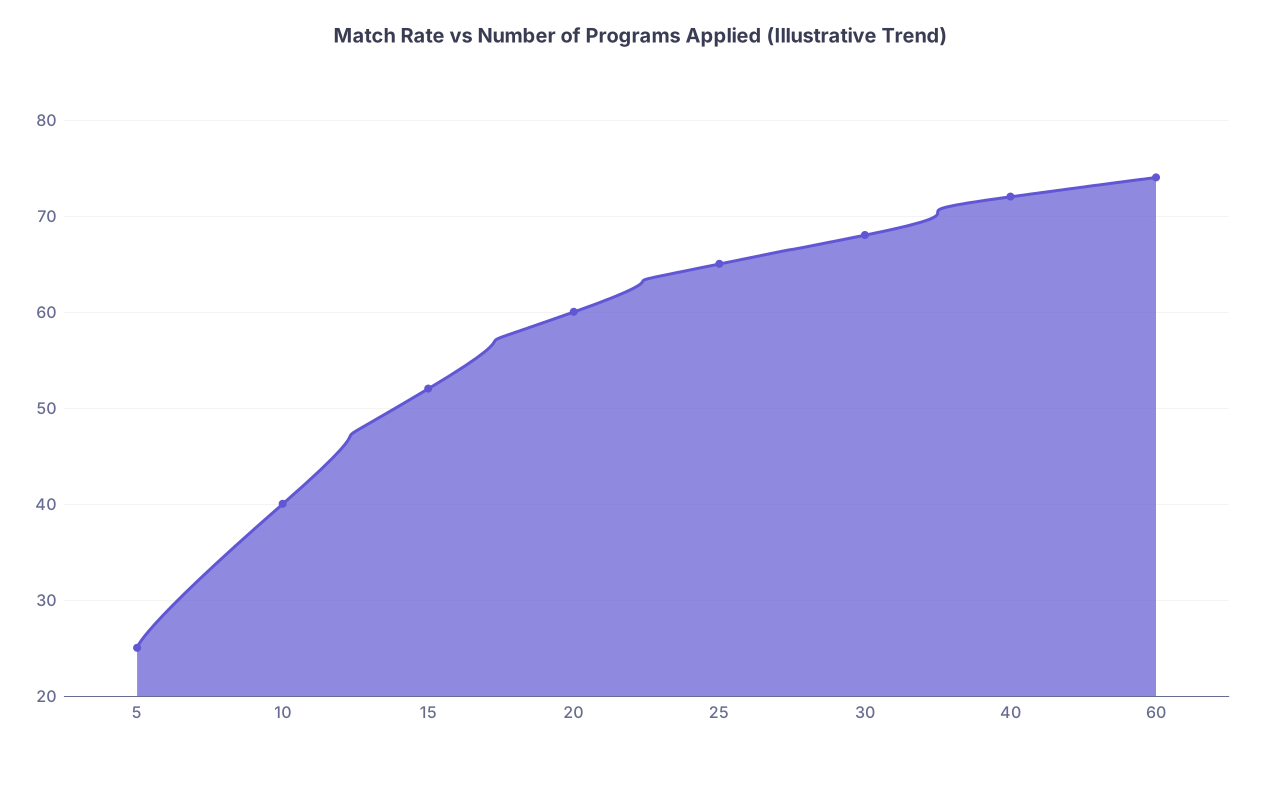
The heart of your question is: how to choose residency programs and how many programs to apply to for an MD graduate focused on pediatrics–psychiatry.
A. Anchoring Principles for Your Strategy
Balance ambition with safety
- Triple board programs are few, and cohorts are small.
- Even strong applicants need a backup plan that still aligns with their goals.
Prioritize fit over prestige
- For peds psych residency paths, a program’s commitment to integrated child care matters more than brand name alone.
- The right culture and curricular depth will shape your skillset much more than a marginal reputation difference.
Consider geography realistically
- Be honest about where you’re truly willing to live for 3–5 years.
- Don’t waste applications on locations you wouldn’t attend even if it were your only match.
Think in tiers and categories
- Instructionally, break your list into:
- Triple Board programs
- Categorical Pediatrics
- Categorical Psychiatry
- Then into “reach,” “target,” and “safety” within each.
- Instructionally, break your list into:
B. How Many Programs to Apply To? A Practical Framework
The answer depends on:
- Your academic metrics (USMLE/COMLEX, clerkship performance)
- Strength of your experiences in pediatrics and psychiatry
- Strength of letters of recommendation
- How clearly your application tells a coherent peds-psych narrative
For an MD graduate from an allopathic medical school match environment with a solid but not extreme profile, a typical range might be:
Triple Board
- Total number of programs nationwide is small (often <20).
- If you’re strongly committed, apply broadly to nearly all feasible triple board programs.
- Common range: 8–15 triple board applications, depending on how many exist that year and your tolerance for travel.
Categorical Pediatrics (if this is your preferred backup)
- For most MD graduates in pediatrics:
- 12–20 pediatrics programs can be sufficient for broadly competitive applicants.
- If your application has any significant weaknesses, consider 18–25.
- Focus on:
- Programs with strong behavioral/developmental training
- Children’s hospitals with well-integrated child psychiatry.
- For most MD graduates in pediatrics:
Categorical Psychiatry (if this is an equal or alternative backup)
- For psychiatry, MD graduates often apply to:
- 15–25 programs, adjusted for competitiveness.
- If peds psych is your focus, prioritize:
- Programs with early child exposure
- Strong consult-liaison and collaborative care models
- For psychiatry, MD graduates often apply to:
Example Combined Strategy
A balanced, realistic list for a committed peds–psych MD graduate might look like:
- Triple Board: 10 programs
- Pediatrics: 15 programs (10 with known strong behavioral/child psych linkage, 5 more general but geographically desirable)
- Psychiatry: 12 programs (all with strong child rotations or pediatric hospital integration)
Total: ~37 programs
You can adjust up or down depending on:
- Financial limits
- Strength of your application
- Risk tolerance for the match
For a very strong MD applicant with clear niche experience, you may be comfortable with slightly fewer categorical applications (e.g., 8–10 each in pediatrics and psychiatry). For applicants with late-discovered interest, weaker metrics, or visa needs, you might increase the categorical numbers.

Evaluating Individual Programs: A Step-by-Step Approach
Once you’ve defined how many programs to apply to in each category, the question becomes: Which ones?
Step 1: Pre-Screen by Mission and Curriculum
For each program on your radar, look for:
Stated mission and values
- Do they mention child mental health, integrated care, or interdisciplinary training?
- Are there specific references to pediatrics-psychiatry collaboration?
Curriculum details
- For triple board: Is there clear rotation detail across all three disciplines?
- For pediatrics: Are there longitudinal behavioral health experiences?
- For psychiatry: How early are child rotations and pediatric consults available?
Reject programs early if:
- Their curriculum or mission clearly does not support your peds psych interests.
- They have poor track records in education quality or resident support.
Step 2: Assess Opportunities for Mentorship and Scholarship
Strong peds psych residency environments share:
- Faculty actively working at the interface of pediatrics and psychiatry
- Joint appointments
- Integrated clinics
- Collaborative research projects
Scan:
- Department websites for:
- Child psychiatrists embedded in pediatric services
- Developmental-behavioral pediatricians
- Recent publications or QI projects on:
- Integrated behavioral health in pediatrics
- Pediatric psychopharmacology
- Child trauma, foster care, or juvenile justice work
A program where you can easily find mentors aligned with your passion is more valuable than one with a more prestigious name but no such faculty.
Step 3: Consider Structure, Flexibility, and Resident Life
Ask:
- How are triple board residents supported when rotating across departments?
- For categorical programs:
- Is there elective time for cross-department experiences (e.g., peds residents doing psych rotations and vice versa)?
- Does the program encourage custom educational plans?
Other critical factors:
- Call schedule and workload
- Resident wellness and burnout prevention
- Diversity and inclusiveness of the institution
Step 4: Learn from Current Residents and Alumni
During:
- Virtual open houses
- Away rotations
- Interview days
Ask targeted questions:
- “How easy is it to set up electives that cross pediatrics and psychiatry?”
- “Can you describe how triple board residents are perceived and supported by both departments?”
- “Where have recent graduates working in peds–psych roles ended up?”
- “If you had a do-over, would you choose this program again given your interest in integrated child care?”
You’re seeking:
- Honesty about structural challenges
- Evidence that the culture values integrated thinking
- Proof that graduates are achieving careers that resemble your own goals
Putting It All Together: Practical Action Plan for MD Graduates
1. Timeline and Preparation
6–12 months before ERAS opens:
- Clarify your career vision (triple board vs. categorical)
- Seek out:
- Electives in pediatrics, psychiatry, and ideally child psychiatry
- Mentors in each area
3–6 months before ERAS:
- Build your program spreadsheet:
- Triple board: list all possible programs and initial impressions
- Pediatrics and Psychiatry: flag those with strong child mental health integration
- Decide on a target range for:
- How many programs to apply to overall
- How many in each category
1–3 months before ERAS:
- Refine personal statement(s) to clearly reflect:
- Your peds psych narrative
- Why triple board (if applicable)
- How your background and goals align with this niche
- Confirm which letters of recommendation best showcase your pediatrics–psychiatry alignment.
2. Structuring Your Application Mix
For an MD graduate strongly committed to triple board:
- Apply broadly to nearly all triple board programs that:
- Are in locations you would realistically attend
- Have curricula that genuinely match your goals
- Use pediatrics and psychiatry programs to:
- Ensure a secure match
- Still align with your pediatrics–psychiatry interests
For an MD graduate leaning pediatric with psych interest:
- Emphasize categorical pediatrics programs with:
- Strong behavioral/developmental focus
- Embedded child psychiatry teams
- Apply to selected triple board programs that best match your interests.
- Apply to a smaller set of psychiatry programs only if you would truly be happy with that as a primary identity.
For an MD graduate leaning psychiatry with child focus:
- Emphasize psychiatry programs with:
- Early and robust child rotations
- Strong pediatric consult-liaison presence
- Apply to triple board programs where you feel you’d be supported in more psychiatric-leaning career paths.
- Apply to pediatrics only as a backup if you’d be genuinely content with that pathway.
3. Ranking Strategy
After interviews:
Rank based on your long-term identity
- If triple board truly fits your vision, it should sit at the top of your list.
- But don’t rank a program highly if you would dread living in that geography or culture.
Within program types, prioritize:
- Quality and alignment of curriculum with peds–psych goals
- Mentorship opportunities
- Resident support and culture
Use categorical programs thoughtfully:
- Rank them in the order of where you would most want to live and train if triple board is not your outcome.
- Ensure your top 10–15 ranks are programs you would actively be happy to attend.
FAQs: Program Selection Strategy for MD Graduates in Pediatrics–Psychiatry
1. As an MD graduate, do I need to apply to both triple board and categorical programs?
You don’t have to, but it’s usually wise. Triple board spots are limited, and even outstanding applicants can face unpredictability. A typical strategy is:
- Apply broadly to triple board programs you like.
- Back this up with a deliberate mix of pediatrics and/or psychiatry programs that still align with your peds–psych interests. This approach protects you in the allopathic medical school match while keeping you aligned with your passion for integrated child care.
2. How many triple board programs should I apply to?
Because there are relatively few triple board programs and each has small class sizes, most strongly interested applicants apply to almost all programs that seem like a reasonable fit geographically and culturally, often around 8–15 applications. The exact number depends on:
- How many exist that year
- Your geographical constraints
- Financial/logistical limits
- Your perceived competitiveness
3. Should I prioritize pediatrics or psychiatry categorical programs as my backup?
Base this on:
- Your core professional identity (pediatrician vs. psychiatrist)
- Which environment you feel most at home in clinically
- The kind of long-term practice you would accept if triple board doesn’t work out If you envision your future primarily in child mental health, many applicants lean toward psychiatry + child fellowship as a robust backup. If you love general pediatrics and longitudinal primary care, a pediatrics residency with strong behavioral resources might be better.
4. What if my application is stronger in one area (e.g., pediatrics) than in psychiatry?
That’s common. As an MD graduate, leverage your strengths while demonstrating genuine commitment to both fields:
- Highlight peds–psych integration in your personal statement.
- Secure at least one strong psychiatry letter and one pediatrics letter for triple board.
- When selecting programs:
- Apply more broadly in the field where you are less competitive, to increase chances.
- In your stronger field, you may not need as many applications but still include a range of programs (reach, target, safety). Most program directors will value a clearly articulated narrative and sustained interest in child mental health even if your transcript or scores skew slightly toward one discipline.
Choosing and applying to pediatrics–psychiatry pathways—whether triple board, pediatrics, or psychiatry—requires clarity, strategy, and honest self-reflection. By defining your long-term identity, understanding the landscape, and deliberately planning how many programs to apply to in each category, you can build a match strategy that is both ambitious and realistic, and that positions you to become the integrated child health clinician you aspire to be.