Understanding the Landscape: Medical Genetics Residency for MD Graduates
For an MD graduate, entering the world of medical genetics residency (often Medical Genetics and Genomics) is both exciting and uniquely challenging. It’s a smaller specialty with fewer positions than most core residencies, yet it offers broad impact across pediatrics, internal medicine, oncology, prenatal care, and rare disease.
To build a winning program selection strategy—and to know how many programs to apply to—you need a clear understanding of:
- How medical genetics training pathways are structured for MD graduates
- The supply-demand balance for genetics residency spots
- The specific factors that matter most when choosing programs
- How to realistically assess your competitiveness and risk tolerance
This guide will walk you step-by-step through a structured, evidence-informed way to choose where to apply and how to build your list for the genetics match.
Training Pathways in Medical Genetics for MD Graduates
Before you can choose programs, you need to understand what you’re actually choosing among. For MD graduates, there are three broad categories in the allopathic medical school match that interact with genetics:
1. Categorical Medical Genetics & Genomics (MGG)
These are direct-entry genetics residencies that accept MD graduates right after medical school. The exact structure varies by institution, but typical formats include:
Direct Categorical MGG (4-year)
- 24 months of broad clinical training (often a mix of internal medicine, pediatrics, or combined rotations)
- 24 months of clinical genetics and genomics
- Outcome: Eligible for the American Board of Medical Genetics and Genomics (ABMGG) certification in Clinical Genetics and Genomics
Combined programs embedded in categorical tracks
Some programs list as categorical “Medical Genetics and Genomics” but internally sequence your early years to meet ACGME clinical requirements and the genetics core.
These positions are relatively few per year nationally, so planning a robust program selection strategy is essential.
2. Combined Genetics Programs (Residency–Residency)
Common combined pathways include:
- Internal Medicine–Medical Genetics and Genomics (IM-MGG)
- Pediatrics–Medical Genetics and Genomics (Peds-MGG)
- Less common but possible: Obstetrics & Gynecology–Genetics, Dermatology–Genetics, etc., often at large academic centers
These programs are typically 4–5 years, fully integrated, and lead to dual board eligibility (e.g., ABIM or ABP plus ABMGG). They may appear in ERAS/NRMP under combined program codes.
Strategic implication:
If you’re convinced that you want to be a clinical geneticist but also want strong grounding in a core specialty, combined programs can be ideal—but they’re few and highly selective.
3. Sequential Training (Core Residency → Genetics Fellowship/Residency)
Many practicing geneticists first complete another residency and then enter genetics training:
- Example:
- 3 years Internal Medicine → 2 years Medical Genetics and Genomics
- 3 years Pediatrics → 2 years Medical Genetics and Genomics
- 4 years OB/GYN → 2 years Genetics (depending on program structure)
For an MD graduate residency applicant directly from medical school, this means you might:
- Apply now to internal medicine, pediatrics, OB/GYN, or other fields
- Intentionally choose programs with strong genetics divisions or ABMGG-accredited training
- Plan to apply for genetics training after your initial core residency
Strategic implication:
If you’re uncertain about committing to genetics from day one—or want broader generalist training—this pathway keeps options open. However, if your primary goal is clinical genetics, direct or combined pathways may be more efficient.

Step 1: Clarify Your Career Vision in Medical Genetics
Your program selection strategy should be anchored in what you want your career to look like. Genetics is broad; different programs emphasize different niches.
Key Career Questions to Answer
Clinical focus:
- Do you see yourself in primarily pediatric genetics, adult genetic medicine, or a mixed practice?
- Are you particularly drawn to cancer genetics, cardiogenetics, neurogenetics, or metabolic disorders?
Academic vs. community emphasis:
- Do you want a strongly academic career with research as a central component?
- Or do you envision a clinically focused role in a major health system or regional genetics center?
Procedural/technical interests:
- Interested in working closely with genomics labs, variant interpretation, or bioinformatics?
- Or more on the counseling, diagnostic, and care-coordination side?
Research aspirations:
- Are you aiming for translational genomics research, clinical trials, or quality improvement in genomic medicine?
- Do you foresee needing protected research time and advanced degrees (e.g., MPH, MS in genomics)?
Lifestyle and geography:
- Are there geographic constraints (family, partner, visa) that will shape your radius of applications?
- How important are schedule predictability, call burden, and outpatient vs inpatient balance?
How Your Answers Shape Program Selection
If you want pediatric rare-disease focus, prioritize programs with:
- Large children’s hospitals
- Dedicated metabolic genetics and dysmorphology clinics
- Strong NICU/ICU consult services
If you’re leaning toward adult genetics (cardiogenetics, cancer, pharmacogenomics):
- Look for programs integrated with comprehensive cancer centers or cardiovascular institutes
- Emphasis on adult consult services and multidisciplinary clinics
If research-intensive career is your goal:
- Target programs with NIH funding, T32 training grants, and well-established genomics research centers
- Seek documented protected research time in PGY-3/4, and robust mentorship infrastructure
Having this clarity prevents you from applying broadly without a plan and helps you explain your interests convincingly in personal statements and interviews.
Step 2: Build a Long List of Potential Genetics Programs
With your career vision in mind, the next task is creating a longlist of programs before deciding how many programs to apply to.
Sources to Identify Programs
- ERAS and NRMP directories
Search under:- “Medical Genetics and Genomics” (categorical)
- Combined programs (Pediatrics/IM–Genetics)
- ACGME and ABMGG lists
- Check ABMGG-accredited training programs for up-to-date rosters
- Institutional websites
- Major academic centers often host multiple genetics tracks (residency, fellowship, combined)
Data Points to Collect for Each Program
Create a spreadsheet and track:
- Program name and institution
- Program type:
- Categorical MGG
- IM–MGG
- Peds–MGG
- Others (Ob/Gyn–Genetics, etc.)
- Positions per year and historical fill rate (if available)
- Visa sponsorship (if applicable)
- Clinical emphasis:
- Pediatric vs adult mix
- Cancer genetics, cardiogenetics, prenatal, metabolic, etc.
- Research opportunities:
- Presence of genomics center, cancer center, or rare-disease institutes
- T32 or equivalent training grants
- Call structure and inpatient vs outpatient balance
- Geographic location and affiliated hospitals
At this stage, don’t over-filter. The goal is to capture most plausible options that align broadly with your interests and constraints.
Step 3: Key Criteria to Evaluate When Choosing Genetics Programs
Now you refine your list using a structured program selection strategy. Consider the following domains:
1. Training Structure and Curriculum
Ask:
- How are the clinical years structured (e.g., first 2 years mostly pediatrics/IM, last 2 mostly genetics)?
- How much time is in inpatient consults versus outpatient specialty clinics?
- Are there required rotations in:
- Biochemical genetics / metabolic clinics
- Prenatal diagnosis
- Cancer genetics
- Neurogenetics
- Cardiogenetics
Programs with broad, well-defined rotations will prepare you for diverse practice settings.
2. Breadth and Depth of Clinical Exposure
Key indicators:
- Size of the catchment area and referral base
- Number and variety of specialty clinics (e.g., connective tissue disorder clinic, mitochondrial clinic, skeletal dysplasia clinic)
- Integration with:
- Children’s hospitals
- Cancer institutes
- High-risk obstetrics services
Actionable step:
On program websites (or by emailing coordinators), look for clinic schedules and lists of specialty clinics. More breadth generally means more flexible career options later.
3. Faculty and Mentorship
Strong mentorship is crucial in a niche field like genetics.
Evaluate:
- Number of genetics faculty (clinical geneticists, biochemical geneticists, laboratory geneticists)
- Presence of genetic counselors, bioinformaticians, and molecular pathologists
- Faculty interests: Do they align with your areas (cancer, neuro, cardiogenetics, etc.)?
- Track record of mentoring residents into:
- Fellowships (if applicable)
- Faculty positions
- Industry, lab medicine, or policy roles
Actionable step:
Read faculty bios; during interview season, explicitly ask residents about mentoring culture.
4. Research and Scholarly Environment
In a rapidly evolving field like genomics, a strong academic environment matters—even if you are clinically focused.
Consider:
- Availability of:
- Clinical or translational research projects
- Genomics or precision medicine initiatives
- Bioinformatics and big data resources
- Protected research time:
- Is there designated time in PGY-3/4?
- Support for:
- Conference presentations (ASHG, ACMG)
- Manuscript development
- Grant-writing exposure
If you foresee an academic career, prioritize programs with a consistent history of resident publications.
5. Culture, Support, and Lifestyle
Burnout can be a concern in any residency; culture matters.
Evaluate:
- Program size: Smaller programs can offer individualized attention but might mean heavier call coverage.
- Call frequency and intensity:
- How often are you on call, and what is the typical volume?
- Resident satisfaction:
- Do current residents seem supported and engaged?
- Interdisciplinary collaboration:
- Is genetics respected and integrated across departments?
This is best assessed during interviews and second looks (if available), and by speaking confidentially with current residents.
6. Outcomes and Graduate Placement
For each program, look for:
- Where graduates go:
- Academic positions
- Regional genetics centers
- Further subspecialty training
- ABMGG board pass rates (if publicly available or shared)
- Connections to:
- Industry and pharmacogenomics
- Laboratory genetics and variant interpretation roles
- Policy and public health genomics
Programs that consistently place residents in roles you aspire to are strong fits.

Step 4: How Many Programs to Apply to in Medical Genetics
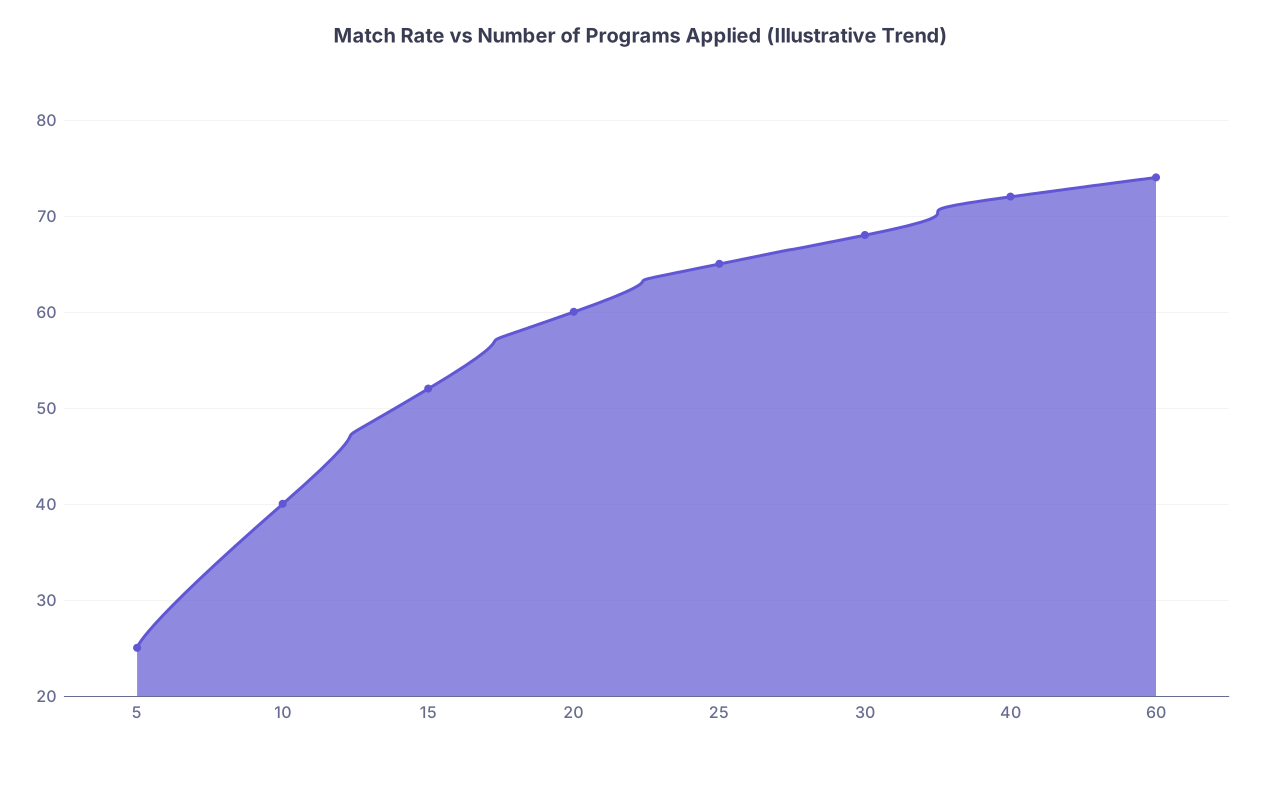
The question “how many programs to apply” doesn’t have a one-size-fits-all answer, especially in a smaller specialty like genetics. But you can use a structured framework.
Understand the Market
- Medical genetics and genomics has:
- Relatively few positions per year nationally
- Historically variable fill rates—some cycles see unfilled slots, others are tighter
- Many applicants enter genetics after another residency, not directly from MD graduation. This can work in your favor as a direct applicant but can also increase unpredictability.
Factors That Affect Your Ideal Number of Applications
- Your Competitiveness
Consider:
- Step/COMLEX scores (if applicable)
- Clerkship performance and class rank
- Strength of letters (especially from genetics or closely related fields)
- Research or scholarly work in genetics/genomics
- Demonstrated commitment to the field (electives, rotations, case reports, conferences)
Rough categories:
- Highly competitive: Strong academic records, genetics research, stellar letters, home-institution genetics exposure
- Moderately competitive: Solid academic performance, some exposure to genetics but limited research
- More vulnerable: Significant red flags (exam failures, leaves, major gaps), or very late pivot to genetics with minimal exposure
- Geographic Constraints
- High constraints (must be in 1–2 regions, family/visa limitations) → Apply to more programs within those regions
- Low constraints (open to most of the country) → You can selectively apply to programs that best match your interests
- Program Type Mix
- If you’re applying primarily to categorical MGG (fewer positions):
- You need a broader net.
- If you’re combining genetics with a more common core residency (e.g., IM, Peds) and plan to pursue genetics later:
- Your initial application strategy will follow norms for that core specialty, with genetics considerations layered on top.
Suggested Application Ranges (Direct-Entry Genetics Focus)
Assuming you are primarily targeting medical genetics residency (categorical and combined), and you are graduating from an allopathic medical school:
- Highly competitive MD graduate, flexible geography
- Target: 12–18 programs
- Mix: Majority categorical genetics + some combined IM/Peds–Genetics
- Moderately competitive, flexible geography
- Target: 18–25 programs
- Mix: Broad array of categorical and combined programs, with some programs slightly below top-tier academic centers
- More vulnerable applicant and/or significant geographic limits
- Target: 25–35 programs
- Mix:
- All categorical MGG and combined programs in your allowable regions
- Consider parallel-planning with a more common residency (e.g., IM or Peds) if realistic and allowed by NRMP rules
These ranges are guidelines, not guarantees. Because the field is small, it is often safer to slightly overshoot your application number rather than undershoot, as long as you tailor your applications reasonably.
Parallel Planning and Contingency Strategy
For some MD graduates, especially those with substantial academic strengths in internal medicine or pediatrics, a dual-path strategy can make sense:
- Apply to:
- A solid set of genetics-focused programs
- Plus a carefully selected subset of IM or Peds programs with strong genetics exposure
- Then:
- If you match into IM/Peds, plan to pursue genetics training sequentially
- If you match into a combined or categorical genetics program, you follow that track directly
Be sure any parallel strategy is consistent with NRMP rules and your ethical obligations; discuss with your dean or advising office.
Step 5: Creating a Tiered Application List
Once you know roughly how many programs to apply to, build a tiered list.
Tier 1: “Reach but Realistic” Programs (20–30%)
- Top academic centers, high research intensity
- Highly selective combined programs (IM–MGG, Peds–MGG)
- Programs in extremely popular cities or limited geographic markets
You should be a plausible candidate on paper; this is not a fantasy list but your more ambitious tier.
Tier 2: “Core Target” Programs (50–60%)
- Solid academic or large regional centers
- Good mix of clinical exposure and some research
- Reasonable to slightly below your predicted competitiveness level
These programs should make up the majority of your list.
Tier 3: “Safety/Lower Risk” Programs (10–20%)
- Programs that may be:
- In less competitive or less popular regions
- Slightly smaller or newer
- Still offer accredited, solid training and ABMGG eligibility
Actionable approach:
- Start with a long list (maybe 30–50 programs).
- Categorize each into tier 1, 2, or 3 based on competitiveness and fit.
- Trim or expand to reach the application count that matches your risk profile (e.g., 18–25).
- Confirm that the final list:
- Spans multiple regions (if possible)
- Contains a good mix of program types (categorical vs combined, pediatric vs adult emphasis)
- Aligns with your career targets
Step 6: Maximizing Fit and Standing Out
Applying to the right number of programs isn’t enough—how you present yourself and communicate fit will strongly influence interview offers.
Tailor Your Personal Statements
For a medical genetics residency application:
- Convey a coherent narrative:
- How did you become interested in genetics?
- What specific experiences (patients, research, electives) solidified that interest?
- Highlight:
- Exposure to genetic counseling, variant interpretation, or genomics labs
- Research or case-based work (case reports, posters) in genetics or related fields
- Interest in precision medicine, rare diseases, or specific patient populations
Consider slight customization for:
- Programs with strong pediatric orientation
- Programs with heavy research emphasis
- Combined IM/Peds–Genetics tracks
Secure Strong, Targeted Letters
Prioritize letters from:
- Clinical geneticists you have worked with
- Faculty in pediatrics, internal medicine, oncology, MFM, or neurology with a clear link to genetics
- Research mentors in genomics or related fields
Ask letter writers to:
- Comment on your clinical reasoning in complex diagnostic scenarios
- Highlight your ability to handle uncertainty and synthesize large amounts of information
- Speak to your curiosity and perseverance—critical in genetics
Communicate Program-Specific Fit
In emails and interviews:
- Reference specific features:
- “Your cardiogenetics clinic aligns with my interest in inherited arrhythmia syndromes.”
- “The integration with your cancer center and precision oncology program is particularly appealing because of my prior work on hereditary breast/ovarian cancer.”
- Ask informed questions based on program websites and faculty publications.
This demonstrates genuine interest and insight, which matters in smaller specialties where faculty know their applicant pool well.
Frequently Asked Questions (FAQ)
1. As an MD graduate, should I apply only to categorical medical genetics programs or also to internal medicine/pediatrics?
If you are strongly certain you want to be a clinical geneticist and are comfortable with a smaller, more specialized field, applying primarily to categorical or combined genetics programs is reasonable.
If you value broader flexibility—or if your competitiveness in genetics-focused programs is uncertain—it can be wise to also apply to internal medicine or pediatrics programs that have strong genetics divisions, planning to pursue genetics training sequentially. This “parallel planning” should be thoughtfully designed and consistent with NRMP policies.
2. How many programs should I apply to if I have strong grades and genetics research?
For a highly competitive MD graduate with strong academic performance, meaningful genetics research, and clear commitment to the field, a typical range is around 12–18 programs in medical genetics and genomics (including categorical and combined programs), assuming you are flexible about geography. If you are geographically restricted, consider nudging this up modestly to 18–20 to compensate for fewer options.
3. What if my medical school doesn’t have a genetics department or rotation?
You are not disqualified, but you must be more intentional:
- Seek out electives or away rotations in genetics if timing allows.
- Engage in research projects or case reports involving genetic conditions, even if supervised by non-geneticists (e.g., oncologists, pediatricians).
- Attend webinars, conferences, or online courses in medical genetics.
- Make sure your personal statement explains your pathway into genetics and how you’ve pursued the field despite local limitations.
Programs often respect applicants who have proactively created opportunities.
4. Is a research-heavy profile mandatory for a competitive genetics match?
No. Many successful applicants to medical genetics residency are clinically focused and may have limited formal research. However:
- Having some scholarly work—case reports, quality improvement, chart reviews—especially with genetic or genomic relevance, strengthens your application.
- For applicants targeting highly academic or research-intensive programs, more substantial research in genomics or related areas becomes more important.
Ultimately, programs look for curiosity, persistence, and the ability to manage complex diagnostic problems, whether demonstrated in research or clinical work.
By grounding your program selection strategy in a clear career vision, understanding the unique landscape of medical genetics, and using a structured approach to decide how many programs to apply to, you can navigate the genetics match with confidence. Thoughtful, well-researched choices now will position you for a rich and impactful career at the forefront of genomic medicine.