Understanding the Landscape of Medical Genetics Residency
Medical genetics is a small, intellectually demanding, and rapidly evolving specialty. Because of its size and structure, your program selection strategy in medical genetics needs to be more deliberate than in larger fields like internal medicine or pediatrics. The usual generic advice about “just apply broadly” is not enough—you need to understand the unique training pathways, program types, and career trajectories in genetics before deciding how to choose residency programs and how many programs to apply to.
Key Training Pathways in Medical Genetics
There are several common training formats:
Combined Pediatrics–Medical Genetics (Peds/Genetics, 4–5 years)
- You complete pediatrics and medical genetics in an integrated curriculum.
- Ideal if you are confident you want a pediatrics base (e.g., pediatric metabolic, dysmorphology, NICU consults).
- Highly valued for clinical roles in children’s hospitals and academic centers.
Combined Internal Medicine–Medical Genetics (Med/Genetics, 4–5 years)
- Less common but excellent for adult genetics, inherited cancer risk, cardiovascular genetics, and adult metabolic.
- Be sure you’re comfortable with continuity adult medicine and inpatient internal medicine.
Medical Genetics and Genomics (Primary, 2 years)
- Usually pursued after a prior categorical residency (e.g., pediatrics, internal medicine, OB/GYN, neurology).
- Great route if you discover genetics later or want to pivot to a more genomics-focused career.
Subspecialty Fellowships After Genetics
- Examples: Biochemical genetics, cancer genetics, neurogenetics, prenatal genetics.
- Some programs have structured fellowship pipelines; others rely on external fellowships.
When building a program selection strategy, you should first identify which pathway best matches:
- Your current training stage (MS4 vs resident vs practicing physician)
- Your age and family situation (time in training)
- Your long‑term vision (primarily clinical vs research vs lab‑based)
Why Strategy Matters More in Medical Genetics
Several features of the field make strategy critical:
- Fewer programs nationwide: You can realistically review every medical genetics residency program in the country, but that means each choice counts.
- Highly variable program structures: Clinic mix, inpatient consult volume, lab exposure, and research emphasis differ widely.
- Diverse career outcomes: Graduates may do heavy clinical care, lab directorship, bioinformatics, industry work, public health, or research.
- Variable integration with other departments: Your day‑to‑day life depends heavily on how well genetics interfaces with pediatrics, oncology, MFM, cardiology, etc.
A thoughtful plan will help you:
- Identify programs aligned with your goals.
- Avoid under‑applying and risking not matching.
- Avoid over‑applying in a way that dilutes the quality of your applications and drains time and money.
Defining Your Personal and Professional Priorities
Before looking at the map of programs, clarify your non‑negotiables and “nice‑to‑haves.” This exercise is the backbone of any strong program selection strategy.
Step 1: Clarify Your Career Vision
Ask yourself:
Clinical focus
- Do you see yourself:
- Primarily in pediatric genetics (congenital anomalies, developmental delay, metabolic disease)?
- Primarily in adult genetics (cancer predisposition, cardiogenetics, neurogenetics)?
- Doing a mixed practice at an academic center?
- Some programs have overwhelmingly pediatric volume; others are strong in adult cancer and hereditary syndromes.
- Do you see yourself:
Academic vs community vs industry
- Are you aiming for:
- Tenure‑track or research‑intensive academic career?
- Clinician‑educator or clinical leader in a tertiary center?
- Role with an industry partner (pharma, biotech, diagnostics)?
- Public health, policy, or genomic implementation science?
- Are you aiming for:
Research intensity
- Do you want:
- A heavily research‑oriented career with grant writing, lab work, or data science?
- Some scholarly activity but predominantly clinical work?
- Nearly all clinical care with minimal research requirements?
- Do you want:
Your answers should drive whether you prioritize:
- NIH‑funded mentors and T32 programs
- Strong biostatistics/data science infrastructure
- A large clinical volume with diverse pathology
- Partnerships with industry or public health agencies
Step 2: Identify Personal and Lifestyle Constraints
These often matter as much as professional goals:
- Geographic ties
- Spouse’s job, children’s schooling, caregiving responsibilities.
- Immigration or visa needs (especially J‑1/H‑1B options).
- Urban vs suburban vs smaller city
- Comfort with cost of living, commute, and family resources.
- Support systems
- Proximity to family or friends.
- Access to childcare, faith communities, or specific cultural groups.
Aim to rank these as:
- Must‑have
- Strong preference
- Flexible
This ranking helps determine how broad you’ll need to be when deciding how many programs to apply and where.
Step 3: Establish Training Environment Preferences
Factors that profoundly shape your day‑to‑day:
- Program size
- Smaller programs: more individualized attention; fewer peers.
- Larger programs: broader case mix; potentially more internal competition for opportunities.
- Interdisciplinary culture
- How genetics collaborates with pediatrics, oncology, maternal–fetal medicine, cardiology, neurology.
- Breadth of cases
- Exposure to inpatient consults, NICU, PICU, adult hospital, metabolic ICU, prenatal clinics.
- Teaching and mentorship style
- Structured curricula vs apprenticeship‑style learning.
- Formal mentorship programs vs informal.
List your top 5 training‑environment needs. You’ll use these to filter and compare programs.

Researching Programs: From Broad List to Targeted Application Pool
Once you know what you want, you can start building a rational list of programs for your genetics match strategy.
Step 1: Generate a Master List
Use:
- ACGME program search and ERAS specialty listings for:
- Combined Pediatrics–Medical Genetics
- Combined Internal Medicine–Medical Genetics
- Medical Genetics and Genomics
- American College of Medical Genetics and Genomics (ACMG) website
- Lists programs, often with additional details about fellowships and research.
- Institution websites
- Department of Genetics/Genomic Medicine pages.
- Associated pediatrics or medicine department websites.
At this stage, be inclusive. Add every program that:
- Meets your pathway (e.g., Peds/Genetics vs Med/Genetics).
- Is in a region you would at least consider.
- Has any relevant niche you might be interested in (cancer, neurogenetics, etc.).
You might start with:
- ~20–30 programs for combined pathways
- ~15–25 programs for post‑residency 2‑year genetics programs (depending on year and availability).
Step 2: Apply First‑Pass Filters
To narrow this list, screen for:
Geography and Logistics
- Eliminate places you absolutely will not move to due to family or visa reasons.
- Consider climate, cost of living, and distance from support networks, but keep an open mind unless it’s a true dealbreaker.
Program Type and Pathway
- Remove programs that:
- Only offer Med/Genetics if you are certain you want Peds/Genetics (or vice versa).
- Lack the training length/structure that fits your timeline.
- Remove programs that:
Basic Program Health Indicators
- Accreditation status (avoid probationary or at‑risk programs unless you have specific reasons).
- Number of current residents and recent graduates.
Your list may now be:
- ~10–20 programs for combined pathways
- ~10–15 for 2‑year genetics programs
Step 3: Deep Dive into Program Characteristics
For each remaining program, investigate:
Clinical Exposure
- Proportion of:
- Pediatric vs adult consults.
- Inpatient vs outpatient.
- Prenatal, metabolic, cancer, cardiogenetics, neurogenetics.
- Presence of:
- Dedicated biochemical genetics rotations.
- NICU, PICU, adult ICU consult experience.
- Patient population:
- Tertiary/quaternary referral center?
- Catchment area size and diversity?
- Proportion of:
Research and Scholarly Opportunities
- Availability of:
- Basic science labs in genomics, gene therapy, metabolic pathways.
- Clinical trials in rare disease or gene therapies.
- Bioinformatics and data science collaborators.
- Funding mechanisms:
- T32 training grants.
- Internal pilot funding.
- Support for conference travel and presentations.
- Availability of:
Fellowship and Career Outcomes
- Do graduates:
- Secure fellowships in biochemical, cancer, or neurogenetics?
- Obtain academic positions at reputable institutions?
- Move into industry, public health, or lab directorships?
- Is there mentorship around non‑traditional paths (e.g., startup, policy)?
- Do graduates:
Program Culture and Support
- Resident wellness initiatives.
- Call schedule and workload.
- Support for parenting residents (parental leave, lactation facilities).
- Faculty approachability and stability (long‑standing vs high turnover).
Integration with Other Departments
- Strength of ties to:
- Pediatric subspecialties.
- Adult specialty clinics (cardiology, neurology, oncology).
- Obstetrics/MFM for prenatal and reproductive genetics.
- Existence of multidisciplinary clinics (e.g., neurogenetics, craniofacial, cardiogenetics).
- Strength of ties to:
Step 4: Use a Structured Scoring or Tiering System
To avoid being overwhelmed, assign scores (e.g., 1–5) to each program across 5–7 dimensions such as:
- Fit with clinical interests
- Research/academic alignment
- Lifestyle/geographic fit
- Program culture and mentorship
- Perceived competitiveness (your chance of matching)
- Future opportunities (fellowships, career placement)
Then:
- Create tiers:
- Tier 1: Ideal, high‑priority programs.
- Tier 2: Strong fit, realistic targets.
- Tier 3: Solid safety programs where you would still be content to train.
This framework will guide both which programs to apply to and how to rank them later.
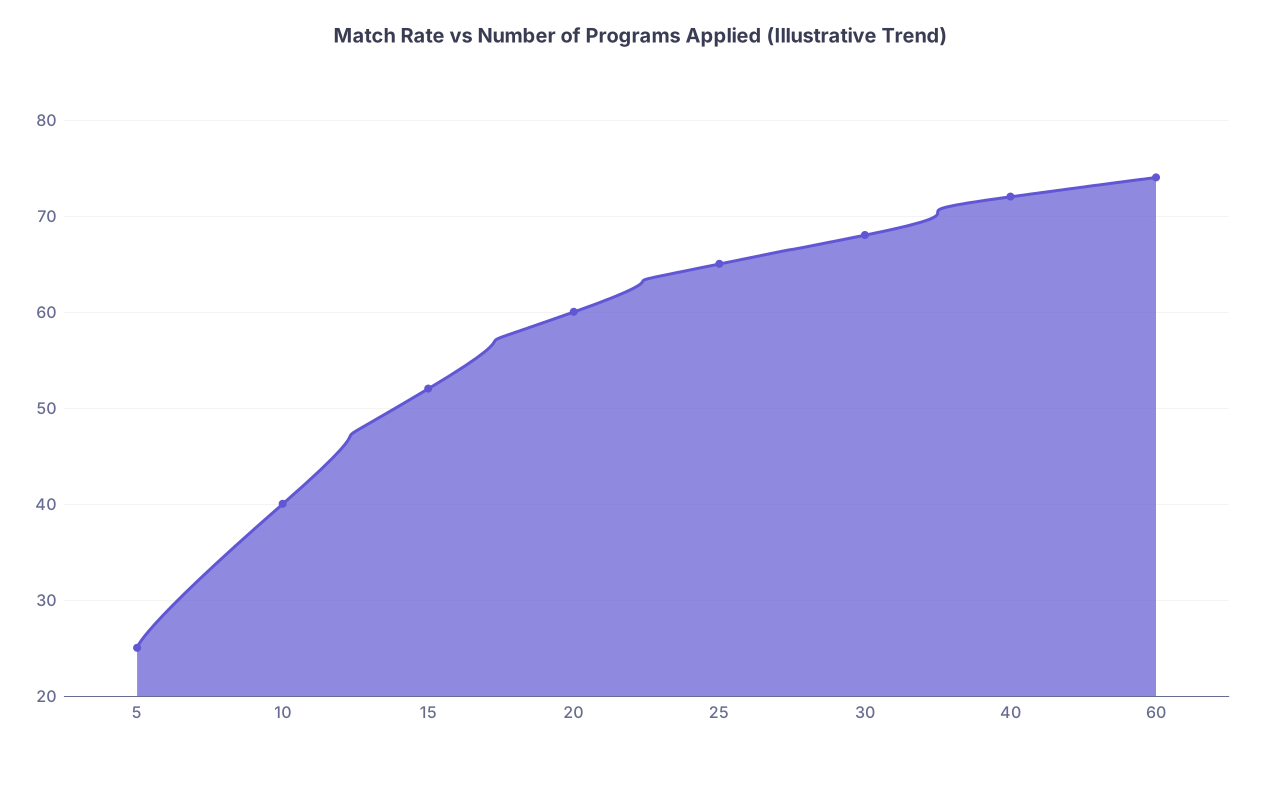
How Many Programs to Apply to in Medical Genetics?
One of the most common questions is how many programs to apply to in a small specialty like medical genetics. There is no universal number, but you can develop a rational range.
Factors That Influence Application Numbers
Competitiveness of Your Application
- Stronger applicants can often apply more selectively; others benefit from a broader list.
- Consider:
- USMLE/COMLEX performance.
- Clerkship and prior residency evaluations.
- Research output in genetics or related fields.
- Strong letters from genetics faculty or adjacent specialties.
- Red flags (e.g., exam failures, professionalism issues) argue for a more robust application spread.
Pathway and Applicant Pool Size
- Peds/Genetics and Med/Genetics:
- Very small number of spots nationwide.
- Fewer applicants than large specialties, but match dynamics can fluctuate.
- 2‑year Medical Genetics and Genomics:
- Many applicants are already trained physicians, often with strong academic CVs.
- Peds/Genetics and Med/Genetics:
Geographic Flexibility
- If you insist on one region or city, you must apply more broadly within that area and be prepared to expand slightly outward.
- If you are open nationally, you can choose based more purely on program fit and category (reach/target/safety).
Financial and Time Constraints
- Application and interview costs are real considerations.
- Virtual interviews have decreased travel costs, but your time and energy are still finite.
Suggested Ranges for Application Numbers
These ranges are not official rules; they are strategic guidelines for the genetics match based on typical patterns in small specialties:
Combined Pediatrics–Medical Genetics (for MS4s)
- Strong candidate, geographically flexible:
- 8–12 programs
- Solid candidate, some constraints:
- 10–15 programs
- Candidate with concerns (exam retake, limited genetics exposure):
- 12–18 programs (assuming that many programs are available that you could genuinely attend)
- Strong candidate, geographically flexible:
Combined Internal Medicine–Medical Genetics
- Generally fewer programs and sometimes more self‑selected applicants.
- Strong candidate:
- 6–10 programs
- Others:
- 8–14 programs
2‑Year Medical Genetics and Genomics (Post‑Residency)
- Applicant with strong base residency (e.g., solid peds/IM, some genetics research/exposure):
- 6–10 programs
- Applicant changing fields or with weaker track record:
- 8–14 programs
- Applicant with strong base residency (e.g., solid peds/IM, some genetics research/exposure):
The critical principle: choose a number that:
- Gives you true breadth of options.
- Allows you to customize and strengthen each application.
- Does not cause you to submit rushed or generic personal statements and program‑specific essays.

Tactics to Optimize Your Genetics Match Odds
Knowing how many programs to apply is only part of the answer. You also need to apply smartly. Here are targeted tactics for a high‑yield program selection strategy in medical genetics.
1. Demonstrate Authentic Interest in Genetics
Program directors in small fields quickly distinguish casual applicants from those truly committed.
Concrete steps:
Electives and rotations
- Take a clinical genetics or genomics elective if available.
- If not available, seek:
- Tele‑electives with other institutions.
- Research rotations in genetics labs or genomic medicine.
Mentorship
- Identify at least one genetics‑connected mentor (clinical or research).
- Ask for specific guidance on:
- Types of programs that fit your profile.
- Which mentors they know at your target institutions.
Scholarly work
- Case reports of interesting genetic diagnoses.
- Participation in quality improvement projects in newborn screening, cascade testing, or genomic integration.
- Posters or presentations at ACMG or other genetics‑related meetings.
Then highlight this commitment in:
- Personal statements (tailored to medical genetics).
- CV organization (group genetics experiences together).
- Letters of recommendation (from someone who can speak to your curiosity about rare and complex disorders).
2. Match Your Strengths to Program Profiles
Use insights from your program research:
If your strengths are in basic science and wet lab:
- Prioritize programs with:
- Strong basic research infrastructure.
- Mentors with R01‑level funding in genetics/genomics.
- Track record of graduates entering research careers.
- Prioritize programs with:
If you are a clinician‑educator type:
- Look for:
- Programs with strong medical student and resident teaching responsibilities.
- Opportunities to help design genetics curricula.
- High clinical volume with diverse patient populations.
- Look for:
If you are drawn to informatics or genomic implementation:
- Seek:
- Partnerships with biomedical informatics departments.
- Population genomics or EHR‑integrated genomic projects.
- Involvement with large biobank or precision medicine initiatives.
- Seek:
Align your application narrative to underscore the fit between your profile and what the program offers.
3. Balance Reach, Target, and Safety Programs
Even in a small specialty, it is useful to think in tiers:
Reach programs
- Highly prestigious or research‑heavy institutions.
- Historically selective or popular among applicants.
- Apply if your profile has clear strengths or alignment, but don’t rely solely on these.
Target programs
- Programs whose typical resident profile looks similar to yours.
- Good balance between clinical and academic opportunities.
Safety programs
- Less competitive based on location or perceived prestige.
- You would still be comfortable training there.
- Important for applicants with significant red flags or geographic limits.
A reasonable mix might be:
- 20–30% reach
- 40–60% target
- 20–30% safety
4. Use Pre‑Application Contact Strategically
Thoughtful contact can help, if done well:
- When appropriate
- You have a specific, well‑researched question (e.g., “I’m interested in neurogenetics—could you share how residents engage with neurology and genetics joint clinics?”).
- You’re clarifying eligibility (IMGs, visa sponsorship, atypical backgrounds).
- How to do it
- Email the program coordinator first; they can direct questions appropriately.
- If contacting a PD or faculty directly, keep emails brief, specific, and professional.
- Do not ask “What are my chances?”; instead, ask content‑focused questions.
5. Customize Your Application Materials
Programs notice when an applicant has taken the time to tailor:
Personal statement
- Core genetics narrative stays the same.
- One paragraph can be customized:
- Mention specific program features (e.g., cancer genetics clinic, T32, biobank).
- Connect these features to your stated goals.
Experiences section
- Emphasize responsibilities that demonstrate traits valued in genetics:
- Pattern recognition.
- Comfort with uncertainty.
- Longitudinal patient relationships.
- Attention to detail and complex counseling.
- Emphasize responsibilities that demonstrate traits valued in genetics:
Letters of recommendation
- If possible, include at least one letter from:
- A genetics faculty member, or
- A subspecialist who regularly collaborates with genetics (e.g., MFM, oncology, neurology) and can comment on your ability to manage complex diagnostic challenges.
- If possible, include at least one letter from:
Approaching Interview Season and Final Program Selection
Once interviews arrive, your program selection strategy shifts from “Where should I apply?” to “How should I rank?”
Evaluating Programs During Interviews
During and after each interview, systematically assess:
Training Quality
- Did faculty articulate clear curricula and learning objectives?
- Were residents able to discuss their day‑to‑day experiences with specifics?
Culture and Fit
- Did residents seem genuinely supported and satisfied?
- Was there diversity in gender, race/ethnicity, and backgrounds among residents and faculty?
- How did faculty speak about residents and vice versa?
Clinical and Research Match
- Did opportunities match the website description?
- Were there concrete examples of resident projects and career paths that resemble your goals?
Location and Lifestyle
- Can you realistically envision yourself (and your family, if applicable) living there for several years?
- Cost of living, schools, commute, and community resources.
Ranking Strategy
When forming your rank list:
- Rank based on true preference, not where you think you’re most likely to match. The NRMP algorithm favors the applicant’s preferences.
- Weigh heavily:
- Training quality.
- Program culture and support.
- Alignment with your long‑term goals.
- Use your earlier scoring/tiering but also honor your “gut” impressions from interview day and resident interactions.
Consider creating:
- A decision matrix with your top 8–10 programs and your core criteria.
- Short reflection notes after each interview while details are fresh.
FAQs: Program Selection Strategy in Medical Genetics
1. Is medical genetics a competitive specialty, and do I really need to apply broadly?
Medical genetics is a small specialty, which can make it feel competitive because there are fewer total spots. However, it is not uniformly “hyper‑competitive” in the way some surgical subspecialties are. If you have:
- Solid overall academic performance,
- Clear evidence of interest in genetics,
- Thoughtful letters of recommendation,
you can be selective, but you should still apply to a reasonable number of programs. For most applicants, that means roughly 8–15 programs, adjusted based on your background and geographic constraints.
2. I’m interested in both pediatrics and adult genetics. Should I choose a combined Peds/Genetics or Med/Genetics program?
Think about:
- Which patient population you want to work with most often.
- Where you see the majority of your career (children’s hospital vs adult academic center).
- Your tolerance for adult inpatient medicine vs pediatric rotations.
If you are truly unsure, look for programs that:
- Have strong mixed clinics and shared consult teams.
- Offer clear exposure to both pediatric and adult cases, even if the base is one field.
- Support cross‑disciplinary collaboration (e.g., joint cancer or cardiogenetics clinics spanning age groups).
3. How important is research for matching into medical genetics?
Research is helpful, especially at academic and research‑heavy programs, but it is not an absolute requirement everywhere. What matters more is:
- Demonstrated curiosity about genetics and complex disease.
- Ability to think critically and synthesize complex data.
- Initiative to pursue scholarly or QI projects if given the chance.
If you do have research, highlight:
- Genetics, genomics, or basic science studies.
- Clinical projects involving rare diseases or diagnostic odysseys.
- Any presentations or publications, even if early or local.
4. I’m an IMG (or have a non‑traditional background). How should I approach program selection in medical genetics?
You should:
- Carefully check each program’s visa policies and historical acceptance of IMGs or non‑traditional applicants.
- Emphasize your unique strengths:
- Broader clinical experience.
- Research or public health work.
- Multilingual skills and global health perspective.
- Apply to a slightly larger number of programs (often 2–4 more than typical for your pathway) to offset any structural disadvantages.
- Consider reaching out to programs where your background uniquely aligns with their population or research.
A thoughtful, data‑driven program selection strategy in medical genetics—grounded in your personal priorities, career aspirations, and realistic self‑assessment—will serve you far better than simply “applying everywhere.” Understand the pathways, research the landscape intentionally, choose a rational number of programs, and align each application with what that program actually offers. Doing so will not only improve your chances of a successful genetics match, it will also set the stage for a fulfilling and sustainable career in this intellectually rich and rapidly evolving specialty.