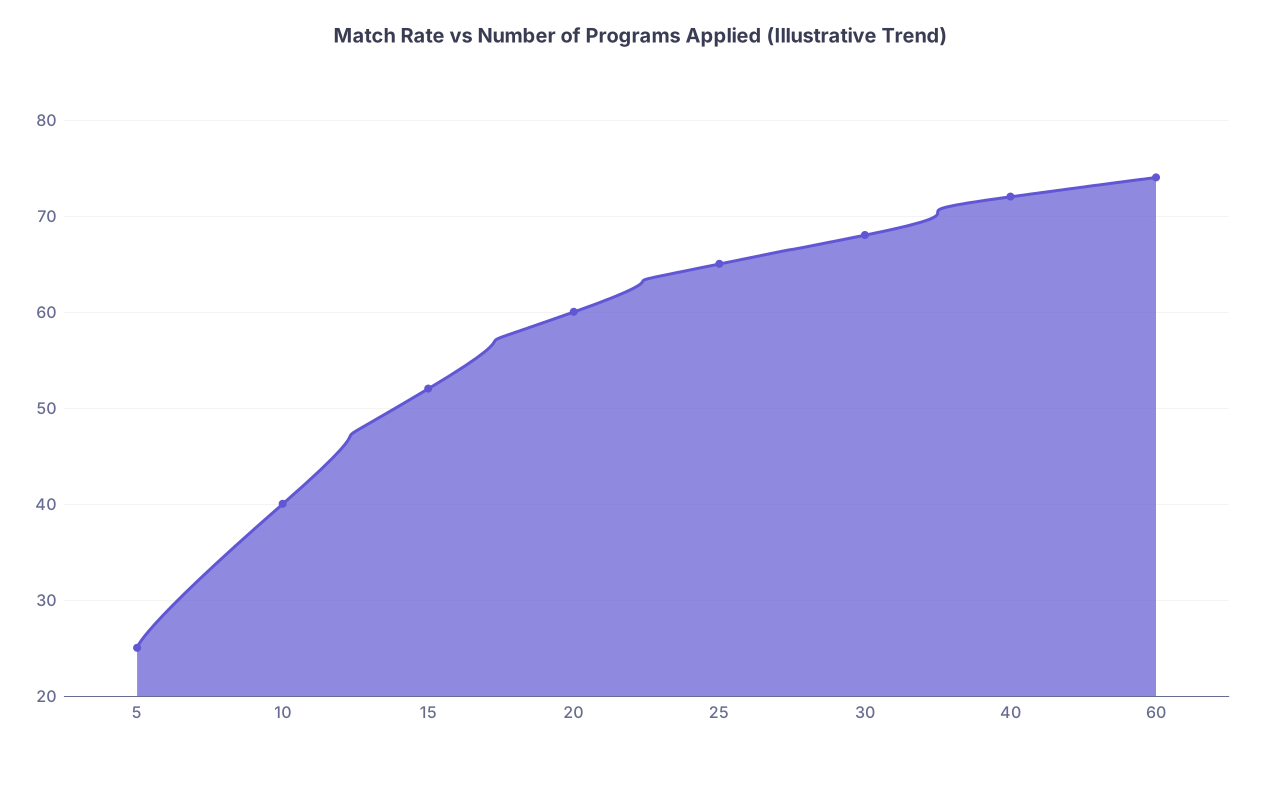
As a non-US citizen IMG aiming for a medical genetics residency, your program selection strategy will make or break your match chances. Because medical genetics is a small and specialized field, you cannot simply “apply everywhere and see what happens.” You must balance visa sponsorship, realistic competitiveness, clinical interests, and long-term goals—while also answering the practical question: how many programs to apply to and which ones.
This guide walks you through a structured, step-by-step approach tailored specifically to the foreign national medical graduate targeting medical genetics in the US.
Understanding the Landscape: Medical Genetics & the IMG Perspective
Medical genetics is a relatively small specialty with:
- Fewer residency positions compared to big fields like internal medicine or pediatrics
- Concentration in academic centers and large children’s hospitals
- Significant variation in visa support, IMG friendliness, and program structure
As a non-US citizen IMG (sometimes called a foreign national medical graduate), you face additional constraints:
- Need for visa sponsorship (J-1, and occasionally H-1B)
- Limited US clinical experience compared with US graduates
- Possible gaps since graduation and varying familiarity with US-style training
That means your program selection strategy must be more intentional than that of a US grad. Before you even ask “how many programs to apply,” you need clarity on:
Pathway Type
- Combined programs: e.g., Pediatrics/Medical Genetics, Internal Medicine/Medical Genetics, or other combined pathways
- Categorical Medical Genetics residency after primary residency
- Clinical Genetics & Genomics as a second residency post-core training
Your Visa Situation
- Are you open to J-1 only?
- Do you need H-1B due to personal or legal constraints?
- Are you already in the US on another visa (F-1, J-2, H-4, etc.)?
Your Competitiveness Baseline
- USMLE/COMLEX scores
- Years since graduation
- US clinical experience and letters of recommendation
- Research and publications in genetics or related fields
Once you understand these, you can design a program list that is both ambitious and realistic.
Step 1: Clarify Your Goals and Constraints Before Building a List
You shouldn’t start by scrolling through FREIDA randomly. Instead, start with a self-assessment and clear constraints.
A. Define Your Primary Goals
Ask yourself:
- Do I want a career in academic medicine, research, or primarily clinical practice?
- Am I most interested in:
- Pediatric genetics (e.g., congenital anomalies, metabolic disorders)
- Adult genetics (e.g., cancer predisposition, neurogenetics, cardiogenetics)
- Laboratory-based genetics/genomics (future fellowship goals like molecular genetics, cytogenetics, biochemical genetics)
Your answers shape the types of programs to prioritize:
- Academic, research-heavy centers if you want research + academic careers
- Strong clinical volume and broad patient mix if you want robust clinical training
- Programs with related fellowships on site (e.g., biochemical, cancer genetics) if you want smoother subspecialty training later
B. Understand Your Limitations as a Non-US Citizen IMG
Your program selection strategy must respect these realities:
- Visa:
- Many programs sponsor J-1 only
- Some explicitly do not sponsor any visas
- A smaller subset offers H-1B sponsorship (varies year-to-year)
- IMG Friendliness:
- Some programs have a strong track record of matching non-US citizen IMGs
- Others prefer US grads and rarely review international applications
- Time Since Graduation (YOG):
- Some programs prefer applicants within 3–5 years of graduation
- Others are more flexible, especially if you have relevant research or prior residency
You want to avoid wasting applications on programs that clearly:
- Don’t sponsor visas
- Have strict graduation year cutoffs that you exceed
- Explicitly state “no IMGs” or “US graduates only”
Step 2: How Many Programs to Apply to in Medical Genetics?
The core question for any applicant: how many programs should you apply to?
Because medical genetics is a small specialty, the absolute number of programs is limited, which partially answers the question for you—there simply aren’t as many options as in internal medicine or family medicine.
A. General Ranges for Non-US Citizen IMG Applicants
These are typical target ranges for a foreign national medical graduate applying to medical genetics–related pathways (numbers assume you’re applying broadly to all suitable programs in the US):
- Highly competitive IMG (recent grad, strong scores, US research/experience, genetics exposure):
- 15–25 well-chosen programs may be sufficient
- Moderately competitive IMG (average scores, some USCE, some research/clinical exposure):
- Aim for 25–40 programs
- Lower-competitiveness profile (old YOG, borderline scores, limited USCE):
- Consider 35–50+ programs, if available, across all suitable pathways
Because the total number of programs is limited, your upper bound is often “all programs that:
- sponsor your visa,
- consider IMGs, and
- align with your basic goals.”
B. Factors That Affect “How Many Programs” for You
USMLE Scores and Attempts
- Strong scores, especially on Step 2 CK, can justify a smaller list (within reason)
- Multiple attempts or low scores argue for a broader application strategy
US Clinical Experience (USCE)
- Hands-on clerkships or observerships in genetics, pediatrics, or internal medicine at US institutions help significantly
- If you lack USCE, err on more programs, not fewer
Research Productivity
- Genetics-related publications, abstracts, or even solid research experiences at recognizable institutions significantly improve your odds, especially in academic genetics programs
- If you have minimal research, don’t rule out academic programs, but apply more broadly
Combined vs Standalone Pathways
- If you’re applying only to standalone medical genetics programs, there are fewer possible programs → apply to nearly all eligible ones
- If you’re applying to combined Pediatrics/Genetics or Internal Medicine/Genetics, you may have slightly more choices
In practice, you’ll likely end up applying to the majority of realistic programs that meet your visa and eligibility requirements.
Step 3: Building Your Initial Program List (Systematic Approach)
Once you have a target number in mind, you need a systematic method to build your list.
A. Use Multiple Databases and Sources
Start with:
FREIDA (AMA) – Filter by:
- Specialty: Medical Genetics, or combined programs (Pediatrics-Medical Genetics, Internal Medicine-Medical Genetics, etc.)
- Visa sponsoring status
- Program type (university-based vs community-based)
ACGME / ABMGG Program Lists – See which institutions have accredited genetics programs and what subspecialties they host.
Program Websites – Often have more up-to-date information about:
- Visa policy (J-1 vs H-1B)
- IMG acceptance history
- Application requirements
- Research tracks and subspecialty options
Create a spreadsheet with columns such as:
- Program name & institution
- City/State
- Pathway (e.g., Pediatrics/Medical Genetics, Internal Medicine/Medical Genetics, categorical Genetics)
- Visa type supported (J-1, H-1B, none)
- IMG friendly (Yes/No/Unknown)
- Minimum/typical IMG scores (if listed)
- Year-of-graduation cutoffs (if any)
- Research focus (low/medium/high)
- Your personal interest level (1–5)

B. Apply Your Hard Filters First
As a non-US citizen IMG, immediately filter out:
- Programs that do not sponsor any visas
- Programs that explicitly state:
- “US citizens or permanent residents only”
- “No sponsorship for J-1 or H-1B visas”
- Programs with rigid criteria you don’t meet:
- For example, “Graduation within last 3 years” if your YOG is 8 years ago
What remains is your preliminary eligibility pool.
Step 4: Prioritizing Programs – A Structured Program Selection Strategy
With your initial pool defined, the next crucial step is prioritization. This is where your program selection strategy becomes specific, not theoretical.
A. Core Prioritization Dimensions
Consider rating each program (1–5) in these domains:
Visa and IMG Friendliness (Non-negotiable)
- J-1 support is most common and usually sufficient
- If you must have H-1B, those programs become top priority but severely limit your pool
- Programs with a history of accepting a non-US citizen IMG in recent years move up your list
Clinical & Academic Fit
- Pediatric vs adult vs mixed patient population
- Availability of specialized clinics (e.g., cancer genetics, neurogenetics, cardiogenetics, metabolic clinics)
- In-house lab-based genetics or genomics if you’re research-oriented
- Presence of genetics-related fellowships on site (e.g., biochemical genetics, molecular genetics)
Research Infrastructure
- NIH funding, large genetics departments, or strong institutional genomics programs
- Protected research time during residency
- Access to mentors publishing in areas you’re interested in
Program Size, Culture, and Support
- Number of residents/fellows—larger programs may offer more flexibility and peer support
- Faculty interest in teaching and mentoring
- Evidence of wellness support, structured teaching, and clear curricular design
Location & Lifestyle
- Cost of living and safety
- Public transport availability (important if you don’t initially drive)
- Presence of communities from your home region or strong international presence
B. Tiering Your List: A Practical Example
Once you score programs on the above dimensions, divide them into tiers:
Tier 1: Ideal Fit + Realistic Chance
- Visa sponsored
- IMG-friendly track record
- Strong alignment with your career and research goals
- Well-known faculty or research you already follow
- These are your top priority for personalized emails, well-tailored personal statements, and careful interview preparation
Tier 2: Good Fit + Moderate Chance
- Sponsors visas, accepts some IMGs, but maybe:
- Less research heavy, or
- Less ideal geography, or
- Slightly more competitive than your profile
- Still very much worth applying to
- Sponsors visas, accepts some IMGs, but maybe:
Tier 3: Backup Programs / Geographic Stretch
- Accept IMGs but with limited data on foreign national medical graduates
- Fewer resources or less ideal fit, but still accredited and solid
- Possibly less desirable location, but might be your entry into US training
Your program selection strategy should ensure:
- Majority of your list sits in Tier 1 and Tier 2
- You still include a meaningful number of Tier 3 programs as safety options, especially if your profile has risk factors (low scores, older YOG, limited USCE)
Step 5: Tailoring Applications and Maximizing Interview Chances
After you’ve built and prioritized your list, your work is not finished. Your chance of interview depends not only on where you apply, but how you apply.
A. Customize Your Application for Genetics
For each program, highlight:
Your interest in medical genetics:
- Genetics electives or rotations
- Research in genomics, rare diseases, cancer genetics, metabolic or neurodevelopmental disorders
- Conference posters or case reports in genetics
Your understanding of the field’s realities:
- Long-term follow-up of complex patients
- Multidisciplinary teamwork with neurologists, oncologists, cardiologists, and lab specialists
- Ethics and counseling in genetic testing
A well-structured personal statement for genetics should connect:
- Your clinical experiences
- Your research or academic curiosity
- Your long-term goals in medical genetics (clinical, academic, or both)
B. Communicate as a Non-US Citizen IMG
Program directors want to know you have thought through the logistics and commitment:
- Clearly list your visa status and what you will require (J-1 vs H-1B)
- Highlight any prior US stays, observerships, or training experiences that show you can adapt to US systems
- Provide strong US letters of recommendation (if possible), especially if they come from genetics, pediatrics, internal medicine, or related specialties
C. Strategic Outreach (Without Overstepping)
For your Tier 1 programs, especially those that have matched non-US citizen IMGs before:
- Consider polite, concise emails to the program coordinator or program director:
- Express specific reasons you are interested in their program (not generic compliments)
- Note one or two faculty or program features that align with your goals
- Briefly mention any strong connection (e.g., prior rotation, collaborative research, mentor recommendation)
This won’t guarantee an interview, but can help your application stand out if done professionally.

Step 6: Common Pitfalls in Program Selection for Non-US Citizen IMGs
A strong program selection strategy also means avoiding common mistakes.
A. Overemphasis on Reputation Only
Choosing programs only by name recognition (e.g., the most famous universities) is risky:
- They may be extremely competitive or prefer US graduates
- They may be research-heavy but not necessarily better for your clinical or visa needs
Balance a few high-reputation “reach” programs with a solid core of realistic options.
B. Underestimating Visa and IMG Policies
Some non-US citizen IMGs spend a substantial part of their ERAS budget applying to:
- Programs that do not sponsor visas
- Programs that technically accept IMGs but have not matched a non-US citizen IMG in years
Always cross-check visa policies and, if possible, verify with program websites or coordinators when unclear.
C. Ignoring Geography Entirely
Although it’s good to be flexible, completely ignoring:
- Personal support systems
- Climate, cost of living, and safety
- Transportation and community networks
…can lead to burnout or culture shock. You don’t need to be picky, but you should be aware of what you are signing up for, especially since medical genetics training can be emotionally intense.
D. Applying Too Narrowly
Because the field is small, some foreign national medical graduates mistakenly:
- Apply to only a handful of genetics programs in a few states they prefer
- Or limit themselves to H-1B-only programs when J-1 would have been acceptable
If your goal is to maximize your chance of entering the US system, prioritize breadth over strict location preference.
Putting It All Together: A Sample Strategy Scenario
Imagine a non-US citizen IMG with the following profile:
- USMLE Step 2 CK: 241, Step 1: Pass
- YOG: 4 years ago
- 6 months of research in inherited metabolic diseases, 1 publication
- 2 months of US observership in pediatrics at a mid-tier academic center
- Open to J-1 visa, okay with most US locations
A reasonable program selection strategy might be:
Use FREIDA, ABMGG, and program websites to identify all Pediatrics/Medical Genetics and Medical Genetics & Genomics programs that:
- Sponsor J-1
- Do not exclude IMGs
Create a list of ~35 eligible programs.
Tier them:
Tier 1 (10–12 programs):
- Strong metabolic or pediatric genetics programs
- Evidence of prior IMGs or non-US citizen graduates
- Research opportunities aligned with metabolic diseases
Tier 2 (15–18 programs):
- Solid clinical training but slightly less research focus
- Mixed record for IMGs but open to them
Tier 3 (5–7 programs):
- Smaller, less-known programs, possibly in less popular locations
- Fewer published outcomes but meet all eligibility criteria
Apply to all 35, with:
- Highly customized personal statements for Tier 1
- Moderate personalization for Tier 2
- Solid but more generic statements for Tier 3
Engage in polite outreach to a subset of Tier 1 programs, emphasizing:
- Specific research interests
- Clear reasons you would thrive in their environment
This approach balances ambition, realism, and financial cost while maximizing the chances of a successful genetics match.
FAQs: Program Selection Strategy for Non-US Citizen IMG in Medical Genetics
1. As a non-US citizen IMG, should I apply only to programs that previously matched IMGs?
No. Prior IMG matches are a good positive sign, but not a strict requirement. Some newer programs or smaller centers may be open to IMGs but haven’t had many applicants from abroad. Use past IMG matches as one variable in your program selection strategy, but don’t make it your only filter—especially in a small specialty like medical genetics.
2. Is it better to apply broadly to internal medicine or pediatrics first, then do genetics later?
It depends on your long-term goals:
- If you want broad generalist training or are uncertain about genetics, starting with internal medicine or pediatrics can make sense.
- If you are already strongly committed to medical genetics, a combined or categorical genetics pathway can bring you to your desired field faster and more directly.
As a foreign national medical graduate, remember that every application cycle is costly. If you are clearly passionate about genetics, applying directly to genetics-related pathways may be more efficient.
3. Can I be competitive for medical genetics without genetics-specific research?
Yes, although genetics-focused experience helps. Programs look for:
- Solid clinical performance
- Curiosity and commitment to complex, long-term patient care
- Evidence that you understand what genetics practice involves
If you lack genetics research, emphasize:
- Rotations or cases where genetic testing or counseling played a major role
- Any exposure to oncology, neurology, pediatrics, or cardiology cases with hereditary components
- Willingness to learn and build research skills during residency
4. How late is “too late” to apply to genetics if I graduated many years ago?
Many programs prefer applicants within 3–5 years of graduation, but this is not universal. As an older YOG applicant, you can still be competitive if you:
- Have continuous clinical or research experience
- Can explain your career trajectory clearly (e.g., prior residency elsewhere, PhD, consistent clinical practice)
- Provide strong, recent letters of recommendation
If your YOG is >7–8 years, you may need to apply to more programs and be flexible about location and program type. Carefully read each program’s policies on graduation year and don’t waste applications on those with strict cutoffs you cannot meet.
A deliberate, well-researched program selection strategy can transform your chances as a non-US citizen IMG pursuing medical genetics residency. By clarifying your goals, understanding the genetics match landscape, and strategically answering how many programs to apply to and which ones, you can move from uncertainty to an organized, targeted application plan.