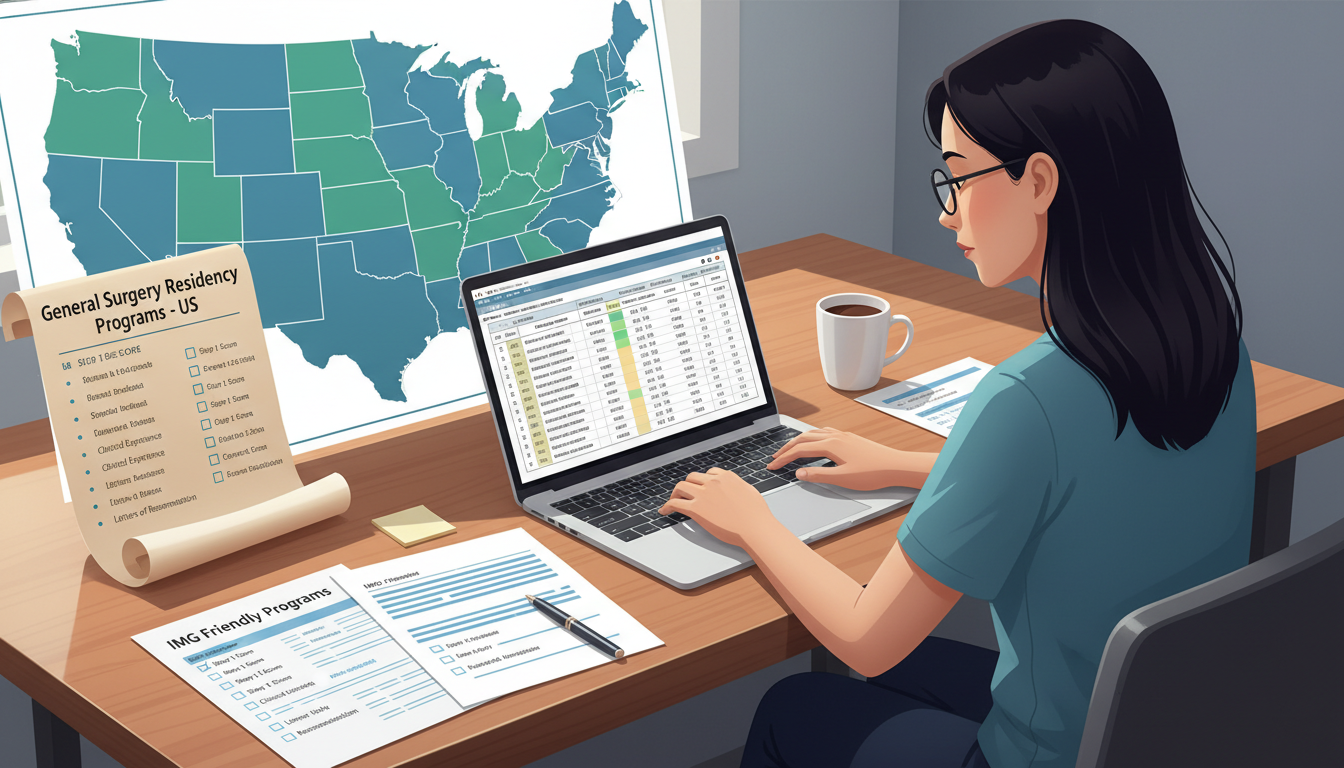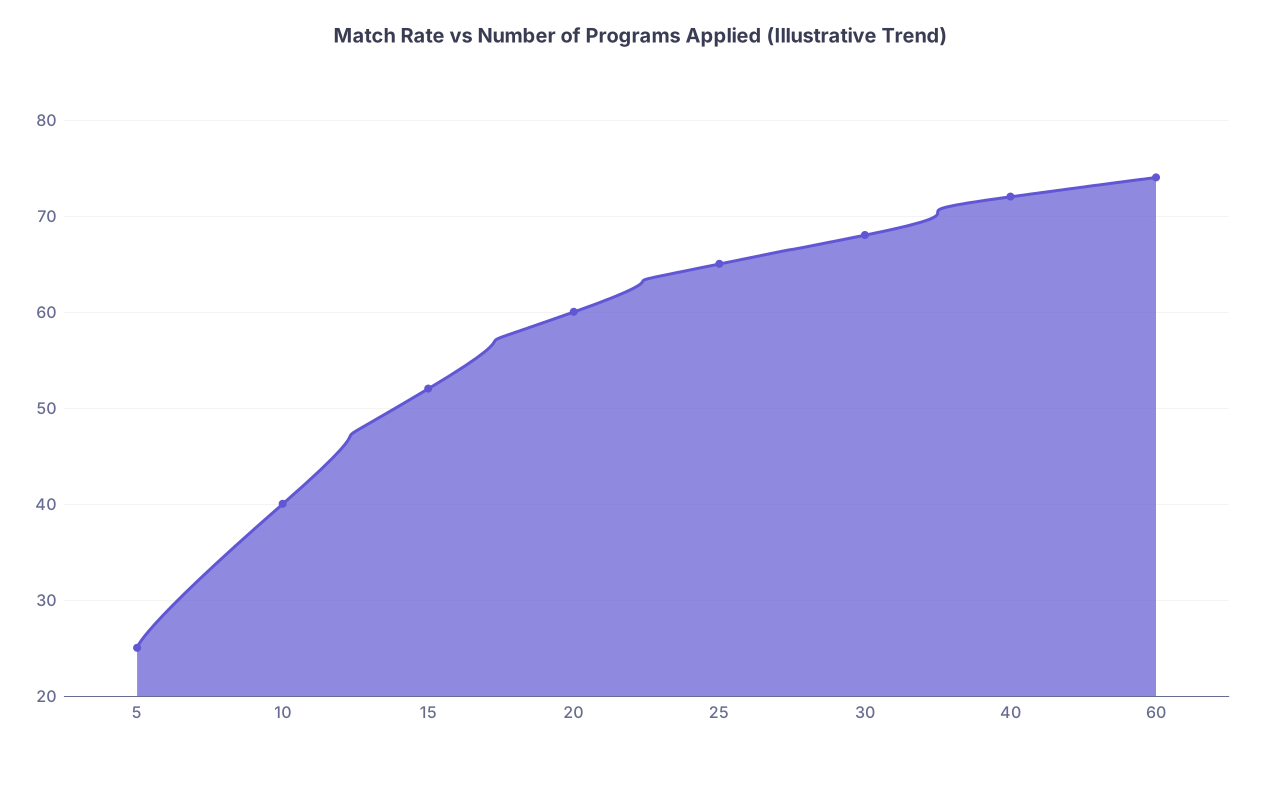
Radiation oncology is one of the most competitive specialties in the NRMP, and for a non-US citizen IMG or foreign national medical graduate, a smart program selection strategy is just as important as strong scores and research. The way you choose where to apply—and how many programs to apply to—can make the difference between a rad onc match and an empty season.
This guide walks you step-by-step through building a realistic and strategic program list as a non-US citizen IMG in radiation oncology residency, with specific attention to visas, funding realities, and how to read between the lines of program websites.
Understanding the Unique Challenges for Non-US Citizen IMGs in Radiation Oncology
Radiation oncology (rad onc) is small, research-heavy, and historically dominated by US graduates. As a non-US citizen IMG or foreign national medical graduate, you face three distinct layers of difficulty:
- Competitiveness of the specialty
- Structural barriers for IMGs
- Visa and funding limitations
1. Specialty competitiveness and small numbers
Radiation oncology has:
- Very few positions per year (compared with internal medicine or family medicine)
- High academic and research expectations
- Strong emphasis on US-based experience and letters from rad onc faculty
Even if competitiveness fluctuates year to year, the ratio of applicants to positions stays relatively tight, and every lost interview matters more when there are fewer total programs.
2. Structural disadvantages for IMGs
Compared with US MD seniors, non-US citizen IMGs often:
- Have less access to US rad onc research and established academic collaborations
- Struggle to get US-based radiation oncology letters of recommendation
- May lack formal away rotations in US departments
- Are often screened out by automatic filters (USMLE, graduation year, visa status)
This means your program selection strategy has to maximize your chances of not getting screened out and of being considered where your application profile truly fits.
3. Visa and funding realities
For a foreign national medical graduate, visa issues directly shape where you can apply:
- Some programs support only J-1 visas
- Some support H-1B, but often with stricter exam and licensure requirements (e.g., Step 3 required)
- Some do not sponsor any visas, even if they accept US citizen IMGs
- University/state funding and hospital policies may limit the number of international hires
Because rad onc programs are small (often 1–4 residents per year), a program might choose to avoid visa complexity entirely. Your list must carefully account for which programs truly accept and actively train non-US citizen IMGs.
Step 1: Clarify Your Applicant Profile Before Choosing Programs
Before asking how to choose residency programs, you need an honest snapshot of your competitiveness in rad onc. This will determine how many programs to apply to and which tiers you should realistically target.
A. Core metrics and credentials
Key elements that rad onc PDs consider:
- USMLE/COMLEX scores (especially Step 2 CK)
- Medical school pedigree (well-known vs lesser-known international schools)
- Graduation year (many programs prefer more recent grads; ≥5 years out can be a concern)
- Research productivity in radiation oncology or oncology:
- First-author papers
- Abstracts, posters, oral presentations
- Involvement in multi-institutional or clinical trials
- US clinical experience (USCE), preferably:
- Radiation oncology electives/observerships
- US-based rotations in oncology, internal medicine, or surgery
- Letters of recommendation from:
- US rad onc faculty (high value)
- Well-known US academic oncologists (medical or surgical)
- Well-published international rad onc mentors with external collaborations
B. Soft factors that matter more than you think
- Communication skills (English fluency, clarity in personal statement)
- Evidence of professionalism, reliability, teamwork
- Alignment with a specific program’s strengths (e.g., strong physics background for academic programs; global health interest for certain departments)
- Visa status and prior US visas (student, J-1 for research, etc.)
C. Categorize yourself into broad tiers
For planning, it helps to put yourself roughly into one of 3 categories (honestly and conservatively):
Highly competitive non-US citizen IMG
- Strong Step 2 CK (e.g., significantly above the national mean)
- Multiple publications in rad onc/oncology, including first-author work
- Strong US letters in radiation oncology
- Recent graduate, good clinical record, high-class rank
Moderately competitive non-US citizen IMG
- Solid but not outstanding scores
- Some research in oncology or related fields; maybe 1–2 publications or posters
- Limited but real USCE, perhaps one rad onc observership
- Graduation within last 5–7 years
At-risk applicant / uphill profile
- Scores near cutoffs or attempts
- Minimal or no rad onc-specific research
- Older graduate (>7–8 years)
- Limited or no prior US experience
- No US rad onc LORs
Your category should drive both how many programs to apply to and how you shape your list balance (reach, target, safety—though in rad onc “safety” is relative).

Step 2: How Many Radiation Oncology Programs Should You Apply To?
In a less competitive specialty, non-US IMGs might apply more conservatively. Radiation oncology is different. Because the specialty is small and visa-limiting, you should plan for a broad and strategic application spread.
General numeric guidelines (non-US citizen IMG, rad onc)
These are approximate ranges, not rigid rules, but they are a realistic starting point:
Highly competitive non-US citizen IMG
- Recommended: 40–60 programs
- Rationale: You are strong on paper, but you remain an IMG and face visa filters. With a smaller specialty, you want to cast a wide net while focusing on programs that actually consider non-US citizens.
Moderately competitive non-US citizen IMG
- Recommended: 60–90 programs
- Rationale: You need volume to secure enough interviews, and many programs will auto-screen based on scores or year of graduation. The larger number counteracts these lost opportunities.
At-risk / uphill-profile IMG
- Recommended: 80–120+ programs (where visa and criteria allow)
- Rationale: Your acceptance probability per program is low, so maximizing the denominator is rational. You’ll still focus on realistic programs (accept IMGs, sponsor visas, aligned with your strengths), but you should be prepared for a very broad ERAS campaign.
Why such high numbers?
- Small specialty size: There simply aren’t that many rad onc programs. Each one you skip for the wrong reason might represent 1–2% of your total opportunities.
- Visa exclusions: You may automatically be excluded by 30–50% of all programs that don’t sponsor or rarely sponsor visas.
- Institutional bias: Some institutions quietly prefer US grads even if they “accept IMGs” in theory.
- Match statistics: In competitive specialties, most successful non-US citizen IMGs applied to a large number of programs.
Balancing cost vs benefit
Each ERAS application and supplemental material (if used) costs money. Before deciding how many programs to apply to, consider:
- Your total budget (application fees, supplemental fees, potential interview travel if in-person)
- The marginal benefit of adding 10–20 more programs at the lower end of your preference list
- Whether your profile is strong enough that a slightly smaller number is reasonable
If your budget is limited, prioritize depth of research over raw quantity. It’s better to apply to 70 highly vetted, appropriate programs than 100 random ones that do not sponsor visas or have never taken an IMG.
Step 3: Building a Targeted List – A Practical Program Selection Strategy
Now to the heart of program selection strategy: which specific rad onc programs should make your list?
A. Start with a master list of all programs
Grab the full list of ACGME-accredited radiation oncology programs from:
- ACGME or FREIDA
- Official specialty society directories (e.g., ASTRO)
- NRMP program listings
Put everything into a spreadsheet with columns such as:
- Program name
- City/state/region
- Visa policy (J-1 / H-1B / None / Unclear)
- IMG acceptance history
- USMLE cutoffs (if known)
- Graduation year limits
- Program size (total residents, PGY-2 positions/year)
- Research focus (high/medium/low)
- Your personal interest rating (1–5)
This becomes your program selection dashboard.
B. Filter by visa sponsorship and non-US citizen eligibility
For a non-US citizen IMG, your first hard filter is visa sponsorship. Check:
- Program websites (Residency > Eligibility or FAQ sections)
- FREIDA filters for visa types supported
- Direct emails to program coordinators when unclear
Categorize each program:
- Category 1: Supports J-1 only – Most common; generally open for foreign national medical graduates.
- Category 2: Supports J-1 and H-1B – Attractive for those who want H‑1B; often require:
- Passing all USMLE Steps (including Step 3) on first attempt
- ECFMG certification before starting
- Category 3: No visa sponsorship – Exclude from your list unless you already have an independent status (green card, EAD, etc.).
- Category 4: Unclear / not stated – Email to clarify; if no response, proceed with caution.
Eliminate programs in Category 3 unless your personal immigration status makes them viable.
C. Identify IMG-friendly vs IMG-possible programs
Next, assess IMG friendliness (especially to non-US citizen IMGs):
Look at current and past residents
- Program websites often show resident names, med schools, and sometimes countries.
- If multiple residents are from non-US schools and non-US citizens, flag as IMG-friendly.
- If only US MD/DO graduates for many years: IMG-possible but unlikely.
Search publications or social media
- Programs that highlight global health, international electives, or collaboration with international institutions may be more open to foreign-trained applicants.
Use networking
- Ask current residents, fellows, or faculty you know where non-US citizen IMGs have matched.
- Attend virtual open houses, ask direct—but polite—questions about their history with foreign national graduates.
Label programs as:
- High IMG-friendly – Regularly train non-US citizen IMGs
- Moderately IMG-friendly – Have taken some IMGs, but not consistently
- Low IMG-friendly – Rarely or never list non-US citizen IMGs as residents
D. Align program strengths with your profile
To move beyond generic “IMG-friendly” labels, evaluate program fit:
Research-heavy academic centers
- Best if you have strong rad onc/oncology research, multiple publications, or PhD-level experience.
- These programs may overlook IMG status for a truly exceptional academic CV.
Clinically-focused community or hybrid programs
- Often less research-intensive but still ACGME-accredited.
- Can be more open to IMG applicants if you have strong clinical skills and solid scores.
Programs with specific niche strengths
- Global oncology, health equity, physics, informatics, AI in radiation planning, brachytherapy.
- Match your own interests to their niche; tailor your personal statement accordingly.
E. Geographical and personal considerations
Finally, layer your personal needs:
- Regions where you have family or support systems
- Areas with a lower cost of living if salary is a concern
- Climate preferences (cold vs warm) – minor but can affect your happiness
- Visa processing considerations (some states/hospitals are more familiar with H‑1B/J‑1 processes)
Geography should not be your primary filter in a competitive field like rad onc, but it’s reasonable as a secondary tiebreaker when choosing between similar programs.
Step 4: Structuring Your List – Reach, Target, and Safety Programs
With rad onc and IMGs, “safety” is relative, but it’s still helpful to stratify:
A. Define your categories
Reach programs
- Highly prestigious institutions
- Very research-heavy departments
- Historically few non-US citizen IMGs, but your profile is unusually strong
- Top 10–15% of programs by reputation or academic productivity
Target programs
- Solid academic or hybrid programs where:
- Your scores and research are around the median resident profile
- There is a track record of supporting non-US citizen IMGs
- Visa sponsorship is clear
- Solid academic or hybrid programs where:
Safety programs (in quotation marks)
- Smaller or lesser-known programs
- Community-based or less research-intensive
- Documented history of taking non-US citizen IMGs
- Your metrics are clearly above their published minimums
B. Suggested distribution by applicant tier
Highly competitive non-US citizen IMG (applying to ~40–60 programs)
- 20–30% Reach
- 50–60% Target
- 20–30% Safety
Moderately competitive non-US citizen IMG (applying to ~60–90 programs)
- 10–20% Reach
- 40–50% Target
- 40–50% Safety
At-risk non-US citizen IMG (applying to ~80–120+ programs)
- 5–10% Reach (selected carefully, where your niche strengths might matter)
- 30–40% Target (solid match to their typical resident profile)
- 50–60% Safety (or “more realistic”) programs with demonstrated IMG support
C. Rebalancing after interview invites start
Once invites begin to arrive:
If you get few or no invitations early, consider:
- Adding programs that accept late applications (if any)
- Strengthening communication with programs via updates (new publications, Step 3 results)
- Reaching out to contacts/mentors for advocacy
If you receive multiple interviews quickly:
- You may not need to apply to additional programs.
- Instead, invest time in program research, interview preparation, and tailored communication.
Your program selection strategy is not static; adapt it based on early feedback from the cycle.
Step 5: Practical Tools and Tactics for Smarter Program Selection
Beyond the big picture, here are concrete tools and techniques you can start using today.
A. Build a living spreadsheet
Include columns for:
- Program name, location
- Visa sponsorship type
- IMG-friendliness score (e.g., 1–5)
- USMLE minimums/cutoffs (if published)
- Past or current non-US citizen IMG residents (Y/N)
- Research intensity (High/Med/Low)
- Your personal interest (1–5)
- Status (Applied / Invited / Interviewed / Ranked / Not ranked)
- Notes from open houses, emails, or resident conversations
This becomes your central document for answering how to choose residency programs, and it will keep you grounded as you make decisions about how many programs to apply to and where.
B. Use virtual open houses and information sessions
Most rad onc programs now hold virtual open houses. As a non-US citizen IMG, these are invaluable because:
- You can ask directly about:
- Visa sponsorship
- Past experiences with foreign national medical graduates
- How they evaluate IMGs in their applicant pool
- You get a sense of:
- Program culture and communication style
- Resident diversity and inclusion efforts
- How invested they are in education vs service
Keep detailed notes; these may influence how you rank programs later.
C. Email tactfully when information is unclear
If a program’s visa or IMG policies aren’t clearly stated:
- Contact the program coordinator first, politely and concisely:
- Ask specifically about J-1/H-1B sponsorship
- Ask whether non-US citizen IMGs have matched there in the past
- Avoid sending your entire CV unsolicited; keep it short.
- If you have a mentor connected to that institution, it’s often better for them to make the outreach.
D. Leverage your unique strengths in niche selection
Examples of niche-based strategy:
If you have a physics/engineering background:
- Target programs with strong medical physics departments or heavy involvement in technology/AI.
If you have global health or low-resource oncology experience:
- Look for programs publicizing global oncology tracks or partnerships in LMICs.
If you have a PhD or prolonged research experience:
- Focus on academic centers with R01-funded investigators where your productivity stands out.
When your profile matches a program’s unique strengths, you move from “another IMG” to a specifically valuable applicant.
Step 6: Adapting Strategy Based on Your Long-Term Plans
Your program selection strategy should also reflect your future goals:
A. Academic vs community-oriented career
If you want an academic career:
- Prioritize programs with:
- Strong research infrastructure
- Protected research time
- High publication output from residents
- These may be harder to enter as a non-US citizen IMG, but if your record is strong, they are worth including.
- Prioritize programs with:
If you envision a primarily clinical practice:
- Community or hybrid programs that focus heavily on patient care may be more aligned.
- These may give you robust clinical training and good board pass rates without needing heavy academic pedigree.
B. Long-term immigration goals
If you aim for permanent practice in the US:
- Consider H-1B-friendly programs when possible, as H‑1B may simplify later transitions to permanent residence (though many physicians remain on J‑1 and go through waiver routes).
- Understand J‑1 waiver obligations (service in underserved areas) and be sure you are open to this pathway.
If you may return to your home country or move elsewhere after training:
- Any accredited rad onc residency in the US will be valuable.
- Focus more on training quality and exposure to techniques you can bring back (e.g., advanced planning, brachytherapy, SRS/SBRT).
Frequently Asked Questions (FAQ)
1. As a non-US citizen IMG, is radiation oncology realistically achievable, or should I switch specialties?
It is difficult but not impossible. Radiation oncology is one of the tougher specialties for foreign national medical graduates, mainly because of:
- Small number of positions
- Strong competition from US MDs with extensive research
- Visa and institutional constraints
If you have solid scores, genuine oncology interest, strong research, and are willing to apply broadly, a rad onc match remains possible. If you lack these elements and are not able to significantly strengthen your profile, you should seriously consider a more IMG-friendly specialty or a longer-term plan of building research and US experience before applying.
2. How many rad onc programs should I apply to if my budget is very limited?
If financial constraints prevent you from applying to 80–100 programs, you can still be strategic:
- Aim for at least 40–60 highly curated programs, chosen based on:
- Clear visa sponsorship
- History of non-US citizen IMG residents
- Alignment with your research or clinical strengths
- Avoid wasting applications on programs that:
- Explicitly state they don’t sponsor visas
- Have never taken a foreign national medical graduate
- Use free or low-cost options (open houses, emailing coordinators, mentor networking) to refine your list.
Quality and alignment matter more than raw quantity, especially if quantity is capped by finances.
3. Should I prioritize J-1 or H-1B programs as a foreign national medical graduate?
Both can work, but they have different implications:
J-1 visa:
- Widely used and supported by most teaching hospitals
- Requires you to return to your home country for two years after training or obtain a J‑1 waiver (often through service in underserved US areas)
- Application process is relatively standardized
H-1B visa:
- Fewer programs offer it; requirements are often stricter (Step 3, no exam failures)
- Can be more straightforward for eventual US permanent residency for some applicants
- May impose caps on duration and require more institutional legal support
If your priority is maximizing your chances of matching, don’t limit yourself only to H-1B programs. Include both J‑1 and H‑1B sponsoring institutions unless you have a very specific immigration plan.
4. How can I quickly check if a rad onc program is IMG-friendly before applying?
Use a 5–10 minute triage checklist for each program:
- Check their resident roster:
- Do you see any current or recent residents from non-US medical schools?
- Look for visa information:
- Clear mention of J-1 and/or H-1B sponsorship on their website or FREIDA.
- Search past match lists or alumni:
- Look for international names or schools.
- Scan for global health or international collaborations:
- Suggests a more open attitude toward foreign-trained doctors.
- If unclear, send a brief email to the coordinator asking:
- Whether they sponsor visas
- Whether non-US citizen IMGs have matched there before
If you find no IMGs, no visa sponsorship, and no evidence of international engagement, the program is probably low-yield for a non-US citizen IMG, and you may choose to invest your application elsewhere.
By approaching your radiation oncology residency search with a structured program selection strategy, you transform a stressful, uncertain process into a deliberate plan. As a non-US citizen IMG or foreign national medical graduate, you must think harder about how many programs to apply to, which institutions truly fit your profile, and where your unique background can be an asset rather than a barrier.
Start early, track everything meticulously, and adjust your strategy based on real data (scores, research, feedback, interview invites). This is how you move from hoping for a rad onc match to actively engineering your best possible chance.