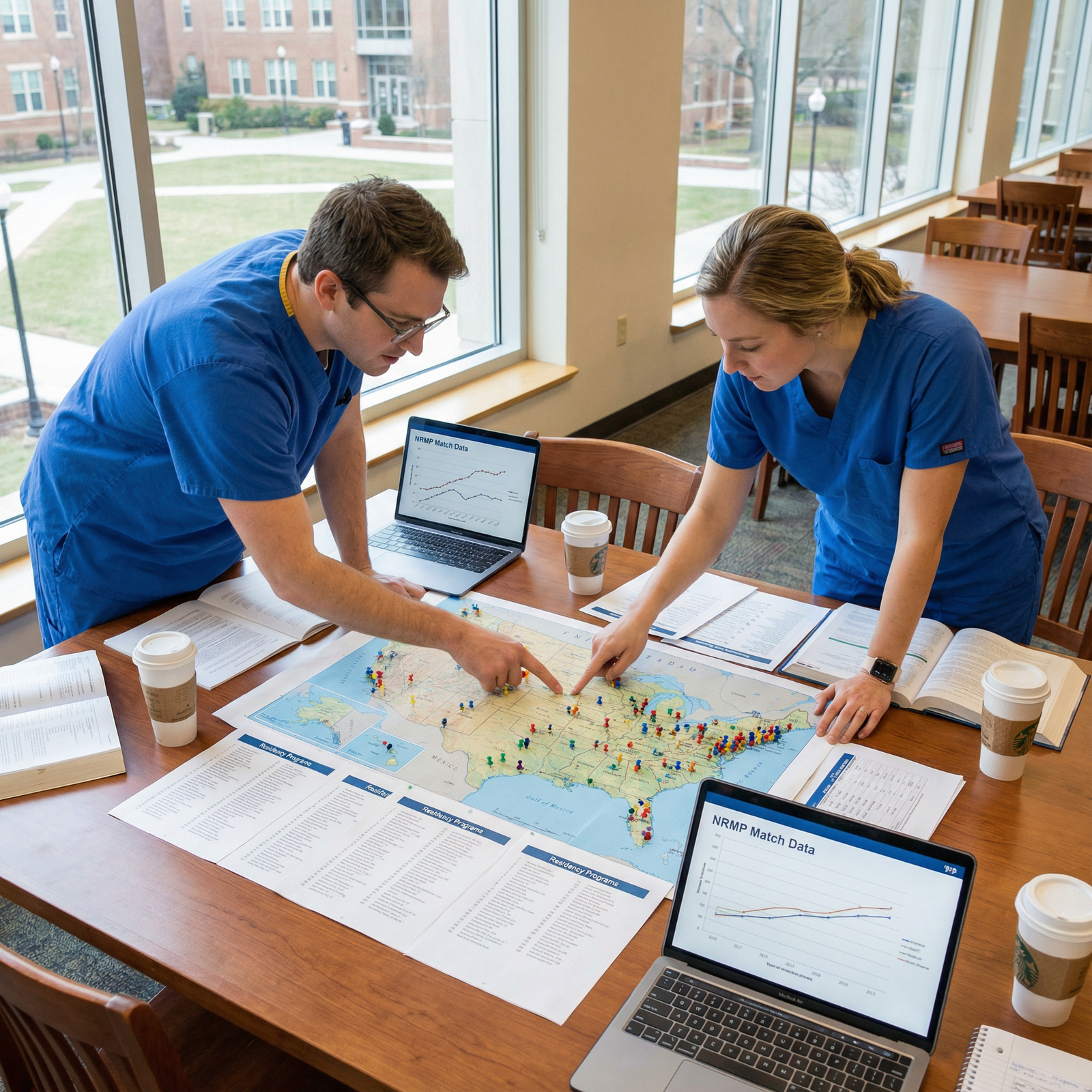
Choosing where to apply for a pediatrics-psychiatry (peds psych) or Triple Board residency is one of the highest‑impact decisions you’ll make as a non-US citizen IMG. Your program selection strategy will shape not only your Match chances, but also your visa options, training experience, career trajectory, and even your mental well‑being during residency.
Below is a step‑by‑step, IMG‑focused framework for how to choose residency programs, how many programs to apply to, and how to build a smart, realistic application list for peds psych and related pathways.
Understanding the Peds Psych & Triple Board Landscape as a Non-US Citizen IMG
Before building a program list, you need a clear picture of what you’re applying to and how your status as a foreign national medical graduate affects your strategy.
What are Peds Psych and Triple Board Programs?
Residency options that combine pediatrics and psychiatry in the US typically include:
Triple Board Programs
– 5-year combined training in Pediatrics + General Psychiatry + Child & Adolescent Psychiatry
– Graduates are eligible for board certification in all three
– Very small number of programs nationally (usually fewer than 15) and very few total positions per yearPediatrics–Psychiatry–Child & Adolescent Psychiatry (Peds-Psych-CAP) Combined Programs
– Also 5-year programs, similar structure to Triple Board
– Some institutions label or structure them slightly differently, but conceptually similar: integrated pediatric and psychiatric trainingTraditional Categorical Pathways with Later Specialty Focus
– 3-year Pediatrics residency followed by Child & Adolescent Psychiatry fellowship
– 4-year General Psychiatry residency followed by Child & Adolescent Psychiatry fellowship
– For some foreign national medical graduates, this “stepwise” route may be more realistic than directly matching into a Triple Board or peds psych combined program
Because Triple Board and peds psych combined programs are few, small, and highly specialized, non-US citizen IMGs must approach program selection with extra care and strategy.
Why Peds Psych is Especially Complex for Non-US Citizen IMGs
As a non-US citizen IMG, you face additional layers of complexity:
Visa sponsorship variability
– Some combined programs sponsor J-1 only
– Some sponsor J-1 and H-1B
– A few may not sponsor any visas, or only in select yearsHighly competitive with limited spots
– Fewer positions mean that each program can be extremely selective
– Programs may prioritize applicants with US medical degrees, US clinical experience, and strong psychiatry/pediatrics exposureInstitutional risk tolerance
– Programs with no prior history of matching foreign national medical graduates may be hesitant to sponsor visas for such a small, integrated training track
Because of these factors, a narrow, unrealistic list can easily lead to going unmatched—even for strong candidates. A disciplined program selection strategy is therefore essential.
Step 1: Clarify Your Profile and Constraints Before Building a List
Your program selection strategy should be grounded in a clear, honest assessment of your own profile and constraints as a non-US citizen IMG.
Key Profile Factors to Consider
Exam Performance (USMLE/COMLEX)
- Step 1 (Pass/Fail but still matters for screening at some places)
- Step 2 CK score (often a critical number for initial filtering)
- Any failed attempts are particularly important for smaller, competitive programs
Medical School Background
- Country and region (e.g., South Asia, Middle East, Latin America, Europe)
- Type of school (public vs. private, recognized vs. less known)
- Year of graduation (fresh graduate vs. older graduate)
Pediatrics & Psychiatry Experience
- US clinical experience (USCE) in pediatrics, psychiatry, or child & adolescent psychiatry
- Research or scholarly projects in either field
- Electives or rotations that show a sustained interest in child mental health or developmental disorders
Non-US Citizen / Visa Status
- Are you abroad, or already in the US on a different visa (F-1, J-1 research, H-4, etc.)?
- Are you open to J-1? Do you strongly prefer or require H-1B?
- Are you prepared for the J-1 waiver process post-residency if you choose that route?
Geographic and Personal Factors
- Willingness to relocate to any region vs. specific states
- Family or support systems in certain areas
- Financial constraints (application, travel, visa, cost of living)
Document these in a one-page personal “snapshot” you keep visible while building your list. This will help you make consistent, rational decisions rather than emotional ones.
Self-Assessment Tiers (Realistic Targeting)
To guide your program selection strategy, loosely categorize yourself in terms of competitiveness:
Tier 1 (Highly competitive)
- Strong Step 2 CK (e.g., 245+), no failures
- Recent graduate (≤ 2–3 years)
- Multiple USCE experiences, strong LORs from US pediatrics/psychiatry/child psych faculty
- Some research, ideally in child mental health
- Fluent English, solid interview skills
Tier 2 (Moderate)
- Step 2 CK in a mid-range (e.g., 225–245), possibly with minor red flags
- Graduation within past 5–7 years
- Some USCE, but limited or not specifically in peds psych
- Decent letters, some exposure but not extensive research
Tier 3 (More challenging)
- Below-average Step 2 CK (e.g., <225) or multiple attempts
- Older graduate (>7 years out)
- Little or no USCE
- Significant visa limitations or restricted location preferences
This tiering is not absolute, but it helps you decide how ambitious vs. how broad to make your program list and whether you should emphasize more backup categorical programs (e.g., pediatrics or psychiatry alone).
Step 2: Understand the Peds Psych & Triple Board Program Landscape
Now that you know your profile, you need to understand the supply side: what programs exist and how they vary.
Types of Programs to Include in Your Strategy
True Triple Board / Peds-Psych-CAP Combined Programs
- Your primary target if your passion is integrated child mental health care
- Make sure they truly accept and support non-US citizen IMGs, not just list them in theory
Categorical Pediatrics Programs (with strong child mental health exposure)
- Often more numerous and sometimes more IMG-friendly
- You can later pursue a Child & Adolescent Psychiatry fellowship
Categorical Psychiatry Programs (with child/adolescent track or strong CAP training)
- If your long-term focus is child psychiatry, a psychiatry residency followed by CAP fellowship is a standard route
Pediatrics or Psychiatry Programs at the Same Institution as a Triple Board Program
- If you aren’t competitive enough to match into Triple Board directly, joining the institution through a categorical spot can still connect you to that environment
A smart program selection strategy for a non-US citizen IMG usually diversifies across these buckets rather than betting all applications solely on Triple Board.
Where to Find Accurate Program Information
ERAS / AAMC Program Listings
– Official list of participating programs, with contact info and basic detailsNRMP and Specialty Organization Websites
– Past program and position lists, Match data, and institutional pathwaysIndividual Program Websites
– Look for: curriculum, resident roster (do any residents appear to be IMGs?), visa information, explicit IMG policiesFREIDA (AMA database)
– Filterable database with information on program size, visa sponsorship, and sometimes board scores or IMG percentagesProgram/Department Social Media (Twitter/X, Instagram, LinkedIn)
– Can reveal culture, DEI efforts, and how they highlight IMGs or visa issues
As a foreign national medical graduate, you must verify visa sponsorship and historical openness to IMGs. Do not rely on old forum posts alone; always cross-check with current official sources.
Step 3: Visa Realities and Their Impact on Program Selection
Visa policy is a central factor in how to choose residency programs as a non-US citizen IMG.
J-1 vs H-1B: How They Shape Your List
J-1 Visa (ECFMG-Sponsored)
- Most common visa for IMGs
- Generally easier for programs to sponsor
- Comes with a 2-year home-country physical presence requirement after training, unless you obtain a J-1 waiver
- Many Triple Board and peds psych programs, if they sponsor any visa, will at least sponsor J-1
H-1B Visa
- Less common in residency, more often used in fellowships and jobs
- Requires passing all relevant USMLE Steps, including Step 3, prior to starting residency (depending on state)
- More paperwork and cost for the program, so smaller, specialized programs may be less likely to offer it
- If you strongly prefer H-1B, your list will be much narrower and you may need to prioritize larger institutions with a history of H-1B sponsorship
No Visa Sponsorship
- Some programs only accept US citizens or permanent residents
- These should be excluded from your list
Designing a Visa-Aware Program Filter
Build a simple spreadsheet and add a column for visa status. As you research each program, mark:
- J-1: Y/N
- H-1B: Y/N
- “Unknown” or “Case-by-case”: needs verification
If you are open to J-1, you’ll have more flexibility and can include:
- Any program that clearly states J-1 sponsorship
- Programs that previously matched IMGs on J-1
If you need H-1B, your program selection strategy should:
- Focus first on large university hospitals and academic centers
- Look up recent Match lists and see if any residents hold H-1B
- Consider broadening your strategy to include more categorical pediatrics/psychiatry programs at H-1B-friendly institutions

Step 4: Building Your Program List: A Structured, Data-Driven Approach
Now, combine your self-assessment and visa constraints into a concrete program selection strategy.
Step 4A: Decide How Many Programs to Apply To
The question “how many programs to apply” has no universal answer, but for non-US citizen IMGs interested in peds psych or Triple Board, here are pragmatic guidelines:
Highly Competitive Profile (Tier 1)
- Triple Board / Peds-Psych-CAP: 8–15 programs (essentially every program that fits your visa/geographic constraints)
- Plus 15–25 categorical pediatrics and/or psychiatry programs as backup
- Total: ~30–40 programs
Moderate Profile (Tier 2)
- Triple Board / Peds-Psych-CAP: 8–15 programs (again, nearly all possible)
- Categorical pediatrics/psychiatry: 30–50 programs
- Total: ~40–60 programs (or more if resources allow)
More Challenging Profile (Tier 3)
- Triple Board / Peds-Psych-CAP: 5–10 (still apply if it’s your passion, but don’t over-rely on them)
- Categorical pediatrics/psychiatry: 50–80 programs (broad geographic spread, IMG-friendly focus)
- Total: ~60–90 programs, depending on your budget and resilience
Because peds psych and Triple Board are niche, most non-US citizen IMGs should not apply to these alone. A broad backup strategy is critical.
Step 4B: Categorize Programs Into Tiers on Your List
Once you have a raw list, classify each program into three “fit” levels:
Reach Programs
- Highly competitive, top academic centers, or those with minimal IMG history
- You are below or at the lower end of their typical metrics
Target Programs
- Your profile aligns with or slightly exceeds their apparent average
- They have recently matched IMGs, especially non-US citizen IMGs on visas
- Program size or location suggests moderate competition
Safety Programs
- Strong track record of matching IMGs
- Less preferred locations or smaller hospitals that might attract fewer US graduates
- Your scores and experience are clearly above their stated or observed thresholds
For Triple Board and peds psych combined programs, most will fall into Reach or Target categories. For categorical pediatrics/psychiatry, you should intentionally include a substantial number of Safety options, especially if you have any red flags.
Step 4C: Must-Have and Nice-to-Have Filters
Define your personal limits clearly before making final decisions:
Hard Filters (Non-negotiable)
- Program must sponsor your required visa type (J-1 and/or H-1B)
- Accepts or has previously matched IMGs
- Willingness to train non-US citizen IMGs in pediatrics/psychiatry fields
Soft Filters (Preferences)
- Geographic region (e.g., East Coast vs. Midwest vs. rural settings)
- Academic vs. community-based
- Research opportunities in child psychiatry or developmental pediatrics
- Availability of mentorship for foreign national medical graduates
Apply hard filters rigorously; apply soft filters flexibly. As a non-US citizen IMG, being too rigid with soft filters can drastically reduce your chances of matching.
Step 5: Evaluating Individual Programs in Depth
After you’ve created a filtered list, you should critically assess each program’s fit and feasibility.
What to Look For on Program Websites
For all peds psych and Triple Board programs (and potential categorical backups), examine:
Current Residents and Alumni
- Are there IMGs in the program?
- Any clearly non-US graduates (check medical schools listed)?
- Are any residents on visas?
Visa and IMG Policies
- Clear statements: “We sponsor J-1,” “We sponsor H-1B in selected cases,” or “We do not sponsor visas.”
- Mentions of ECFMG certification requirements
Curriculum Structure
- For Triple Board/peds psych:
– How integrated are pediatrics and psychiatry rotations?
– How much exposure to child & adolescent psychiatry? - For categorical pediatrics/psychiatry:
– Are there child psych electives, developmental clinics, or combined clinics?
- For Triple Board/peds psych:
Research and Scholarly Opportunities
- Are there faculty working in areas like autism, developmental disorders, child trauma, or pediatric psychopharmacology?
- Are residents expected or encouraged to publish or present?
Program Culture and Diversity
- Any mention of DEI initiatives, support for international residents, or cultural humility training?
- Photos and bios that reflect diversity in backgrounds and nationalities?
Red and Green Flags for Non-US Citizen IMGs
Green Flags:
- Website explicitly states: “We welcome applications from IMGs and sponsor J-1 visas.”
- Resident list includes multiple IMGs from diverse countries.
- Institution is a known teaching hospital with robust GME infrastructure.
- Program leadership has prior experience training foreign national medical graduates.
Red Flags:
- No information on visas; emails go unanswered or receive vague responses.
- No IMGs in current or recent resident cohorts.
- Stated minimum scores or cutoffs significantly higher than your profile.
- Repeated comments (from residents, forums, or social media) about lack of support for non-US citizens or international graduates.
Communicating with Programs (When and How)
You can email coordinators or program directors for clarification on:
- Visa sponsorship in the current cycle
- Whether they consider non-US citizen IMGs for peds psych or Triple Board specifically
- Clarifying USMLE cutoffs if not stated online
Keep these communications:
- Brief, respectful, and focused
- Including your ECFMG status, visa need, and a 1–2 sentence summary of your interest
If a program clearly states “no visa sponsorship,” there is no benefit in applying.

Step 6: Strategic Mix: Peds Psych vs. Categorical Backups
For non-US citizen IMGs, the key strategic decision is how to balance specialized peds psych targets with more available categorical options.
Recommended Mix by Applicant Tier
Tier 1 (Highly Competitive)
- Triple Board / Peds-Psych-CAP: apply broadly (most or all programs that accept IMGs and sponsor your visa)
- Categorical Pediatrics: 10–15 programs with strong child psych exposure
- Categorical Psychiatry: 5–10 programs with strong child/adolescent focus
Tier 2 (Moderate)
- Triple Board / Peds-Psych-CAP: apply to all realistically reachable programs
- Categorical Pediatrics: 20–30 programs, including IMG-friendly community and university programs
- Categorical Psychiatry: 10–20 programs with CAP opportunities
Tier 3 (More Challenging)
- Triple Board / Peds-Psych-CAP: select 5–10 programs that are more IMG-friendly and transparent
- Categorical Pediatrics: 30–50 programs, highly IMG-friendly, broad geography
- Categorical Psychiatry: 20–30 programs, with known acceptance of IMGs
This diversified approach answers both how to choose residency programs and how many programs to apply in a way that maximizes your chances while honoring your long-term goal in peds psych.
Aligning Personal Statement and Application Materials
If you’re applying to both Triple Board and categorical programs, you may need multiple versions of your personal statement:
Version A – Triple Board / Peds-Psych Focus
- Emphasize your passion for integrated care bridging pediatrics and psychiatry
- Highlight experiences that show comfort in both fields and interest in developmental/behavioral health
Version B – Pediatrics Categorical
- Emphasize child health, development, and your openness to later fellowship training (e.g., CAP, developmental-behavioral pediatrics)
Version C – Psychiatry Categorical
- Emphasize your interest in child and adolescent mental health, family systems, and how pediatric exposure enriched your psychiatric perspective
Your letters of recommendation should likewise reflect this mix:
- At least one (ideally more) letter from pediatrics
- At least one from psychiatry or child psychiatry
- If possible, a letter from a faculty who works at the interface of child health and mental health
Common Mistakes in Program Selection (and How to Avoid Them)
Non-US citizen IMGs pursuing peds psych often run into predictable pitfalls.
Mistake 1: Over-concentrating on Triple Board Only
Given the small number of positions, applying only to Triple Board or peds psych combined programs is a high-risk strategy, even for strong candidates. Always anchor your program selection strategy with solid categorical backups.
Mistake 2: Ignoring Visa Realities
Applying blindly to many programs that cannot or do not sponsor visas wastes money and time. It also leads to false optimism when interview invitations do not materialize.
Mistake 3: Underestimating the Importance of IMG Friendliness
Some excellent academic centers are effectively closed to foreign national medical graduates, especially in small, specialized tracks. If a program has never matched an IMG or is vague about visas, treat it as a Reach at best.
Mistake 4: Being Too Rigid About Geography
Limiting yourself to only major coastal cities drastically reduces options. Many IMG-friendly pediatrics and psychiatry programs are in the Midwest, South, or smaller cities. If your priority is to enter US training and eventually work in peds psych, you may need to be geographically flexible.
Mistake 5: Poor Application Timing and Completeness
Even with a good list, late or incomplete applications reduce your chances:
- Submit your ERAS application as early as possible in the season
- Have your USMLE transcripts, ECFMG certification (or progress), and letters ready
- Avoid missing documents, especially for competitive Triple Board tracks
Putting It All Together: A Sample Strategy for a Non-US Citizen IMG
Imagine you are:
- A non-US citizen IMG from South Asia
- Step 2 CK: 234; one attempt on Step 1 (Pass on second try)
- Graduated 3 years ago
- 2 months of USCE: 1 in pediatrics, 1 in adult psychiatry
- Open to J-1, H-1B would be ideal but not required
- Strong interest in child mental health and developmental disorders
A realistic program selection strategy might look like:
Triple Board / Peds-Psych-CAP
- Apply to all programs that:
– Sponsor J-1
– Have at least some history of matching IMGs or state they welcome IMGs - Expect many of these to be Reach or Target programs
- Apply to all programs that:
Categorical Pediatrics (Primary Backup)
- 30–40 programs, focusing on:
– J-1 friendly
– Clear IMG representation
– Presence of developmental-behavioral pediatrics or child psych services - Mix of university-affiliated and community programs across various regions
- 30–40 programs, focusing on:
Categorical Psychiatry (Secondary Backup)
- 15–20 programs that:
– Are J-1 friendly and IMG-friendly
– Offer strong child & adolescent psychiatry rotations/electives
- 15–20 programs that:
Total Applications: ~60–75 programs
With this approach, you are pursuing your dream (peds psych/Triple Board) while protecting against the risk of going unmatched as a foreign national medical graduate.
FAQs: Program Selection Strategy for Non-US Citizen IMGs in Pediatrics-Psychiatry
1. As a non-US citizen IMG, is it realistic to match into a Triple Board or peds psych combined residency?
It is possible but challenging. The number of Triple Board and peds psych combined positions is very small, and many applicants have strong US backgrounds. Your chances improve if you have solid USCE in pediatrics and psychiatry, strong letters, good Step 2 CK, and a well-crafted narrative about integrated child mental health care. However, you should almost always combine these applications with a broader set of categorical pediatrics and/or psychiatry programs.
2. How many programs should I apply to if my primary interest is peds psych but I’m a non-US citizen IMG?
Most non-US citizen IMGs should apply to all Triple Board and peds psych combined programs that sponsor visas and welcome IMGs (typically 8–15). In addition, it is wise to apply to at least 30–50 categorical programs in pediatrics and psychiatry combined, depending on your competitiveness. Overall, totals of 40–70 programs (or more for less competitive profiles) are common and reasonable.
3. Should I prioritize pediatrics or psychiatry categorical programs as backups?
This depends on your long-term vision. If you see yourself primarily as a pediatrician with strong mental health competency, prioritize pediatrics categorical programs with good developmental/behavioral services. If you aim to become a child & adolescent psychiatrist, prioritize psychiatry categorical programs with robust CAP training. Many non-US citizen IMGs interested in peds psych apply to both, with a slightly higher number in the field they see as their core identity.
4. How do I identify IMG-friendly programs in pediatrics-psychiatry and related fields?
Look for:
- Current or recent residents who are IMGs (check program rosters)
- Clear statements on program websites about welcoming IMGs and sponsoring visas (J-1 and/or H-1B)
- Presence of international medical graduates on social media posts or resident spotlights
- Historical Match lists indicating non-US schools
You can also ask current residents (via email or social media) how supportive the program is toward foreign national medical graduates. Always verify visa policies through official channels before adding a program to your final list.
By taking a structured, data-driven approach—grounded in honest self-assessment, visa realities, and a diversified mix of programs—you can build a strong program selection strategy that maximizes your chances of entering US training and ultimately building a career in pediatrics-psychiatry as a non-US citizen IMG.