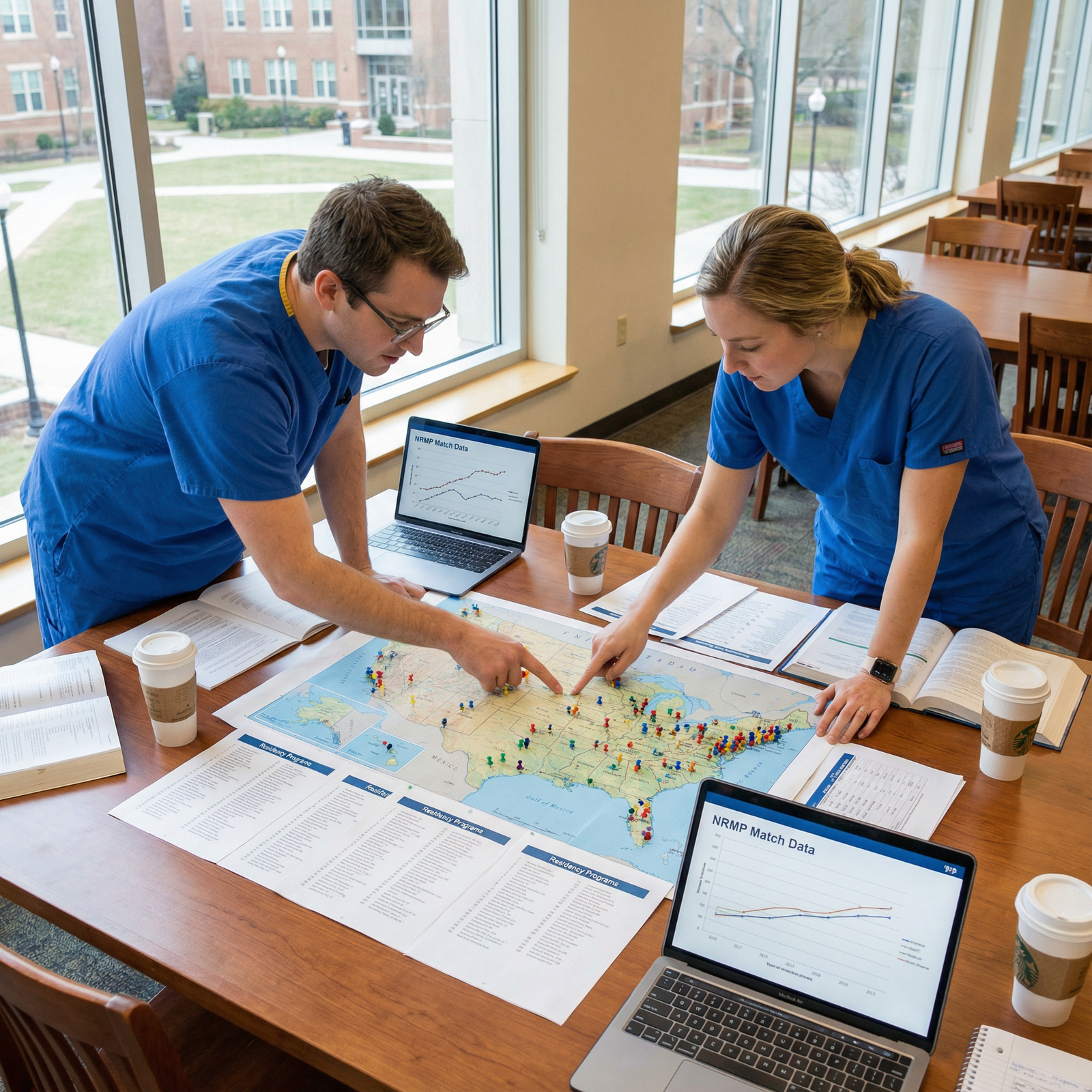
Understanding the Big Picture: Nuclear Medicine Residency for IMGs
For an international medical graduate (IMG), developing a smart program selection strategy is just as important as writing a strong personal statement or preparing for interviews. In nuclear medicine, a smaller and more specialized field, where and how you apply can dramatically influence your chances in the nuclear medicine match.
This IMG residency guide focuses specifically on nuclear medicine residency and is tailored for IMGs who may be asking:
- How many programs to apply to in nuclear medicine?
- How to choose residency programs that are realistic but still ambitious?
- Which programs are more IMG-friendly?
- How to build a strong program list with limited time and money?
The goal of this article is to give you a step-by-step program selection strategy so you can create a targeted, balanced application list and maximize your chances of matching.
Step 1: Clarify Your Professional Profile Before Choosing Programs
Before you look at a single program website, you need a clear, honest understanding of your own profile. Nuclear medicine is a small specialty, and programs often look for specific characteristics. Your program selection strategy must match your strengths and limitations.
1. Core Components of Your Applicant Profile
Key elements programs assess:
USMLE/COMLEX scores
- Number of attempts
- Overall performance and consistency
- Any failures or gaps
ECFMG certification status
- Certified vs. will be certified by start date
- Timing of Step 2 CK and OET
Medical school background
- Country and school reputation
- Year of graduation (YOG)
- Length of clinical gap since graduation
Clinical experience
- US clinical experience (USCE): observerships, externships, electives
- Home country clinical experience
- Any nuclear medicine or radiology-specific exposure
Research and academic background
- Publications, abstracts, posters
- Nuclear medicine–related projects, imaging research, or basic science
- Advanced degrees (e.g., MSc, PhD, MPH) or fellowships
Visa needs
- Type of visa you require (J-1, H-1B, or other)
- Flexibility in location and visa sponsorship options
Language and communication skills
- English proficiency (including OET/TOEFL)
- Evidence of work/clinical experience in English-speaking environments
Write this out as a one-page profile summary. This will help you decide where you are competitive and guide how you choose residency programs.
2. Categorize Yourself by Competitiveness
While every applicant is unique, it can be helpful to place yourself into a broad tier to shape your program selection strategy:
Highly competitive IMG
- Strong USMLE scores with no failures
- Recent graduation (0–3 years)
- Meaningful USCE
- At least some research experience, preferably imaging-related
- Good letters of recommendation from US faculty, ideally in radiology/nuclear medicine
Moderately competitive IMG
- Average or slightly below-average scores, or a single failure
- Some gap after graduation (3–7 years)
- Limited USCE, but good home-country clinical experience
- Minimal nuclear medicine research but demonstrable interest
At-risk IMG applicant
- Multiple exam failures
- Long gap after graduation
- Limited practice or clinical exposure in recent years
- No USCE
- No visa-independent status (needs sponsorship) and limited flexibility
Your program selection strategy should be more aggressive (more programs, broader geographic range) if you fall into the at-risk or moderate categories.
Step 2: Understand the Nuclear Medicine Training Pathways
Nuclear medicine residency in the US is not as standardized as larger specialties. IMGs must understand possible pathways to select the right types of programs.
1. Types of Nuclear Medicine Training Structures
You may encounter:
Dedicated Nuclear Medicine Residency (3-year programs)
- Traditional nuclear medicine residency, often starting after an initial clinical year
- Sometimes open to IMGs directly after internship or other training
- May accept applicants with prior radiology training from abroad
Nuclear Radiology Fellowship Programs
- For applicants with completed ACGME-accredited radiology residency (often US-trained)
- Less accessible directly to IMGs without US radiology training
Combined or Pathway Programs
- “Diagnostic Radiology + Nuclear Medicine” integrated pathways in some institutions
- “2+1” or “3+2” structures within radiology departments
- Sometimes allow non-traditional entry for those with equivalent international training
Alternate Routes via Diagnostic Radiology
- Some IMGs aim for diagnostic radiology first, then specialize in nuclear radiology or molecular imaging
- More competitive, but a realistic long-term strategy if you have strong credentials
For most IMGs starting from abroad, the key focus will be on dedicated nuclear medicine residency programs that sponsor visas and explicitly accept international graduates.

Step 3: Build a Long List – Systematic Program Research for IMGs
Once you understand your profile and training pathways, you can start building your long list of possible nuclear medicine programs.
1. Where to Find Nuclear Medicine Programs
Use multiple sources:
ERAS / AAMC directory
- Lists programs participating in the match
- Shows program details (positions, contact info, links to websites)
FREIDA (AMA Residency & Fellowship Database)
- Filter by specialty: Nuclear Medicine or Nuclear Radiology
- Check IMG friendliness, visa types, program size
Society of Nuclear Medicine and Molecular Imaging (SNMMI)
- Often lists accredited programs and training opportunities
- May have program directories with contact details
ACGME program search
- Confirms accreditation status
- Useful to verify if the program is currently active and accredited
Program websites
- Most accurate and up-to-date information about:
- Required exams and scores
- Visa policies
- Curriculum and rotation sites
- Recent graduates’ outcomes
- Most accurate and up-to-date information about:
Create a spreadsheet to track your IMG residency guide data, with columns such as:
- Program name
- City/State
- Program type (3-year NM, DR+NM, nuclear radiology, etc.)
- Number of positions per year
- Visa sponsorship (J-1, H-1B, none)
- Explicit IMG acceptance policy (if mentioned)
- USMLE minimums or cutoffs
- Requires US clinical experience? (Y/N)
- Recent IMG residents or graduates? (Y/N)
- Application deadlines
- Notes (strengths, weaknesses, impressions)
This spreadsheet becomes the backbone of your program selection strategy.
2. Identifying IMG-Friendly Nuclear Medicine Programs
Although not all programs publicly declare “IMG-friendly,” you can infer friendliness by:
Reviewing current residents and alumni on program websites:
- Names, medical schools, countries
- If you see multiple IMGs over several years, that program likely has experience with international candidates.
Checking visa sponsorship history:
- Programs that list J-1 or H-1B sponsorship for previous residents/fellows are generally safer for IMGs.
Reading program FAQs:
- Some clearly state:
- “We accept international medical graduates.”
- “We require ECFMG certification at time of application.”
- “We do not sponsor visas.”
- Some clearly state:
Searching Match outcome discussions and forums:
- While not definitive, they can reveal anecdotal patterns about specific programs and IMGs.
For nuclear medicine, where the applicant pool is smaller, many programs are receptive to IMGs, especially those with imaging exposure, research, or prior radiology training. However, visa and exam requirements remain strict.
3. Geographic and Personal Factors
Location still matters, even in a small specialty:
Visa considerations
- Some states/institutions rarely sponsor H-1B visas
- J-1 is more available but may come with a home-country return requirement
Lifestyle and cost of living
- Big academic centers in large cities vs. smaller regional programs
- Personal/family constraints (spouse, children, support networks)
Climate, culture, and community
- Adapting to new environments can influence your performance and well-being
At the long-list stage, you should be broad and inclusive. Avoid over-filtering too early.
Step 4: How Many Programs to Apply To in Nuclear Medicine?
Now we reach a critical question in any IMG residency guide: how many programs to apply to? In nuclear medicine, the answer is different from internal medicine or family medicine.
1. Understand the Size of the Field
Nuclear medicine residency is a small specialty with:
- Fewer total programs
- Fewer positions per year compared to core specialties
- Variable competitiveness: some positions may be underfilled, but a few elite academic programs remain very selective
Because of this, your program selection strategy must balance reality:
- You cannot apply to 100+ nuclear medicine programs because they do not exist.
- But applying to too few programs is risky, especially as an IMG.
2. General Numerical Guidelines for IMGs in Nuclear Medicine
These are approximate and should be adjusted based on your profile and resources:
Highly competitive IMG
- Nuclear medicine–only plan:
- Aim for 15–25 nuclear medicine programs, if available and realistic
- Combined strategy (e.g., NM + Diagnostic Radiology or other related specialties):
- 10–20 nuclear medicine programs
- Plus an additional set of programs in one more specialty (e.g., internal medicine as a backup)
- Nuclear medicine–only plan:
Moderately competitive IMG
- Nuclear medicine–focused but with backup:
- Try for 20–30 nuclear medicine programs, including all IMG-friendly options
- Add a solid backup specialty (e.g., internal medicine, transitional year, preliminary year) with another 25–40 programs depending on budget
- Nuclear medicine–focused but with backup:
At-risk IMG
- Nuclear medicine as a targeted specialty:
- Apply to every realistic nuclear medicine program that:
- Sponsors your visa
- Considers IMGs
- Does not have strict score cutoffs you cannot meet
- Simultaneously build a stronger backup plan (e.g., 40–60 programs in a less competitive specialty)
- Apply to every realistic nuclear medicine program that:
- Nuclear medicine as a targeted specialty:
Because nuclear medicine is small, you should also consider long-term strategy: for example, match into internal medicine or another field while building imaging research experience, then later shift into nuclear medicine fellowship or radiology pathways.
3. Budget and Time Constraints
ERAS fees increase as you apply to more programs. Your program selection strategy must be realistic:
- Calculate your maximum affordable number of applications.
- Reserve at least 70–80% of your applications for realistic targets.
- Keep 10–20% for reach programs and 10–20% for safety/backup specialties.
If resources are very limited, prioritize:
- Programs with known IMG alumni
- Programs explicitly sponsoring your required visa type
- Programs where your profile closely aligns with published requirements

Step 5: Create a Tiered Program List (Reach, Target, Safety)
To move from a long, unfiltered list to an effective program selection strategy, you should categorize programs into tiers.
1. Define Your Tiers
For nuclear medicine as an IMG:
Reach Programs
- Top academic centers (often associated with elite medical schools)
- Programs with:
- Strong research profiles
- Heavy emphasis on publications, advanced imaging, theranostics
- Highly competitive US graduates or US-trained radiologists
Target Programs
- Solid academic or community-academic hybrids
- Have IMGs among current residents or alumni
- Offer visa sponsorship and relatively flexible selection criteria
- Your profile matches their requirements (scores, graduation year, etc.)
Safety Programs / Backup Pathways
- Programs with consistent history of taking IMGs, possibly in less competitive regions
- Nuclear medicine positions that are less advertised or smaller
- Related specialties (e.g., internal medicine or preliminary year programs) positioned as a strategic step toward later nuclear medicine training
2. How to Assign Programs to Tiers
For each program on your spreadsheet, assess:
Program prestige and resources
- Number of publications
- National reputation
- Advanced technology (PET/MR, theranostics, new tracers)
Admission requirements vs. your profile
- If they require US experience or certain score thresholds you meet or exceed, they’re more likely target.
- If they do not mention IMG acceptance and appear highly prestigious, classify as reach.
History with IMGs and visa policy
- Strong IMG representation + explicit visa sponsorship = usually target or safety.
- No IMGs, no visas, or unclear policies = likely reach or not suitable.
Geographic location
- Less popular locations may be easier for IMGs to access and can be considered target or safety depending on other factors.
Aim for a distribution like:
- 20–30% reach
- 50–60% target
- 10–30% safety/backup
Adjust this distribution according to your risk tolerance and competitiveness.
3. Practical Example of Tiering
Imagine you are an IMG with:
- USMLE Step 1: pass (numeric not reported)
- Step 2 CK: 238, no failures
- ECFMG certified
- 4 years since graduation
- 3 months US observership, including 1 month in radiology
- 2 nuclear medicine case reports published
You might:
- Place top-tier academic centers with large NM research divisions (e.g., nationally ranked institutions with high research output) in your reach category.
- Include mid-sized academic hospitals that list prior IMGs in their resident roster as target.
- Consider smaller or regional programs with stable nuclear medicine departments and frequent IMGs as safety/target.
- Add an internal medicine or transitional year backup list as extra safety.
Step 6: Strategic Factors Unique to Nuclear Medicine for IMGs
Nuclear medicine has several distinctive characteristics that should shape how IMGs choose residency programs.
1. The Growing Role of Theranostics and Molecular Imaging
Programs heavily engaged in:
- PET/CT and PET/MR
- Theranostic therapies (e.g., Lu-177, I-131 MIBG, PRRT)
- Oncology-focused nuclear imaging and therapy
may favor applicants who:
- Demonstrate interest in oncology or molecular imaging
- Have research background in radiopharmaceuticals, oncology, or imaging
- Express long-term academic career goals
If you have such a background, you can aggressively include these programs even if they are slightly above your profile level (reach).
2. Prior Radiology or Nuclear Medicine Experience
Many IMGs applying to nuclear medicine have:
- Completed a radiology residency in their home country
- Worked as radiologists or nuclear medicine physicians internationally
- Completed non-ACGME fellowships in imaging
Programs may value:
- Proven imaging interpretation skills
- Comfort with cross-sectional anatomy
- Familiarity with SPECT, PET, CT, or hybrid imaging
If you bring this type of experience:
- Highlight it in your CV and personal statement.
- Target programs that explicitly welcome applicants with prior imaging backgrounds.
- You may be more competitive at advanced or research-rich centers than your test scores alone suggest.
3. Flexibility Around Start Dates and Positions
Because nuclear medicine is smaller:
- Some positions may open off-cycle.
- Programs may convert unfilled fellowships to residencies, or vice versa.
- Late openings can sometimes favor IMGs already in the US (on J-1 or H-1B visas in another program).
Your program selection strategy should include:
- Periodically checking for open/unfilled positions through professional societies or match websites.
- Staying in regular email contact with program coordinators, expressing interest in future openings, especially if you’re already in the US.
Step 7: Refining and Finalizing Your Application List
Once your tiered list is ready, review it with the following considerations:
1. Balance Ambition and Realism
Ask yourself:
- Do I have enough realistic target programs that fit my profile and visa needs?
- Am I over-concentrating on a few prestigious institutions?
- Have I included enough safety or backup options in either nuclear medicine or a related specialty?
If your answers reveal overconfidence or under-preparedness, adjust the list.
2. Double-Check Eligibility and Deadlines
Before submitting ERAS applications:
- Re-check each program’s:
- Application deadline
- Required documents (LORs, MSPE, ECFMG certificate, etc.)
- Specific eligibility criteria (YOG limits, score cutoffs, clinical experience requirements)
- Remove programs where:
- You are clearly not eligible.
- They explicitly do not accept IMGs or sponsor visas.
- Your application would be incomplete by their deadline.
This step prevents wasting money on impossible applications.
3. Align Your Application Materials with Your Strategy
Your program selection strategy should also influence how you customize your:
Personal statements
- Consider a nuclear medicine–focused PS highlighting:
- Why nuclear medicine
- Your prior exposure to imaging
- Long-term career plans in molecular imaging/theranostics
- You may prepare a second PS for any backup specialty.
- Consider a nuclear medicine–focused PS highlighting:
Letters of Recommendation
- At least one letter from an imaging-related supervisor (radiology or nuclear medicine) is ideal.
- Strong letters from US-based mentors carry high value, especially when programs must compare IMGs from different systems.
Curriculum Vitae
- Emphasize:
- Imaging experiences
- Research, even if small-scale (case reports, quality improvement)
- Teaching or leadership roles in radiology/nuclear medicine societies
- Emphasize:
Make sure your materials tell a coherent story that fits the types of programs you’re targeting.
Frequently Asked Questions (FAQ)
1. As an IMG, is nuclear medicine less competitive than diagnostic radiology?
For IMGs, dedicated nuclear medicine residency can be less competitive than US diagnostic radiology residency, mainly because:
- There are fewer applicants overall.
- Some programs struggle to fill all positions.
- Many US graduates prioritize diagnostic radiology before nuclear medicine.
However, top academic nuclear medicine programs remain selective, especially for applicants requiring visas. Your program selection strategy should treat nuclear medicine as a focused but still competitive field.
2. Should I apply to both nuclear medicine and internal medicine as an IMG?
For many IMGs, this is a sensible approach, especially if:
- Your profile is moderate or at-risk.
- You need more options to maximize your chances of matching in the US.
- You’re open to:
- A long-term plan (e.g., internal medicine now, then imaging fellowships later).
- Combining clinical care with imaging or theranostics.
If budget allows, applying to both can be part of a two-tiered program selection strategy: nuclear medicine as your primary goal and internal medicine as a structured backup.
3. How important is US clinical experience (USCE) for nuclear medicine residency?
USCE is beneficial, but in nuclear medicine:
- US imaging exposure (radiology or nuclear medicine observerships, electives) is especially valuable.
- Even a short observership in nuclear medicine can:
- Provide a relevant letter of recommendation.
- Demonstrate familiarity with US imaging practice.
- Show commitment to the specialty.
If you cannot secure imaging-specific USCE, general clinical USCE is still better than none. However, prioritize opportunities that align with imaging or oncology, as these closely relate to nuclear medicine.
4. I completed radiology residency abroad. How should I choose programs?
If you already trained in radiology in your home country:
- Highlight this experience prominently.
- Consider applying to:
- Nuclear medicine residencies that value prior imaging training.
- Academic centers with strong research programs where your advanced experience may be attractive.
- You might place more top academic programs in your target list rather than only in reach, since your background increases your competitiveness.
Still, don’t skip safety options. Visa needs and exam history can still significantly influence your chances.
By approaching your nuclear medicine match with a deliberate program selection strategy—analyzing your profile, understanding the field, calculating how many programs to apply to, and building a tiered list—you give yourself the best possible chance as an international medical graduate. Thoughtful preparation, strategic choices, and targeted applications can turn a small and specialized field like nuclear medicine into a realistic and rewarding path.