Understanding the Nuclear Medicine Residency Landscape as an MD Graduate
Nuclear medicine is a small, highly specialized field, and the program selection strategy for an MD graduate is very different from larger core specialties like internal medicine or general surgery. As an MD graduate from an allopathic medical school, you have particular strengths—USMLE scores, clinical clerkships, standardized evaluations—that can position you well in the nuclear medicine match, but only if you are thoughtful and strategic.
Before you decide how many programs to apply to and which ones to target, you need to understand the structure of nuclear medicine training in the U.S. and how it fits into the broader allopathic medical school match system.
Types of Nuclear Medicine Training Pathways
Depending on the institution and year of training, you may see several types of programs:
ACGME-Accredited Nuclear Medicine Residency (2–3 years)
- Usually entered after completion of a preliminary/transitional year or a full residency (e.g., diagnostic radiology, internal medicine).
- Some institutions still accept applicants directly after PGY-1 for dedicated nuclear medicine training (often 2 years).
Nuclear Radiology Fellowships
- Generally a 1-year fellowship taken after a 4-year diagnostic radiology residency.
- Not your immediate path as a new MD graduate, but relevant if you’re thinking long-term about combining radiology and nuclear imaging.
Combined or Integrated Tracks
- Some academic centers may offer structured pathways combining diagnostic radiology and nuclear medicine/nuclear radiology.
- Often more competitive and require very careful planning of your residency match strategy.
As an MD graduate, your program selection strategy should start with clarity about:
- Whether you want a direct path into nuclear medicine after PGY-1,
- Or a radiology-first path, followed by nuclear subspecialization later.
This article focuses on MD graduates targeting the nuclear medicine residency route, while also addressing how that fits into the broader match and long-term career strategy.
Clarifying Your Goals: Why Nuclear Medicine and What Kind of Career?
Before you decide where to apply, you need to know what you want out of your future practice. Nuclear medicine can look very different depending on the institution and job market.
Core Questions to Guide Your Strategy
Ask yourself:
Do I want a primarily imaging-based career, or a mix of imaging and direct patient care?
- Many nuclear medicine physicians have limited direct patient interaction compared to general internal medicine or surgery.
- However, theranostics (e.g., Lu-177 therapies, I-131 therapy, targeted radiopharmaceuticals) is increasing direct patient care and procedural work.
Am I aiming for an academic career, private practice, or hybrid?
- Academic programs: heavier emphasis on research, teaching, and complex protocols.
- Private practice–oriented training: may focus on efficiency, clinical throughput, and practical skills.
How important is it to combine nuclear medicine with diagnostic radiology?
- In many markets, dual trained nuclear medicine + diagnostic radiology physicians are especially competitive.
- If you want broad imaging, you may apply for diagnostic radiology residency first, then specialize in nuclear radiology later.
- If your all-in passion is molecular imaging and theranostics, a nuclear medicine residency may be the most direct fit.
How much do I value research, particularly in molecular imaging and theranostics?
- If you want a career in cutting-edge research, you should target programs with:
- Active NIH or industry-funded trials
- PET/MR or advanced PET/CT
- Theranostic clinical trials
- Formal research tracks or protected research time
- If you want a career in cutting-edge research, you should target programs with:
Your answers to these questions will shape:
- Which programs make sense for you,
- How to prioritize academic vs. community settings,
- And ultimately how many programs to apply to in each category.

How Many Programs Should You Apply To in Nuclear Medicine?
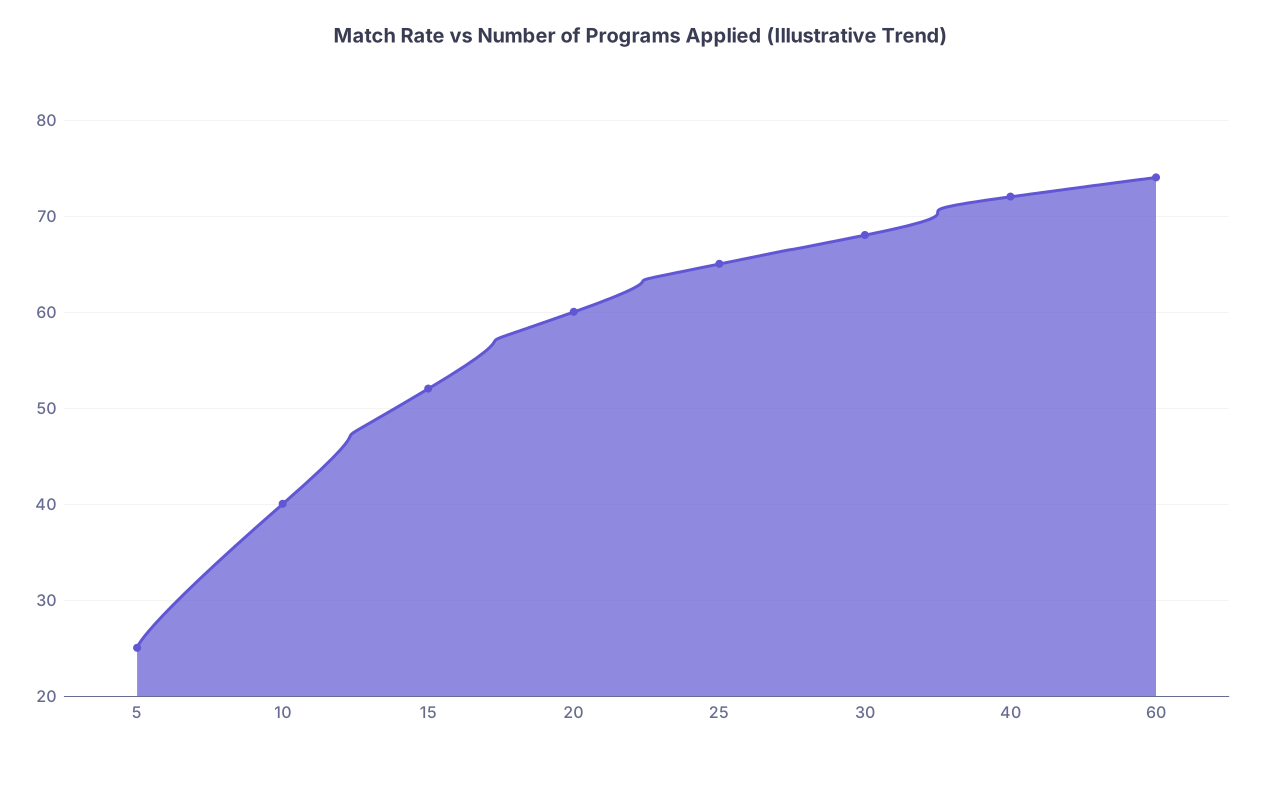
The question “how many programs to apply” is central to your program selection strategy. Nuclear medicine residency is a small specialty, so standard advice from larger fields often doesn’t translate directly.
Factors That Drive Application Volume
Competitiveness of Your Application
- USMLE Step 1 (if available) and Step 2 CK scores
- Medical school pedigree and performance (honors, AOA, clerkship evaluations)
- Quality and relevance of nuclear medicine or radiology research
- Strong letters of recommendation from imaging or oncology faculty
- Prior exposure to nuclear medicine (electives, rotations, shadowing)
Competitiveness of the Field and Program Fill Rates
- Nuclear medicine has historically had more positions than applicants, but:
- Some programs are much more competitive than others (e.g., top academic centers, high-research institutions).
- Trends fluctuate with growing interest in theranostics and molecular imaging.
- Nuclear medicine has historically had more positions than applicants, but:
Visa and Citizenship Status
- International or visa-requiring applicants often need to apply more broadly.
- As an MD graduate from a U.S. allopathic medical school, you may have a relative advantage, especially if you are a U.S. citizen or permanent resident.
Geographic Flexibility
- If you are open to moving anywhere in the country, you can strategically apply to a balanced set of programs.
- If you have strong geographic limitations (family, partner, financial constraints), you will need to apply more heavily within that region and perhaps broaden to related fields (e.g., diagnostic radiology with nuclear focus).
General Application Volume Guidelines for MD Graduates
These are approximate ranges tailored for an MD graduate residency applicant in nuclear medicine:
Very strong applicant
(High Step 2 CK, honors, robust imaging research, strong letters, U.S. MD)- Target: 10–15 nuclear medicine programs
- Plus: Consider applying to a subset of diagnostic radiology programs (if you are open to a dual-pathway career).
Solid/average applicant
(Good scores, decent clinical record, maybe some imaging exposure or research)- Target: 15–20 nuclear medicine programs
- Add: A few radiology or related prelim programs if you are keeping options open.
Applicant with significant concerns
(Lower scores, academic gaps, limited imaging experience)- Target: 20–25+ nuclear medicine programs, if available
- Also consider:
- Broadening your geographic preferences,
- Strengthening your application with a dedicated imaging or nuclear medicine elective,
- Applying to a parallel specialty (e.g., internal medicine with later nuclear fellowship).
Because the total number of nuclear medicine residency programs is limited, the upper bound is naturally constrained. It may not even be possible to apply to 40+ different programs the way one might in internal medicine. The key is breadth plus realism: include reach, match-range, and safety programs.
Balancing Cost, Time, and Yield
Every program you apply to costs:
- Money (ERAS fees, interview travel if in-person),
- Time (researching programs, writing tailored communications),
- Emotional bandwidth (interview preparation, ranking).
A good program selection strategy is to:
- Avoid applying so broadly that you dilute your attention,
- But not so narrowly that a few rejections jeopardize your entire nuclear medicine match outcome.
Aim for a list large enough to protect against outliers (unexpected rejections, program closures, reduced positions), but curated enough that each program is somewhere you could realistically see yourself training.
Building a Targeted List: How to Choose Nuclear Medicine Residency Programs
The next step in your program selection strategy is deciding which specific programs to apply to. For an MD graduate, this involves a mix of objective and subjective factors.
1. Training Structure and Case Mix
Review each program’s:
- Modality mix: PET/CT, SPECT/CT, PET/MR, gamma camera studies.
- Theranostics: Access to I-131 therapies, Lu-177 DOTATATE, PSMA-targeted agents, Y-90, and clinical trial agents.
- Patient population: High-volume oncology centers offer exposure to a broader spectrum of malignancies and advanced PET protocols.
Ask:
- Does this program provide comprehensive exposure to both diagnostic and therapeutic nuclear medicine?
- Will I gain enough hands-on experience in procedures and therapies to be job-ready?
2. Integration with Radiology and Other Services
Nuclear medicine is closely tied to:
- Diagnostic radiology,
- Medical oncology,
- Radiation oncology,
- Endocrinology, cardiology, and sometimes neurology.
Look for:
- Joint conferences with radiology and oncology,
- Access to radiology teaching files and call experiences (in integrated or affiliated arrangements),
- Opportunities to attend tumor boards and multidisciplinary meetings.
If you envision a career that blends nuclear medicine with broader imaging, prioritize programs that:
- Work closely with a robust diagnostic radiology department,
- Offer structured pathways or informal opportunities to gain radiologic interpretation skills.
3. Research and Academic Environment
For applicants interested in academic careers, the allopathic medical school match experience often includes early exposure to research expectations. Leverage that:
Consider:
- Ongoing clinical trials in molecular imaging and targeted radiopharmaceuticals.
- Availability of:
- PET/MR research projects,
- Radiopharmaceutical development,
- Dosimetry and image quantification work.
- Presence of PhD scientists and protected research time for residents.
Programs with a strong academic profile may:
- Expect previous research experience (which many MD graduates from academic schools already have),
- Offer mentorship that can shape your academic career and future fellowships.
4. Program Size, Culture, and Support
Smaller nuclear medicine programs can offer:
- Closer one-on-one mentorship,
- More individualized attention and flexibility.
Larger programs may provide:
- Higher case volume,
- More diverse pathology,
- Multiple faculty mentors with varied interests.
When evaluating culture, look for:
- Resident well-being initiatives,
- Support for board preparation (e.g., structured didactics, mock exams),
- Resident feedback on autonomy and supervision.
You can gather this information through:
- Program websites,
- Virtual or in-person open houses,
- Informal networking with current or former residents,
- Faculty you know through electives or research.
5. Geographic, Personal, and Lifestyle Factors
Even in a nuclear medicine match–focused strategy, personal considerations matter:
- Proximity to family or partner,
- Cost of living,
- City size and lifestyle (urban academic center vs smaller city).
Align your preferences with:
- Your tolerance for long commutes,
- Need for support systems,
- Preferences for climate and city culture.
These may not be primary filters at first, but they help refine your rank list later.

Crafting a Coherent Overall Strategy: Nuclear Medicine and Related Pathways
Nuclear medicine rarely exists in isolation from the rest of your career path. A thoughtful program selection strategy considers not only where you match, but what that match sets you up to do afterward.
Considering Combined or Sequential Training
Some MD graduates aim to:
- Match into diagnostic radiology first,
- Then pursue nuclear medicine or nuclear radiology fellowship.
Others prefer:
- Direct entry into nuclear medicine residency, especially if their main interest is theranostics and molecular imaging rather than broad cross-sectional imaging.
When deciding:
- If you are strongly drawn to all forms of imaging (CT, MR, US, IR), radiology-first may offer greater breadth and marketability.
- If your passion is truly nuclear—radiopharmaceuticals, PET physics, targeted therapy—then a dedicated nuclear medicine residency may allow earlier immersion and leadership.
You can also:
- Apply to both nuclear medicine and radiology programs in the same cycle, but you must be clear with yourself about your true first choice when ranking programs.
Parallel and Backup Plans
An effective program selection strategy anticipates uncertainty. Consider what you would do if:
- You do not match into nuclear medicine,
- Or your top programs do not offer you interviews.
Possible approaches:
- Apply to a modest number of diagnostic radiology programs as a parallel plan if your profile fits.
- Consider a preliminary year (internal medicine, surgery, transitional) and reapply with improved credentials and more nuclear medicine exposure.
- For those who love oncology but are flexible on imaging, internal medicine with a later oncology or palliative focus can also be an alternative path.
When building your list:
- Ensure your overall application reflects a coherent narrative. If you apply broadly to both nuclear medicine and radiology, be prepared to explain:
- How each fits into your long-term goals,
- Why your interest in nuclear medicine is genuine, not just a backup.
Tailoring Your Application to the Programs You Choose
Once you’ve decided how many programs to apply to and which programs to target:
Personal Statement(s)
- Craft at least one nuclear-medicine–focused statement that:
- Explains your interest in molecular imaging, radiopharmaceuticals, theranostics.
- Links your prior experiences (electives, research) to your future goals.
- If you are applying to radiology as well, you may need:
- A radiology-focused personal statement,
- Or a version that thoughtfully integrates both radiology and nuclear imaging as parts of your career vision.
- Craft at least one nuclear-medicine–focused statement that:
Letters of Recommendation
- Strongest letters often come from:
- Nuclear medicine faculty (ideally),
- Radiology faculty,
- Oncology or internal medicine clinicians who can speak to your clinical reasoning and teamwork.
- Make sure at least one letter highlights:
- Your commitment to imaging and/or nuclear medicine,
- Your ability to handle complex diagnostic tasks.
- Strongest letters often come from:
Program-Specific Communication
- For especially important programs, consider:
- Attending their virtual open house,
- Mentioning program-specific features in your ERAS experiences or during interviews,
- Networking respectfully with faculty through academic venues (e.g., SNMMI meetings).
- For especially important programs, consider:
A focused and consistent message—across personal statements, letters, and interviews—helps programs understand why you are a particularly good fit for nuclear medicine and for their institution specifically.
Practical Steps and Timeline for MD Graduates Targeting Nuclear Medicine
To translate strategy into action, map out your year:
Late MS3 / Early MS4 (or PGY-1 If Delayed)
- Confirm your specialty choice.
- Schedule:
- A dedicated nuclear medicine elective, preferably at an institution with a residency.
- Optional: Radiology elective if you want to keep that door open.
- Begin or continue research projects in:
- PET/CT, theranostics, oncology imaging, or image analysis.
Summer / Early Fall
- Research nuclear medicine residency programs:
- Identify all ACGME-accredited programs and collect details in a spreadsheet.
- Categorize programs as:
- Reach (more competitive),
- Match-range,
- Safety (less competitive or more flexible).
- Decide how many programs to apply to in each tier based on your profile.
- Draft your personal statement(s) early and refine with mentor feedback.
ERAS Season and Interview Cycle
- Submit applications early in the season to signal strong interest.
- Track interviews and maintain a running document of:
- Program strengths and weaknesses,
- Faculty and resident impressions,
- Case mix and research opportunities described in interviews.
Rank List Strategy
When finalizing your rank list:
- Rank based on overall fit:
- Training quality, faculty mentorship, case volume,
- Personal goals (academic vs. community, research vs. clinical).
- Do not attempt to game the system by trying to predict how programs will rank you.
- The NRMP and similar matching systems are designed so that ranking by true preference is your best strategy.
By the time you submit your rank list, you should:
- Have a realistic understanding of your position in the nuclear medicine match,
- Feel confident that every program on your list is somewhere you could be satisfied training.
FAQs: Program Selection Strategy for MD Graduates in Nuclear Medicine
1. As an MD graduate from an allopathic medical school, do I need to apply to a backup specialty if I’m targeting nuclear medicine?
Not always. Nuclear medicine often has more positions than applicants, and U.S. MD graduates can be competitive, especially with imaging-related experience. However, if you are geographically limited, have academic red flags, or are strongly drawn to radiology as well, applying to a small number of related programs (e.g., diagnostic radiology, internal medicine with future imaging interest) can be a rational safety net. Make sure your overall narrative remains coherent.
2. How many nuclear medicine programs should I apply to if I’m aiming for a very academic career with strong research?
If you have strong scores, good research, and strong letters, 10–15 well-chosen nuclear medicine programs may be sufficient, especially if you are geographically flexible. Focus your applications on institutions with recognized molecular imaging research, active theranostics programs, and strong academic mentorship. Add a few diagnostic radiology programs if your long-term plan might involve dual training.
3. What if my medical school has limited or no nuclear medicine exposure—will that hurt my chances?
Lack of exposure can be a challenge, but it is not insurmountable. Seek out:
- Away rotations or visiting electives in nuclear medicine,
- Shadowing opportunities,
- Research projects under nuclear medicine or radiology faculty (even remotely). Explain in your application how you discovered the field and took initiative to gain more exposure. Programs are usually receptive to motivated MD graduates who clearly articulate why they chose nuclear medicine.
4. How important is it to match at a “big-name” academic center for nuclear medicine residency?
Prestige can help with academic networking and certain competitive fellowships, but it is not the only path to a successful career. More important considerations include:
- Breadth and depth of clinical exposure,
- Access to theranostics and advanced PET imaging,
- Quality of teaching and mentorship,
- Board pass rates and job placement of graduates.
A well-rounded, supportive program where you gain solid clinical skills and mentorship often outweighs name recognition alone.
By understanding the unique landscape of nuclear medicine training, honestly assessing your profile as an MD graduate, and applying a structured program selection strategy, you can build a targeted list of programs that maximizes your chances of a successful nuclear medicine match while setting up the career you actually want.