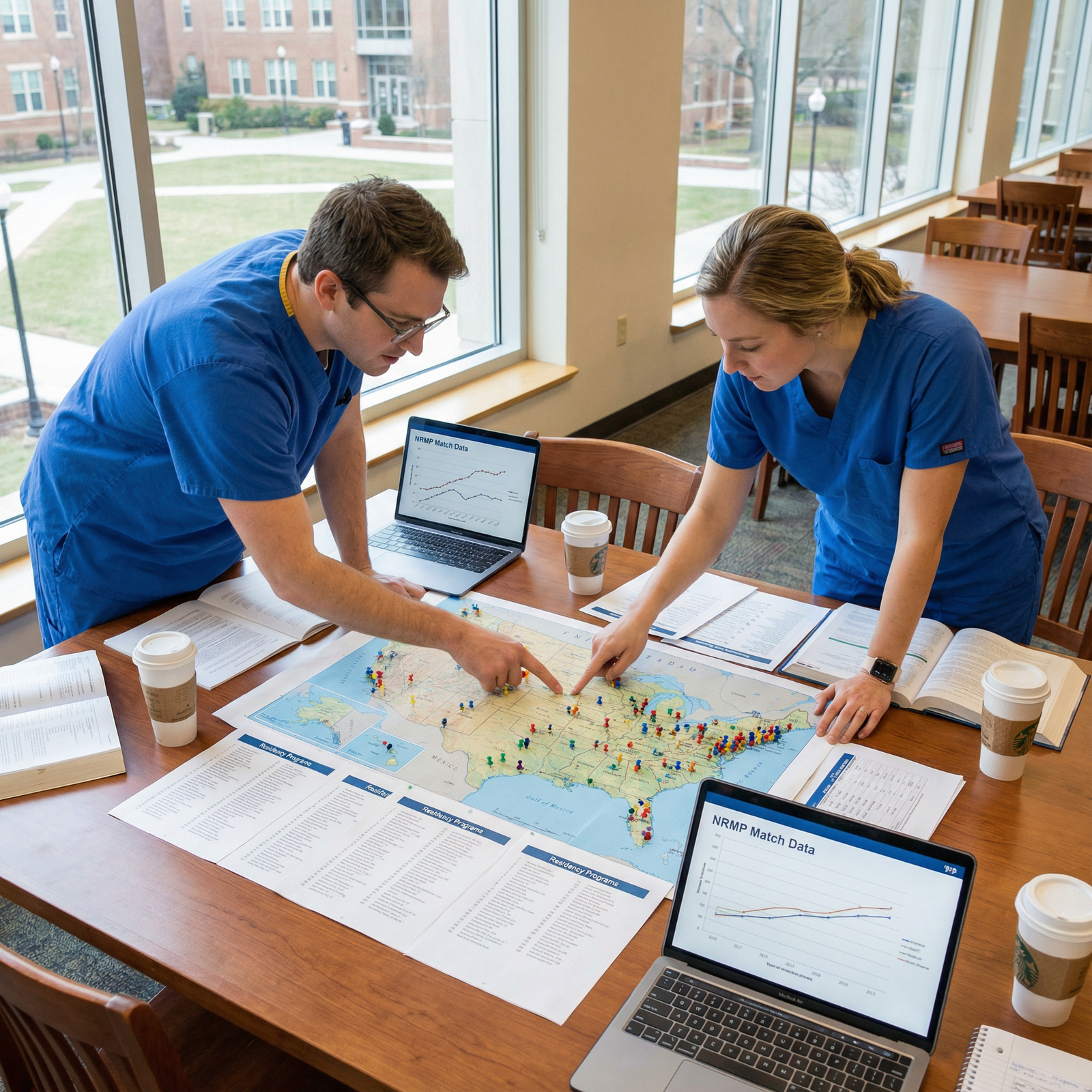
Understanding the Landscape: Nuclear Medicine and the Non‑US Citizen IMG
Nuclear medicine is a small, highly specialized field in the United States. For a non‑US citizen IMG or foreign national medical graduate, this brings both opportunities and challenges when planning a residency program selection strategy.
Compared with large specialties (Internal Medicine, Family Medicine), there are:
- Fewer nuclear medicine residency positions nationwide
- A mix of combined programs (e.g., Diagnostic Radiology–Nuclear Medicine) and stand‑alone nuclear medicine/theranostics programs
- Substantial variability in:
- Visa sponsorship policies
- Required prior training (e.g., some require prior Diagnostic Radiology or Internal Medicine training)
- Research expectations and case volume
As a non‑US citizen IMG, your program selection strategy will strongly influence your chances in the nuclear medicine match. Success is less about “how many programs to apply to” in abstract, and more about which programs, why those programs, and how well your application fits their profile.
This article walks you step‑by‑step through a focused, realistic, and data‑driven strategy tailored to foreign national medical graduates applying in Nuclear Medicine.
Step 1: Clarify Your Training Path and Eligibility
Before you can meaningfully choose programs, you must understand what type of nuclear medicine training you’re actually eligible for. Nuclear medicine has several pathways:
1. Stand‑Alone Nuclear Medicine Residency (Traditional Pathway)
Characteristics:
- Usually 2–3 years in length
- May accept applicants:
- Directly from medical school (rare)
- After one clinical preliminary year (e.g., Internal Medicine, Surgery, Transitional Year)
- After prior radiology or other specialty training (varies by program and ABNM rules)
For a non‑US citizen IMG, the key questions:
- Does the program accept IMGs directly, or do they strongly prefer candidates with US clinical experience or prior US residency training?
- Do they have a history of sponsoring J‑1 or H‑1B visas for stand‑alone nuclear medicine trainees?
- Do they require or prefer prior ACGME‑accredited training?
2. Combined Diagnostic Radiology–Nuclear Medicine Pathways
Some institutions integrate nuclear medicine training into a diagnostic radiology residency:
- Diagnostic Radiology with enhanced Nuclear Medicine experience
- “ESIR + Nuclear Medicine” or internal fellowships
These tracks are often more competitive and may:
- Strongly prefer US medical graduates
- Favor applicants who completed US rotations and have strong USMLE scores
- Have more restrictive visa policies
As a non‑US citizen IMG, these programs may be a “reach” tier unless you have:
- Outstanding USMLE scores
- Robust US research in imaging/nuclear medicine
- Strong US letters of recommendation
- A green card or another work‑authorized status
3. Nuclear Radiology or Nuclear Medicine Fellowships After Radiology
Another path is to complete diagnostic radiology residency first, then pursue nuclear medicine or nuclear radiology fellowship:
- More common route for US grads
- Highly dependent on matching into radiology first
If you are a non‑US citizen IMG already in a radiology residency (US or abroad), you may consider:
- Applying directly to advanced nuclear medicine positions that accept prior radiology training
- Building a strategy that leverages your prior radiology experience as a strength
Step 2: Build a Shortlist of Genuine Options (Visa, Eligibility, and Structure)
2.1 Start With Hard Filters
Your first pass through nuclear medicine residency programs should apply non‑negotiable filters:
Visa Sponsorship
- Check each program’s website or FREIDA entry:
- “Sponsoring J‑1 only”
- “J‑1 and H‑1B accepted”
- “No visa sponsorship”
- As a non‑US citizen IMG, programs that do not sponsor visas are effectively off your list unless you already hold US permanent residency or independent work authorization.
- Check each program’s website or FREIDA entry:
ECFMG Certification
- Confirm whether the program requires:
- ECFMG certification at the time of application
- ECFMG certification at the time of ranking or start date
- Make sure your timeline fits. If you will not be certified before the rank order list deadline, some programs may not consider you.
- Confirm whether the program requires:
Eligibility Requirements Look carefully at each program’s eligibility section:
- Do they accept applicants directly from international medical schools?
- Do they require prior ACGME‑accredited clinical training (e.g., a clinical PGY‑1, radiology, or internal medicine)?
- Are there minimum USMLE thresholds (e.g., Step 1/2 >220)?
- Do they explicitly state “we do not sponsor visas for this program”?
Any program that fails one of your non‑negotiable criteria should be removed at this stage. This is how to choose residency programs efficiently and avoid wasted applications.
2.2 Understand Program Structure and Focus Areas
For remaining programs, study:
- Program structure (2‑year vs 3‑year; integrated with radiology or not)
- Clinical volume:
- PET/CT, SPECT/CT, cardiology, neuro, theranostics
- Subspecialty strengths:
- Theranostics (Lu‑177, I‑131), oncology PET, research PET tracers
- Research infrastructure:
- Access to PET cyclotron, radiochemistry, active clinical trials
As a foreign national medical graduate, you can use these structural features to align programs with your long‑term goals:
- If you want an academically oriented career, prioritize programs with high research output, funded projects, and protected research time.
- If you aim for private practice or mixed clinical jobs, programs with high clinical volume and broad case mix may be more attractive.

Step 3: Tiers, Fit, and “How Many Programs to Apply To”
For nuclear medicine, program selection strategy must balance three elements:
- Your objective competitiveness
- The overall size and competitiveness of the field
- Your visa and geographic constraints
3.1 Assess Your Competitiveness Honestly
Consider:
USMLE Scores
- Step 1 (if numeric), Step 2 CK, Step 3 (if taken)
- Whether you passed on first attempt
Medical School and Background
- Well‑known vs less‑known international school
- Year of graduation (YOG) – recent vs older graduate
Experience and Alignment
- US clinical experience (observerships, electives) in imaging or oncology
- Research in nuclear medicine, radiology, or oncology
- Prior residency training (radiology, internal medicine, oncology)
Other Assets
- Publications, presentations, conference posters
- Strong letters from nuclear medicine or radiology faculty
Create a realistic self‑assessment:
Highly competitive IMG for nuclear medicine:
- Strong USMLE scores (e.g., Step 2 CK >240), no fails
- Recent graduate or already in US training
- Nuclear medicine or imaging research + US experience
- Compelling visas status (e.g., J‑1 previously, or green card)
Moderately competitive:
- Solid USMLE (e.g., Step 2 CK 225–240)
- 1–2 years from graduation
- Some imaging/oncology exposure; maybe one or two abstracts
- Limited but relevant US experience
Less competitive / higher risk profile:
- Lower scores or one exam failure
- Older YOG (>5–7 years)
- Minimal US experience and no specific imaging background
Your competitiveness tier strongly influences how many programs to apply to.
3.2 Setting Application Volume: Realistic Ranges for Nuclear Medicine
Nuclear medicine has relatively few positions nationwide, and some are filled by internal candidates (e.g., radiology residents at the same institution). For a non‑US citizen IMG, the following are reasonable starting ranges:
Highly competitive IMG
- If applying broadly in Nuclear Medicine: 15–25 programs (if available and visa‑friendly)
- You may match with fewer applications, but there is no guarantee; the small size of the specialty introduces randomness.
Moderately competitive IMG
- Aim for 25–35 programs, assuming that many will reject based on visa, prior training, or US experience.
- Include a mix of academic and community‑affiliated programs.
Less competitive IMG
- Consider 30–45 programs, if that many are realistically open to non‑US citizen IMGs and your visa type.
- Simultaneously, strongly consider a parallel plan (e.g., applying to Internal Medicine or Transitional Year to create a future entry point into imaging/nuclear medicine).
These numbers must be adjusted based on:
- How many nuclear medicine programs actually sponsor your visa type
- Whether you’re restricted to certain geographic regions (family, spouse visa, etc.)
- Your budget for application fees and potential interview travel (if in‑person)
3.3 Balancing Reach, Target, and Safety Programs
Use your self‑assessment to classify each nuclear medicine residency:
Reach programs
- Top‑tier academic centers (e.g., major cancer centers, high‑profile research institutions)
- Historically favor US grads and internal candidates
- Very research‑intensive, or restricted visa support
Target programs
- Solid academic or large community‑academic hybrids
- Explicit history of accepting IMGs and sponsoring visas
- Reasonable score expectations; you meet most stated criteria
Safety programs
- Smaller or newer programs
- Less competition or fewer applicants historically
- You comfortably exceed most of their stated minimums
A rational distribution for a non‑US citizen IMG:
- 20–30% reach
- 40–60% target
- 20–30% safety
This structure helps mitigate risk in the nuclear medicine match, where program numbers are small and variability is high.
Step 4: Deep‑Dive Research on Individual Programs
Once you have a preliminary list, move from a “quantity” approach to a quality and fit approach.
4.1 Use Multiple Data Sources
For each program:
Program Website
- Visa information
- Curriculum and rotation structure
- Call schedule and workload
- Faculty interests and subspecialty strengths
FREIDA or ERAS Program Listings
- Official ACGME data
- Number of positions per year
- Types of residents they historically accept
Publications and Faculty Profiles
- PubMed or institution’s research pages to see:
- Is the program actively publishing in nuclear medicine or theranostics?
- Are there opportunities for you to join ongoing projects?
- PubMed or institution’s research pages to see:
Networking
- Reach out to:
- Current or former residents (LinkedIn, institutional email)
- Alumni from your own medical school who matched there
- Ask targeted questions:
- “How many non‑US citizen IMGs are in the program now?”
- “How supportive is the program with visas?”
- “What’s the typical fellow/resident’s background?”
- Reach out to:
4.2 Evaluate Fit as a Non‑US Citizen IMG
When assessing how to choose residency programs specifically as a foreign national medical graduate, consider:
Visa Attitude vs. Policy
- Some programs technically sponsor visas but rarely do so in practice.
- Look for evidence:
- Names/photos of current or prior residents with obvious IMG backgrounds
- Statements highlighting diversity or international trainees
Supportive Environment
- International office or GME department experienced with J‑1/H‑1B
- Structured onboarding for IMGs
- Clear policies on moonlighting, Step 3, and contract renewals
Clinical and Career Outcomes
- Where do graduates go?
- US academic positions?
- Return to home country?
- Industry (radiopharmaceuticals, imaging companies)?
- Where do graduates go?
For a non‑US citizen IMG, programs with strong post‑training placement and clear support for visas and career development are especially valuable.
Step 5: Tailoring Your Strategy to Your Background and Goals
The most effective program selection strategy is personalized. Here are example scenarios and how you might adjust your approach.
5.1 Scenario A: Recent IMG Graduate With Strong Scores and Imaging Research
Profile:
- Step 2 CK > 240, no exam failures
- Graduation within last 2–3 years
- Research in radiology or nuclear medicine, perhaps a couple of abstracts or papers
- Some US observerships in imaging or oncology
Strategy:
- Apply to most visa‑sponsoring nuclear medicine programs, ~20–30 total
- Target a balanced mix of:
- High‑profile academic centers (reach)
- Solid mid‑tier academic programs (target)
- A few new or smaller programs (safety)
- Highlight your research and commitment to imaging in your personal statement
- If feasible, consider adding a small number of Diagnostic Radiology programs as a parallel strategy (depending on your risk tolerance and finances)
5.2 Scenario B: Older IMG Graduate With Limited US Experience
Profile:
- Step 2 CK around 220, maybe an attempt or gap
- Graduation 7–10 years ago
- Mostly home‑country clinical experience, little or no US exposure
- Minimal imaging research
Strategy:
- Focus on programs known to have matched IMGs with similar profiles
- Apply broadly to 30–40 nuclear medicine programs that:
- Clearly sponsor your visa type
- Do not list strict recent YOG cutoffs
- Strongly consider a parallel application (Internal Medicine, Transitional Year) to increase chances of entering the US system, then later transitioning to nuclear medicine or imaging.
- Obtain strong, updated letters from:
- Nuclear medicine / radiology faculty (even if abroad)
- Supervisors who can attest to your recent clinical competence
5.3 Scenario C: IMG Already in Another Residency (e.g., Internal Medicine or Radiology)
Profile:
- Currently training in Internal Medicine or Radiology (home country or US)
- Exposure to nuclear medicine; keen interest in imaging or theranostics
- Stronger clinical and research background
Strategy:
- Emphasize your prior specialty experience as added value:
- Oncology/hematology exposure for PET
- Cardiovascular knowledge for nuclear cardiology
- Apply selectively to 15–25 programs that:
- Value applicants with prior residency training
- Offer advanced or shorter training pathways
- Highlight continuity:
- How your background will improve your nuclear medicine practice
- Your interest in hybrid/theranostics or academic careers
Step 6: Final Checklist and Practical Tips
6.1 Before Submitting Applications
- Confirm all visa details in ERAS and program websites
- Ensure ECFMG certification (or clear path before start date)
- Prepare:
- Personal statement tailored to nuclear medicine
- CV emphasizing imaging/oncology research, presentations, and relevant electives
- Letters of recommendation from:
- At least one imaging or nuclear medicine mentor if possible
- US‑based supervisors when available
6.2 During the Application Season
- Track your programs in a spreadsheet:
- Visa type
- Contact emails
- Application status (submitted, complete, interview received)
- Respond quickly to interview invitations; nuclear medicine interviews may be limited in number and schedule.
- Use interviews to clarify:
- Visa support experience
- Typical resident background (how many IMGs?)
- Graduate outcomes
6.3 After Interviews: Rank List Strategy
When ranking programs, prioritize:
- Visa and Contract Security
- Programs with stable GME support and clear visa policies
- Training Quality and Case Mix
- PET/CT, theranostics, cardiology, neuro, pediatric exposure
- Mentorship and Career Support
- Faculty engaged with your goals—academic, clinical, or industry
- Location and Lifestyle
- Cost of living, support systems, and potential for your family
Avoid ranking programs low only because they are less famous. For a non‑US citizen IMG, matching into a supportive, visa‑friendly, medium‑tier program can be far better than unmatched status.
FAQs: Program Selection Strategy for Non‑US Citizen IMGs in Nuclear Medicine
1. As a non‑US citizen IMG, how many nuclear medicine programs should I apply to?
For most foreign national medical graduates, a reasonable range is 20–40 programs, depending on your competitiveness and visa restrictions:
- Strong applicants: 15–25 programs
- Average applicants: 25–35 programs
- Less competitive profiles: 30–45 programs (if that many are viable for your visa type)
Because nuclear medicine is a small specialty, it’s wise to apply broadly to all programs that:
- Sponsor your visa
- Accept IMGs
- Have no hard cutoffs that you fail to meet
2. How do I know if a nuclear medicine residency is IMG‑friendly?
Look for:
- Clear statements on their website or FREIDA about accepting IMGs and sponsoring visas
- Current or past residents who graduated from international schools
- Program leadership willing to answer questions about prior non‑US citizen IMG residents
- A supportive GME office and institutional culture that mentions diversity and international trainees
You can also ask:
- “How many of your recent residents were IMGs or non‑US citizens?” during interviews or by email.
3. Should I apply to both nuclear medicine and another specialty (e.g., Internal Medicine) in the same match?
For some non‑US citizen IMGs, a dual application strategy is wise, especially if:
- Your profile is less competitive (lower scores, older YOG, limited US experience)
- There are few nuclear medicine programs that sponsor your visa
- You are willing to use an initial residency (e.g., Internal Medicine) as a stepping stone to imaging later
However, dual applications require:
- Additional cost
- Multiple tailored personal statements
- Clear explanation if interviewers ask about your primary career goal
4. Is research in nuclear medicine essential to match as a foreign national medical graduate?
Research is not absolutely mandatory, but it is very helpful, especially in such a small and academic‑leaning field:
- Strong imaging or oncology research can move you from “average” to “competitive”
- Publications or abstracts with nuclear medicine or PET/CT topics show genuine interest
- If your home institution lacks nuclear medicine research, you can still:
- Participate in radiology/oncology projects
- Present posters at local or international radiology/nuclear medicine meetings
- Join remote or collaborative projects if possible
Programs value demonstrated commitment to imaging more than the sheer number of publications.
By combining careful eligibility checking, realistic self‑assessment, broad but thoughtful program selection, and a clear understanding of your long‑term goals, you can build a strong program selection strategy for the nuclear medicine match as a non‑US citizen IMG.