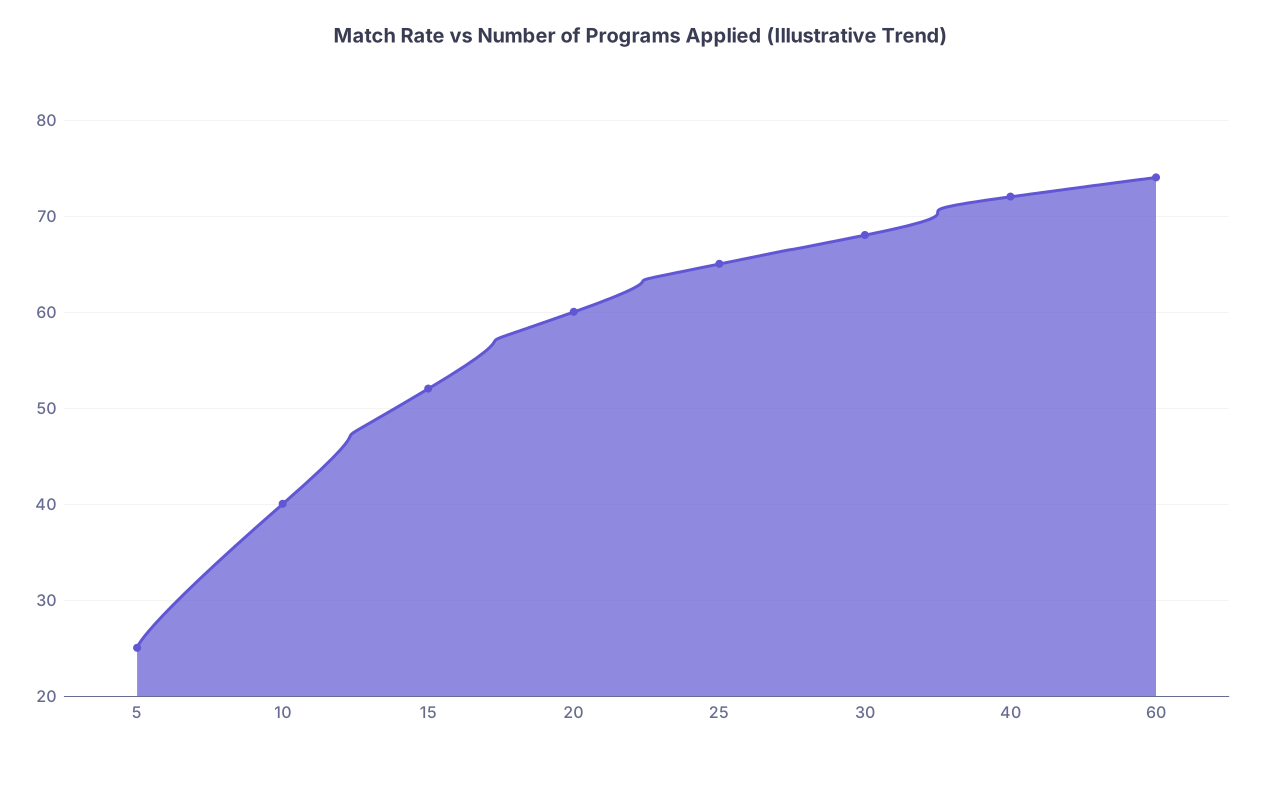
Understanding the Big Picture: What’s at Stake in Ortho Program Selection
Orthopedic surgery is one of the most competitive specialties in the allopathic medical school match. As an MD graduate, your program selection strategy will have a direct impact on whether you match, where you train, and ultimately what kind of orthopedic surgeon you become.
Many applicants focus almost entirely on polishing their ERAS application and Step scores, but underestimate how critical it is to choose the right mix of programs and the right number of programs. If you’re asking questions like:
- “How many programs to apply for orthopedic surgery?”
- “Which programs are realistic for my application profile?”
- “How should I balance reach, target, and safety programs?”
- “How do I prioritize academic vs community ortho programs?”
…then you’re asking the right questions.
This article will walk you through a structured, evidence-informed approach to program selection strategy tailored specifically to the MD graduate residency applicant in orthopedic surgery. We’ll cover how to:
- Analyze your competitiveness honestly
- Create a systematic program list (with tiers)
- Balance geographic preferences with match probability
- Estimate how many programs to apply for your profile
- Make smart use of signals, away rotations, and contacts
The goal is to help you build a list that maximizes your chances of an ortho match while aligning with your career goals and personal needs.
Step 1: Assess Your Competitiveness as an MD Ortho Applicant
Before you can decide where to apply, you must understand who you are as an applicant within the orthopedic surgery landscape. This is the foundation of any effective program selection strategy.
Core Competitiveness Domains
For orthopedic surgery residency, programs tend to weigh these domains heavily:
USMLE/COMLEX Performance (Step 2 CK especially)
- Step 1 is now Pass/Fail, but many ortho programs still screen by Step 2 CK.
- Very competitive applicants: often ≥ 250
- Competitive: ~240–249
- Borderline: ~230–239
- Below average for ortho: < 230
Class Rank and Honors
- AOA status (if applicable)
- Honors in core rotations, especially Surgery and related electives
- Deans Letter (MSPE) narratives and professionalism comments
Orthopedic-Specific Experience
- Home ortho rotation performance
- Sub-internships (“aways”) at orthopedic surgery residency programs
- Letters of recommendation from orthopedic surgeons (ideally 2–3, including at least one from a well-known academic orthopedist if possible)
Research Productivity
- Ortho-focused research is a major differentiator, especially at academic programs:
- First-author or co-author publications
- Posters and presentations at national meetings (AAOS, OTA, POSNA, etc.)
- Involvement in ongoing ortho research projects
- Ortho-focused research is a major differentiator, especially at academic programs:
Institutional Prestige and Environment
- Allopathic medical school match history (does your school regularly send graduates into ortho?)
- Supportive advising infrastructure
- Access to an affiliated ortho department or hospital
Personal Factors
- Geographic ties (e.g., grew up in the region, went to undergrad or med school nearby)
- Unique experiences (military service, D1 athletics, engineering background, etc.)
- Red flags: professionalism issues, exam failures, leaves of absence
Using a Self-Rating Framework
Create a simple table or spreadsheet and rate yourself (e.g., 1–5) in each domain:
- Step 2 CK
- Clinical performance
- Ortho letters
- Ortho research
- School reputation + ortho match history
- Geographic flexibility
- Red flags (yes/no; severity)
This gives you a semi-objective baseline to decide if you’re:
- Highly competitive for orthopedic surgery
- Solid/average for ortho
- Borderline or at risk of not matching
Your MD graduate residency status (vs DO or IMG) is an advantage, but it does not guarantee a match, especially in this specialty. Honest self-assessment helps you design a realistic application quantity and program-level mix.

Step 2: Clarify Your Priorities and Career Goals
Many applicants jump straight into FREIDA or program websites before deciding what actually matters to them. Clarifying your goals ensures your program selection strategy is not just “apply everywhere.”
Key Priority Domains
Career Trajectory
- Do you want a highly academic career with research and fellowship at a top-tier institution?
- Are you aiming for community practice with strong operative volume and early autonomy?
- Do you care most about specific subspecialties (e.g., sports, trauma, spine, hand, pediatrics)?
Program Type
- Academic university programs:
- Often research-heavy
- Access to subspecialty fellowships
- Competitive ortho match outcomes for fellowship and jobs
- Community-based programs:
- Often higher operative volume earlier
- Less pressure to publish, more clinical focus
- May have fewer research resources but can still yield great training
- Academic university programs:
Geography
- Regions where you have family, support systems, or significant ties
- States where you can see yourself living for 5 years (not just visiting)
- Urban vs suburban vs rural preferences
- Cost of living and lifestyle match
Training Style and Culture
- Operative autonomy vs heavily supervised early years
- Program reputation for being “malignant” vs supportive
- Resident camaraderie, wellness resources, diversity and inclusion
- Call structure and workload
Logistical and Personal Factors
- Dual-career/partner considerations
- Visa issues (if applicable)
- Childcare and family needs
- Proximity to major airports, etc.
Translating Values into Filters
Write down your top 3–5 non-negotiables and 3–5 “nice to have” features. Examples:
Non-negotiables:
- Strong sports and arthroscopy exposure
- At least one Level I trauma center
- Within driving distance of family in the Midwest
Nice to have:
- Integrated or predictable research year
- Track record of matching fellows into spine
- Affordable cost of living
These become your filtering criteria when reviewing potential programs.
Step 3: Building a Smart Program List (Tiers, Quantity, and Balance)
Now the central question: how to choose residency programs and how many programs to apply in orthopedic surgery.
Step 3A: Start with Comprehensive Data Sources
Use these tools to build your initial list:
- FREIDA (AMA) – filter by orthopedic surgery, MD vs DO, number of positions, etc.
- NRMP Charting Outcomes in the Match (most recent version) – to understand match probabilities by Step score, number of ranks, and characteristics for allopathic medical school match data.
- Residency Explorer – compare your application profile to those of previously matched residents at specific programs.
- Program websites + Doximity/other rankings – for more detailed program culture, rotations, and outcomes.
Create a spreadsheet with:
- Program name and location
- Program type (university, university/community, community)
- Number of residents per year
- Known Step 2 CK cutoff (if listed or reported)
- Research expectations and opportunities
- Trauma level, subspecialty exposure
- Geographic region
- Notes on culture (from residents, forums, mentors)
Step 3B: Categorize Programs into Tiers
Using your self-assessment and data from above, divide your list into:
Reach Programs
- Places where your metrics (Step 2, research, pedigree) are below the typical matched resident profile.
- Highly academic, big-name ortho programs.
- You should still meet minimum thresholds; true “moonshot” applications are rarely worth it unless there’s a strong connection.
Target Programs
- Your profile is within the mid-range of matched residents’ stats.
- Realistic chance of an interview if you apply broadly and your application is well-crafted.
Safety Programs
- Your profile is stronger than the average matched resident profile.
- Often smaller programs, community-based, or in less sought-after locations or regions.
Label each program as R / T / S in your spreadsheet based on:
- Program reputation/competitiveness
- Your USMLE Step 2 CK
- Research intensity
- Institutional pedigree requirements (some prefer top-tier med schools)
Step 3C: How Many Orthopedic Programs Should You Apply To?
The “right” number depends on your risk tolerance and competitiveness. For an MD graduate residency applicant in orthopedic surgery, typical ranges:
Highly competitive MD applicant
- Strong Step 2 CK (≥ 250), several ortho publications, strong home ortho department with robust letters.
- Typical range: 35–45 ortho programs
- Composition: ~25–30% reach, 50–60% target, 15–25% safety
Solid/average competitive MD applicant
- Step 2 CK ~240–249, some research, good letters, no red flags.
- Typical range: 45–60 ortho programs
- Composition: ~20–25% reach, 50–60% target, 20–25% safety
Borderline MD applicant (for ortho)
- Step 2 CK ~230–239, limited research, or other minor weaknesses.
- Typical range: 60–80 ortho programs (or more, depending on advice from your school)
- Composition: ~10–20% reach, 40–50% target, 35–50% safety
MD with significant red flags (exam failure, professionalism issues)
- You must discuss orthopedic surgery residency feasibility with an experienced advisor.
- Often advised to either:
- Apply extremely broadly (80+ programs) while also considering a parallel specialty strategy, or
- Consider delaying application to strengthen your profile (research year, more ortho involvement)
Remember: applying to more programs is not always better if your list is poorly curated. A well-researched list of 55 programs targeted to your profile and priorities is often more effective than 80 random programs.

Step 4: Fine-Tuning by Fit, Signals, and Strategic Factors
Once you have a preliminary list and approximate number of programs, refine your program selection strategy by considering deeper layers of fit and modern match mechanics.
Program Fit: Beyond Name and Location
For each program, ask:
Operative Exposure
- Early hands-on experience vs delayed autonomy
- Case volume per resident
- Exposure to high-acuity trauma, arthroplasty, sports, spine, hand, pediatrics, foot & ankle
Research Environment
- Protected research time (months/years)
- Presence of dedicated research faculty or PhD collaborators
- Institutional resources (biostats support, orthobiologics lab, registries)
- Is high research output expected or optional?
Fellowship and Career Outcomes
- Types of fellowships recent graduates pursue
- Where they match geographically and institutionally
- Graduates who go directly into practice and where they end up
Culture and Wellness
- Resident testimonials (on the website, social media, or from alumni)
- Program’s reputation for supportive leadership vs malignant environment
- Diversity initiatives, mentorship quality, responsiveness to resident feedback
Lifestyle Factors
- Call schedule and night float
- Vacation and time off
- Housing costs and commuting patterns
- Partner job market, school systems (if you have or plan to have children)
Score each program informally (e.g., 1–5) on fit and adjust your tiers if needed. Some “reach” programs may turn into true top choices if the culture and training style align well with you.
Away Rotations and Existing Connections
For orthopedic surgery, aways matter. Strategic points:
- Your home ortho program (if you have one) is often your most likely match site. Prioritize it with a strong performance, engaged presence, and excellent letters.
- Away rotations serve as month-long interviews:
- Aim for 2–3 aways at programs that are realistic targets and align with your goals.
- If you did an away and felt a strong mutual fit, that program may shift from “reach” to “target” in practical terms.
- Connections:
- If your mentor has strong ties with a PD or faculty at a given program, that program may be more accessible.
- Where your school historically matches in ortho can also guide your confidence level.
Mark any programs where you:
- Have done or plan to do an away
- Have strong faculty/mentor connections
- Have geographic or personal ties
Give these programs higher priority when it comes to signals, personal statements, and interview preparation.
Program Signaling and Preference Signaling Systems
Recent cycles have introduced program signaling in many competitive specialties. While system details can evolve, the core principles are similar:
- You receive a limited number of “signals” to indicate strong interest in specific programs.
- Programs often interpret a signal as:
- Higher than average interest, and
- Justification to give your file a closer read for interview offers.
How to integrate signals into your program selection strategy:
- Signal your genuine top choices where you are plausibly competitive.
- Avoid using signals on true “moonshots” where your stats are far below typical matches unless you have a strong connection.
- Strong candidates may allocate signals across:
- A few top-tier reach programs with meaningful fit or connection
- Several target programs that are realistic favorites
- Borderline candidates might:
- Focus most signals on target and safety programs where a little boost could matter significantly.
- Coordinate with your home institution advisor so your strategy doesn’t conflict with their recommendations (some schools track where past signals succeeded).
Signals are limited; use them as a precision tool, not a lottery ticket.
Step 5: Application Execution and Dynamic Adjustments
With your list — and strategy — defined, you need to execute thoughtfully through ERAS and the interview season.
Tailoring Your Application by Program Type
While you don’t rewrite your entire application for each program, you can:
- Use program-specific language in supplemental essays or secondary questions.
- Mention unique program features that align with your goals:
- For academic powerhouses: highlight your research ambitions and interest in subspecialty fellowships.
- For community-heavy programs: emphasize your interest in clinical volume, community service, and operative independence.
- Align your personal statement (or tailored versions) with the general category of program:
- One version that leans academic/research
- One version that leans community/clinical focus
Tracking Invitations and Adjusting Expectations
As interview invitations roll in:
Monitor the distribution (reach vs target vs safety):
- If early invites are mostly from safety programs, you may need to:
- Prepare for a more conservative rank list strategy, and
- Intensify efforts in networking and expressing interest to target programs.
- If you see many reach and target invites, you can feel more secure about your list’s competitiveness.
- If early invites are mostly from safety programs, you may need to:
Respond promptly and professionally:
- Ortho interview slots fill rapidly; delays can cost opportunities.
- Use a structured calendar and efficient scheduling tools.
Communicate interest appropriately:
- Thank-you notes after interviews (where culturally expected).
- A limited, honest number of “top choice” communications late in the season (if you choose to do this, stay ethical and avoid telling multiple programs they are your “#1”).
Considering Backup or Parallel Plans
Orthopedic surgery is unforgivingly competitive. A wise program selection strategy includes contingency thought:
- For borderline applicants, discuss with your advisor:
- Whether to apply in a parallel specialty (e.g., general surgery)
- Whether to plan a research year if you don’t match
- How aggressive to be with SOAP planning
- This is not a sign of lack of confidence — it’s strategic risk management.
The stronger and more systematic your primary ortho strategy, the more optional these backup plans may feel, but they are still worth thoughtful consideration.
Summary: Building a Deliberate Ortho Program Selection Strategy
For an MD graduate pursuing orthopedic surgery residency, a successful program selection strategy hinges on:
Honest Self-Assessment
- Know your Step 2 CK positioning, research record, letters, and school pedigree.
- Identify if you’re highly competitive, average, or borderline for an allopathic medical school match in ortho.
Clear Priorities
- Define your career goals (academic vs community vs hybrid).
- Decide what matters most: geography, research, operative volume, culture.
Structured Program List
- Use FREIDA, NRMP, and Residency Explorer.
- Triage programs into reach, target, and safety tiers.
- Decide realistically how many programs to apply (often 35–80, depending on competitiveness).
Refined Fit Analysis
- Evaluate trauma level, subspecialty breadth, resident outcomes, and culture.
- Integrate away rotation impressions and faculty connections.
- Use limited program signals strategically.
Thoughtful Execution
- Tailor aspects of your application to program types.
- Track interviews and adjust expectations across reach/target/safety.
- Maintain backup plans and stay adaptable.
When done well, this systematic approach doesn’t just increase your ortho match probability — it increases the chances that you match into a program where you will truly thrive as a developing orthopedic surgeon.
Frequently Asked Questions (FAQ)
1. As an MD graduate, how many orthopedic surgery residency programs should I apply to?
For most MD graduates:
- Highly competitive applicants often apply to 35–45 programs.
- Average applicants typically apply to 45–60 programs.
- Borderline applicants may need 60–80 or more.
Your exact number should depend on your self-assessed competitiveness, advisor input, and your willingness to broaden geographic and program-type preferences. A targeted, well-researched list in these ranges is more important than sheer volume.
2. How should I balance academic vs community programs in my list?
Anchor your choice to your career goals:
- If you aim for an academic career with heavy research, prioritize university and research-intensive programs, but still include some community or hybrid programs as safety options.
- If you see yourself in community practice with a focus on volume and early autonomy, include more community-based or hybrid programs, while still maintaining some academic options for flexibility.
A typical balanced list might have:
- 40–60% academic or university-based
- 40–60% community or hybrid
Adjust that ratio based on what aligns with your long-term vision.
3. Should I still apply to “dream” reach programs if my scores are below their usual range?
Yes, but strategically and sparingly. It can be reasonable to allocate a small portion (e.g., 10–20%) of your applications to true reach programs, especially if:
- You have a strong mentor or letter-writer with connections to that program.
- You have relevant research or unique experience that aligns strongly with that department.
- You have geographic or personal ties to the area.
Avoid making your list top-heavy with ultra-reach programs; they are unlikely to interview you if you are far outside their usual profile.
4. How important are away rotations in my orthopedic surgery program selection strategy?
Away rotations are very important in orthopedic surgery. They:
- Allow programs to evaluate you over a full month, not just a single interview day.
- Give you an inside view of culture, resident happiness, and operative opportunities.
- Substantially increase your odds of an interview and often a higher rank at that program.
Plan 2–3 away rotations at programs where your profile is realistically competitive and that fit your geographic or career preferences. Use these experiences to refine your program list and prioritize where to invest extra effort, including signals and personalized communications.