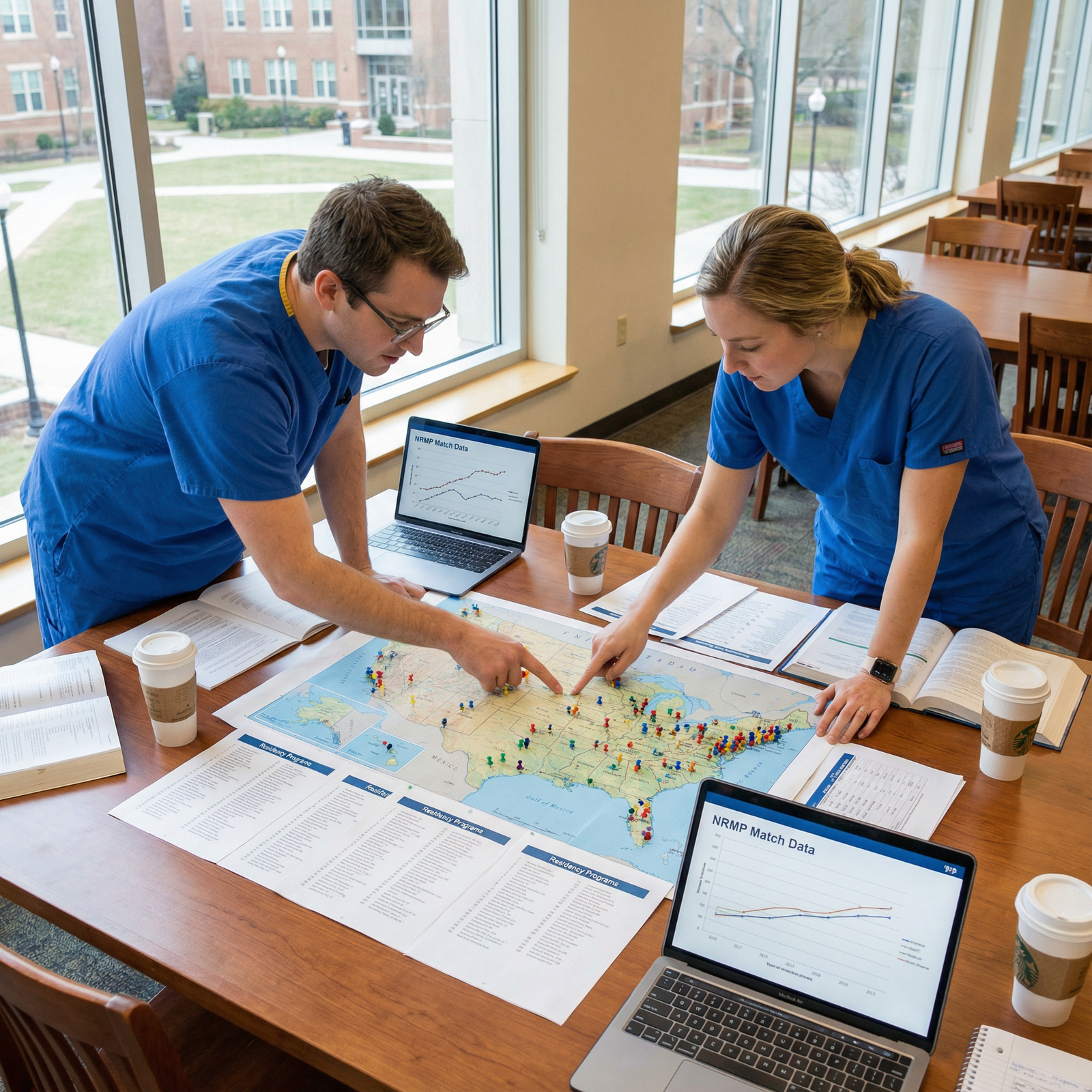
Understanding the Unique Position of the US Citizen IMG in Ophthalmology
Ophthalmology is one of the most competitive specialties in the Match. As a US citizen IMG (American studying abroad), you occupy a unique middle ground: you have US citizenship—which removes some visa barriers—but you trained at a non‑US medical school, which still places you in the international graduate category for most programs and statistics.
Before you can build a smart program selection strategy, you need to understand how you’re perceived and where you fit in the competitive landscape.
Key Realities for US Citizen IMGs in Ophthalmology
Competitiveness of the specialty
- Ophthalmology uses a separate match system run by SF Match.
- Low overall match rates, with much lower rates for IMGs (including US citizen IMGs).
- Many programs never or rarely take IMGs, regardless of how strong the applicant is.
Advantages of being a US citizen IMG vs non‑US citizen IMG
- No visa issues: Programs don’t need to sponsor H‑1B or J‑1 visas for you, which removes a major barrier.
- Easier to stay for internships/PGY‑1 years and any required observerships or research.
- You may have a stronger understanding of US culture and healthcare expectations.
Challenges compared with US MD/DO graduates
- Fewer program directors are familiar with your school.
- Potential bias about the rigor of international schools.
- Often fewer US letters of recommendation from ophthalmologists.
- You may have had limited access to US-based ophthalmology research or away rotations.
Recognizing this starting point is critical when you think about how many programs to apply to and how to prioritize them. Your goal is not just to accumulate a huge list; it’s to build a targeted but sufficiently broad program list that maximizes your realistic chances.
Step 1: Honestly Assess Your Application Strength
A rational program selection strategy for the ophtho match starts with an honest profile assessment. Your competitiveness will directly affect how many programs to apply to and how broad your targeting must be.
Core Factors to Evaluate
Think in terms of three tiers: strong, solid, and at‑risk applicant for ophthalmology as a US citizen IMG.
1. Academic metrics
USMLE Step 1 (if scored) and Step 2 CK
- For ophthalmology, Step 2 CK is especially important now that Step 1 is pass/fail for many.
- Strong: Step 2 CK > 250
- Solid: 238–250
- At‑risk: < 238 or multiple attempts
Medical school performance
- Class rank, honors, distinctions.
- Strong: top quartile; honors in core rotations; clear academic excellence.
- At‑risk: multiple failures, repeated years, or weak clinical evaluations.
2. Ophthalmology‑specific experiences
Home ophthalmology department exposure
- Clinical electives in ophtho.
- Strong: multiple ophthalmology rotations, excellent evaluations.
Research
- Strong: ophthalmology publications (especially first or second author) in peer‑reviewed journals.
- Solid: posters/abstracts or non‑ophtho research with ophthalmology‑relevant skills.
- At‑risk: minimal or no research, especially if scores are average.
Letters of recommendation
- Strong: 2–3 letters from US ophthalmologists, ideally from well‑known faculty; letters explicitly compare you favorably with US applicants.
- At‑risk: no US ophtho letters, only non‑ophthalmology or non‑US letters.
3. US clinical exposure
- US clinical electives or away rotations in ophthalmology
- Strong: at least one US ophthalmology rotation, preferably at a residency‑training program.
- Solid: US internal medicine or surgery rotations + some shadowing in ophtho.
- At‑risk: no US clinical experience.
4. Red flags
- Exam failures (Step 1/2, school exams).
- Gaps in training.
- Professionalism concerns.
- Major change of specialty late in the game with little ophthalmology preparation.
Putting Yourself into a Category
- Category A – Highly competitive US citizen IMG
- Strong Step scores, top performance, meaningful ophtho research, US ophtho letters, US rotations.
- Category B – Moderately competitive US citizen IMG
- Solid scores, decent performance, some exposure, maybe one US ophtho letter, limited research.
- Category C – At‑risk US citizen IMG
- Below‑average scores, few or no US ophtho experiences, minimal ophtho‑specific work, or red flags.
Your category will guide:
- How broad your geographic reach must be.
- How aggressive you should be with application volume.
- How you prioritize “IMG‑friendly” programs vs reach programs.

Step 2: Understand Ophthalmology Program Types and IMG Friendliness
To design an effective program selection strategy, you must recognize that not all programs are equally open to IMGs. As a US citizen IMG, you benefit from not needing a visa, but you still face the “unfamiliar school” barrier.
1. Identify Historically IMG‑Friendly Ophthalmology Programs
Look for:
- Programs with IMGs in recent classes
- Check program websites for resident bios.
- Look for graduates from Caribbean schools, European schools, or other non‑US institutions.
- Programs that explicitly mention considering IMGs
- Some list “We consider IMGs” or “We sponsor visas” (a good sign, even though you don’t need a visa).
- Safety‑leaning community‑based or hybrid programs
- Smaller academic centers and community programs may be more open than ultra‑competitive university powerhouses.
Remember: some top‑tier programs do take IMGs, but usually from well‑known international schools and with exceptional profiles. These can be “reach” choices in your list.
2. Geographic and Institutional Filters
As you think about how to choose residency programs, also consider:
Region
- Certain regions (Midwest, South, some non‑coastal areas) may be more open to IMGs than high‑demand coastal cities.
- If you have strong geographic ties (grew up there, undergrad there, family there), highlight this.
Program size
- Larger programs (more residents per year) may be more flexible.
- Very small programs (1–2 residents/year) may be more risk‑averse.
University vs community
- Big‑name academic centers are usually the most competitive and least IMG‑friendly, though exceptions exist.
- Community‑based programs affiliated with smaller universities may offer more opportunities.
3. Ophtho Match Data and Program Signals
Use SF Match and program websites to understand:
- Minimum score thresholds
- Some programs state minimum USMLE scores; if you are far below, it may be unrealistic.
- Required US clinical experience
- “Must have US clinical experience” or “Must have completed a US clinical elective in ophthalmology” are key filters.
- Research focus
- Research‑heavy programs may favor applicants with robust ophthalmology research; they may be reach programs for you if you lack research.
Your goal: create a three‑tiered list—reach, realistic, and safety—based on both your profile and each program’s IMG track record.
Step 3: How Many Ophthalmology Programs Should a US Citizen IMG Apply To?
This is one of the most common questions: how many programs to apply to for ophthalmology as a US citizen IMG?
There is no single “correct” number, but there are reasonable ranges based on your competitiveness.
General Application Volume Guidelines
These ranges assume you are serious about matching ophthalmology and are financially able to support broad applications through SF Match (plus separate applications for prelim/TY/PGY‑1 years later, usually via ERAS):
Category A (Highly competitive US citizen IMG)
- Recommended: 30–45 programs
- You can include more top‑tier academic programs and still have a realistic shot.
Category B (Moderately competitive US citizen IMG)
- Recommended: 45–65 programs
- Emphasis on a wide range of community/hybrid and mid‑tier university programs.
Category C (At‑risk US citizen IMG)
- Recommended: 60–80+ programs
- Focus primarily on IMG‑friendly programs and broader geographic regions. You may also consider a parallel plan (e.g., research year or applying to a backup specialty).
These numbers are intentionally higher than typical US MD applicants because:
- Many programs automatically screen out IMGs.
- You’re playing a probabilities game, especially in a small specialty like ophthalmology.
Balancing Cost vs Yield
Every additional application has a cost—time, money, and energy. However, under‑applying can severely limit your chance in such a competitive field.
For a US citizen IMG aiming for ophtho:
- It is usually safer to slightly over‑apply rather than under‑apply, within your budget.
- If money is tight, prioritize data‑driven selection:
- Programs with verified IMG residents in the recent 5–7 years.
- Programs that do not specify US MD/DO–only language.
- Regions where you have geographic ties.
Step 4: Building a Smart Program List (Reach, Realistic, Safety)
Program selection is not just about raw numbers; it’s about allocation—how many reach vs realistic vs safety programs you choose. This is the heart of your program selection strategy.
1. Define Your Tiers
Reach programs
- Traditionally very competitive (top academic centers, high research expectations).
- Few or no recent IMGs, but not explicitly anti‑IMG.
- Strong USMD bias, but you might stand out if you have exceptional metrics or research.
Realistic programs
- Some history of accepting IMGs (especially US citizen IMGs or graduates of similar schools).
- Solid academic expectations but not extreme.
- May be mid‑sized academic or community‑based university programs.
Safety programs
- Clear evidence of friendliness to IMGs.
- Historically have residents from a range of medical schools, including Caribbean or less widely known schools.
- Smaller programs or less geographically competitive areas.
2. Sample Distribution by Applicant Category
For a list of, say, 60 programs, the distribution might look like:
Category A (very competitive), 40–50 programs:
- 30–40% reach
- 40–50% realistic
- 10–20% safety
Category B (moderately competitive), 50–65 programs:
- 20–30% reach
- 50–60% realistic
- 20–30% safety
Category C (at‑risk), 60–80 programs:
- 10–20% reach
- 40–50% realistic
- 30–50% safety
The key is not to over‑weight reach programs, especially if your academic profile is average or below average for ophthalmology. Many unmatched US citizen IMGs were overly optimistic about where they would be competitive.
3. Practical Example: Category B Applicant
Profile:
- US citizen IMG from a Caribbean school.
- Step 2 CK: 242, Step 1 pass on first attempt.
- Top 30% of class.
- One US ophthalmology elective, strong letter from that rotation.
- One ophtho research abstract, no publications yet.
A rational strategy:
- Total programs: 55
- Reach: ~12 programs (some academic centers, one or two top programs where you have connections).
- Realistic: ~28 programs (mid‑tier university and strong community‑based programs with prior IMGs).
- Safety: ~15 programs (smaller or IMG‑friendly programs in less competitive regions).
This balances ambition with realism and recognizes the competitive nature of the ophtho match.

Step 5: Detailed Criteria for How to Choose Residency Programs
Beyond IMG‑friendliness and competitiveness, you should apply a structured how to choose residency programs checklist. This will help improve your fit and satisfaction if you match.
1. Training Environment and Case Volume
Consider:
- Surgical numbers: Cataract cases, retina exposure, glaucoma surgeries, oculoplastics.
- Breadth of pathology: Diversity of cases (trauma, pediatric, complex pathology).
- Subspecialty exposure: Do they have fellowships that might overshadow residents, or do they enhance learning?
For a US citizen IMG, strong training and volume can be a key selling point if you later apply for fellowships or jobs.
2. Academic vs Community Focus
Academic‑heavy programs
- Strengths: research opportunities, subspecialty exposure, strong fellowship pipelines.
- Challenges: high competition, stronger preference for US MDs at times.
Community‑based or hybrid programs
- Strengths: potentially more open to IMGs, strong surgical volume, close supervision.
- Challenges: fewer research opportunities, may be less known nationally (though many still match fellows well).
Ask yourself: Do you prioritize research and academia, or are you more focused on becoming a strong comprehensive ophthalmologist with robust surgical skills?
3. Geography and Lifestyle
While you cannot be too picky as a US citizen IMG in a competitive specialty, geography still matters:
- Family or personal ties: Programs often value applicants who are likely to stay in the region.
- Cost of living: You will be living on a resident salary; expensive coastal cities may create financial pressure.
- Climate and culture: This affects your wellness and satisfaction.
You can signal geographic interest via your personal statement or communications to programs, especially if you’re an American studying abroad who plans to return to a specific region long‑term.
4. Program Culture and Support for IMGs
Look for signs that the program is supportive of diverse backgrounds:
- Past or current IMGs who appear well‑integrated and successful.
- Mentorship structures: Do they assign faculty mentors? Is there evidence of resident advocacy?
- Wellness initiatives: Are they attentive to workload, burnout, and mental health?
For a US citizen IMG, a program that has successfully trained other IMGs is often a safer environment than one where you would be the first.
Step 6: Strategic Use of Research, Rotations, and Networking
Your program selection strategy should interact with your broader application plan: research, away rotations, and networking can all shift your competitive tier upward.
1. Research Targeted to Ophthalmology
If you still have time before applying:
- Seek short‑term ophthalmology research at US institutions (even unpaid).
- Aim for:
- Case reports or brief communications that can be completed within months.
- Retrospective chart reviews or database projects.
- Target institutions where you might apply; this can create name recognition and strong letters.
Having research ties to a program can move it from “reach” toward “realistic.”
2. Away Rotations and Observerships
Due to visa freedom, as a US citizen IMG you can more easily do:
- US ophthalmology electives (if your school allows VSLO or similar).
- Observerships at ophthalmology departments if full electives are not possible.
Prioritize:
- Programs that are already on your target list and are reasonably IMG‑friendly.
- Regions where you want to anchor your future career.
A strong evaluation from an away rotation can significantly change your chances at that program and may influence similar programs in the region.
3. Networking and Mentorship
Leverage:
- Alumni from your medical school who matched into ophthalmology.
- Faculty connections from your rotations or research.
- Conferences (e.g., AAO, ARVO) where you can present posters and meet faculty.
Networking is particularly important for a US citizen IMG because:
- It softens the “unknown school” factor.
- Faculty can advocate for you or contact program directors on your behalf.
- It can help you identify hidden‑gem programs that are more welcoming to IMGs.
Step 7: Parallel Plans and Risk Management
Even with an excellent program selection strategy, ophthalmology is inherently risky for IMGs. Every US citizen IMG should consider risk management and parallel options.
1. Research Year as a Strategic Buffer
If your application is borderline:
- A dedicated ophthalmology research year at a US academic center can:
- Strengthen your CV with publications.
- Provide strong US ophtho letters.
- Deepen your network in the field.
This can convert you from Category C to Category B, or from B to borderline A, changing how many programs you need to apply to and what tier you can realistically target.
2. Backup Specialty Considerations
Decide early whether you will:
- Apply only to ophthalmology and accept the possibility of going unmatched for a cycle, or
- Pursue a dual application (ophthalmology + a backup specialty via ERAS), such as:
- Internal medicine (with long‑term goal of applying to ophthalmology again or doing medical retina).
- Transitional year with plan for reapplication.
This is a personal decision influenced by:
- Financial resources.
- Tolerance for risk.
- Long‑term career flexibility.
3. Re‑application Strategy if Needed
If you do not match:
- Analyze weaknesses honestly: scores, letters, lack of research, late applications, too many reach programs.
- Consider:
- A research year.
- More US clinical experience and observerships.
- Expanding your list (more programs, more geographically diverse, more IMG‑friendly).
Many US citizen IMGs have matched on a second attempt with a stronger application and more strategically built program list.
FAQs: Program Selection Strategy for US Citizen IMG in Ophthalmology
1. As a US citizen IMG, how many ophthalmology programs should I apply to?
For most US citizen IMGs:
- Strong applicants: 30–45 programs.
- Average/moderate applicants: 45–65 programs.
- At‑risk applicants: 60–80+ programs.
Because ophthalmology is small and competitive, and many programs rarely consider IMGs, it is safer to slightly over‑apply within your budget. Adjust upward if your scores, research, or letters are below average for the specialty.
2. How can I tell if an ophthalmology program is IMG‑friendly?
Look for:
- Recent or current residents who graduated from international or Caribbean schools.
- Program websites that mention considering IMGs or sponsoring visas.
- Lack of language such as “US MD/DO only.”
- Word‑of‑mouth from mentors, alumni, or other IMGs.
As an American studying abroad, prioritize programs that have actually trained IMGs in the last 5–7 years, not just those that state “we accept IMGs.”
3. Should I bother applying to top academic ophthalmology programs as a US citizen IMG?
Yes—but selectively and strategically:
- Include a small number of reach programs (especially if you have strong scores or research).
- Prioritize top programs where you have:
- Research connections.
- Strong letters from faculty known there.
- Geographic ties.
However, do not let reach programs dominate your list; your match probability will come primarily from realistic and safety programs.
4. What’s more important for program selection: geography or IMG‑friendliness?
For most US citizen IMGs in ophthalmology, IMG‑friendliness and realistic competitiveness should come first, especially for your initial attempt. Geography is a secondary but still important factor. A pragmatic approach:
- Start with a nationwide search for IMG‑friendly programs.
- Then prioritize within that pool by:
- Geographic ties.
- Lifestyle and cost of living.
- Training quality and case volume.
This ensures you maintain a reasonable chance of matching while still honoring personal preferences as much as possible.
By combining a realistic appraisal of your profile, data‑driven targeting of IMG‑friendly programs, and a thoughtful answer to how many programs to apply to, you can craft a powerful program selection strategy for the ophtho match as a US citizen IMG. Your goal is not just to apply widely—it is to apply intelligently, where your application has the highest probability of turning into interviews, ranks, and ultimately a successful match in ophthalmology.