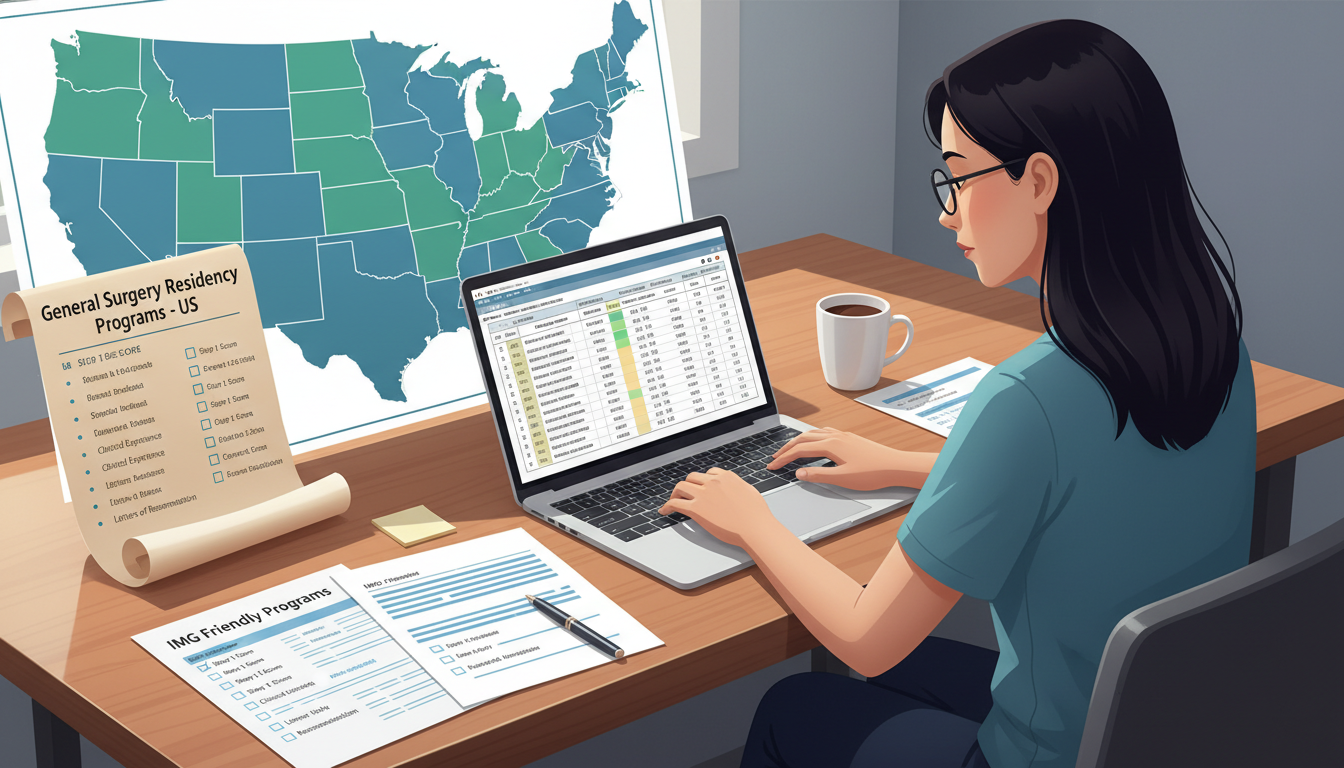
Choosing where to apply for orthopedic surgery residency as a US citizen IMG is one of the most strategic—and stressful—parts of the Match. The right program selection strategy can dramatically change your chances of securing an ortho match, while a poorly targeted list can waste time, money, and opportunity.
This guide walks you step-by-step through a data‑driven, realistic, and practical program selection strategy specifically tailored to US citizen IMGs and Americans studying abroad in orthopedic surgery.
Understanding Your Position as a US Citizen IMG in Orthopedic Surgery
Before you build a program list, you need a clear-eyed view of your competitiveness and the landscape you’re entering.
Why Ortho Is Particularly Tough for IMGs
Orthopedic surgery is one of the most competitive specialties. Several factors work against IMGs:
- Limited spots overall compared with internal medicine, family medicine, etc.
- High Step score expectations and strong research expectations.
- High proportion of US MDs and increasingly strong DO applicants.
- Program bias toward home and US MD schools with known clinical/research pipelines.
For US citizen IMGs, this means:
- A smaller subset of programs are truly IMG-friendly.
- Within that subset, you still compete with US MDs, DOs, and non‑US IMGs.
- You often have less built-in mentorship and fewer home institution advocates.
However, being a US citizen does remove visa-related barriers, and that can be a meaningful advantage over non‑US IMGs when programs are hesitant about sponsorship.
Know Where You Stand: Self‑Assessment Framework
Honest self‑assessment shapes your program selection strategy and helps answer how many programs to apply to.
Evaluate yourself across these domains:
USMLE/COMLEX scores (if applicable)
- Step 1: Pass/fail, but the context (number of attempts, timing) still matters.
- Step 2 CK: This is critical.
- 250+ → highly competitive for an IMG in ortho.
- 240–249 → solid, but still uphill.
- 230–239 → needs strong offsetting strengths (research, connections, US ortho rotations).
- <230 or attempts → extremely challenging; must be exceptionally strategic.
Clinical Experience and Letters of Recommendation
- Number of US orthopedic surgery sub‑internships/audition rotations.
- Quality of letters of recommendation (US ortho faculty, known attendings, program leaders).
- Any home ortho department involvement, if applicable.
Research Profile
- Ortho‑focused research (projects, posters, publications).
- Involvement at US institutions or known ortho research groups.
- Timing of involvement (longitudinal vs last-minute).
Connections and Networking
- Mentors who personally know program directors or faculty.
- Away rotation relationships.
- Conference networking (AAOS, specialty meetings, regional ortho meetings).
Red Flags
- Course failures, LOA, professionalism concerns.
- Multiple exam attempts.
- Large gaps in training.
Write an honest “competitiveness snapshot” in 3–5 bullet points and keep it visible while you design your list. Your goal is to align your program selection strategy with who you are on paper and in person, not who you wish you were.
Step 1: Define Your Program Selection Strategy Framework
A good strategy for an American studying abroad in orthopedic surgery is structured, not random. Start by deciding what types of programs you’ll target, then refine.
Segment Programs into Tiers (Realistically)
Avoid obsessing over arbitrary “rankings” and instead think in tiers based on probability of interview and match for someone with your profile.
A rough IMG‑focused tiering framework:
Tier 1: Reach Programs
- Historically low or zero IMG representation.
- Strong brand-name academic centers or highly sought-after community programs.
- You apply here if you have exceptional metrics, research, or connections.
Tier 2: Selectively IMG-Friendly Academic/Hybrid Programs
- Some history of interviewing or matching US citizen IMGs or DOs.
- Mid-level academic or large community affiliations.
- Balanced between training quality and realistic chances.
Tier 3: Consistently IMG-Friendly Programs
- Documented track record of taking US citizen IMGs.
- Often community-based or hybrid programs.
- Where your probability of interview is highest.
Your list should be heavily weighted toward Tier 2 and Tier 3 if your goal is simply to maximize chance of any ortho match, rather than to chase prestige.
Prioritize Fit Over Reputation
For an ortho match as a US citizen IMG, the key question is not “What’s the best program on paper?” but:
“Where am I most likely to get interviews and ultimately match, while still receiving strong orthopedic training?”
Look at:
- Historical IMG acceptance
- Educational culture (supportive vs cutthroat, resident-driven vs faculty-driven)
- Volume and case mix (joint, trauma, sports, spine, pediatrics)
- Fellowship placement (fellows do not guarantee a good residency, but they show network strength)
- Geographic tolerance (some regions are more IMGFriendly than others)
Step 2: Researching Programs as a US Citizen IMG
This is where most applicants go wrong—they either under‑research or over‑rely on reputation and anecdote.

Tools and Data Sources You Should Use
FREIDA (AMA Residency & Fellowship Database)
- Filter by specialty → Orthopaedic Surgery.
- Check:
- Program type (university, community, university‑affiliated).
- Number of residents per year.
- Minimum exam criteria (if listed).
- Whether they consider IMGs or require US clinical experience.
Program Websites and Resident Rosters
- Look at current and recent residents.
- Ask:
- Do any residents have non‑US medical schools listed?
- Are there DOs or Caribbean/American‑abroad graduates?
- Are any labeled as “US citizen IMG” or show foreign medical schools you recognize?
NRMP and ERAS Data
- NRMP “Charting Outcomes in the Match” (if updated) for Ortho and IMG stats.
- Specialty data for match rates, score ranges, and IMG match numbers.
- Although ortho data may be limited for IMGs, trendlines still help.
Program Social Media (Instagram, Twitter/X, LinkedIn)
- See how open they are about diversity and non‑traditional paths.
- Watch for posts featuring IMGs or Caribbean grads.
Networking Inputs
- Ask mentors, recent graduates, current residents:
- “Do you know of ortho programs that have historically been good for US citizen IMGs?”
- “Any programs that are clearly IMG‑averse that I should avoid?”
- Ask mentors, recent graduates, current residents:
Identifying IMG-Friendly Orthopedic Programs
For each program, assign a simple IMG‑friendliness rating (High, Moderate, Low, Unknown). You can infer this by:
- Presence of any IMGs in the last 5–10 years.
- Presence of DOs (often, not always, correlates with flexibility beyond US MDs).
- Explicit website language:
- Positive: “We welcome international medical graduates,” “We consider all applicants.”
- Negative: “We do not sponsor visas” (less relevant if you are a US citizen), or “We only consider graduates from LCME-accredited US or Canadian schools.”
As a US citizen IMG, visa issues are less of a barrier, but programs that are globally conservative may still be less receptive to IMGs in general.
Step 3: How Many Programs to Apply to in Orthopedic Surgery as a US Citizen IMG
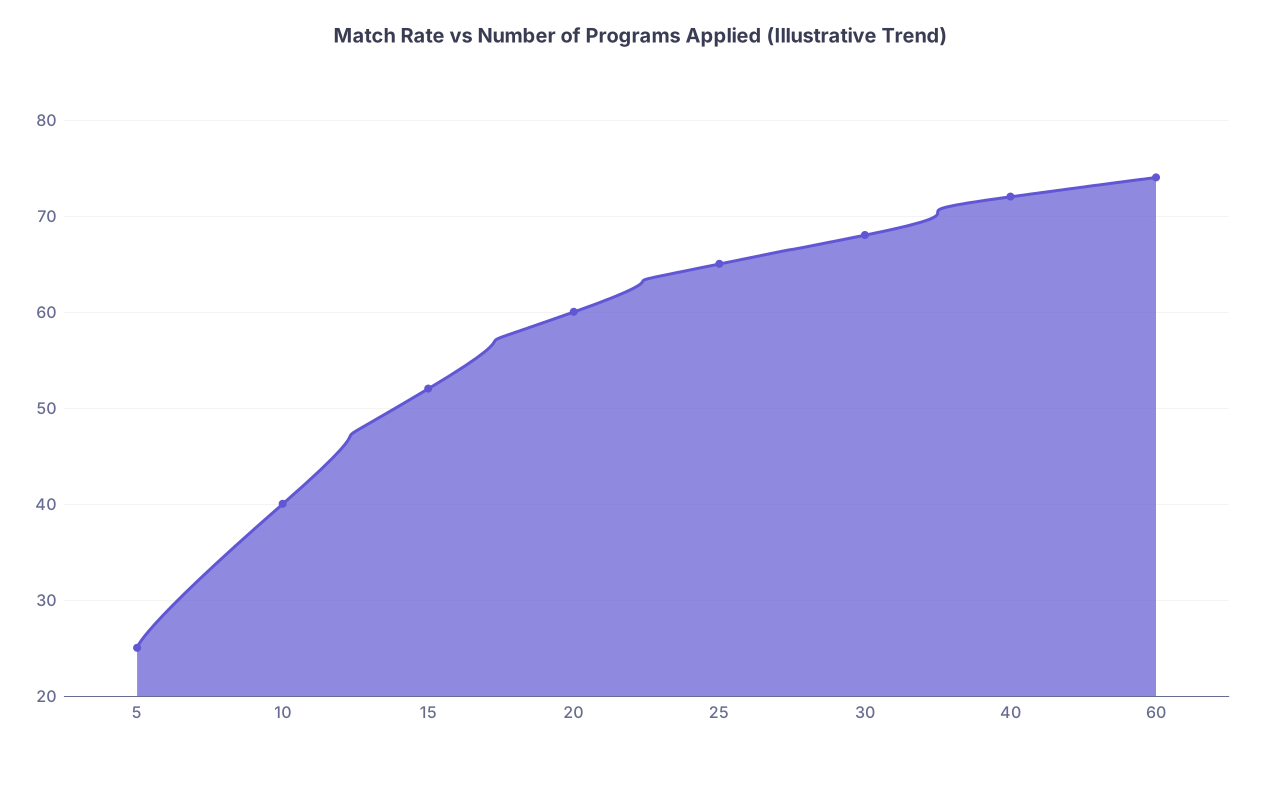
The question “how many programs to apply” is central for any program selection strategy. For a US citizen IMG in orthopedic surgery, the answer is almost never “apply to just a few.”
General Volume Guidelines
These are not rigid rules, but realistic ranges:
Highly competitive US citizen IMG
(Step 2 CK ≥ 250, strong ortho research, US ortho rotations, multiple strong US letters)- Consider: 40–60 programs
- Rationale: Still an IMG; volume matters, but you can be modestly more selective.
Moderately competitive US citizen IMG
(Step 2 CK 235–249, some research, at least 1–2 US ortho rotations, solid letters)- Consider: 60–90 programs
- Rationale: You need breadth and heavy emphasis on IMG-friendly programs.
Borderline/at-risk profile
(Step 2 CK <235 or attempts, limited US ortho exposure, minimal research)- Consider: 80–100+ programs, plus a serious backup specialty strategy.
- Rationale: Ortho match is unlikely; you’re applying to maximize chances while preparing a realistic plan B.
Remember: These numbers assume you’ve screened out programs that are obviously incompatible (e.g., explicitly no IMGs, extremely elite with no IMG history, or those that list cutoffs you don’t meet).
Balancing Breadth and Depth
While volume matters, quality of choice is more important than sheer numbers. Sending 100 unfocused applications to programs that clearly never take IMGs wastes effort and fees.
Use this structure:
- ~10–20% Reach programs
- ~40–50% “realistic” but competitive (Tier 2) programs
- ~30–40% strong IMG‑friendly programs (Tier 3)
For example, if you apply to 80 programs:
- 10–15 reach.
- 35–40 mid-tier, selectively IMG-friendly.
- 25–30 reliably IMG-friendly.
Step 4: Building and Refining Your Program List
Once you know how many programs to apply to and roughly how you’ll divide them across tiers, it’s time to build a concrete list.

Step-by-Step List Construction
Start Wide Using FREIDA and ERAS
- Export or copy all orthopedic surgery residency programs into a personal spreadsheet.
- Add columns:
- Location (state, region)
- Program type (academic, community, hybrid)
- IMG-friendly rating
- US citizen IMG/DO presence
- Personal connections (Y/N)
- Cutoffs/requirements (scores, attempts, graduation year)
- Priority (High/Medium/Low)
First Filter: Hard Cutoffs and Deal‑Breakers
Remove or de‑prioritize:- Programs with explicit statements excluding IMGs.
- Programs listing score or attempt cutoffs you don’t meet.
- Geographic locations you truly refuse to live in (be honest, but flexible).
Second Filter: IMG‑Friendliness and History
- Highlight programs where:
- At least one IMG or DO is in current/recent classes.
- There’s evidence of international diversity.
- Flag programs with no evidence of IMG presence and no open stance as “Reach/Low probability.”
- Highlight programs where:
Third Filter: Your Personal Fit Factors
Ask:- Do I have any connection to this region (family, school, undergrad)?
- Have I rotated there or do I plan to?
- Does the program’s structure fit my learning style (academic vs hands-on community)?
- Is there a particular niche I care about (trauma-heavy, sports, joints, etc.)?
Give each program a simple 1–3 priority score:
- 3 = Strong target
- 2 = Acceptable option
- 1 = Only if I need more volume
- Check Your Counts Against Your Application Volume Target
Match the final number to your target range from earlier. For example:
- If you’re moderately competitive aiming for 70 programs, you might end up with:
- 15 reach.
- 30 strong targets.
- 25 IMG‑friendly anchors.
If after filtering for realistic and IMG‑friendly programs you only have 40–50, that’s a critical signal:
- Either you need to lower expectations (add more reach but accept low interview probability), or
- More importantly, you may need to consider parallel plans such as applying to a backup specialty.
Step 5: Geographic and Personal Considerations
Strategy must be balanced with your life circumstances. As an American studying abroad, you may have ties across the US that you can leverage.
Using Geographic Ties Strategically
Programs often prefer applicants who are likely to stay and thrive in their region. For each program, ask:
- Do I have:
- Family nearby?
- Undergrad or high school in the state/region?
- Prior work experience or military service there?
- Any history that you can articulate in your personal statement?
If yes, highlight this in:
- Your ERAS geographic preference signals (if used that cycle).
- Your personal statement (localized versions).
- Interviews, if offered.
Programs in regions with less competition for location (Midwest, some Southern or rural areas) may be more approachable than highly desired urban coastal centers.
Lifestyle and Career Goals
Some questions to guide your program selection strategy beyond match probability:
- Do I want more operative autonomy earlier, often found in community or hybrid programs?
- Do I see myself in academic medicine, where more traditional university programs may help?
- Is proximity to specific family or partner career needs non‑negotiable?
- Am I willing to sacrifice “prestige” for a higher probability of matching somewhere solid?
For most US citizen IMGs in ortho, the primary objective is “match first, optimize later.” Fellowship can refine your career niche and prestige later on.
Step 6: Integrating Research, Rotations, and Timing into Program Selection
Your program list is not static; it should interact with your broader application strategy.
Aligning Away Rotations with Program Targets
If you have the chance to do US orthopedic sub‑internships, choose them strategically:
- Prefer programs that are:
- Already on your target list.
- Known to be open to IMGs or DOs.
- In regions you’re willing to live in and that might have multiple nearby programs.
Your rotation performance can:
- Turn a low-probability program into a realistic option.
- Generate a powerful letter of recommendation.
- Give you insider information about which nearby programs are more IMG‑friendly.
Research Collaborations and Networking
If your research is based at a US institution, ask mentors:
- “Which programs do you think would genuinely consider someone with my background?”
- “Are there former trainees/residents in orthopedics who might be willing to talk with me?”
Such conversations often uncover:
- Smaller or less-known programs that are quietly IMG-friendly.
- Programs where your mentor’s name carries weight, increasing your odds of an interview.
Updating Your List as the Season Evolves
Expected timeline:
- Spring–early summer: Preliminary list and priority scoring.
- Late summer: Final decisions on how many programs to apply to based on updated scores, letters, and research output.
- After ERAS opens: Rarely, you might add or drop a few programs if new information arises (e.g., a program loses accreditation, or you gain a strong tie to a region).
Step 7: Considering a Backup Strategy (Realistically)
As a US citizen IMG targeting orthopedic surgery, it’s responsible—not defeatist—to consider alternatives.
Options include:
- Dual-apply to a less competitive but still procedurally oriented specialty (e.g., general surgery, PM&R with MSK focus) if your profile is borderline.
- Apply ortho-only if your metrics and experiences are strong and you’re prepared to reapply if needed.
Use the same program selection strategy principles for any backup specialty:
- Identify IMG‑friendly programs.
- Decide how many programs to apply based on your risk tolerance.
- Keep your geographic and life constraints in mind.
Putting It All Together: Example Strategies
Here are two simplified scenarios to illustrate how a US citizen IMG might approach program selection.
Scenario A: Strong US Citizen IMG
- Step 2 CK: 252
- 2 US ortho sub‑internships at mid‑tier academic programs, good feedback
- 3 ortho‑related publications, one at a US institution
- 2 letters from US ortho faculty, 1 from home IM chair
Strategy:
- Goal: Maximize chance of ortho match, aim for robust training environment.
- Applications: ~55 programs.
- 10–12 reach (academic university programs with minimal IMG history).
- 25–30 mid-tier academic/hybrid programs with some DO/IMG presence.
- 15–18 IMG-friendly community or hybrid programs with documented US‑IMG residents.
Scenario B: Moderate US Citizen IMG, Caribbean Graduate
- Step 2 CK: 238
- 1 US ortho sub‑I, 1 general surgery sub‑I
- 1 case report, 1 poster, both ortho‑related
- Decent but not superstar letters
Strategy:
- Goal: Match ortho if possible; consider backup if no traction early.
- Applications: 80–90 ortho programs.
- 15–20 reach (though unlikely, a few might surprise).
- 35–40 mid‑tier with some DO/IMG history.
- 25–30 strong IMG‑friendly programs.
- Backup: 30–40 general surgery or PM&R programs (decide in advance, not last minute).
In both scenarios, the key is deliberate targeting rather than blind mass application.
FAQs: Program Selection Strategy for US Citizen IMG in Orthopedic Surgery
1. As a US citizen IMG, is it even realistic to match into orthopedic surgery?
Realistic does not mean guaranteed, but yes, it is possible—especially with:
- Strong Step 2 CK score (ideally ≥240).
- At least one or two US orthopedic surgery sub‑internships.
- Quality US letters from orthopedic surgeons.
- Some ortho‑related research or scholarly activity.
- A smart program selection strategy that emphasizes IMG‑friendly programs.
However, the overall match rate for IMGs into ortho is low, so it’s important to be strategic, apply broadly, and consider contingency plans.
2. How can I quickly identify programs most likely to interview a US citizen IMG?
Use this checklist:
- Check resident rosters on program websites:
- Any non‑US medical schools listed?
- Any Caribbean or US‑citizen IMGs?
- Look for DO residents; this often indicates some openness to non‑traditional paths.
- Scan FREIDA and program FAQs for explicit IMG or US‑graduate policies.
- Ask mentors, alumni, and current residents which programs have a track record of taking US citizen IMGs.
- Prioritize programs that meet at least two of these criteria and assign them “High priority” in your spreadsheet.
3. Should I avoid applying to top academic programs entirely as an IMG?
Not necessarily. A few reach programs can be part of a healthy list, especially if:
- You have exceptional metrics (very high Step 2, strong research, or powerful letters).
- You have a specific connection (research there, away rotation, regional ties).
However:
- Do not let reach programs dominate your list.
- They should be 10–20% of your total applications, not your core strategy.
- The bulk of your list must be realistic, IMG‑aware programs to protect your overall match chances.
4. If my budget is limited, how should I prioritize which programs to apply to?
When financial constraints limit how many programs to apply to, prioritize:
- IMG‑friendly programs with a documented history of taking IMGs or DOs.
- Regions where you have strong geographic ties (family, school, upbringing).
- Programs where you’ve rotated or have strong faculty connections.
- Then, add a few strategic reach programs if your metrics justify it.
If money is very tight, it’s better to submit 40 well-chosen, high-yield applications than 70 scattershot ones to programs that are unlikely to consider a US citizen IMG.
A thoughtful, data‑driven program selection strategy is one of the strongest levers you control as a US citizen IMG aiming for an orthopedic surgery residency. By honestly assessing your competitiveness, targeting IMG‑friendly programs, and applying broadly and intelligently, you give yourself the best possible chance to achieve your ortho match goals.