Understanding the Landscape: Clinical Informatics for a US Citizen IMG
Clinical Informatics is not a traditional entry-level residency; it is a subspecialty fellowship that physicians pursue after completing a primary residency (usually in fields like Internal Medicine, Family Medicine, Pathology, Pediatrics, Emergency Medicine, etc.). As a US citizen IMG or an American studying abroad, your program selection strategy needs to account for two layers:
- Primary residency choice – which specialties and specific programs will best set you up for a future clinical informatics fellowship and broader health IT training.
- Downstream fellowship opportunities – how your residency program’s resources, mentorship, and institutional ecosystem will position you for a clinical informatics fellowship later.
This article focuses on that first layer: designing a deliberate, realistic residency program selection strategy tailored to a US citizen IMG with a strong interest in clinical informatics. You’ll also see how to keep the second layer (fellowship and health IT career) in view from the beginning.
Key questions we’ll answer:
- How to align your specialty choice with a future in clinical informatics
- How to choose residency programs that value informatics, tech, and innovation
- How many programs to apply to as a US citizen IMG aiming for informatics
- How to strategically tier programs and build a realistic, data-informed list
- How to evaluate programs for EHR exposure, research, and health IT training opportunities
Step 1: Clarify Your Career Vision in Clinical Informatics
Before picking programs, you need a clear picture of where you’re headed. “Clinical Informatics” is broad; your program selection should reflect the specific type of work you hope to do.
Common Career Paths in Clinical Informatics
As a US citizen IMG, you may be drawn to one or more of these roles:
Clinical Informaticist / CMIO track
Physicians who bridge clinical care and IT, optimizing EHRs, clinical decision support, quality metrics, and workflows.Health IT implementation and optimization
Working with vendors, health systems, or consulting firms on EHR rollouts, interoperability, and data-driven workflow redesign.Data/analytics-focused roles
Using clinical data for quality improvement, population health, predictive modeling, or AI/ML projects (often in partnership with data scientists).Academic informatics
Teaching, research, and innovation in informatics, often at large academic centers with formal clinical informatics fellowships.
Your program selection strategy should match your likely direction:
- If you’re interested in clinical operations and leadership → a robust clinical residency (e.g., Internal Medicine, Family Medicine, Pediatrics) at a health system that invests in health IT and quality improvement.
- If you lean toward data and pathology-focused informatics → Pathology residencies with strong lab information systems (LIS) and digital pathology infrastructure.
- If you like emergency workflows and decision support → Emergency Medicine programs with advanced EHR customization and QI projects.
Why This Matters for a US Citizen IMG
As a US citizen IMG, you have one major advantage over non-US IMGs: no visa sponsorship needs, which often makes you more attractive to certain community or smaller academic programs. However, you may face:
- Less familiarity with US health systems and EHRs
- Less embedded research in informatics during medical school
- Potential bias toward US MD/DO graduates at elite academic centers
Because of that, your best strategy is usually to prioritize match viability and solid clinical training, then layer on informatics through elective time, projects, and networking.
Step 2: Choose a Primary Specialty With Informatics in Mind
Before you can worry about specific residency programs, you need to select a primary specialty that:
- You will actually enjoy practicing clinically (long-term), and
- Has reasonable access to clinical informatics fellowship opportunities.
Specialties Commonly Leading to Clinical Informatics
Board-eligible physicians from any specialty can pursue clinical informatics, but some paths are more common or better supported:
Internal Medicine (IM)
- Pros: Abundant residency spots; many academic IM programs are heavily involved in quality, EHR optimization, and hospital operations.
- Informatics fit: Hospital medicine, ambulatory care, and population health are frequent informatics domains.
Family Medicine (FM)
- Pros: Strong orientation to primary care, population health, preventive medicine; many opportunities for practice-based data and quality projects.
- Informatics fit: Outpatient EHR optimization, registries, telehealth, and chronic care management.
Pediatrics
- Pros: Increasingly data-driven, especially in tertiary children’s hospitals; opportunities in quality, safety, and outcomes research.
- Informatics fit: Pediatric-specific clinical decision support, registries, and population health.
Emergency Medicine (EM)
- Pros: High-intensity workflow, reliance on rapid information flow; early adoption of decision support and protocols.
- Informatics fit: ED throughput, triage algorithms, sepsis alerts, and operational dashboards.
Pathology
- Pros: Naturally data-centric; heavy use of LIS, digital pathology, and analytics.
- Informatics fit: Laboratory information systems, image analysis, and data pipelines.
Other specialties can work (Anesthesiology, Radiology, Psychiatry, etc.), but these five are the most common informatics feeders.
US Citizen IMG Perspective on Specialty Choice
As a US citizen IMG, your match probability differs by specialty:
- More attainable (relatively speaking):
- Internal Medicine (particularly community and mid-tier academic programs)
- Family Medicine
- Pediatrics (varies by region)
- Moderately competitive:
- Emergency Medicine (especially in desirable cities)
- Pathology (variable; fewer positions but less popular overall)
Align your interests and your risk tolerance:
- If your CV is stronger (solid scores, US clinical experience, strong LORs), you might target EM or more competitive IM programs.
- If your metrics are more average, leaning toward IM or FM often gives you the best combination of match viability and downstream informatics options.
Step 3: Core Criteria for Selecting Residency Programs
Once you’ve chosen a specialty (e.g., Internal Medicine), the next step is to decide which programs to target and how many programs to apply to. You should evaluate programs across three broad domains:
- Match viability (can you realistically match here?)
- Informatics/health IT environment (will it support your future aims?)
- Personal and lifestyle fit
A. Match Viability: Data and Realism
For a US citizen IMG, this is your first filter.
Key factors:
Historical IMG friendliness
- Check program websites and NRMP/FRIEDA data (when available).
- Look for “IMG-friendly” markers:
- Explicit statements welcoming IMGs
- Current residents who trained abroad (view resident bios)
- Clear description of minimum USMLE scores, number of attempts allowed
USMLE / COMLEX thresholds
- Some programs won’t review applications below certain score cutoffs.
- If your scores are modest or you have attempts, prioritize programs that:
- State they consider applicants holistically
- Have a track record of accepting IMGs with diverse profiles
Number of positions and fill rates
- Larger programs with more categorical spots often have more flexibility.
- Programs that fill mostly with US MD/DO each year may be harder to access.
Geographic realities
- Highly desirable areas (e.g., coastal big cities) tend to be more competitive.
- Midwestern, Southern, or more rural regions may be more IMG-friendly.
As a US citizen IMG, visa issues are off the table, which is a huge plus. You can confidently apply to programs that “do not sponsor visas” because that restriction does not apply to you.
B. Informatics / Health IT Environment
You’re not just matching anywhere—you’re aiming for a place that will support your future clinical informatics fellowship and health IT training aspirations.
Look for:
EHR Maturity and Systems
- Does the program use a major EHR (Epic, Cerner, Meditech, etc.)?
- Is the health system recognized for digital adoption (HIMSS EMRAM, quality awards, innovation centers)?
Informatics Teams and Leadership
- Is there a CMIO, Associate CMIO, or clinical informatics director listed on the hospital’s website?
- Are there clinical informaticists who are physicians in your chosen specialty?
- Does the institution host a clinical informatics fellowship?
Opportunities for Projects and QI
- Does the residency include robust quality improvement and patient safety curricula?
- Are residents encouraged to participate in EHR optimization, clinical pathways, or data dashboards?
- Are there research opportunities using clinical data?
Formal or Informal Health IT Training
- Any mention of informatics electives, data science courses, or collaborations with schools of public health, engineering, or computer science?
- Institutional participation in telehealth, digital health pilots, or AI projects?
You don’t need a formal informatics fellowship at your residency site to build a strong path, but having some evidence of health IT investment is a major plus.
C. Personal Fit and Practical Considerations
Residency is intense, and informatics will be a side focus at first; you need a place where you can thrive clinically and personally.
Consider:
- Location and support system (family, cost of living, safety)
- Clinical workload and culture (is there space for scholarly work?)
- Educational structure (protected didactic time, supportive PD/APDs)
- Benefits and wellness (vacation, parental leave, mental health resources)
Residency is your foundation. A healthier training environment gives you the energy and time to pursue informatics projects.
Step 4: Building a Tiered Program List and Deciding How Many Programs to Apply To
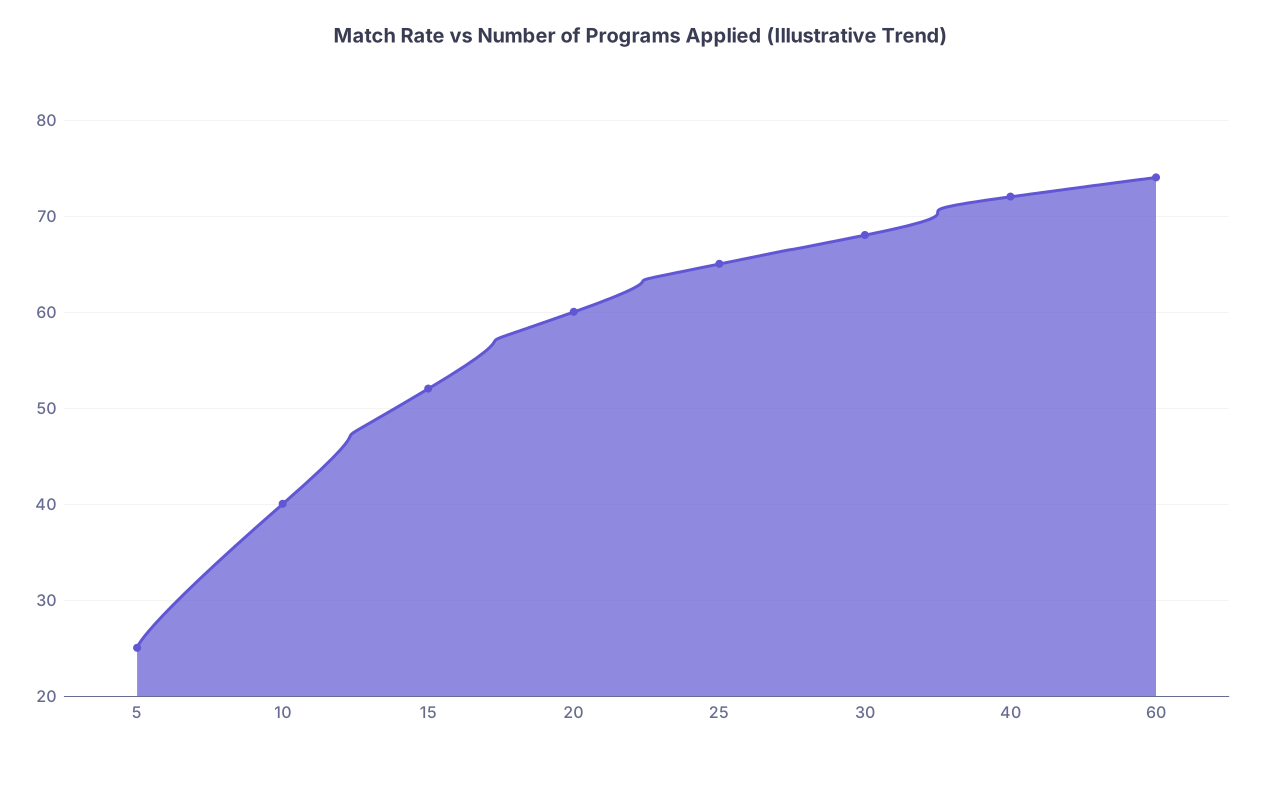
A central question every applicant asks: How many programs to apply? For a US citizen IMG targeting a future in clinical informatics, your answer depends on competitiveness, specialty, and how broad your geographic flexibility is.
A. General Ranges for US Citizen IMGs
These are rough guidelines (not guarantees), assuming you are applying in a moderately competitive specialty like Internal Medicine, Family Medicine, or Pediatrics:
- Strong profile (solid scores, no attempts, US rotations, strong LORs, some research/QI):
- IM/FM/Peds: 35–60 programs
- Average profile (mid-range scores, maybe one attempt, limited research):
- IM/FM/Peds: 50–80 programs
- Weaker profile (multiple attempts, significant gaps, limited USCE):
- IM/FM/Peds: 75–120 programs, with emphasis on IMG-friendly community programs
For more competitive specialty choices (e.g., Emergency Medicine):
- Strong profile: 40–60 programs
- Average profile: 60–90 programs
- If clearly below common EM metrics: consider a parallel plan (e.g., IM + EM) and higher application numbers.
Remember: your interest in clinical informatics does not directly change how many programs you should apply to; it mostly affects which programs you prioritize.
B. Tiering Your List: A Practical Strategy
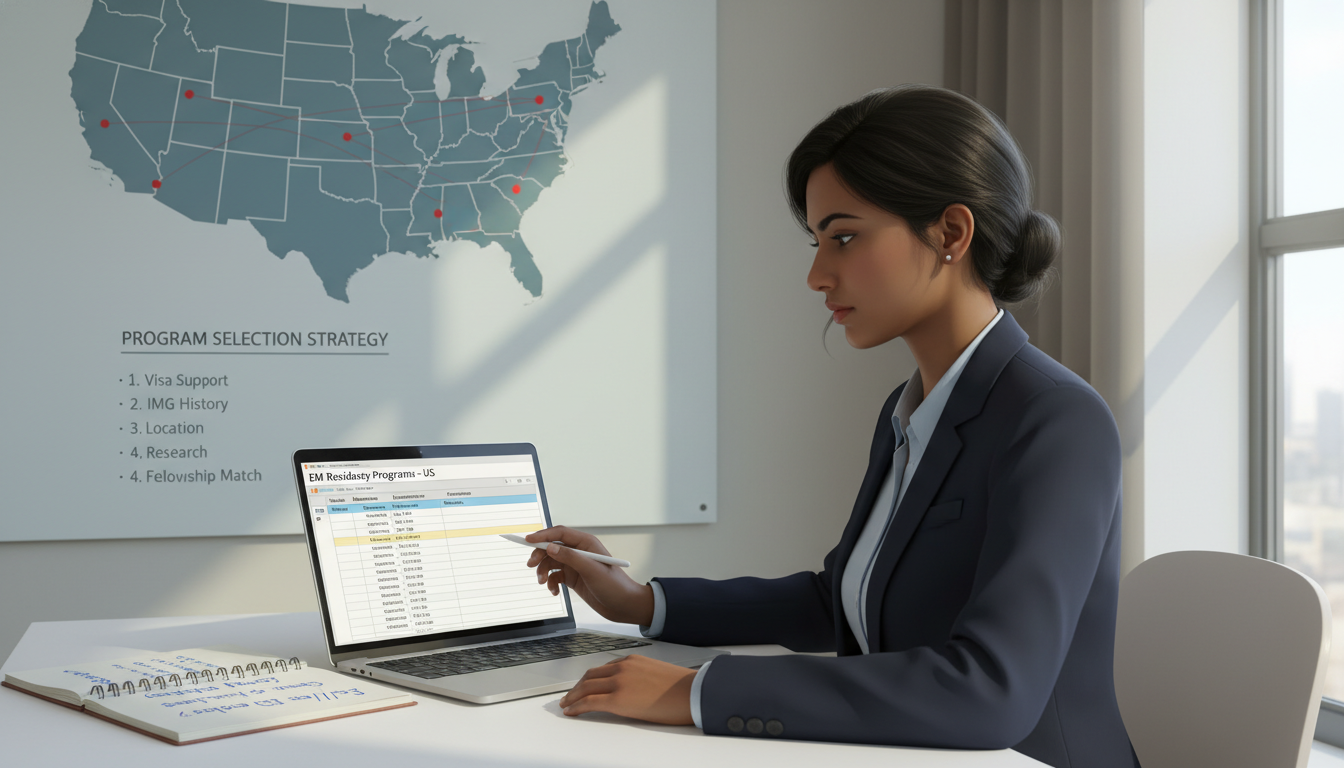
A structured program selection strategy for a US citizen IMG might look like this:
Gather a broad pool
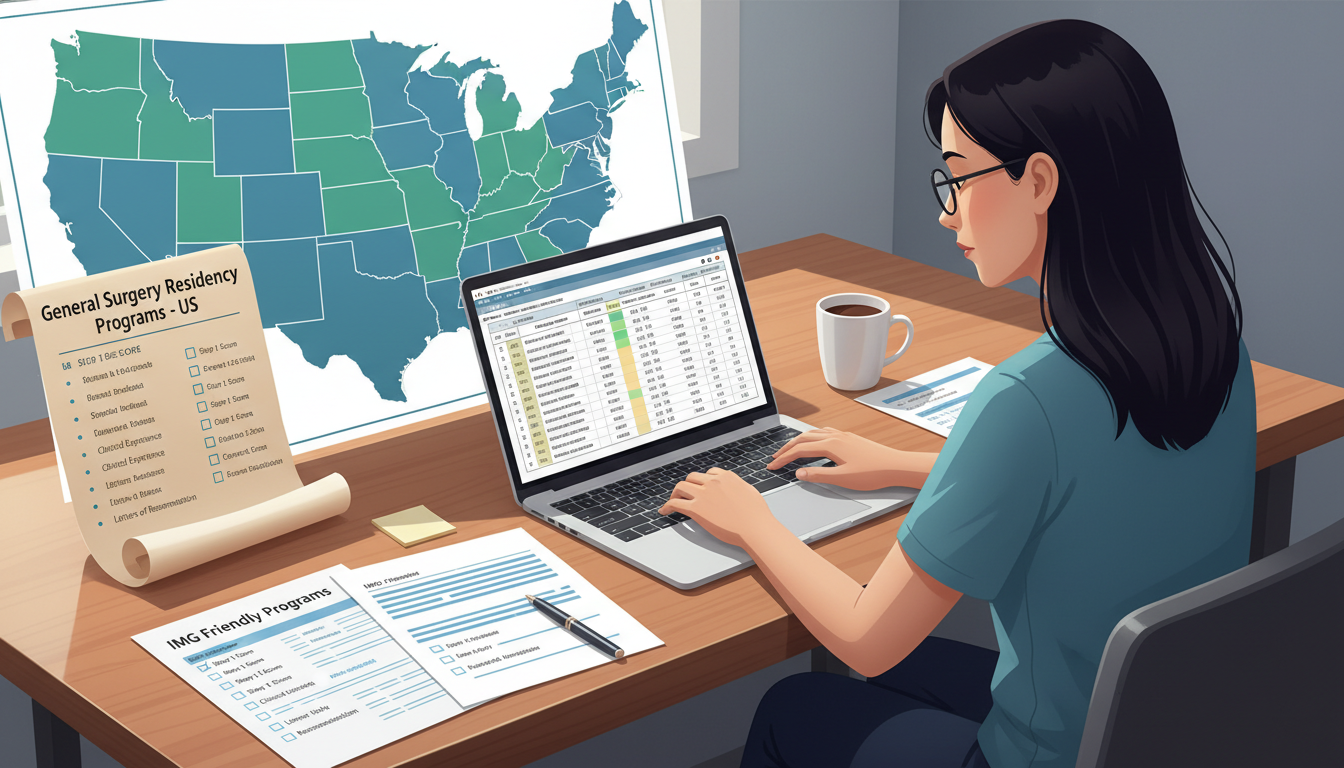
- Use FREIDA, program websites, and match data to create a list of all programs in your specialty.
- Flag programs with:
- IMG-friendliness
- No visa requirement (you can apply to all, but note the policies)
- EHR sophistication and any mention of informatics or QI
Create three tiers
- Tier 1 (Reach): Highly desirable locations, strong academic centers, or places with established informatics fellowships.
- Tier 2 (Target): Mid-tier academic or strong community programs, moderately competitive, some informatics exposure.
- Tier 3 (Safety/High-yield): IMG-friendly community programs, less competitive regions, but still with decent EHR/QI opportunities.
Distribute your applications
- Strong profile (IM/FM/Peds example, total 60 programs):
- ~10–15 Tier 1
- ~25–30 Tier 2
- ~15–20 Tier 3
- Average profile (80 programs):
- ~10–15 Tier 1
- ~25–30 Tier 2
- ~35–45 Tier 3
- Strong profile (IM/FM/Peds example, total 60 programs):
Add an Informatics Lens to Each Tier
Within each tier, prioritize programs that show at least some of:- Named CMIO or informatics leadership
- Mention of “informatics,” “data,” “EHR optimization,” or “quality improvement” in the curriculum
- Partnerships with IT or data analytics teams
This way, you balance match safety with future informatics potential.

Step 5: Evaluating Informatics Potential in Specific Programs
Once you have a preliminary list, deepen your research to prioritize the best fits for your clinical informatics aspirations.
A. Signals to Look For on Program and Hospital Websites
When reviewing program sites and institutional pages, ask:
Does the institution have a clinical informatics fellowship?
- Not mandatory, but a big plus.
- Even if it’s in another department (e.g., Pathology, Pediatrics), it suggests a strong informatics culture.
Who are the leaders in health IT?
- Search the hospital or health system website for:
- “CMIO”
- “Chief Health Information Officer”
- “Clinical Informatics”
- “Digital health” or “Health IT”
- Look at their backgrounds—if they are physicians, especially in your planned specialty, that’s a great sign.
- Search the hospital or health system website for:
What EHR and analytic tools do they use?
- Mentions of Epic, Cerner, or advanced registries/analytics tools indicate a more mature digital environment.
- Awards (HIMSS Stage 7, Most Wired, etc.) show institutional commitment to digital transformation.
Research and QI outputs
- Look at faculty publications—are there recent papers on EHR optimization, data use, predictive models, etc.?
- Check if residents have presented posters or talks related to informatics or QI.
B. Questions to Ask During Interviews (or Resident Q&A)
When you interview or reach out to residents/alumni, use targeted, concise questions:
- “Are there opportunities for residents to get involved with EHR optimization or quality dashboards?”
- “Do any faculty or residents work closely with the CMIO or IT department?”
- “Has anyone from this program gone on to a clinical informatics fellowship or health IT-oriented career?”
- “Is there protected time or elective time that could be used for informatics or data projects?”
- “Are there collaborations with a school of public health, engineering, or data science related to clinical data?”
Even if informatics isn’t advertised prominently, many programs are happy to support a motivated resident if they see you as a strong, reliable clinician first.
C. Practical Example: Comparing Two Hypothetical IM Programs
Program A (large academic center in the Midwest):
- Uses Epic; HIMSS Stage 7
- Lists a CMIO and an Associate CMIO who are general internists
- Hosts an ACGME-accredited clinical informatics fellowship
- Multiple QI and data-driven research projects on the website
- Historically accepts 2–3 IMGs per year
Program B (community program in the Southeast):
- Uses Cerner; no mention of informatics fellowship
- Has a Director of Quality and some QI curriculum
- No obvious CMIO on the website
- Highly IMG-friendly, many US citizen IMGs in prior classes
For a US citizen IMG with a reasonably strong profile, Program A is highly appealing—strong informatics environment and a decent chance of acceptance. Program B, while less obviously informatics-oriented, is still valuable: you get solid clinical training and can carve out informatics experience via QI, EHR workflows, and self-initiated projects.
In your program selection strategy, you might:
- Include Program A as a Tier 1 or 2 target
- Include Program B as a Tier 2 or 3 high-yield option
- Apply to multiple versions of A and B, not just one of each
Step 6: Leveraging Your IMG Background and Informatics Interest
As an American studying abroad or US citizen IMG, you can turn aspects of your background into strengths:
A. Framing Your Story
Programs care about:
- Can you be a safe, reliable resident?
- Do you bring something distinctive to the program?
You can emphasize:
- Global perspective: Understanding diverse health systems, resource constraints, and variation in EHR adoption.
- Adaptability: Navigating different cultures, languages, or healthcare environments.
- Interest in system-level improvement: Demonstrate you see informatics as a way to improve care quality and equity.
Tie this clearly to your clinical informatics interest:
- Example framing:
“Training abroad, I saw how data gaps and paper-based systems affected patient care. I’m motivated to train in a US residency that values EHR innovation and quality improvement so I can contribute to safer, more efficient care and eventually pursue a clinical informatics fellowship.”
B. Concrete Steps During Medical School or Pre-Residency
While planning your applications, strengthen your informatics profile:
- Participate in QI or audit projects during clinical rotations (even abroad); focus on data collection and workflow changes.
- Seek US clinical experience where you can observe EHR use and ask clinicians how they interact with IT systems.
- Take online or university-based short courses in:
- Health informatics
- Data science for healthcare
- Quality improvement methodologies (e.g., IHI Open School)
- Learn core concepts: basic SQL or R/Python exposure, if possible, but don’t oversell your skills; emphasize your willingness to learn.
Residency programs don’t need you to be a programmer—they want a motivated physician who understands how informatics can enhance care and who will be a strong clinician first.
FAQs: Program Selection Strategy for US Citizen IMG in Clinical Informatics
1. As a US citizen IMG interested in clinical informatics, should I only apply to programs with a clinical informatics fellowship?
No. While programs with a clinical informatics fellowship are attractive, they are often more competitive and limited in number. As a US citizen IMG, you should:
- Apply broadly, including many programs without a formal fellowship.
- Prioritize places with strong EHR systems, QI culture, and openness to projects.
- Remember that you can match to a separate clinical informatics fellowship later, even at a different institution, if you build skills and experiences during residency.
2. How many programs should I apply to if I’m aiming for a future in clinical informatics?
Your interest in informatics doesn’t change the basic numbers; your profile and specialty do. For typical specialties feeding into informatics (IM/FM/Peds) as a US citizen IMG:
- Strong profile: 35–60 programs
- Average profile: 50–80 programs
- Weaker profile: 75–120 programs
Within that range, choose programs that balance match likelihood and health IT training potential—don’t chase only informatics-heavy academic centers at the expense of match safety.
3. Is Internal Medicine better than Family Medicine or Pediatrics for a future informatics career?
No single specialty is universally “best.” However:
- Internal Medicine often offers the widest variety of hospital and outpatient experiences and a large number of residency spots.
- Family Medicine is strong for population health, chronic disease management, and outpatient informatics.
- Pediatrics is valuable if you’re specifically interested in pediatric EHR and outcomes research.
Choose a specialty you can see yourself practicing long-term, then look for programs in that specialty that support quality improvement, EHR use, and data-driven care.
4. If my medical school had little exposure to informatics, will that hurt my chances?
Not necessarily. Many US and international schools have limited formal informatics content. Programs mainly care that you:
- Have solid clinical skills and professionalism
- Show genuine, informed interest in informatics
- Have taken concrete steps (courses, QI projects, data-based audits, reading) to prepare yourself
As a US citizen IMG, highlight your adaptability and learning mindset. Use your personal statement, experiences, and interview answers to connect your background, your clinical training, and your motivation toward a future in informatics.
By combining a realistic understanding of your competitiveness as a US citizen IMG with a deliberate focus on EHR maturity, QI opportunities, and informatics culture, you can create a smart, data-informed program selection strategy that maximizes both your chances of matching and your long-term trajectory toward a clinical informatics career.