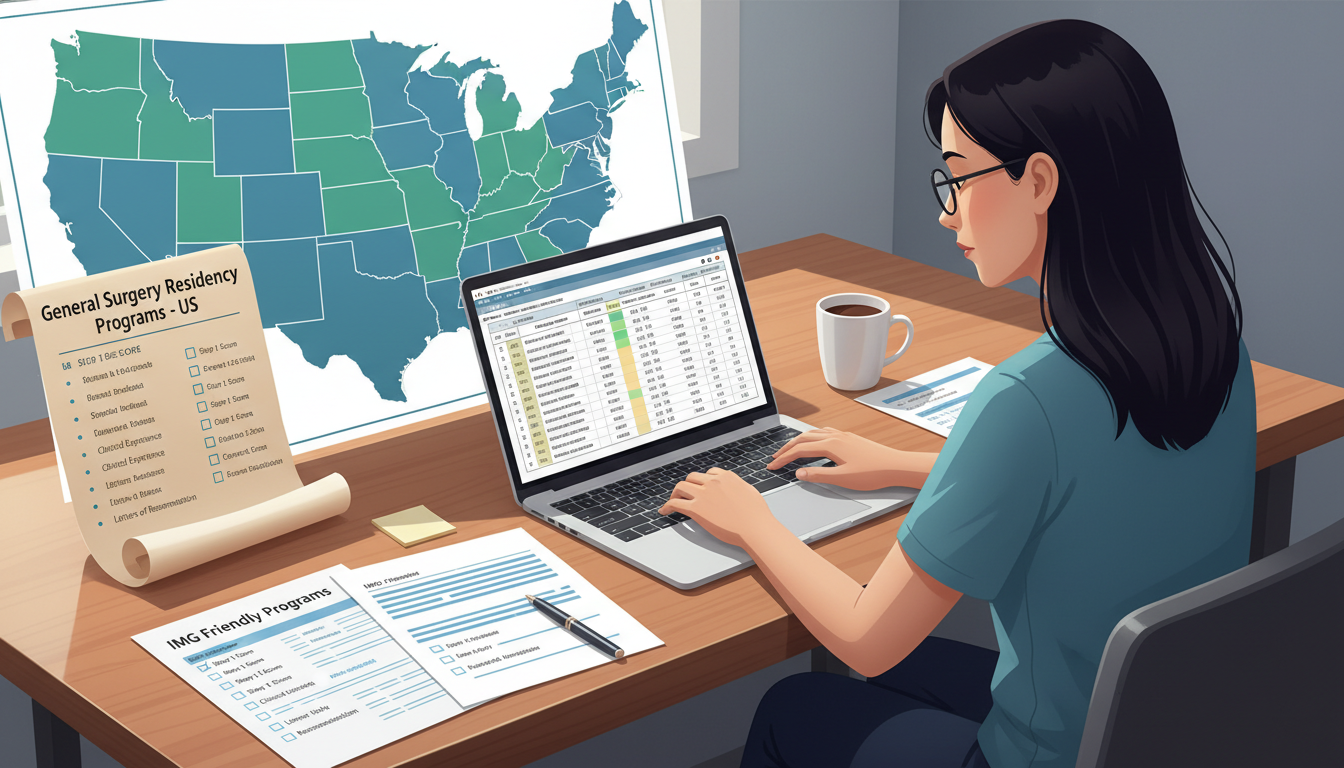
As a US citizen IMG (American studying abroad), pursuing neurosurgery residency in the United States puts you in one of the most competitive lanes in medicine. A smart program selection strategy is not optional—it is the backbone of your entire brain surgery residency application.
This guide walks you through a structured, reality-based approach to deciding:
- Which neurosurgery programs to target
- How many programs to apply to
- How to balance reach, realistic, and safety programs
- How to adapt as a US citizen IMG neurosurgery applicant
Understanding the Landscape: Where US Citizen IMGs Stand in Neurosurgery
Before building a program selection list, you need a clear view of the field you’re entering.
1. Neurosurgery: Ultra-Competitive by Design
Neurosurgery residency in the US:
- Has very few total positions each year (a fraction compared to IM, FM, or Pediatrics)
- Attracts applicants with:
- High board scores
- Significant research experience, often in neurosurgery
- Publications, presentations, and strong letters from neurosurgeons
- Is highly selective about “fit,” mentorship potential, and long-term commitment
For an American studying abroad (US citizen IMG), every decision about where and how you apply must respect this competitiveness.
2. The IMG Reality in Neurosurgery
Historically, very few IMGs match into neurosurgery each year, and those who do often share features like:
- Extensive US-based neurosurgery research (sometimes 1–3 research years)
- Multiple publications in neurosurgery or neuroscience
- Strong US neurosurgery letters of recommendation
- Step 2 CK scores typically well above average
- Often prior connections: research collaborator, post-doc, observer, or visiting rotator at their matched program
As a US citizen IMG, you do have certain advantages compared to non-US IMGs:
- No visa sponsorship required
- Cultural familiarity with US training systems
- Often easier communication with programs about logistics
But program directors will still see you as an IMG, and most neurosurgery programs are very conservative in taking IMGs.
That’s why program selection is not just about volume (how many programs to apply); it’s about strategic targeting.
Step 1: Honest Self-Assessment Before Choosing Programs
Your program selection strategy has to be grounded in an honest appraisal of your profile.
Key Metrics to Assess
USMLE / Step 2 CK performance
- Competitive neurosurgery applicants tend to have very high Step scores
- If your Step 2 CK is above average but not exceptional, you will rely more heavily on:
- Research strength
- Connections
- Strategic program selection
Neurosurgery-specific research
- Number of:
- Publications (especially first-author)
- Abstracts and posters
- Presentations at neurosurgery or neurology conferences
- Time spent in:
- Research fellowships
- Lab positions
- Clinical neurosurgery research projects
- Number of:
Clinical US experience in neurosurgery
- Sub-internships / acting internships in US neurosurgery departments
- Performance evaluations from those rotations
- Case logs, call experience, exposure to OR and neurosurgical ICU
Letters of Recommendation
- At least 2–3 letters from US neurosurgeons, ideally at academic centers
- Strength, specificity, and seniority of letter writers
Institutional connections
- Prior research or observerships at a program
- Strong mentor advocating for you to specific departments
Categorizing Your Profile: High, Moderate, or Emerging Competitiveness
For US citizen IMGs, you can roughly (and honestly) sort yourself into:
High competitiveness (for IMG neurosurgery)
- Very strong Step 2 CK score
- 1–3 years of US-based neurosurgery research
- Multiple neurosurgery publications, including first-author
- US neurosurgery letters from well-known academic names
- Sub-I or extended rotation at a neurosurgery program
Moderate competitiveness
- Good but not standout Step 2 CK
- Some neurosurgery or neuroscience research
- A few publications/abstracts or strong ongoing projects
- 1–2 solid letters from US neurosurgeons
- Some US clinical experience, though not all as neurosurgery sub-Is
Emerging competitiveness
- Step 2 CK is adequate but not aligned with typical neurosurgery ranges
- Little or no neurosurgery-specific research
- Few or no publications
- Limited US clinical exposure
- Letters largely from non-neurosurgeons or non-US faculty
If you are in the emerging group, you should strongly consider:
- Dedicated neurosurgery research time in the US
- Additional sub-internships
- Possibly applying to a transitional or preliminary surgery year while building your neurosurgery profile
This honest baseline determines not just how many programs to apply to, but which type of programs belong on your list.
Step 2: Building a Data-Driven Program List
How to Research Neurosurgery Programs as a US Citizen IMG
When you’re thinking about how to choose residency programs, use a structured checklist focused on your status as a US citizen IMG.
Key data sources:
- FREIDA (AMA)
- Individual program websites
- NRMP and SF Match historical data (for neurosurgery, track ERAS/NRMP results and any available unofficial data)
- Program social media, resident profiles, and publications
- Word-of-mouth from mentors, fellows, or residents
Critical Filters for an IMG-Focused Program Selection Strategy
IMG Friendliness
- Has the program ever taken an IMG in neurosurgery?
- Does the current or recent resident list show:
- International medical graduates
- Americans studying abroad
- If a program has never had an IMG neurosurgery resident, this doesn’t make it impossible—but it makes it very high-risk.
Visa Requirements (less of a barrier for you, but still informative)
- Even though you’re a US citizen IMG and don’t need a visa:
- Programs that sponsor visas are often more administratively open to IMGs
- Programs that state “US MD/DO only” may be less flexible
- Even though you’re a US citizen IMG and don’t need a visa:
Program Size and Structure
- Number of residents per year (1 vs 2 vs 3+)
- Larger programs may:
- Have more research infrastructure
- Potentially be more flexible if you bring strong research value
Research Culture and Fit
- Look at:
- Neurosurgery faculty CVs and publications
- Ongoing projects in areas that match your CV (e.g., spine, neuro-oncology, functional, vascular, pediatrics)
- Programs with heavy research emphasis may value your research productivity more than those focused purely on clinical volume.
- Look at:
Geographic and Personal Factors
- Regions where you have:
- Done research or clinical rotations
- Lived or studied previously
- Proximity to mentors who may advocate for you
- Regions where you have:
Program Reputation vs. Risk Profile
- “Top 10” or “top 20” neurosurgery departments:
- Often extremely selective
- More likely to prefer US MD/DOs from top schools
- May still consider you if you are a high-research IMG with strong internal connections
- Mid-tier or smaller programs:
- May have more variability year to year
- Sometimes more open to unique, research-heavy IMGs with strong work ethics
- “Top 10” or “top 20” neurosurgery departments:

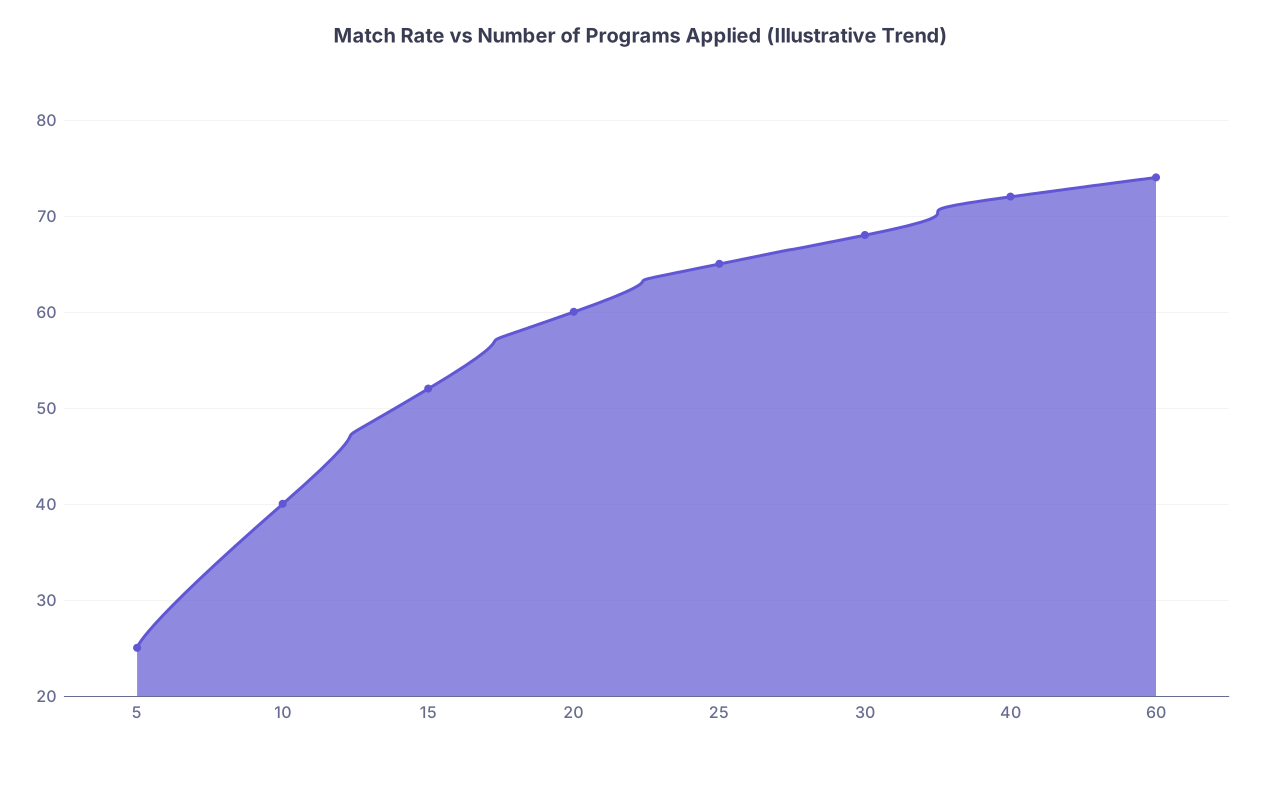
Step 3: How Many Neurosurgery Programs Should a US Citizen IMG Apply To?
You will not find an official number that guarantees success. But you can use reasonable ranges based on your competitiveness and the extreme selectivity of neurosurgery.
General Principles
Aim for breadth without sacrificing quality.
- In neurosurgery, every application requires tailored materials (personal statement tweaks, letters selection, etc.)
- Unlike larger specialties, there are fewer programs overall, so “applying to 150–200” is not realistic.
Assume low interview yield as an IMG.
- Even if you are strong, your interview rate per application will likely be lower than that of US MD/DOs.
Funding and bandwidth matter.
- Each application costs money, and interviews (even virtual) cost time and energy.
- You want to find the saturation point where additional applications are unlikely to change outcomes.
Tentative Ranges by Competitiveness (for US Citizen IMGs in Neurosurgery)
These are not rules, but starting frameworks:
High-competitiveness US citizen IMG
- Realistic range: 25–40 programs
- Strategy:
- Many programs where you have strong research or rotation connections
- A mix of “reach,” solid targets, and a few more IMG-friendly programs
- Example:
- 5–10 highly ranked academic centers where you did research or had mentors
- 10–20 mid-to-upper-tier programs with evidence of prior IMGs or strong research culture
- 5–10 smaller or less-known programs that are IMG-open and aligned with your geography/interests
Moderate-competitiveness US citizen IMG
- Realistic range: 30–50 programs (if available and feasible)
- Strategy:
- Slightly reduce emphasis on the ultra-elite places (apply selectively where you have a connection or niche fit)
- Heavier focus on mid-tier and smaller programs, especially IMG-friendly ones
- Example:
- 5–7 top-tier programs where you have direct mentorship or strong research overlap
- 15–25 mid-tier programs with known or suspected IMG openness
- 10–20 smaller or community-affiliated academic programs
Emerging-competitiveness US citizen IMG
- Neurosurgery direct match will be extremely difficult
- Application strategy should include:
- Neurosurgery programs that know you personally from research or rotations (even if few)
- Preliminary surgery or transitional year programs, especially those associated with neurosurgery departments open to IMGs
- Number of neurosurgery applications may be smaller (10–25) but paired with a serious backup plan in general surgery or another route.
Balancing Quantity and Targeting
When deciding how many programs to apply, avoid these extremes:
- Too few (e.g., 5–10 without strong connections): Very high risk of no interviews.
- Pure quantity without fit (e.g., applying to every neurosurgery program, regardless of IMG history or fit): Wasteful; low marginal returns.
A realistic neurosurgery program selection strategy for a US citizen IMG is broad but thoughtful. You want to hit a coverage zone of programs that:
- Sometimes consider IMGs
- Value neurosurgery research
- Match your geographic or academic strengths
Step 4: Categorizing Programs: Reach, Target, and Safety (As Much As That Exists in Neurosurgery)
In neurosurgery, the concept of “safety programs” is limited. However, you can still use a three-tier classification within your list.
1. “Reach” Programs
Traits:
- Top national reputation or rankings
- Very strong US MD applicant pool
- No or almost no IMGs historically
- Extremely research-heavy (often large NIH funding, multiple R01-level labs)
You may still apply to these if:
- You have direct research time at these institutions
- You have letters from their neurosurgery faculty
- Your CV includes significant neurosurgery publications
For a high-competitiveness US citizen IMG:
- Reach programs may be ~20–30% of your list.
For moderate-competitiveness:
- Keep them to ~10–20% and only where you have a connection.
2. “Target” Programs
Traits:
- Solid or mid-tier academic neurosurgery programs
- Some history of interviewing or matching IMGs, though not many
- Research opportunities, but perhaps not at the very top national level
- Reasonable caseloads, balanced training, often in non-major coastal cities
These are your core focus:
- Most of your applications should be here.
- You meet or come close to their typical step scores and research profiles.
- You can construct a clear narrative of fit (e.g., shared research focus, geographic ties, mentor recommendations).
3. “Safety” Programs (Relative Term in Neurosurgery)
Traits:
- Known to have matched IMGs or US citizen IMGs in the past
- May be smaller or less nationally recognized
- Sometimes located in less competitive geographic regions
- May emphasize service volume over high-end research
These are not true “safeties” because neurosurgery is never safe for any applicant, especially an IMG. However, for program selection strategy, these are:
- Your best odds for interview invitations
- Places where your IMG status may be less of a barrier if your dedication and work ethic are obvious
Aim for:
- At least 5–10 of these relative “safety” or IMG-friendly programs in your list, if such programs exist and are a match for your goals.

Step 5: Tailoring Program Selection for a US Citizen IMG in Neurosurgery
Now, let’s bring this together into a structured approach specific to your background.
1. Leverage Your “US Citizen” Advantage Strategically
While you’re still categorized as an IMG, you can emphasize:
- No visa sponsorship needed in your ERAS materials or CV
- Ability to commit fully without immigration uncertainty
- Familiarity with US culture, healthcare systems, and long-term plans to stay in the US
Some programs, explicitly or implicitly, consider visa complexity when evaluating IMGs. You eliminate that barrier.
2. Make Your Neurosurgery Research the Centerpiece
As an American studying abroad, your research often becomes your biggest equalizer with US MD/DO applicants.
For program selection:
Prioritize departments where:
- Your subfield (e.g., spine, functional, tumor, neurotrauma) is actively researched
- You or your mentors have co-authored papers with the faculty
Ask:
- “Where might my research background be extra valuable?”
- “Which labs or investigators could see me as an asset, not just an applicant?”
3. Weigh Programs with Personal Connections More Heavily
For a US citizen IMG in neurosurgery:
- Programs where you’ve rotated, done research, or have strong mentoring relationships should be top priority.
- If a neurosurgeon at Institution A has worked closely with you and says, “We usually don’t take IMGs, but I’ll support you,” that program should be extremely high on your list.
When deciding how many programs to apply to, anchor your list around:
- 3–5 programs where you have the strongest connection
- Then build outward into similar or related programs.
4. Geographic Strategy for US Citizen IMGs
Geography can quietly influence IMG selection:
- Programs in ultra-desirable locations (major coastal cities, highly competitive metro areas) may receive huge numbers of US MD applicants and have little incentive to stretch their selection.
- Programs in medium or smaller cities, or less commonly targeted regions, might:
- Be more open to dedicated IMGs
- Value your willingness to commit to that location
If you have flexibility, your program selection strategy should intentionally include:
- A good proportion of programs in non-hyper-competitive locations
5. Contingency Planning: Neurosurgery-Related Alternatives
Given the extreme competitiveness, even a well-designed brain surgery residency application may not result in a match.
Practical strategic options:
Prelim Surgery or Transitional Year Programs
- Particularly at institutions with neurosurgery departments where you can:
- Build relationships
- Participate in neurosurgery call or research
- Reapply with a significantly stronger profile
- Particularly at institutions with neurosurgery departments where you can:
Dedicated Neurosurgery Research Years (Pre- or Post-Graduation)
- For applicants early in the process, one or two years of full-time research in a US neurosurgery department can radically change your competitiveness.
- These research positions can also refine your program list for future application cycles.
Putting It All Together: A Sample Strategy for a US Citizen IMG
Imagine you are:
- US citizen IMG from a Caribbean school
- Step 2 CK: Above average but not top decile
- 1 year of neurosurgery clinical research at a US academic center
- Two abstracts at a neurosurgery conference, one manuscript under review
- Letters from two neurosurgeons and one internal medicine physician
A realistic program selection strategy might look like:
Total number of neurosurgery programs to apply to: ~35–45
Breakdown:
- 4–5 “reach” programs (including your research institution and programs with strong ties to your mentors)
- 20–25 “target” programs where:
- You meet typical score ranges
- There’s evidence of past IMG interviews or matches OR strong research culture
- 8–12 relatively more IMG-friendly or smaller programs, with:
- Documented IMG residents
- Emphasis on clinical volume and service
Backup Plan:
- Apply to 10–20 preliminary surgery or transitional year programs, especially at institutions with neurosurgery departments and research you can join.
- Discuss with your mentors which programs have historically allowed prelim residents to integrate with neurosurgery.
Ongoing Adaptation:
- As interview invitations come in, adjust:
- If interview yield is very low, re-emphasize backup planning for the following year.
- If unexpectedly strong, prioritize on your rank list the places where you truly fit best long term.
- As interview invitations come in, adjust:
FAQs: Program Selection Strategy for US Citizen IMG in Neurosurgery
1. As a US citizen IMG, do I have a real chance at neurosurgery, or should I not bother applying?
You do have a real but small chance, depending on your profile. If you have:
- Strong Step 2 CK
- Substantial neurosurgery research
- US neurosurgery letters
- At least one US-based neurosurgery rotation
…you are a legitimate candidate. However, success rates are much lower than for US MDs. You should apply seriously but build an intentional backup plan (research years, prelim surgery, etc.). Don’t “not bother”—but don’t ignore the need for contingency planning.
2. How many neurosurgery programs should I apply to if I’m a moderately competitive US citizen IMG?
A reasonable range is typically 30–50 programs, depending on:
- Your financial resources
- The number of programs that are at least moderately IMG-friendly
- Your geographic flexibility
Make sure most of your applications are to realistic target and IMG-open programs, not just famous names.
3. How can I identify IMG-friendly neurosurgery residency programs?
Look for:
- Current or recent residents who are IMGs (check program websites and LinkedIn)
- Past program announcements or newsletters mentioning IMGs
- Program websites that do not explicitly restrict applications to “US MD/DO only”
- Programs that sponsor visas (even if you don’t need one; it’s a marker of administrative openness)
- Direct input from mentors who know particular programs’ attitudes toward IMGs
No list is perfect, but these indicators help narrow your targeting.
4. Should I prioritize programs where I’ve done research or rotations even if they are more competitive?
Yes. Personal connection and institutional familiarity are critical advantages for US citizen IMGs. A highly competitive program where:
- You’ve spent a year doing neurosurgery research
- Faculty know your work ethic
- You have strong internal advocates
…may actually be more realistic than a mid-tier program where you are just a name on paper. Always weigh connections and demonstrated value heavily in your program selection decisions.
Thoughtful, data-driven program selection will not eliminate the inherent difficulty of neurosurgery for a US citizen IMG—but it will maximize your odds and help you invest your effort where it truly counts.