Understanding the Landscape of Addiction Medicine Training
Addiction medicine is rapidly evolving, sitting at the intersection of psychiatry, internal medicine, family medicine, emergency medicine, and public health. As the overdose crisis continues and substance use disorders (SUDs) rise across all demographics, demand for high-quality addiction specialists has never been greater. That reality shapes how you should build your program selection strategy.
Before you decide how many programs to apply to or which to prioritize, you need a clear understanding of:
- What addiction medicine fellowship training actually entails
- Variability across programs (size, focus, patient population, setting)
- How addiction medicine fits with your primary specialty and long-term career plans
What is an Addiction Medicine Fellowship?
An addiction medicine fellowship is typically a 1-year (occasionally 2-year) ACGME-accredited clinical training program open to graduates of several core specialties, such as:
- Internal Medicine
- Family Medicine
- Psychiatry
- Emergency Medicine
- OB/GYN
- Pediatrics
- Anesthesiology
- Preventive Medicine and others (depending on board pathways)
Core components of substance abuse training in these programs usually include:
- Inpatient consult services for SUDs and withdrawal management
- Outpatient addiction clinics (general and/or specialized: pregnant patients, adolescents, co-occurring pain, etc.)
- Methadone and buprenorphine treatment programs
- Dual-diagnosis or co-occurring disorder care
- Integrated primary care–addiction settings
- Rotations in community treatment programs (residential, IOP, OTPs)
- Didactics in pharmacotherapy, psychotherapy, harm reduction, public health, and policy
Yet the emphasis of this training can differ dramatically between programs. Your program selection strategy needs to focus on aligning those differences with your goals.
How Addiction Medicine Fits Different Career Paths
Before diving deeper into residency and fellowship choices, clarify your long-term direction. Addiction medicine can be:
- Your primary clinical focus (e.g., working in addiction clinics, OTPs, hospital consult services)
- A niche within your base specialty (e.g., an IM physician who leads the SUD consult team or a psychiatrist specializing in dual diagnosis)
- A foundation for public health, policy, research, medical education, or leadership roles
When comparing programs, ask yourself:
- Do I see myself as a clinical specialist, systems leader, researcher, educator, or a mix?
- Do I want to work mostly inpatient, outpatient, or a combination?
- Am I drawn to a specific population: pregnant patients, adolescents, patients with co-occurring pain, unhoused populations, justice-involved populations, or rural communities?
A strong program selection strategy in addiction medicine is always built backward from your intended career trajectory.
Step 1: Clarify Your Training and Career Priorities
Before you can decide how to choose residency programs and, later, addiction medicine fellowships, you need a framework for what matters most to you. This may be the most important step in your entire application strategy.
Define Your Clinical Interests in Addiction Medicine
Reflect deeply on what kind of addiction-related work energized you most in training:
- Detox and withdrawal management?
- Inpatient consult services, ED-based addiction care, liaison roles with hospitalists/intensivists.
- Longitudinal outpatient care?
- Office-based buprenorphine, methadone program work, integrated primary care–addiction clinics.
- Co-occurring mental illness?
- Programs with strong psychiatry and dual-diagnosis training.
- Co-occurring pain and SUD?
- Programs with robust pain medicine and palliative care collaboration.
- Pregnancy and women’s health?
- Programs with perinatal addiction clinics and OB partnerships.
- Adolescent and young adult populations?
- Programs affiliated with pediatric hospitals or adolescent medicine services.
Your clinical interests will shape both your residency program selection strategy (if you’re not yet in fellowship) and which addiction medicine fellowship environments you target.
Determine the Right Level of Academic vs. Community Focus
Addiction medicine training environments exist on a spectrum:
Highly academic, research-focused
- Emphasis on grant-writing, research productivity, and scholarly work
- Large academic centers; extensive didactics; multiple subspecialty clinics
- Ideal if you envision a faculty, leadership, or research-heavy career
Clinically intensive, community-focused
- Heavy direct patient care, sometimes high-volume safety-net settings
- Strong exposure to real-world system barriers and public health realities
- Ideal for future community leaders, medical directors of programs, or clinicians focused on underserved populations
Hybrid models
- Moderate research opportunities plus strong clinical training
- Balance of academic mentorship and high-volume clinical work
Clarifying where you fall on this spectrum prevents you from applying blindly to programs that don’t match your trajectory.
Identify Non-Negotiables vs. Preferences
Make a two-column list:
Non-negotiables may include:
- Required rotations (e.g., methadone clinic, pregnant patients, inpatient consult)
- Guaranteed supervision from addiction-board-certified faculty
- Training in harm reduction and evidence-based medications (buprenorphine, methadone, extended-release naltrexone)
- A supportive learning culture and reasonable workload
- Specific visa sponsorship (if applicable)
Preferences might include:
- Geographic region and climate
- Proximity to partner/family support
- Schedule flexibility
- Research vs. QI emphasis
- Opportunities for teaching residents or students
This non-negotiable vs. preference framework will help you screen programs more efficiently and determine how many programs to apply to realistically.
Step 2: Strategic Program Selection for Residency (Before Fellowship)
If you are still in medical school or early residency, your how to choose residency programs decisions will meaningfully influence your future addiction medicine opportunities—though they do not rigidly determine them.
Which Base Specialties Pair Well with Addiction Medicine?
The most common pairing is:
- Psychiatry → Addiction Psychiatry fellowship or Addiction Medicine fellowship
- Internal Medicine or Family Medicine → Addiction Medicine fellowship
However, many other routes are possible. Consider:
- Psychiatry
- Strong foundation for dual-diagnosis care
- Excellent if you want to integrate mood, psychosis, trauma, and SUD care
- Internal Medicine / Family Medicine
- Strong for integrated primary care + addiction
- Good fit for hospital SUD consult services, HIV/hepatitis C clinics, and complex medical comorbidity
- Emergency Medicine
- Ideal if you care about ED-initiated buprenorphine, overdose prevention, and rapid-access pathways
- OB/GYN, Pediatrics, or others
- Best if you want to be a specialty-specific addiction expert (e.g., perinatal SUD or adolescent SUD)
There is no single “best” pathway—only what best matches your practice vision.
What to Look For in a Residency Program if You Plan Addiction Medicine
When you evaluate residency programs with a future addiction medicine fellowship in mind, examine:
Existing SUD Exposure and Culture
- Are there addiction consult services, addiction clinics, or faculty with addiction expertise?
- Does the program embrace harm reduction, MOUD (medications for opioid use disorder), and evidence-based SUD care?
- Is there stigma toward patients with SUDs among residents and faculty?
Opportunities for Electives and Scholarly Work in SUD
- Can you do electives in addiction medicine clinics, methadone programs, consult services?
- Are there QI or research projects related to SUD treatment, overdose prevention, or population health?
- Are residents encouraged and supported to present at addiction-focused conferences?
Mentorship and Career Support
- Are there faculty with addiction training who can advise on program selection strategy for your future fellowship?
- Does the program have a strong track record of fellowship placement generally (even if not specifically addiction yet)?
Call Schedule and Lifestyle
- Will you have enough time and bandwidth to build an addiction-related portfolio (research, electives, advocacy)?
- A program that is too demanding may limit your ability to develop a unique addiction-focused profile.
How Many Residency Programs to Apply To (with Addiction in Mind)
The exact number will depend on your competitiveness, visa needs, specialty competitiveness, and geographic flexibility. However, general principles:
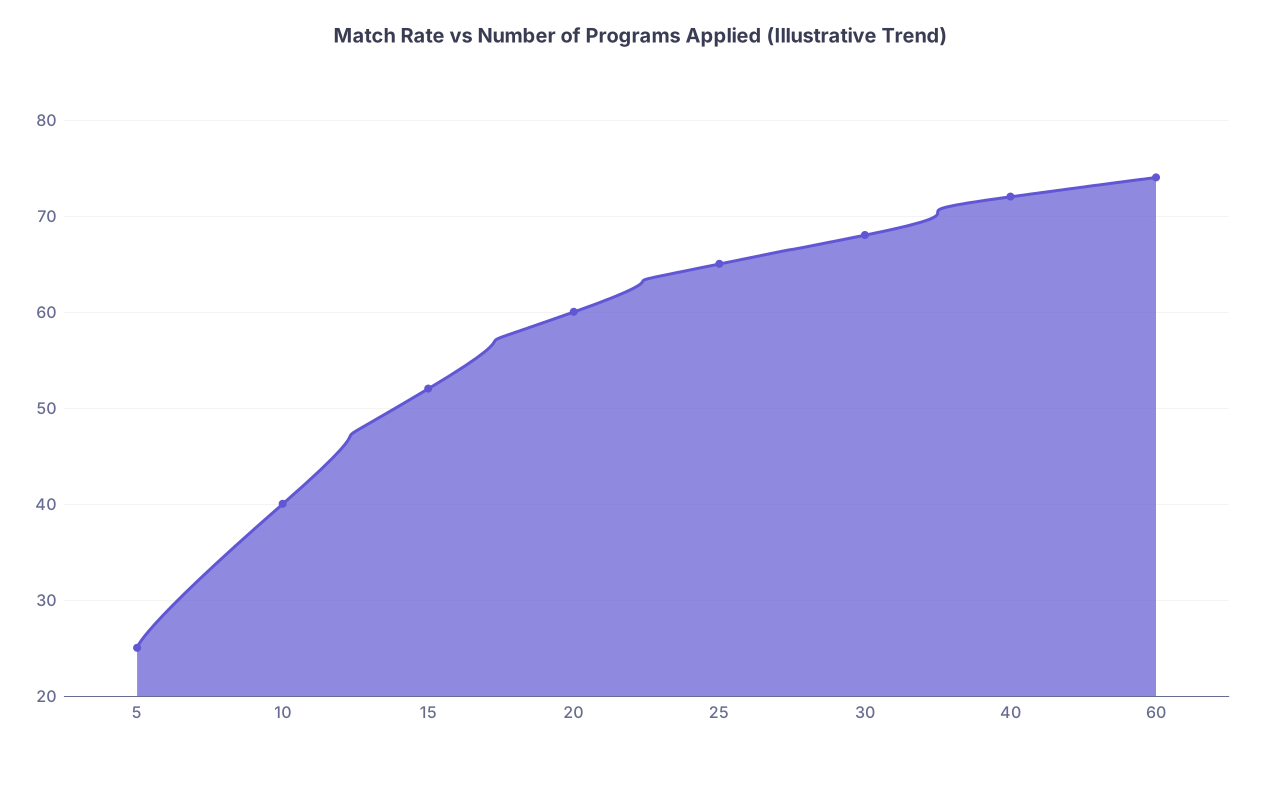
- For most core specialties, US graduates might apply to 15–25 programs if broadly competitive and geographically flexible; 25–40+ if mid-range or more geographically restricted.
- International medical graduates or applicants with red flags often benefit from a wider net (30–60+), strategically chosen, not random.
Frame your decisions through an addiction lens:
- Prefer programs with demonstrated SUD interest rather than simply adding more programs without addiction exposure.
- It is better to apply to 20 well-chosen programs aligned with your long-term SUD interests than 50 random ones, assuming you are reasonably competitive.

Step 3: Targeted Selection of Addiction Medicine Fellowships
Once you are in residency (or have completed it), your focus shifts to building a list of addiction medicine fellowships that fit you. This is where your program selection strategy becomes highly specialized.
Core Dimensions to Compare Across Fellowships
When reviewing addiction medicine programs, evaluate them along these dimensions:
Clinical Breadth and Depth
- Do fellows see patients in multiple settings: inpatient, outpatient, ED, OTP, community programs?
- Is there exposure to a wide range of substances: opioids, stimulants, alcohol, benzodiazepines, polysubstance use?
- Are there unique populations: pregnant patients, adolescents, rural communities, unhoused populations, people who inject drugs?
Faculty Expertise and Mentorship
- How many addiction-board-certified faculty are there?
- Is there at least one mentor whose career path looks like your aspirational future self?
- Are there faculty with backgrounds in internal medicine, psychiatry, emergency medicine, etc., providing diverse perspectives?
Teaching and Educational Infrastructure
- Is there a structured didactic curriculum in pharmacology, psychotherapy, harm reduction, and policy?
- Are there journal clubs, case conferences, or interdisciplinary rounds?
- Are fellows involved in teaching residents and students?
Research, QI, and Leadership Opportunities
- Is research required, optional, or strongly encouraged?
- Are there existing projects you can join, or will you need to start your own?
- Are there leadership roles (e.g., overdose task forces, curriculum development, policy committees)?
Program Culture and Support
- What is the approach to work–life balance?
- How is staff burnout addressed, given the emotionally demanding nature of SUD work?
- Do current fellows feel supported, valued, and appropriately supervised?
Aligning Programs With Your Career Vision: Example Scenarios
Scenario 1: Future Academic Leader
- You want to run an academic addiction consult service and secure grant funding.
- Prioritize:
- Programs with NIH-funded faculty or active research portfolios
- Robust didactics, expectation of publication or presentation
- Strong mentorship in both clinical and research training
- You might apply to 10–15 academic-heavy programs where your research interest is clearly aligned.
Scenario 2: Community-Focused Clinician and Advocate
- You want to work in a safety-net clinic, methadone program, or rural health setting.
- Prioritize:
- High-volume clinical programs with broad population exposure
- Partnerships with public health departments or community agencies
- Programs that emphasize harm reduction and structural competency
- You might apply to 8–12 programs, focusing on geographic areas and communities you see yourself serving.
Scenario 3: Dual-Training and Niche Focus (e.g., Perinatal Addiction)
- You are an OB/GYN physician wanting to specialize in perinatal SUD.
- Prioritize:
- Programs with established perinatal addiction clinics
- Joint rotations with OB, neonatology, pediatrics, social work
- Mentors who have built perinatal or women’s addiction services
- Because this is more niche, you may need to apply to a slightly larger range, e.g., 12–18 programs, to capture those with specific perinatal offerings.
How Many Addiction Medicine Programs to Apply To?
Addiction medicine fellowships are competitive but not uniformly oversubscribed. The right number depends on:
- Your CV strength (SUD experience, letters from SUD mentors, research)
- Specialty background and board performance
- Geographic flexibility
- Visa status and any gaps or red flags
Approximate benchmarks:
- Highly competitive, flexible applicants
- 8–12 well-chosen programs can be sufficient.
- Moderately competitive or more geographically restricted
- 12–18 programs is often safer.
- Significant geographic limitations, visa needs, or academic red flags
- 18–25+ thoughtful applications may be appropriate.
Focus less on an abstract number and more on whether each program matches your specific goals. A “large” number of applications to poorly matched programs is far less useful than a moderate number of deeply aligned choices.
Step 4: Practical Tools for Building and Prioritizing Your List
Once you understand your priorities and approximate target for how many programs to apply to, you need a structured process to build your list.
Building Your Initial Program List
Use multiple sources:
- Official fellowship directories (ACGME, specialty societies such as ASAM-related listings)
- Program websites (curriculum, faculty bios, clinic descriptions, research areas)
- Conference presentations (note where speakers and panelists train or work)
- Word-of-mouth from residents, fellows, mentors, and alumni
For each program, track:
- Setting: urban vs. suburban vs. rural; academic vs. community
- Key clinical experiences: consults, OTPs, perinatal, adolescent, ED, HIV/hepatitis C
- Research/QI emphasis: required project? funded opportunities?
- Faculty interests: any overlap with your passions?
- Call, schedule, and benefits: realistic workload?
A spreadsheet or note-taking app can keep this organized and visible.
Prioritizing Programs: Tiering Strategy
Rather than labeling programs as “reach,” “target,” or “safety” solely by prestige, adopt a fit-based tiering system:
Tier 1 – Top fit:
- Strong alignment with your clinical and career goals
- Multiple mentors you’d be excited to work with
- Geographic and personal fit is excellent
Tier 2 – Solid fit:
- Reasonable alignment with your goals; at least one mentor match
- Perhaps less robust research or fewer niche clinics, but still high-quality training
Tier 3 – Adequate fit / backup options:
- Good general addiction training but fewer of your specific niche opportunities
- Might be less ideal geographically or in culture, but would still provide board-eligible preparation
Build a list that includes:
- Roughly 30–40% Tier 1, 40–50% Tier 2, and 10–20% Tier 3 programs
- Adjust as needed based on your competitiveness and constraints
Using Time and Location Strategically
Think beyond your 1-year fellowship:
- Where are the local job markets strong for addiction medicine?
- Does the institution or region have strong public health and community partnerships for SUD?
- Are there opportunities to stay on as faculty or staff after fellowship?
If you are strongly tied to a region (family, spouse, immigration issues), prioritize a dense cluster of programs in that region and supplement with a modest number of out-of-region programs.

Step 5: Evaluating Programs Beyond the Website
Paper descriptions rarely tell the whole story. Once you have interviews, or even before, deepen your assessment.
Key Questions to Ask on Interview Day
Ask current fellows and faculty:
Clinical Experience and Autonomy
- What does a typical week look like?
- How many patients do fellows see per day in various settings?
- How much autonomy do fellows have in decision-making, and is supervision accessible?
Teaching and Professional Development
- How are didactics structured, and who leads them?
- Are fellows supported in attending conferences (ASAM, AAAP, etc.)?
- Are there opportunities to give lectures or precept trainees?
Mentorship and Career Outcomes
- How often do fellows meet with mentors formally and informally?
- Where have recent graduates gone (academic positions, community practice, leadership roles)?
- Does the program support non-traditional paths (policy, public health, advocacy)?
Program Culture and Support
- How does the program handle emotionally challenging cases or fellow burnout?
- Is there psychological support or wellness infrastructure specifically for trainees?
- How receptive is the program leadership to feedback?
Using Red and Green Flags in Your Strategy
Green flags:
- Fellows speak authentically about feeling supported and respected
- Clear, consistent curriculum that matches what’s on the website
- Openness about program limitations and ongoing improvements
- Evidence of interdisciplinary collaboration (social work, nursing, peer recovery, public health)
Red flags:
- Vague or evasive answers about workload, supervision, or outcomes
- Lack of structure in didactics or rotations (“You’ll figure it out as you go”)
- Dismissive attitudes toward harm reduction or medications for opioid use disorder
- High turnover of faculty or fellows without clear explanations
These observations may cause you to re-rank your programs even if they looked appealing on paper.
Final Ranking and Decision-Making Strategy
When building your rank list (for NRMP-participating fellowships or internal matches), integrate:
- Fit with your career goals and non-negotiables
- Perceived support and culture
- Geographic/personal considerations
- Growth potential: which program will stretch you and open doors?
Rank programs in true order of preference, not based on perceived competitiveness, assuming the match algorithm is in use. If a fellowship does not participate in the match, be transparent with yourself about what you’re willing to accept if multiple offers arise.
FAQs: Program Selection Strategy in Addiction Medicine
1. How many addiction medicine programs should I apply to?
Most applicants do well applying to 8–18 programs, depending on competitiveness and geographic flexibility:
- 8–12 if you have a strong SUD-focused CV, excellent letters, and broad geographic openness
- 12–18 if your application is mid-range, you’re geographically constrained, or you have modest research exposure
- Consider 18–25+ if you have visa constraints or application red flags, but be sure each program is at least a decent fit
Quality and alignment matter more than sheer quantity.
2. Does my base residency specialty limit my addiction medicine career options?
In most cases, no. Addiction medicine is intentionally multidisciplinary. Your base specialty (IM, FM, psychiatry, EM, OB/GYN, pediatrics, etc.) will shape your practice setting and patient mix, but all can support a robust addiction medicine career. What matters more is:
- The depth of your substance abuse training during fellowship
- The strength of your mentorship and network
- The match between your practice environment and your skills (e.g., hospital vs. outpatient vs. public health)
3. How important is research exposure in choosing an addiction medicine fellowship?
It depends on your goals:
- If you want an academic or research-heavy career, look for programs with active projects, funding, and publication expectations.
- If you want to be primarily a clinical leader, it is enough to have QI or limited scholarly projects that build systems-improvement skills.
Even in clinically focused careers, some exposure to research methodology and evidence appraisal is beneficial, but it does not need to be the primary program selection driver unless academia is your explicit aim.
4. What if I don’t know my exact niche within addiction medicine yet?
Choose a program with broad, high-quality clinical exposure across care settings and substances, plus a supportive culture that encourages exploration. Look for:
- Rotations in inpatient, outpatient, OTP, ED, and community programs
- Exposure to special populations (perinatal, adolescents, co-occurring mental illness, pain)
- Multiple mentors with diverse interests
A broad, well-structured fellowship will help you discover your niche while still preparing you for a wide range of career paths.
A thoughtful program selection strategy—from residency through your addiction medicine fellowship—can profoundly shape your career, your impact, and your sustainability in this demanding, deeply meaningful field. By aligning your applications with your values, interests, and long-term vision, you position yourself not just to match, but to thrive as a future addiction medicine physician.