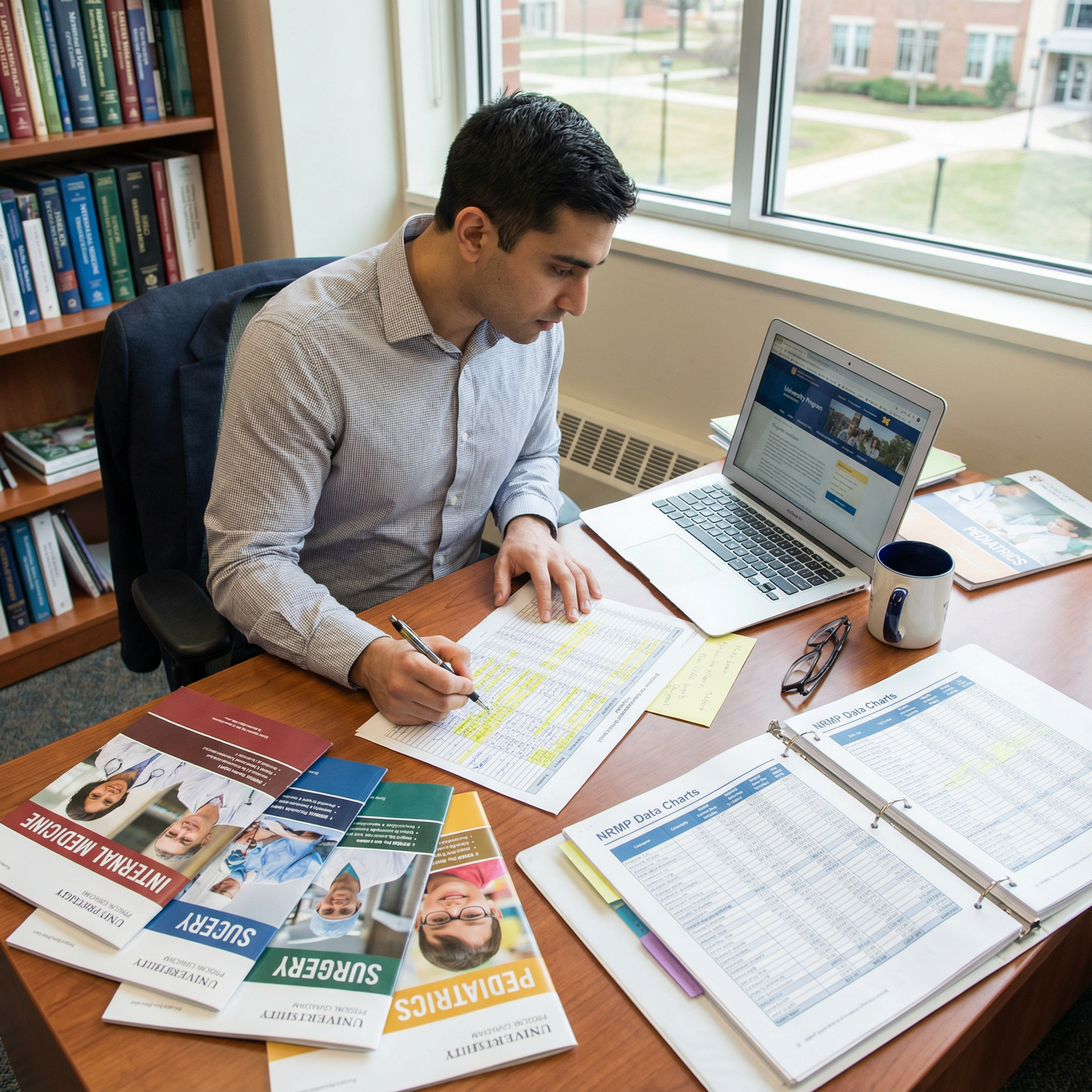
Understanding the Landscape: Neurosurgery Residency as a DO Graduate
Neurosurgery is one of the most competitive specialties in medicine—and that competitiveness is even more pronounced for a DO graduate. Developing an intentional, data‑driven program selection strategy is essential if you want to maximize your chances in the osteopathic residency match environment (now fully integrated with ACGME).
As a DO, you absolutely can match into neurosurgery residency and ultimately practice brain surgery and complex spine surgery. But the path is narrower, and you need to be strategic about:
- Where you apply
- How many programs to apply to
- How to choose residency programs that realistically fit your profile
- How to communicate your DO training as a strength, not a limitation
This article will walk you through a structured strategy tailored to a DO graduate in neurosurgery, including concrete examples, tools, and common pitfalls to avoid.
Step 1: Know Your Starting Point as a DO Candidate
Before you build a list of programs, you need a clear-eyed assessment of your profile. For a neurosurgery residency applicant, programs will typically weigh:
- Board scores and exams
- Clinical performance and clerkship grades
- Research output (especially neurosurgery‑relevant)
- Letters of recommendation (LORs), particularly from neurosurgeons
- Sub‑internships / away rotations performance
- DO vs MD degree and perceived familiarity with osteopathic training
1. Board Exams: USMLE vs COMLEX
Many neurosurgery programs still prefer or require USMLE scores, even though you are a DO graduate.
- If you have both COMLEX and USMLE:
- Programs will often primarily compare you using USMLE scores.
- Strong USMLE Step 2 CK (since Step 1 is now pass/fail) is critical.
- If you only have COMLEX:
- You can still match into neurosurgery, but fewer programs will consider you.
- Focus your list on programs that explicitly accept COMLEX without USMLE or are DO‑friendly.
Action:
- Categorize yourself as:
- High‑stats DO (Step 2 CK above typical neurosurgery averages; strong COMLEX)
- Mid‑range DO (around average; maybe a small red flag)
- Underdog DO (significant board concerns, gap in training, or late specialty decision)
Your category will directly influence how many programs to apply to and how broad your strategy must be.
2. Research, Publications, and Scholarly Work
Neurosurgery is research‑heavy.
- Competitive candidates often have:
- Multiple neurosurgery or neuroscience‑related publications, abstracts, or posters
- Involvement in basic science, clinical, or outcomes research
- A dedicated research year (or two), especially for aspirants to the most competitive programs
For a DO graduate, research is often the differentiator that can partially offset institutional or degree bias.
Action:
- List your neurosurgery‑relevant experiences:
- Publications (PubMed‑indexed? first author?)
- Presentations (national vs regional?)
- Ongoing projects and mentors
Then compare your CV to typical matched neurosurgery residents (check program websites and resident bios for examples).
3. Clinical Rotations and Sub‑Internships
Sub‑Is (acting internships) are critical in neurosurgery. Performance on these rotations often matters more than your school’s name.
- Aim for:
- At least one home neurosurgery rotation (if your school has one)
- 1–2 away rotations at ACGME neurosurgery programs
These serve three key functions:
- Demonstrate you can handle neurosurgery’s intensity
- Provide strong letters of recommendation from neurosurgeons
- Show programs you’re a cultural and personality fit
Action:
- Honestly assess your performance feedback from sub‑Is:
- Did faculty mention they’d “love to work with you again”?
- Did multiple neurosurgeons offer to write LORs?
- Were you functioning close to an intern level by the end of the rotation?
Step 2: Build a Data‑Driven Program Universe
Before narrowing, you need to understand the universe of neurosurgery programs and where a DO candidate realistically fits.
1. Use Official and Unofficial Data Sources
Combine multiple resources:
- FREIDA / AMA Residency & Fellowship Database
- Filter for neurosurgery programs; note size, location, and program length.
- Program websites
- Look at resident rosters:
- Are there any DO graduates currently or historically?
- Which schools and research backgrounds do current residents have?
- Look at resident rosters:
- NRMP data (Charting Outcomes, match data reports)
- Review data for neurosurgery and, where possible, DO applicants specifically.
- Online communities (forums, spreadsheets, social media groups)
- Get anecdotal evidence about program culture, DO‑friendliness, and interview patterns.
Action:
Create a spreadsheet with all ACGME neurosurgery programs and key fields:
- Program name, city, state
- DO residents (Y/N, how many, which years)
- USMLE required / USMLE optional / COMLEX accepted
- Average case volume or patient mix (if available)
- Number of residents per year
- Research opportunities (R25, PhD pathways, dedicated research years)
- Historical reputation toward DOs (DO‑friendly / neutral / historically DO‑sparse)
You will refine this list soon—but start broad.

Step 3: How to Choose Residency Programs as a DO in Neurosurgery
This is where your program selection strategy becomes personalized. You will balance competitiveness, DO‑friendliness, geography, research intensity, and your personal life priorities.
1. Categorize Programs by Competitiveness and Fit
For each program, ask:
- Competitiveness / prestige
- Is this a top‑tier academic powerhouse with heavy NIH funding and multiple R01s?
- A solid regional academic program?
- A smaller, clinically focused or community‑based program with academic affiliation?
- Fit for a DO graduate
- Are there current DO residents?
- Does the program explicitly state they welcome COMLEX?
- Known to have interviewed or matched DOs in recent years?
- Research and academic expectations
- Mandatory research year?
- Dedicated lab space and mentors?
- Expectations for resident publications?
Then stratify into tiers for you, not generic tier labels:
- Reach programs
- Historically MD‑heavy, few or no DOs
- High research expectations, heavy emphasis on pedigree
- You might target these if you have exceptional research, scores, and mentorship.
- Target programs
- Have matched DOs
- Strong but not ultra‑elite research profile
- Align well with your scores and CV
- Safety programs (as much as they exist in neurosurgery)
- Smaller programs, possibly less research‑heavy
- Demonstrated comfort with DO trainees
- Located in less competitive geographic regions
2. Geography: Be Flexible but Strategic
Being geographically rigid is risky in neurosurgery. A DO graduate often needs to widen the geographic net to boost match probability.
Consider:
- Are you open to:
- Midwest and South (often more DO‑friendly)
- Smaller cities or less “destination” locations
- Is there anywhere you absolutely will not go?
- If yes, understand you’re trading match probability for geographic preference.
A realistic approach might be:
- “I will apply broadly nationwide, but I’ll be especially aggressive in regions known to be DO‑friendly (Midwest, some South, some Northeast community‑academic hybrids).”
3. Program Size and Culture
Small programs (1–2 residents/year) can be:
- Advantageous if you form a strong connection on an away rotation
- Riskier because each faculty member’s opinion weighs heavily
Larger programs (3+ residents/year):
- May have more flexibility to take a DO applicant
- Often have more established research and mentorship structures
Culture clues to look for:
- Do residents seem collaborative vs hyper‑competitive?
- Do they highlight wellness and support, or only prestige and research?
- How do they describe their DO residents (if any) in alumni lists—buried or proudly featured?
Action:
Add columns to your spreadsheet for:
- Reach/Target/Safety
- Geography priority (H/M/L)
- DO‑friendliness (H/M/L)
- Personal desirability (subjective score 1–5)
This will be the backbone of your program selection strategy.
Step 4: How Many Programs to Apply to in Neurosurgery as a DO Graduate?
The question “how many programs to apply” is critical in neurosurgery, especially for a DO graduate. There’s no magic universal number, but there are reasonable ranges based on your profile and risk tolerance.
1. Understand the Baseline
In neurosurgery:
- Many MD applicants apply to 40–60 programs.
- Some exceptionally strong applicants with heavy research and top‑tier home programs may apply to fewer, but this is not the typical DO scenario.
As a DO graduate:
- You are competing in a very small applicant pool for a very limited number of DO‑friendly neurosurgery programs.
- You should lean toward broad application rather than “hyper‑curated but minimal.”
2. Suggested Ranges by Applicant Profile
These ranges assume a DO applicant with at least one neurosurgery sub‑I and some neurosurgery‑relevant research.
High‑stats DO applicant (strong USMLE/COMLEX, active neurosurgery research, solid letters)
- Recommended range: 45–70 programs
- Distribution:
- 10–15 reach programs
- 20–35 target programs
- 10–20 safety/DO‑strong programs
Mid‑range DO applicant (average scores, decent research, good but not stellar pedigree)
- Recommended range: 60–80 programs
- Distribution:
- 5–10 reach programs
- 30–40 target programs
- 20–30 DO‑friendly / geographic flexibility programs
Underdog DO applicant (lower scores, limited research, or late switch)
- Recommended range: 70–90+ programs
- Distribution:
- 5–8 reach (selective)
- 25–35 realistic targets
- 40–50 DO‑friendly or slightly less competitive regions
These numbers are high, but neurosurgery is a “small N” specialty. It is safer to over‑apply than under‑apply, particularly as a DO.
3. How to Balance Cost and Benefit
Applying to 60+ programs is expensive. Ways to be strategic:
- Prioritize:
- Programs with at least some DO presence or explicit COMLEX acceptance.
- Regions where you are willing and realistically able to move.
- Question:
- Ultra‑elite programs that have never interviewed a DO or taken anyone outside a short list of top MD schools—apply only if you have truly exceptional research or mentorship ties.
Practical example:
- You are a DO graduate with:
- Step 2 CK: 250
- COMLEX Level 2: 650+
- Two neurosurgery publications
- One year of research
- One home rotation and two away rotations with strong letters
You might:
- Apply to 60 programs total
- 15 high‑tier academic “reach” programs
- 30 mid‑tier academic “target” programs with DO history
- 15 smaller or geographically less popular programs that have historically taken DOs

Step 5: Refine Your List with a Targeted Strategy
Once you have your long list and a sense of how many programs to apply to, refine using qualitative data and your own non‑negotiables.
1. Identify DO‑Friendly Neurosurgery Programs
Look for the following signals:
- Current or former DO residents on the program website
- Program directors or faculty with DO backgrounds
- Known history (from forums, mentors, or alumni) of interviewing DO applicants
- Explicit language on accepting COMLEX alone or being DO‑inclusive
These should make up a substantial portion of your target and safety lists.
2. Leverage Mentorship and Networking
As a DO aiming for brain surgery residency, mentorship often matters as much as metrics.
- Ask neurosurgery faculty who know you:
- “Which programs might realistically be a good fit for me?”
- “Where do you have colleagues who might be receptive to a DO candidate?”
- Request that mentors:
- Email or call program directors on your behalf when appropriate
- Help emphasize your specific strengths (work ethic, research, sub‑I performance)
Example:
If you did an away rotation at Program X and received great feedback, ask your attending:
“Based on your experience with me, would you feel comfortable advocating for my application to a few colleagues at similar programs? And are there specific programs you think I should target?”
3. Match Program Offerings to Your Career Goals
Think downstream: academic vs community career, research vs clinically heavy track, subspecialty interests (e.g., vascular, spine, tumor, pediatrics).
Ask:
- Does this program have:
- A track record of graduates matching into competitive fellowships?
- Faculty heavily involved in your area of interest?
- Flexibility for a research career (protected time, funding, structured mentorship)?
A DO applicant interested in academic neurosurgery may prioritize:
- R25‑funded programs
- Institutions with NIH‑funded neurosurgery departments
- Programs where residents present at major neurosurgical meetings regularly
A DO applicant more focused on clinical practice might prioritize:
- High operative volume
- Diverse case mix (tumor, trauma, spine, vascular)
- Graduates entering strong private practice positions
4. Align Your List with Sub‑I Sites
Anywhere you did a strong sub‑I should be near the top of your list:
- Apply without hesitation
- Consider them among your highest yield targets
- Maintain professional contact with mentors and residents there
Conversely, if you had a neutral or poor fit at a sub‑I site, discuss with mentors whether to apply there at all.
Step 6: Common Pitfalls and How to Avoid Them
Pitfall 1: Applying Only to “Name‑Brand” Programs
Strong DO applicants sometimes overconcentrate on:
- Top‑10 academic institutions
- Coastally clustered programs in high‑desirability cities
This can dramatically reduce their match chances.
Solution:
Balance your list across tiers and regions; treat prestige as one factor—not the only factor.
Pitfall 2: Ignoring DO‑Friendly Programs Because of Geography
Turning down a DO‑friendly neurosurgery program in a less desirable city on paper can be risky.
Solution:
Remember: you can live anywhere for 7 years of training, especially if it means achieving your goal of becoming a neurosurgeon. Focus on training quality and match viability first; location second.
Pitfall 3: Inadequate Program Research
Not knowing:
- Whether a program accepts COMLEX only
- Whether there are DO residents
- Whether they have a culture known to be supportive vs malignant
leads to wasted applications.
Solution:
Spend real time on your spreadsheet. For each program, aim to know at least:
- DO presence
- Board requirements
- Culture snapshot
- Research expectations
Pitfall 4: Not Adjusting Strategy After New Information
As interview season evolves, you must be flexible.
- If you receive fewer interviews than expected:
- Consider applying to a second wave of highly DO‑friendly programs (if open)
- Discuss application weaknesses with a trusted mentor quickly
- If you receive many interviews:
- You can be more selective about attending those that fit your long‑term goals.
Putting It All Together: A Sample Strategy for a DO Neurosurgery Applicant
Imagine you are a recent DO graduate:
- Step 2 CK: 245
- COMLEX Level 2: 620
- Two neurosurgery abstracts and one pending manuscript
- Strong letters from your home neurosurgeon and one away rotation
- No significant red flags
Your program selection strategy might look like this:
- Build a universe of ~110 neurosurgery programs in the US.
- Filter to ~85 programs after excluding:
- Programs requiring USMLE with no COMLEX alternative, if you only have COMLEX
- Programs with no apparent DO history and ultra‑high competitiveness, unless you have personal connections
- Further refine to ~65 programs by:
- Prioritizing DO‑friendly programs (at least 1–2 DOs in current or recent classes)
- Ensuring you have some representation in all major geographic regions
- Including all programs where you rotated or have faculty connections
- Categorize:
- 10 reach
- 35 target
- 20 safety/DO‑strong
- Apply to all 65 and monitor:
- Interview response rates
- Feedback from mentors and programs
- During interview season:
- Reassess your rank list strategy, focusing on fit, support culture, and career alignment rather than name recognition alone.
By starting early, staying honest about your profile, and applying broadly but intelligently, you can significantly improve your chances of matching into a neurosurgery residency as a DO.
FAQs: Program Selection Strategy for DO Graduates in Neurosurgery
1. Is it realistic for a DO graduate to match into neurosurgery?
Yes. While neurosurgery is extremely competitive and historically MD‑dominant, DO graduates do match each year. Success is more likely when you:
- Take USMLE in addition to COMLEX (if feasible and still timely)
- Build a strong neurosurgery‑specific research and sub‑I portfolio
- Target programs that have a record of accepting DOs
- Apply broadly and strategically
2. Should a DO neurosurgery applicant always take USMLE?
If you are early enough in training, taking USMLE (at least Step 2 CK) is strongly recommended:
- It allows more direct comparison to MD applicants.
- Many neurosurgery programs still prefer or require USMLE scores.
If you are late in the process or already graduated, discuss with mentors whether taking USMLE now is worth the time and risk.
3. How many away rotations should a DO neurosurgery applicant do?
Aim for:
- 1 home neurosurgery rotation (if available)
- 1–2 away rotations at ACGME neurosurgery programs
More than 2 away rotations can add diminishing returns and financial/physical strain, but extra rotations may be reasonable in rare cases if you changed specialties late or lack a home program.
4. Should I prioritize DO‑friendly programs over higher‑ranked but DO‑sparse programs?
For most DO applicants, yes—DO‑friendly programs should form the core of your target and safety list. You can still apply to a select group of higher‑ranked, DO‑sparse programs if you have:
- Strong research ties
- Mentor connections
- Very high board scores and CV strength
Think of DO‑friendly programs as your backbone and high‑prestige programs as your upside shots, not the reverse.
By approaching program selection as a structured strategy rather than guesswork, you dramatically improve your odds of achieving your goal: matching into neurosurgery and building the career in brain surgery you’ve worked so hard to pursue as a DO graduate.