Understanding the Big Picture: Why Program Selection Strategy Matters
For an MD graduate pursuing a family medicine residency, your program selection strategy can influence not only your chances of matching, but also your future career satisfaction, fellowship options, and even your lifestyle for years to come. Many applicants focus heavily on perfecting their personal statement and CV, but underestimate the importance of how to choose residency programs and how many programs to apply.
As a graduate of an allopathic medical school aiming for the allopathic medical school match, you have some advantages—particularly in family medicine, which remains one of the more accessible specialties. However, competitiveness has risen, and program selection has become more nuanced. Applying smartly—rather than simply applying everywhere—will help you:
- Maximize your FM match probability
- Target programs that align with your career goals (outpatient, academic, rural, obstetrics-focused, etc.)
- Avoid burnout from excessive interviewing
- Control application and travel costs
- Set yourself up for fellowship or academic opportunities if desired
This article will walk you step-by-step through a structured program selection strategy for an MD graduate in family medicine, including practical frameworks, numeric targets, and pitfalls to avoid.
Step 1: Clarify Your Career Goals and Personal Priorities
Before you make spreadsheets or run NRMP data, you need clarity about what you actually want from a family medicine residency. Without that, no amount of data will make your strategy coherent.
A. Define Your Long-Term Career Vision
Consider where you see yourself 5–10 years after residency. Some examples:
- Community outpatient physician working in a suburban clinic, broad-spectrum FM, limited inpatient.
- Rural full-spectrum family physician doing OB, inpatient, emergency, and procedures.
- Academic family physician with teaching and research responsibilities.
- Fellowship-bound (sports medicine, geriatrics, palliative care, addiction medicine, maternal-child health, etc.).
- Hospitalist pathway but using FM training to get there.
Your likely trajectory affects what kind of program best fits you. For example:
- If you want full-spectrum practice in a rural setting, you may prioritize rural or community-based programs with strong OB and procedural training.
- If you want academic or fellowship opportunities, you may lean toward university-affiliated programs with research support and subspecialty exposure.
B. Identify Non-Negotiables and Flexibles
Make a two-column list: “Non-negotiable” vs. “Flexible.” Be ruthlessly honest.
Common non-negotiables:
- Geographic location (near partner/family, specific regions, or states)
- Visa sponsorship needs (for non-US citizens)
- Strong OB or inpatient exposure (for those seeking full-spectrum practice)
- Opposite: minimal OB or night float if you know you dislike it
Common flexibles:
- Program prestige
- Exact size of program (e.g., 6 vs. 12 per class)
- Academic vs. community emphasis
- Call schedule details
This early clarity will save time and make how to choose residency programs far more organized.
C. Assess Your Competitiveness Honestly
As an MD graduate, you generally have a strong foundation in the MD graduate residency market, especially in family medicine. However, you still need to gauge your competitiveness:
Consider:
- USMLE/COMLEX Step 1 and Step 2 CK scores
- Number of exam attempts (any failures)
- Clerkship grades and AOA or other honors
- Quality and number of letters of recommendation (including from family medicine)
- Research, leadership, and volunteer experiences
- Red flags (gaps, professionalism issues, repeated years)
Compare your metrics to NRMP Charting Outcomes (for MD in Family Medicine) when possible. If your scores are near or above the mean and you have no major red flags, you’re likely a stronger-than-average FM applicant. If you have multiple red flags, your strategy must lean more on volume and broader geographic flexibility.

Step 2: Understanding the Family Medicine Landscape and Match Numbers
A. Family Medicine Competitiveness for MD Graduates
Within the allopathic medical school match, family medicine remains one of the more accessible specialties for MD applicants. Most reasonably competitive MD graduates can match if they apply broadly and interview well.
Still, match failures do occur—often because of:
- Overly narrow geographic preference
- Overly ambitious list (too many “reach” programs)
- Too few total applications or interviews
- Late or incomplete applications
B. How Many Programs to Apply: General Benchmarks
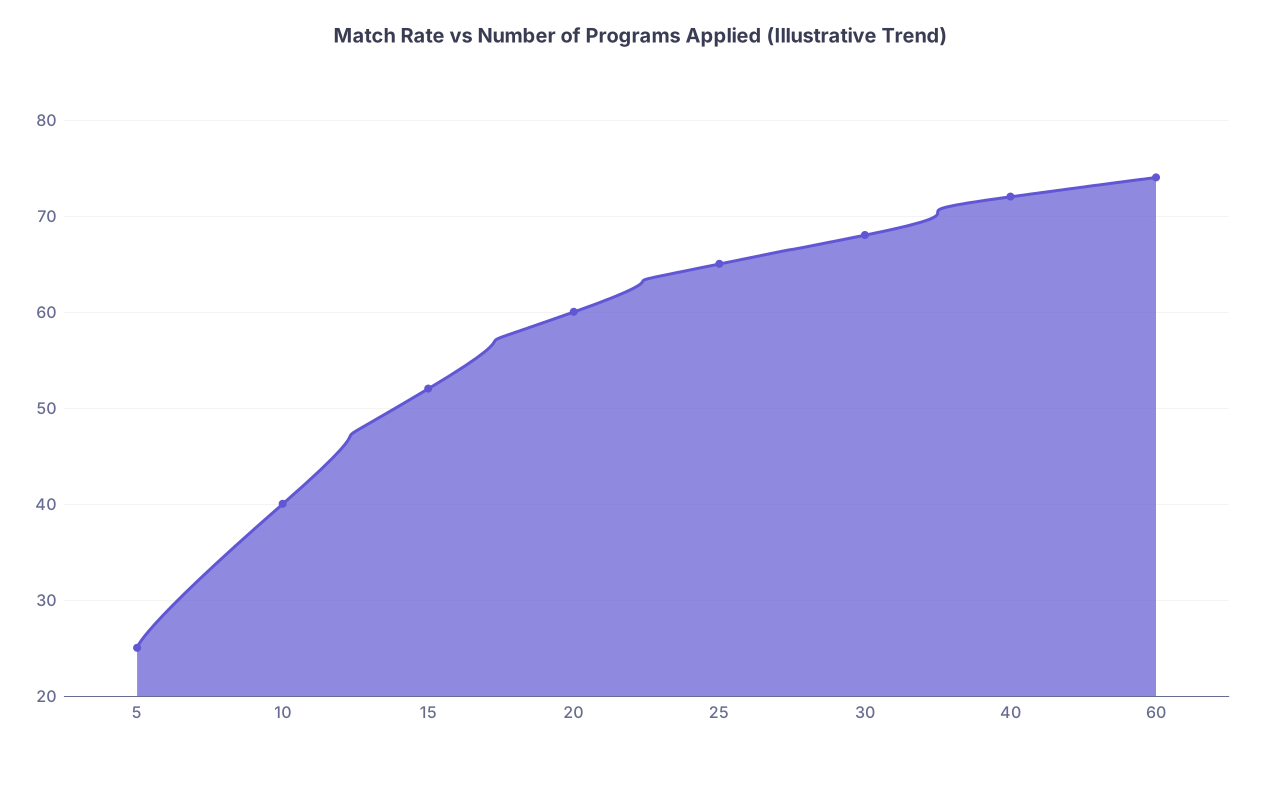
Determining how many programs to apply is central to your program selection strategy. Data from NRMP and professional advising suggests some helpful ranges for MD graduates in family medicine:
Baseline guidelines for MDs in Family Medicine (no major red flags):
- Low-risk applicants (strong scores, no fails, solid evaluations):
- Apply to 15–25 programs
- Average-risk applicants (slightly below average scores or minor concerns):
- Apply to 25–35 programs
- Higher-risk applicants (failures, large gaps, multiple red flags):
- Apply to 35–50+ programs, with particular attention to geographic and program-type flexibility
These are not rigid rules, but a starting point. The final number depends on:
- How narrow your geographic preference is
- How many “reach” vs. “safety” programs you include
- Whether you’re limited to university-based vs. open to community/rural programs
C. Number of Interviews Needed to Match in FM
In family medicine, MD graduates who attend 10–12 interviews generally have a very high chance of matching. Many advisors suggest:
- Aim for at least 8–10 FM interviews as a minimum target.
- If you receive 12–14+ interviews, you are likely “safe” statistically, assuming you rank them all.
Your application volume should be designed to secure that many interviews. If you’re not on track by mid-season, you may need to apply to more programs.
Step 3: Building Your Program List – A Structured Approach
Once you know your goals and your risk level, you can build a balanced list of programs with a clear program selection strategy.
A. Use the 3-Tier Model: Reach, Target, and Safety
Assign programs into three categories based on your competitiveness and their characteristics.
Reach Programs
- More competitive locations (major coastal cities, high-demand metro areas)
- Prestigious academic centers
- Highly sought-after tracks (sports med pipeline, OB-heavy, global health focus)
- Your metrics are below their typical averages
Target Programs
- Your metrics are close to their posted or known averages
- Typical community or community-university hybrid FM programs
- Reasonable geographic preference regions
Safety Programs
- Locations that are less in demand (rural, smaller cities, certain regions)
- Programs that historically interview and rank a wide range of applicants
- Your metrics are above their typical averages
Sample distribution for an MD applicant without major red flags:
- Total applications: 25–30
- Reach: 5–7
- Target: 12–15
- Safety: 8–10
Adjust this ratio depending on your risk profile and how narrow your geographic constraints are.
B. Geographic Strategy
Location is often the strongest determinant in choosing a family medicine job later, so think carefully now.
Ask yourself:
- Are you open to multiple regions (e.g., Northeast + Midwest + South), or just one metro area?
- Are you willing to train in a less-desirable location for 3 years to build skills and later move?
- Do you need to be near a partner, spouse, or dependent family?
Guidance:
- If you’re geographically flexible, you can apply to fewer programs overall because your pool is bigger.
- If you want to be in one city or one state only, you must:
- Apply to a higher proportion of programs in that region, and
- Often increase the total number you apply to, to compensate for limited options.
C. Program Characteristics That Matter in Family Medicine
When you’re thinking about how to choose residency programs, consider:
Type of Program
- Community-based: Often strong in outpatient continuity, broad-spectrum primary care, sometimes less bureaucracy.
- University-based: Often more academic, diverse pathology, research options, sometimes more inpatient heavy.
- Community-university affiliated: A hybrid with community training and academic connections.
- Rural training track: Strong for full-spectrum + rural practice.
Scope of Training
- OB exposure and continuity deliveries
- Inpatient medicine and ICU rotations
- Emergency medicine and urgent care experience
- Procedures (joint injections, dermatologic procedures, point-of-care ultrasound, colonoscopy in some programs)
Fellowship and Career Outcomes
- Do graduates match into fellowships you’re considering?
- Do they secure positions in academic centers, rural clinics, or hospitalist roles aligned with your vision?
Program Culture and Support
- Resident wellness initiatives
- Faculty accessibility and mentorship
- Diversity and inclusion efforts
- Feedback from current residents (e.g., during open houses or social events)
Lifestyle Considerations
- Call schedule, night float, weekend workload
- Vacation and parental leave policies
- Cost of living and commute
Create a short list of 5–7 factors that matter most to you and rate each program (e.g., 1–5) on those factors to compare them systematically.

Step 4: Determining Your Final Application Numbers
With your priorities and program tiers defined, you can now put numbers to your program selection strategy and decide concretely how many programs to apply.
A. Match Your Risk Profile to Application Volume
Use this framework as an MD graduate applying to family medicine:
1. Strong MD Applicant in FM
- USMLE scores at or above national mean, no failures
- Strong FM letters, robust clinical performance
- No significant red flags, flexible geography
Suggested strategy:
- Total applications: 15–25
- Example distribution:
- 4–5 reach
- 7–10 target
- 4–8 safety
- Expected interviews: 10–15 (often more than enough for a strong FM match)
2. Average MD Applicant in FM
- Scores slightly below mean but no failures
- Typical clinical evaluations, standard letters
- Some geographic limitations
Suggested strategy:
- Total applications: 25–35
- Example distribution:
- 6–8 reach
- 12–18 target
- 7–10 safety
- Expected interviews: 8–12, depending on competitiveness of targeted areas
3. Higher-Risk MD Applicant in FM
- One or more Step failures
- Major gaps or professionalism concerns
- Strong geographic restriction (e.g., one metro area) or limited visa options (if applicable)
Suggested strategy:
- Total applications: 35–50+
- Example distribution:
- 8–10 reach
- 15–20 target
- 12–20 safety
- Emphasize community, rural, or less popular regions
- Consider backup specialties or preliminary years if advised by your dean’s office
B. Consider Cost and Time
Every added application increases fees and, if interviews are in-person, travel expenses. While virtual interviews have lowered financial barriers, you still must consider:
- Time away from rotations or responsibilities
- Zoom fatigue and interview prep time
- Decision fatigue in ranking too many programs
Aim for a number that is strategically sufficient but practically manageable.
C. Dynamic Adjustment During the Season
Program selection is not one-and-done. Monitor your progress:
- If you submit 30 applications and by mid-season have only 2–3 interview offers, consider applying to additional safety programs in broader regions.
- If you quickly receive 12–15 interview offers, you may decline late interview requests in locations you’re less interested in, to avoid burnout.
Step 5: Practical Tools and Workflows to Execute Your Strategy
Having a good plan is only half the battle; execution matters. Here are concrete tools and steps to organize your program selection strategy.
A. Build a Master Spreadsheet
Columns to include:
- Program name and ACGME code
- City, state, and region
- Program type (university, community, rural track, etc.)
- NRMP code (if needed later)
- Program size (residents per year)
- OB volume (high/medium/low)
- Inpatient exposure (e.g., number of months)
- Fellowship support (yes/no; which types)
- Visa sponsorship (if relevant)
- Your tier (reach/target/safety)
- Subjective “fit” score (1–5)
- Application status (planned, applied, interview offered, interview completed)
- Notes from open houses, mentors, or online reviews
This spreadsheet becomes your decision hub for both program selection and ranking later.
B. Use Multiple Information Sources
To understand how to choose residency programs wisely, cross-reference:
- Program websites (curriculum, resident bios, leadership bios)
- FREIDA or similar directories for objective data
- NRMP and AAFP data on match outcomes and program characteristics
- Virtual open houses, Q&A sessions, or social media accounts
- Conversations with residents, alumni, and attendings who know the programs
Be cautious about anonymous online reviews; weigh them but don’t let a single negative comment overrule all other data.
C. Leverage Mentors and Advisors
Ask:
- Faculty in family medicine who know your strengths and weaknesses
- Recent graduates from your medical school who matched in FM
- Your dean’s office or career advisors with access to past match lists
Specific questions to ask:
- “Given my application, how many programs should I realistically apply to?”
- “Can you suggest specific programs that might be a good fit, including some safety options?”
- “Do you know if graduates from our school historically interview well at XYZ program?”
Mentors can also identify “hidden gem” programs—community or rural sites with outstanding training but less name recognition.
Step 6: Integrating Strategy with Personal Fit and Well-Being
Your FM match success is not just about numbers; it’s also about how well your personality, learning style, and life priorities align with the program.
A. Recognize Signs of Good Fit
Look for programs where:
- Residents seem genuinely content and supported.
- Faculty speak about training in a way that aligns with your values (patient-centered, evidence-based, team-oriented).
- The program leadership is transparent about strengths and areas for improvement.
Ask residents:
- “What type of resident thrives here?”
- “What changes would you like to see in the next few years?”
- “How does the program respond when residents struggle or have personal crises?”
B. Beware of Overemphasizing Prestige
In family medicine, program “prestige” is far less important than:
- Breadth and quality of clinical training
- Supportive mentorship
- Your ability to graduate confident and competent
An excellent community program may prepare you better for your goals than a name-brand academic center if the fit and training are more aligned with your needs.
C. Balance Ambition with Realism
It is reasonable to include some aspirational programs in your program selection strategy, but avoid building a list composed mostly of long-shot options—especially if you have any application weaknesses.
The right mindset:
- Use reach programs as opportunities, not expectations.
- Anchor your list with target and safety programs that you would be genuinely happy attending.
Frequently Asked Questions (FAQ)
1. As an MD graduate applying in family medicine, what is a safe number of programs to apply to?
For most MD graduates targeting family medicine without major red flags, a safe range is 20–30 programs. Highly competitive applicants with flexible geography may do well with 15–20, while those with exam failures or significant gaps should consider 35–50+, with a higher proportion of safety programs and broader geographic spread.
2. How many family medicine interviews do I need to feel confident about matching?
Data and advising experience suggest that MD graduates who attend 10–12 family medicine interviews have a very high probability of matching, provided they rank all programs at which they interview. A reasonable minimum target is 8–10 interviews. If you are not reaching that by mid-season, consider applying to additional programs, particularly in less competitive locations.
3. How should I balance reach, target, and safety programs?
A typical balanced strategy for an average-risk MD applicant might look like:
- 20–30 total applications, with:
- 5–7 reach programs
- 10–15 target programs
- 5–8 safety programs
Adjust the mix based on your competitiveness and geographic flexibility. The key is ensuring that your list includes multiple programs where your metrics are stronger than their typical applicant pool.
4. What factors should I prioritize when choosing between similar family medicine programs?
When programs are similar on paper, prioritize:
- Scope and quality of training (OB, inpatient, procedures, continuity clinic structure)
- Culture and resident support (wellness, mentorship, responsiveness of leadership)
- Location and lifestyle fit (cost of living, social support, partner/family needs)
- Career outcomes (fellowship matches, job placement in your desired practice setting)
When in doubt, choose the environment where you believe you will be well-trained, well-supported, and personally able to thrive for three important years of your life.
A thoughtful, data-informed program selection strategy will position you strongly for the FM match and, just as importantly, help you land in a residency that aligns with your goals, values, and vision for your future as a family physician.