Understanding the Unique Challenge: Non‑US Citizen IMG in Clinical Informatics
Clinical informatics is one of the most exciting and rapidly growing areas in medicine, but it is also one of the least straightforward paths for international medical graduates—especially non‑US citizens—trying to enter the US system.
If you are a non‑US citizen IMG or foreign national medical graduate targeting clinical informatics, your program selection strategy must be far more deliberate than simply applying broadly. You are not only choosing where to train; you are designing a multi‑step pathway that must account for:
- Immigration and visa constraints
- Limited number of clinical informatics jobs and fellowships
- The need for strong US clinical experience and letters
- Competition with US graduates with prior health IT or data science experience
This article focuses on helping you build a program selection strategy that maximizes your chances of:
- Matching into a residency that will accept and support non‑US citizens, and
- Positioning yourself competitively for a clinical informatics fellowship and a long‑term career in health IT.
We will cover how to choose residency programs, how many programs to apply to, and which factors matter most for a non‑US citizen IMG interested in informatics.
Step 1: Clarify Your Clinical Informatics Career Pathway
Before you start making a spreadsheet of programs, step back and define your realistic pathway. Clinical informatics in the US is generally not a first stop; it is a second stage after residency.
The Usual Path to Clinical Informatics
For most physicians, especially IMGs, the path looks like this:
- ACGME‑accredited residency (Internal Medicine, Pediatrics, Family Medicine, Pathology, Emergency Medicine, etc.)
- Board eligibility in that primary specialty
- Clinical Informatics Fellowship (2 years, ACGME‑accredited)
- Health IT career: CMIO, informatics physician, EHR lead, data analytics, quality improvement, digital health roles, etc.
For a non‑US citizen IMG, each step must be compatible with:
- Visa sponsorship (usually J‑1 or H‑1B)
- Institutional experience training and hiring IMGs
- Opportunities for informatics exposure, research, and mentorship during residency
Decide on Your Primary Specialty with Informatics in Mind
A key strategic choice is which residency specialty to pursue. Clinical informatics is considered a subspecialty of several primary boards (ABIM, ABFM, ABP, ABEM, ABPath, etc.), not a standalone entry point.
When selecting a specialty as a foreign national medical graduate, consider:
- Historical acceptance of IMGs (e.g., Internal Medicine, Family Medicine, Pediatrics tend to be more IMG‑friendly than Dermatology or Neurosurgery).
- Access to health IT projects, EHR optimization, quality improvement, and data analytics in that specialty.
- The volume and competitiveness of clinical informatics fellowships linked to that discipline.
For most non‑US citizen IMGs targeting informatics, the most realistic specialties are:
- Internal Medicine
- Family Medicine
- Pediatrics
- Pathology
- Emergency Medicine (more competitive, more H‑1B at some academic centers)
Your program selection strategy should therefore start with:
“Which residencies in my chosen specialty will best support my long‑term aim in clinical informatics while reliably sponsoring visas?”
Step 2: Know Your Risk Profile and Application Volume
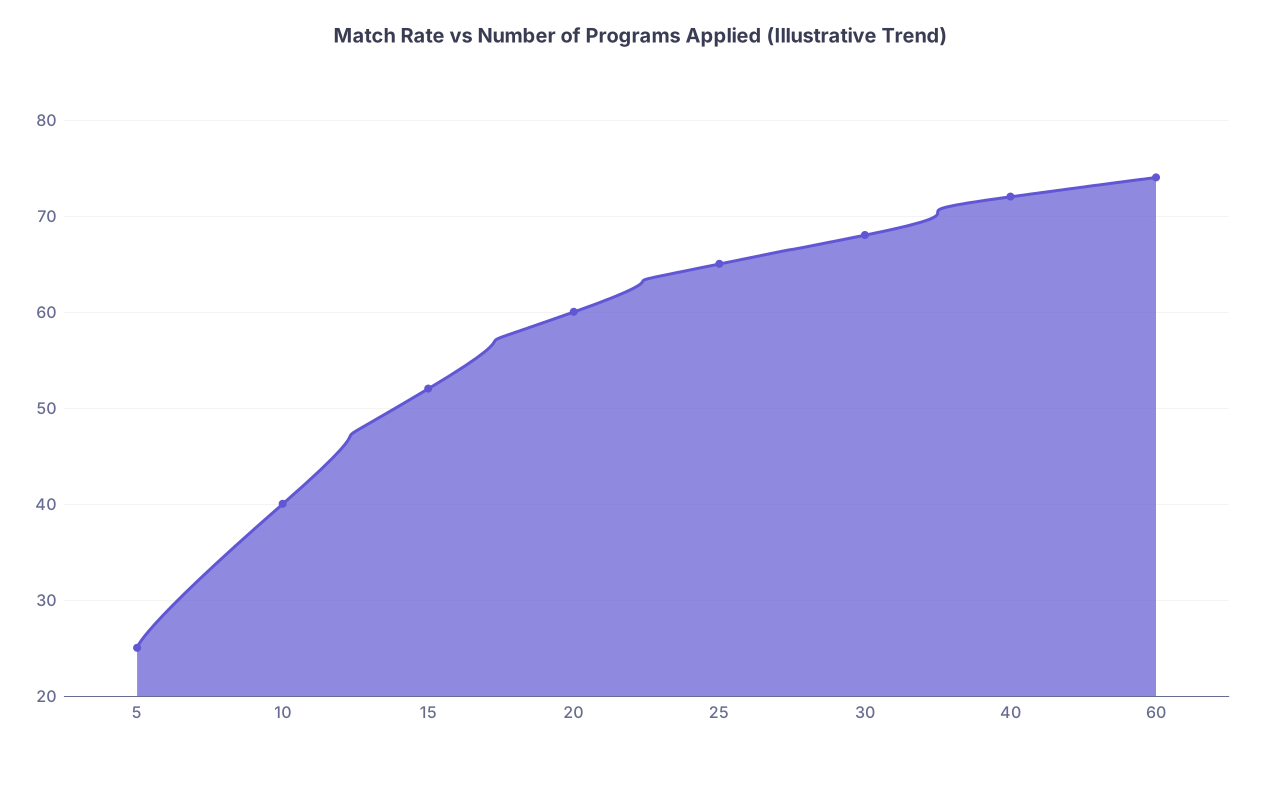
A common question is how many programs to apply to. There is no single number, but you can estimate a range based on your profile and visa status.
Key Risk Factors for Non‑US Citizen IMGs
Your need to apply broadly depends on:
- USMLE performance (step scores or pass/fail timing; strong CK scores remain important)
- Number of attempts (any failures require more applications and careful targeting)
- Year of graduation (fresh graduate vs. older graduate > 5–7 years)
- Amount and quality of US clinical experience (USCE)
- Strength of letters of recommendation (especially from US faculty)
- Any research or experience in informatics or health IT
- Visa type required: J‑1 vs. H‑1B, or needing O‑1 in rare cases
As a non‑US citizen IMG, you must assume significantly higher competition unless your profile is exceptionally strong.
General Guidance: How Many Programs to Apply
The following are approximate ranges (for one specialty) and assume you are specifically targeting an informatics‑friendly career:
- High‑risk profile (multiple attempts, low scores, older YOG, minimal USCE)
- Internal Medicine: often 120–150+ programs
- Family Medicine/Pediatrics: 80–120 programs
- Moderate‑risk profile (average scores, some USCE, YOG within 5–7 years)
- Internal Medicine: 80–120 programs
- Family Medicine/Pediatrics: 60–90 programs
- Relatively strong profile (good USMLEs, recent YOG, solid USCE, clear informatics work)
- Internal Medicine: 60–80 programs
- Family Medicine/Pediatrics: 40–70 programs
If you are applying to two specialties (e.g., Internal Medicine + Family Medicine), it is common for non‑US citizen IMGs to reach 120–180 total programs across specialties, depending on budget.
This large number may feel overwhelming, but residency seats for non‑US citizen IMGs are limited, and you are competing with US grads and green‑card holding IMGs.
The key is to apply broadly but intelligently, not blindly.
Step 3: Identify Programs That Truly Support Non‑US Citizen IMGs
Not every program that says “J‑1 accepted” is equally supportive. Likewise, some programs that sponsor H‑1B do so sparingly. For a non‑US citizen IMG who wants a future in clinical informatics and health IT training, it is essential to identify programs that:
- Routinely train IMGs
- Actually sponsor your visa type
- Offer or connect you to informatics exposure
Core Filters When Building Your Program List
Use these as mandatory filters:
Visa Sponsorship
- Confirm through FREIDA, program website, and direct emails:
- Do they sponsor J‑1?
- Do they sponsor H‑1B (if you are eligible, i.e., all USMLE steps passed including Step 3, and state rules allow)?
- Be careful: websites may be outdated; verify with the program coordinator.
- Confirm through FREIDA, program website, and direct emails:
IMG Friendliness
- Look at current residents on the website:
- Do you see non‑US citizen IMGs?
- What percentage of residents are international?
- Programs with no recent IMGs are a high risk for you, regardless of stated visa policy.
- Look at current residents on the website:
USMLE Cutoffs and Attempts
- Some programs have hard filters; if they state “no failures” and you have any, remove them unless you have compelling connections.
Geography and State Licensing Rules
- Some states have stricter rules on H‑1B or Step 3; some require more months of hands‑on clinical experience.
- Check state medical board regulations for IMGs if you intend to pursue H‑1B.
Communication Response
- If you email a concise question and never receive a reply, that may reflect poor administrative support—important for a foreign national medical graduate who will need visa and paperwork help.

Step 4: Add a Clinical Informatics Lens to Your Program Selection
Once you’ve filtered by visa and IMG friendliness, the next layer is informatics potential. Your primary residency may not be labeled as “informatics heavy,” but some key indicators show whether a program will support your aspirations.
Signs a Residency Supports Clinical Informatics Interests
Look for programs that have:
Affiliated Clinical Informatics Fellowship
- Many informatics fellowships are based at academic medical centers (e.g., university hospitals, large integrated health systems).
- If your target residency is at the same institution or closely affiliated, that is a major advantage.
- Even if you don’t match their fellowship later, proximity gives you:
- Access to informatics faculty
- Research and QI projects
- Electives in informatics or data analytics
Strong Health IT Infrastructure
- Large academic centers or high‑volume community teaching hospitals often have:
- Dedicated EHR optimization teams
- Quality improvement departments
- Data analytics offices
- IT/innovation labs
- Check for:
- Use of major EHRs (Epic, Cerner, etc.)
- Participation in telemedicine, digital health initiatives, or decision‑support projects
- Large academic centers or high‑volume community teaching hospitals often have:
Faculty with Informatics or Data Backgrounds
- Scan faculty bios for:
- “Clinical informatics,” “Chief Medical Information Officer,” “CMIO”
- “Biomedical informatics,” “health data science,” “quality improvement lead”
- If the program has faculty publishing or presenting in these fields, you’re more likely to find mentorship.
- Scan faculty bios for:
Elective Time and Flexibility
- Programs that allow research months, quality improvement electives, or rotations with IT/analytics teams can provide tangible informatics experience.
- Ask in interviews or via email whether they support:
- Resident projects in EHR optimization
- Interdisciplinary informatics work with IT or data science departments
Track Record of Graduates Going into Informatics or Related Fields
- If alumni profiles mention graduates going into:
- Clinical informatics fellowship
- Quality and safety leadership
- Healthcare analytics or industry roles
- That is a good sign that your informatics path is realistic from this program.
- If alumni profiles mention graduates going into:
Balancing Informatics Strength with Match Probability
You might be tempted to apply almost exclusively to large academic centers with famous informatics fellowships. That can be a mistake, especially if you’re a high‑risk non‑US citizen IMG.
You need a portfolio of programs:
Tier A: High Informatics Potential + Historically IMG‑Friendly (Smaller Number)
- University‑affiliated programs with established informatics fellows or strong EHR/IT teams that are known to take IMGs.
Tier B: Moderate Informatics Potential + Very IMG‑Friendly (Core Volume)
- Community or university‑affiliated programs that regularly accept IMGs, have stable EHR systems, and some QI/data activities, even if not a big informatics brand.
Tier C: Likely to Rank You Highly but Modest Informatics Resources (Safety)
- Programs that may not have robust informatics infrastructure but are very IMG‑friendly and stable; you can later move into informatics via:
- Research collaborations
- Online certificates (AMIA 10×10, data science courses, health IT training programs)
- Applying to fellowships externally after residency
- Programs that may not have robust informatics infrastructure but are very IMG‑friendly and stable; you can later move into informatics via:
Your primary goal is to match into a strong, supportive residency; you can then build an informatics‑focused CV from there.
Step 5: Practical Process for Building and Narrowing Your List
Turn this strategy into a step‑by‑step workflow as you prepare your ERAS application.
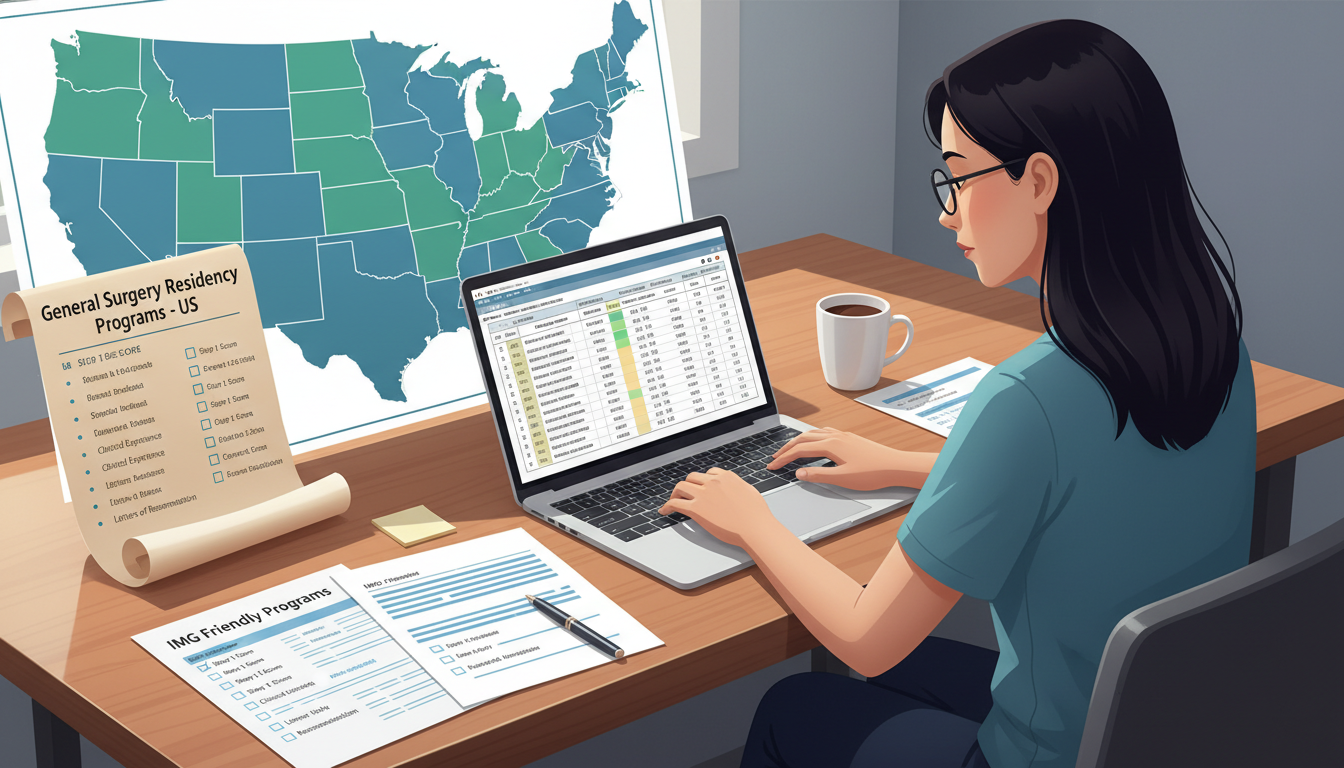
1. Start Broad Using Public Databases
Use tools like:
- FREIDA (AMA)
- Program websites
- NRMP and AAMC data
Filter by:
- Specialty
- Visa sponsorship
- Program size (larger programs often have more flexibility)
- Geographic preference (if any, but keep this flexible for non‑US citizen IMGs)
Export or build a spreadsheet that includes:
- Program name and ACGME code
- City, state, type (university/community)
- Visa type (J‑1, H‑1B, none, unclear)
- Percentage of IMGs or at least examples of current international residents
- Whether a clinical informatics fellowship exists at that institution or nearby
- Notes field (USMLE cutoff, attempts allowed, informatics keywords)
2. Apply First‑Pass Filters
Remove programs that:
- Do not sponsor the visa you need
- Clearly state they do not accept IMGs or have zero IMGs historically
- Have hard USMLE or YOG cutoffs that you do not meet
This first pass should still leave you with a large list, often 150+ depending on specialty.
3. Perform an Informatics‑Oriented Deep Dive
For each remaining program, quickly check:
- Department website for:
- Informatics faculty or CMIO
- QI and patient safety divisions
- Research and EHR‑related projects
- The institution’s main site for:
- “Clinical informatics fellowship”
- “Biomedical informatics”
- “Health IT training initiatives”
Assign a simple informal score:
- 3 = Strong informatics opportunity (fellowship + visible faculty + projects)
- 2 = Some informatics exposure (good EHR system + QI/research potential)
- 1 = Minimal obvious informatics focus
4. Categorize by Competitiveness and Fit
Group programs into tiers based on:
- Informatics score (1–3)
- IMG friendliness
- Your perceived competitiveness for that program (low, medium, high)
Your target distribution of submissions might resemble:
- 15–25 “reach” programs (high informatics score, but competitive)
- 40–70 “realistic” programs (moderate informatics, IMG‑friendly)
- 30–60 “safety” programs (very IMG‑friendly, at least basic EHR/QI activity)
The exact numbers depend on your risk profile and total budget. For a non‑US citizen IMG, err on the side of more applications, especially in Internal Medicine.

Step 6: Communicating Your Informatics Interest Strategically
Your program selection strategy only works if programs understand why you are a good fit. As a non‑US citizen IMG, you need to signal clearly that:
- You are committed to a clinical career in the US
- You have a realistic understanding of clinical informatics
- Your interest in technology supports, not replaces, your dedication to patient care
Personal Statement and ERAS Application
Within ERAS, align your materials with your program choices:
Personal Statement
- Mention:
- How clinical informatics can improve safety, outcomes, or efficiency
- A concrete example of informatics/health IT experience (EHR optimization, telemedicine, data projects, research in informatics or public health surveillance systems)
- Your plan: residency first, then possibly a clinical informatics fellowship
- Emphasize that you understand informatics is in addition to being an excellent clinician.
- Mention:
CV and Experiences
- Highlight:
- Any health IT training, online courses, or certifications (AMIA 10×10, Coursera data science in healthcare, basic programming skills, etc.).
- QI projects with data components (audit and feedback, dashboard development, order set redesign).
- Publications or presentations involving data analysis, EHR data, or population health.
- Highlight:
During Interviews
When interviewing at programs with informatics potential:
Ask targeted questions such as:
- “Do your residents participate in EHR optimization or decision‑support projects?”
- “Are there opportunities to collaborate with the clinical informatics team or CMIO?”
- “Have previous residents engaged in informatics research or gone on to health IT roles or fellowships?”
Be careful not to sound like you are only interested in IT:
- Reinforce that clinical training is your main priority, and informatics is a tool to enhance that work.
Your articulated interest can differentiate you in a positive way—especially at academic centers looking for residents who will contribute to quality and innovation.
Step 7: Planning Beyond Residency – Positioning for Informatics Fellowships
Your residency program selection should be made with the post‑residency step in mind: applying for a clinical informatics fellowship or a related health IT role.
Choosing Residency with Fellowship Compatibility
When two programs look equal for residency training and visa support, ask:
Does this institution have:
- A clinical informatics fellowship?
- Faculty affiliated with national informatics organizations (AMIA)?
- Data warehouses and analytics tools accessible to residents?
Are there examples of fellows or faculty who started as residents there and later stayed for informatics roles?
Even if you eventually apply elsewhere, spending 3 years in a system with robust analytics and IT projects will build a much stronger informatics portfolio than a setting with minimal exposure.
Building a Track Record During Residency
Wherever you match, you can work toward informatics fellowship competitiveness by:
- Volunteering for:
- QI projects using EHR data
- Committees on order set design, clinical decision support, or patient safety
- Doing small projects such as:
- Analyzing readmission data and proposing EHR alerts or workflow changes
- Evaluating telehealth utilization in your clinic
- Seeking:
- Mentorship from informatics‑minded faculty or the CMIO
- Co‑authorship on abstracts or posters about EHR interventions
Your eventual fellowship applications will look much stronger if your residency program allowed and supported these activities. This is why the informatics lens is critical in initial program selection.
Common Pitfalls and How to Avoid Them
1. Over‑Focusing on Informatics and Undervaluing Match Probability
Some non‑US citizen IMGs apply almost exclusively to top‑tier academic centers with famous informatics teams—then receive very few interviews.
Avoid this by:
- Ensuring a large base of IMG‑friendly programs, including community and mid‑tier university hospitals.
- Treating high‑profile informatics programs as reach options, not your entire list.
2. Misunderstanding Visa Policies
Do not rely on old forum posts alone. Policies change, and a site stating “H‑1B possible” in 2018 may now be J‑1 only.
Always:
- Double‑check FREIDA, program sites, and email the coordinator politely if unclear.
- Keep track of official answers in your spreadsheet.
3. Underestimating the Competition for Clinical Informatics Fellowships
Even if you match into residency, informatics fellowships are competitive and small in number.
Plan early by:
- Selecting residency programs that enable informatics activities.
- Building tangible outputs: QI projects, presentations, some basic data skills.
- Joining relevant organizations (e.g., AMIA student/resident membership).
FAQs: Program Selection Strategy for Non‑US Citizen IMGs in Clinical Informatics
1. As a non‑US citizen IMG, should I prioritize programs with a clinical informatics fellowship at the same institution?
It is highly beneficial but not absolutely required. Programs with an in‑house clinical informatics fellowship usually:
- Have more informatics‑oriented faculty and mentors
- Offer projects and electives aligned with health IT and data analytics
- Provide networking with fellows and faculty active in the field
However, if such programs are extremely competitive and not IMG‑friendly, it is better to match at a more attainable residency that still offers quality EHR, QI, and research opportunities. You can always apply to informatics fellowships at other institutions later.
2. How many programs should I apply to if I am a strong non‑US citizen IMG applicant targeting Internal Medicine and clinical informatics?
If your profile is relatively strong (solid scores, recent graduation, USCE, no attempts), a reasonable range for Internal Medicine might be 60–80 programs, carefully chosen using the filters described:
- Visa sponsorship guaranteed
- Clear track record of non‑US citizen IMGs
- At least moderate informatics potential
If your profile is moderate or high‑risk, you may need to increase to 80–120+ programs. Budget permitting, more well‑targeted applications increase your odds, especially for non‑US citizens.
3. Is it risky to mention clinical informatics strongly in my personal statement?
It is safe—and often advantageous—if you frame it correctly. You should:
- Emphasize that you see informatics as a tool to enhance clinical care and patient outcomes.
- Show that you understand informatics is typically pursued after strong residency training.
- Avoid implying that you want to leave bedside medicine quickly to “do IT only.”
Most programs, especially academic and mid‑size teaching centers, appreciate residents interested in EHR optimization, quality, and data‑driven care, as long as they also prioritize clinical duties.
4. I have no formal informatics or programming background. Can I still target a clinical informatics career?
Yes. Many successful informatics physicians started with standard clinical training and developed informatics interests during residency. To strengthen your candidacy:
- Take online health IT training, introductory data science, or informatics courses.
- Seek involvement in EHR‑related QI projects during residency.
- Network with informatics‑minded faculty and attend relevant conferences or local workshops.
Your program selection strategy should ensure access to at least some EHR, data, and quality activities—even if the residency does not brand itself as “informatics heavy.”
By combining visa‑aware program selection, realistic expectations about how many programs to apply to, and a consistent focus on finding settings that support informatics‑oriented growth, you can significantly improve your chances of both matching into residency and ultimately securing a role in clinical informatics and health IT as a non‑US citizen IMG.