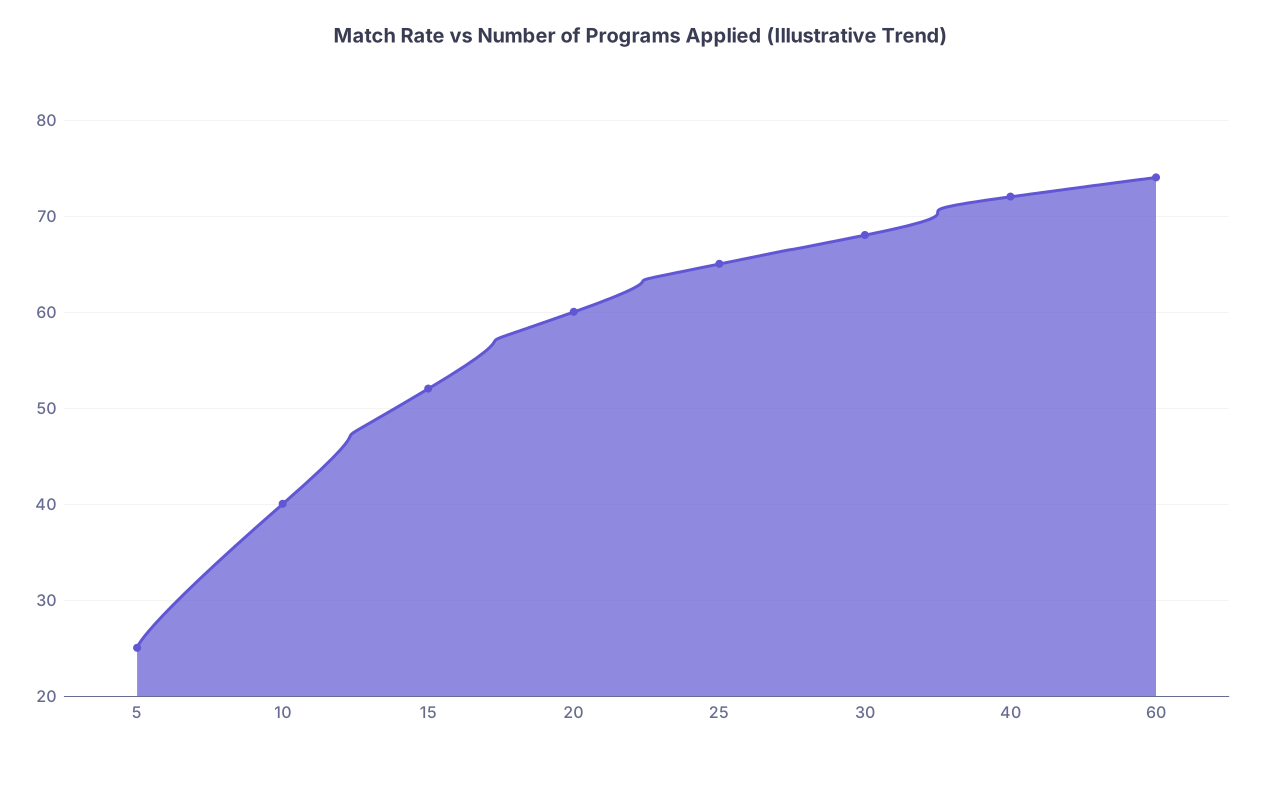
Understanding the Unique Position of the US Citizen IMG in Dermatology
Dermatology is one of the most competitive specialties in the US, and being a US citizen IMG (American studying abroad) adds additional complexity. A strong program selection strategy is not optional—it is critical to your derm match chances.
As a US citizen IMG in dermatology, you typically face:
- Fewer interview offers per application than US MD seniors
- Heightened scrutiny of USMLE scores and clinical experience
- Variable program policies toward IMGs that are often unspoken or poorly publicized
A well-designed program selection strategy answers three core questions:
- Where can I realistically match? (probability and fit)
- Where do I have a plausible edge? (connections, strengths, unique experiences)
- How many programs should I apply to, and which ones? (volume and targeting)
Your goal is to create a tiered, evidence-based list that balances reach, realistic, and safety targets, while staying financially and logistically sane.
Before you build that list, you need a clear picture of your own profile.
Step 1: Honestly Assess Your Competitiveness as a US Citizen IMG
To build a smart program selection strategy, start with an unflinching self-audit. Program directors will do this in seconds; you need to do it first, in detail.
1. Academic Foundation
Key elements:
- USMLE Step 1 (Pass/Fail)
- USMLE Step 2 CK score
- Any Step failures or repeats
- Class rank, GPA, or distinctions (if available from your school)
For dermatology, Step 2 CK is now a major filter. While thresholds vary:
- 250+ = strong to very competitive (for a US citizen IMG, this opens many doors)
- 240–249 = solid but not elite; needs compensating strengths
- 230–239 = possible but significantly more challenging; must be extremely strategic
- <230 = very high risk for direct derm match; consider research year, dual-apply, or longer-term strategy
Be honest about:
- Any exam failures
- Gaps in training
- Remediation on transcripts
These don’t automatically disqualify you, but they drastically change which programs are realistic and how many programs you should apply to.
2. Dermatology-Specific Experience and Commitment
Program directors highly value evidence of genuine commitment to dermatology:
- Dermatology electives (especially in the US)
- Away rotations or observerships in US derm departments
- Derm case reports, QI projects, posters, or publications
- Involvement in dermatology interest groups or outreach (skin cancer screenings, community clinics)
For a US citizen IMG:
- At least one in-person US dermatology experience (elective, sub-I, or substantial observership) is extremely helpful
- Multiple derm rotations with strong letters from US dermatology faculty are near-essential for competitive programs
If you lack these, your program selection strategy should:
- Favor programs known to be IMG-friendly
- Include more applications overall
- Possibly incorporate a dedicated research year at a US derm department before applying
3. Research Productivity
Dermatology is research-heavy. Programs look for evidence that you can read and contribute to the literature:
- First-author derm publications
- Middle-author contributions
- Case reports, letters to the editor, review articles
- Poster/oral presentations at AAD or regional derm meetings
You don’t need 20 publications, but having zero dermatology research as a US citizen IMG puts you at a clear disadvantage, especially for academic programs.
4. US Clinical Experience (Beyond Derm)
Programs want reassurance that you can function in the US system:
- US internal medicine, pediatrics, or surgery rotations
- US letters from non-derm attendings
- Strong comments about communication, teamwork, and reliability
If your US experience is limited, you must be more conservative and deliberate with program selection.
5. Personal and Geographic Factors
These often shape your program list more than applicants expect:
- Do you have a strong geographic tie? (grew up in a state, family there, undergrad nearby)
- Are you open to any location, including smaller cities and less popular regions?
- Do you have constraints (family, visa for spouse, financial)?
For a US citizen IMG, being geographically flexible is a powerful advantage you should fully exploit.

Step 2: Master the Data – How Programs View US Citizen IMGs in Dermatology
To build a rational program list, you must understand how dermatology programs behave, not just how they advertise themselves.
1. Use the Right Data Sources
For derm match planning and program selection strategy, focus on:
- NRMP Charting Outcomes in the Match (Dermatology, most recent edition)
- Look at:
- Match rates for US MD vs US citizen IMG vs non-US IMG
- Median Step 2 CK scores of matched candidates
- Look at:
- Program websites & FREIDA
- Check:
- IMG acceptance policies
- Minimum score requirements
- Visa policies (less relevant for US citizen IMG, but still indicates openness to IMGs)
- Check:
- Residency Explorer & Doximity
- Get a sense of program competitiveness and applicant profiles
- PubMed & program websites
- For research intensity and academic focus
2. Identify Programs with History of Taking US Citizen IMGs
This is one of the most powerful filters you have.
Actions:
- Go to program websites and review current residents:
- Look for:
- International schools
- Caribbean graduates
- “American studying abroad” profiles
- Look for:
- Search residents on LinkedIn for more detailed training backgrounds
- Ask trusted mentors or recent US citizen IMG dermatology residents about programs known to be IMG-friendly
These programs should form the core of your “realistic” tier, especially if your Step 2 CK is <250.
3. Recognize Hidden Filters
Not all filters are explicitly listed. Be cautious when:
- Program website says nothing about IMGs and current residents are 100% US MD/DO
- Every resident is from top-20 US medical schools and/or has PhDs or major research portfolios
- Programs state they require USMLE attempts only once or “no failures”
As a US citizen IMG, you can apply to a few of these as reach programs—but relying heavily on them is risky.
Step 3: Building a Tiered Program List – From Dream to Safety
A structured tier system will keep your derm match strategy rational and reduce panic during application season.
1. Example Tier Framework for Dermatology
For a US citizen IMG, you might create 4 tiers:
Tier 1 – Reach Academic Programs
- Highly research-intensive, university-based programs
- Historically low IMG representation
- Resident profiles: high Step 2 CK (often 255+), multiple publications
Tier 2 – Realistic Academic/Hybrid Programs
- University or hybrid community-university programs
- Some history of accepting IMGs (especially US citizen IMG)
- Moderate-to-strong research but not exclusively elite backgrounds
Tier 3 – IMG-Friendly & Community-Based Programs
- Known to accept US citizen IMGs or Caribbean grads
- Often in less popular geographic areas
- More holistic review, especially if you have US experience and solid letters
Tier 4 – Transitional/Preliminary Medicine or Research Years (Safety Net)
- For applicants considering a longer path:
- Preliminary internal medicine or transitional year + derm research year
- Dedicated dermatology research fellowships at US institutions
- For applicants considering a longer path:
2. How Many Programs to Apply to in Dermatology as a US Citizen IMG?
Dermatology is low-volume and highly competitive; historically, most applicants apply to a very large number of programs. For a US citizen IMG:
Highly competitive applicant (Step 2 CK ≥ 255, multiple derm publications, US derm rotations, strong US letters):
- Roughly 60–80 derm programs, with thoughtful targeting
- Optional: 10–20 medicine prelim/TY programs as backup
Moderately competitive (Step 2 CK 240–254, some derm research, at least one US derm experience):
- Typically 80–120 derm programs
- 20–30 medicine prelim/TY programs if you’re serious about pursuing derm long-term
At-risk profile (Step 2 CK < 240, minimal derm research, weaker US exposure):
- Consider very carefully: direct derm application vs. delayed strategy
- If applying directly: 100–140 derm programs + robust preliminary/TY list
- Strongly consider: research year or derm-adjacent path if funding permits
These are not rigid rules, but they reflect the “how many programs to apply” reality in a hyper-competitive specialty for a US citizen IMG. Volume matters—but only when combined with smart targeting.
3. Example Tier Allocation
For a moderately competitive US citizen IMG (Step 2 CK 245, 2 derm posters, 1 US derm elective, solid letters):
- Total derm programs: 100
- Tier 1 (Reach): 15–20 programs
- Tier 2 (Realistic): 40–50 programs
- Tier 3 (IMG-friendly): 30–40 programs
- Plus: 15–20 prelim/TY medicine programs in geographic areas aligned with derm programs
Your goal: maximize the chance of 10–12 interviews or more, which generally puts you in a stronger position for a derm match.

Step 4: Choosing Specific Programs – Practical Selection Criteria
Once you’ve decided on your overall volume and tiers, the next step in program selection strategy is choosing individual programs intelligently.
1. Core Filters Every US Citizen IMG Should Use
When evaluating each program, systematically check:
IMG Friendliness
- Recent or current residents from international schools
- Any language like “We welcome qualified IMGs”
- Visa sponsorship (often a proxy for openness, even though you don’t need it)
Score Requirements
- Stated floor for Step 2 CK (e.g., ≥240)
- Policies on USMLE failures or attempts
Derm and Non-Derm Research Focus
- Are they heavily academic (R01-funded, lots of publications)?
- Or more clinically/community oriented?
- Match this to your own research profile.
Geographic Fit and Personal Ties
- Family or personal ties can significantly help
- Programs often prefer candidates likely to stay in the region
Program Size and Culture
- Small programs = fewer spots but closer-knit environment
- Large programs = more research and mentorship options
2. Creating a Scoring System
To avoid emotional, last-minute decisions, assign each program a simple numeric score. For example:
Score each 1–5 on:
- IMG Friendliness
- Geographic Fit
- Academic/Research Fit
- Personal Interest
Total possible: 20. Then:
- Keep most of your applications in the 13–18 range (realistic to strong fit)
- Limit programs scoring ≤10 to a small portion of your list (true reaches or “backup of last resort” locations)
3. Special Considerations for Americans Studying Abroad
If you are an American studying abroad (e.g., Caribbean, Ireland, Eastern Europe), program directors may have less familiarity with your school. To compensate:
- Emphasize your US clinical performance in letters and ERAS
- Highlight any US faculty advocates willing to speak for you
- Prioritize programs where your school has previous matches (even in other specialties)
Check with:
- Your school’s match list
- Recent grads from your school
- Online communities (e.g., alumni groups, IMG networks)
Programs that have already taken someone from your medical school—or similar schools—are more likely to consider your file seriously.
Step 5: Strategic Use of Dual Application and Backup Plans
Because dermatology is high-risk, even strong US MD seniors sometimes pursue backup plans. For a US citizen IMG, this is especially important to think about early.
1. Common Backup Strategies
Medicine or Transitional Year + Derm Reapplication
- Apply to derm and a reasonable number of internal medicine or TY programs
- If unmatched in derm but matched in prelim/TY, pursue derm research and reapply
Dedicated Dermatology Research Year Before Applying
- Spend 1–2 years in a US derm department as a research fellow
- Produce publications, meet mentors, and then apply from a stronger position
Apply to Derm-Adjacent Fields
- Pathology (dermpath later), rheumatology (skin manifestations), allergy/immunology, etc.
- This is more of an alternative career path than a direct derm match pipeline, but relevant for those rethinking their strategy
2. Integrating Backup into Your Program List
When deciding how many programs to apply to, integrate backup planning from the start:
- If you are strongly derm-or-bust and reasonably competitive:
- Heavy derm list, moderate prelim/TY list
- If your profile is borderline and you cannot extend training time:
- Consider a balanced application (derm + categorical IM or another field)
- If you can afford an extra year or two for research:
- Strongly consider research first, then high-target derm application
Be intentional. A haphazard derm match attempt without backup planning can result in you being unmatched with few options.
Putting It All Together: A Sample Strategy for a US Citizen IMG
Imagine you are:
- US citizen IMG, Caribbean graduate
- Step 1: Pass, Step 2 CK: 247
- 1 US derm elective with strong letter
- 2 derm posters at regional meetings, 1 accepted case report
- 6 months US internal medicine rotations with solid letters
- Open geographically, no major family constraints
Your derm match and program selection strategy might look like:
Decide Application Volume
- Derm: ~100 programs
- Prelim/TY medicine: ~20–25 programs
Build Tiers
- Tier 1 (Reach): 20 high-profile academic programs (some with limited IMG history)
- Tier 2 (Realistic): 40–45 programs with:
- Some IMGs in current/past residents
- Mid-to-high academic focus
- Tier 3 (IMG-friendly): 35–40 programs with:
- Clear IMG presence
- Locations in less saturated markets
Program Scoring
- Create a spreadsheet with filters:
- IMG presence (0–5)
- Geography fit (0–5)
- Research fit (0–5)
- Personal interest/impression from website or residents (0–5)
- Use this to refine away very low-fit programs while maintaining enough total volume
- Create a spreadsheet with filters:
Backup Strategy
- Apply robustly to prelim/TY medicine in cities with several derm departments (to maximize networking and research opportunities if you reapply)
Execute and Adjust
- If interview numbers are low by mid-season, seek away rotations, observerships, or short-term research opportunities where you have some contact.
- Plan early for what you’ll do if you don’t match: SOAP vs research vs full reapplication plan.
FAQs: Program Selection Strategy for US Citizen IMG in Dermatology
1. As a US citizen IMG, how many dermatology programs should I apply to?
For dermatology, most US citizen IMGs need to apply broadly:
- Strong applicants (Step 2 CK ≥ 255, US derm rotations, research): 60–80 programs
- Moderate applicants (Step 2 CK 240–254, some derm research, at least one US derm elective): 80–120 programs
- At-risk applicants (Step 2 CK < 240 or minimal derm exposure): 100–140 programs, plus a serious backup plan
These ranges are general; adjust based on your budget, strength of your CV, and geographic flexibility.
2. How do I know if a dermatology program is IMG-friendly?
Look for:
- Current or recent residents trained at international schools
- Program statements welcoming qualified IMGs
- A history of sponsoring visas (even if you don’t need one as a US citizen IMG)
- Feedback from recent IMG applicants or residents
If all residents are US MDs from top-ranked schools and the program is highly research-intensive, consider it more of a reach.
3. Should I still apply to highly competitive university programs as a US citizen IMG?
Yes—but selectively and with realistic expectations. Include a small number of reach programs (perhaps 10–20% of your list), especially if:
- You have strong USMLE scores
- You’ve done a derm research year or major derm projects
- You have strong US academic letters
However, your main focus should be on realistic and IMG-friendly programs to maximize interviews.
4. Is a research year necessary for a US citizen IMG to match into dermatology?
Not always, but it often helps significantly, especially if:
- Your Step 2 CK is below ~250
- You have minimal derm research or US derm exposure
- You’re targeting academic programs
A well-structured research year at a US institution can provide publications, mentorship, and strong letters—substantially improving your derm match odds. It also signals serious commitment to the field.
Designing your program selection strategy as a US citizen IMG in dermatology requires data, honesty, and a willingness to think long-term. By combining a realistic self-assessment with a structured, tiered approach—and by applying to an appropriate number of programs—you give yourself the best possible chance to land interviews, build relationships, and ultimately secure a derm match.