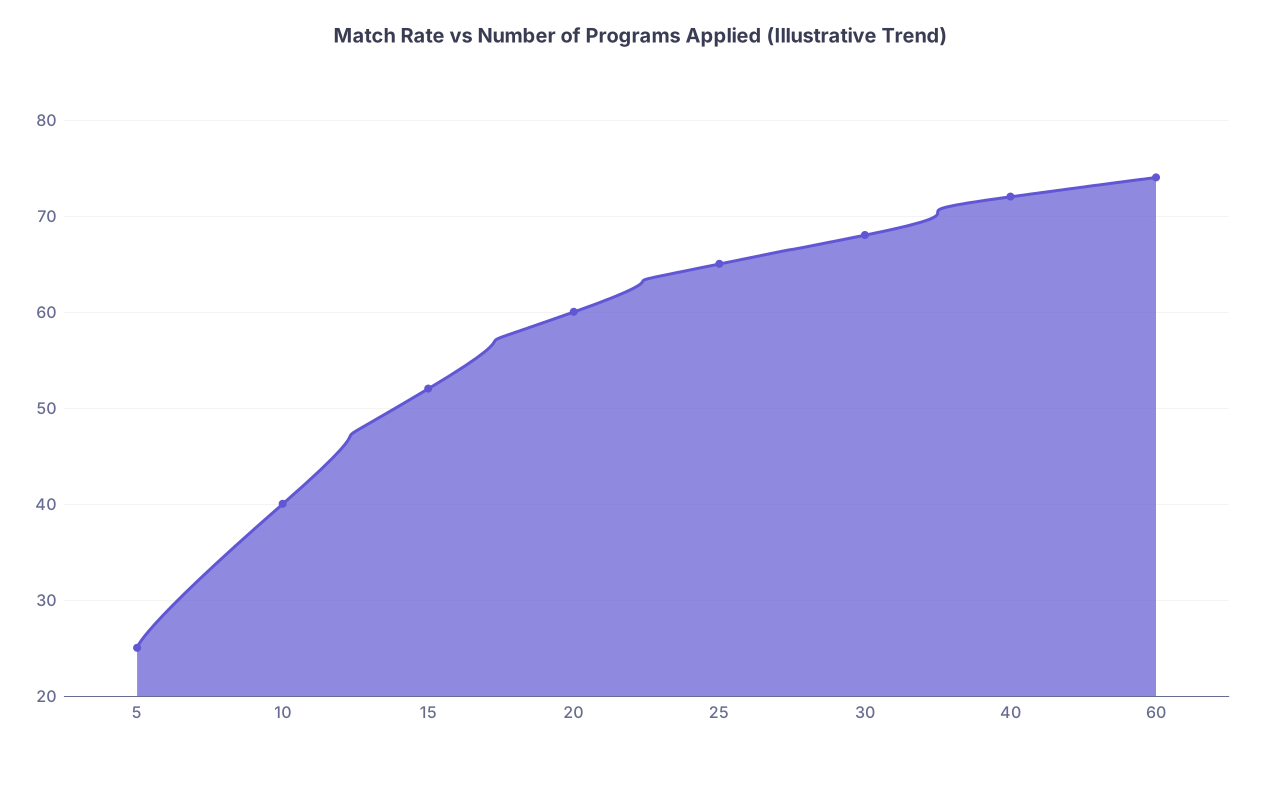
Applying to medical genetics as a US citizen IMG (American studying abroad) is a smart, achievable goal—but it requires a deliberate, data‑driven program selection strategy. Because medical genetics is a smaller specialty with unique training pathways and relatively few residency positions, you cannot afford a random or purely “name‑brand” approach.
This guide will walk you through a structured program selection strategy tailored specifically for a US citizen IMG targeting medical genetics residency programs—whether that’s categorical medical genetics, combined pediatrics–genetics, internal medicine–genetics, or other combined tracks.
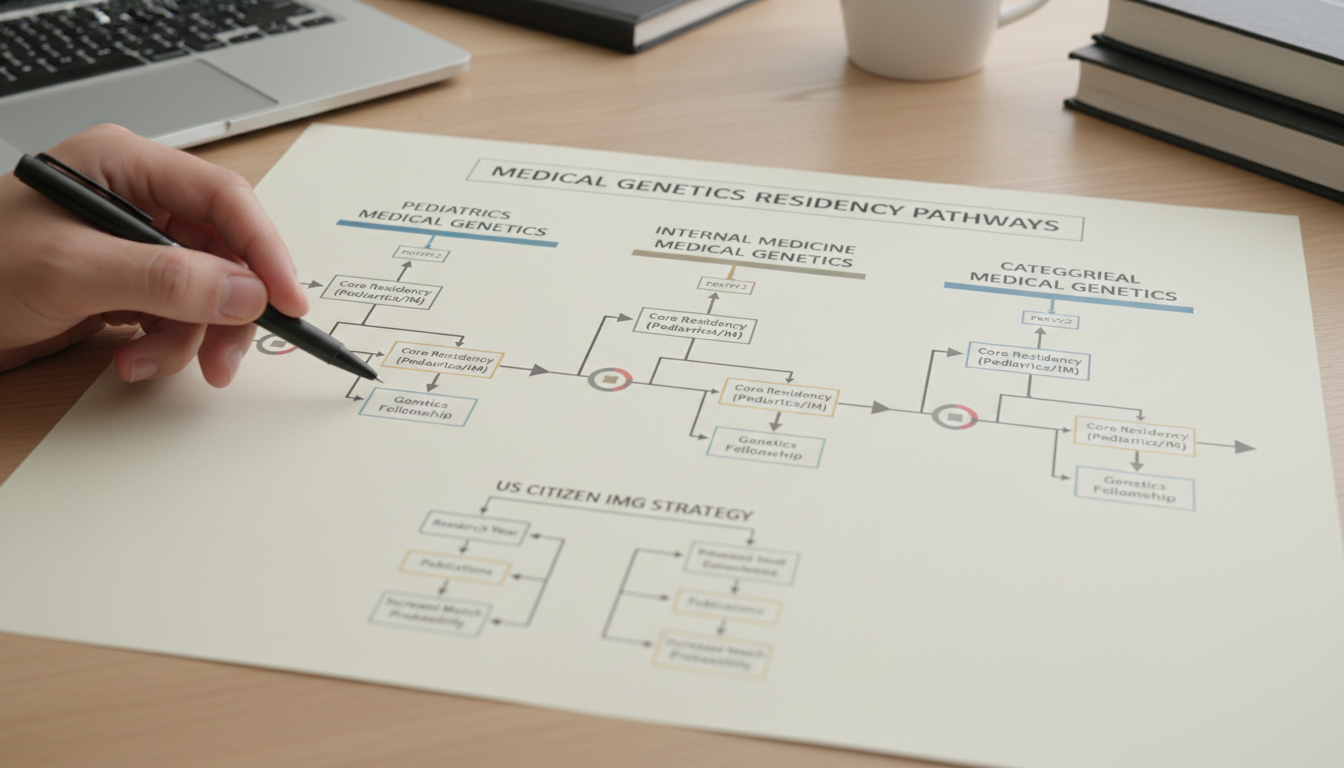
Understanding the Medical Genetics Training Landscape
Before you can build a program list, you need to understand how medical genetics training is structured in the US.
1. Types of Medical Genetics Residency Pathways
Medical genetics is offered in several main formats:
Categorical Medical Genetics and Genomics (MGG)
- 2‑year residency after completion of another primary residency (commonly Pediatrics, Internal Medicine, or OB/GYN).
- You apply during or after your primary residency.
- More common for applicants who discover genetics interests later.
Combined Pediatrics–Medical Genetics (Peds‑Genetics)
- Typically a 4‑ or 5‑year integrated program (e.g., 2 years pediatrics + 2 years genetics).
- You match once and complete both certifications in a linked format.
- Ideal for those strongly interested in pediatric rare disease, dysmorphology, metabolic disorders.
Combined Internal Medicine–Medical Genetics (IM‑Genetics)
- Similar structure, but focused on adult genetics: cancer genomics, cardiogenetics, adult metabolic disorders, etc.
- Less common but growing as adult‑onset genetic conditions are recognized more often.
OB/GYN–Genetics or Other Variants
- Rare, highly specialized tracks. Most US citizen IMG applicants will focus on Peds‑Genetics, IM‑Genetics, or categorical MGG after a core residency.
Why this matters for program selection strategy:
You must decide whether you’re applying:
- Directly to combined programs in the Match (Peds‑Genetics, IM‑Genetics), or
- To a primary residency first (Pediatrics, IM, etc.), with the intention of applying for genetics later.
Many US citizen IMGs succeed by first matching into Pediatrics or Internal Medicine and then applying to genetics fellowships/residencies. However, there is a small but real cohort who match directly into combined programs.
2. Competitiveness and Match Dynamics for Genetics
Medical genetics remains relatively small, with:
- Fewer applicants than primary specialties
- High demand for genetics-trained physicians
- Program directors often valuing:
- Genuine interest in genetics
- Research or scholarly work in genetics/genomics
- Strong clinical performance and communication skills
For a US citizen IMG, this combination can be favorable—provided you present a clear narrative and strong preparation.
Key implications for your genetics match strategy:
- You won’t be competing with hundreds of applicants per seat like in dermatology or orthopedic surgery.
- However, each program may interview only a small number of candidates, and some may favor:
- Graduates from US medical schools
- Applicants from affiliated or “feeder” residency programs
- Your US citizenship does help: programs don’t have to worry about visa sponsorship, which is a significant plus compared to non‑US IMGs.
Clarifying Your Goals as a US Citizen IMG
Your program selection strategy should align with a clearly defined career plan. Start with these questions.
1. What Patient Population and Practice Setting Do You Want?
Ask yourself:
- Do you see yourself primarily treating children with genetic conditions?
→ Lean toward Pediatrics–Genetics pathways. - Are you drawn to adult‑onset genetic disease, cancer genetics, cardiogenetics, neurogenetics?
→ Consider Internal Medicine–Genetics or categorical MGG after IM. - Are you most interested in prenatal and reproductive genetics?
→ OB/GYN with later genetics training or strong reproductive genetics exposure in Peds/IM‑Genetics programs.
Also consider setting:
- Academic center with heavy research vs clinically oriented program
- Desire for subspecialty focus (metabolic, neurogenetics, cancer genetics, etc.)
Your answers will:
- Help narrow program types and institutions
- Make your personal statement and interview narrative coherent
2. How Strong Is Your Current Profile?
As a US citizen IMG (American studying abroad), you must realistically evaluate:
- USMLE performance (Step 1/2 CK; Step 3 if taken)
- Time since graduation
- US clinical experience (USCE)
- Observerships, electives, sub‑internships, externships
- Letters of Recommendation from US faculty
- Research or scholarly work in genetics or closely related fields
- Evidence of commitment to genetics
- Genetics interest group involvement
- Case reports on genetic conditions
- Quality improvement projects in genetics clinics
- Online or formal coursework in genetics/genomics
Your self‑assessment directly affects how many programs to apply to and at what level of selectivity.
How Many Programs Should You Apply to in Medical Genetics?
This is the most common question for any residency applicant, and especially for US citizen IMGs in niche specialties like genetics.
Because medical genetics is relatively small, the numbers are different than for core specialties—but the logic is the same: you must balance risk, cost, and opportunity.
1. Core Principles for Deciding How Many Programs to Apply To
Your program selection strategy should be based on:
- Size of the specialty
- Fewer total positions means you cannot rely on just a handful of applications.
- Your competitiveness
- Stronger applicants can be slightly more selective, but IMGs should rarely under‑apply.
- Overlap with primary specialties
- If you’re targeting combined programs (Peds‑Genetics or IM‑Genetics), you must also consider your competitiveness for standalone Pediatrics or IM programs.
- Financial and time constraints
- Every additional application and interview costs money and time, but the cost of not matching is far higher.
2. Suggested Ranges: How Many Programs to Apply To
These ranges are general guidance for US citizen IMGs applying specifically to genetics-related pathways:
A. Applying Directly to Combined Peds‑Genetics or IM‑Genetics Programs
There are relatively few combined programs nationally. As a US citizen IMG:
If you are a strong candidate (good USMLE scores; recent grad; strong USCE; clear genetics exposure):
- Target all combined programs that are a reasonable geographic/fit match.
- For many applicants, this ends up being around 10–20 combined programs, depending on availability in a given match cycle.
If your application is average or weaker (or you’re uncertain):
- Apply to as many combined programs as exist that you’d realistically attend, often 15–25+, and
- Also apply to a substantial number of categorical Pediatrics or Internal Medicine programs as a safety net
- Typical IMG strategy: 40–60+ core programs (Peds or IM), depending on your profile.
Your goal is to ensure a viable match into some pathway that still allows later entry into genetics.
B. Planning a Two-Step Path: Core Residency First, Then Genetics
If you’re applying only to Pediatrics or Internal Medicine now, intending to pursue genetics after residency:
- Follow general IMG application advice for that core specialty:
- Many US citizen IMGs apply to 60–100+ primary programs, though the exact number depends heavily on:
- USMLE scores
- Year of graduation
- USCE
- Visa needs (you won’t need a visa as a US citizen, which helps)
- Many US citizen IMGs apply to 60–100+ primary programs, though the exact number depends heavily on:
- At this stage, your program selection strategy focuses on:
- Choosing pediatrics or IM programs with strong genetics exposure, or
- Large academic centers where genetics departments are active.
Even if you’re not applying to genetics yet, you should track which institutions have robust genetics programs—you’ll have a natural advantage applying later if you’re already in their system.
C. Applying to Categorical Medical Genetics (Post‑Residency)
If you’re applying to categorical medical genetics after completing (or being near completion of) another residency:
- It’s wise to apply to nearly every program for which you are eligible, especially if:
- You’re several years out from graduation
- Your core residency is not at a major genetics center
- For many candidates, this means 10–25+ genetics programs, depending on the cycle.
Bottom line on numbers:
Because medical genetics is small and US citizen IMGs are relatively less common in the field, your default stance should be to slightly over‑apply rather than under‑apply. Missing out on the genetics match because you applied to too few programs is far more costly than the incremental expense of a few extra applications.
Building a Smart Program List: A Step-by-Step Strategy
Once you have a general sense of how many programs to apply to, the next step is deciding which programs make sense for you. This is where a systematic program selection strategy is essential.
Step 1: Map the Universe of Relevant Programs
Start by listing:
- Combined Peds‑Genetics and IM‑Genetics programs
- Use NRMP, ERAS, and the American Board of Medical Genetics and Genomics (ABMGG) or ACMG (American College of Medical Genetics and Genomics) resources.
- Categorical Medical Genetics programs
- Especially if you’re near or post‑residency.
- Pediatrics or Internal Medicine programs with strong genetics departments
- Look for:
- Affiliated children’s hospitals with genetics clinics
- Cancer centers with hereditary cancer programs
- Biochemical genetics/metabolic units
- Look for:
Create a spreadsheet with columns like:
- Program name
- City/state
- Type (Peds‑Genetics, IM‑Genetics, Categorical Genetics, Peds only, IM only)
- IMG‑friendliness (Y/N/Unknown)
- US citizen IMG or American studying abroad residents/fellows present?
- Required USMLE scores (if listed)
- US clinical experience requirement
- Research emphasis (low/medium/high)
- Genetics clinic size / subspecialties (e.g., metabolic, cancer, neurogenetics)
- Geographic preferences (e.g., Northeast, Midwest, etc.)
This will be your working program selection database.
Step 2: Evaluate IMG-Friendliness and US Citizen Advantage
As a US citizen IMG, you occupy a unique position:
- You are an IMG, so:
- Some programs may prefer US MD/DOs.
- You are also a US citizen, so:
- You do not require visa sponsorship, which removes a major barrier at many institutions.
When researching how to choose residency programs, prioritize the following signals:
- Historical acceptance of IMGs
- Check program websites for resident photos and biographies.
- Do they list or show any IMGs (especially US citizen IMGs or Americans studying abroad)?
- Visa policies (even though you don’t need one)
- Programs that already sponsor J‑1 or H‑1B visas are typically more comfortable with IMGs in general.
- Program size
- Larger programs may be more open to a diverse mix of trainees.
- Stated preferences
- Some programs explicitly mention welcoming IMGs or having holistic review processes.
Score each program in your spreadsheet on an IMG‑friendliness scale (e.g., 1–3 or 1–5). This will directly influence how many “reach” vs “safety” programs you include.
Step 3: Align Programs with Your Genetics Interests
To build a targeted genetics match strategy, dive deeper into:
- Faculty interests
- Are there faculty in areas you care about? (e.g., metabolic genetics, neurogenetics, cardiogenetics, cancer genetics, prenatal genetics)
- Clinic and lab structure
- Are there dedicated:
- Metabolic clinics?
- Cancer risk assessment clinics?
- Neurogenetics or epilepsy genetics programs?
- Are there dedicated:
- Research opportunities
- Especially important if you are interested in an academic career.
- Look at:
- Recent publications from faculty
- NIH funding
- Availability of MPH, MSc, or PhD tracks
On your spreadsheet, add columns such as:
- Subspecialty strength (e.g., metabolic, cancer, neuro, prenatal)
- Research intensity
- Fit with your long‑term goals (subjective rating)
Programs scoring high on both IMG‑friendliness and fit with your genetics interests should be prioritized.
Step 4: Stratify Programs Into Tiers
Borrowing from medical school application strategies, divide programs into:
- Reach programs
- Highly academic, top‑tier institutions
- Very competitive or with few positions
- May have historically fewer IMGs
- Target (realistic) programs
- Solid academic or community‑academic hybrids
- Some documented IMG presence
- Requirements in line with your scores and profile
- Safety programs
- Known IMG‑friendly
- Slightly lower score thresholds
- Perhaps smaller or in less popular locations
For a US citizen IMG focusing on medical genetics:
- Aim for a broad base of target and safety programs, with:
- Maybe 20–30% reach
- 40–50% target
- 30–40% safety
(Adjust these ratios based on your competitiveness and the total number of programs available.)
Then adjust the total count within each tier based on your earlier decision about how many programs to apply to.
Step 5: Factor in Geography, Lifestyle, and Support Systems
Even in a niche field like genetics, location matters. Consider:
- Where you can realistically live for 3–5 years
- Urban vs suburban vs rural
- Cost of living
- Climate and cultural fit
- Support system
- Proximity to family or friends
- Community where you can thrive physically and mentally
- Opportunities for partners or dependents
- Jobs for spouses
- Schools/childcare for children
However, resist the temptation to over‑narrow by geography. For many US citizen IMGs, securing the right professional opportunity is more important than living in an ideal city. If you are too restrictive geographically, you may significantly reduce your odds of matching in medical genetics.

Practical Tips to Strengthen Your Genetics-Focused Application
Your program selection strategy is only as strong as the application it supports. As a US citizen IMG aiming for a genetics match, you should actively shape your profile while you build your program list.
1. Targeted US Clinical Experience
Where possible, pursue:
- Electives or observerships in genetics clinics
- Pediatric genetics
- Cancer genetics
- Metabolic clinics
- Rotations at institutions with genetics residency programs
- This can help you:
- Understand the program culture
- Obtain strong letters of recommendation
- Signal interest and familiarity
- This can help you:
Even if direct genetics rotations are unavailable, prioritize:
- Pediatrics or Internal Medicine rotations dealing with rare diseases, NICU/PICU, or complex adult medicine where genetics are often involved.
2. Build Genetics-Relevant Scholarship
To stand out when programs review you among other US citizen IMG and US MD/DO applicants, consider:
- Case reports involving genetic diagnoses
- Brief reviews or narrative articles about common genetic conditions
- **Posters or presentations at:
- ACMG
- ASHG (American Society of Human Genetics)
- Pediatric or internal medicine conferences with genetics tracks**
This doesn’t have to be high‑impact research; even small projects demonstrate genuine engagement and understanding of the field.
3. Tailor Your Personal Statement and CV
Program directors look for authentic interest, not generic language. Specifically:
- Clearly explain:
- Why genetics?
- What patient population you hope to serve?
- How your background as an American studying abroad contributes a unique perspective?
- Highlight:
- Any genetics exposure in medical school or in USCE
- Relevant research or quality improvement
- Language skills and cross‑cultural competence (often highly valued in genetics clinics)
Make sure your CV and ERAS entries reflect a logical path from medical school → interest in genetics → program choice.
4. Use Letters of Recommendation Strategically
Ideal letters come from:
- US‑based physicians who:
- Know you well
- Can comment on your clinical skills, communication, and reliability
- At least one letter from:
- Pediatrics or Internal Medicine if applying to combined programs
- Any genetics or genomics faculty if available—this is a major plus
Explicitly ask letter writers to:
- Mention your interest in medical genetics
- Comment on your ability to manage complex or rare disease cases
- Highlight examples of curiosity, thoroughness, or teamwork in challenging clinical situations
Bringing It All Together: A Sample Program Selection Strategy
To illustrate, here is a practical example for a hypothetical US citizen IMG applying to combined Pediatrics–Genetics:
Profile:
- US citizen IMG, graduated 1 year ago
- Step 1: Pass; Step 2 CK: 237
- 8 weeks of US pediatrics electives, 4 weeks of NICU observership
- One poster about a child with a rare metabolic condition
- Strong letters from US pediatricians, one genetics clinic director
Program Selection Strategy:
Define Path:
- Apply mainly to Pediatrics–Genetics combined programs
- Also apply to a robust set of categorical Pediatrics programs as safety
Program Universe:
- Identify:
- 15 Peds‑Genetics combined programs in the US
- 60 categorical Pediatrics programs with:
- Genetics departments
- Known IMG‑friendliness
- Mix of geographic regions
- Identify:
Stratify:
- Peds‑Genetics:
- 5 reach (elite, very research‑heavy, limited IMG presence)
- 7 target
- 3 safety (more IMG‑friendly, less competitive locations)
- Pediatrics:
- 10 reach
- 25 target
- 25 safety
- Peds‑Genetics:
Total Applications:
- 15 Peds‑Genetics + 60 Peds = 75 programs
- Slightly high, but reasonable for a US citizen IMG aiming at a specialized pathway.
Ongoing Optimization:
- After a few weeks of interview invitations, adjust:
- If more invites from target/safety pediatrics but few from Peds‑Genetics, consider:
- Stronger focus on preparing for Peds interviews
- Maintaining genetics as a post‑residency plan
- If more invites from target/safety pediatrics but few from Peds‑Genetics, consider:
- After a few weeks of interview invitations, adjust:
This approach combines ambition with realism, maximizing chances of matching somewhere compatible with a future in genetics.
FAQs: Program Selection Strategy for US Citizen IMG in Medical Genetics
1. As a US citizen IMG, do I have a realistic chance to match into medical genetics?
Yes. Being a US citizen IMG is an advantage over non‑US IMGs because you do not need visa sponsorship. If you:
- Have solid USMLE scores
- Obtain meaningful US clinical experience
- Demonstrate real interest in medical genetics
- Apply broadly and strategically
you have a realistic chance of matching either directly into a combined program or via a core residency followed by genetics.
2. Should I focus only on combined genetics programs, or also apply to Pediatrics/Internal Medicine?
Most US citizen IMG applicants are safest using a dual strategy:
- Apply to combined Peds‑Genetics or IM‑Genetics (if strongly interested and reasonably competitive), and
- Simultaneously apply to a substantial number of categorical Pediatrics or Internal Medicine programs.
This increases your overall chances of matching somewhere while keeping the door open to genetics later.
3. How do I decide how many programs to apply to, given the small size of the specialty?
Use these guidelines:
- For combined genetics programs: often 10–25+ programs, or essentially all that are reasonable fits.
- For core specialties (Peds or IM) as a US citizen IMG: often 40–80+ programs depending on your competitiveness.
- For categorical medical genetics post‑residency: apply to nearly all programs for which you’re eligible, often 10–25+.
Err on the side of over‑applying, especially if you are more than 1–2 years out from graduation or have any application weaknesses.
4. What is the single most important factor in choosing where to apply for genetics?
The most important factor is the combination of:
- IMG‑friendliness and openness to non‑US graduates, and
- Demonstrated strength and activity in medical genetics (faculty, clinics, research, training pathways).
A moderate‑prestige, IMG‑friendly academic center with a strong genetics department is often a better target than a top‑ranked institution that rarely interviews IMGs.
By understanding the structure of medical genetics training, honestly assessing your profile as a US citizen IMG, and carefully building a balanced and broad list of programs, you can create a program selection strategy that maximizes your chance of achieving a successful genetics match—either directly or via a core residency pathway.