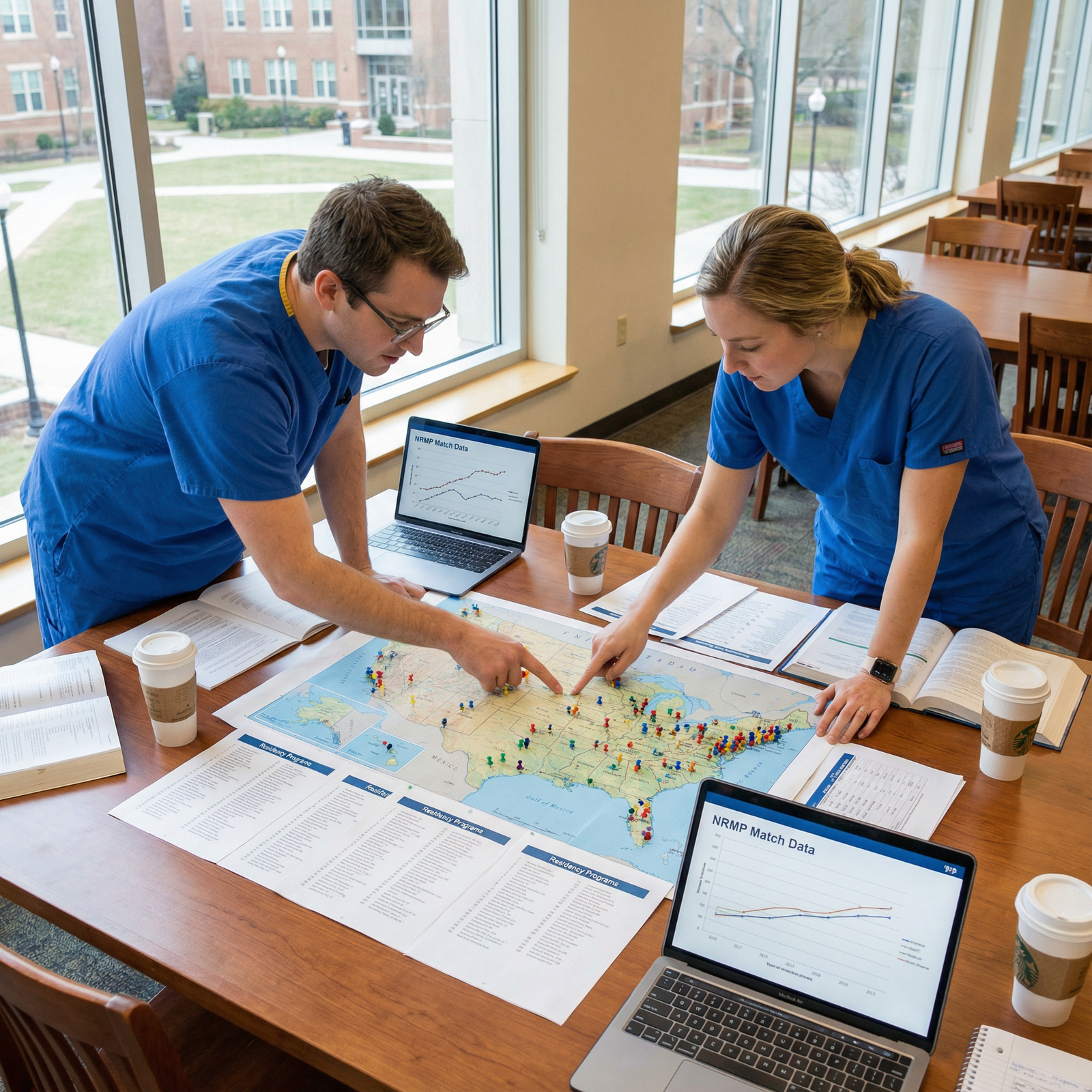
Understanding the Unique Position of the US Citizen IMG in Preliminary Medicine
For a US citizen IMG (American studying abroad), developing a smart program selection strategy for a preliminary medicine year is just as important as crafting a strong application. Many applicants underestimate how nuanced prelim IM program selection can be—especially if you are trying to maximize your chances to match while also keeping an eye on your long‑term specialty goals (neurology, radiology, anesthesia, dermatology, etc.).
As an American studying abroad, you sit in a “middle” category—sharing some advantages with US grads (citizenship, language, cultural familiarity) but still competing in the IMG pool. That reality should shape how you think about:
- How many programs to apply to
- Which programs are realistically within reach
- How to choose residency programs that align with your long‑term specialty
- Balancing safety, target, and reach programs
- Geographic and visa-related considerations (even as a US citizen, these affect your competition)
Before you build a list, you need absolute clarity on what a preliminary medicine year is and why you’re doing it.
What Is a Preliminary Medicine Year (Prelim IM)?
A preliminary medicine year is a one‑year internal medicine internship. It is:
- Non‑categorical – it does not continue into PGY‑2 within internal medicine at that same program.
- Often used as the first year for advanced specialties, such as:
- Neurology
- Anesthesiology
- Dermatology
- Radiation oncology
- PM&R
- Radiology
- Some ophthalmology slots
- Also used by applicants who:
- Want a clinical year to strengthen their profile (for a future match)
- Want broad medical training before another field
Because it’s just one year, many applicants mistakenly think a prelim IM position is “easier to get” and requires less planning. In reality, some preliminary programs are extremely competitive (especially at big-name academic centers that also house competitive advanced specialties). You need a deliberate program selection strategy that reflects:
- Your competitiveness as a US citizen IMG
- Your long‑term specialty plan
- Your geographic and personal constraints
- Your financial and logistical limits on application volume
Step 1: Clarify Your Goals and Constraints Before Building a List
You cannot build a rational list of prelim IM programs without first answering a few core questions.
A. Are You Matching Prelim + Advanced This Cycle, or Prelim-Only?
Your approach will differ dramatically depending on whether you are:
- Applying to both preliminary medicine and advanced specialty positions in the same cycle, or
- Applying only for a preliminary year (e.g., to build your CV, improve scores, get US clinical experience, or because you didn’t secure an advanced spot yet).
If you’re applying Prelim + Advanced:
- Your prelim IM list should:
- Include programs in the same cities/regions as your advanced applications where possible
- Prioritize programs that have a history of coordinating with your intended advanced specialty
- Consider “bundled” or coordinated positions if available
If you’re applying Prelim-Only:
- Focus more on:
- Strong clinical training
- Supportive teaching and feedback culture
- Opportunities for research, networking, and US letters of recommendation
- Reasonable call schedules and wellness (so you can actively improve your application)
B. Understand Your Applicant Profile as a US Citizen IMG
Be brutally honest about your competitiveness. Consider:
- USMLE/COMLEX scores (or equivalent)
- Attempts/failures (Step 1 or Step 2 CK)
- Year of graduation (YOG)
- Amount and quality of US clinical experience (USCE)
- Letters of recommendation (especially from US physicians)
- Red flags (gaps, professionalism issues, exam failures)
As an American studying abroad, your US citizenship helps with:
- No visa sponsorship needed (big advantage for many community programs and some mid‑tier academics)
- Higher comfort with US healthcare system culture and communication
But you’re still an IMG, so you face:
- Possible institutional caps or biases against IMGs
- Competition with highly polished non‑US IMGs who may have strong research portfolios
Being realistic about where you stand is the foundation of an effective program selection strategy.
C. Identify Your Hard Constraints
Before asking how many programs to apply to, define:
- Geographic limits: Family, partner, cost of living, major cities you cannot live in, or regions you won’t consider.
- Financial limits: ERAS fees, travel for interviews (if in‑person), cost of living in expensive cities for a year.
- Timeline constraints: YOG, whether you can afford another gap year, need to stay close to family or dependents.
Write these down—your final list should reflect them.

Step 2: Researching Programs: Where and How to Look as a US Citizen IMG
Once you know your goals and constraints, you can start exploring how to choose residency programs that are feasible and strategic for a preliminary medicine year.
A. Use Official Data Sources
Start with:
FREIDA (AMA Residency & Fellowship Database)
- Filter by:
- Internal Medicine → Preliminary
- Accepts IMGs
- US citizens only vs. visas sponsored (even if you don’t need visa, this impacts competition)
- Look for:
- Number of prelim IM spots
- University vs. community hospital
- States and cities you’re open to
- Filter by:
Program websites
- Check:
- Whether they accept IMGs (most won’t say “US citizen IMG” separately; assume IMG policies apply to you)
- USMLE score expectations
- Graduation year limits (e.g., “within 5 years of graduation”)
- Whether they sponsor visas (indirect marker of willingness to consider IMGs)
- Check:
B. Analyze Historical Match Data and Filters
Dig into:
- NRMP’s “Charting Outcomes in the Match” and “Program Director Survey”
- State medical board requirements (e.g., some states require a minimum number of weeks in certain rotations in medical school)
You want to know:
- How many IMG prelim candidates match in IM each year
- Which regions historically are more IMG‑friendly (often the Northeast, parts of the Midwest, some Southern states)
- How program directors view:
- US citizen IMGs
- Step scores
- Research and USCE
- Gaps and attempts
C. Spot IMG-Friendly Prelim IM Programs
Look for the following signs:
- On FREIDA or program site:
- A significant percentage of current or recent residents are IMGs
- The program explicitly states: “We welcome applications from IMGs”
- On resident profiles:
- You see graduates of Caribbean or international schools similar to yours
- On social media / alumni networks:
- IMGs who speak positively about support and inclusion
For a US citizen IMG, community hospital programs affiliated with a university often strike the best balance of:
- Willingness to take IMGs
- Solid clinical training
- Potential research/networking through the parent university
D. Distinguish Types of Prelim Programs
When refining your program selection strategy, categorize prelim IM programs into broad types:
Big‑Name Academic Prelim IM Programs
- Often aligned with competitive specialties
- Heavy competition, especially from US MD seniors
- Benefit: prestige, networking with advanced departments
- Risk: harder to match into, especially if scores are modest
Mid‑Tier University‑Affiliated Community Programs
- IMGs more common
- Good balance of training and mentorship
- May have connections to local advanced specialties or research opportunities
Pure Community Programs
- Often more service‑heavy
- High workload, less research
- But frequently more open to IMGs, and strong clinical exposure
As a US citizen IMG, your most realistic core target often lies in category 2 and 3, with a selective sprinkle of category 1 if your profile allows.
Step 3: Determining How Many Programs to Apply To for a Prelim IM Year
“How many programs to apply” is both a statistical and a personal decision. For a US citizen IMG in a preliminary medicine track, you need to factor in:
- Your competitiveness
- The fact that prelim IM spots are fewer than categorical IM
- Overlap with advanced specialty applications (if applying in the same cycle)
A. General Benchmarks for US Citizen IMGs in Prelim IM
While exact numbers vary by year, a reasonable baseline for a US citizen IMG applying to prelim IM might be:
Highly competitive profile (strong Step 2 CK > 245, no fails, recent YOG, strong USCE and letters):
- 15–25 prelim IM programs
- Fewer if you are also strongly competitive in your advanced specialty and have geographic flexibility.
Average profile (Step 2 CK 225–245, or minor red flags but good USCE):
- 25–40 prelim IM programs
- This is common for many American studying abroad who have okay scores but less research.
Below-average / multiple red flags (Step 2 CK < 225, attempts, older YOG, limited USCE):
- 40–60+ prelim IM programs
- Especially if prelim IM is your main route into the US system.
If you’re also applying for advanced positions (e.g., anesthesiology, neurology), total applications across prelim + advanced often reach 60–100 programs across all specialties/positions for many IMGs.
These ranges are not absolutes, but they give a structured starting point. Err on the side of more applications if:
- You have red flags
- You are geographically restricted
- You are applying late in the season
B. Financial and Time Considerations
Applications are expensive. When deciding how many programs to apply to, remember:
- ERAS charges escalate as you apply to more programs in a specialty.
- You will also spend time:
- Researching programs
- Tailoring personal statements or messages
- Attending interviews (virtual or in‑person)
Balance the marginal benefit of each additional application with the marginal cost in money, time, and energy. For most US citizen IMGs in prelim IM, applying to fewer than 20 programs is risky unless you are truly top‑tier and geographically flexible.

Step 4: Building a Balanced List: Safety, Target, and Reach Programs
A sophisticated program selection strategy divides your prelim IM list into safety, target, and reach categories. This helps avoid overly optimistic or overly conservative lists.
A. Defining Safety, Target, and Reach for a US Citizen IMG
Safety Programs (25–40% of your list):
- Historically match many IMGs
- Step score expectations clearly at or below your level
- Community or smaller university-affiliated hospitals
- Locations that are less popular (smaller cities, rural areas, colder climates)
- Example: Community hospital in the Midwest with >40% IMG residents
Target Programs (40–60% of your list):
- Programs where your stats are within the typical accepted range
- Some IMGs present, but also US MDs and DOs
- University-affiliated or solid community programs in moderately desirable locations
Reach Programs (10–20% of your list):
- Big academic centers
- Prelim IM programs strongly tied to competitive advanced specialties
- Locations that are highly desirable (NYC, Boston, San Francisco, major coastal cities)
- Programs where your scores or YOG are below their typical median, but you still meet minimums
For each program, ask:
- Do they list minimum scores?
- Do they mention IMGs positively and show examples?
- Do my metrics clearly meet or exceed their stated expectations?
Be disciplined: don’t let your list tilt 80–90% toward prestige programs that rarely take IMGs.
B. Example: Applying This Strategy in Practice
Imagine you are:
- US citizen IMG
- Step 2 CK: 232
- No failures
- YOG: 2023
- 12 weeks of USCE with strong letters
- Goal: Anesthesiology (advanced) + Prelim IM this cycle
A rational prelim IM list might look like:
- Total prelim IM programs: ~30
- 8–10 safety (IMG-heavy community programs)
- 15–18 target (university-affiliated community, some mid-tier academics)
- 3–5 reach (big-name academic prelims in cities you like)
In parallel, you might apply to 25–40 anesthesiology programs, depending on competitiveness and geography.
The key: your prelim IM plan is not an afterthought; it is carefully tiered just like your advanced specialty application.
Step 5: Aligning Prelim IM Choices With Long‑Term Specialty Goals
Your preliminary medicine year should support your long‑term plan, not just “fill time.” As an American studying abroad, you may rely on this year to build credibility in the US system.
A. Consider the Culture and Training of the Program
Ask yourself:
- Will I have adequate supervision and teaching, or will I be purely service?
- Is there time or flexibility for:
- Research?
- Attending specialty-specific conferences?
- Shadowing or networking in my target advanced specialty?
For example:
If your goal is neurology, a prelim IM program at a hospital with a strong neurology department (or neurology residency) may give you:
- Access to neuro faculty
- Opportunities to do inpatient stroke work
- Letters from neurologists during your prelim year
If your goal is anesthesiology, look for:
- Prelim IM programs at hospitals with anesthesia residencies
- Opportunities to work with ICU teams (critical care exposure is valuable)
B. Integrated vs. Disconnected Prelim + Advanced Paths
Sometimes, advanced programs recommend or prefer specific prelim IM programs (often within the same institution). If you’re lucky enough to have:
- An advanced anesthesia or neuro interview at Institution X, and
- Institution X also offers a prelim IM track,
Then ranking them together (advanced + their own prelim) may offer a smoother one‑year transition and coordinated training.
But as a US citizen IMG, you may not always land both. So your program selection strategy for prelim IM should also include:
- Stand‑alone prelims in regions where multiple advanced programs exist
- Programs known for helping prelim residents successfully match into their desired fields
C. Look for Programs That Support Career Transitions
Prelim years can sometimes lead to:
- Switching into categorical IM at the same or another institution
- Matching into a new specialty based on your performance that year
As a US citizen IMG, that flexibility is valuable. Some programs clearly mention:
- A track record of prelims securing PGY‑2 spots later
- Support for residents applying for advanced positions
These programs can be especially attractive if your advanced specialty plan is uncertain.
Step 6: Practical Tactics to Refine and Finalize Your Program List
Once you have a draft list based on your strategy, refine it with these practical steps.
A. Use Spreadsheets and Scoring Systems
Create a simple spreadsheet with columns for:
- Program name, city, state
- Type (academic, university-affiliated, community)
- IMG‑friendliness (low/medium/high)
- Your estimated category (safety/target/reach)
- Minimum Step requirements
- Presence of your target advanced specialty
- Cost of living
- Personal factors (family nearby, city preference)
- Overall score (subjective, 1–10)
Weight each factor based on what matters to you:
For a career-focused applicant:
- Higher weight on academic affiliations, specialty presence, research
For someone with strong geographic needs:
- Higher weight on city/region and cost of living
Use this to remove programs that:
- Clearly don’t accept IMGs
- Demand scores way above yours
- Are in locations you truly cannot tolerate for a year
B. Reach Out Strategically
You can sometimes refine your impression by:
Emailing program coordinators with very specific questions (not generic “Will I be competitive?” queries)
- Ask about:
- Number of IMGs in recent prelim classes
- Typical profile of matched applicants (without asking for exceptions)
- Any changes to their selection criteria this year
- Ask about:
Contacting current or recent residents (especially IMGs) via:
- Alumni from your school
- Social media
Ask about:
- Workload and wellness
- How they treat IMGs
- Whether prelims are supported in matching to advanced specialties
Keep it brief and respectful—busy residents appreciate focused questions.
C. Revisit Your List 2–3 Times Before Submission
Plan three passes:
- Initial build: Wide net, include all feasible programs.
- Reality check: Remove clearly unrealistic or unsuitable options.
- Budget alignment: Adjust the final number of applications to fit your budget and time, ensuring you still have a robust mix of safety/target/reach.
Remember: outside of the very top tier of applicants, under‑applying is a far more common error for US citizen IMGs than over‑applying.
Frequently Asked Questions (FAQ)
1. As a US citizen IMG, do I have an advantage over non‑US IMGs for prelim IM programs?
Yes, in many cases. As a US citizen IMG, you don’t need visa sponsorship, which removes a major barrier and cost for programs. Some community and mid‑tier university programs that are hesitant about J‑1 or H‑1B visas are more open to US citizen IMGs. However, you are still evaluated in the IMG pool, so you must remain competitive in USMLE scores, USCE, and professionalism.
2. Should I prioritize academic or community programs for my preliminary medicine year?
It depends on your goals:
- If you are focused on research‑heavy, competitive advanced specialties (derm, rad onc, competitive anesthesia programs), academic prelim IM may give you better networking and scholarly opportunities.
- If your scores are average or you have red flags, community or university-affiliated community programs may offer a better chance to match and still provide solid clinical training and letters.
Many US citizen IMGs benefit from a mixed strategy: some academic reaches, a solid core of community and university-affiliated programs as targets/safeties.
3. How many preliminary medicine programs should I apply to if I have average scores?
For a typical US citizen IMG with average Step 2 CK (around 225–245), recent graduation, and decent USCE, a common range is 25–40 prelim IM programs, depending on:
- Geographic flexibility
- Number of advanced positions you’re applying to
- Presence of any minor red flags
If you are very geographically restricted or have any concerns about your profile, leaning toward the higher end of that range is usually wise.
4. Can a strong preliminary medicine year help me overcome weaker scores as an IMG?
Yes—if you choose the right program and perform well. A strong prelim IM year can provide:
- US‑based letters from respected faculty
- Evidence of clinical excellence and professionalism
- Opportunities to engage in research or specialty‑specific work
- A narrative of growth and resilience after earlier academic struggles
Program directors often value recent, in‑system performance heavily. For a US citizen IMG with marginal scores, a successful prelim year is one of the most powerful tools to reshape your trajectory—provided you go in with a deliberate program selection strategy that maximizes your chance to match and to grow.
By approaching your preliminary medicine applications with a clear understanding of your profile, deliberate tiers of programs, and an honest assessment of how many programs to apply to, you can transform a stressful process into a structured, strategic campaign. As a US citizen IMG, your background gives you both challenges and advantages—use both wisely when choosing where to spend your one crucial prelim IM year.