Understanding the Landscape: Radiation Oncology and the US Citizen IMG
Radiation oncology is one of the most competitive specialties in the Match, combining physics, technology, oncology, and longitudinal patient care. For a US citizen IMG (American studying abroad), crafting a smart program selection strategy can be just as important as your scores, letters, and research.
As an American studying abroad, you sit in a unique position:
- You are a US citizen, which simplifies visa issues and sometimes increases program comfort compared to non‑US IMGs.
- You are still an IMG, which means some programs remain hesitant due to board pass concerns, unfamiliar schools, or institutional policies.
- Radiation oncology has fewer total positions than many specialties; every application choice matters.
Your goal is to answer three core questions:
- Where am I realistically competitive?
- What types of programs should I prioritize or avoid?
- How many programs should I apply to, and how do I build a balanced list?
This article will walk through a practical, step‑by‑step program selection strategy for US citizen IMG applicants to radiation oncology, focusing on the rad onc match, how to choose residency programs, and how many programs to apply to for a realistic shot while controlling cost and burnout.
Step 1: Know Your Profile and Your Odds as a US Citizen IMG
Before you choose programs, you need a cold, honest assessment of your profile and how you fit into the radiation oncology residency landscape.
Key Components of a Rad Onc Application
For radiation oncology, program directors typically prioritize:
- USMLE/COMLEX scores (particularly Step 2 CK for IMGs, as Step 1 is now pass/fail)
- Research productivity (publications, abstracts, posters, especially oncology-related)
- Letters of recommendation from US academic radiation oncologists
- US clinical experience, ideally radiation oncology electives/audition rotations
- Medical school reputation (for IMGs, whether your school is well‑known and has a history of successful US placements)
- Personal statement and career narrative that show commitment to oncology and patient care
As a US citizen IMG, your visa is not a barrier, which is a major advantage. However, you still need to prove:
- You can handle complex oncology content and rigorous board exams
- You have clear dedication to radiation oncology (not applying as a backup)
- You can integrate into a US academic team and contribute to research and clinical work
Honest Tiering of Your Own Application
Before discussing how many programs to apply and where, classify yourself roughly into one of three “competitiveness tiers” for radiation oncology:
Highly Competitive US Citizen IMG
- Step 2 CK ≥ ~245–250
- Multiple oncology/radiation oncology publications or abstracts
- Strong letters from US rad onc faculty at reputable centers
- Solid US clinical experience including rad onc rotations
- Possibly prior advanced degrees or serious research (MS, MPH, PhD, or post-doc)
Moderately Competitive US Citizen IMG
- Step 2 CK ~235–245
- Some research, ideally including oncology or related fields
- At least one US rad onc letter, plus strong clinical letters from US physicians
- US clinical experience, but perhaps not multiple rad onc rotations
- Clear story of interest in oncology, good performance on clinical rotations
At-Risk / Less Competitive US Citizen IMG
- Step 2 CK < 235, or a failure on a board exam
- Minimal or no research; non-oncology oriented
- Limited US clinical experience, or no US rad onc exposure
- Late switch into radiation oncology, with a weaker narrative
Your program selection strategy will differ dramatically across these tiers. Over‑ or underestimating your competitiveness is one of the biggest strategic errors in the rad onc match.
Step 2: Understand Program Types and IMG-Friendliness
Not all radiation oncology programs are alike. For an American studying abroad, program selection must weigh IMG-friendliness, training style, geography, and culture.
Categories of Radiation Oncology Programs
You can loosely group programs into four types:
Top-Tier, Research-Heavy Academic Centers
- NCI-designated comprehensive cancer centers
- Strong emphasis on publications, trials, and academic careers
- Typically high Step scores and strong home-school candidates
- Some accept IMGs, but often with strong research pedigrees
Mid-Tier Academic / Hybrid Programs
- University-affiliated or large academic community centers
- Good clinical volume, some research, potentially more flexible with IMGs
- Often willing to consider candidates who show strong work ethic and fit
Community-Heavy or Smaller University Programs
- Emphasis on clinical training over heavy research
- May be more open to non-traditional paths, including US citizen IMGs
- Often strong for those interested in community practice careers
Newer or Recently Expanded Programs
- Newly accredited or expanding complement
- Sometimes more open to diverse applicant backgrounds
- May lack a long track record of board pass rates or fellowships
Identifying IMG-Friendly Radiation Oncology Programs
To understand how to choose residency programs as a US citizen IMG, focus on actual historical behavior, not assumptions. Look for:
- Current or recent IMGs on the resident roster
Visit each program’s website; check resident bios:- Do they list IMGs currently in training?
- Are some of them US citizen IMGs or from similar schools to yours?
- Program’s stated stance
Many programs list on FREIDA or their websites:- Whether they consider IMGs
- Whether they sponsor visas (even though you don’t need one, it signals openness to IMGs)
- NRMP Charting Outcomes / specialty reports (when available)
While rad onc data may be limited, general IMG match patterns are helpful. - Word of mouth and advisor insight
Ask:- Faculty you rotated with
- Your medical school’s alumni in the US
- Residents you meet on away rotations
An IMG-unfriendly program might:
- Have no IMGs in the last 5–10 years
- Explicitly state “only US MD/DO applicants considered”
- Have strict Step score cutoffs that disadvantage IMGs
As an American studying abroad, even if you are a US citizen, such programs are usually low yield unless you have exceptional research or a strong personal connection (e.g., major publications with a faculty member there).

Step 3: Building a Smart Program List: How Many and Which Ones?
Now we bring it together: how many programs to apply for radiation oncology, and which ones, as a US citizen IMG.
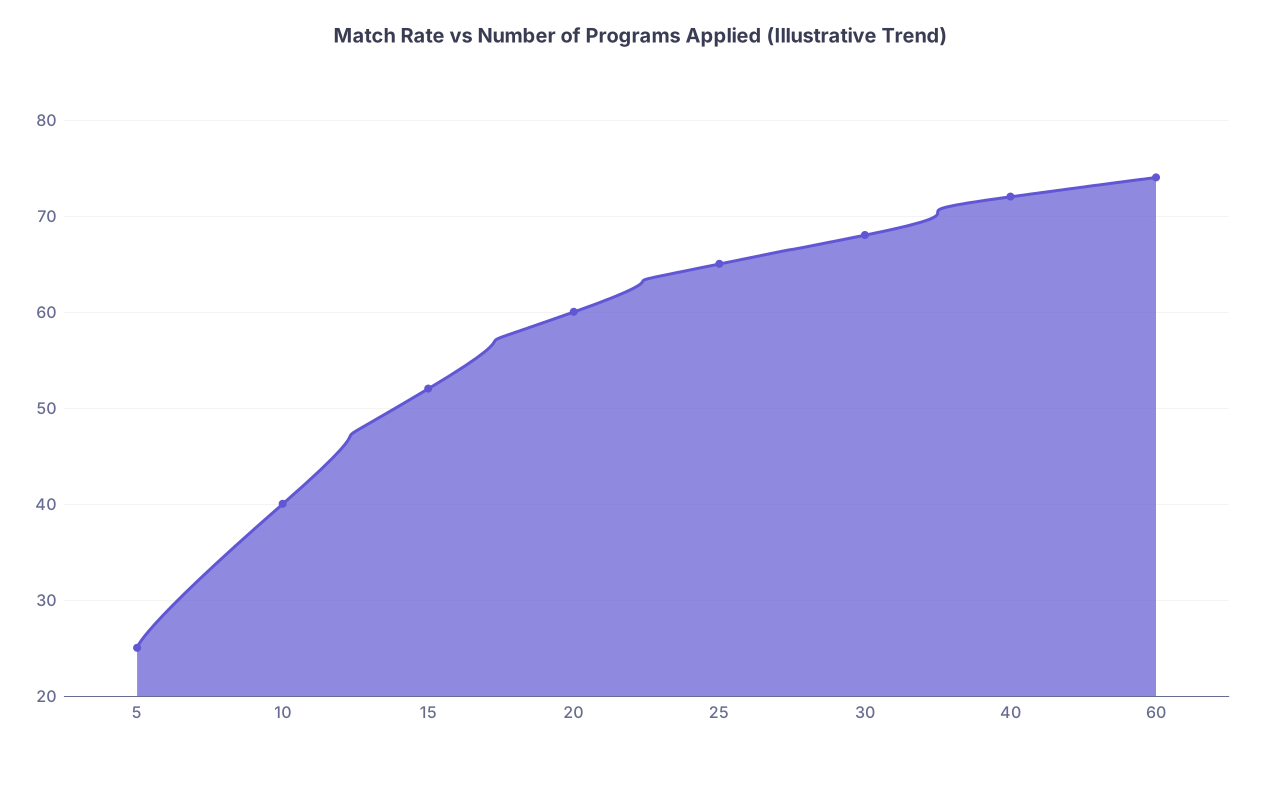
How Many Programs Should You Apply To in Radiation Oncology?
Radiation oncology has a relatively small number of positions and applicants, but as an IMG you must buffer against uncertainty.
General guidance for US citizen IMG applicants:
Highly Competitive US Citizen IMG
- Target range: 25–40 programs
- This is still a relatively high number because:
- Many programs may not interview IMGs at all
- You need a wide enough net to ensure adequate interviews
Moderately Competitive US Citizen IMG
- Target range: 40–60 programs
- This is the most common category
- You will need to cast a broad net to overcome IMG biases and variability
- Plan your budget and time accordingly
At-Risk / Less Competitive US Citizen IMG
- Target range: 60–80+ programs, plus:
- A strong parallel plan (e.g., a preliminary year plus research, or a more IMG-friendly backup specialty)
- Recognize that matching directly into rad onc may be difficult; maximize your options but also protect your career trajectory with contingency planning.
- Target range: 60–80+ programs, plus:
These numbers are general guidelines, not guarantees, and should be adapted to:
- Your budget
- Your time capacity for writing tailored personal statements
- The actual number of programs that consider IMGs in the year you apply
For many US citizen IMGs, 40–60 programs is a realistic working number to remain competitive without overextending.
Structuring Your List: A Portfolio Approach
Think of your list as an investment portfolio with “reach,” “target,” and “safety” programs:
Reach Programs (20–30%)
- Highly competitive academic centers, top research institutions
- Possibly limited IMG intake historically
- You apply because:
- You have strong research
- You have a unique connection (e.g., worked in that lab)
- Example: NCI-designated cancer centers with strong rad onc research
Target Programs (40–50%)
- Solid mid-tier academic programs or larger community-based academic hybrids
- Documented history of interviewing or matching IMGs
- Reasonable geographic and academic fit
- These programs should realistically be your main path to matching
Safety / More IMG-Friendly Programs (20–30%)
- Programs with a clear track record of accepting IMGs
- Possibly smaller or newer programs, or in less competitive geographic areas
- Might have fewer research opportunities but strong clinical volume
- These improve your odds of matching, especially if your metrics are borderline
For example, if you apply to 50 programs as a moderately competitive US citizen IMG:
- 10–15 reach programs
- 20–25 target programs
- 10–15 safety programs
This structure gives you aspirational options plus a realistic core and a safety net.
Geographic Strategy: Flexibility Matters
Geography can dramatically affect your rad onc match odds.
- Widest geographic flexibility = stronger match odds.
- Areas often under-applied to by US MDs:
- Midwest, certain Southern states, and smaller cities
- Programs distant from major coastal metropolises
If you insist on only applying in California, New York, or a few large cities, you’ll need a much stronger application and still face higher risk. As a US citizen IMG, broad geographic openness is one of your best strategic advantages.
Step 4: Practical Program Selection Process (Step-by-Step)
Here is a concrete, repeatable process to answer how to choose residency programs and build your final list.
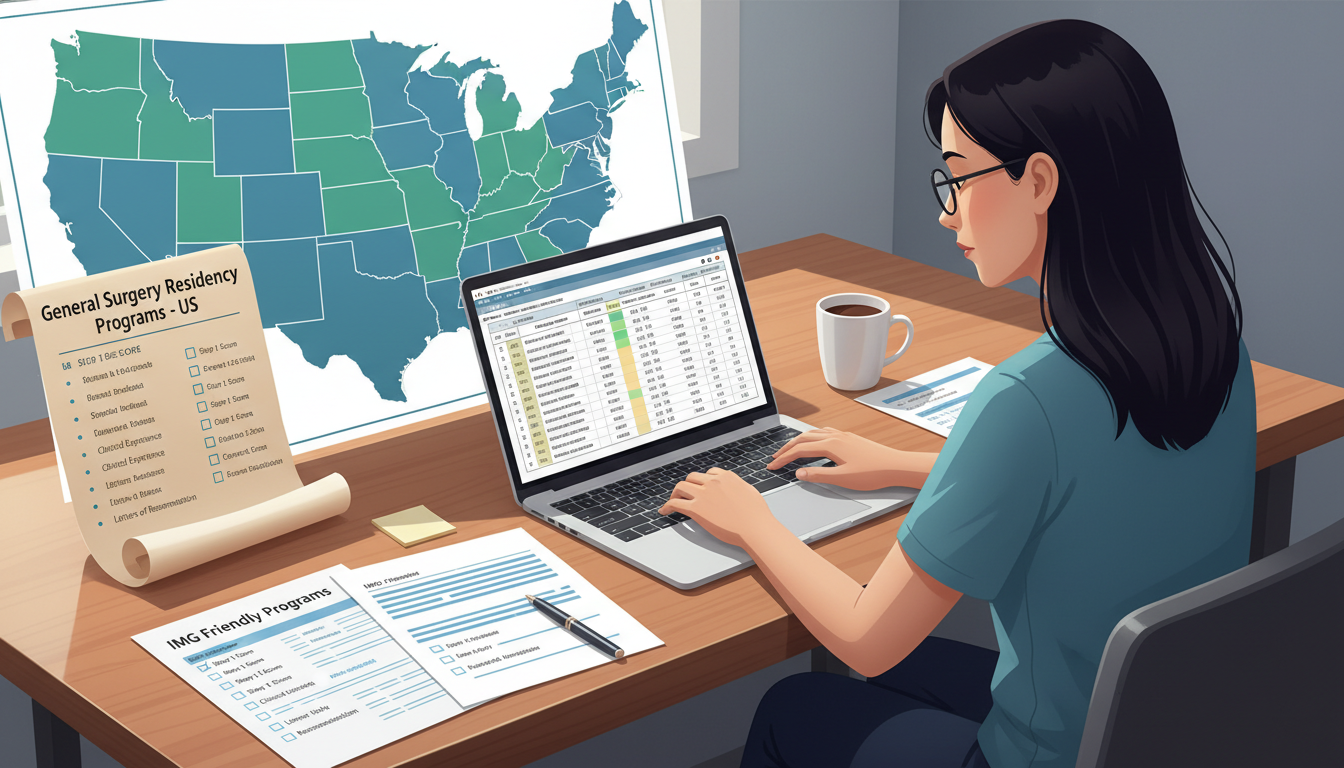
Step 4.1: Create a Master Spreadsheet
Include columns for:
- Program name and ACGME code
- City/state/region
- Program type (top-tier academic, mid-tier, community-heavy, new)
- IMG-friendly? (Yes/No/Unknown; based on resident bios and FREIDA)
- Visas sponsored (useful as IMG friendliness proxy)
- Number of residency positions
- Presence of IMGs currently or in last 5–10 years
- Board pass rate and case volume (if available)
- Research emphasis (high/medium/low)
- Personal factors:
- Family/friends nearby
- Cost of living
- Preference rating (1–5)
You will use this as your program selection strategy dashboard.
Step 4.2: Filter Out Non-Options Early
Remove or de-prioritize:
- Programs that explicitly do not accept IMGs.
- Programs with zero history of IMGs, unless:
- You have a special connection, or
- They are exceptional fits academically and you’re highly competitive.
This ensures you don’t waste applications on extremely low-yield choices.
Step 4.3: Investigate IMG-Friendliness and Fit in Detail
For each remaining program, answer:
- Do they currently have IMGs in training?
- Are there any US citizen IMG alumni?
- Do they list any international medical schools similar to yours?
- How heavy is their research requirement? Does it match your background?
- Does the patient population and case mix interest you (e.g., high-tech treatments, brachytherapy, proton therapy, etc.)?
Make a qualitative note in your spreadsheet about each program’s perceived openness and suitability.
Step 4.4: Align Programs with Your Career Goals
Think beyond simply matching:
- If you’re heavily interested in academic oncology or clinical trials:
- Prioritize research-heavy centers, even if they are slightly more competitive.
- If you are primarily aiming for community practice:
- Strong clinical training and case volume may matter more than big-name research.
- If you’re unsure:
- Target a mix, but lean toward programs with at least some research support (protected time, access to mentors, etc.).
Step 4.5: Trim to Your Final Application Number
Using your self-assessed competitiveness and geographic flexibility:
- Sort programs by:
- IMG-friendliness
- Personal preference
- Research/clinical fit
- Label them as:
- Reach / Target / Safety
- Ensure final counts:
- Highly competitive: 25–40
- Moderate: 40–60
- At-risk: 60–80+
Adjust up or down depending on:
- How many genuinely IMG-friendly programs you identify
- Your budget (application fees climb quickly)

Step 5: Maximizing Yield from the Programs You Choose
Selecting the right programs is only half the battle; you also need to make your application stand out to those programs.
Tailoring Your Application to Program Types
For Research-Heavy Academic Programs
- Highlight:
- Publications, abstracts, posters
- Specific oncology or radiation oncology projects
- Any advanced degrees or methodologic expertise (statistics, physics, informatics)
- In your personal statement or ERAS experiences:
- Express interest in academic careers, clinical trials, or translational work
- Name specific faculty or research themes (only if genuine and well-researched)
- Highlight:
For Clinically-Focused Programs
- Emphasize:
- Clinical excellence and strong clerkship evaluations
- Empathy, communication, and teamwork
- Interest in community practice or patient-centered care
- Highlight experiences:
- Longitudinal patient care
- Multidisciplinary oncology clinics
- Quality improvement projects
- Emphasize:
For Newer or Smaller Programs
- Stress:
- Flexibility, adaptability, and motivation to help grow a program
- Interest in being closely mentored by a smaller group of faculty
- Show:
- You’re willing to take initiative and help build new projects or workflows
- Stress:
Strategic Use of Away Rotations
Away rotations (audition electives) are particularly powerful in radiation oncology:
- Aim for 1–2 away rotations at realistic target programs or mid-tier academic centers:
- Where IMGs are known to match
- Where your research interests align
- During your rotation:
- Work hard, be reliable, and be present
- Seek a strong letter of recommendation
- Express sincere interest in the program (without overcommitting early)
For a US citizen IMG, a strong away rotation performance can elevate you from “maybe” to “top of the list” at certain programs.
Communicating as a US Citizen IMG
Subtly address IMG-related concerns:
- On your application and in interviews, show:
- Excellent English and communication skills
- Understanding of the US healthcare system (through US rotations)
- Reliability and professional behavior
- If asked why you went abroad as an American studying abroad:
- Answer honestly, positively, and briefly
- Focus on how your experiences abroad have broadened your perspective and prepared you for diverse patient populations
Avoid being defensive; instead, use your non-traditional path as evidence of resilience and global awareness.
Putting It All Together: Example Scenarios
Example 1: Moderately Competitive US Citizen IMG
- Step 2 CK: 240
- 1 rad onc abstract, 2 oncology posters
- 2 US rad onc electives with good feedback
- 1 strong rad onc letter, 2 strong US clinical letters
- Open to any geography
Strategy:
- Apply to ~50 programs
- Focus on:
- All IMG-friendly programs identified nationally
- Mix of mid-tier academic and community-heavy programs
- 10–15 reach (large academic centers, NCI institutions that have occasionally taken IMGs)
- 20–25 target, 10–15 safety
- Do 1–2 away rotations at realistic target programs
- Tailor personal statement to emphasize:
- Clinical interest and early research productivity
- Flexibility regarding location
- Clear commitment to radiation oncology
Example 2: At-Risk US Citizen IMG
- Step 2 CK: 228 (one failed Step 1 then passed)
- Limited research (1 case report, not oncology)
- 1 general US clinical rotation, no rad onc rotation yet
- Very motivated to pursue radiation oncology
Strategy:
- First, consider strengthening:
- Take 1+ year for a rad onc research fellowship in the US
- Secure multiple US rad onc rotations and letters
- If applying now:
- Apply to 60–80+ programs
- Target:
- All IMG-friendly programs
- Many smaller/newer programs
- Broad geographic spread
- Consider a parallel plan:
- Apply also to a more IMG-friendly specialty or a transitional/prelim year + research
- Use personal statement to:
- Acknowledge growth from earlier missteps
- Emphasize resilience and commitment
- Highlight any unique strengths (languages, prior careers, etc.)
FAQs: Program Selection Strategy for US Citizen IMG in Radiation Oncology
1. As a US citizen IMG, how many radiation oncology programs should I apply to?
Most US citizen IMG applicants should plan to apply to 40–60 radiation oncology programs, depending on competitiveness:
- Strong metrics and research: ~25–40
- Average metrics, some research: ~40–60
- Lower metrics or red flags: 60–80+, plus a serious backup plan
Your actual number should also consider how many programs are realistically IMG-friendly and how broad you can be geographically.
2. How do I identify IMG-friendly radiation oncology residency programs?
Look for:
- Current or recent IMGs (especially US citizen IMGs) on program websites
- FREIDA or program website statements that they consider IMGs and/or sponsor visas
- Word-of-mouth input from:
- Rad onc attendings you’ve worked with
- Residents at programs you visit
- Alumni from your medical school who matched in the US
Programs that never list IMGs or explicitly refuse them are low-yield for your program selection strategy.
3. Should I still apply to top-tier academic rad onc programs as an IMG?
Yes, but in moderation. As part of a balanced list:
- Include some top-tier or high-prestige academic centers, particularly if:
- You have strong research or prior relationships with their faculty
- They have historically taken IMGs
- Limit these to 20–30% of your list, not the majority
- Your main match probability will usually come from mid-tier and IMG-friendly programs, not solely from elite centers
4. If I don’t match radiation oncology as a US citizen IMG, what should I do?
Common next steps include:
- Obtaining a preliminary or transitional year position and reapplying with strengthened credentials
- Doing a rad onc research fellowship to increase publications and networking
- Considering a backup specialty with greater IMG acceptance, especially if financial or visa timelines are pressing
Talk early with mentors to create a contingency plan parallel to your rad onc application, especially if your profile is at risk.
A thoughtful, data-driven program selection strategy—built around your true competitiveness, IMG-friendliness, and geographic flexibility—can significantly improve your chances in the rad onc match as a US citizen IMG. By applying broadly and wisely, targeting the right mix of programs, and clearly demonstrating your commitment to radiation oncology, you position yourself for the best possible outcome in this highly specialized field.