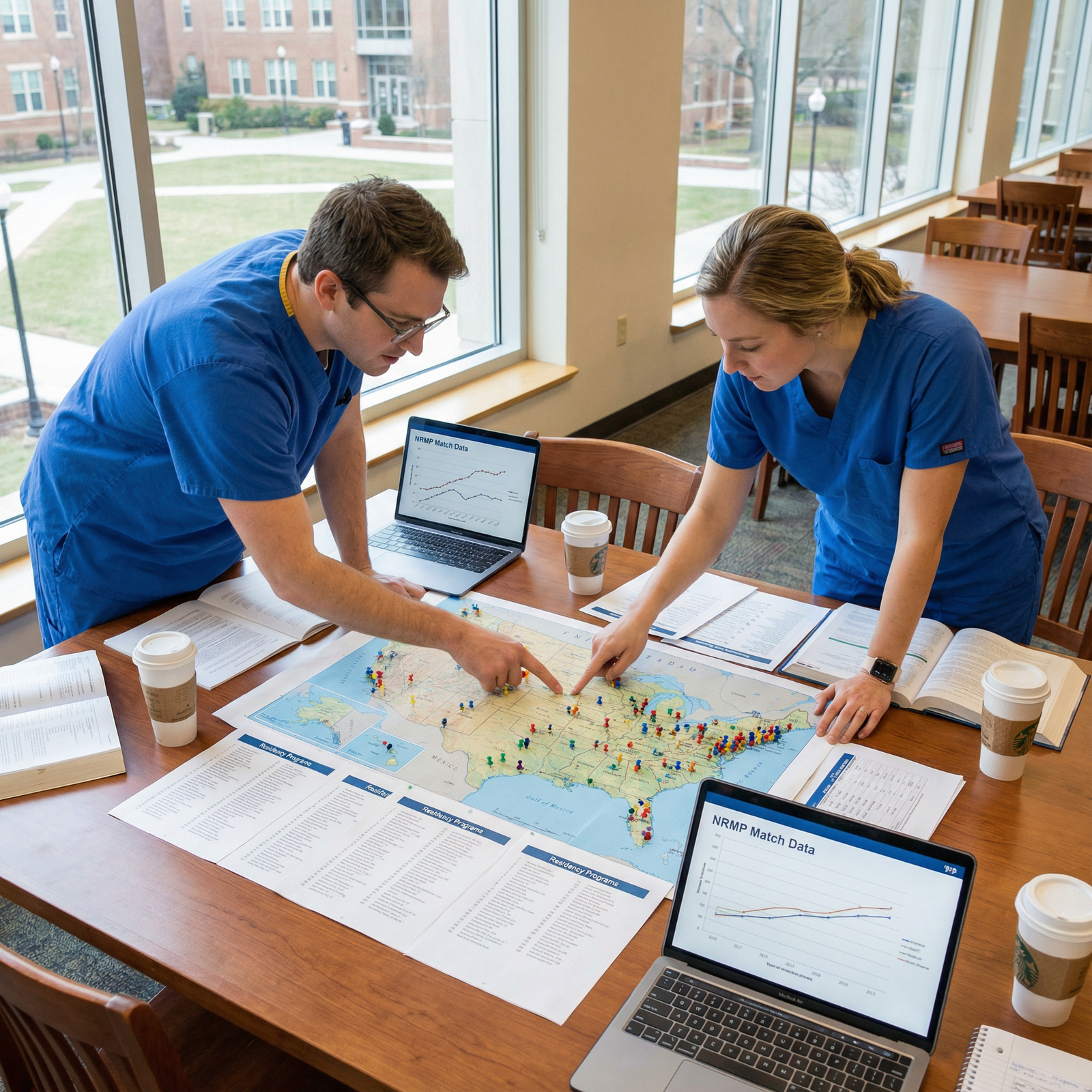
Why Program Selection Strategy Matters So Much for US Citizen IMGs in Nuclear Medicine
For a US citizen IMG interested in nuclear medicine residency, program selection is not a casual checklist task—it is a core part of whether you will successfully match. Nuclear medicine is a small, niche specialty with relatively few positions, highly variable program structures, and rapidly evolving training pathways. As an American studying abroad, you face both advantages (US citizenship, no visa barrier) and challenges (IMG status, possible lack of home program, networking gaps).
A deliberate, data‑driven program selection strategy will help you:
- Maximize your chances of matching while avoiding over‑applying
- Target programs where US citizen IMGs have historically done well
- Align your nuclear medicine residency with long‑term career goals (academic vs community, research vs clinical, hybrid imaging)
- Use your time and money more efficiently during the application season
This guide walks you through how to choose residency programs in nuclear medicine, how many programs to apply to, and how to tailor your list specifically as a US citizen IMG.
Understanding the Nuclear Medicine Training Landscape (as a US Citizen IMG)
Before building a program list, you need to clearly understand what “nuclear medicine residency” means in 2025 and what pathways are relevant to you as an IMG.
1. Pathways into Nuclear Medicine
There are several structures you’ll see when researching programs:
Dedicated Nuclear Medicine Residency (ACGME-accredited)
- Traditional 2–3 year programs after at least one prior clinical year (often prelim medicine, surgery, or transitional year).
- Some are stand‑alone nuclear medicine; others are combined with diagnostic radiology exposure.
Hybrid or Integrated Pathways
- Programs that offer combined training (e.g., DR + Nuclear Medicine tracks, or DR with strong emphasis in nuclear medicine / molecular imaging).
- Some institutions may structure this as additional fellowship training following diagnostic radiology rather than a standalone nuclear medicine residency.
Nuclear Radiology Fellowship
- Often pursued after a full diagnostic radiology residency.
- Not the primary path for most IMGs initially, but relevant if you later pivot from DR to nuclear subspecialization.
As a US citizen IMG, your practical options early on are usually:
- Apply directly to dedicated nuclear medicine residencies (if you have or will have the required prelim year), and/or
- Apply to preliminary/transition year programs plus future nuclear medicine positions.
Make sure you read each program’s prerequisites carefully; nuclear medicine training often has specific USMLE, prior training, and certification requirements.
2. How Friendly Is Nuclear Medicine to IMGs?
Nuclear medicine has historically had:
- A relatively higher proportion of IMGs than some ultra‑competitive specialties
- Variable competitiveness depending on the institution (top academic centers can be highly selective)
Your advantage as a US citizen IMG:
- No need for J‑1 or H‑1B visa sponsorship
- Less administrative burden for programs → some programs explicitly state they prefer or only take US citizens/green card holders among IMG applicants.
Your challenges:
- Lack of a US MD degree and often no home nuclear medicine department for strong letters
- Limited exposure to nuclear medicine in your core med school curriculum abroad
- Potential gaps in US clinical experience (USCE)
This dynamic makes a nuanced program selection strategy critical: you can’t simply “apply everywhere” and expect the same odds as a US MD student, but you also don’t need to overcompensate with 100+ applications like in some hyper‑competitive specialties.
Step‑by‑Step Program Selection Strategy for Nuclear Medicine
Step 1: Define Your Personal and Career Priorities
Before logging into ERAS or FREIDA, pause and write down:
Location priorities
- Regions where you have:
- Family or partner ties
- US clinical experience
- Visa‑independent work preferences after training (even though you’re a citizen, networks matter)
- Consider cost of living: large coastal cities vs midwestern/southern regions.
- Regions where you have:
Academic vs Clinical focus
- Do you want a research‑heavy academic career (major university center, NIH‑funded labs, PhD collaborators)?
- Or are you more interested in strong clinical training with high procedure volumes and less pressure to publish?
Subspecialty interests
- PET/CT or PET/MR (oncologic imaging)
- Theranostics / radionuclide therapy (e.g., Lu‑177, I‑131, Y‑90)
- Cardiovascular nuclear imaging
- Pediatric nuclear medicine
Lifestyle and support
- Program size and culture (small close‑knit vs large anonymous)
- Importance of mentorship for IMGs
- Call schedule, work‑life balance, wellness resources
Having these written down gives you a framework to rank programs meaningfully—beyond “name prestige.”
Step 2: Build a Master List of Nuclear Medicine Programs
Use multiple data sources:
ACGME and specialty organization lists
- ACGME public program search: list all accredited nuclear medicine residencies.
- Society of Nuclear Medicine and Molecular Imaging (SNMMI) program directories.
FREIDA / Residency Explorer / Program websites
- FREIDA: filter by specialty “Nuclear Medicine”
- Residency Explorer (if available for the cycle): compare metrics like average Step scores and IMG percentages.
- Individual program websites for:
- Length of training (2 vs 3 years, or integrated structures)
- Eligibility for IMGs
- USMLE requirements
- Prior year requirements (PGY‑1, prior residency, etc.)
Informal sources
- Reddit (r/medicalschool, r/Residency, IMG‑focused subreddits)
- Specialty‑specific forums and WhatsApp/Telegram groups for US citizen IMG
- SNMMI trainee sections and networking events
Start with a broad list of all nuclear medicine residencies and then progressively filter.

Step 3: Screen Programs for Eligibility and IMG Friendliness
Once you have your master list, perform an initial screen on two key dimensions:
1. Basic Eligibility
For each program, confirm:
USMLE/COMLEX requirements
- Minimum Step 1/Step 2 scores (if listed)
- Whether they accept/require Step 3 before starting
Prior training requirements
- Do they require a completed categorical residency (often internal medicine or radiology), or only an intern year?
- Are they open to IMGs with foreign internships, or must the PGY‑1 be ACGME‑accredited in the US?
IMG policy
- Some programs specifically state “We accept IMGs” or list the percentage of IMG residents.
- Others may not explicitly state, but prior residents listed on their website can reveal patterns.
Mark each program as:
- “Clearly eligible”
- “Possibly eligible – needs clarification”
- “Not eligible”
For the “possibly eligible” ones, email the program coordinator with a concise, professional query summarizing your background (US citizen IMG, degree country, USMLE status, prior training) and asking if you are eligible.
2. IMG-Friendliness and US Citizen Advantage
Specific things to look for:
- Recent or current residents who are IMGs (especially US citizen IMG if visible via LinkedIn searches)
- Programs that do not sponsor visas (this can paradoxically be advantageous; they must fill with US citizens/green card holders, including IMGs)
- Historical match data (from NRMP or program announcements) showing IMGs matched
As an American studying abroad, use “no visa sponsorship” programs as high‑value targets: they often have fewer total applicants but still want diverse, qualified candidates.
Step 4: Assess Competitiveness and “Fit” for You
To develop an effective program selection strategy, you must honestly assess your application strength and the competitiveness of each program.
1. Self‑Assessment Factors
Consider:
- USMLE scores and first‑time pass status
- Clerkship grades and any honors
- US clinical experience in radiology or nuclear medicine
- Research in imaging, oncology, or related fields
- Letters of recommendation from US faculty, ideally in radiology or nuclear medicine
- Red flags (exam failures, gaps, disciplinary issues)
Categorize yourself loosely as:
- Stronger-than-average US citizen IMG (solid scores, US research, USCE, no red flags)
- Typical/average US citizen IMG (adequate scores, some USCE, maybe limited research)
- At-risk / needing broader safety net (borderline scores, limited USCE, red flags)
2. Program Tiers (for Your Personal Strategy)
You can roughly group programs as:
Reach (Top Tier)
- High‑profile academic centers with major cancer hospitals and robust research (e.g., major university‑based departments with large PET/CT and theranostics programs).
- Often attract many US MDs, PhDs, or DR residents pivoting into nuclear medicine.
- As a US citizen IMG, you’re competitive here if you bring research, strong US letters, and good scores.
Target (Middle Tier)
- Solid academic or hybrid academic‑community programs with good clinical volume and some research.
- Typically more welcoming to IMGs, including US citizen IMG, especially if your file is well‑rounded.
Safety (Lower Tier)
- Smaller programs, sometimes in less popular geographic locations.
- May struggle to fill all positions annually; sometimes explicitly IMG-friendly.
- Excellent choices if you need to maximize nuclear medicine match probability and are flexible about location.
Rank each program into one of these categories based on both reputation and your self‑assessment.
How Many Nuclear Medicine Programs Should a US Citizen IMG Apply To?
There is no universal number, but you can derive a rational range by combining NRMP data trends, specialty size, and your risk tolerance.
1. Specialty Context: Small but Niche
Nuclear medicine has:
- A small total number of programs and positions compared with larger core specialties.
- Often a significant number of unfilled positions in some cycles, but these may be at specific programs or locations.
This means:
- Applying to some programs widely is wise, but applying to an extreme number (e.g., 60+) is often unnecessary because there may not even be that many appropriate programs once you filter for eligibility and interest.
2. General Application Number Guidelines
For a US citizen IMG focusing on nuclear medicine only (not dual‑applying to other specialties), a rough rule of thumb might be:
Strong US citizen IMG
- 12–20 nuclear medicine programs total
- Composition:
- ~3–5 reach
- ~6–10 target
- ~3–5 safety
Average US citizen IMG
- 18–25 nuclear medicine programs
- Composition:
- ~4–6 reach
- ~8–12 target
- ~6–8 safety
At-risk profile (lower scores, red flags, minimal USCE)
- 22–30 nuclear medicine programs, if that many are realistically accessible
- Composition:
- ~4–6 reach (only those that truly match your interests)
- ~8–12 target
- The rest safety – including programs in geographically less popular areas
These ranges assume:
- You are genuinely eligible at those programs.
- You are committed to nuclear medicine as a career.
- You may also be applying to a few preliminary or transitional year programs if you still need a PGY‑1.
If you are dual‑applying (e.g., internal medicine plus future nuclear medicine fellowship, or diagnostic radiology plus nuclear medicine interest), the calculus changes: you may apply to fewer dedicated nuclear medicine residencies and more categorical programs that keep nuclear options open later. In that scenario, consult mentors to avoid over‑ or under‑applying.
3. Tailoring “How Many Programs to Apply” to Your Resources
Consider:
- Cost: ERAS fees increase with more programs; travel costs for interviews can add up (though many remain virtual).
- Time: Each application should be tailored; 30 genuinely thoughtful applications is better than 50 generic ones.
- Burnout: Interview fatigue is real; you want a manageable number of interviews you can genuinely attend.
If funds or time are limited, prioritize quality over raw quantity:
- Trim obvious misfits geographically or academically.
- Drop programs where you are technically eligible but have no realistic interest in living or training.

Practical Tips on How to Choose Residency Programs Strategically
1. Look Beyond the Name: Evaluate Training Quality
For each program left on your short list, evaluate:
Case volume and variety
- PET/CT volume (oncologic, neurologic, cardiac)
- Radionuclide therapies offered (I‑131, Lu‑177 therapies, Y‑90, etc.)
- Access to PET/MR or advanced SPECT/CT
Didactic structure
- Regular lectures, tumor boards, and multidisciplinary conferences
- Board review sessions and mock exams
Procedural exposure
- Opportunities in therapies, biopsies (at integrated radiology sites), or hybrid imaging protocols.
Outcomes
- Board pass rates
- Fellowship or job placement – where do graduates go? Academic roles? Community practice? Industry?
A less famous program with strong theranostics and PET/CT volume may serve you better than a larger name with limited hands‑on exposure.
2. Assess Program Culture and Support for IMGs
Ask yourself:
- Do they highlight resident wellness, mentorship, or professional development?
- Are there current IMGs in the program? This often signals a supportive environment for international graduates.
- How responsive is the program coordinator to your emails?
- Do faculty have interest in teaching (as evident from the website, publications, or resident testimonials)?
US citizen IMG applicants often benefit enormously from structured mentorship and faculty who understand the IMG journey.
3. Align Your Long-Term Goals with Program Strengths
Examples:
If your goal is academic nuclear medicine with major theranostics research:
- Favor programs within NCI‑designated cancer centers, robust radionuclide therapy programs, and strong translational labs.
- Reach programs are especially relevant here.
If your goal is community practice with broad imaging skills:
- Programs that emphasize practical clinical skills, multidisciplinary team interaction, and efficient reading of high volume are ideal.
- Safety and target programs may often align well with this path.
If you are unsure:
- Seek balanced programs with solid clinical volume and moderate research.
- Talk to current residents to understand their trajectories.
4. Use Interviews to Refine and Re‑Rank
Your program selection strategy does not end with submitting ERAS. During interview season:
- Take careful notes after each interview:
- Resident happiness
- Faculty accessibility
- Educational structure
- City and cost of living
- Track where you felt:
- Welcomed as a US citizen IMG
- Recognized for your experiences abroad
- Encouraged to develop your specific interests (oncology, cardiology, pediatrics, theranostics)
After interviews, you may reclassify programs:
- A “reach” may become your #1 if the fit is outstanding.
- A “target” may drop if culture, support, or training depth do not meet your expectations.
When building your rank list, combine:
- Personal fit
- Training quality
- Geographic reality
- Your willingness to live there for several years
Example Application Scenarios for US Citizen IMGs in Nuclear Medicine
Scenario 1: Strong US Citizen IMG, Research-Oriented
Profile:
- US citizen, Caribbean school
- Step 1 pass, Step 2: 245
- 1 year of research in oncology with PET imaging publications
- USCE in radiology and internal medicine
- Strong letters including US radiologist
Strategy:
- Apply to ~18 programs:
- 5 high‑profile academic centers (reach)
- 8 solid academic/hybrid programs (target)
- 5 geographically broad safety programs
- Emphasize research experience and imaging interest in personal statement.
- Target programs with theranostics and PET/MR.
Scenario 2: Average US Citizen IMG, Clinically Focused
Profile:
- US citizen, Eastern European med school
- Step 1 pass, Step 2: 230
- Some USCE in internal medicine, minimal imaging exposure
- No major red flags but limited research
Strategy:
- Apply to 20–22 programs:
- 4–5 reach (academic programs with known IMG acceptance)
- 10–12 target programs with solid clinical volume
- 5 safety programs, including less popular locations
- Arrange observerships or electives in nuclear medicine or radiology prior to application if possible.
- Highlight interest in clinical imaging and multidisciplinary care.
Scenario 3: At-Risk US Citizen IMG, Needing a Broad Safety Net
Profile:
- US citizen, Asian med school
- Step 1: second attempt pass; Step 2: 220s
- Limited USCE, no research, but strong motivation for nuclear medicine
- Good interpersonal skills, compelling personal story
Strategy:
- Apply to 25–30 programs, prioritizing:
- All programs clearly open to IMGs and not requiring visas.
- Programs in less competitive geographic regions.
- Seek US clinical observerships in nuclear medicine to backfill experience.
- Strongly consider parallel strategies:
- Apply broadly to prelim internal medicine or transitional year programs.
- Plan for future nuclear medicine entry after a US‑based PGY‑1.
FAQs: Nuclear Medicine Program Selection for US Citizen IMGs
1. Is nuclear medicine a good specialty choice for a US citizen IMG?
Yes, it can be. Nuclear medicine often has:
- A moderate level of competitiveness with room for qualified IMGs
- Growing relevance due to theranostics and advanced PET imaging
- Strong integration with oncology, cardiology, and neurology
As a US citizen IMG, your lack of visa needs is an asset. However, you should:
- Build imaging‑related experience (USCE, research, observerships)
- Understand that jobs are often clustered around major centers and metropolitan areas
- Be realistic about geographic flexibility during training and early career
2. How many nuclear medicine programs should I apply to if I’m also applying to internal medicine?
If you plan a dual‑application strategy (e.g., internal medicine now, nuclear medicine fellowship later):
- Internal medicine:
- Many US citizen IMGs apply to 30–50+ IM programs depending on competitiveness.
- Nuclear medicine:
- You might selectively apply to 8–15 nuclear medicine residencies that strongly interest you, while primarily relying on IM as your foundation.
Ensure that your application story is coherent:
- Internal medicine personal statement can mention an interest in oncology or imaging.
- Nuclear medicine personal statement can be more specific about imaging and theranostics.
3. How do I know if a nuclear medicine program is IMG-friendly?
Look for:
- Current or recent residents with non‑US medical schools on the program website
- Program statements explicitly welcoming IMGs
- Lack of visa sponsorship (can suggest they rely on US citizen/green card IMGs)
- Positive feedback from IMGs on forums or word‑of‑mouth
If unsure, email the coordinator politely asking:
- Whether IMGs have matched there
- Whether there are any specific requirements for international graduates
4. Should I prioritize big-name academic centers or mid-sized programs that seem more IMG-friendly?
Balance is key. A strong program selection strategy typically includes:
- Some big‑name centers as reach options—especially if you have imaging research and high scores.
- A solid core of mid‑sized, IMG‑friendly programs as your realistic backbone.
- A few safety programs in less saturated locations that still provide solid clinical training.
Ultimately, the quality of training, program culture, and support for your growth often matter more than pure name recognition. As a US citizen IMG in nuclear medicine, having a rich, hands‑on clinical experience and strong mentorship can do more for your career than a brand‑name alone.
By applying a structured program selection strategy—honest self‑assessment, systematic research, and targeted application numbers—you can dramatically improve your chances in the nuclear medicine match as a US citizen IMG. Combine this with thoughtful networking, well‑crafted personal statements, and strategically chosen letters, and you will position yourself competitively in this evolving and exciting specialty.