Understanding Your Path: Global Health as a Career Focus
If you’re an MD graduate passionate about global health, your residency program selection strategy will look different from classmates focused solely on domestic practice. You’re not just asking “How do I match?”—you’re asking:
- Which programs genuinely support global health work?
- How do I identify an authentic global health residency track versus marketing buzzwords?
- How many programs should I apply to given my specific interests?
- What program environments will best prepare me for sustainable work in international medicine?
This article walks you step-by-step through designing a program selection strategy tailored to global health–oriented MD graduates, especially those from allopathic medical schools planning to enter the US residency system.
We’ll cover how to:
- Clarify your global health goals before building a list
- Analyze which specialties and program types fit those goals
- Evaluate programs for true global health depth (not just a website paragraph)
- Decide how many programs to apply to and how to tier them
- Create a targeted, realistic list that maximizes both match success and global health training quality
Throughout, we’ll weave in practical tips, examples, and decision tools you can use immediately.
Step 1: Clarify Your Global Health Identity and Goals
Before asking how to choose residency programs, you need clarity on who you are as a global health–minded MD graduate and what you’re actually aiming for.
A. Define Your Global Health “Type”
Global health is broad. Your program selection strategy changes depending on whether you’re primarily drawn to:
Clinical service in low-resource settings
- Example: Practicing internal medicine or pediatrics in rural East Africa or Latin America a few months per year
- You need: Strong core clinical training + structured international rotations + mentorship from physicians active in those regions
Academic global health and research
- Example: Study tuberculosis care delivery in South Asia; publish; seek NIH or foundation funding
- You need: Programs with a global health residency track, research infrastructure, biostatistics and implementation science support, and mentors with grant funding
Health systems, policy, and leadership
- Example: Work for WHO, national ministries of health, or NGOs; design and evaluate large-scale programs
- You need: Exposure to health policy, quality improvement, systems thinking, and ideally dual degrees (MPH, MSc) or robust leadership training
Humanitarian and crisis response
- Example: Work with MSF, Red Cross, or disaster-response organizations
- You need: Training in emergency medicine, surgery, infectious disease, or critical care; strong procedural and acute care skills; simulation opportunities; experience in complex humanitarian environments
Write down your top two categories and rank them. This will directly shape your program selection strategy.
B. Clarify Time Horizon: Residency vs Career
Your goals for residency might be narrower than your ultimate career goals:
- Residency goal: “I want strong clinical training with realistic, structured international experiences and mentorship.”
- Career goal: “Within 5–10 years, I want to be an academic leader in global HIV care and implementation research in sub-Saharan Africa.”
Being precise helps distinguish essential features from nice-to-have ones when evaluating programs.
C. Identify Non-Negotiables vs Preferences
List 3–5 non-negotiables. Common examples for global health–oriented MD graduates:
- Access to established global health partnerships, not one-off electives
- Protected time or elective time for international rotations
- A dedicated global health residency track (if research/academic focus)
- At least one faculty mentor doing active work in your region/population of interest
- Visa/credentialing support for international rotations (if you’re considering specific regions)
Then list 5–10 preferences (location, specific countries, particular degrees, program size, etc.). These should influence ranking, not whether a program makes your initial application list.
Step 2: Choosing a Specialty and Training Path Aligned With Global Health
Your residency specialty is itself a major part of your program selection strategy. For MD graduates interested in international medicine and global health, several core pathways dominate.
A. Specialty Options for Global Health
Common specialties for global health careers:
Internal Medicine (IM)
- Broad adult care, chronic disease management, HIV, TB, NCDs
- Strong base for infectious disease, global health fellowship, or primary care–oriented global work
Family Medicine (FM)
- Cradle-to-grave care; strong match with rural and primary-care global settings
- Often more flexible for long-stay work in low-resource environments
Pediatrics
- Child health, malnutrition, vaccination programs, child survival initiatives
Emergency Medicine (EM)
- Acute care, disaster response, humanitarian emergencies
Obstetrics & Gynecology (OB/GYN)
- Maternal health, family planning, reproductive justice, surgical skills
Less common but still relevant:
- General Surgery, Anesthesiology, Psychiatry, Pathology, Radiology — all have emerging global health niches, though global health residency tracks are less common.
Your allopathic medical school match advisors may push you to think primarily about domestic job opportunities, but as a global-health–oriented MD graduate, you should also consider:
- Where are your skills most needed globally?
- Which specialty allows you to work across health systems and in international settings?
- How likely are you to find global health residency tracks or fellowships in that specialty?
B. Program Type: Academic vs Community vs Hybrid
For global health, academic programs often offer:
- Structured global health tracks
- Global health faculty and ongoing projects
- Funding for resident travel and research
- Opportunities to present at conferences like CUGH
Community programs may provide:
- Flexible schedules for international electives (especially PGY-3 and PGY-4)
- Strong hands-on clinical training in underserved domestic populations
- Occasional but less formal international opportunities
Hybrid programs (large community hospitals affiliated with a university) can offer the best of both worlds: more autonomy plus access to academic global health resources.
As you evaluate how to choose residency programs, know that most robust global health pathways still live in academic centers, but don’t ignore strong community programs with genuine commitment to underserved and international medicine.
Step 3: Evaluating Programs for True Global Health Commitment
Marketing language can be misleading. Many programs now mention “global health” to attract applicants, but only some have meaningful infrastructure. Your program selection strategy should include a systematic way to distinguish real from superficial opportunities.
A. Key Features of a Genuine Global Health Residency Track
Look for:
Formal global health track or pathway
- Clear curriculum (seminars, workshops, journal clubs)
- Defined competencies (ethics, health systems, research methods, cultural humility)
Ongoing, long-term partnerships
- Named partner institutions (e.g., “Hospital X in Uganda, Clinic Y in Haiti”)
- Evidence of bilateral exchange, not just US residents going abroad
- Mention of joint research projects, bi-directional faculty visits, or visiting scholars
Structured international rotations
- Available to most or all residents in the track
- Occur in PGY-2/3 or beyond (after foundational clinical skills)
- Well-supervised and integrated into evaluation and learning goals
Faculty with active global health work
- Faculty bios mentioning specific countries, ongoing projects, recent publications
- PIs on global grants (NIH, Gates, CDC, USAID, etc.)
- Leadership roles in organizations like CUGH, MSF, or global professional societies
Funding and logistical support
- Stated financial support for travel, housing, or stipends during global rotations
- Assistance with visas, licensing, immunizations, and safety training
Programs that consistently hit these marks are worth strong consideration.
B. Red Flags Suggesting Superficial Global Health Offerings
Be cautious when:
The website has one vague paragraph about global health without:
- Named partners
- Clear faculty leaders
- Specific examples of resident projects or sites
“Global health” is described solely as:
- “Residents may arrange international electives with approval” (no structure or support)
- “We’re open to residents interested in going abroad” (but no track, funding, or history)
No evidence of:
- Recent global health publications from faculty
- Resident posters/presentations at global conferences
- A designated global health faculty lead or program director
Such programs might still work if your primary goal is domestic training with occasional short-term international exposure, but they are less ideal if you want a career built on global health.
C. How to Verify Global Health Depth: A Practical Method
Website scan (10–15 minutes per program)
- Look for “Global Health,” “International Medicine,” “Global Health Residency Track” or “Global Health Pathway” pages.
- Find specific faculty names and partnerships.
PubMed and Google Scholar search
- Search “[Program name] global health,” “[Faculty name] Uganda,” “[Faculty name] HIV Malawi,” etc.
- Note who is publishing and in which areas.
Contact current residents
- Email residents listed as global health track participants.
- Ask specific questions:
- “How many residents actually go abroad each year?”
- “Are rotations well supervised?”
- “Is funding adequate, or do you pay out-of-pocket?”
- “How does the global health track affect call schedules and clinical duties?”
Ask targeted questions on interview day
- “Can you describe a recent resident’s international project and how the program supported it?”
- “How do you ensure global health rotations are ethical and sustainable?”
- “How are international experiences integrated into evaluation and career development, not just as ‘trips’?”
Programs with real commitment will answer with specific examples, named sites, and clear structure.
Step 4: Building Your Program List: Strategy and Numbers
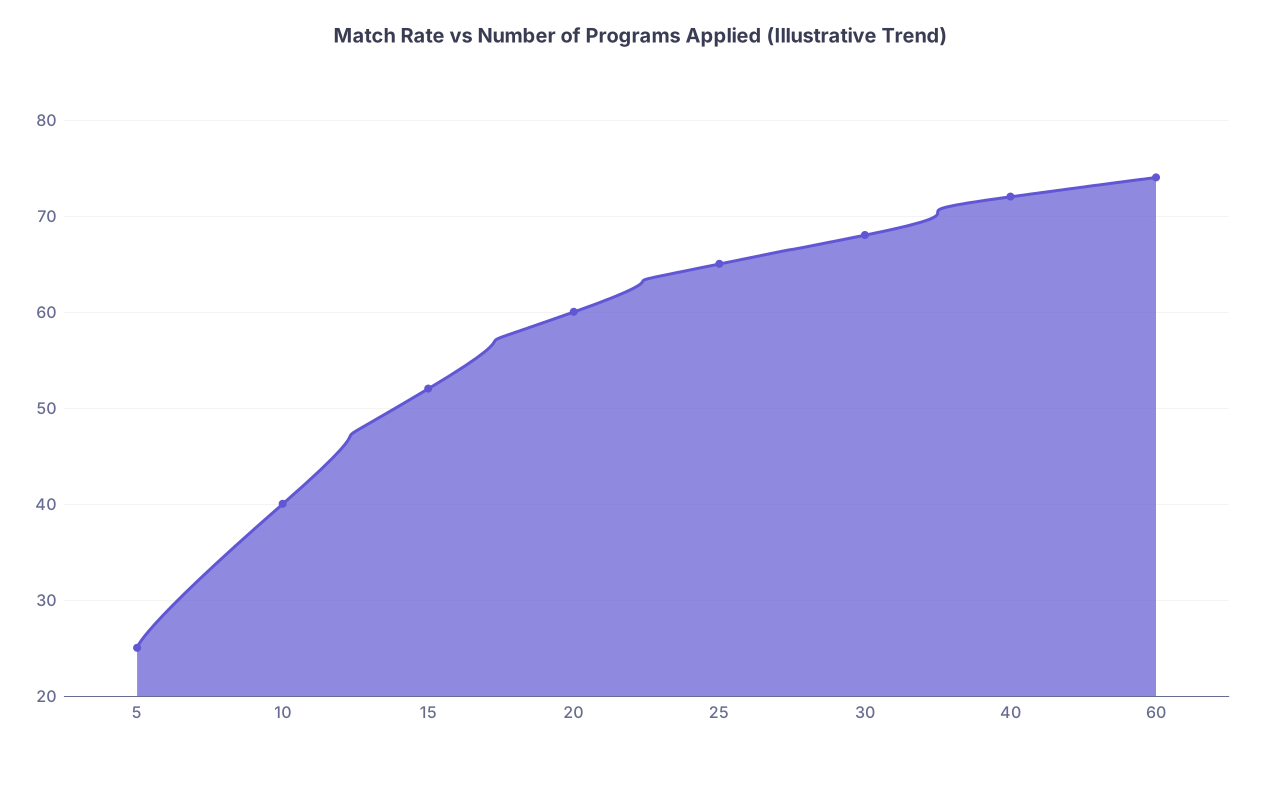
One of the most common questions for MD graduates is how many programs to apply to. The answer depends on:
- Specialty competitiveness
- Your academic profile (USMLE/COMLEX scores, clerkship grades, research, red flags)
- International status (US MD vs IMG, visa needs)
- How narrowly you define “acceptable” global health offerings
A. General Application Volume Benchmarks
For a US MD graduate in a moderately competitive specialty (IM, FM, Pediatrics, EM):
Strong applicant (few or no red flags)
- 15–20 programs if extremely flexible about geography and global health depth
- 20–30 programs if you want a good number with structured global health tracks
Average applicant
- 25–35 programs, with careful tiering (see below)
Below-average or with red flags (failures, LOA, limited clinical grades, limited USCE for IMGs)
- 35–50+ programs, depending on specialty competitiveness
For more competitive specialties (e.g., EM in saturated markets, OB/GYN in popular cities), add 5–15 programs to these ranges.
Your program selection strategy should aim for a balance between:
- Ensuring enough interviews to secure a match
- Concentrating applications where there is genuine global health alignment
B. Tiering Your List: Core Global Health vs Broad Safety Net
A practical, global-health–oriented tiering strategy:
Tier 1: Strong global health focus (30–40% of list)
- Clear global health residency track
- Multiple global health faculty
- International rotations with funding
- Active research or long-term partnerships
Tier 2: Moderate global health opportunities (40–50% of list)
- Clinical strength + domestic underserved populations
- Occasional structured international electives
- 1–2 faculty with global health experience
- No formal track but real interest and some infrastructure
Tier 3: Safety programs with minimal global health focus (10–20% of list)
- Solid clinical training
- Possibly only elective-based international opportunities
- You would still feel comfortable training here even if global opportunities had to be developed later (fellowship, early career)
For example, a typical MD graduate residency applicant in internal medicine with strong global health interests might apply to:
- 8–10 Tier 1 programs (academic centers with renowned global health residency tracks)
- 12–18 Tier 2 programs (hybrid/academic programs with some global work and strong underserved care)
- 5–8 Tier 3 programs (mostly for match security but still reasonable alignment)
This balances your global health aspirations with match safety.

Step 5: Matching Program Features With Your Career Plans
Once you have an initial list, refine it by matching specific program features to your defined career goals.
A. If You Want a Global Health Academic Career
Prioritize programs that offer:
- Global health residency track + global health fellowship
- Opportunities for:
- First-author publications during residency
- MPH or other graduate coursework (often tuition-supported)
- Longitudinal research projects in international settings
- Protected time for:
- Data analysis
- Abstract preparation
- Conference presentations
Concrete questions to ask:
- “What proportion of your global health track residents present at conferences such as CUGH or ASTMH?”
- “Do recent graduates secure global health–focused fellowships or junior faculty positions?”
- “Is there formal mentorship for grant writing during residency?”
B. If You Want Primarily Clinical International Medicine
If your priority is direct patient care in international settings:
Focus on programs with:
- High-volume, diverse pathology domestically
- Robust training in infectious diseases, chronic disease management, and procedures relevant to low-resource settings
- Longitudinal international clinical rotations where residents provide sustained service, not just short-term electives
In family medicine or internal medicine, ask:
- “Do graduates typically practice abroad after residency, and how did the program prepare them?”
- “How independent are residents in international rotations, and how is supervision structured?”
Strong clinical autonomy in residency (with proper safety net) is particularly valuable if you foresee working in resource-limited environments.
C. If You Aim for Policy, Systems, or NGO Leadership
Seek programs that:
Have strong ties to:
- Schools of public health, policy institutes, or global health centers
- NGOs or governmental agencies (CDC, USAID, ministries of health)
Offer:
- Dual-degree or certificate options (e.g., MPH, MSc in Global Health, health policy)
- Opportunities to work on large implementation projects, quality improvement, or health systems research
In interviews, ask:
- “Do residents have the option to pursue formal training in health policy or implementation science?”
- “Can you describe a recent resident whose global health work focused more on systems or policy than direct clinical care?”
Step 6: Practical Constraints: Geography, Lifestyle, and Logistics
Even the strongest global health residency track must fit your broader life context.
A. Geographic Considerations
Ask yourself:
- Am I willing to relocate anywhere for the right global health program, or do I need to stay in certain regions (for family, partner, visa, or financial reasons)?
- If limited geographically, do local programs have:
- Access to international airports and global hubs?
- Partnerships with global health organizations nearby?
Programs in cities with strong academic ecosystems (Boston, New York, San Francisco, Seattle, Atlanta, etc.) often have richer global health networks—but there are also excellent, less famous regional hubs.
B. Visa and Licensing Considerations for International Work
If you plan to work abroad during or after residency:
- Clarify:
- Does the program provide support for obtaining short-term medical licensure in partner countries?
- Are rotations recognized and insured by your US institution?
- Are there restrictions on where you can work (safety, politics, institutional rules)?
If you are an international medical graduate matching into an allopathic residency program, factor in:
- Your own US visa status (J-1 vs H-1B and long-term mobility)
- Whether programs have experience sponsoring visas for globally mobile careers
Step 7: Using Data and Mentorship to Refine Your Strategy
A thoughtful program selection strategy blends data, mentorship, and introspection.
A. Use Objective Match Data
Review:
- NRMP Program Director Survey (for your specialty)
- Specialty-specific match statistics from your medical school
- Your school’s list of alumni who matched into global health–oriented programs
These resources help calibrate:
- How many programs you should apply to
- Where your application is competitive
- Which programs historically welcome globally minded residents
B. Seek Advice From Multiple Mentors
Ideal mentors include:
- A global health faculty member at your allopathic medical school
- A recent graduate currently in a global health residency track
- Someone doing the job you want 10 years from now (international clinician, academia, NGO leader)
Ask them:
- “If you were me, how would you prioritize global health versus program prestige/brand?”
- “Which programs align best with my specific interests (e.g., HIV in sub-Saharan Africa, refugee health in the US, TB implementation research)?”
- “Given my CV, how many programs would you realistically apply to, and at what tier levels?”
Synthesize their feedback, but stay true to your own top goals and non-negotiables.
Step 8: Final Checklist Before Submitting Applications
Before ERAS submission, review your list against this global health–focused checklist:
I’ve clearly defined my global health priorities (clinical vs research vs policy vs humanitarian).
My list includes a healthy mix of:
- Tier 1: Robust global health residency track programs
- Tier 2: Programs with some structure and genuine interest in global health
- Tier 3: Solid training programs as safety options
I understand why I am applying to each program (at least one global health–relevant reason per program).
My personal statement and experiences clearly articulate:
- My global health trajectory
- Ethical and sustainable approaches to international medicine
- How residency at that program advances my long-term goals
I have asked mentors to review my list and adjust how many programs to apply to based on my competitiveness.
I’m prepared to discuss my global health interests thoughtfully and realistically during interviews, including:
- Understanding of power dynamics, equity, and local partnership
- Plans to remain clinically excellent in my chosen specialty
With this preparation, your program selection strategy becomes purposeful rather than reactive.
FAQs: Program Selection Strategy for Global Health–Focused MD Graduates
1. Is it risky to prioritize programs with a global health residency track over more “prestigious” brands?
Not necessarily. Clinical strength and board pass rates matter more for your long-term career than name alone. Many outstanding global health programs are at institutions that may be less famous overall but are leaders in international medicine. For a global health–oriented MD graduate, a program with structured global health opportunities, mentorship, and funding can be more valuable than a top-10 brand with only superficial interest in global health.
2. What if programs say, “We’re open to global health,” but don’t have a formal track?
That can still be a good fit, especially if you’re self-directed and your priority is strong clinical training plus occasional international experiences. In that case, verify:
- Are there at least one or two global health faculty?
- Are residents actually going abroad, and how often?
- Is there any institutional support (funding, logistics) for electives?
If the answer is consistently “not really,” consider that program more of a clinical training site than a global health incubator.
3. Can I “create” a global health experience at a program that doesn’t have one?
Yes, to a degree. Many residents have built global health experiences through:
- Partnering with a faculty member who has contacts abroad
- Using elective time and external grants or scholarships
- Collaborating with NGOs independently
However, doing this from scratch requires extra effort and strong self-advocacy. If global health is a central career goal rather than a side interest, it’s usually better to start in a program with at least some existing global health infrastructure.
4. How do I talk about global health in interviews without sounding naïve or “medical touristy”?
Emphasize:
- Long-term commitment rather than short trips
- Interest in partnerships, capacity building, and equity
- Willingness to listen and learn from local colleagues
- Plans to maintain strong core clinical skills
For example: “I’m interested in long-term collaborations that strengthen local health systems, not just short-term volunteer experiences. I’m hoping for a residency that pairs strong clinical training with thoughtful, sustained engagement in global health partnerships.”
By combining a clear understanding of your global health goals with a structured, evidence-based program selection strategy, you can build an application list that both maximizes your chance of matching and sets you up for a meaningful, sustainable career in global health and international medicine.