Understanding the Landscape: US Citizen IMG in Anesthesiology
As a US citizen IMG (American studying abroad), you sit in a unique position in the anesthesia match. You are not considered the same as non‑US IMGs in many program directors’ minds, but you also don’t benefit from the automatic familiarity of a US MD/DO degree. That means your program selection strategy is critical—arguably just as important as your exam scores.
Anesthesiology has become more competitive over the past decade. While it isn’t as tight as dermatology or plastic surgery, the anesthesia match now attracts strong applicants from US MD, DO, and IMG pathways. As a US citizen IMG, matching into an anesthesiology residency is very achievable with a smart approach to:
- Identifying realistic programs
- Balancing reach, target, and safety options
- Understanding how many programs to apply to
- Aligning your profile and interests with each program’s priorities
This article will walk you through a step‑by‑step program selection strategy for US citizen IMG in anesthesiology, using data‑driven principles and practical tactics tailored to your situation.
Step 1: Know Your Profile and Where You Fit
Before you can decide how to choose residency programs, you must understand what kind of applicant you are. This self‑assessment will define your program selection strategy and your decision on how many programs to apply to in anesthesiology.
Key Components of Your Applicant Profile
USMLE/COMLEX Scores and Attempts
- Step 1 (even if pass/fail) still matters through school reputation and performance
- Step 2 CK score is now heavily weighted
- Any failed attempts? These significantly affect your target tiers
Medical School Type and Reputation
- Caribbean vs. European/Asian schools vs. 5th Pathway programs
- Graduate of an LCME‑equivalent school vs. unaccredited (from US perspective)
- History of prior graduates matching into anesthesiology from your school
Clinical Experience in the US
- US clinical rotations (especially anesthesiology electives)
- Quality and length of US experience (4 weeks vs 3+ months)
- Letters of recommendation (LORs) from US anesthesiologists
Red Flags
- Gaps in training
- Multiple exam attempts
- Failed step exams
- Prior withdrawals, dismissals, or professionalism issues
Strengths Beyond Scores
- Research in anesthesiology or perioperative medicine
- Leadership, teaching, or extensive volunteer work
- Strong narrative fit for anesthesia (clear, compelling reason for the specialty)
Build a Realistic Self-Assessment
Group yourself into a rough competitiveness bracket:
Higher-Competitiveness US Citizen IMG
- Step 2 CK ≥ 245
- No failures
- Multiple US clinical rotations, at least one in anesthesia
- Strong LORs from US anesthesiologists
- Some research or unique strengths
Mid-Range US Citizen IMG
- Step 2 CK 230–244
- No more than 1 attempt on any exam
- Some US clinical experience (even if not anesthesia)
- Decent but not standout LORs
- Average CV
At-Risk / Lower-Competitiveness US Citizen IMG
- Step 2 CK < 230 or multiple attempts
- Limited or no US clinical experience
- Few or no anesthesia-specific LORs
- Red flags (gaps, professionalism concerns, prior match failure)
Your category will heavily influence how many anesthesiology programs to apply to and how aggressively you should stretch for more competitive institutions.
Step 2: Understand the Anesthesiology Program Landscape
To build an effective anesthesia match plan, you must know what types of programs exist and which are more open to US citizen IMGs.
Types of Anesthesiology Programs
University-Based Academic Powerhouses
- Large tertiary centers, major research institutions
- Strong fellowship programs, high case complexity
- Historically more competitive; many favor US MDs
- Some are very IMG‑friendly; others never interview IMGs
Mid-Sized University or University-Affiliated Programs
- Mix of academic and community training
- Sometimes more open to US citizen IMGs, especially if your profile is strong
- Good balance of case mix and lifestyle
Community-Based Academic Programs
- Community hospitals with academic affiliation
- Often more IMG‑friendly
- Less research-heavy, but solid clinical preparation and case volume
Pure Community Programs
- Focused on clinical anesthesia, less research
- Often located in smaller cities or less competitive regions
- Frequently more open to IMGs, including US citizen IMG profiles
Geographic and Regional Considerations
Your program selection strategy should account for geography in the anesthesia match:
Highly Desirable Urban Hubs (e.g., NYC, Boston, SF, LA, Chicago, Miami)
- Extremely competitive
- Many US MDs and DOs prefer these locations
- Still worth applying if you’re a strong US citizen IMG, but not your only focus
Moderate Markets (e.g., mid-sized cities, some coastal programs)
- Mixed competitiveness
- Some very IMG-friendly, others not at all—check historical data
Less Competitive or Underserved Regions (e.g., Midwest, South, some rural areas)
- Higher likelihood of IMG consideration
- Many excellent training programs with broad case exposure
- Often where a strong program selection strategy can give you a big advantage
Identifying IMG-Friendly Anesthesiology Programs
Use these tools and methods:
- NRMP Charting Outcomes & Program Director Survey
- Check IMG match rates by specialty and general competitiveness
- FREIDA and Program Websites
- Look at current residents—how many are IMGs or Americans studying abroad?
- Residency Explorer and EMRA/ASA resources
- Filters by IMG percentages, Step 2 cutoffs, and program characteristics
- Networking
- Ask seniors from your school where they matched in anesthesiology
- Contact US citizen IMGs in anesthesia via LinkedIn or alumni networks

Step 3: How Many Anesthesiology Programs Should You Apply To?
This is one of the most common questions: how many programs to apply to in anesthesiology as a US citizen IMG.
There isn’t a single universal number, but we can create realistic ranges based on your profile.
General Principles for Application Volume
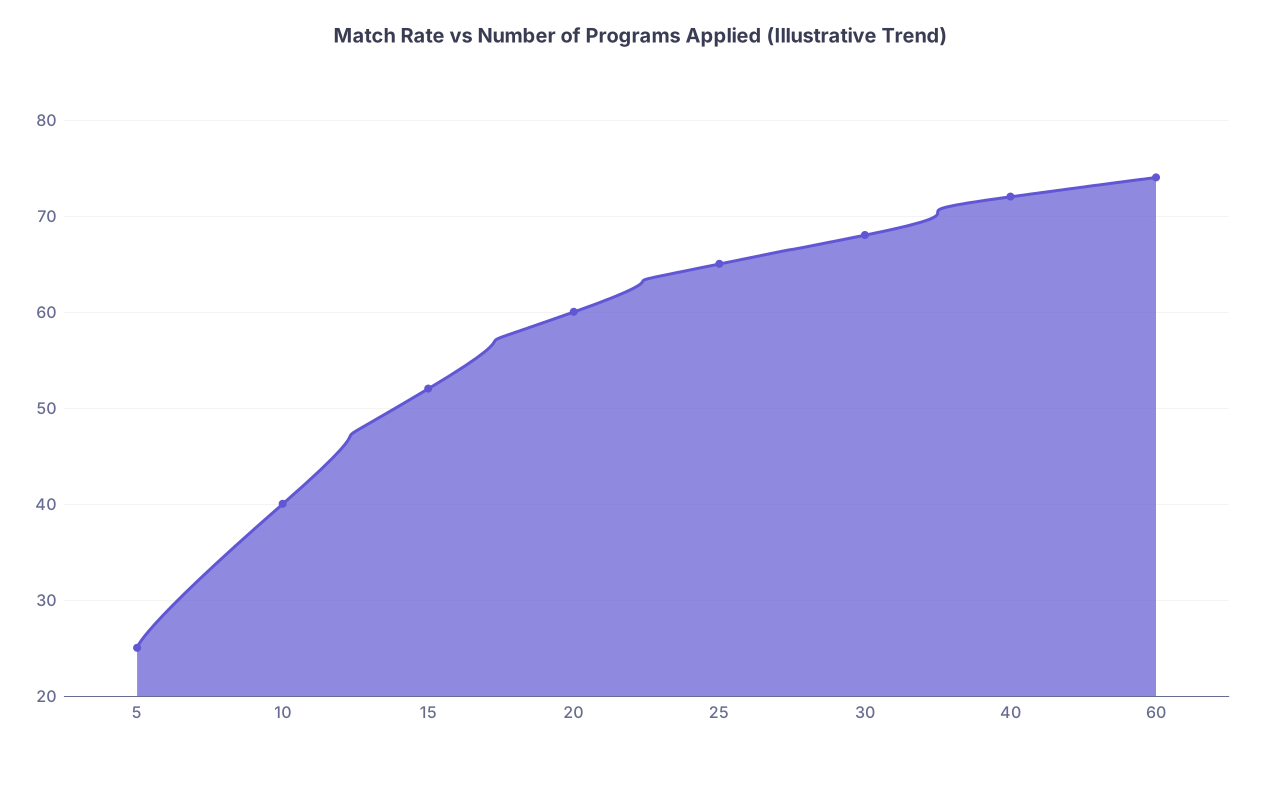
- Goal: Secure enough interviews to make a rank list that statistically leads to a match.
- For anesthesiology, most applicants who match rank around 10–13 programs.
- To generate that many ranks, you typically need 12–18 interviews, assuming you rank nearly all of them.
- IMGs usually need to apply more broadly to achieve this interview volume.
Recommended Ranges for US Citizen IMGs
1. Higher-Competitiveness US Citizen IMG
Profile:
- Step 2 CK ≥ 245, no failures
- Strong US clinical experience (including anesthesia)
- Solid LORs from US anesthesiologists
Recommended number:
- 35–50 anesthesiology programs
Strategy:
- 10–15 “reach” programs (strong academic, competitive cities)
- 15–25 “target” programs (mid-tier universities, strong community programs)
- 10–15 “safety” programs (IMG-friendly, less competitive regions)
2. Mid-Range US Citizen IMG
Profile:
- Step 2 CK 230–244
- Limited but some US experience
- No major red flags
Recommended number:
- 55–75 anesthesiology programs
Strategy:
- 5–10 reach programs (selectively)
- 20–30 target programs (programs with documented IMG residents)
- 25–35 safety/IMG-friendly programs (especially community and smaller city sites)
3. At-Risk/Lower-Competitiveness US Citizen IMG
Profile:
- Step 2 CK < 230, or multiple attempts
- Limited US experience, or some red flags
Recommended number:
- 80–120 anesthesiology programs
Strategy:
- 0–5 reach programs (only if there is a very specific tie or reason)
- 25–35 target programs (IMG-friendly, lower score cutoffs)
- 50–80 safety programs (community-heavy, smaller geographic markets, programs historically taking multiple IMGs)
These ranges may sound high, but for IMGs in competitive specialties like anesthesiology, application breadth is an insurance policy. You can adjust slightly upward if:
- You have exam attempts
- You have no US anesthesia rotations
- Your school has no track record in anesthesiology
Step 4: Building a Rational Program List
Now that you know roughly how many anesthesiology programs to apply to, you need a method to decide which ones go on your list. This is where a structured program selection strategy becomes essential.
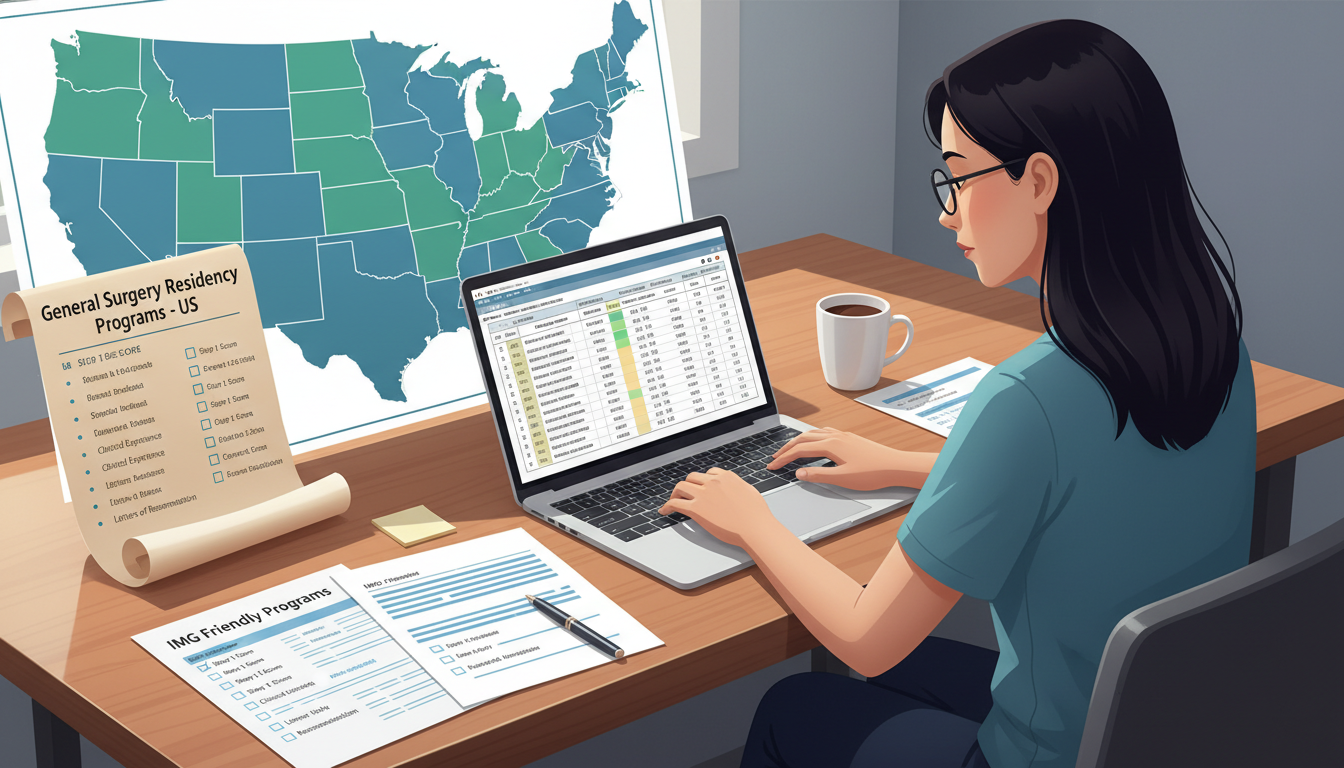
Create a Program Evaluation Spreadsheet
Include columns such as:
- Program name and ACGME ID
- Location (city, state, region)
- Program type (university, university-affiliated, community)
- Current IMG residents? (Y/N, number, and US vs non-US IMGs)
- Step 2 CK cutoffs (published or estimated from forums)
- Visa sponsorship (important if you might need one)
- Case volume and subspecialty exposure
- Fellowship opportunities (cardiac, critical care, pain, peds, regional)
- Lifestyle factors (call schedule, wellness support, benefits)
- Subjective notes (culture, reputation, personal ties)
This allows you to sort and prioritize programs based on your goals and match probability.
Prioritizing Programs as a US Citizen IMG
When deciding how to choose residency programs in anesthesiology, weigh these factors:
IMG-Friendliness
- Do they currently train IMGs, especially US citizen IMG?
- Have they taken multiple IMGs over several years?
- Do they specifically mention considering IMGs on their website?
Geographic Flexibility
- Are you willing to train in smaller cities or less “popular” states?
- Being geographically open dramatically increases options for US citizen IMGs.
Program Size
- Larger programs (more CA-1 positions) often interview more applicants and may have more flexibility to include IMGs.
- Very small programs may be more risk-averse.
Research vs. Clinical Focus
- If you have research experience, especially in anesthesia, you may fit better at academic centers.
- If not, community or hybrid programs may be more realistic.
Your Personal Connections
- Any place where you:
- Rotated
- Have a strong letter writer
- Have family or close ties to the area
deserves extra consideration, even if the program is somewhat more competitive.
- Any place where you:
Sample Distribution for a Mid-Range US Citizen IMG
Let’s say you decide to apply to 65 programs. A balanced list might look like:
8 Reach Programs
- Mostly university programs in major cities
- One or two where you did a rotation or have strong letters
27 Target Programs
- Mix of university-affiliated and strong community programs
- Regions like Midwest, South, mid-sized East Coast and West Coast cities
30 Safety Programs
- Smaller community or regional academic centers
- Documented history of taking multiple IMGs
- More open-location areas (Midwest, inland states, some Southern programs)
This kind of diversification gives you a more reliable shot at stacking enough interviews for a robust rank list.

Step 5: Strategic Targeting to Increase Interview Yield
Once you’ve chosen your programs, refine how you present yourself to each one. For US citizen IMGs in anesthesiology, tailoring is a powerful way to increase interview chances.
Use Signaling Opportunities Smartly (If Available)
If ERAS or the specialty offers signaling or preference signals:
- Prioritize:
- Programs where you rotated
- Programs with documented US citizen IMG residents
- Programs in locations where you have a long-term connection or plan to stay
Don’t waste signals on dream programs that have never taken IMGs and do not know you.
Align Your Personal Statement and Experiences
You can’t write 60 different personal statements, but you can:
- Create 2–3 slightly different versions:
- Academic-leaning version (for university/academic-heavy programs)
- Clinically focused version emphasizing broad case exposure (for community-heavy programs)
- Geographic-ties version (for regions where you have strong local connections)
Within those, highlight:
- Any US anesthesia rotations and what you learned
- Interest in perioperative medicine, critical care, or other subfields
- Evidence that you understand and value the team-based nature of anesthesiology
Leverage Your US Citizen Status as an IMG
Being an American studying abroad carries specific advantages:
- No visa requirement simplifies hiring and credentialing.
- You likely understand US healthcare culture and patient expectations better than many non‑US IMGs.
- You may have stronger geographic and family ties to US regions.
Subtly emphasize:
- Long-term commitment to practicing in the US
- Any specific regional ties (grew up in the Midwest, family in Texas, etc.)
- Familiarity with US healthcare through prior work, volunteering, or pre-med experiences
Step 6: Common Pitfalls in Program Selection for US Citizen IMGs
Avoiding common mistakes is as important as choosing the “right” programs.
Pitfall 1: Overweighting Prestige and Location
Many US citizen IMGs make the error of:
- Applying heavily to only big-city academic centers
- Ignoring smaller, IMG-friendly programs in less “popular” areas
Actionable advice:
- Force yourself to include at least 30–50% of programs from less competitive regions.
- Remember: your primary goal is to match into anesthesiology, not only to match in one of five cities.
Pitfall 2: Underapplying Because of Cost
Applications are expensive, but underapplying can cost you an entire year.
Consider:
- The financial and emotional cost of not matching:
- Delayed income
- Extra year of uncertainty
- Needing to reapply or change specialties
If possible, budget early and aim for the higher end of the recommended program numbers for your risk category, especially if you have any red flags.
Pitfall 3: Ignoring IMG-Friendliness Data
Some programs:
- Have never taken IMGs
- Explicitly or implicitly focus on US MDs only
While you can include a few dream options, do not build your strategy around them. Rely on:
- Actual resident rosters
- Alumni match lists from your school
- Forum data (cautiously, but as a supplement)
Pitfall 4: Not Accounting for Your Red Flags
If you have exam failures, large gaps, or prior unsuccessful match attempts:
- You must overcompensate with volume and targeting.
- Overly optimistic lists lead to very few interviews.
Be honest with yourself, and adjust:
- Increase total applications
- Increase percentage of community and IMG-friendly programs
- Apply earlier and ensure all documents are complete on day one
Putting It All Together: A Sample Strategy Blueprint
Here’s how a thoughtful program selection strategy for US citizen IMG in anesthesiology might look for a typical applicant.
Example: Alex, a US Citizen IMG
- Step 2 CK: 236 (first attempt, pass)
- No Step 1 failures (pass on first attempt)
- Caribbean grad, 2 months of US clinicals, 4-week anesthesia elective at a community program
- 2 LORs from US anesthesiologists, 1 from internal medicine, 1 from basic science
- No major red flags, 6-month gap explained by family reasons and US volunteer work
Self-assessment: Mid-range US citizen IMG
Application Volume: 65 anesthesiology programs
Program Distribution:
8 Reach:
- Mid-to-large academic centers, mainly outside top-10 cities
- Include the place where Alex did the anesthesia elective if competitive
27 Target:
- University-affiliated and strong community programs
- Mostly in Midwest and South, plus some East Coast mid-size cities
- All have at least a few IMGs in current or recent resident classes
30 Safety:
- Community-oriented programs, including in less sought-after states
- Strong record of taking multiple IMGs
- At least several programs where Alex’s school has alumni
Additional Tactics:
- Use one personal statement emphasizing academic interest for reach/target university programs and one highlighting clinical strength and teamwork for community-heavy programs.
- Send polite, tailored emails to a few programs where Alex has clear geographic ties.
- Attend virtual open houses and mention them in communications when appropriate.
This balanced approach maximizes interview chances and gives Alex a realistic pathway to matching into an anesthesia residency.
FAQs: Program Selection Strategy for US Citizen IMG in Anesthesiology
1. As a US citizen IMG, do I have an advantage over non‑US IMGs in the anesthesia match?
Often, yes. Many anesthesiology programs view US citizen IMGs more favorably than non‑US IMGs because:
- You don’t require visa sponsorship
- You usually have better familiarity with US culture and often more geographic ties
However, you’re still competing with US MD/DO graduates. You need a smart program selection strategy and broad applications to capitalize on this relative advantage.
2. Is it realistic to apply only to anesthesiology as a US citizen IMG, or should I have a backup specialty?
If you are mid-range or higher competitiveness (e.g., Step 2 CK ≥ 230, no failures, some US clinical experience), it’s reasonable to apply solely to anesthesiology with adequate program numbers and smart targeting.
If you have significant red flags (repeated exam failures, no US clinical experience), consider:
- Applying to a backup specialty simultaneously
or - Doing a year of research or preliminary training to strengthen your profile before reapplying in anesthesia.
3. How important are anesthesiology-specific rotations and letters for program selection?
They’re very important, especially for a US citizen IMG:
- Anesthesia rotations in the US demonstrate early commitment and give you specialty-specific LORs.
- Programs can better assess your fit, work ethic, and OR behavior. For program selection, give extra weight to places where you:
- Rotated
- Have strong anesthesia letters These should be among your top-priority applications and ranked highly if the interviews go well.
4. If I can’t afford to apply to 80–100 programs, how should I prioritize?
If finances limit you, be extremely targeted:
- Focus on IMG-friendly community and university-affiliated programs.
- Be geographically flexible and prioritize midwestern, southern, and less competitive regions.
- Apply to fewer reach programs and concentrate on realistic targets and safeties.
- Use tools like FREIDA and Residency Explorer to identify programs with a history of US citizen IMG and IMG matches.
By combining realistic self-assessment, data-driven targeting, and a broad but thoughtful approach to how many programs to apply to, you can significantly improve your chances of a successful anesthesia match as a US citizen IMG.