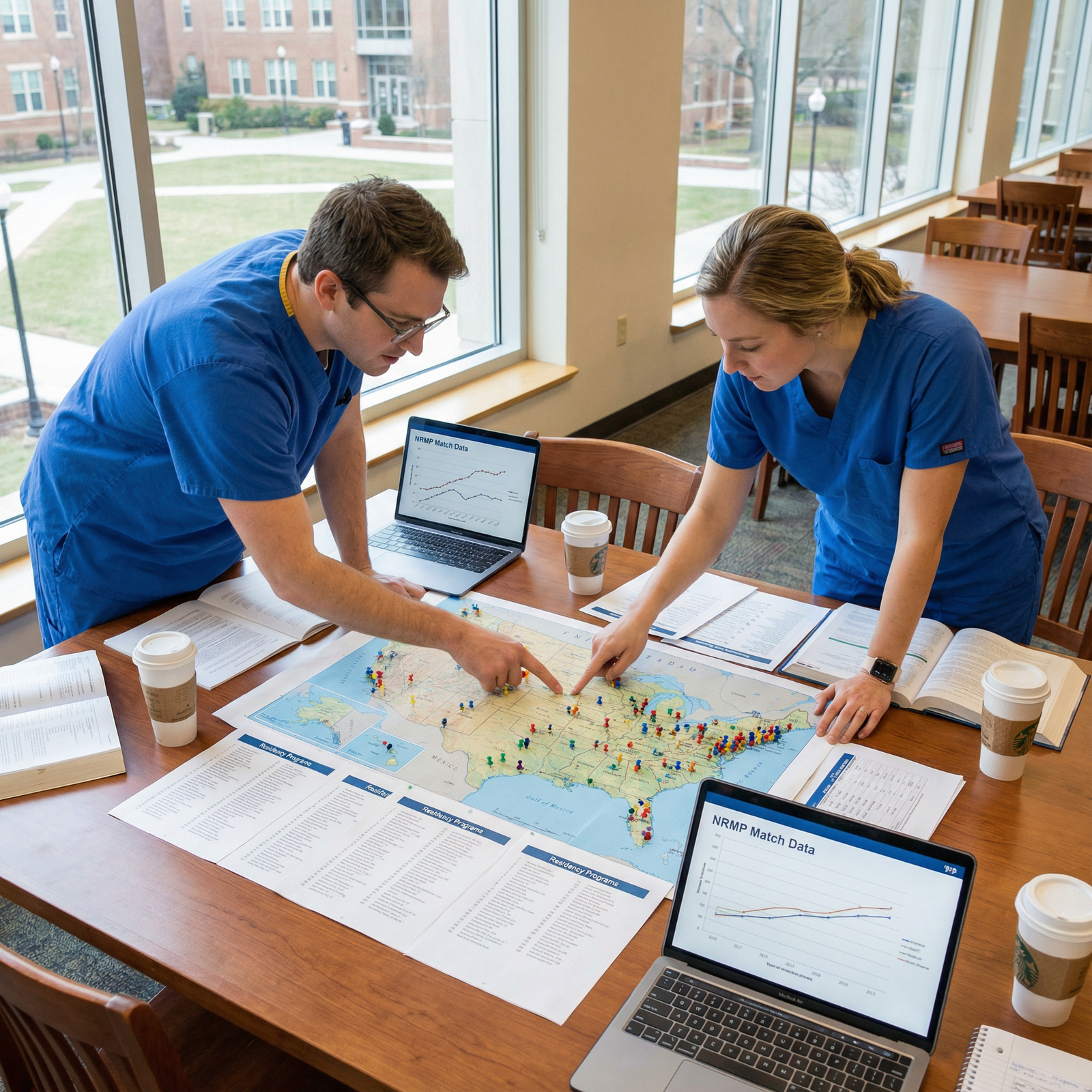
Understanding the Landscape: US Citizen IMG in General Surgery
General surgery is one of the most competitive core specialties in the NRMP. For a US citizen IMG, the program selection strategy you choose can make the difference between matching, partially matching (prelim only), or going unmatched.
You are in a unique position as an American studying abroad. Compared to non‑US IMGs, you often have:
- Fewer visa issues (or none)
- Better cultural familiarity with the US system
- Sometimes stronger networking opportunities in the US
But you still face many IMG-related challenges:
- Fewer automatic interview offers
- Screening biases at some academic programs
- Limited access to US-based home institution support
This article will walk through a structured, evidence-informed approach to:
- Build your program list intelligently
- Decide how many programs to apply to
- Develop a program selection strategy tailored to your profile
- Avoid common pitfalls that waste time and money
Keywords you’re likely thinking about—how many programs to apply, how to choose residency programs, and overall surgery residency match strategy—are woven throughout this guide.
Know Your Profile: Where Do You Stand Competitively?
Before you can choose programs, you need a realistic sense of your competitiveness as a US citizen IMG targeting a general surgery residency.
1. Academic Metrics
Key elements:
- USMLE Step 2 CK score (and Step 1 if available, even if pass/fail)
- Clerkship grades (especially surgery, medicine)
- Class rank or decile (if provided)
Very roughly for general surgery:
Highly competitive US IMG profile
- Step 2 CK: 250+
- Strong letters from US surgeons (ideally at university-affiliated hospitals)
- Honors in core rotations, especially surgery
- Multiple US clinical experiences
Moderately competitive
- Step 2 CK: 235–249
- Mostly high passes/passes, one or two honors
- Some US rotations with decent letters
- Solid but not stellar CV
Less competitive / at-risk
- Step 2 CK: <235 or attempt
- Remediations, leaves, or academic concerns
- Limited or no US clinical experience
- Sparse or weak letters
Be honest about which category you clearly fit best. It drives how many programs to apply and where.
2. US Clinical Experience (USCE)
For general surgery, USCE is almost essential, especially as an IMG:
- Sub-internships / acting internships (AIs) in surgery are gold.
- General surgery electives or sub-specialty surgery (vascular, trauma, colorectal, etc.) still help.
- Rotations at community or university-affiliated hospitals that actually have a surgery residency are particularly valuable.
If you’re an American studying abroad, aim for:
- At least 2–3 months of USCE with some exposure to general surgery.
- At least 1 rotation at a program with a surgery residency, even if it’s community-based.
3. Research and CV
General surgery is research-friendly but not universally research-heavy. Consider:
- Research in surgery or related fields (oncology, critical care, etc.) is ideal.
- Case reports, QI projects, and audits still count, especially if presented/posters.
Academic-heavy university programs often favor:
- Research productivity
- Publications, presentations
- Strong academic references
Community and hybrid programs may be more flexible, focusing more on clinical performance and work ethic than research output.
4. Red Flags
Red flags that affect your program selection strategy:
- USMLE attempts or failures
- Extended time to graduation
- Gaps in medical education not clearly explained
- Disciplinary actions
If any apply, you will need:
- A broader, more community-heavy list
- More applications
- Meticulous explanation in your application and personal statement

Building Your Program List: Strategy Over Guesswork
Once you understand your profile, you can start building your program selection strategy. This is where many US citizen IMGs either underreach or massively overspend without improving their odds.
Step 1: Define Your Priorities
Before deep-diving into FREIDA and program websites, clarify your priorities:
- Location
- Do you need to be near family or a spouse?
- Are you open to less popular regions (Midwest, South, rural areas)?
- Program type
- Large academic vs medium hybrid vs community-based
- Trauma level, case volume
- Lifestyle
- City vs suburban vs rural
- Cost of living
- Supportive culture vs hyper-competitive vibe
- Future goals
- Strong desire for fellowship (e.g., vascular, surgical oncology, trauma)
- Interest in academic vs community practice
As a US citizen IMG, staying too rigid with location or prestige will sharply reduce your chances. The more flexible you are, the better.
Step 2: Use Data to Screen Programs
For a US citizen IMG in general surgery, not all programs are equally realistic. Focus on:
History of interviewing/matching IMGs
- Check program websites, FREIDA, and residency explorer.
- Look for:
- “We do/do not accept IMGs/require US citizenship/green card.”
- Current or recent residents with IMG or international credentials.
- Pay special attention to whether they have US citizen IMGs, not just non-US IMGs needing J-1 visas.
Minimum score requirements
- Some programs list minimum Step 2 CK scores (e.g., 230).
- If you are significantly below, don’t waste the application unless there’s some strong connection.
Program size
- Larger programs (more categorical positions) may allow more flexibility.
- However, some large academic centers rarely take IMGs despite size.
Unfilled positions and SOAP history
- Programs that occasionally or frequently have unfilled general surgery spots may be more open to diverse applicants, including US citizen IMGs.
- Not always a negative—some of these are hidden gems with high operative volume.
Step 3: Categorize Programs: Reach, Target, Safety
A practical program selection strategy for general surgery:
Reach programs (20–30%)
- Slightly above your metrics or reputation tier.
- May be research-heavy or in very desirable locations.
- Some history of taking IMGs is helpful, even if rarely.
Target programs (40–50%)
- Align well with your scores and CV.
- Clear history of taking US citizen IMG or at least IMGs.
- Mostly community or hybrid programs; some mid-tier academics.
Safety programs (20–30%)
- Programs where your scores are clearly above the minimum.
- Strong history of taking IMGs.
- Possibly less desirable location or smaller name, but good training.
Example for a moderately competitive US citizen IMG (Step 2 CK 242, good USCE, 1–2 publications, no red flags):
- Total 70 categorical applications (illustrative, not prescriptive)
- 20 reach (e.g., mid-tier academics that take some IMGs)
- 35 target (hybrid and community with known IMG acceptance)
- 15 safety (heavily IMG-friendly, often non-major metro areas)
How Many Programs to Apply To in General Surgery as a US Citizen IMG?
“How many programs to apply” is one of the most common and anxiety-provoking questions for American studying abroad students aiming for general surgery.
There is no magic number, but there are rational ranges based on your profile and budget.
General Ranges for Categorical General Surgery (US Citizen IMG)
Note: These are conceptual ranges, not guarantees.
Highly Competitive US Citizen IMG
- Solid USMLE (250+), strong USCE, research, no red flags
- Rough range: 40–70 categorical programs
- Why fewer?
- You’re more likely to generate interviews.
- You may want a higher proportion of academic programs.
Moderately Competitive
- Step 2 CK 235–249, some USCE, limited but decent research
- Rough range: 60–90 categorical programs
- Reasoning:
- You need volume but also targeted selection.
- Focus on IMG-friendly community and hybrid programs, with some academic reach.
Less Competitive / At-risk
- Step 2 CK <235, attempts, or gaps; limited USCE
- Rough range: 80–120 categorical programs
- Additionally consider:
- Preliminary surgery positions (20–40 prelim applications).
- Some categorical backup in less competitive fields if you’re open to that.
What About Preliminary Positions?
As a US citizen IMG in general surgery, prelim positions can be:
- A stepping stone to reapply or transfer into a categorical spot.
- A backup if you don’t secure a categorical position.
Strategy:
If you are moderately competitive, consider:
- 10–25 prelim general surgery programs in addition to categorical applications.
If you are less competitive or have red flags, consider:
- 20–40 prelim applications and prepare for potential SOAP participation.
Be realistic: a prelim year can be grueling, and there is no guarantee of conversion to categorical. But for some, it’s a viable path.
Diminishing Returns and Budget Considerations
Application costs rise quickly. Beyond a certain point, each extra program adds less benefit:
- If you are already at 90+ categorical programs, adding another 20 likely provides minimal incremental advantage unless:
- You had a known oversight (missed a friendly region, etc.)
- Your list was too heavily skewed toward reach programs.
Your program selection strategy should emphasize quality and fit over sheer volume—but as a US citizen IMG in general surgery, you still need a relatively high number of applications compared with US MD seniors.

How to Choose Residency Programs: Practical Filters and Tools
Beyond numeric competitiveness and IMG-friendliness, you should filter programs using structured criteria. This is where how to choose residency programs becomes more personalized.
1. Geographic Strategy
For many US citizen IMGs, geography can strongly influence the surgery residency match chances:
- Home region or state ties
- Applying strongly in states or regions you can authentically claim (grew up, family, college) can help.
- High-IMG-density regions
- Some areas (certain Midwest, South, New York, New Jersey) have more programs that routinely accept IMGs.
- Less saturated markets
- Very popular cities (NYC core, Boston, San Francisco) are intensely competitive.
- Consider nearby but less famous cities with strong hospital systems.
Strategy example:
- Instead of applying to all the top-name programs in 3 mega-cities, you might:
- Apply to fewer reach programs there.
- Add more community and hybrid programs in nearby regions that train excellent surgeons but are less oversubscribed.
2. Academic vs Community Focus
Your long-term goals matter:
If you want a highly academic career and competitive fellowships:
- You still may match at a strong community or hybrid program with excellent operative experience and regional fellowship connections.
- But your list should preserve some academic programs that actually interview IMGs.
If you foresee a community general surgery career:
- Prioritize programs with:
- High operative volumes
- Strong autonomy
- Graduates going into community practice
- Prioritize programs with:
3. Program Culture and Training Style
Consider:
- Operative volume and case mix
- Trauma level, subspecialty exposure
- Resident culture
- Burnout, turnover, or chronic understaffing are red flags.
- Resident testimonials, social media, and alumni outcomes can be enlightening.
As an IMG, you may be particularly sensitive to issues of equity, inclusion, and support. Look for:
- Evidence that IMGs are integrated and supported, not marginalized.
- Programs where current residents with international backgrounds speak positively about the culture.
4. Visa Needs vs US Citizenship Advantage
As a US citizen IMG, you don’t need visa sponsorship. This is a significant plus:
- Some programs explicitly say “no visa sponsorship”—these often still consider US citizen IMGs.
- Filter for “US citizen or green card holders only” if you see it—this can reduce the overall competition compared to non-US IMGs.
Use this to your advantage:
- Add some programs that are closed to J-1/H-1B but open to US citizen IMGs.
- When emailing programs with questions, quietly highlight that you are a US citizen trained abroad, which separates you from other IMGs.
5. Using Tools: FREIDA, Residency Explorer, Program Websites
FREIDA
- Base info: number of positions, program setting, contact info.
- Sometimes indicates IMGs in training.
Residency Explorer
- Compare your profile against historic matched data (US MD/DO and sometimes IMGs).
- Use it to get a rough sense of how your application might look at specific programs.
Program websites
- Check:
- Current residents: any international grads?
- Stated minimum requirements.
- Rotations, curriculum, case volume.
- Check:
Networking and mentors
- Ask prior graduates from your school who matched in surgery where they applied and interviewed.
- Attend meetings, conferences, and virtual open houses to ask respectful, targeted questions.
Putting It All Together: Example Strategies by Applicant Type
To make this more concrete, here are illustrative program selection strategies for three archetype US citizen IMG applicants.
1. “Strong Academic” US Citizen IMG
- Step 2 CK: 255
- 1+ year research in surgical oncology
- 3–4 publications/presentations
- Multiple US AIs in surgery
- No red flags
How many programs to apply (categorical): ~50–70
Program mix:
20–25 reach:
- Mid- to high-tier academic programs with some history of IMGs.
- Regions where you have ties.
20–30 target:
- Hybrid academic-community programs.
- Large teaching hospitals in non-major metro areas.
10–15 safety:
- IMG-friendly community programs with good case volume.
Likely fewer prelim applications unless particularly risk-averse.
2. “Solid but Not Stellar” US Citizen IMG
- Step 2 CK: 242
- 1–2 case reports or posters
- 2 months USCE in surgery, strong LORs
- No red flags
How many programs to apply (categorical): ~70–90
Program mix:
15–20 reach:
- Some mid-tier academics known to take IMGs.
- A few “dream” programs but not too many.
35–45 target:
- Community and hybrid programs with consistent IMG intake.
15–20 safety:
- More remote or less-known regions, but clearly IMG-friendly.
Prelim applications: 10–20 programs, mainly in regions where you’d actually be willing to live for a year.
3. “At-Risk” US Citizen IMG
- Step 2 CK: 228 with 1 attempt
- Some USCE but limited surgery exposure
- 1 minor publication
- 6-month gap in training due to personal reasons (explained in application)
How many programs to apply (categorical): ~80–120
Program mix:
10–15 reach:
- Lower-tier academics that sometimes consider IMGs.
40–60 target:
- Community and hybrid programs in IMG-friendly regions.
30–45 safety:
- Smaller programs, less “popular” cities, but historically open to IMGs and lower scores.
Prelim applications: 20–40 programs, possibly including:
- Programs with many prelim spots.
- Places where prelims frequently advance to categorical or match well elsewhere afterward.
FAQs: Program Selection Strategy for US Citizen IMG in General Surgery
1. As a US citizen IMG, can I realistically match into general surgery?
Yes, it is realistic, but it is competitive. Your chances improve significantly if you:
- Have a strong Step 2 CK score and solid USCE (especially surgery rotations).
- Apply broadly and intelligently, using the reach/target/safety model.
- Target programs that have historically accepted IMGs and/or explicitly welcome US citizen IMGs.
Many US citizen IMGs successfully match into general surgery each year, but they typically have well-researched program lists and large enough application volumes.
2. How many programs should I apply to if I’m on a tight budget?
If finances limit you, prioritize:
- Quality of list over sheer number.
- Focus mainly on:
- Programs with clear IMG-friendliness.
- Regions where you have strong ties.
- For a moderately competitive profile with budget constraints, you might aim for:
- 50–60 very carefully selected programs rather than 80+ random ones.
Use tools (FREIDA, program websites) to remove programs that clearly do not interview IMGs or require metrics far above yours.
3. Should I apply to prelim surgery positions even if I really want categorical?
If you are an IMG and not in the top competitiveness tier, yes, prelim applications are often wise:
- They act as a safety net, increasing your chance of getting into the operating room and US system.
- If you match only to a prelim, you can:
- Work hard, impress faculty, and seek a categorical position internally or elsewhere.
- Reapply with stronger US-based experience.
However, consider:
- The physical and emotional toll of a prelim year.
- Whether you’d be willing to repeat the Match process.
4. How do I know if a program truly accepts IMGs and isn’t just saying “we consider all applicants”?
Look for concrete evidence:
- Current or recent residents with international medical schools listed.
- Match lists showing IMGs.
- Statements on their website or at info sessions like:
- “We have a long history of training IMGs.”
- “We welcome applications from international graduates, especially US citizens.”
If unsure, you can politely email the program coordinator:
- Briefly introduce yourself as a US citizen IMG.
- Ask whether IMGs have been interviewed or matched in the last few years.
- Keep the email concise and professional.
A thoughtful, data-informed program selection strategy is one of the most powerful tools you have as a US citizen IMG aiming for a general surgery residency. By understanding your profile, applying to an appropriate number of programs, and choosing them strategically, you can substantially improve your odds of a successful surgery residency match—while preserving your budget and sanity.