Understanding Your Unique Position as a US Citizen IMG in Radiology
If you’re a US citizen IMG (American studying abroad) applying to diagnostic radiology, you sit in a very particular niche in the residency ecosystem. You’re not evaluated exactly like US MD seniors, and you’re not viewed the same as non‑US citizen IMGs either.
Recognizing this position is the first step in building a strong, realistic program selection strategy.
How Programs Commonly View US Citizen IMGs
Most diagnostic radiology program directors think in three broad applicant categories:
- US MD seniors
- US DO seniors
- IMGs (split into US citizen and non‑US citizen)
Among IMGs, US citizen IMGs often have fewer visa issues, may be more familiar with US culture and healthcare, and sometimes already have US clinical or research experience. This can help, but you still face:
- Questions about clinical training quality at your foreign school
- Less predictability in exam prep and clerkship structure
- Fewer built‑in connections to US teaching hospitals
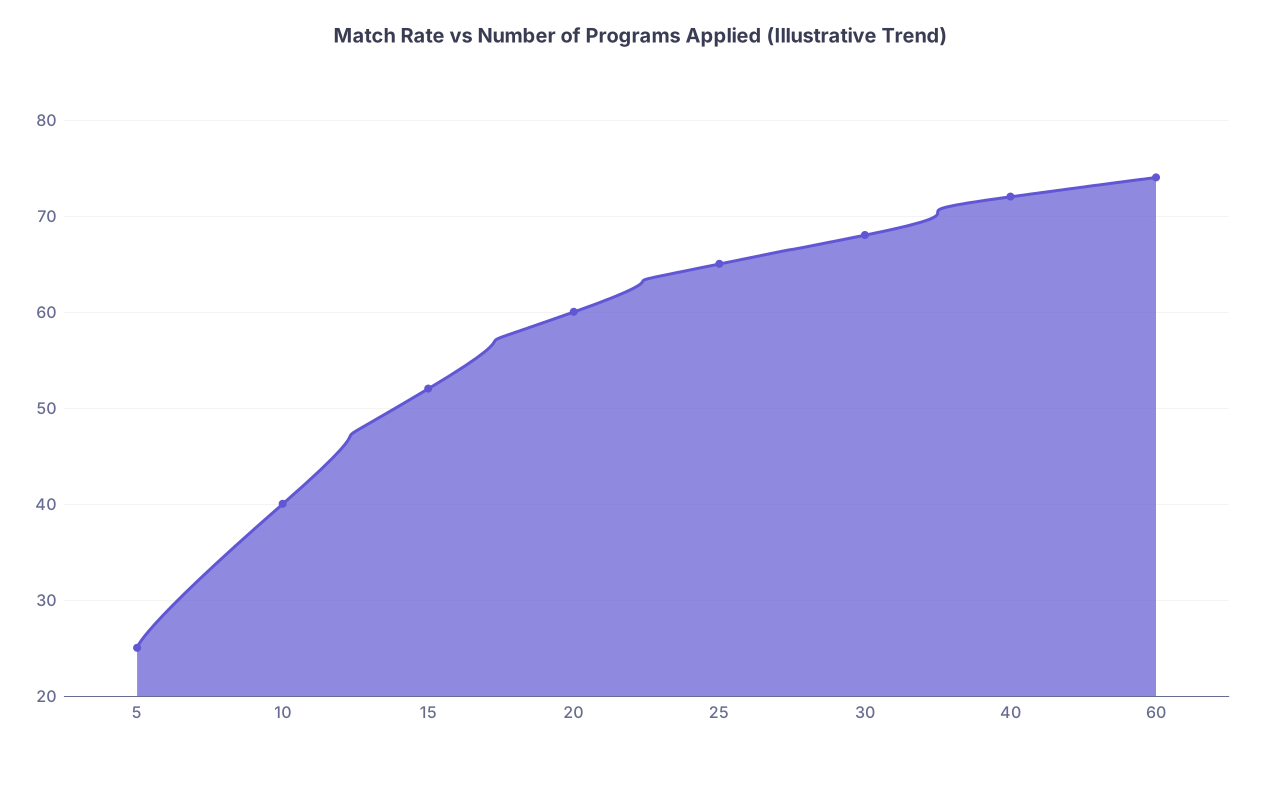
That means your program list must be both ambitious and highly realistic. A US MD with similar stats might comfortably apply to 40–50 programs; a US citizen IMG in diagnostic radiology will usually need a broader, more carefully stratified list and a deliberate program selection strategy.
Competitiveness of Diagnostic Radiology for US Citizen IMGs
Diagnostic radiology is moderately to highly competitive. A few realities:
- Step scores matter a lot, especially for IMGs
- Research and letters from US radiologists are highly valued
- Many academic programs have little IMG history
- Some community programs are IMG‑friendly but still selective
As a US citizen IMG, your leverage points often include:
- USMLE scores at or above typical interview cutoffs
- US clinical experience (USCE) involving radiology exposure
- Evidence of commitment to radiology (electives, research, case reports, radiology interest group involvement)
- Fluent English and strong communication skills
Your program selection strategy needs to align these strengths with the right tier of programs and volume of applications.
How Many Programs to Apply to for Diagnostic Radiology
You can’t design a smart program selection strategy without confronting the question every applicant asks: How many programs should I apply to?
For a US citizen IMG in diagnostic radiology, the safe answer is almost never “20–30.” You usually need more—but not so many that you’re wasting time and money on poor‑fit choices.
General Ranges for US Citizen IMGs in Radiology
These are approximate ranges and must be tailored to your profile:
Very strong US citizen IMG (for radiology)
- Step 2 CK ≥ 250, multiple US radiology electives, at least one radiology publication, strong letters from US radiologists
- Recommended: 50–70 diagnostic radiology programs
Solid/average US citizen IMG
- Step 2 CK ~240–249, at least one US radiology elective, good letters, some scholarly work or strong clinical grades
- Recommended: 70–90 programs
Below average or red flags
- Step 2 CK < 240, failed exam attempt, limited USCE, few or no radiology letters
- Recommended: 90–120 programs, plus a backup specialty or prelim‑only strategy
These numbers assume:
- You are applying broadly across the country
- You have no geographic constraints so strict that they eliminate most IMG‑friendly places
- You are also applying to a sufficient number of prelim/transitional year programs if needed
If your budget is limited, you’ll need a more surgical list (prioritizing IMG‑friendly and mid‑tier programs) and perhaps slightly lower expectations about the number of interviews.
Why US Citizen IMGs Often Need Higher Application Volume
For American students studying abroad, interview yield per application is typically lower than for US MD/DO seniors. Reasons include:
- Some programs have automatic filters for non‑US schools
- Others rarely review IMG files seriously, even if not explicitly hostile
- You might have less well‑connected letter writers
This doesn’t mean you’re not competitive—it means you need to hedge your risk with a well‑researched, larger program list.
Building a Tiered Program List: A Step‑by‑Step Strategy
A smart program selection strategy for a US citizen IMG in diagnostic radiology requires intentional stratification. Instead of randomly adding 80 programs, you want a structured portfolio:
- Reach programs
- Reasonable targets
- Safer/IMG‑friendly programs
- Prelim and transitional year backups
Step 1: Define Your Personal Profile Honestly
Before you decide how many programs to apply to or which ones, take an honest inventory:
Exam performance
- Step 2 CK score (and Step 1 performance if still used by programs informally)
- Any failed attempts?
Radiology‑specific exposure
- How many radiology electives (especially in the US)?
- Any radiology research, case reports, or quality improvement work?
- Participation in radiology interest groups or conferences?
Letters of recommendation
- Do you have at least one US radiologist letter?
- Are your other letters from US faculty in core rotations?
US clinical experience
- How many months of USCE?
- Were these in academic or community settings?
Additional factors
- Graduation year (recent graduates are preferred)
- Gaps, leaves, or career changes
- Geographic priorities (family, partner, etc.)
This profile will guide your overall program selection strategy and help you judge where you stand relative to typical diagnostic radiology applicants.
Step 2: Understand Program Types and Tiers
Diagnostic radiology programs can be roughly grouped into:
Highly academic, top‑tier programs
- Strong research output, NIH funding, big‑name faculty
- Often highly competitive, limited IMG presence
- Tend to prioritize US MDs with strong research
Mid‑tier academic programs
- University‑affiliated, good fellowship placement
- Some IMG history, especially US citizens
- Solid training, moderate competitiveness
Community‑based/academic hybrid
- Community hospitals with academic affiliations
- Often more open to IMGs if you meet score cutoffs
- Can provide excellent, hands‑on training
Community programs with strong IMG representation
- Often off the radar of many US MD applicants
- May be less research heavy but excellent clinically
- Higher probability of granting interviews to US citizen IMGs
You want a mix of these categories, weighted toward where your profile best fits.
Step 3: Use Data to Identify IMG‑Friendly Diagnostic Radiology Programs
Use multiple sources:
NRMP Charting Outcomes & Program Director Survey
- See typical score ranges for matched applicants
- Understand what PDs prioritize (USMLE, letters, etc.)
FREIDA, Residency Explorer, individual program websites
- Check:
- Do they list IMGs or US citizen IMGs among current residents?
- Do they specify minimum score requirements?
- Do they explicitly accept IMGs?
- Check:
Program‑specific resident rosters
- Look at medical school names of current residents
- If you see Caribbean, Irish, Eastern European, or other international schools, it’s a positive sign for a US citizen IMG
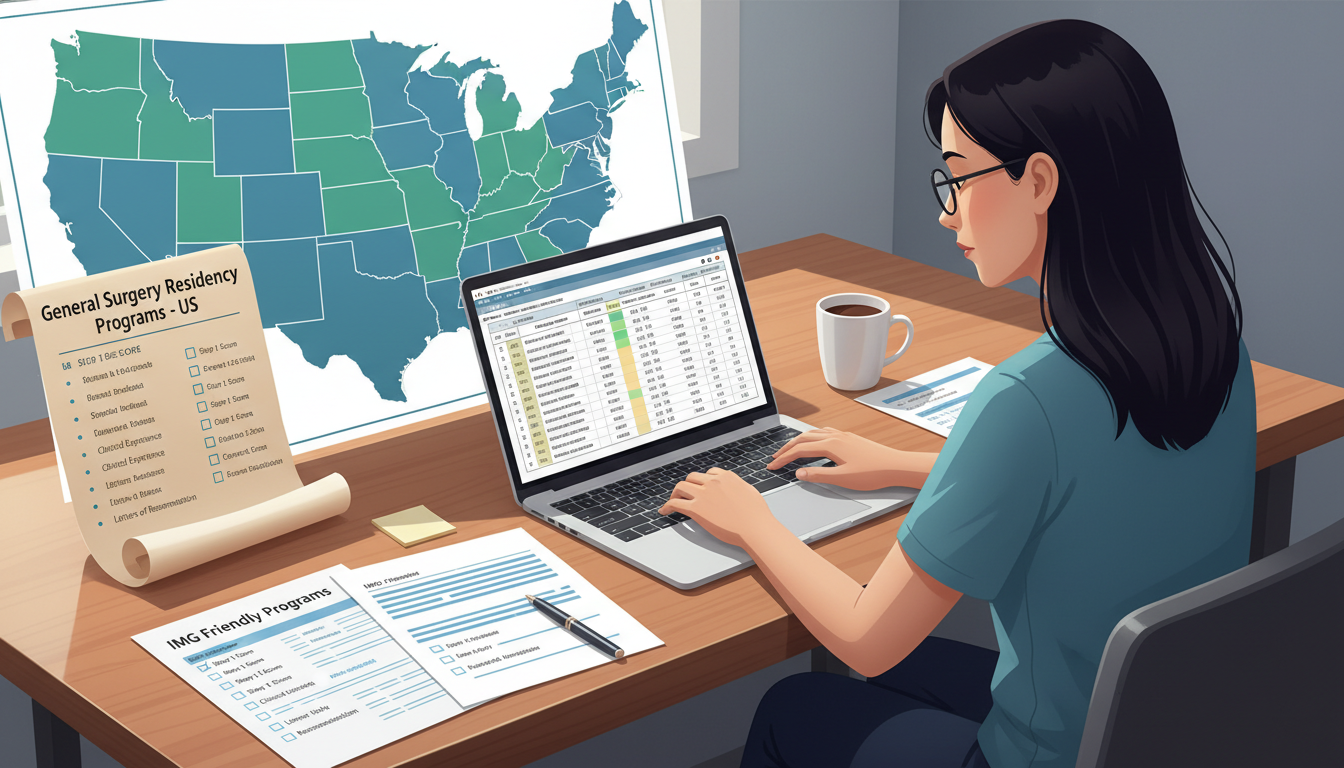
As you gather information, annotate a spreadsheet with:
- IMG‑friendly (yes/no/unclear)
- Program type (academic, hybrid, community)
- Minimum score/requirements
- Visa policy (even if not needed, it reflects IMG openness)
- Your personal interest (1–5 rating)
This becomes the backbone of your program selection strategy.
Step 4: Decide on a Tier Allocation
After you’ve identified potential programs, roughly divide them into:
Reach programs (15–25%)
- Programs that may be beyond your stats or no clear IMG history
- Apply if you have at least one strong angle (e.g., research, connection, geography)
Target programs (40–60%)
- Programs where your stats and background are around or slightly below typical ranges
- Clear history of taking US citizen IMGs or IMGs from schools like yours
Safety/IMG‑heavy programs (20–35%)
- Programs with consistent IMG intake
- Slightly below your academic profile or fully aligned with it
- These programs increase your probability of getting enough interviews to match
Example distribution for a US citizen IMG with Step 2 CK of 246, 2 US radiology electives, and one radiology abstract:
- Total applications to diagnostic radiology: 80
- 18 reach programs
- 44 target programs
- 18 safety/IMG‑heavy programs
This tiered approach lets you aim high while still protecting yourself against the inherent uncertainty of the diagnostic radiology match.

Key Factors to Prioritize When Choosing Radiology Programs
Program selection in diagnostic radiology is not only about how many programs to apply to; it’s also about which features truly matter, especially for an American studying abroad.
1. IMG Friendliness and Resident Composition
For a US citizen IMG, this may be the single most important filter.
Look for:
- Current or recent IMGs among residents
- Presence of US citizen IMGs specifically
- Website statements welcoming applications from IMGs
- Clear mention of minimum USMLE cutoffs that you meet or exceed
Red flag:
- No IMGs in the last several years and no indication of openness. You can still apply to a few such programs as reaches, but they should not dominate your list.
2. Geographic Strategy
Geography can heavily influence your match odds:
- Regions with lots of programs and fewer geographic “must‑stay” applicants (e.g., some Midwest or South regions) often have more opportunities for IMGs.
- Regions like California, New York City, Boston are more competitive; you can apply, but don’t cluster your entire list there.
- If you have strong ties to a region (grew up there, family there, undergrad nearby), highlight this in your application and favor programs in that area, as perceived commitment can help.
Your program selection strategy should balance:
- Some applications in high‑desirability areas (if you are willing to move)
- A healthy number in regions with historically more IMG receptivity
3. Training Environment and Case Mix
Beyond match odds, think about training quality:
- Case volume (high enough to develop strong interpretive skills)
- Mix of inpatient, outpatient, emergency, and specialty imaging
- Presence of subspecialty services (neuro, MSK, IR, women’s imaging, etc.)
- Access to modern imaging equipment (MRI, CT, US, PET, etc.)
Even community programs can offer excellent radiology training, especially if they serve a large or diverse patient population.
4. Academic vs. Community Focus
As a US citizen IMG, you may assume that academic radiology programs are out of reach. They’re not necessarily, but:
Academic programs:
- More research expectations
- Stronger fellowship and academic career pipelines
- Often more competitive and less IMG‑heavy
Community or hybrid programs:
- More hands‑on, practical diagnostic experience
- Sometimes less pressure to publish
- Often more open to strong IMGs who meet thresholds
Your program selection strategy should reflect your career goals:
- If you’re strongly interested in academics or niche fellowships, include more academic or hybrid programs.
- If your goal is to become a high‑quality practicing radiologist in private practice, a strong community or hybrid program can be excellent.
5. Research Opportunities and Fellowship Placement
Radiology is a fellowship‑heavy field. Almost everyone subspecializes. So consider:
- Does the program offer in‑house fellowships (e.g., neuroradiology, MSK, IR, breast)?
- What are typical fellowship destinations for recent graduates?
- Are residents involved in abstracts, presentations, or publications?
For a US citizen IMG, aligning with a program that supports at least moderate scholarly activity can open doors later, even if the program is not top‑tier academically.
6. Call Structure, Wellness, and Culture
Even in a competitive specialty, don’t overlook:
- Call responsibilities (night float, weekend coverage)
- Resident camaraderie and support (look at program Instagram, open house Q&A)
- Faculty approachability and resident advocacy
These are harder to quantify but often become clear once you interview. For your initial screening, they are secondary to IMG‑friendliness and fit, but they will matter when ranking programs.

Practical Tactics to Refine Your Radiology Program List
Beyond broad strategy, there are specific, actionable steps you can take as a US citizen IMG to optimize your program selection.
1. Start Early and Build a Living Spreadsheet
Begin compiling programs at least 6–9 months before ERAS opens. For each program, include:
- Location and type (academic, hybrid, community)
- IMG history and US citizen IMG presence
- Score requirements and visa policies
- Your personal interest rating
- Notes on anything unique (e.g., strong MSK focus, large trauma center)
Update this continuously as you learn more from:
- Virtual open houses
- Talking to alumni from your medical school
- Insights from forums (but treat anecdotes cautiously)
2. Use School‑Specific Networking
As an American studying abroad, you may have predecessors from your school in US radiology programs. Make a list of:
- US citizen IMGs from your school who matched into diagnostic radiology
- Where they matched and what their stats roughly were (if they’re willing to share)
Contact them (politely and concisely) to ask:
- Which programs were IMG‑friendly?
- Any hidden‑gem programs they recommend?
- Advice on balancing academic vs. community programs for someone with your background
This can refine where you apply and which programs you treat as targets vs. reaches.
3. Consider a Backup Strategy Without Diluting Your Radiology Effort
Given the competitiveness of the diagnostic radiology match for IMGs, some US citizen IMGs:
- Apply primarily to diagnostic radiology, plus
- Add a smaller number of applications to a backup specialty (e.g., internal medicine, preliminary surgery) in case the radiology interview count is low
If you do this:
- Keep your radiology‑focused personal statement for radiology applications
- Use a separate, honest statement for backup specialties
- Avoid sending obviously “backup” vibes to radiology programs
Your program selection strategy should prioritize radiology while acknowledging risk.
4. Adjust in Real Time Based on Interview Yield
After ERAS submission, monitor your interview invitations compared to your expectations:
- By late October to early November, you should have a sense of your pace.
- If you’re well below expectations:
- Add more late‑opening or IMG‑friendly radiology programs
- Consider increasing applications to your backup specialty
- If you’re tracking reasonably well:
- Focus your energy on preparing thoroughly for interviews
A rough benchmark:
- A US citizen IMG hoping to match in diagnostic radiology should aim for at least 10–12 radiology interviews to feel reasonably safe, though more is better.
Frequently Asked Questions (FAQ)
1. How many programs should a US citizen IMG apply to for diagnostic radiology?
Most US citizen IMGs should consider applying to 50–90 diagnostic radiology programs, depending on their profile:
- Very strong profile: 50–70
- Average/solid profile: 70–90
- Below average or red flags: 90–120 (plus a serious backup plan)
These numbers assume a broad geographic spread and a balanced tier mix (reach, target, safety). Always pair this with enough prelim or transitional year applications if the DR program is advanced (PGY‑2 start).
2. Should I focus only on IMG‑friendly programs or also apply to top academic centers?
Use a mixed strategy:
- Focus the majority (60–80%) of your list on programs with demonstrated IMG or US citizen IMG history and score ranges aligned with your profile.
- Allocate 15–25% to reach or aspirational programs, which may include some top academic centers, especially if:
- You have strong radiology research
- You’ve rotated there
- You have a meaningful geographic tie or strong faculty connection
Do not fill your list mostly with programs that have no IMGs and extremely high metrics; that’s a common reason US citizen IMGs under‑match.
3. How important are USMLE scores compared to radiology electives and research?
For diagnostic radiology, especially for IMGs:
- USMLE Step 2 CK is usually the primary screening tool
- Radiology electives in the US plus strong letters strongly influence interview decisions after passing score screens
- Research can help differentiate you, especially for academic programs, but good scores and solid clinical performance generally matter more initially
You want all three aligned if possible, but for pure screening, Step 2 CK is often the gatekeeper.
4. Should I apply to programs in locations I know I wouldn’t want to live?
In most cases, don’t apply where you’d realistically never go, but be honest with yourself about what that means. Many radiology applicants, including US citizen IMGs, match in places they hadn’t initially imagined living and end up very satisfied with their training and quality of life.
That said:
- If you are 100% certain you would never rank a program in a particular region, save your money and don’t apply there.
- If you’re merely unsure about a city or state, it may still be worth including some programs there—especially if they’re IMG‑friendly and align with your training goals.
A well‑designed program selection strategy for a US citizen IMG in diagnostic radiology is about volume plus precision: applying broadly enough to overcome systemic barriers, while carefully choosing programs where your profile and goals truly fit. By honestly assessing your competitiveness, prioritizing IMG‑friendly institutions, and maintaining a balanced tier structure, you significantly increase your chances of a successful diagnostic radiology match.