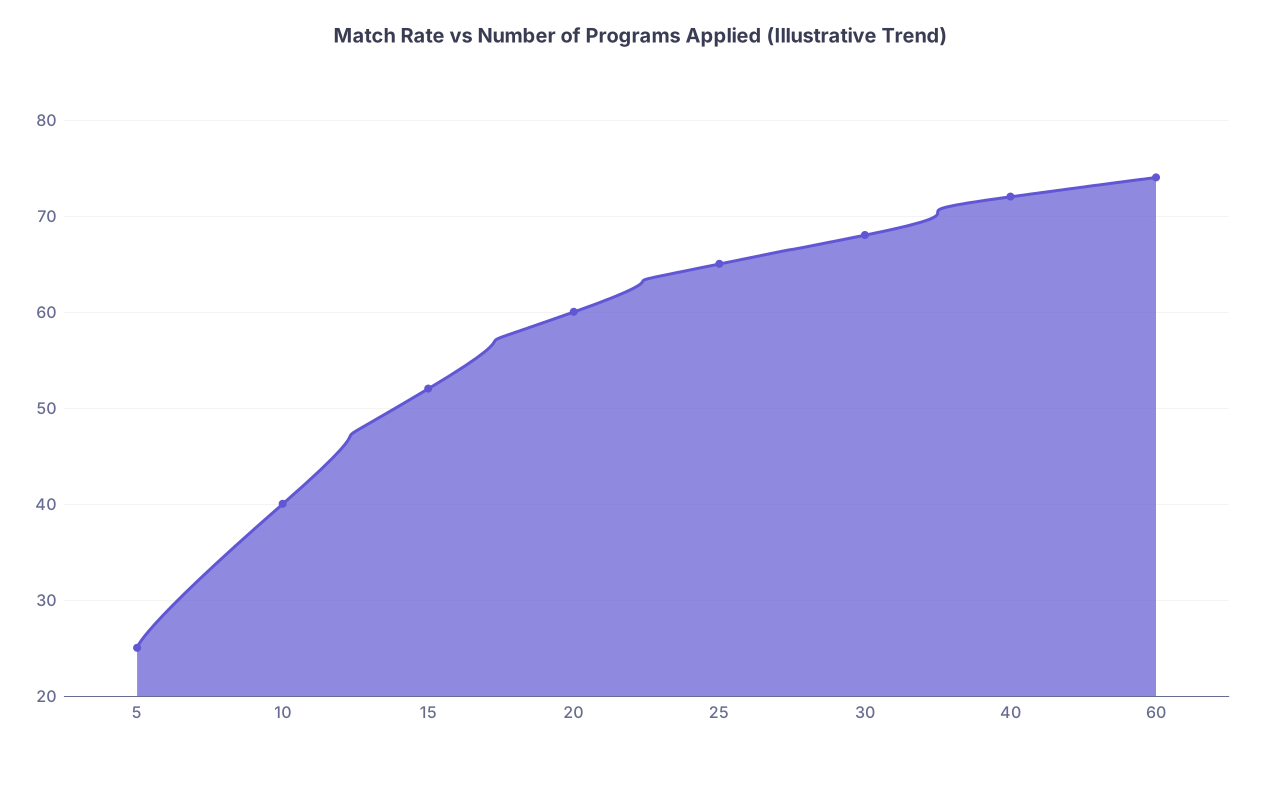
Navigating the integrated plastics match as a US citizen IMG (American studying abroad) is uniquely challenging—but very possible with a sharp, data-driven program selection strategy. For plastic surgery residency, where every application slot, interview, and signal matters, which programs you choose is nearly as important as how you present yourself.
This guide will walk you step-by-step through building a smart, customized program list, understanding how many programs to apply to, and prioritizing programs where you have a realistic shot as a US citizen IMG.
Understanding Your Position as a US Citizen IMG in Plastic Surgery
Before building a program list, you must understand how programs see a US citizen IMG and how that affects your integrated plastics match strategy.
What “US Citizen IMG” Means for Plastic Surgery
As a US citizen IMG, you:
- Are a US citizen or permanent resident
- Attended medical school outside the US/Canada
- Are not an AMG (US MD/DO graduate)
For plastic surgery residency, this distinction matters because programs typically categorize applicants as:
- US MD
- US DO
- US citizen IMG / American studying abroad
- Non–US citizen IMG (often requiring visas)
You have some advantages compared to non–US citizen IMGs:
- No visa sponsorship needed → fewer administrative barriers
- Often easier to return for away rotations / sub-internships
- Some programs explicitly note “will consider US citizen IMGs” but not other IMGs
However, you still face big hurdles compared with US MD/DO applicants:
- Some integrated plastics programs do not consider any IMGs (citizenship irrelevant)
- Limited exposure to US clinical systems unless you’ve done away rotations
- Potential bias or unfamiliarity with your international school’s curriculum
Recognizing this reality helps you target programs where your US citizenship and IMG background are both acceptable.
Where US Citizen IMGs Typically Match in Plastics
Data on integrated plastics is more limited than larger specialties, but patterns are clear:
- Most positions still go to US MD seniors.
- DOs and IMGs match into plastics, but usually:
- With exceptional CVs (publications, step scores, strong letters)
- Through home programs or research-heavy institutions
- Or after doing dedicated research years or preliminary training in general surgery
As a US citizen IMG, you’ll typically be most competitive at:
- Programs that explicitly interview or have matched IMGs before
- Institutions where you have strong connections (research, mentors, away rotations)
- Programs that place a premium on research productivity and US letters of recommendation
Your program selection strategy should lean heavily on evidence of IMG-friendliness and personal connections.
Step 1: Honestly Assess Your Competitiveness
Your program list quality depends on how honestly you assess your profile. For a realistic integrated plastics match, you must benchmark yourself against successful applicants.
Core Metrics to Evaluate
Key pieces of your application that affect program selection:
USMLE / COMLEX Scores
- Step 1: Pass (now pass/fail, but honors or school transcript comments may still matter)
- Step 2 CK: A major screening tool
- For plastics, competitive Step 2 CK is often ≥ 245–250+, especially for IMGs
- If you’re DO: strong COMLEX Level 2, and ideally USMLE Step 2 CK if programs require it
Research Productivity
- Integrated plastic surgery is research-heavy
- Strong applicants typically have:
- Multiple pubmed-indexed publications
- At least a few plastics-related projects
- Presentations at major meetings (e.g., ASPS, regional plastics meetings)
- A dedicated research year in the US is common among IMGs who match plastics
Clinical Experience in the US
- At least one or two US clinical rotations in plastic surgery is highly valuable:
- Away sub-internships/auditions
- Electives or observerships (less powerful, but still helpful)
- Strong US-based letters of recommendation from plastic surgeons are crucial
- At least one or two US clinical rotations in plastic surgery is highly valuable:
Medical School Reputation and Performance
- Class rank, honors, or distinctions
- If your international school is poorly known, letters and research become even more important
Networking and Mentorship
- Mentors who:
- Know US residency selection well
- Can directly contact program directors
- Have served on residency selection committees
- Mentors who:
Creating a Self-Assessment Profile
On a single page, honestly answer:
- Step 2 CK score: ______
- Publications (total / plastics-related): ______ / ______
- US plastic surgery rotations: ______
- US letters from plastic surgeons: ______
- Research year in the US: Yes/No
- Mentors with direct US plastics connections: Yes/No
- Notable awards, leadership, or unique experiences: ______
Then, categorize your approximate competitiveness:
- Very Strong for a US citizen IMG:
- Step 2 CK ≥ 255
- Multiple plastics publications with first-author work
- US research year or substantial research in plastics
- Multiple US plastics letters from recognized faculty
- Moderate:
- Step 2 CK ~240–254
- Some plastics or surgical publications
- 1–2 US plastics rotations, at least 1 US letter
- Developing / At Risk:
- Step 2 CK < 240
- Limited research or primarily non-plastics work
- Few or no US rotations or letters
Your program selection strategy must match this category. Very strong IMGs can consider more ambitious lists; developing applicants must lean into broader strategies, including prelim or general surgery backup plans.
Step 2: Define Your Overall Application Strategy (Including Backup)
For plastic surgery residency as a US citizen IMG, you must decide early:
- Is your plan plastics-only, or
- Plastics-primary with a structured backup (e.g., general surgery, prelim year + research)?
Primary vs. Backup Pathways
Plastics-Only, Integrated Match Focus
- Generally only advisable if:
- You are in the “very strong” category
- You have mentors in plastics who encourage this plan
- Even then, you should have a clear Plan B if you don’t match (research fellowship, re-application strategy)
- Generally only advisable if:
Plastics with General Surgery or Prelim Backup
- Common and often recommended for IMGs
- You apply to:
- A targeted list of integrated plastics programs
- A broader list of categorical general surgery or preliminary surgery programs
- Prelim year + research can be a later stepping-stone into plastics (integrated or independent track)
Your choice here directly affects how many programs to apply to in integrated plastics and how you prioritize time, money, and effort.
Step 3: Research and Identify IMG-Friendly Plastic Surgery Programs
Not all integrated plastic surgery programs are equally open to IMGs. As an American studying abroad, your first filter is who will realistically consider you at all.
How to Identify IMG-Friendly Programs
Use a systematic process:
Check Program Websites
- Look at current and past residents:
- Do they include US citizen IMGs or any IMGs?
- Is there a pattern of graduates from international schools?
- Review eligibility:
- Some clearly state “We consider international graduates”
- A few explicitly restrict to US MD/DO only
- Look at current and past residents:
Use Match Data and Online Tools
- Look at recent NRMP program data, if available
- Search for “plastic surgery residency current residents” + “IMG” or country names
- Use alumni networks or social media (LinkedIn, program Instagram) to spot IMGs
Email or Call Program Coordinators (Selectively)
- Do this sparingly and professionally
- Ask concise questions such as:
- “Do you consider applications from US citizen IMGs?”
- “Have you had US citizen IMG residents in the past?”
- Avoid asking about your individual competitiveness; just clarify eligibility
Talk to Mentors and Recent Applicants
- Ask:
- “Which programs have historically been receptive to US citizen IMGs?”
- “Where have your IMG mentees been interviewed or matched?”
- Ask:
Create a column in your spreadsheet: “IMG-friendly? (Yes / Possible / No / Unknown)” based on your findings.
Use a Program Selection Spreadsheet
To compare programs objectively, build a spreadsheet with columns such as:
- Program name
- Location & region
- IMG policy (friendly / neutral / unlikely)
- Past IMGs in residency: Yes/No
- US citizen IMG specifically: Yes/No/Unknown
- Research intensity (high/medium/low)
- Number of positions per year
- Past or current connection (rotation, mentor, research)
- Step requirements
- USMLE vs COMLEX acceptance
- Your personal interest (1–5 score)
This will serve as the backbone of your program selection strategy and make decisions about how many programs to apply much more rational.

Step 4: How Many Plastic Surgery Programs Should You Apply To?
Because plastic surgery residency is among the most competitive specialties, US citizen IMGs must apply broadly—but also strategically.
Setting Application Volume Based on Competitiveness
There is no single perfect number, but some guidelines:
- Very Strong US Citizen IMG
- Integrated plastics programs: 35–60
- Plus targeted general surgery or prelim programs if you want a structured backup
- Moderate US Citizen IMG
- Integrated plastics programs: 45–70
- Substantial backup:
- 40–80 general surgery / prelim positions, depending on your risk tolerance
- Developing / At-Risk Profile
- You may still apply to integrated plastics to test the waters and begin building connections, but:
- Integrated plastics programs: 20–40, focusing heavily on IMG-friendly, connection-rich programs
- Robust backup plan:
- 60–100+ general surgery / prelim programs
- Consider dedicated research year before or after applying
- You may still apply to integrated plastics to test the waters and begin building connections, but:
Your financial capacity and time available to prepare tailored applications also matter. Applying to 80+ plastics programs with generic personal statements and no research fit is less effective than 40 targeted, well-tailored applications.
Balancing Breadth vs. Realism
Applying to every program that exists is not a smart program selection strategy:
- Some programs never interview IMGs
- Some explicitly exclude international grads regardless of citizenship
- You pay unnecessary fees and dilute your effort tailoring applications
Instead, use a tiered approach (discussed below) to prioritize where your efforts and money go.
Step 5: Tiering Programs and Building Your Final List
Once you’ve compiled potential programs and considered how many programs to apply, the next step is tiering—grouping programs based on how realistic and desirable they are for you.
Create Three Tiers
For each integrated plastics program on your spreadsheet, assign:
Tier 1: High-yield programs
- IMG-friendly or clear history of IMGs
- You have some connection:
- Research collaboration
- Away rotation
- Mentor knows the PD or faculty
- Your profile is reasonably aligned with current and past residents:
- Similar or slightly below median Step 2 CK
- Similar research volume
Tier 2: Reasonable reach programs
- May not have many IMGs, but:
- No explicit exclusions
- Strong fit with your research interests
- Geographic or personal reasons for interest
- Your stats may be a bit below their typical range but still plausible
- May not have many IMGs, but:
Tier 3: Long-shot or “dream” programs
- Highly prestigious / research-heavy places with:
- Limited or no history of IMGs
- Extremely strong applicant pools
- You still apply because:
- You have a genuine fit (e.g., extensive research with their faculty)
- A mentor strongly recommends it
- Highly prestigious / research-heavy places with:
Distribution Example
For a moderately strong US citizen IMG applying to ~60 plastics programs:
- Tier 1: 15–25 programs (high-yield, IMG-friendly, with connections)
- Tier 2: 20–25 programs (reasonable reach)
- Tier 3: 10–20 programs (long-shots / dream institutions)
Your main goal:
Maximize Tier 1 and Tier 2 programs where your US citizenship and IMG status are truly considered, not dismissed.
Assessing Program “Fit”
Within each tier, give each program a fit score (1–5) based on:
- Research alignment
- Do they publish in areas you care about (microsurgery, hand, craniofacial, aesthetics)?
- Mentor and connection strength
- Can anyone advocate for you there?
- Geographic considerations
- Regions where you have family or ties can be powerful narrative points
- Program culture and training style
- Academic vs. community
- Emphasis on autonomy vs. supervision
- Long-term goals
- Are you aiming for academic practice, private practice, heavy research, or subspecialty fellowship?
For each program, note key reasons you’re interested. These notes will help you:
- Tailor your personal statement to highlight fit
- Answer “why our program?” in interviews and communications
- Prioritize signals if they exist for your application cycle

Step 6: Strategic Use of Rotations, Research, and Signals
Your program selection strategy isn’t just about a static list. You can actively shape your competitiveness at chosen programs through rotations, research, and signaling.
Away Rotations/Sub-Internships
As a US citizen IMG in plastic surgery:
- Away rotations are among the highest-yield tools you have to demonstrate:
- You can function in the US system
- You fit into a specific program’s culture
- You can earn strong letters of recommendation from US plastic surgeons
When planning your aways:
- Target Tier 1 and strong Tier 2 programs that:
- Are known to consider IMGs
- Have active research in your area of interest
- Have had IMG trainees in any form (fellowship, visiting scholars, etc.)
Performing well on away rotations can move a program from Tier 2 to Tier 1 in terms of interview likelihood.
Research Years and Fellowships
If your competitiveness is moderate or developing, a dedicated research year in US plastic surgery can:
- Generate multiple publications and presentations
- Deepen your connection to a specific department
- Provide powerful letters and behind-the-scenes advocacy
Program selection implications:
- If you are in or planning a research year:
- Strongly favor applying to that institution’s program and its network
- Also apply to programs where your research has been presented or collaborated
Signaling (If Available)
In some cycles, specialties use program signals (like “golden tickets” indicating special interest):
- Treat signals as high-value currency
- Use them on:
- Your absolute top-tier, most realistic programs (Tier 1 and high Tier 2)
- Institutions where you have concrete connections and can clearly justify interest
Do not waste signals on ultra-long-shot programs that almost never interview IMGs unless you have a unique and powerful connection there.
Step 7: Integrating Backup Plans into Your Program List
Given the intense competitiveness of integrated plastic surgery, especially for an American studying abroad, a backup plan is critical.
Choosing a Backup Strategy
Common options:
Categorical General Surgery Applications
- More attainable than integrated plastics
- Allows you to pursue:
- Independent plastic surgery pathway later
- Additional research during or after general surgery
- Program selection strategy:
- Include a mix of academic and community programs
- Focus more on IMG-friendly surgery programs in regions where you can thrive
Preliminary Surgery Year
- 1-year positions; not guaranteed continuation to categorical spot
- Can:
- Buy time to strengthen your application
- Allow for networking and US clinical performance
- Better when combined with:
- Research during/after prelim year
- Strong mentorship at the prelim institution
Dedicated Research Fellowship Before Reapplying
- Sometimes chosen before first application if metrics are weak
- Or after an unsuccessful match cycle
Your backup decision influences how many programs you apply to within plastics vs. surgery:
- If you rely heavily on backup:
- Don’t hesitate to apply to many more general surgery / prelim programs (60–100+).
- If you’re taking an aggressive plastics-focused approach:
- Plastics programs may dominate your application count (40–70+), with a moderate number of surgery backups (30–50).
Practical Timeline and Execution Tips
To make this program selection strategy operational, use a rough timeline:
12–18 Months Before ERAS
- Meet with mentors to:
- Assess competitiveness
- Decide whether to pursue a research year
- Start or continue US-based plastics research
- Plan for at least one US plastic surgery rotation if possible
6–9 Months Before ERAS
- Build your master program spreadsheet
- Start preliminary filtering for IMG-friendliness
- Reach out to mentors about:
- Program recommendations
- Personal contacts at specific institutions
3–4 Months Before ERAS
- Finalize your decision about:
- How many programs to apply to in plastics and in backup specialties
- Which programs are Tier 1–3
- Draft tailored personal statements:
- A plastics-focused primary statement
- Adjusted versions emphasizing fit for particular programs or regions
1–2 Months Before ERAS
- Confirm letters of recommendation
- Finalize your top programs for signals (if applicable)
- Do a last pass through program websites:
- Confirm eligibility criteria
- Check for any updated policies about IMGs
Putting It All Together: A Sample Strategy
Imagine you’re a US citizen IMG with:
- Step 2 CK: 245
- 3 publications (1 in plastics)
- One US plastics rotation completed, one upcoming
- 2 anticipated US plastics letters
- No dedicated research year (yet)
A reasonable integrated plastics match strategy might look like:
Integrated Plastic Surgery Applications (~55 total)
- Tier 1 (20 programs): IMG-friendly, you have connections or rotations, realistic fit
- Tier 2 (20 programs): moderate reach, some IMG presence or clear research alignment
- Tier 3 (15 programs): aspirational programs with high prestige
Backup General Surgery / Prelim (~60–70 total)
- Focus on:
- Programs with strong training and some history with IMGs
- Geographic areas you’d genuinely consider living long term
- Focus on:
You would:
- Signal your top 5–7 Tier 1/Tier 2 programs (depending on the system)
- Prioritize tailored communication and personal statements for Tier 1 programs
- Use your rotations to earn standout letters and direct advocacy from faculty
This sort of program selection strategy balances ambition with realism and provides multiple future paths, even if you don’t match plastics on the first try.
FAQs: Program Selection Strategy for US Citizen IMG in Plastic Surgery
1. As a US citizen IMG, how many integrated plastic surgery programs should I realistically apply to?
For most US citizen IMGs, a range of 45–70 integrated plastics programs is common, depending on your competitiveness and finances. Highly competitive applicants with strong scores, research, and US plastics rotations might apply to 35–60. Those with less research or lower scores may apply more broadly and lean heavily on a general surgery or prelim backup strategy.
2. Should I avoid programs that have never had IMGs in plastics?
Not necessarily—but they should generally be Tier 3 (long-shot) unless you have a powerful connection (e.g., you’ve done a rotation there, done significant research with their faculty, or your primary mentor is closely connected to the program). Programs with no IMG history aren’t impossible, but as a US citizen IMG, your highest yield typically comes from programs with a demonstrated history of at least considering or training IMGs.
3. How important is a dedicated research year for US citizen IMGs aiming for plastic surgery residency?
For many US citizen IMGs, a US-based research year in plastic surgery can significantly improve competitiveness. It boosts your publication count, gives you meaningful US mentorship, and often provides direct connection to a department’s residency program. While it’s not strictly mandatory, it’s strongly advisable if your current profile is moderate or developing and you’re committed to integrated plastics.
4. If I don’t match integrated plastics on the first attempt, what’s the smartest next step?
Common next steps include:
- Research fellowship or research year in a US plastics department
- Preliminary general surgery year, ideally at a center with a plastics program and research opportunities
- Applying to categorical general surgery with long-term plans for the independent plastics route
Whichever you choose, maintain contact with your mentors, continue plastics-related research, and refine your program selection strategy for the next application cycle, focusing even more on programs where you have concrete connections and demonstrated fit.
By approaching your plastic surgery residency applications with a structured, data-informed program selection strategy, you maximize your chances of success as a US citizen IMG—both in the integrated plastics match and in any backup paths you pursue.