Choosing where to apply – and ultimately where to train – in vascular surgery is one of the most consequential decisions of your career. The landscape of vascular surgery residency, especially with the rise of the integrated vascular program (0+5), is competitive and nuanced. A thoughtful program selection strategy can dramatically improve your chances of matching and your long-term satisfaction.
Below is a comprehensive, step‑by‑step guide to building a strong, personalized program list in vascular surgery, including how to choose residency programs, how many programs to apply to, and what factors actually matter.
Understanding the Vascular Surgery Training Pathways
Before you can design a program selection strategy, it’s essential to understand the training structures available in vascular surgery.
Integrated (0+5) Vascular Surgery Residency
The integrated vascular surgery residency is a five‑year program entered directly from medical school. Key characteristics:
- Length: 5 years total
- Structure: Combines core surgery training and advanced vascular rotations from day one
- Match process: ERAS + NRMP match as a categorical position
- Advantages:
- Earlier and more sustained exposure to vascular surgery
- Streamlined path to board eligibility in vascular surgery
- Often robust endovascular training integrated throughout
- Considerations:
- Extremely competitive; small number of positions nationally
- Commits you to vascular very early; less flexibility to switch
When applicants refer to “vascular surgery residency,” they are usually referring to this integrated vascular program.
Independent (5+2) Vascular Surgery Fellowship
The independent track is a fellowship after a general surgery residency:
- Length: 5 years general surgery + 2 years vascular surgery
- Structure: Board-eligible in general surgery, then additional subspecialty training
- Match: Separate vascular surgery fellowship match during general surgery training
- Advantages:
- Broader general surgical foundation
- More time to confirm that vascular surgery is the right fit
- Flexibility to practice general surgery if desired
- Considerations:
- Longer total training time
- Match competitiveness at the fellowship level
For this article, we’ll focus primarily on integrated vascular surgery residency program selection strategy, but many principles apply to future fellowship decisions as well.
Step 1: Clarify Your Goals and Constraints
A strong program selection strategy starts with clear self‑assessment. Before asking “how many programs to apply,” you must understand where you’d thrive and what you actually need.
Define Your Career Vision
Ask yourself:
- Academic vs. community practice:
- Do you envision a career in academic vascular surgery (research, teaching, leadership)?
- Or are you aiming for high‑volume clinical practice in a community or private setting?
- Research intensity:
- Are you interested in NIH‑funded or high‑impact clinical research?
- Do you want a dedicated research year or scholarly time during residency?
- Technical focus:
- Are you particularly drawn to complex open aortic work?
- Are you especially interested in endovascular, limb salvage, or venous disease?
Your answers will influence which programs fit best (e.g., high‑volume tertiary centers vs. smaller, more clinically focused institutions).
Identify Personal and Logistical Constraints
These are often just as important as academic factors:
- Geographic preferences or limitations
- Family or partner considerations (couples match, dual-career jobs)
- Desire to be near a support system
- Preference for certain regions (e.g., Northeast vs. West Coast, urban vs. rural)
- Lifestyle factors
- Cost of living
- Climate tolerance (winters in the Midwest vs. summers in the South)
- Proximity to airports if you plan frequent travel home
- Visa status
- If you are an international medical graduate (IMG), understand which programs sponsor J‑1 or H‑1B visas
- This can significantly narrow or shape your target list
Actionable step: Write down your top 3–5 non‑negotiables (e.g., must be within a flight of aging parents; must have strong endovascular training; must sponsor J‑1). These will anchor your program selection strategy.
Step 2: Understand Competitiveness and “How Many Programs to Apply”
Integrated vascular surgery is among the more competitive surgical specialties because of:
- Small number of total positions
- High concentration at academic centers
- Strong applicant pool (often AOA, substantial research, strong letters)
Estimating Your Competitiveness
Consider:
- Objective metrics
- USMLE/COMLEX scores (if applicable)
- Clerkship grades, especially surgery and medicine
- Class rank, AOA/Gold Humanism
- Subjective strengths
- Vascular‑specific research or presentations
- Strong letters of recommendation from vascular or surgical faculty
- Performance on vascular surgery sub‑internships (“aways”)
- Unique factors
- Prior career (engineering, industry, military) relevant to device innovation or leadership
- MPH/MSc/PhD in related fields (clinical research, bioengineering)
You can roughly categorize yourself as:
- Highly competitive (upper tier)
- Strong scores, honors in surgery, multiple vascular publications, AOA, strong home or away letters.
- Solid/average competitive
- Good scores, mostly high passes/honors, some research, strong letters in surgery but less vascular‑specific work.
- Underdog / non‑traditional / IMG / lower scores
- Strengths in some areas but may have academic gaps, later interest in vascular, or visa constraints.
Your category will influence how many programs to apply to.
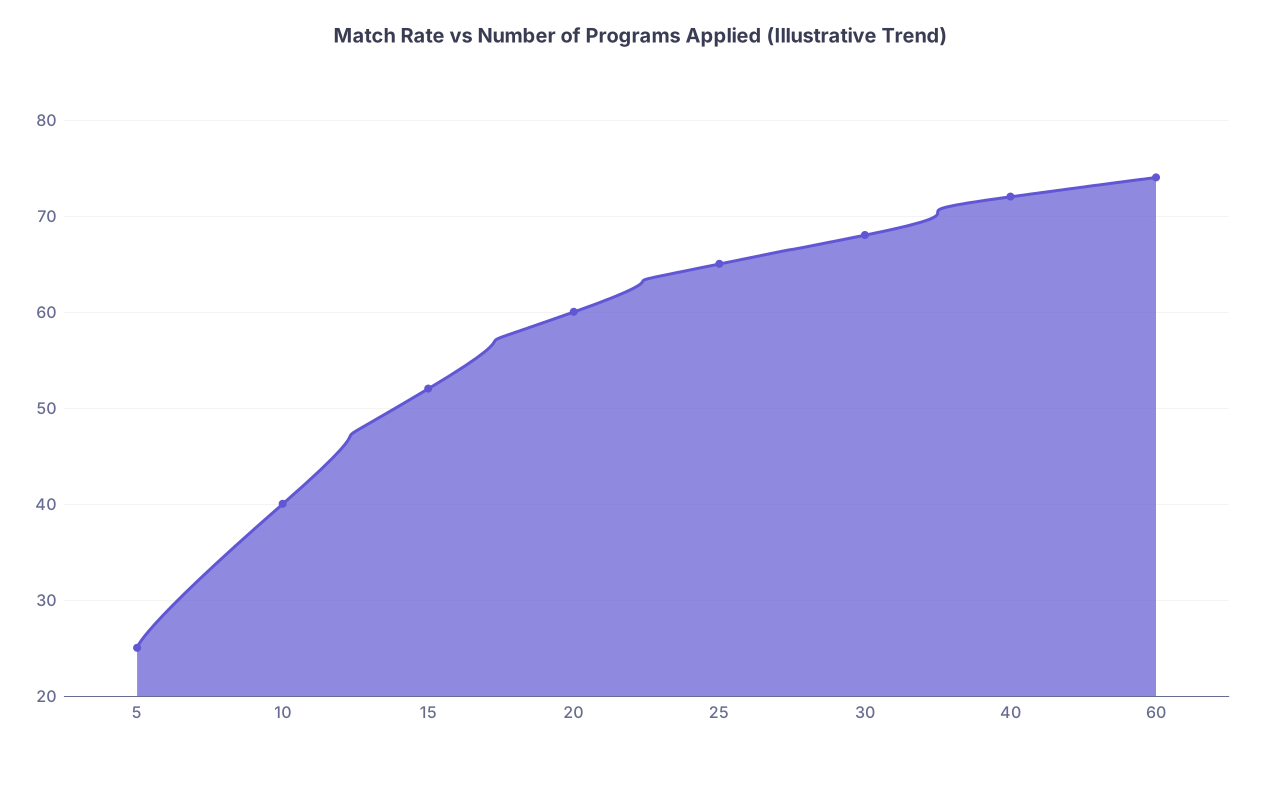
How Many Integrated Vascular Surgery Programs Should You Apply To?
Because the number of vascular surgery residency spots is limited, application strategy is different from larger specialties like internal medicine.
As of recent match cycles (numbers vary slightly year to year):
- There are typically ~60–70 integrated vascular surgery programs in the US.
- Most applicants apply broadly because:
- Positions per program are low (often 1–2 per year)
- Interview numbers per program are limited
General guidance (for integrated vascular program applicants):
- Highly competitive applicant:
- Apply to 25–35 programs
- Focus on strong academic centers plus a mix of mid‑tier programs across regions
- Solid/average competitive applicant:
- Apply to 35–50 programs
- Wide geographical spread, including less “name‑brand” academic centers
- Underdog/IMG/non‑traditional applicant:
- Apply to 45–65+ programs
- Essentially most or all programs that:
- Accept IMGs (if applicable)
- Are not explicit about cutoffs that you don’t meet
- Align even somewhat with your goals
This is a starting point, not a rule. Your final number will depend on:
- Financial constraints (application and travel/interview costs)
- Time available for interviews (especially with virtual vs. in-person trends)
- Parallel planning (e.g., also applying in categorical general surgery)
Program selection strategy tip: For a small field like vascular surgery, under‑applying is a common and preventable cause of not matching. When in doubt, apply a bit more broadly, then filter further based on interviews.

Step 3: Core Factors When Choosing Vascular Surgery Programs
Once you have a sense of how many programs to apply to, the next question becomes: which ones, and why?
Here are the major domains to evaluate when you’re learning how to choose residency programs in vascular surgery.
1. Case Volume and Case Mix
Vascular surgery is fundamentally technical. You want a program that will graduate you as a confident, independent operator.
Key questions:
- Total vascular case volume per resident
- Do residents meet or exceed ACGME minimums comfortably?
- Ask about the average vascular case numbers at graduation, not just minimums.
- Balance of endovascular vs. open
- Is there robust endovascular training (EVAR, TEVAR, peripheral interventions, carotid stenting)?
- Is there still adequate exposure to open aortic, carotid, and lower extremity bypass?
- Spectrum of pathology
- Aortic disease (AAA, TAA, dissections)
- Peripheral artery disease, critical limb ischemia
- Carotid, mesenteric, and renal disease
- Dialysis access, venous disease, trauma, and emergencies
Red flags:
- Residents reporting they struggle to get enough open aortic cases
- Over‑reliance on fellows doing the key index cases with little resident involvement
2. Hybrid OR and Endovascular Training
Modern vascular surgery is deeply endovascular. Your program selection strategy must weigh the quality of imaging facilities and training.
Consider:
- Number and quality of hybrid operating rooms
- Are there dedicated hybrid suites used regularly for vascular cases?
- Is imaging state-of-the-art (flat-panel fluoroscopy, 3D imaging, fusion technology)?
- Endovascular curriculum
- Structured simulation training?
- Use of endovascular simulators, virtual reality, or cadaver labs?
- Faculty expertise
- Are there faculty with high endovascular volumes and advanced skills?
Programs with strong endovascular infrastructure will better prepare you for contemporary practice.
3. Resident Autonomy and Culture
Case volume is meaningless if you never get to operate meaningfully.
Evaluate:
- Level of graduated responsibility
- Do senior residents truly function as primary operators on complex cases?
- How early do integrated residents start doing vascular cases?
- Resident-fellow dynamics
- Does the presence of a vascular fellowship limit integrated residents’ autonomy?
- Is there a clear plan to protect resident case opportunities?
- Program culture and well‑being
- Do residents seem genuinely satisfied and collegial on interview day?
- How do they talk about faculty, feedback, and support?
Questions you can ask residents:
- “At your level, what kind of cases are you primary on?”
- “Can you tell me about a time you felt really supported by your program?”
- “What’s one thing you’d change about the culture here if you could?”
4. Academic Environment and Research
If you’re aiming for an academic career, this should be central to your program selection strategy.
Consider:
- Research productivity
- Number of vascular publications per year
- Participation in clinical trials or device studies
- National presentations at SVS, VESS, etc.
- Research infrastructure
- Dedicated research time (1–2 years) vs. integrated research blocks
- Availability of research coordinators, biostatisticians
- Ease of starting projects with faculty
- Mentorship
- Are there faculty doing the kind of research or innovation you aspire to?
- Are residents supported to apply for grants, fellowships, or advanced degrees?
If you prefer a clinically focused career, you may still want:
- Some exposure to quality improvement (QI)
- Opportunities to present at regional meetings
- Training in evidence-based practice
5. Program Reputation and Placement
Reputation is not everything, but it influences:
- Fellowship opportunities (if you later decide on further subspecialization)
- Academic job prospects
- Network and mentorship access
Consider:
- Fellowship/job placement of recent graduates
- Academic vs. community practice?
- Geographic distribution – do graduates end up in places you’d want to live?
- Faculty involvement in vascular societies
- Leadership roles in SVS, editorial boards, guideline committees
- Alumni network
- Strong alumni often help with job searches and collaborations
6. Logistics: Geography, Workload, and Support
Do not underestimate these factors; they strongly affect your quality of life.
- Call structure
- Frequency of in‑house vs. home call
- Burden on juniors vs. seniors
- Night float vs. traditional q4/q5 systems
- Support staff
- Availability of NP/PA support, vascular lab, interventional radiology collaboration
- Quality of nursing and OR teams
- Location
- Cost of living
- Safety and commuting options
- Opportunities for partner employment or schools for children, if applicable
Step 4: Building a Targeted, Tiered Program List
Once you understand your own profile and program factors, you can translate that into a rational program selection strategy.
Create Tiers Based on Competitiveness and Fit
Divide your potential programs into 3 broad tiers:
- Reach programs
- Highly prestigious, very competitive institutions
- Often with top research output and national reputations
- Core/target programs
- Solid academic centers or high‑volume regional programs
- Good fit for your metrics and goals
- Safety programs
- Less competitive, potentially smaller or newer programs
- May be in less popular locations but still provide strong training
The distribution will depend on your competitiveness, but a rough breakdown:
- Highly competitive applicant (30 applications):
- 8–10 reach
- 15–18 core
- 4–6 safety
- Average applicant (40–45 applications):
- 8–12 reach
- 18–24 core
- 8–12 safety
- Underdog/IMG applicant (50–65 applications):
- 8–12 reach
- 20–25 core
- 20–30 safety
Example: Applying This in Practice
Imagine you’re a solid applicant with:
- Step scores around national average for matched vascular residents
- Honors in surgery, high pass in medicine
- 1–2 vascular‑related case reports or small retrospective projects
- One strong vascular letter, two strong surgery letters
- No major red flags
You might:
- Start with the full list of integrated vascular programs (~60–70)
- Remove:
- Programs that explicitly do not sponsor your visa type (if applicable)
- Programs in regions you absolutely cannot move to (based on defined non‑negotiables)
- Create tiers using:
- Program reputation
- Geographic preference
- Fit for your research interest and lifestyle
You end up with:
- 10 high‑profile academic centers (reach)
- 20 solid academic/regional centers (core)
- 10 smaller, newer, or less well‑known programs (safety)
You then apply to all 40, recognizing that invitations may be more limited from reach programs.

Step 5: Practical Tools and Tactics for Smart Program Selection
Beyond broad principles, use concrete tools to refine and manage your list.
Use Data Sources Strategically
- FREIDA (AMA), individual program websites
- Verify program length, positions per year, call structure
- Check visa policies if relevant
- ACGME Case Logs and Program Descriptions
- Sometimes listed per program; otherwise, ask on interview day
- Society for Vascular Surgery (SVS) resources
- Training program lists, mentorship programs, networking
- NRMP data
- Historical match statistics, though sample sizes may be small for integrated vascular
Build a Spreadsheet
Create a simple but structured tracking system. Columns could include:
- Program name, city, state
- Integrated positions per year
- Hybrid OR availability
- Endovascular vs. open volume (based on your notes)
- Research emphasis (high/medium/low)
- Geographic region
- Visa sponsorship (if needed)
- Your tier (reach/core/safety)
- Application submitted? (Y/N)
- Interview offer? (Y/N)
- Impressions/notes after interview
This helps you compare programs side by side and avoid emotional, last‑minute decisions.
Leverage Mentorship – Thoughtfully
- Home institution vascular surgeons
- Ask for candid feedback on your competitiveness
- Ask where students with similar profiles have matched recently
- Away rotation mentors
- Can provide nuanced perspective on programs in their region
- May recommend or discourage specific programs based on your goals
When you ask, be specific:
- “Given my current CV, what range of programs do you think I’m competitive for?”
- “Are there any programs you’d particularly recommend or advise caution about for someone with my interests?”
Revisit and Adjust After Interview Offers
Your program selection strategy should be dynamic. Once interview invitations start arriving:
- Reassess your list:
- If you’re getting many invites from reach programs, you may be more competitive than expected.
- If invites are sparse, consider:
- Applying to additional programs if still open
- Strengthening a backup plan in general surgery
- Prioritize interviews:
- Rank based on fit, geography, and training quality, not just name recognition.
- If conflicts arise, it is reasonable to decline some lower‑priority interviews.
Remember: Where you interview shapes your rank list far more than where you applied. Being selective with interviews (once you have enough) conserves your energy and focus.
Putting It All Together: A Structured Program Selection Strategy
To summarize a practical approach for vascular surgery residency:
- Clarify goals and constraints
- Academic vs. community focus, research needs, geography, visa, personal factors.
- Assess competitiveness
- Objective metrics, research output, letters, away rotations.
- Decide how many programs to apply
- 25–35 (highly competitive), 35–50 (average), 45–65+ (underdog/IMG), adjusted for your situation.
- Define evaluation criteria
- Case volume and mix, endovascular and hybrid OR resources, autonomy, culture, research environment, logistics.
- Create a tiered list
- Reach, core, safety – with attention to location and training quality.
- Use tools and mentorship
- Spreadsheets, data sources, mentors’ insights to refine your choices.
- Adapt as the season progresses
- Adjust expectations and strategy based on interview patterns.
Ultimately, the best vascular surgery program for you is not just the one with the biggest name – it is the one where:
- You will get excellent technical and cognitive training.
- You fit culturally and personally.
- You can see yourself thriving for five intense, transformative years.
Frequently Asked Questions (FAQ)
1. Should I apply to general surgery as a backup if I’m applying to integrated vascular surgery?
Many applicants with significant interest in vascular decide to:
- Apply to both integrated vascular and categorical general surgery in the same cycle, or
- Focus on vascular and, if unmatched, pursue general surgery the following year or through SOAP.
Consider a dual‑application strategy if:
- Your competitiveness for integrated vascular is uncertain.
- You’d be genuinely happy in general surgery, potentially followed by a vascular fellowship.
If you apply to both, be prepared to:
- Tailor personal statements for each specialty.
- Address your interest in vascular honestly during general surgery interviews, emphasizing your openness to a broad surgical career.
2. How many away rotations should I do in vascular surgery, and how do they impact program selection?
Most students interested in integrated vascular surgery complete:
- One home vascular surgery rotation (if available)
- 1–2 away rotations at programs of strong interest
Away rotations help you:
- Obtain vascular‑specific letters
- Demonstrate technical potential and work ethic
- Learn which programs fit you culturally
In terms of program selection strategy:
- Consider doing away rotations at high‑interest or reach programs where in‑person performance could significantly improve your chances.
- Use what you learn on away rotations to adjust your list (e.g., adding similar programs or deprioritizing programs with a culture that doesn’t fit you).
3. How important is program “name” vs. training quality in vascular surgery?
Program reputation can influence:
- Academic job prospects
- Access to certain fellowships or research networks
However, in vascular surgery:
- Training quality and case volume are often more critical to your future competence and confidence.
- Many excellent vascular surgeons come from lesser‑known programs with outstanding hands‑on training.
When choosing programs:
- Prioritize case numbers, autonomy, endovascular resources, and culture over name prestige alone.
- Use fellowship/job placement information to see how well a program’s graduates do, rather than relying purely on brand.
4. I’m an international medical graduate (IMG). How should I adjust my program selection strategy?
As an IMG, you should be especially systematic:
- Check visa sponsorship carefully on each program’s website and FREIDA.
- Identify programs with a history of:
- Interviewing and matching IMGs
- Supporting J‑1 or H‑1B visas (as applicable)
- Plan to:
- Apply to most or all IMG‑friendly integrated vascular programs (often 45–65+ applications).
- Consider parallel application to categorical general surgery, where there may be more available spots.
- Strengthen your application with:
- US clinical experience, particularly in vascular or surgery
- Strong US‑based letters
- Research output in vascular or surgical topics, if possible
For IMGs, mentorship from faculty familiar with the US match process is especially valuable to refine your program selection strategy.
Thoughtful, data‑driven program selection in vascular surgery takes time, but it pays off in both match success and long‑term career satisfaction. Use the frameworks above, adapt them to your specific circumstances, and continuously refine your list as you gain more information and mentorship.