
A prior visa denial will not kill your US residency chances. Handling it badly will.
I have watched IMGs with a 214(b) or 221(g) denial match into solid internal medicine programs a year later. I have also watched others sabotage themselves by hiding the denial, picking the wrong visa category, or recycling the same useless documents and hoping for “better luck.” Luck is not your strategy. Precision is.
You are not starting from zero. You are starting from experience. The key is to turn that experience into a controlled, credible second attempt—backed by the right programs, the right visa structure, and a clear risk‑reduction plan.
Let us build that.
Step 1: Diagnose Your First Visa Denial Like a Case
You would not treat sepsis without a source. Do not approach a second visa attempt without understanding exactly why you were denied the first time.
1.1 Know your denial type and what it means
Look at the refusal sheet from the consulate. Most IMGs fall into one of these:
214(b) – Nonimmigrant intent not proven
- Common for: B1/B2 observerships, research, some J visas.
- Translation: The officer did not believe you would return home or lacked enough ties or credible story.
221(g) – Administrative processing / missing information
- Common for: J-1, H-1B, complex backgrounds.
- Translation: Not a final refusal at first. They needed more documents or extra security checks. It can end up as a de facto denial if unresolved.
Other grounds (e.g., 212(a))
- More serious: prior overstays, fraud/misrepresentation, certain criminal issues.
- These are harder and usually need an immigration attorney.
If you do not know your specific denial section, get it. Email or call the consulate or check your DS-160/CEAC status notes. No guessing here.
1.2 Write a brutally honest “post‑mortem”
You need a one‑page document for yourself that answers:
What visa did I apply for?
- B1/B2 for observership, J‑1 for research, J‑1/H‑1B for residency?
What story did I present at the interview?
- What did you say about:
- Ties to home country (family, job, property)?
- Who is funding you?
- Why this program / this visa / this path?
- What did you say about:
What documents did I show (if any)?
- Bank statements, job letters, property papers, prior travel history?
What would have raised red flags to a skeptical officer?
- Inconsistent answers about plans
- No clear funding
- No evidence you will return
- CV not matching what is on DS-160
Write this like you are critiquing someone else’s case. Stop defending yourself. Identify weaknesses.
This post‑mortem becomes your blueprint for what must change before attempt two.
Step 2: Fix the Structural Problems Before Reapplying
You do not fix a shaky foundation by repainting walls. Before you think about which “IMG‑friendly programs” to target, you must fix the structural things that triggered the denial.
2.1 Clean up your story: Immigration narrative and career narrative must match
Visa officers are very good at spotting people who are saying what they think the officer wants to hear.
You need one coherent, believable narrative that satisfies both:
- Residency programs, and
- The consulate.
Your core narrative should answer three questions clearly:
- Why the US?
- Specific training gap in your home country (e.g., interventional cardiology exposure, academic research culture).
- What is your path after training?
- You do not have to swear to leave the US forever, but nonimmigrant visas (especially J‑1) require you to credibly present a training‑focused plan.
- How do your home country ties anchor that plan?
- Real things. Not vague “I love my country.”
Make your narrative specific:
- “I have a formal offer to return as a junior consultant at XYZ Hospital after training.”
- “My parents and siblings live in [city]; I am the only physician and primary support.”
- “I already collaborate with [home institution] on research and plan to build a joint program.”
If you cannot articulate a tight, specific story in 4–5 lines, you are not ready to interview at a consulate again.
2.2 Strengthen your objective ties and documents
214(b) is about credibility and ties. You need to upgrade both.
Work on:
Employment ties
- Get a contract or letter from a hospital/university in your home country:
- Stating your current role (or conditional future role)
- Explicitly supporting your training abroad and return
- If you can secure a leave of absence letter (“Dr. X is on authorized leave for training and will return to resume duties”), even better.
- Get a contract or letter from a hospital/university in your home country:
Financial credibility
- For J‑1 residency, funding usually comes from the program; that is clear.
- For observerships/research posts:
- Have clear bank statements (consistent, not huge sudden deposits)
- A sponsor letter that explains relationship and income
- Evidence of sponsor’s income (salary slips, tax returns)
Family and property ties
- You do not need property. But if you have it, carry proof.
- Family documents: marriage certificate, birth certificates of children, etc.
- This is background, not the main argument. Still, do not ignore it.
2.3 Fix any inconsistencies or “noise” in your record
If your DS‑160 says one employment status and your CV says another, you are asking for trouble.
Check:
- All DS‑160s you have submitted (if you kept copies—if not, reconstruct carefully).
- Your ERAS CV and personal statement.
- LinkedIn or online presence (yes, they can look).
- Any past DS‑2019 or I‑797 approvals.
Align:
- Dates of graduation, employment, rotations.
- Previous travel history.
- Explanations for any long gaps (unemployment, US stays, exam prep times).
You want zero contradictions.
Step 3: Choose the Right Visa Category and Program Strategy
A big hidden cause of repeat denial is choosing the wrong visa route. For IMGs, the two main roads for residency are:
- J‑1 (ECFMG‑sponsored)
- H‑1B (employer‑sponsored)
Both can work after a prior denial, but you need to know what you are doing.
3.1 J‑1 vs H‑1B after a denial: Which is safer?
Let me be blunt:
If your first denial was for tourist/observership (B1/B2) under 214(b), you are usually still viable for either J‑1 or H‑1B for residency, if the rest of your case is now strong.
Here is the practical comparison:
| Factor | J-1 | H-1B |
|---|---|---|
| Who sponsors? | ECFMG + program | Program only |
| Typical specialties | Most core specialties | Often IM, FM, Neuro, Psych; fewer surgical |
| Home residency requirement | Yes, 2 years or waiver | No |
| Consular view | Pure training visa, strong if clean story | Dual intent flavor, more complex case |
| Paperwork burden | Moderate | Higher for program and applicant |
My rule of thumb:
- If you have no serious immigration violations (no overstay, no fraud), a prior B1/B2 denial does not automatically make you a poor J‑1 or H‑1B candidate.
- If you have weak or questionable home‑country ties, J‑1 with a clear training‑then‑return plan is usually easier to sell than H‑1B (which screams “potential immigrant” to some officers).
3.2 Target programs with explicit IMG‑ and visa‑friendly policies
Stop spraying applications randomly. Focus on programs that:
- Regularly sponsor visas, and
- Are comfortable with IMGs and consular complexity.
You want to see on program websites or FREIDA:
- “We sponsor J‑1 and H‑1B visas”
- “We do not have USMLE attempt limits” (if that applies to you)
- Current or past residents from your country or region
Examples of often IMG‑friendly, visa‑experienced programs (not a guarantee, but a starting flavor):
- Large university‑affiliated community hospitals
- Big internal medicine, family medicine, pediatrics, psychiatry programs in:
- New York
- New Jersey
- Michigan
- Illinois
- Texas
Once you have a shortlist, do something most applicants skip:
- Email the program coordinator (after you are a serious candidate, not months before ERAS opens) and ask directly:
- “Do you foresee any barriers to visa sponsorship for an applicant with a prior nonimmigrant visa refusal (214(b)) but no overstays or immigration violations?”
The programs that respond clearly and constructively go higher on your rank list. The ones that dodge the question or say “we avoid immigration complexity” drop.
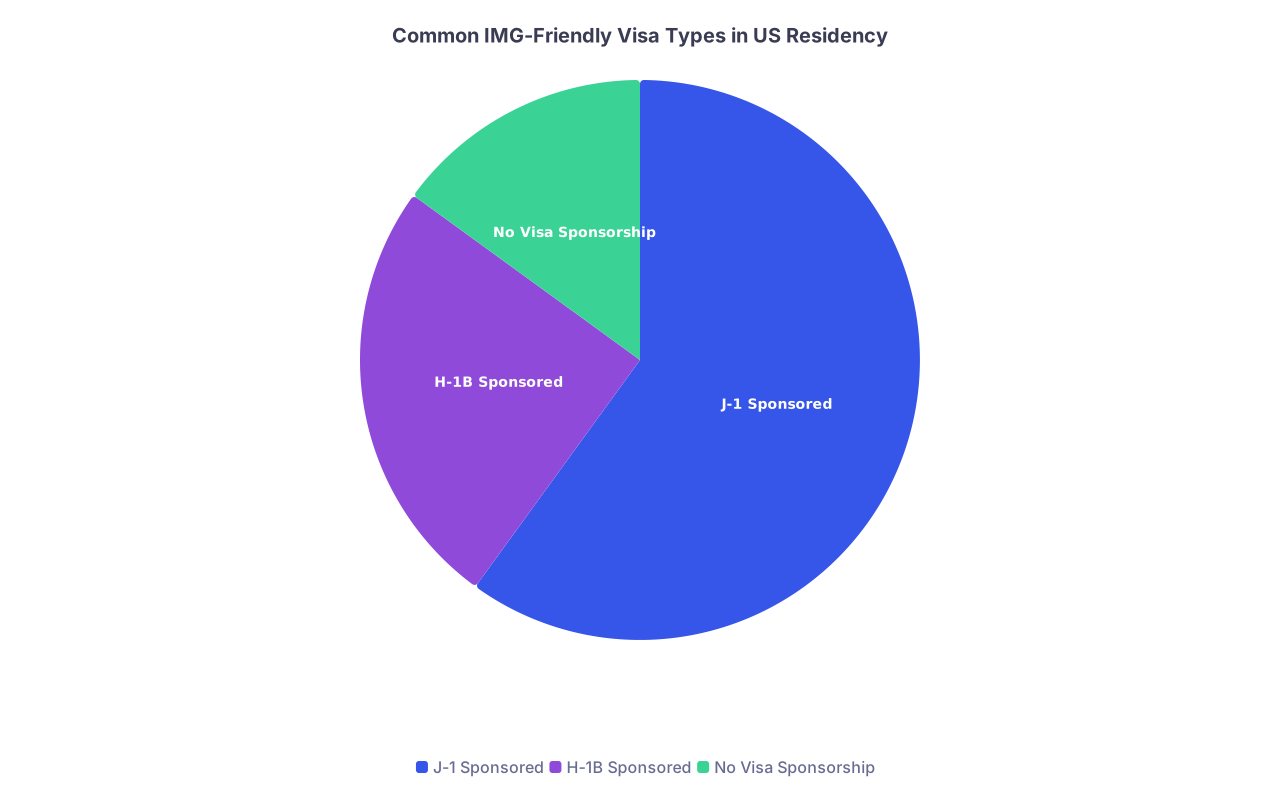
| Category | Value |
|---|---|
| J-1 Sponsored | 60 |
| H-1B Sponsored | 25 |
| No Visa Sponsorship | 15 |
Step 4: Use Your ERAS and Interviews to Pre‑empt the Visa Issue
Most IMGs handle prior denials badly: they either hide them (disaster) or overshare random emotional details (also bad).
You need to do three things:
4.1 Answer ERAS and program forms accurately and simply
If a form asks:
- “Have you ever been denied a US visa?” → You answer Yes.
- “Explain the circumstances” → You give a 2–3 sentence factual summary:
Example:
“In 2022, I applied for a B1/B2 visa to complete an observership and was refused under section 214(b). No immigration violations or overstays occurred. Since then, I have strengthened my clinical and academic profile and am applying now for a training‑focused residency visa with full institutional sponsorship.”
No drama. No excuses. No blame of the officer or “they did not read my documents.”
4.2 Craft one controlled explanation you can repeat everywhere
You need a standard, consistent answer you can use:
- In ERAS
- In emails
- In residency interviews
- At the consulate
Structure it like this:
What happened?
“I applied for a B1/B2 visa for an observership in 2022 and was refused under 214(b).”What did you learn / change?
“At that time, my long‑term training plan and ties to my home institution were not clearly developed. I also had limited documentation of financial and professional commitments at home.”Why is this different now?
“Since then, I have secured [position/contract] at [home or current institution], completed [research/clinical work], and aligned my path toward a structured residency with institutional sponsorship, which has clearer training goals and support.”
Keep this under 60 seconds when spoken. Practice it out loud.
4.3 Give programs a reason to back you on the visa
Programs do not want immigration headaches. Your job is to show them you are:
- Organized
- Transparent
- Low‑risk
Actions:
- Bring a simple, one‑page summary of your immigration history to interviews (if it comes up; do not wave it around unasked).
- If asked, emphasize:
- No overstays.
- No unauthorized work.
- Single, prior refusal with clear, non‑fraud reason.
- You are working with an immigration lawyer if the case is complex.
If a program likes you clinically and feels comfortable you are not hiding anything, they are far more likely to push through visa paperwork and even support you if the consulate raises questions.
Step 5: Re‑Engineering Your Profile to Offset the Red Flag
A prior denial is a soft red flag. You need hard positives to outweigh it.
5.1 Strengthen your clinical credibility
Between denial and second attempt, you should not be idle.
Concrete upgrades:
Hands‑on or high‑quality observerships (even local)
- If US observerships are blocked by visa issues, do:
- High‑intensity clinical work at reputable hospitals in your country
- Telemedicine case conferences with US faculty (if available)
- Regional internships/fellowships that show continuous clinical growth
- If US observerships are blocked by visa issues, do:
Strong letters of recommendation
- Aim for:
- 1–2 US letters (if previously obtained)
- 1–2 strong home‑country letters from people in academic or leadership roles who can vouch for your professionalism and reliability
- Aim for:
These letters help programs feel: “This is a serious clinician, not a visa‑tourist.”
5.2 Upgrade your academic and exam profile
Yes, this matters. A strong academic profile makes programs more willing to invest in a “complicated” visa applicant.
Examples:
- Improve your Step 2 CK score if possible (if not taken yet).
- Add publications/posters with US or international co‑authors.
- Engage in sustained research positions (even unpaid, if credible and structured).
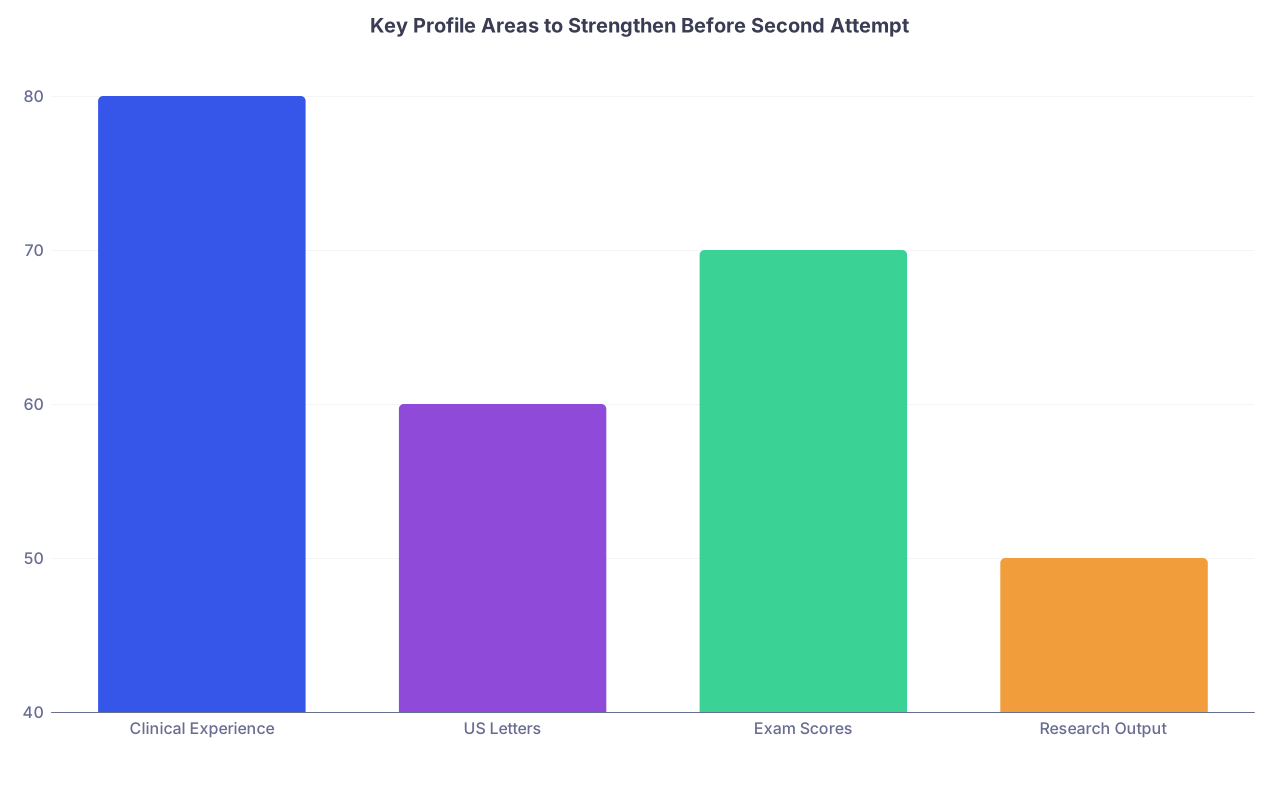
| Category | Value |
|---|---|
| Clinical Experience | 80 |
| US Letters | 60 |
| Exam Scores | 70 |
| Research Output | 50 |
Do not spread yourself thin. Pick 2 areas where you can make a real, measurable jump in 6–12 months and go deep.
Step 6: Prepare for the Second Visa Interview Like an Oral Exam
You do not “wing” a second visa interview after a prior denial. You build a script, rehearse, and anticipate counter‑questions.
6.1 Build a Q&A list specific to your situation
Write out and practice answers to:
- “Why were you denied previously?”
- “What has changed since your last application?”
- “Why are you applying for this visa type now?”
- “What are your plans after residency?”
- “Who is funding your training and living expenses?”
- “Do you plan to immigrate to the US permanently?”
You are not under oath to predict the rest of your life. You are expected to present a coherent, visa‑compliant plan.
For J‑1, for example, a solid answer might be:
“My current plan is to complete residency training in internal medicine, then return to [country] where I have a position waiting at [institution]. I am interested in building a chronic disease management program there with the skills and systems experience I gain in the US.”
Script it. Practice it until it sounds natural, not memorized.
6.2 Organize your documents like you expect to be challenged
You may never be asked for half of this. Bring it anyway.
Organize in a slim folder:
Residency documents
- Match letter
- Program contract
- Any official program visa support letters
Professional ties
- Current employment letters
- Future job or return offer from home institution
- License/registration docs from home country
Financials
- Program funding details (salary, benefits)
- Personal/sponsor bank statements (if relevant)
- Scholarship or grant letters
Family/property ties
- Marriage certificate, children’s birth certificates (if applicable)
- Property/lease documents (if they are in your name and easy to show)
6.3 Rehearse the tone, not just the words
Officers are reading your demeanor as much as your CV.
Avoid:
- Over‑explaining
- Arguing with the officer
- Sounding rehearsed to the point of robotic
Aim for:
- Short answers first. If they want more, they will ask.
- Calm, direct eye contact.
- Respectful disagreement if necessary (“I understand your concern; may I clarify one point?”).
If possible, do a mock visa interview with:
- Someone who works with IMGs (faculty, senior resident), or
- An immigration‑savvy counselor, or
- A peer who will not sugarcoat feedback
Record yourself. Watch body language. Fix what looks defensive or anxious.
Step 7: Build a “Plan B / Plan C” Safety Net
You do everything right and still get denied again. That can happen. You would be foolish to not have backup paths running in parallel.
7.1 Parallel strategies during the Match year
Run at least two tracks at the same time:
US residency track (primary)
- Targeted IMG‑ and visa‑friendly programs
- Application framed with transparent prior denial explanation
Home‑country or alternative training track
- Secure a solid clinical or academic position at home
- Choose something that:
- Improves your CV,
- Keeps your skills sharp,
- Does not trap you long‑term if you match later

| Step | Description |
|---|---|
| Step 1 | Prior Visa Denial |
| Step 2 | Rebuild Profile 6-12 Months |
| Step 3 | Apply to IMG-Friendly Programs |
| Step 4 | Secure Home Country Position |
| Step 5 | Residency Match |
| Step 6 | Strengthen Ties and Experience |
| Step 7 | Visa Interview 2 |
| Step 8 | Start Residency |
The parallel home‑country track is not “giving up on the US.” It is protecting your future either way, and actually strengthens your visa case by showing you are employable and stable at home.
7.2 If you are denied again: Do not panic, document
If the second attempt fails:
- Get the exact refusal code and any officer remarks if possible.
- Update your “post‑mortem” document with:
- Officer’s key questions and your answers.
- Any new reasons cited.
- Immediately loop in:
- Your program’s GME office.
- An experienced immigration attorney (this is the moment to pay for expertise, not Reddit opinions).
Sometimes, second refusals are reversible if there is a clear miscommunication or if the program intervenes with additional clarification. Sometimes they are not. But you want experts, not guesswork, making that call.
Step 8: Specific Program and Specialty Tactics for a Second Attempt
Certain specialties and program types are more forgiving and more experienced with visa complexity.
8.1 Consider less visa‑risk‑averse specialties if you are flexible
If you are still pre‑Match and not tied to a single specialty, remember:
Internal Medicine, Family Medicine, Pediatrics, Psychiatry:
- More IMG‑friendly generally
- Many programs with established J‑1 and H‑1B processes
Highly competitive and procedurally heavy specialties (Derm, Ortho, Plastics):
- Often lower IMG representation
- Programs may be more risk‑averse on visas simply because they have abundant local applicants
I am not saying abandon your dream specialty blindly. I am saying be realistic about where you can afford extra risk.
8.2 Look for programs that have rescued residents from visa issues before
You will not find this written on websites, but you will see hints:
- Alumni lists with many IMGs from high‑denial‑rate countries.
- Program brochures mentioning “robust visa and international scholar support.”
- Residents’ LinkedIn profiles showing J‑1 to waiver transitions, etc.
If you get an interview:
- Ask current residents (off the record) how supportive the program is with immigration hiccups.
- Programs that have fought for residents before are more likely to stand with you if consular issues arise.
Step 9: Common Mistakes That Kill Second Attempts
Learn from other people’s disasters.
Avoid these:
Hiding the prior denial
The consulate sees your entire history. So can many background systems. If ERAS or a program form asks and you say “No,” you have just created a misrepresentation issue, which is far worse than a simple 214(b) refusal.Recycling the same weak visa story
If you show up with the same vague ties, same weak documents, and same script, the officer has no reason to change their decision.Over‑explaining or sounding defensive at the window
This is not a debate. Short, calm answers first.Letting long gaps with no clinical or academic activity accumulate
Gaps make you look less credible both to programs and consulates. Fill your months with something real: clinical work, research, teaching, structured exam prep roles.Depending solely on forums for advice
Reddit and Telegram groups are good for stories, terrible for nuanced strategy. Use them to collect questions, not to build your legal strategy.
What You Should Do Today
Do not “think about this” for three months. You have one job today:
Pull up your prior visa denial notice and write your one‑page post‑mortem.
- Identify the exact code.
- List, in bullet form, what you presented and what was weak.
- Draft a 3–4 sentence version of your future immigration narrative that fixes those weaknesses.
Until that page is written, you are operating blind. Once it is on paper, every other step—choosing programs, structuring your ERAS, planning your second visa interview—becomes targeted and fixable.