
Only 27% of IMGs in internal medicine residencies at smaller community programs ever make it into a U.S. subspecialty fellowship.
That number shocks a lot of residents. They think “If I just get into any residency, I can fight my way into fellowship later.” Reality is harsher: your fellowship odds are largely baked into the structure and culture of the residency you choose.
Let me break this down specifically: there are “IMG-tolerant” programs, and then there are IMG-supportive, fellowship-minded institutions with real pipelines. You want the second group.
This is not about warm feelings, friendly PDs, or generic “we love diversity” language. It is about systems:
- How many fellows they place
- Where they place them
- How consistently they do it
- And how they treat IMGs in that process
Most IMGs misjudge this and pay for it later.
1. What a Real “Fellowship Pipeline” Actually Looks Like
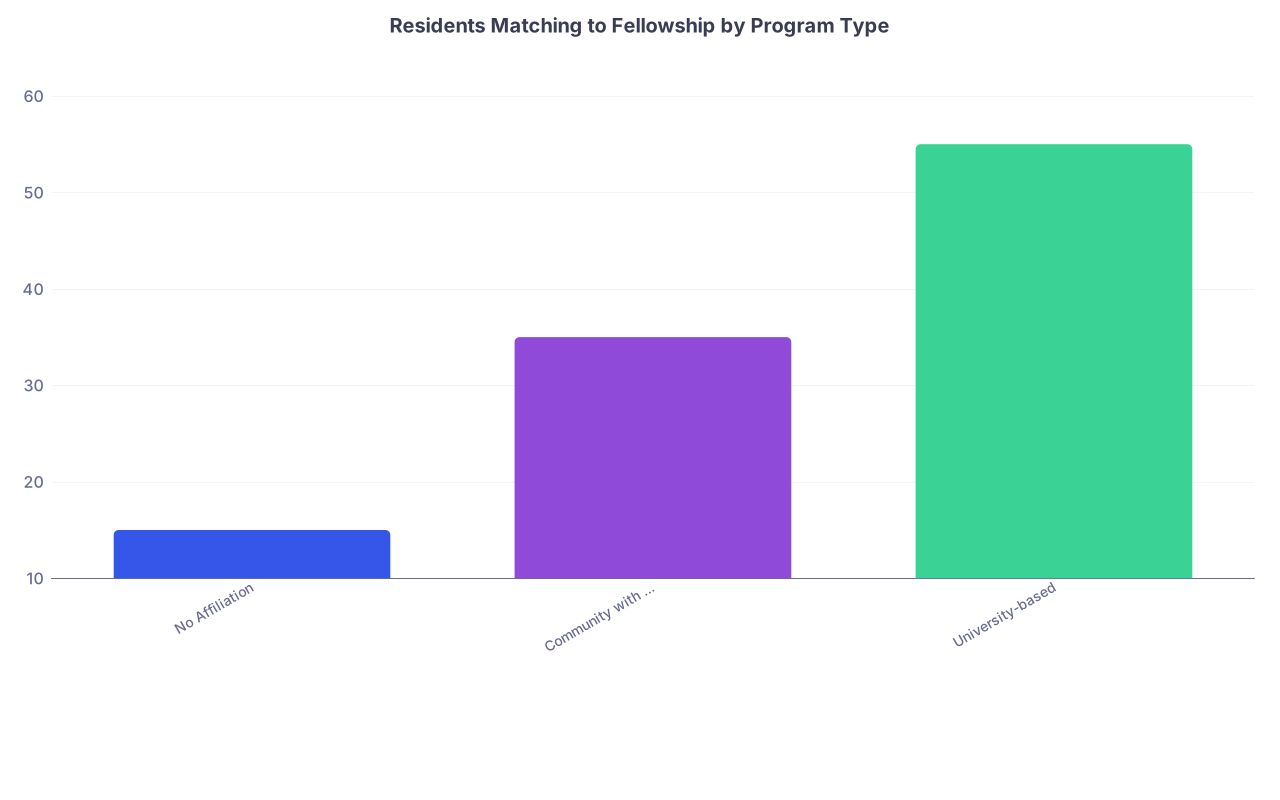
| Category | Value |
|---|---|
| No Affiliation | 15 |
| Community with Affiliation | 35 |
| University-based | 55 |
Everyone uses the phrase “we support fellowship.” Most programs mean “we will write a letter and not actively sabotage you.” That is not a pipeline.
A true fellowship pipeline structure has several hard features:
In‑house fellowships with IMG presence
Not just “we have cardiology.” You want:- Cardiology, GI, Heme/Onc as the big three
- Pulm/CC, Nephro, ID, Endo ideally
- And current or recent IMG fellows in those programs. If they never take their own IMGs as fellows, that is a red flag.
Historical match consistency
This is the best reality check. For internal medicine:- Strong pipeline: >60–70% of interested PGY‑3s match into some fellowship each year
- Elite: Regular placement into competitive fields (GI, Cards, Heme/Onc) and strong outside matches
Structured fellowship prep built into the residency
I am not talking about one noon conference on “How to apply to fellowship.” A real pipeline has:- Assigned fellowship advisors by PGY‑2 start
- Protected time for research / scholarly projects
- Template CV and personal statement support
- Mock interviews run by faculty who actually sit on fellowship selection committees
Formal preference for “homegrown” residents
You will hear versions of this:- “We like to keep our own”
- “Historically, 50–70% of our fellows are our residents”
When you see that, and they already take IMGs into residency, that is gold.
Actual outcomes for visa holders
Many programs sound supportive until the magic words appear: “We prefer permanent residents or citizens for fellowship due to funding.”
A truly supportive institution:- Has a track record of sponsoring H‑1B or continuing J‑1 in fellowship
- Can name fellows who matched onto H‑1B recently
If a program cannot show you these 5 elements, the “pipeline” is mostly marketing.
2. Anatomy of an IMG‑Supportive Institution
Not every “university” program is IMG‑friendly. Not every “community” program is weak. The real difference is institutional behavior.
Let’s be blunt about what you are looking for.
2.1 Hard structural clues
I watch for these things in program materials, resident rosters, and how people talk on interview day.
| Marker | Strong Signal |
|---|---|
| In-house fellowships | ≥3 core IM subspecialties with active programs |
| IMG proportion in residency | 30–70% of categorical residents |
| IMG presence in fellowship | ≥1–2 IMGs in each subspecialty over recent years |
| Visa sponsorship | H-1B + J-1 for residency *and* fellowship |
| Research infrastructure | At least 2–3 active clinical research mentors |
You want that middle band of programs:
- Not brand‑name elite (that barely touch J‑1s).
- Not small community shops with zero fellows.
- The “quietly powerful” institutions where IMGs run a large chunk of the residency and are visible in fellowship classes.
2.2 Culture: how they actually treat IMGs
There are tells. I have heard all of these on site visits:
- Supportive PD language:
- “Half our chiefs have been IMGs.”
- “IMGs are in all academic tracks here.”
- Red flag language:
- “We consider IMGs case by case” (translation: rarely).
- “Most of our fellows are U.S. grads” (and they say it like a point of pride).
Look for:
- IMGs as chiefs, chief residents, QI leaders
- IMGs presenting at grand rounds
- IMGs on residency or fellowship recruitment committees
If IMGs are only worker bees and never decision makers, the pipeline is weaker than advertised.
3. How Pipeline Structures Play Out Year by Year
This is where most people get confused. The pipeline does not appear magically in PGY‑3. It is baked into each year of residency.

| Step | Description |
|---|---|
| Step 1 | Match into IMG-supportive program |
| Step 2 | Early mentor assignment PGY1 |
| Step 3 | Research or QI project PGY1-2 |
| Step 4 | Subspecialty electives PGY2 |
| Step 5 | Fellowship advising and application PGY3 |
| Step 6 | Interview support and ranking |
| Step 7 | Fellowship match |
PGY‑1: Setup phase
In a real pipeline institution, by end of PGY‑1 you should have:
- A faculty mentor in your target field (even if you are “not sure” yet).
- At least one ongoing project (case series, QI, review paper, anything that can lead to a poster).
- Access to subspecialty clinics or inpatient services as an intern, not just as a PGY‑3 favor.
If you are halfway through PGY‑1 and:
- No one has mentioned research
- You have zero connection to any subspecialty faculty
- People say “focus on internship now, you can think about fellowship later”
…that program is not pipeline‑minded. They may still produce an occasional fellow, but you will be fighting friction the entire way.
PGY‑2: Positioning phase
This is the make‑or‑break year for fellowship.
Strong institutions do the following:
- Schedule subspecialty electives early in PGY‑2, not as leftovers
- Push you to present at least one poster or abstract
- Start structured fellowship advising by winter of PGY‑2
You should see:
- Program‑generated lists of alumni fellows and where they matched
- Clear internal competition for in‑house spots (but with transparent criteria)
- “Early interest” meetings from fellowship PDs or core faculty
If you have to cold email attendings and beg for a letter or project in late PGY‑2? The institution does not have a real pipeline; it has individual faculty doing favors. That is a very different situation.
PGY‑3: Execution phase
Now the pipeline either carries you or leaves you hanging. Supportive institutions:
- Block out schedule to allow interviews without destroying your rotations
- Help curate your letter writers and actually coordinate deadlines
- Run mock interviews that resemble real subspecialty panels
Most importantly, they actively advocate for you:
- PD emailing fellowship PDs
- Subspecialty faculty calling colleagues at outside institutions
- Explicit ranking support for you as a strong candidate
I have seen program directors sit in their office and fire off five emails in front of a resident: “I have an excellent IMG candidate in cardiology I want you to look at.” That is the difference between “supportive” and “neutral.”
4. Visa Reality: Where Programs Show Their True Colors
You cannot talk about IMG fellowship pipelines without discussing visas. This is where many so‑called “supportive” places quietly slam the door.
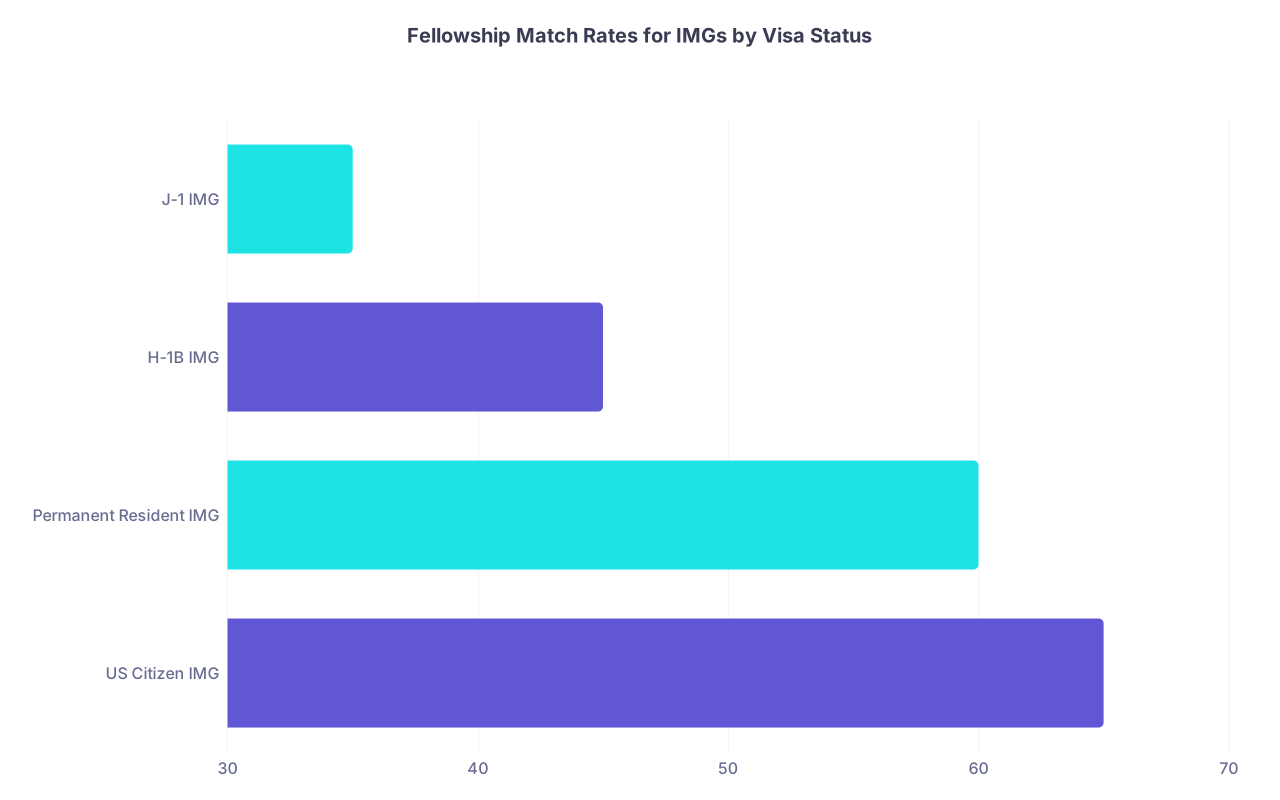
| Category | Value |
|---|---|
| US Citizen IMG | 65 |
| Permanent Resident IMG | 60 |
| H-1B IMG | 45 |
| J-1 IMG | 35 |
4.1 H‑1B vs J‑1 in residency
Programs with real IMG infrastructure usually:
- Sponsor both H‑1B and J‑1
- Understand the nuances of J‑1 waiver pathways
- Have institutional lawyers who have done this repeatedly
If they “only do J‑1” but have no track record of their J‑1s matching into fellowship, that is a problem. It means graduates often go straight to waiver jobs, not subspecialty training.
4.2 Fellowship funding constraints
Ask direct questions (you will not offend anyone serious):
- “Do your in‑house fellowships take J‑1 / H‑1B candidates from your own residency?”
- “Can you name recent fellows on visas?”
If they hesitate, deflect, or give generic “case by case” answers, assume it is rare.
IMG‑supportive institutions know exactly which fellowships:
- Have ECFMG‑sponsored J‑1 slots every year
- Are willing to switch you from H‑1B in residency to J‑1 in fellowship
- Sometimes even transition J‑1 to H‑1B at the fellowship level when jobs are waiting
If they have no idea what you are talking about, the institutional pipeline is weak.
5. Data Signals You Can Check Before You Apply
You do not need secret connections to figure this out. You need to read more intelligently than other applicants.
5.1 Resident and fellow rosters
You should be doing this for every program on your list:
- Residency website: count US grads vs IMGs, and look for countries / schools represented.
- Fellowship websites (Cards, GI, Heme/Onc, Pulm/CC, etc): look at:
- How many fellows came from the same institution’s residency
- Whether any of those are foreign medical graduates
You will learn very quickly:
- Some places proudly train IMGs in residency and then never keep them for fellowship.
- Others show a steady stream of “Residency: Same Institution” with foreign names and international schools.
You want the second group. Always.
5.2 Alumni outcomes
Quite a few programs maintain alumni pages or at least brag about “recent fellowship matches” during interviews or slide decks.
You should see patterns like:
| Year | Cards | GI | Heme/Onc | Pulm/CC | Other IM subspecialties |
|---|---|---|---|---|---|
| 2021 | 2 | 1 | 1 | 1 | 3 |
| 2022 | 1 | 1 | 2 | 1 | 2 |
| 2023 | 2 | 1 | 1 | 2 | 4 |
Then you dig deeper and realize many of those names are IMGs. That is a real pipeline.
Compare to a program that says: “Our graduates go on to successful careers in hospital medicine and primary care.” That line is code. It usually means: “Our fellowship rates are poor, so we frame that as a strength.”
6. Internal vs External Fellowship Matches: What Matters for IMGs
There is a crucial difference between:
- Matching into your institution’s own fellowship (“internal match”), and
- Matching out to other universities.
For IMGs, a healthy pipeline usually has both.
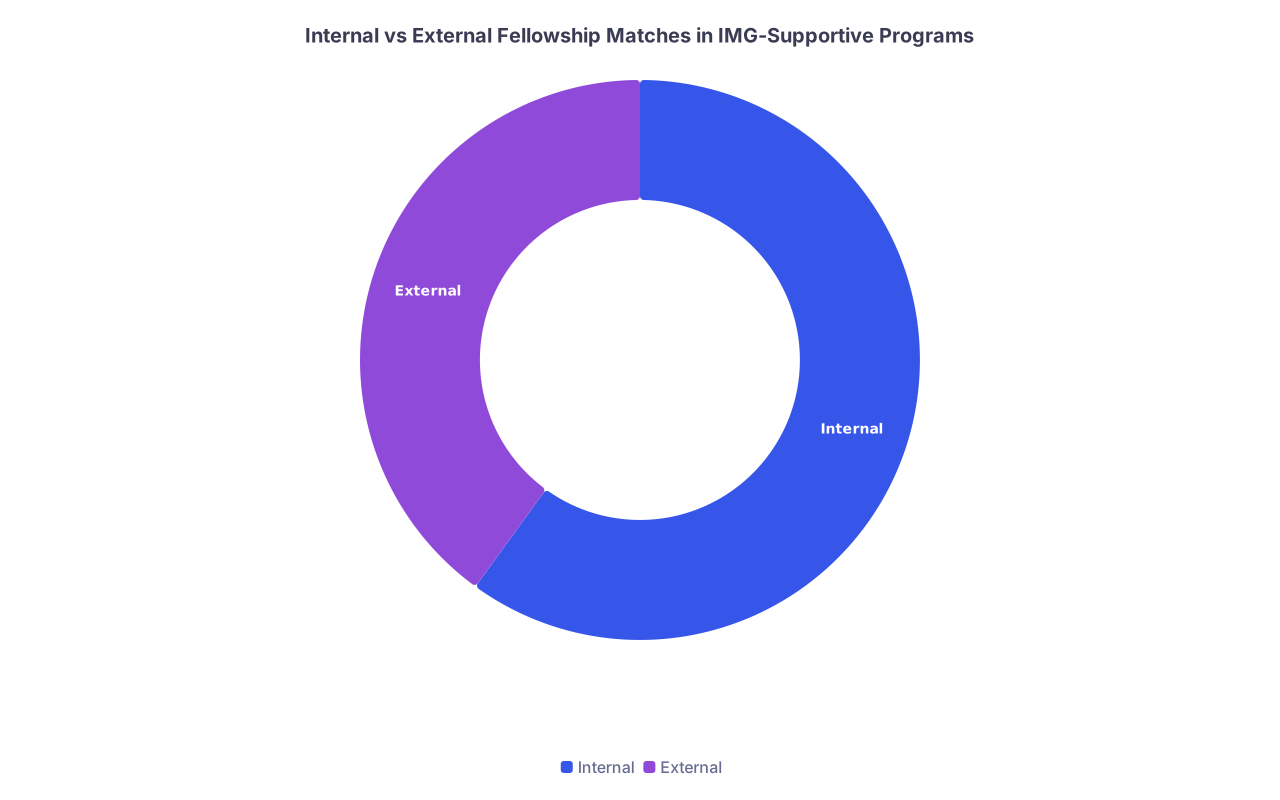
| Category | Value |
|---|---|
| Internal | 60 |
| External | 40 |
6.1 Internal matches: safer path, especially on visas
When a place actually likes its own residents:
- Fellowship PDs know your training quality exactly.
- Visa and HR issues are familiar, not mysterious.
- They can justify picking you over an unknown outside applicant.
Most IMG‑friendly pipelines will explicitly say:
- “We prioritize our own residents for fellowship, provided they meet performance expectations.”
If they have in‑house Cards / GI / Heme‑Onc and have never matched their own IMGs into these, assume:
- They are using their residency as labor, and
- They view you as less competitive than outside US‑grad applicants, no matter how hard you work.
6.2 External matches: proof of true competitiveness
A program that produces external fellowship matches at solid institutions (university or university‑affiliated) is signaling another thing:
- Their letters carry weight beyond their own walls.
- Their residents have enough scholarly work and mentorship to impress external selections.
If you see alumni going from a mid‑tier, IMG‑heavy residency to:
- Regional academic centers
- Known subspecialty programs
…that residency likely has a strong advising and research culture, not just a closed internal pipeline.
The absolute best programs for IMGs:
- Put a chunk of residents into their own fellowships, and
- Consistently send some to big‑name or at least well‑regarded outside programs every year.
7. Concrete Examples of “Supportive Pipeline” Structures
Let me sketch three broad program types I have seen repeatedly, without naming specific institutions.
7.1 The “Mid‑tier university with heavy IMG presence”
Profile:
- University hospital + VA + community affiliates
- 40–60% IMGs in internal medicine residency
- In‑house Cards, GI, Heme‑Onc, Pulm/CC, ID
Pipeline structure:
- Assigned “scholarly mentor” for every intern
- Quarterly research progress check‑ins
- A dedicated “fellowship preparation” track with CV review, timeline, and personal statement workshops
- Fellowship PDs give “How we rank applicants” sessions open to residents
Outcome:
- 70–80% of interested PGY‑3s match into some fellowship each year
- About half stay in‑house, half go to other universities
- J‑1 residents regularly continue as J‑1 fellows; occasional H‑1B when job prospects align
These programs are often the sweet spot for ambitious IMGs who may not hit the absolute top-tier USMD‑dominant programs.
7.2 The “Large community program tightly affiliated with a university”
Profile:
- Community hospital system with formal academic affiliation
- Majority IMGs, heavy service load
- Some in‑house fellowships (often cards, pulm/CC, maybe heme‑onc), others at the parent university
Pipeline structure:
- Clear articulation: “Our top residents are highly competitive for our affiliated university fellowships”
- Protected research blocks for 3–4 months across PGY‑2/3, often QI/clinical projects
- PD with personal relationships at the university’s subspecialty divisions
Outcome:
- Strong residents match into both in‑house and affiliated university fellowships
- Not every interested IMG will match into a top subspecialty, but the top 20–30% do very well
- These programs punch above their “community” label because of the affiliation + IMG track record
For many IMGs, this category is under‑appreciated and extremely valuable.
7.3 The “Service‑heavy community program with no structural pipeline”
Profile:
- No in‑house fellowships
- Little or no formal academic affiliation
- 70–90% IMGs, huge patient volume
Pipeline reality:
- Resident‑initiated projects only
- Minimal or no protected research time
- Fellowship “support” = PD letter and maybe some vague advice
Outcome:
- A small handful of exceptionally driven residents brute‑force their way into nephro, endo, or ID each year
- Competitive fields like cards / GI / heme‑onc are rare wins, often with outside research years or strong personal connections
These places keep telling applicants “Our graduates have successfully matched into fellowships,” which is true. But the rate and structural support are nowhere near the first two types.
For a fellowship‑oriented IMG, these programs should be backup only, not your primary target.
8. How To Interrogate Programs About Their Pipeline (Without Sounding Clueless)
Programs expect residents to ask generic questions. They pay attention when you ask precise ones. You should sound like someone who understands how this game works.
Here are specific, sharp questions that uncover the truth quickly:
- “Of your PGY‑3s who actively applied to fellowship in the last few years, about what percentage matched?”
- “Can you share a few examples of recent IMG residents and what fellowships they entered?”
- “What proportion of your Cards / GI / Heme‑Onc fellows are your own graduates on average?”
- “Do your in‑house fellowships support J‑1 or H‑1B fellows? Any recent examples?”
- “When do residents typically start research for fellowship, and is there protected time?”
Then you listen very carefully:
- If they immediately pull up specific names and stories: good sign.
- If you get vague platitudes like “Our residents do very well” without details: proceed with caution.
Who you ask matters
Ask the same theme to:
- Program Director
- Chief residents
- Current PGY‑2/3s, especially IMGs
- Subspecialty faculty if you meet them
If stories contradict, believe the residents more than the leadership slide deck.
9. Red Flags That the “Pipeline” Is Mostly Hype
You will see these patterns over and over:
- Heavy emphasis on “hospitalist track” but zero structure for fellowship.
- Many IMGs in residency, but fellowship rosters packed with USMDs from other programs.
- PD says “we support anything you want to do” but cannot name where last year’s graduates went.
- No formal mentor assignment, no research curriculum, no schedule adaptation for interviews.
- Visa status is always “complicated” when fellowship comes up.
The biggest red flag: silence. When you ask about fellowship outcomes for IMGs, and they change the topic to how “busy” or “hands-on” the training is. That is not accidental.
10. Putting This Into Your Application Strategy
If you are an IMG aimed at fellowship, your priority list should not be:
- Location
- Name recognition
- “Friendly vibe”
It should be:
- Documented fellowship outcomes, especially for IMGs
- In‑house subspecialties with IMG precedents
- Visa and funding track record through fellowship
- Research infrastructure and structured advising
- Geography and lifestyle (only after the first four)
You can absolutely choose a slightly less famous program that has a ruthless, efficient pipeline, and you will be much better off than an IMG at a so‑called “mid‑tier university hospital” that quietly filters IMGs out of its fellowships.
I have watched residents from unknown but structured IMG‑heavy programs walk into cardiology, GI, heme‑onc year after year because their institutions knew how to build and run pipelines. And I have seen IMGs from “brand name” but IMG‑neutral places stall at hospitalist jobs.
The difference was not effort. It was infrastructure.
FAQ (exactly 5 questions)
1. As an IMG, should I prioritize a smaller university program with fellowships over a big community program without them?
Yes, if your clear goal is fellowship. A smaller university‑based program with in‑house subspecialties and documented IMG fellows almost always offers better fellowship odds than a large service‑heavy community program with no fellowships. The presence of fellows, fellowship‑trained faculty doing research, and structured mentorship are far more predictive of your future than raw hospital size.
2. Is it realistic for a J‑1 IMG to match into competitive fellowships like cardiology or GI?
It is difficult but absolutely realistic from the right institutions. You will usually need: strong evaluations, at least a couple of tangible scholarly products (posters, maybe a publication), clear support from subspecialty faculty, and a program with a track record of sending J‑1s into those fields. The key variable is not only your profile, but whether your institution’s fellowships and their partners routinely take J‑1s.
3. How early in residency do I need to start focusing on fellowship if I am an IMG?
By the end of PGY‑1 you should already be plugged into a mentor and at least one project. Waiting until late PGY‑2 is a common mistake that destroys otherwise strong applications, especially for more competitive subspecialties. The programs with real pipelines will nudge or push you in that direction early; if they do not, you need to self‑start and aggressively seek mentors.
4. Does matching into a brand‑name residency guarantee better fellowship options for IMGs?
No. For US grads, that branding sometimes carries them despite average CVs. For IMGs, many prestigious programs still quietly prefer their USMDs for in‑house fellowships and are less motivated to advocate externally for IMGs. A mid‑tier but IMG‑supportive program with a proven fellowship pipeline can beat a famous but IMG‑neutral program in actual outcomes.
5. What if a program says they are “building” their research and fellowship pipeline—should I trust that?
Be skeptical. “We are building” usually translates to “we do not have it yet.” If you are an incoming resident, you are essentially volunteering to be the experiment cohort. Unless they can already show you early, concrete success (recent fellowships, funded projects, established collaborations), you should not rely on promises of future infrastructure for something as time‑sensitive as your fellowship trajectory.
Key takeaways:
- Fellowship outcomes for IMGs are driven far more by institutional pipeline structures than individual hard work alone.
- The strongest IMG‑supportive programs show visible IMG fellows, clear mentorship systems, and consistent match data, including for visa holders.
- If you want fellowship, choose programs where the system is already built and running—do not bet your career on places that only offer vague “support” and future plans.