
The programs that truly back IMGs don’t just “accept” them. They quietly build an entire protection system around them—and the chief residents are the front line of that defense.
Most applicants never see it. PDs will talk about “diversity” and “global perspectives” on interview day, but whether you’ll survive and thrive as an IMG is decided in a back room conversation between program leadership and the chiefs months before you even start. I’ve been in those rooms. Let me show you how it actually works.
The Real Power Structure: Why Chiefs Matter More Than You Think
Attendings write the evaluations. Program directors sign the contracts. But day‑to‑day, your fate is heavily shaped by one group: the chiefs.
They control the schedule. They manage conflicts. They interpret vague complaints like “communication issues” and decide whether that becomes a warning or gets quietly buried. When a nurse says, “The new IMG intern doesn’t know what they’re doing,” it’s the chief who decides whether that means you’re dangerous or just appropriately cautious and new.
In programs that truly back IMGs, the PD and APDs do something very intentional before July 1:
They pull the chiefs into a closed‑door meeting and say some version of this:
“We recruited these IMGs on purpose. They’re our people. Your job is to make sure they succeed here. If there are issues, bring them to us early. No ambush failures. No letting bias decide who’s ‘struggling.’”
That one conversation changes everything.
In less supportive programs, the message is the opposite, even if it’s never written down:
“Keep the wheels from falling off. If someone is weak, document it. We can’t risk accreditation problems.”
Guess who ends up labeled “weak” first when people are anxious and lazy? The IMG with an accent, unfamiliar EMR habits, and no local political capital.
You need to learn how to identify which kind of structure you’re walking into—and what protection looks like in practice.
The Quiet Ways Chiefs Shield IMGs (That Nobody Puts On the Website)
No program will advertise “We protect our IMGs from bias and scapegoating,” even when they actually do it. Instead, you see soft language: “supportive environment,” “diverse residents,” “many international backgrounds.”
The protection is real, but it shows up in unspoken systems and patterns—the things only insiders and sharp applicants notice.
1. How They Build the Schedule: Your First Line of Defense
In IMG‑friendly programs, chiefs strategically schedule IMGs for success.
This is what that looks like from the inside:
- They don’t stack IMGs on the most malignant rotations in July. They put them with attendings who are known teachers, not known screamers.
- They pair a new IMG intern with a strong, patient senior who has already worked with IMGs and knows the typical early struggles: documentation format, paging culture, phone etiquette, calling consults in the “American style.”
- They avoid putting multiple “at‑risk” residents (new IMG + new prelim + notoriously short‑tempered attending) on the same team in the same month. That’s how disasters happen.
I’ve seen chiefs at IMG‑supportive programs like Brooklyn Hospital Center and a few Midwest community programs literally change the whole block schedule after match lists came out, just to make sure the two new IMGs ended up with their best senior residents in July.
Do not underestimate this. A single bad first month with an unforgiving attending can mark you in the PD’s mind for a whole year. When the chiefs protect you from that, they’re not being “nice.” They’re playing the long game for your reputation.
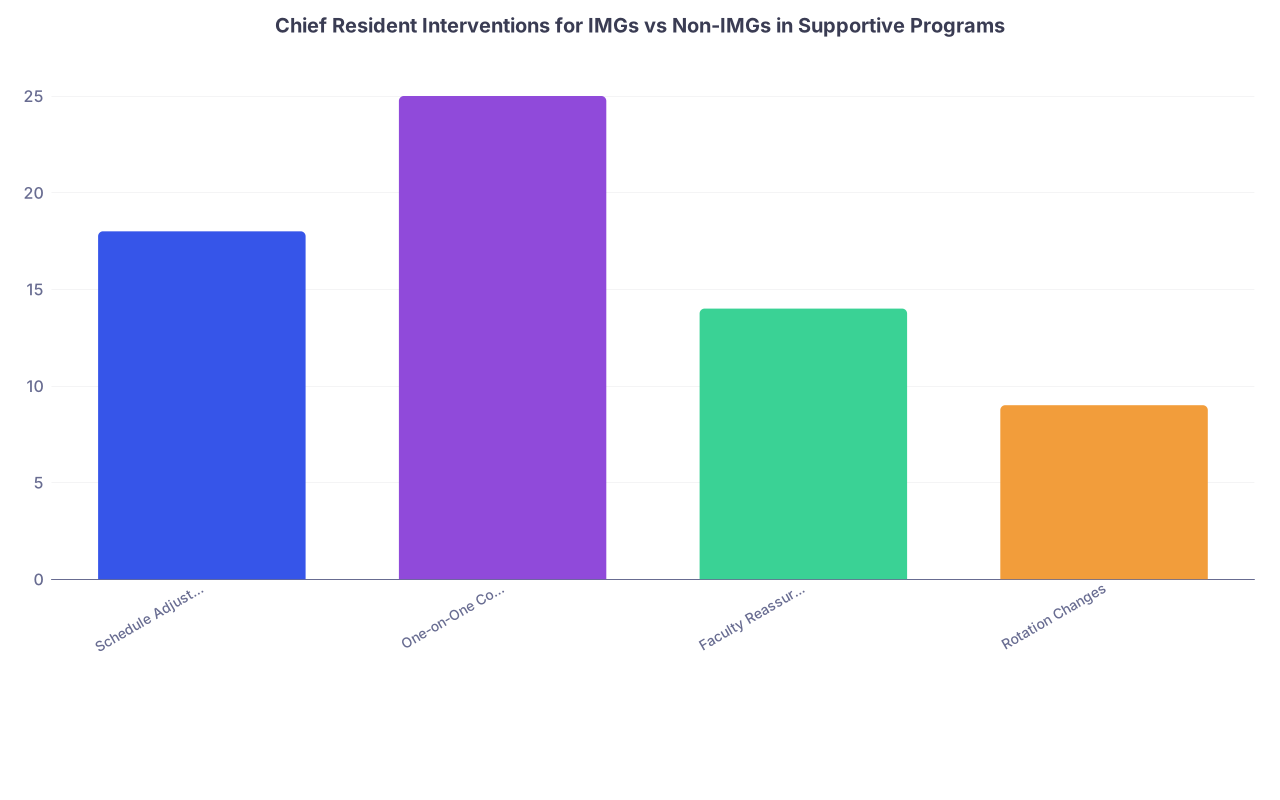
| Category | Value |
|---|---|
| Schedule Adjustments | 18 |
| One-on-One Coaching | 25 |
| Faculty Reassurance | 14 |
| Rotation Changes | 9 |
2. How They Translate Complaints: The Difference Between “Concern” and “Warning”
Here’s some brutal truth: early in the year, nurses, consult services, and some attendings complain more about IMGs. Not always maliciously. But often reflexively.
“He’s slow.” “She doesn’t answer pages fast enough.” “He doesn’t speak clearly on the phone.” “She doesn’t ‘get’ how we do things here.”
In a weak program, those comments get copied into your file and become a story: “This IMG is struggling.”
In a strong, IMG‑backing program, chiefs act as filters and translators.
You’ll hear them say things like:
- To nursing: “He’s double‑checking orders because he’s new to this system. He’ll speed up. If it’s urgent, page me too and I’ll help.”
- To attendings: “She’s still adjusting to documentation style here. Her medical knowledge is strong. Give her two weeks. If it’s still a problem, I’ll step in.”
- To the PD: “Yes, there were a few comments, but this is standard July noise for new IMGs. I’ve watched him on rounds—his reasoning is solid. I’m not concerned.”
That last sentence is what saves you from escalation.
Supportive chiefs don’t deny problems exist. They frame them properly:
“New and adjusting”
vs
“Unsafe and unteachable”
That distinction is the difference between getting a quiet coaching conversation and getting slapped with a formal remediation plan.
Concrete Protection Moves You’ll Never See in the Handbook
Let me walk you through actual behind‑the‑scenes moves I’ve seen chief residents make to protect IMGs—moves that tell you a program truly has your back.
1. Pre‑emptive Education: Teaching Attendings How to Evaluate IMGs Fairly
In some programs, before the year starts, chiefs sit in an attending meeting and say something like:
“We matched several IMGs again this year. Historically, nurses and consultants tend to critique their communication more. We want you to separate accent and style from actual safety and knowledge. If there’s a concern, bring it to us early. Don’t write a scathing evaluation after one rough week without talking to us first.”
When I see that, I know the PD has empowered the chiefs, and the chiefs understand the bias minefield you’re walking into.
Where this doesn’t happen, you get the classic pattern: an attending who’s never worked with IMGs panics after a miscommunication and fires off an evaluation that lives in your file for years.
2. Protecting You from Malignant Personalities
Every program has them. The attending who eats interns for sport. The charge nurse who decides someone is “incompetent” based on two shifts. The fellow who mocks accents behind your back.
In IMG‑supportive environments, the chiefs map this territory for you. Sometimes explicitly, sometimes by how they schedule you.
Things I’ve actually heard chiefs say to IMGs in a closed office with the door shut:
- “I’m not putting you with Dr. X in July. He’s old‑school and not patient with foreign grads. We’ll send you there after you have your feet under you.”
- “If that fellow ever yells at you again, I want a text. I’ve already talked to the PD about him. You’re not going to be the scapegoat for his bad day.”
- “Nurse Y is known for escalating on IMGs. If she complains about you, let me hear your side first. Don’t sign anything or agree you ‘made a mistake’ until we talk.”
That last part is crucial: they teach you not to reflexively accept blame just because someone in the system is louder than you.
3. Time and Space to Adjust—Without Calling It “Remediation”
Strong programs understand this: most IMGs don’t need remediation. They need orientation with teeth.
So the chiefs create space without labeling you as “problem.”
Examples:
- Giving IMGs a slightly lighter first ICU or ED month, not because they doubt your intelligence, but because they know you’re still learning the local language of medicine: how consults are called, how pages are answered, how notes are structured so they don’t get you sued.
- Pairing you with a senior or co‑intern who’s a former IMG and can translate unspoken rules: “When they say ‘just sign this,’ read it. When they say ‘we never do that here,’ ask who ‘we’ is.”
- Arranging shadow days in June if you’ve already moved to the U.S.—not official orientation, just “come hang on wards for a day, see the workflow.” Chiefs in IMG‑friendly programs do this quietly all the time.
None of that shows up in glossy brochures. But residents talk. And chiefs act.
How Chiefs Handle “IMG Mistakes” vs “US Grad Mistakes”
Here’s the ugly truth: everyone screws up early. Orders entered wrong. Consult not called. Lab ignored. Everyone.
The question is not whether you’ll make a mistake. You will. The question is how the system interprets it when you do.
In IMG‑supportive programs, chiefs consciously push back against the double standard.
When a US grad misses a critical lab:
“That’s an intern mistake. We’ll teach them.”
When an IMG does the same thing in an unsupportive program:
“Maybe they’re not ready. Maybe this is a knowledge gap. Maybe they’re not safe.”
The best chiefs see that and refuse to play along.
I’ve seen a chief walk into a PD’s office after a heated attending email about an IMG and say, very bluntly:
“If this were one of our US grads, we’d call it a systems issue plus inexperience. This is the same thing. I watched him on call. He’s careful and teachable. We’re not labeling him unsafe based on this one incident.”
You need chiefs who are willing to say that sentence. Most won’t. The ones who do are the reason some IMGs survive long enough to show how good they really are.
| Signal | What You See as an Applicant |
|---|---|
| IMG chiefs or senior IMGs | IMGs in leadership roles, not just scattered interns |
| Specific IMG support stories | Chiefs describe real interventions, not vague “we’re supportive” |
| Honest talk about bias | Leadership acknowledges challenges and how they manage them |
| Thoughtful July schedule | IMGs not stacked into the worst rotations first block |
| Chiefs available after hours | Chiefs encourage you to contact them when conflicts arise |
During Interviews: How to Detect Whether Chiefs Will Protect You
You’re not powerless here. On interview day or second looks, you can absolutely figure out whether the chiefs at that program are going to stand between you and the worst of the system—or leave you on your own.
Here’s what to pay attention to.
1. Who Actually Talks to You
In IMG‑friendly programs, the chiefs are not hidden. They’re pushed in front of you.
- They’re at the pre‑interview meet‑and‑greet.
- They speak during the program overview.
- You get at least a small group breakout with them.
If you never meet a chief, or they appear for three minutes and vanish, that tells you something. Either they’re overworked and underpowered, or leadership doesn’t see them as central. Neither is great for you as an IMG.
2. How They Answer Questions About Support
Do not ask, “Are you supportive of IMGs?” That’s a useless question. Every program will lie.
Ask more surgical questions during resident or chief Q&A:
- “Can you tell me about a time an IMG intern struggled early on and how the program handled it?”
- “If a nurse or attending had concerns about me as a new IMG intern, how would those be handled?”
- “What extra orientation or informal support do IMGs get when they start here?”
Watch for specifics vs fluff.
Vague answer:
“We’re very supportive, and our residents help each other out.”
Translation: You’re on your own.
Specific answer:
“We had an IMG last year who got harsh feedback from a consultant about communication. The chiefs sat with him, listened to what happened, then talked to the consultant and clarified expectations. They also adjusted his schedule the next month to pair him with one of our strongest seniors. He ended up one of our top residents.”
That’s protection. That’s what you’re looking for.
3. Whether They Admit Bias Exists
The strongest signal of a healthy, IMG‑supportive culture: leadership doesn’t pretend bias doesn’t exist.
The PD or chiefs will say something closer to:
“We know IMGs face more scrutiny—not always for fair reasons. We pay attention to those dynamics. If there’s a concern, it goes through the chiefs first. You’ll hear about it early, and we’ll work with you. No surprise failures.”
Programs that really scare me say things like:
“We treat everyone exactly the same. It’s all purely objective.”
That’s fantasy. And it usually means the quiet bias is running unchecked.

| Step | Description |
|---|---|
| Step 1 | Concern raised about IMG |
| Step 2 | Chief hears about it first |
| Step 3 | Chief meets with IMG for coaching |
| Step 4 | Chief and PD meet IMG together |
| Step 5 | Monitor next rotation |
| Step 6 | If improved, issue closed |
| Step 7 | Serious safety issue |
What Protected IMGs Actually Experience Day‑to‑Day
Let me make this more concrete. When a program truly backs its IMGs, your day‑to‑day experience feels different in a few very specific ways.
You notice things like:
- After your first rough week on nights, the chief pulls you aside and says, “I heard a couple of pages were missed overnight. Tell me what happened.” And they listen, instead of assuming the worst.
- A nurse complains about your accent, and instead of you getting a formal write‑up, the chief comes to you and says, “Here’s how people are hearing you on the phone. Let’s practice how you introduce yourself. It’s not about your English; it’s about pattern. We can fix that.”
- After a demanding attending blasts you in front of the team, the chief checks in: “What he said about your knowledge is not accurate. You answered the questions correctly. He’s just hard on IMGs. I’m documenting that, not that you’re weak.”
Sometimes the most protective thing a chief does is very small and subtle: they believe your version of events when it conflicts with the loudest complainer. That alone can change the trajectory of your year.

How to Work With Your Chiefs Once You Match
If you land in a program that actually backs its IMGs, your job is not to test that protection to the limit. Your job is to collaborate with it.
Here’s what I’ve watched successful IMGs do.
They introduce themselves to the chiefs early. Not with flattery. With clarity.
Something like:
“I know I’ll have an adjustment period with documentation and the system here. I want feedback early, before anything becomes a big issue. If anyone has concerns, please let me know directly. I’d rather hear it from you than from an evaluation I can’t change.”
This does two things. It marks you as teachable, and it invites the chiefs to filter issues through a coaching lens instead of a punitive lens.
They also tell the chiefs when there’s a pattern that smells like bias.
Not every conflict is about you being an IMG. But some are. And you’re allowed to say:
“I’ve noticed this consultant interrupts me more than my US co‑intern and has called my communication ‘unclear’ even when my seniors say it was fine. I’m worried this might be heading toward an unfair evaluation. Can you watch this with me?”
Good chiefs take that seriously. I’ve seen them call consultants directly and say:
“We’re hearing concerns about communication. We’re working with the resident. But I also want to be sure our feedback is specific and not just about accent or style. If you have concrete examples, send them to me, not just ERAS language.”
That’s protection. Coordinated, measured, and behind the scenes.
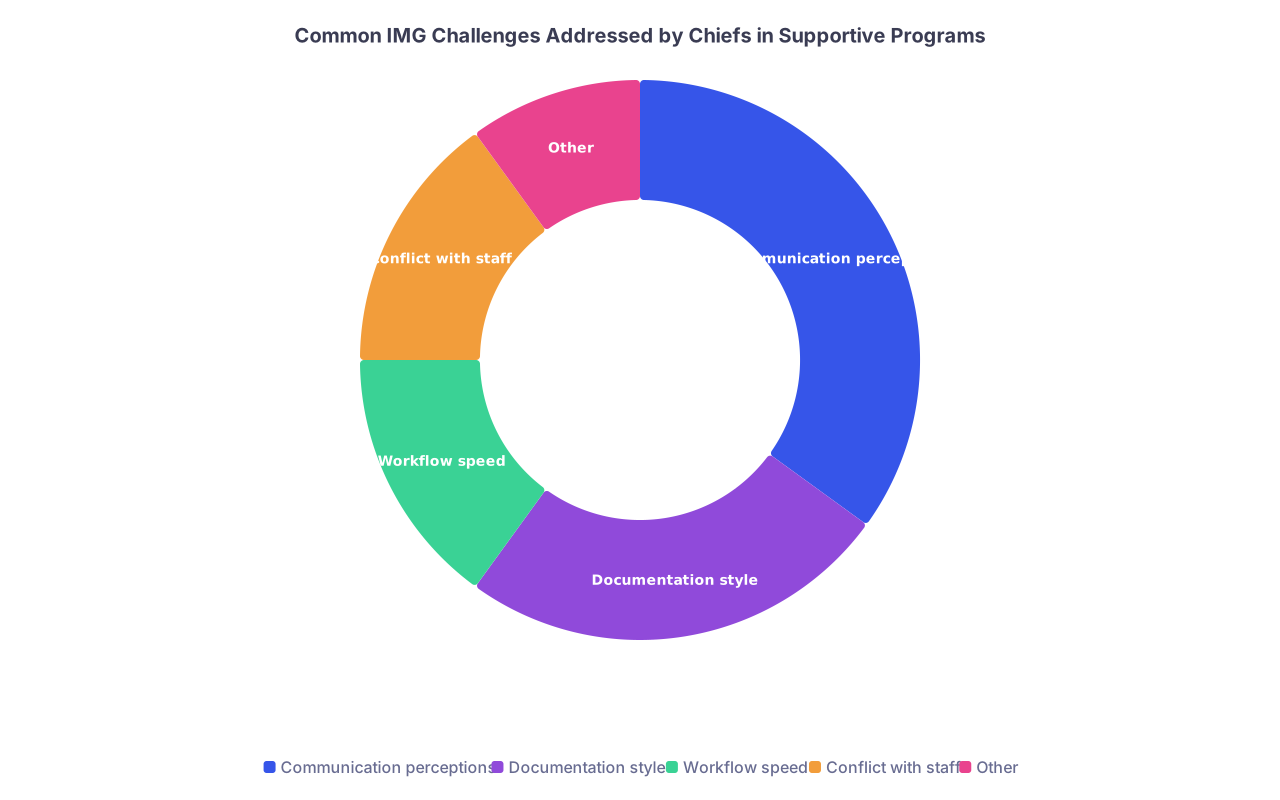
| Category | Value |
|---|---|
| Communication perceptions | 35 |
| Documentation style | 25 |
| Workflow speed | 15 |
| Conflict with staff | 15 |
| Other | 10 |
Programs That Say They “Support IMGs” But Don’t
You’ll meet programs that interview many IMGs, match them heavily, and still throw them under the bus the moment something goes wrong.
The giveaways:
- High IMG percentage, but almost no IMG chiefs or PGY‑3 leaders.
- Residents talk vaguely about “some people not making it to graduation,” but can’t explain why in clear, fair terms.
- Chiefs are constantly “too busy” to meet with interns one‑on‑one.
- PDs talk a lot about “standards” and “protecting our reputation” but never about how they develop struggling residents.
Those programs aren’t backing IMGs. They’re using them. To fill service lines. To cover nights. To get cheap labor from people who will tolerate worse treatment because they’re terrified of losing their visa.
And when conflict comes, there’s no chief in the room saying, “This is fixable. Let’s coach, not cut.” There’s just paperwork.
You want the opposite. You want chiefs who argue for you in that room.
Final Thought: Why This Protection Matters More Than Your CV
Many IMGs obsess over the wrong risk variables: Step score, number of publications, observerships. Those matter for getting you in the door. What keeps you inside once you’re there is different.
It’s the system wrapped around you. The chiefs who quietly adjust schedules. The way complaints about you are interpreted. Whether leadership sees you as an investment to grow or a risk to manage.
Years from now, you won’t remember the exact wording of your personal statement or how many interviews you got. You’ll remember whether you felt like you were constantly one mistake away from deportation—or whether there were people in the building who saw your potential first and your passport second.
Find the programs where chiefs actually protect their IMGs. Not the ones that say the right words. The ones where, when things get ugly—as they sometimes do in residency—someone in a chief’s coat steps between you and the machine and says, “We’re going to fix this. You’re not alone in this.”
That’s what real support looks like. And that, more than anything on your ERAS application, will determine the kind of doctor you become.