It’s late April. You’re refreshing program websites in three different browser tabs, a spreadsheet is half-filled with program names you barely recognize, and everyone keeps saying the same useless phrase: “Apply broadly.”
You do not need “broad.”
You need supportive.
You need programs that actually like IMGs and have a track record of taking care of them.
So here’s what we’ll do: walk month‑by‑month through the ERAS season, but with one filter always on your mind:
“At this point, what should I be doing to identify, prioritize, and impress IMG‑friendly, supportive programs?”
This is not a generic ERAS guide. It’s a targeting system. You’re going to spend your limited time, money, and emotional energy where you’re actually wanted.
Big Picture Timeline: IMG-Focused ERAS Year
First, zoom out. Here’s the skeleton of your year, with an explicit focus on supportive sites.
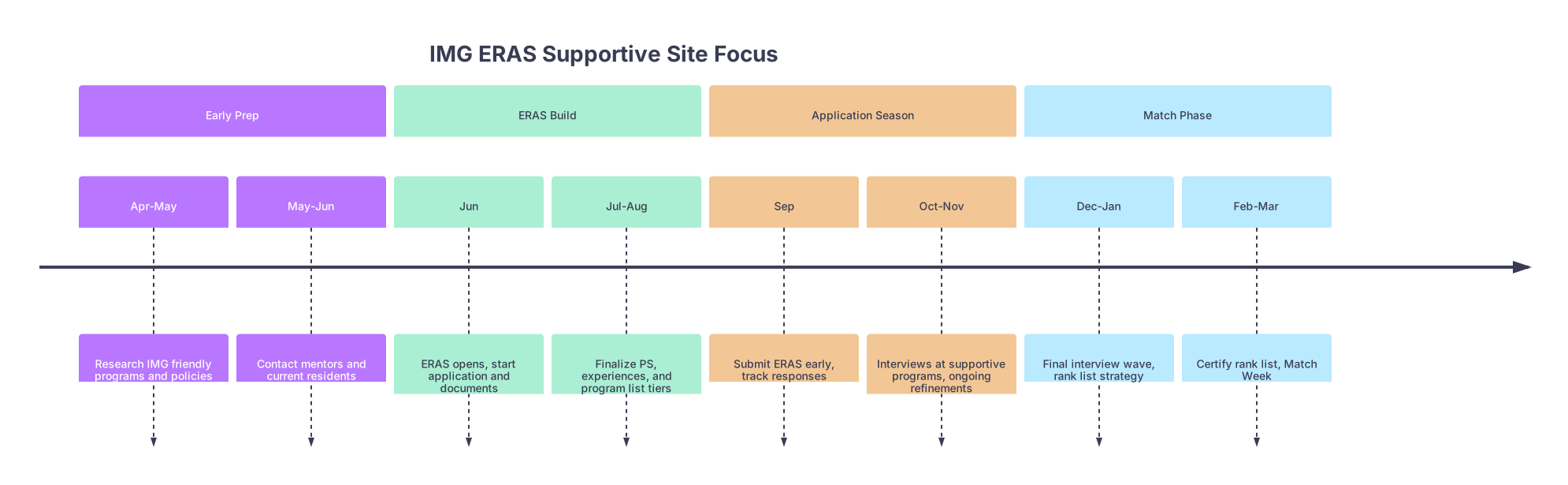
| Period | Event |
|---|---|
| Early Prep - Apr-May | Research IMG friendly programs and policies |
| Early Prep - May-Jun | Contact mentors and current residents |
| ERAS Build - Jun | ERAS opens, start application and documents |
| ERAS Build - Jul-Aug | Finalize PS, experiences, and program list tiers |
| Application Season - Sep | Submit ERAS early, track responses |
| Application Season - Oct-Nov | Interviews at supportive programs, ongoing refinements |
| Match Phase - Dec-Jan | Final interview wave, rank list strategy |
| Match Phase - Feb-Mar | Certify rank list, Match Week |
We’re going to walk this in detail, with “at this point you should…” instructions for each phase.
April–May: Build Your Supportive-Program Radar
At this point you should stop thinking in terms of specialties only and start thinking in terms of which sites actually invest in IMGs.
Your goal for these 2 months
Create a tiered master list of programs by IMG support level, not just “IMG friendly: yes/no.”
Focus on:
- Programs with consistent IMG matches, not just one token person every few years.
- Places with clear, transparent visa policies.
- Programs where IMGs are not all stuck on night float forever.
Step 1: Data pass – objective IMG-friendliness
At this point you should spend 2–3 evenings doing a pure data sweep.
Look at:
- NRMP Charting Outcomes (for your specialty)
Look at tables that show % of IMGs that match and typical scores. - FREIDA (AMA) – filter by:
- “Sponsorship of J-1 visas”
- “H-1B visas accepted / not accepted”
- Average Step scores if published
- Program websites – screen quickly for:
- Current residents section – how many IMGs? From where?
- FAQ on visas, Step scores, graduation year limits
- “We welcome international graduates” is cheap. Resident photo grids are honest.
Track this in a simple sheet:
| Program | IMG % of Residents | Visa Type | Recent Grad Cutoff | Support Level |
|---|---|---|---|---|
| Program A | 60% | J-1 only | 5 years | High |
| Program B | 20% | J-1/H-1B | 3 years | Medium |
| Program C | 0% | No visas | N/A | Avoid |
By end of May you want at least 60–80 programs on your radar (more if applying to very competitive specialties), roughly tagged:
- High‑support
- Moderate‑support
- Low / avoid
Step 2: Qualitative pass – who actually supports IMGs?
At this point you should go beyond the numbers and listen to real humans.
Places to look:
- Reddit r/IMGs, r/medicalschool, r/residency
- Telegram/WhatsApp IMG groups (country‑specific groups can be gold)
- SDN (forums still have older but useful match lists)
- Program Instagram/Twitter – what do they show?
Specific clues that a site is truly supportive:
- Multiple IMGs in each PGY year, not all from the same in‑house or “feeder” school only.
- Social posts highlighting IMG residents’ achievements, leadership roles, fellowships.
- Alumni list showing IMGs matching into fellowships or good jobs, not just disappearing.
- Clear, kind wording around visas:
- “We sponsor J‑1 for all eligible candidates”
- “We consider H-1B for highly qualified candidates who have passed Step 3”
Red flags:
- “We accept ECFMG certified applicants” but zero IMGs on resident list. That’s bait.
- Visa language buried and vague: “Case‑by‑case basis,” “Limited sponsorship.”
- All IMGs clustered in prelim or “non‑categorical” positions only.
By end of May: your High‑support list should be taking shape (20–40 programs minimum).
June: ERAS Opens – Align Your Story With Supportive Sites
In June, ERAS opens. At this point you should build your entire application with your target supportive sites in mind.
Not “generic good applicant.”
“Great fit for supportive, teaching‑heavy, team‑based programs that work with IMGs.”
Week 1–2 of June: Lock in logistics and requirements
Checklist:
- Confirm:
- ECFMG certification status or timeline
- USMLE Step scores ready (and Step 2 CK planned if not yet taken)
- Medical school transcripts lined up
- MSPE timeline (often October, but know your school’s schedule)
- Re‑check:
- Which programs require Step 2 CK before ranking vs before starting
- Which are okay with older YOG (year of graduation)
Create a requirements snapshot so you do not waste time applying where the door is basically shut.
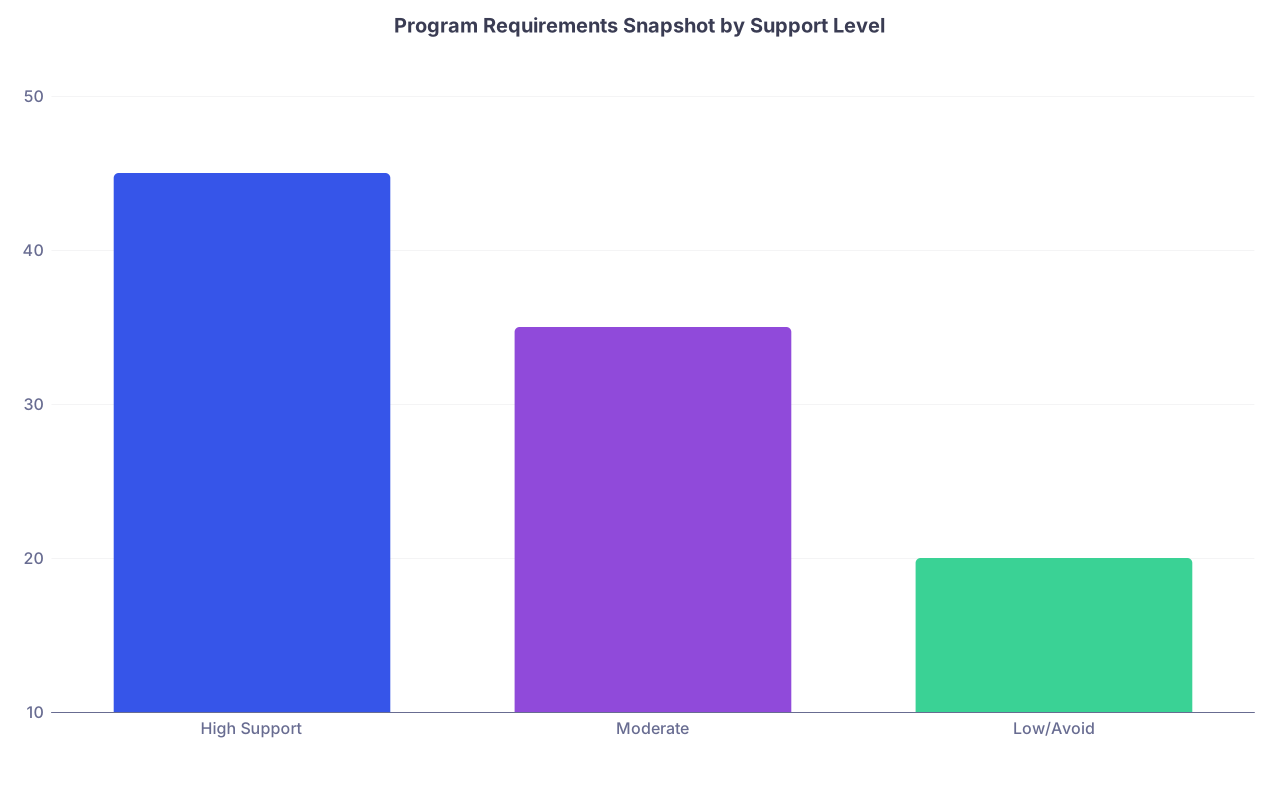
| Category | Value |
|---|---|
| High Support | 45 |
| Moderate | 35 |
| Low/Avoid | 20 |
(Example: from your ~100 considered programs, 45 look high‑support and meet your test/YOG situation.)
Week 3–4 of June: Draft application content for supportive programs
At this point you should tie your narrative to what supportive programs love:
- Stability and reliability
- Ability to adapt to US system
- Evidence you work well in teams and teachable environments
Tweak these:
-
- Explicitly mention:
- Your transition to US healthcare (observerships, research, volunteer work)
- How you benefit from structured teaching and feedback
- Gratitude, not desperation
- Example line:
“I’m particularly drawn to programs that emphasize bedside teaching and have a history of mentoring international graduates into strong, independent clinicians.”
- Explicitly mention:
Experience descriptions
- Highlight:
- Systems adaptation: EMR training, quality projects, communication with consultants
- Continuity experiences: long-term clinic patients, follow-up work
- Mentorship roles: tutoring juniors, leading small groups
- Highlight:
CV filters for supportive sites
- If a program’s website screams “resident wellness, mentorship, teaching certificates,” lean into:
- Teaching experience
- Coaching roles
- Peer-support activities
- If a program’s website screams “resident wellness, mentorship, teaching certificates,” lean into:
By end of June, ERAS should be mostly filled (minus final polishing). Your program list and your story should already match.
July–August: Precision Targeting and Letter Strategy
At this point you should convert your high‑support list into an actual application strategy.
Early July: Solidify tiers and budget
Divide your list:
- Tier 1: High‑support, realistic reach
- Tier 2: Moderate‑support, solid safety/mid targets
- Tier 3: Only‑if‑needed backups (suspect support, but might be lifeline)
Use something like:
| Tier | Description | Number of Programs |
|---|---|---|
| Tier 1 | Strong IMG track record, clear support policies | 30 |
| Tier 2 | Some IMGs, decent policies, not ideal but okay | 25 |
| Tier 3 | Limited info, borderline support, last resort | 15 |
At this point you should tie tiers to money. You are not going to waste fees on “we rarely accept IMGs” programs.
Mid–Late July: LORs that speak to IMG concerns
Supportive programs care about:
- Can you function in US settings?
- Do you take feedback?
- Are you safe on day one?
At this point you should nudge your letter writers to speak that language.
When you request letters, say:
- “Programs I’m applying to have strong teaching and work closely with IMGs. It’d help a lot if you could comment on my ability to adapt to new systems and how I respond to feedback.”
Priority LORs:
- US clinical LORs (top priority)
Especially from:- Community hospitals that already take IMGs
- Faculty with program leadership roles
- Home‑country LORs with US context
Only if they can mention:- English communication
- Guideline-based care
- Teamwork with multidisciplinary teams
By August 1: you should have 3–4 letters either uploaded or firmly committed.
August: Micro‑targeted polishing
At this point you should start tailoring small pieces for the most supportive places:
- Create a short “Program Notes” column in your sheet:
- “Strong IMG alumni network”
- “J‑1 okay, Step 2 required by ranking”
- “Community hospital, high hands-on exposure”
- Prepare 1–2 program‑specific sentences that you can tweak in emails or secondary questions (if any).
Also: clean up any weak spots that supportive programs are used to seeing from IMGs:
- Gaps? Write a one‑paragraph, factual explanation.
- Attempts or low Step scores? Emphasize:
- Improvement timeline
- Concrete changes you made
- Subsequent success (courses, clinical feedback)
September: Submission Month – Push Early to Supportive Sites
ERAS opens for submission in early September; programs download applications around mid‑September.
At this point you should submit within the first week and front‑load your supportive sites.
Week 1–2 of September: Submit + track
Immediate actions:
- Submit ERAS as soon as it’s clean (do not obsess over tiny wording changes).
- Double‑check:
- All supportive programs included
- Visa filters correct
- USMLE transcript requested
Create a simple invite tracking sheet with status:
- Applied
- No response
- Interview invite
- Rejection
Then watch what happens.
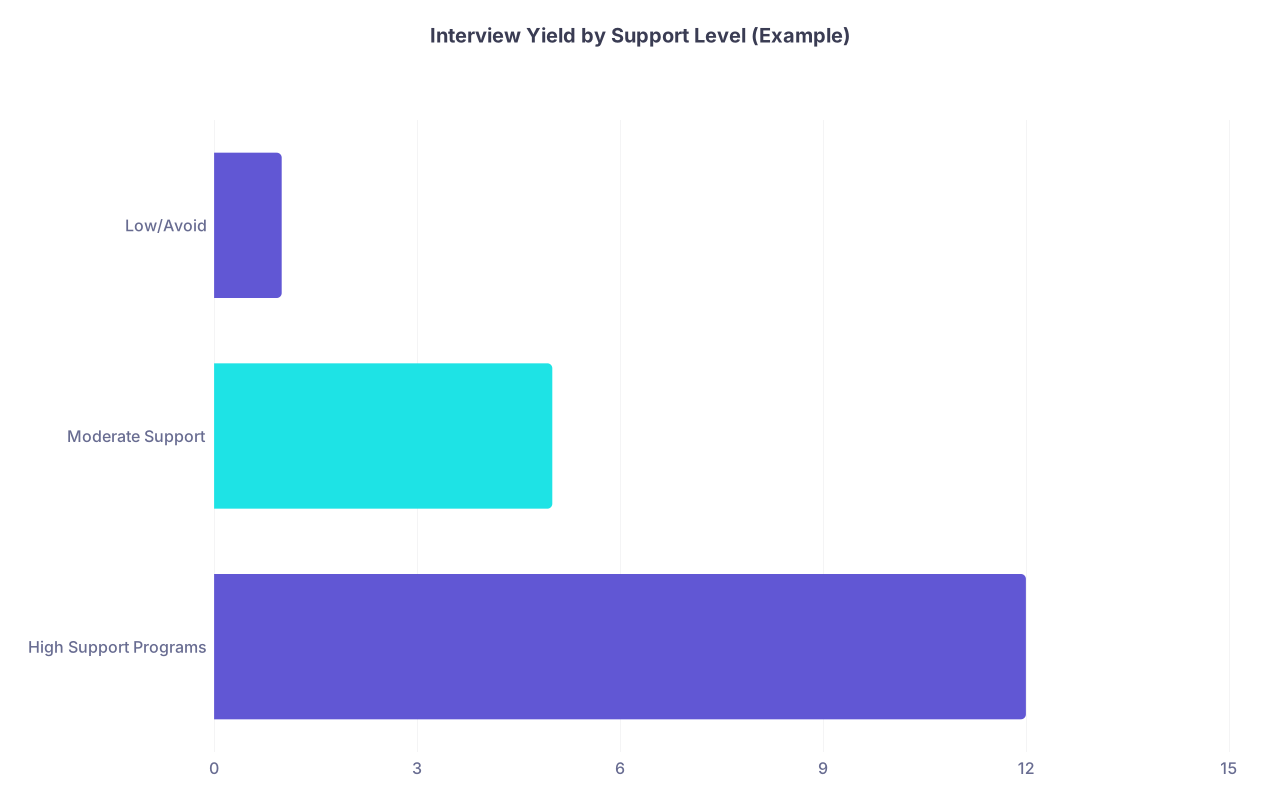
| Category | Value |
|---|---|
| High Support Programs | 12 |
| Moderate Support | 5 |
| Low/Avoid | 1 |
(This is typical: most invites will come from your high‑support group if your targeting is logical.)
Week 3–4 of September: Strategic signals to supportive programs
At this point you should communicate with your top supportive sites, briefly and professionally.
For your top 10–15 programs:
- Send a concise email:
- Re‑introduce yourself (name, med school, IMG)
- One line: why their program (something specific)
- Mention any connection: observership, mentor, geographic tie
- Attach ERAS CV or just reference your AAMC ID
Template structure:
- Subject: “Applicant – [Name], IMG candidate interested in [Program Name]”
- Body: 4–6 lines max. No begging. No long life story.
Supportive programs often respond better to polite interest than the big-name academic places.
October–November: Interview Season – Maximize Supportive Sites
Now interviews start to hit your inbox.
At this point you should prioritize visits (virtual or in-person) to programs that already showed they support IMGs.
Early October: Accept, decline, and protect your energy
Rules I’m going to be blunt about:
- Do not burn interview days on programs that:
- Do not sponsor your visa type
- Have zero IMGs and a vague “we’ll see” stance
- Do take:
- Any interview from high‑support programs
- Reasonable interviews from moderate‑support programs in locations you can tolerate
Make every interview count. Supportive programs are often smaller community sites; they will actually remember you.
During interviews: What you should ask (and listen for)
Supportive vs performative support is obvious if you ask concrete questions:
Ask residents:
- “How many international graduates are in your program right now?”
- “How does the program help new residents adapt to the system during the first few months?”
- “Have IMGs from here gone into fellowships or local jobs? Any examples?”
- “How are visas handled? Is there dedicated support?”
Ask faculty/PD (carefully, once you read the room):
- “What qualities do you value in IMG residents?”
- “How do you support residents who might need a little more time early on with documentation or communication style?”
Listen for:
- Specific examples (“We matched two IMGs last year who are now chiefs…”) vs vague niceness (“We love diversity.”)
- Tone toward IMGs – proud? Annoyed? Tolerant?
- Whether IMGs talk openly in front of faculty. Or stay quiet.
Take notes the same day. Label each program with:
- “Feels safe and supportive”
- “Neutral”
- “Red flags”
December–January: Second Wave + Back‑Up Strategy
By December, you’ve likely had the bulk of your invites. Some late ones will still trickle in.
At this point you should lean all the way into places that actually felt supportive.
Early December: Reassess your list based on reality, not fantasy
Update your sheet:
- How many interviews from:
- High‑support
- Moderate‑support
- Low‑support
Ask yourself:
- Which interviews felt like “they know how to train IMGs”?
- Which felt like “you’ll be on your own, good luck”?
You are not ranking prestige. You are ranking who will actually help you survive and pass boards and not collapse.
Late December–January: Follow‑up, second looks, and signals
At this point you should send short, honest thank‑you / interest emails to your top supportive programs.
Good content:
- One specific thing you liked about the program (anecdote from interview day).
- Why you see yourself fitting there (teaching style, patient population, IMG presence).
- A clear interest signal: “Your program is among my top choices.”
If they offer second looks (virtual or short in‑person tours), strongly consider them for your top 3–5 supportive sites. These can move you up their list, especially in smaller programs that rely on “do we know this person well enough to invest in them?”
February–Match Week: Rank List Built Around Support
Now the real decision: where you’re willing to train.
At this point you should build a rank list that reflects one thing: you will thrive, not just survive.
February: Rank list construction
Tie together everything you collected:
- IMG ratio and track record
- Visa clarity
- Resident culture
- Program leadership attitude toward IMGs
- Location preferences (yes, this still matters—misery kills performance)
Brutal guideline I use with IMGs I advise:
- If a program openly or implicitly treats IMGs like second‑class citizens, don’t rank them ahead of a truly supportive place, even if the name is fancier.
You want to come out of residency:
- Licensed
- Board‑eligible
- Not burnt to ash
- With people willing to write you strong letters
Those things come from supportive environments, not logos.
What You Should Do Today
You’re somewhere on this timeline right now.
One concrete action you can take today:
Open a spreadsheet and list 10 programs you think are IMG‑friendly. For each one, spend 10 minutes confirming:
- How many IMGs are in the current resident roster?
- What do they say about visas?
- What does their social media show about resident life?
Then label each as High / Moderate / Low support.
That’s your first real filter. And once you see how different programs really are in how they treat IMGs, you’ll stop “applying broadly” and start applying intelligently.