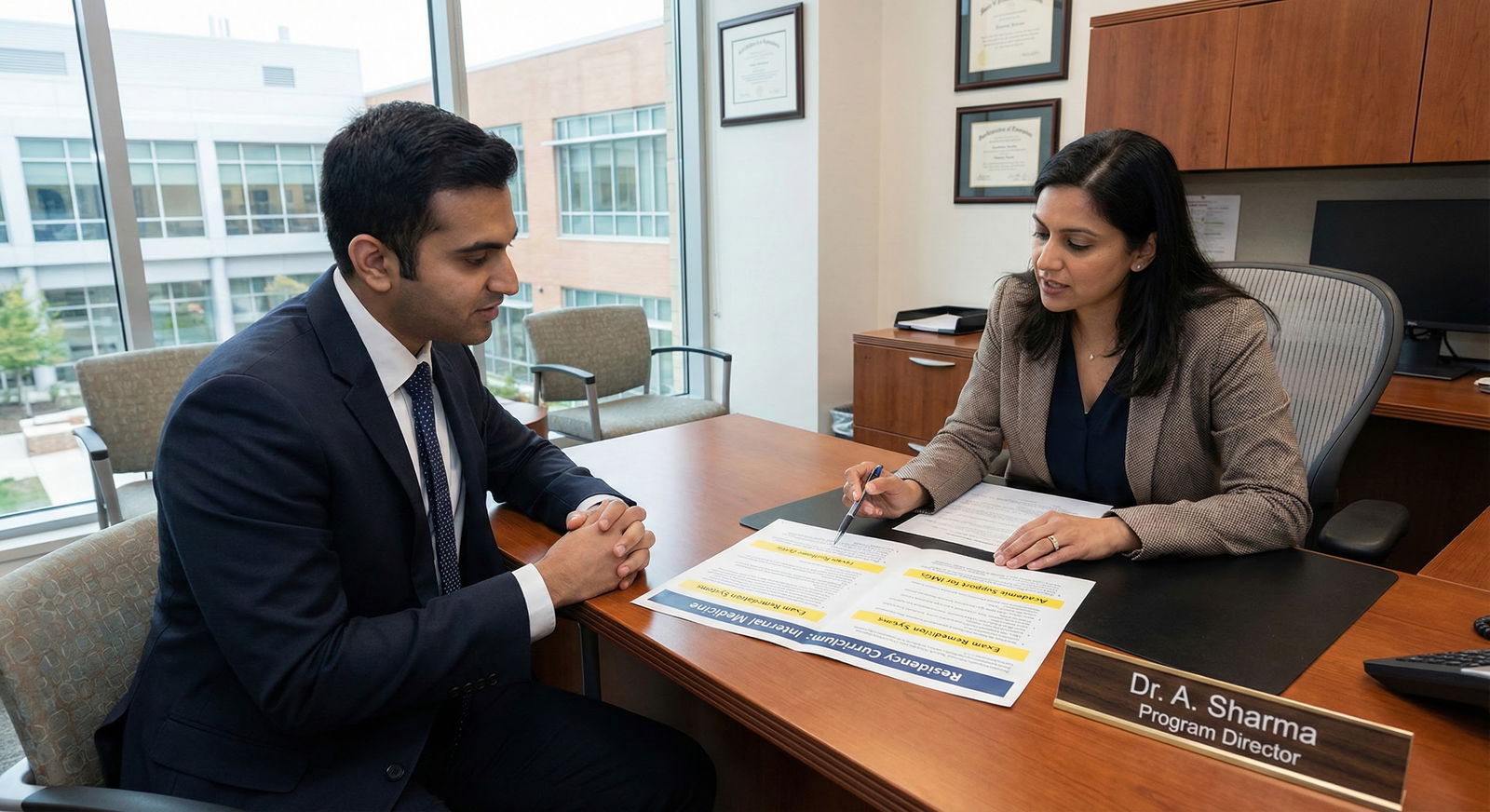
Every program saying “we welcome IMGs” is not the same as actually supporting you. And you’re not crazy for feeling that.
You’re staring at FREIDA, program websites, Reddit threads, old SDN posts… and it all starts to blur. They all claim “we value diversity” and “we welcome international graduates,” but when you look closer: barely any IMG residents, no mention of visas, cryptic wording like “we may consider qualified non-citizen applicants.”
So the panicky thought hits:
What if there actually aren’t any programs that are truly supportive of IMGs like me? What if this whole thing is stacked from the start and I’m just throwing applications into a shredder?
Let’s walk straight into that fear instead of dancing around it.
The Ugly Truth: “IMG-Friendly” Is Often Just Marketing
Let me be blunt: a lot of programs use “IMG-friendly” like a buzzword.
You’ll see things like:
- “We consider all applicants holistically.”
- “We welcome applications from international graduates.”
- “We sponsor J-1 visas on a case-by-case basis.”
Sounds nice. Means very little by itself.
Here’s what I’ve seen actually happen:
- Program website: “We accept IMGs.”
- Current residents page: 36 residents, 0 IMGs.
- PD Q&A on interview day: “Yes, we’ve had IMGs in the past.” (Translation: one person in 2014.)
- Hidden filters: unofficial Step cutoffs, total avoidance of certain schools, silent “US-IMG vs non-US-IMG” bias they’ll never write down.
So no, you’re not being dramatic or paranoid. The system is confusing and often opaque. A lot of programs are technically-open-but-practically-closed to most IMGs.
But that’s not the full story.
There are programs that actually back up their words. The problem is: you can’t identify them with a single label like “IMG-friendly.” You have to read between the lines.
Signs a Program Is Actually Supportive (Not Just Saying It Is)
You’re terrified that no one is truly IMG-friendly. Let’s define what real IMG support even looks like, because once you know what to look for, the map changes.
Here are the things that matter way more than a one-line sentence on the website.
1. Current Residents Tell the Truth (If You Know What to Ask)
If you can get to a current IMG resident—even one—that’s gold.
Supportive programs usually:
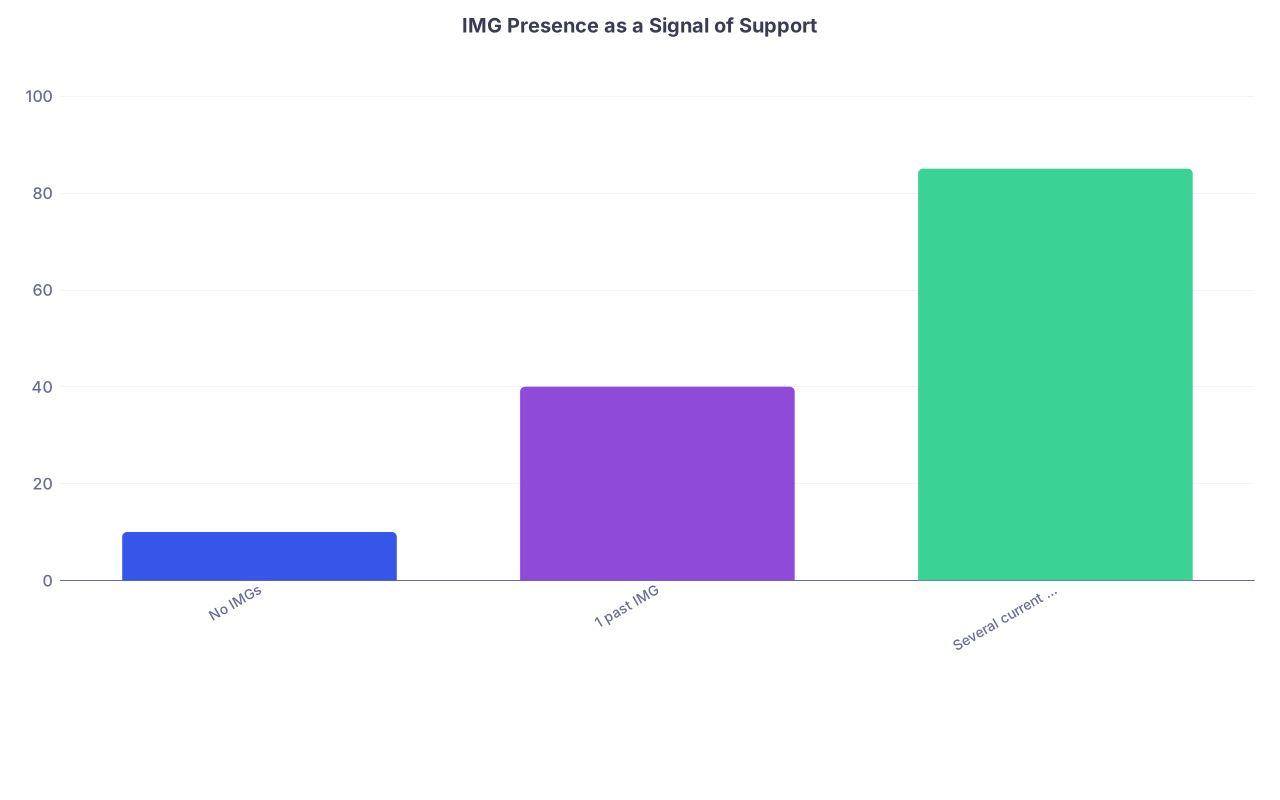
- Have more than one IMG. You’ll see multiple IMGs across PGY classes.
- Let residents answer honestly without faculty hovering on Zoom like surveillance cameras.
- Have IMGs in chief or leadership roles sometimes.
Red flags:
- “We don’t have IMGs now, but we had one a few years ago.”
- Residents dodge visa questions with “that’s more of an office thing.”
- Everyone looks awkward when you ask: “How many IMGs are in your program currently?”
Supportive programs don’t act like your visa is a taboo topic.
2. Visa Policy Is Clear, Written, and Specific
Vague = danger.
Look for:
- “We sponsor J-1 visas through ECFMG.”
- “We do not sponsor H-1B” (honestly, clarity is better than fake hope).
- Data or a sentence like: “We currently have residents on J-1 visas.”
Stay cautious if you see:
- “We may consider non-citizen candidates” with no specifics.
- No mention of visas anywhere.
- Visa policy “under review” or “handled case-by-case” with zero examples.
Supportive programs know IMGs care deeply about visas and don’t hide the ball.
3. Their Match Lists and Resident Bios Don’t Lie
If a program claims to be open to IMGs, the resident pages should show it.
Ask yourself when you scroll:
- Do I see schools from outside the US?
- Do they list medical schools or just names?
- Are there FMGs/IMGs in PGY-1 and PGY-2, not just some distant graduate from 2011?
If you can’t tell, sometimes LinkedIn detective work helps. Annoying? Yes. But it shows you patterns: which med schools/programs actually match there.
4. They Answer IMGs Like You in Email Without Being Weird
You’re scared of being “that applicant” sending emails. But one or two specific, polite questions can tell you a lot.
For example:
- “Do you currently have residents who trained at international medical schools?”
- “Does your program sponsor J-1 visas through ECFMG?”
- “Do you consider applicants who require visa sponsorship?”
Pay attention to how they answer:
- Specific, clear answers = more IMG-friendly.
- Generic copy-paste: “We consider all applicants holistically, please see our website” = they don’t want to commit.
You’re not being needy by asking. You’re trying not to waste thousands of dollars on programs that never intended to rank you.
| Category | Value |
|---|---|
| No IMGs | 10 |
| 1 past IMG | 40 |
| Several current IMGs | 85 |
When It Really Feels Like No One Wants You
Here’s the nightmare scenario that plays in your head at 2 a.m.:
You filter by “IMG-friendly,” do all the research, and it still feels like:
- Top university programs: 90% AMGs, mostly AOA, 260+ scores.
- Community programs: Many are “open” to IMGs but with hidden cutoffs or no clear visa sponsorship.
- Some places that look good on paper don’t respond to emails or have zero updated info.
So the thought: What if I’m too late / too old / too low score / wrong school? What if there is literally no program that truly fits me?
I’ve seen people match from:
- Caribbean schools with 220s on Step 2.
- Non-US IMG with gap years and no US research, but strong US clinical letters.
- Older graduates (5–7 years out) who focused on one specialty and built a tailored application.
They didn’t match everywhere. They matched somewhere that was supportive enough. The trick is you’re not looking for “perfectly supportive,” you’re looking for “supportive enough that you won’t be set up to fail.”
That’s a lower bar, but still real.
How to Build a Realistic “IMG-Supportive Enough” Program List
You’re probably terrified of under-applying and over-spending. Both feel like traps.
Here’s a way to create a list that doesn’t depend on fantasies.
| Tier | Target Programs | Core Idea |
|---|---|---|
| Safer IMG-heavy | 30–60 | Where IMGs are clearly present |
| Middle | 20–40 | Some IMGs, some uncertainty |
| Reach | 5–15 | Low IMG presence but still technically open |
You don’t need these exact numbers, but the structure matters.
Step 1: Start From Where IMGs Actually Match
Don’t reinvent the wheel. Use:
- NRMP Charting Outcomes for IMGs (if updated).
- Specialty-specific IMG match statistics.
- Old posts or spreadsheets where people list “IMG-friendly programs” and verify year by year if that’s still true.
Look for:
- Programs where at least 20–40% of residents are IMGs.
- Multiple IMGs from your region or type of school (Caribbean vs non-US, etc.)
This is your “safer” foundation. These programs may not be perfect, but they’ve proven they’ll actually rank IMGs.
Step 2: Filter Hard on Visa Reality
No program is “supportive” if they literally can’t keep you in the country.
Filter by:
- Only include J-1 sponsors if you’re okay with J-1.
- Only include confirmed H-1B sponsors if you specifically need H-1B.
- Cut any program that won’t say what they sponsor after two attempts at clarity.
And yes, this may slash your list. That’s painful. But better to be brutally realistic than send 40 applications to programs that legally or politically can’t touch you.
Step 3: Use a Personal “Dealbreaker” Checklist
You’re probably overthinking whether you’re being too picky. The truth: you actually do need a few non-negotiables.
For IMGs, typical realistic dealbreakers:
- Must sponsor [J-1 / H-1B].
- Must have current IMGs in program.
- Must not require US citizenship/permanent residency.
- Reasonable Step score expectations for your profile.
If a program fails 2–3 of these? Move on. Being “open to all applicants” on their brochure doesn’t count as a pass.

| Step | Description |
|---|---|
| Step 1 | Start with all programs |
| Step 2 | Filter by visa sponsorship |
| Step 3 | Check current residents |
| Step 4 | Remove or mark low priority |
| Step 5 | Check score expectations |
| Step 6 | Keep as reach |
| Step 7 | Add to main target list |
| Step 8 | Any IMGs present |
| Step 9 | Within realistic range |
What If I End Up in a “Not-That-Supportive” Program?
Another horror thought: you somehow match, then realize the program isn’t very supportive of IMGs. You’re stuck. They’re annoyed at visa stuff. You feel like an outsider.
First, matching at all as an IMG is already beating very rough odds. That alone says something about your resilience.
Second, programs are not monoliths. Even in not-great cultures, there are often:
- One or two attendings who become real mentors.
- Senior IMGs who’ve survived it and can tell you exactly how to navigate.
- Rotations where your work speaks louder than your passport.
Your power then becomes:
- Building relationships with the few people who actually “get it.”
- Being hyper-organized about visa paperwork so you reduce friction.
- Documenting support, promises, and expectations (especially around visa renewals) in writing.
Is that ideal? No. But it’s survivable. And you’re not the first IMG to walk through a less-than-welcoming environment and come out a board-certified physician.
The Darkest Fear: “Maybe I Should Just Give Up”
At some point, scrolling through websites and seeing:
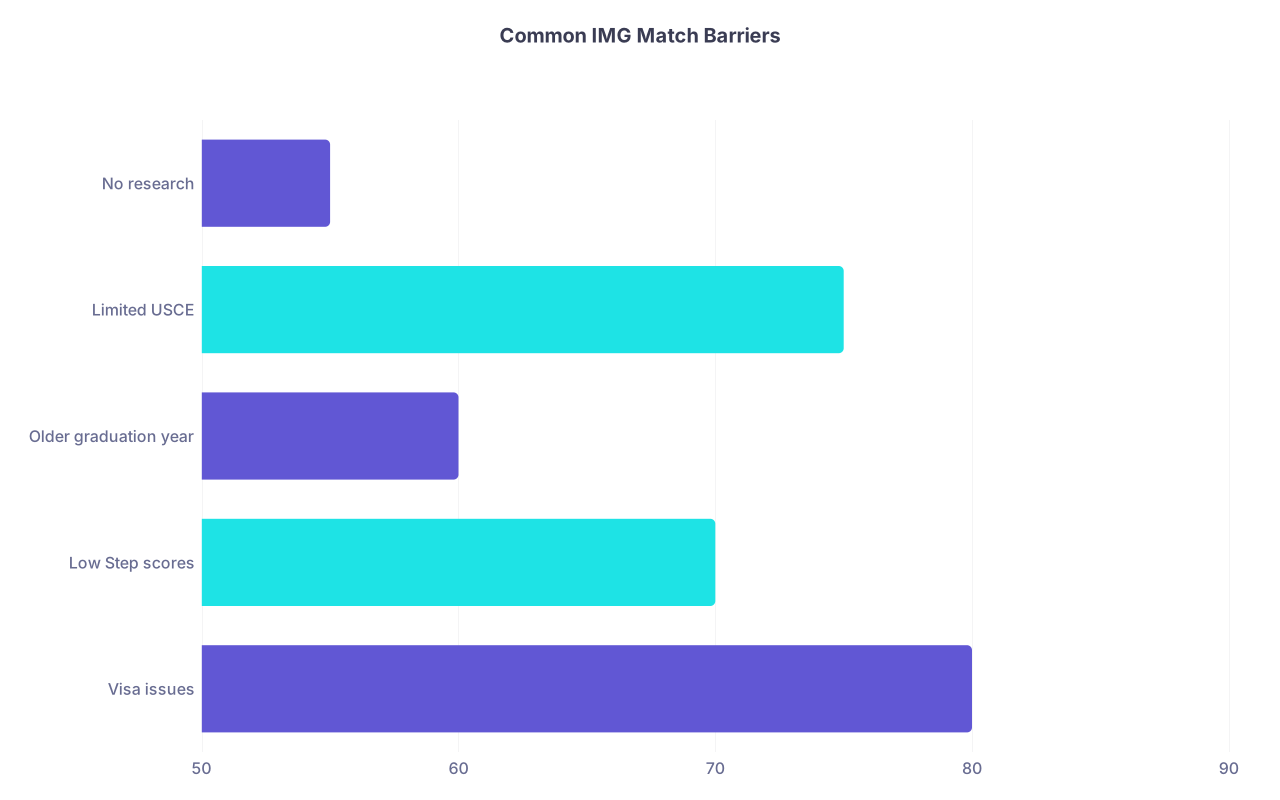
- “US clinical experience strongly preferred.”
- “Significant research productivity desired.”
- “Graduation within 3 years preferred.”
You start thinking: Everyone else has something I don’t. Maybe the biggest sign no program is supportive of IMGs like me is… that I’m just not good enough to be the kind of IMG they want.
I’m going to say something blunt: the match system is brutal and unfair, but it’s not a personality test. It doesn’t measure your worth or your potential to be a good doctor. It measures:
- Timing.
- Strategy.
- Luck.
- Where you happened to be born and trained.
You can make a rational decision to stop pursuing residency if the financial, emotional, or time cost isn’t worth it to you anymore. That’s not “giving up,” that’s choosing a different life.
But don’t make that decision from a place of pure panic, in the middle of the night, after doom-scrolling program websites.
Make it after:
- You’ve actually built a realistic list.
- You’ve talked honestly with at least one IMG who matched from a similar position.
- You’ve calculated the money and time you’re willing to invest in this cycle.
If after that you still feel like every door is closed? Then you can reassess. Not because you’re unworthy. Because the system is rigid, and you’re allowed to protect your sanity.
| Category | Value |
|---|---|
| Visa issues | 80 |
| Low Step scores | 70 |
| Older graduation year | 60 |
| Limited USCE | 75 |
| No research | 55 |
How to Move From Spiral to Action in 24 Hours
You’re drowning in “what if no one wants me.” Here’s how to cut through it fast and get to something you can control.
Today—literally today—do this:
- Pick one specialty you’re most serious about. Stop mentally auditioning three others while pretending you’re “keeping your options open.”
- Open FREIDA (or equivalent) and:
- Filter: your specialty, your desired region (or “any” if you’re flexible).
- Add filter: “Accepts IMGs” OR “Sponsoring J-1” (depending on tools).
- From that filtered list, pick 20 programs and:
- Check their current residents page for IMGs.
- Note whether they clearly state visa sponsorship.
- Out of those 20, pick 5 to email with one simple question:
- “Do you currently have residents who are international medical graduates and do you sponsor [J-1/H-1B] visas?”
You’ll hate doing this. You’ll feel like you’re being annoying and “bothering” people. Do it anyway.
Because once you get even 2–3 responses, you stop guessing and start seeing: some programs do answer, some do have IMGs, some really can sponsor your visa. They’re not everywhere. But they’re not nowhere.
You don’t need every program to be supportive. You need a small, specific cluster that’s supportive enough for someone like you to actually match and survive.

FAQ (Exactly the Questions You’re Afraid to Ask)
1. What if my scores and graduation year are so weak that even “IMG-friendly” programs won’t touch me?
Then your focus has to shift from “friendly” to “possible.” Look at where people with similar stats have matched recently (even if it’s only a few places). For older grads and lower scores, that usually means:
- Community hospitals rather than big academic centers.
- Programs in less popular locations.
- Possibly a backup specialty that’s genuinely less competitive.
It might also mean taking a year to strengthen your USCE, improve Step 3, or build connections. There is a point where it becomes extremely unlikely, yes. But almost nobody is objectively “too weak” without trying a strategic cycle first. The worst trap is burning a cycle on a fantasy list of programs that were never going to rank you.
2. I’m terrified to email programs—won’t that annoy them or hurt my chances?
If you’re spamming them with your life story and begging, yes, that’s annoying. But 1–2 short, targeted questions about visas or IMGs? Completely normal. Coordinators answer this constantly. The key is:
- Keep it under 5 lines.
- Ask specific yes/no or factual questions (visa sponsorship, IMGs currently in program).
- Don’t send follow-ups every 48 hours demanding answers.
If a program gets “annoyed” by a polite visa question, that’s not a supportive place anyway. You’re screening them as much as they’re screening you.
3. Should I only apply to programs that already have multiple IMGs?
No, but that’s where you should start. Programs with multiple current IMGs are your best proof that they don’t just say “we accept IMGs”—they actually rank them. After you’ve built a solid core list of those, you can add:
- Some “middle” programs with 1–2 IMGs or unclear data.
- A few reach places that technically accept IMGs but have low numbers.
If your list is 90% places with no IMGs, that’s gambling, not strategy.
4. What if I match somewhere that isn’t very supportive and I’m miserable?
Then your job becomes survival and leverage. Survive long enough to:
- Get your training completed, pass boards, and get certified.
- Build strong evaluations and relationships with a few attendings.
- Keep your visa stable.
People do transfer programs occasionally, but it’s hard and not guaranteed. The more realistic path is: use even a mediocre program as a stepping stone to an actual career. You don’t have to love the program for it to get you across the finish line. But if you feel deeply unsafe or discriminated against, document everything and seek help early—from GME office, ECFMG/visa advisors, or even legal counsel if needed.
Close your browser tabs for a second and do one concrete thing:
Open a blank document and write down 10 programs where you’ve actually confirmed at least one of these is true—current IMGs, clear visa policy, or explicit mention of IMG support.
Not ideal. Not perfect. Just confirmed.
That’s your starting map. Build from there.