

It is 6:25 a.m. on July 1st. You are the senior on wards. The new interns are standing in the workroom, clutching their coffee and looking at the EMR like it is written in ancient Sumerian. Your pager has already gone off twice. Night float is trying to sign out. The attending is somehow already on the unit.
This is the moment where you either:
- Spend the month putting out fires, re-explaining the same things, and cleaning up preventable messes,
or
- Use day one to set a system so the team mostly runs itself, and you get to be a teacher and leader instead of the human spam filter.
You are not “just” a senior resident here. You are the onboarding department.
Here is the checklist I use and teach: what to do before they start, during the first hours, and by the end of day one so your interns are safe, oriented, and actually useful by week one instead of week four.
1. Prep Before They Arrive: 60–90 Minutes That Save Your Month
If you walk in cold on July 1st, you are already behind. The real leverage is the prep you do before you ever meet them.
A. Build a One-Page “How This Team Works” Doc
Not a novel. One page. Clear, blunt, practical.
Content I recommend:
- Team schedule and expectations
- What time everyone arrives (not “around 6,” but “interns in by 6:15, senior by 6:00”)
- Target sign-out times (post-call, pre-call, long-call)
- When pre-rounds should be done
- Communication rules
- How to call you (text vs page vs call; what is urgent vs non-urgent)
- Expected response time for pages/texts during the day
- Daily rhythm
- Pre-round → table rounds → bedside rounds → notes → afternoon checks
- When to pre-chart vs see patients
- Clinical “red lines”
- “You must call me for:” (hypotension, chest pain, new O2 requirement, suicidal ideation, new neuro deficit, seizing, any rapid/Code Blue)
- “Do not do without discussing first:” (starting heparin drips, signing off AMA, major family meetings alone, code status changes if you are not comfortable)
- Documentation shortcuts
- Where your templates live in the EMR
- Common order set names (e.g., “CHF admission,” “DKA adult,” “sepsis bundle”)
Print a few copies and have it open on a workstation. Hand it to them in the first 15 minutes. It beats 30 minutes of rambling verbal expectations they will forget.
B. Build a Simple Coverage Map
Interns panic when they do not know who is “theirs.”
Create a quick patient-to-intern assignment grid so they can see their load and not argue about who takes what.
| Patient Range | Assigned To | Notes |
|---|---|---|
| Beds 401–406 | Intern A | Mostly medicine |
| Beds 407–412 | Intern B | Mixed, some post-op |
| Beds 413–418 | Intern C | Higher acuity |
Have this ready before rounds. You can adjust, but having a baseline plan prevents chaos.
C. Pre-Load Common Tools
Take 20–30 minutes in the EMR to set up:
- Note templates for:
- Admission H&P
- Daily progress notes
- Discharge summaries
- Order sets bookmarked:
- Sepsis, DKA, ACS, COPD/asthma exacerbation, CHF
- Team lists:
- Separate lists by intern or one main team list with column filters
You want day one to be about thinking and pattern recognition, not arguing with the EMR about how to open a note.
2. The First 30 Minutes: Frame the Job, Set the Culture
Most seniors waste the first half-hour on logistics. You do need logistics. But you need something else more: psychological safety plus clear standards.
Here is how I’d run the opening block.
A. Quick Introductions (2–3 Minutes, Not 20)
Do not fall into the “tell me where you are from, your hobbies” rabbit hole. They are anxious and want to know how not to fail.
- Names, PGY level, where you are from – fine.
- One line max about interests.
- Then pivot to: “Here is how this team works.”
B. Define Your Three Non-Negotiables
I like to state these explicitly. Something like:
No surprises.
If you are worried, I want to know early. I will never be mad you called too soon. I will absolutely be annoyed if I find out late.Own your patients.
You should know your patients better than anyone else. If a nurse calls, you should not be hearing about that problem for the first time on rounds.Respect everyone.
Nurses, RT, case management. They know things. If they page you, they saw something.
Say this out loud. They will remember this more than a 10-bullet “mission statement.”
C. Hand Them the One-Pager and Walk Through It
Sit down at a workstation, put your one-pager between you, and walk them through it in 5–7 minutes:
- “This is our start time.”
- “Here is when I expect pre-rounds done.”
- “These are the things I want you to always call me for.”
Then explicitly ask: “What are you most worried about today?”
You will hear: “I am scared to write orders,” “I have never used Epic/Cerner,” “I am afraid of missing something serious.”
Good. Now you know where to watch more closely.
3. The First Half-Day: Orient, Protect, and Get Them Seeing Patients
Your goals for the first morning are:
- Safety: they do not hurt anyone.
- Orientation: they know where to click, who to call, and how to start.
- Momentum: they see real patients, not just EMR demo screens.
A. Give a Very Short “How to Survive Intern Year” Primer
Ten minutes, max. Focus on the stuff they will actually use this week:
- How to triage pages:
- “I need pain meds renewed” vs “Patient is short of breath.”
- Teach them: “If vital signs sound bad or nurse sounds worried, go see the patient. Then call me.”
- How to structure a cross-cover note or event note:
- Trigger → Assessment → Action → Response.
- How to present briefly:
- One-sentence summary
- Overnight events
- Today’s plan by system
You are not teaching philosophy. You are giving them scripts they can run when stressed.
B. EMR Rapid-Fire Orientation (Don’t Overteach)
Common mistake: 45-minute EMR lecture. They will retain none of it.
Do this instead: a 10–15 minute live demo on one actual patient:
- Where to find:
- Vitals
- Labs and trends
- Micro/imaging
- Notes
- How to:
- Start a progress note from a template
- Place a basic order set (fluids, labs, imaging)
- Look up med list and last dose given
Then say: “That is enough to function. I will show you other tricks as they come up.”
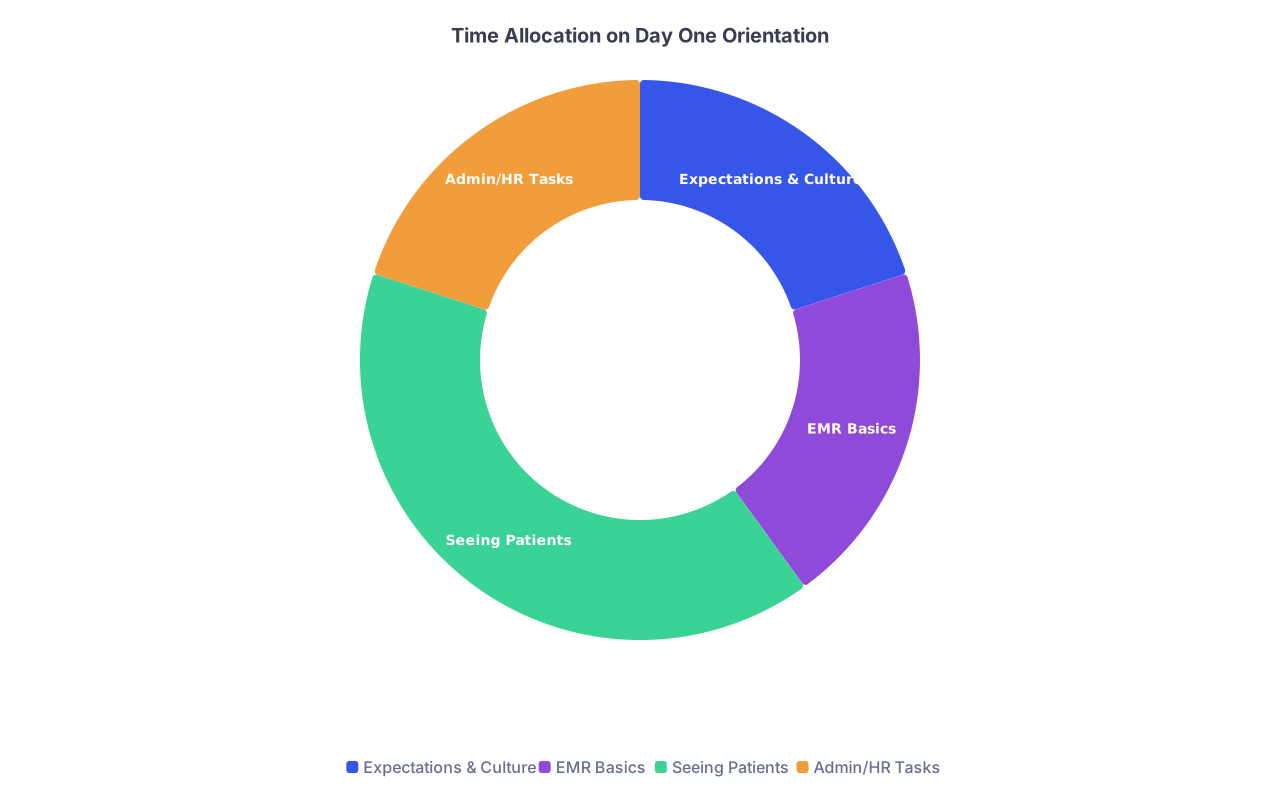
| Category | Value |
|---|---|
| Expectations & Culture | 20 |
| EMR Basics | 20 |
| Seeing Patients | 40 |
| Admin/HR Tasks | 20 |
C. Assign Patients and Set Pre-Rounding Targets
Do not say “Just start looking at charts.” That leads to doom-scrolling labs without a plan.
Be specific:
- “Intern A – these four in 401–404.”
- “Intern B – 405–408.”
- “Intern C – 409–412.”
Then: “I want you to see them in person before rounds. Basic vitals, quick exam, and one to three problems you think we should address today. We are meeting back here at 8:00.”
Give them a deadline. Interns move at the speed of the next fixed obligation.
D. Shadow Their First Critical Actions
If a new admit or sick patient shows up day one, resist the urge to just take over. But do not abandon them either.
Use a “side-by-side” approach:
- Walk with them to the bedside.
- Have them ask questions and do the exam, but you jump in if they get stuck.
- Step outside and say:
- “Give me your one-liner.”
- “What are the two or three biggest problems?”
- “What are you going to order first?”
You are training them that assessment and plan come early, not after 45 minutes of chart archaeology.
4. Running Rounds: Teach the Format on Day One, Not Week Three
Rounds are where the team’s habits get baked in. If you allow chaos on day one, you will fight it all month.
A. Give Them Your Presentation Template
They should not be guessing how you like patients presented.
I usually say:
“Here is how I want you to present:
- One-sentence ID and why they’re here.
- Overnight events and any acute changes.
- Then systems: Neuro, CV, Pulm, GI, Renal, ID, Heme/Onc, Endo.
- For each system: what is the problem and what is the plan.
- End with dispo: what has to happen for them to leave and when you think that might be.”
Then I present the first or second patient myself, out loud, in that format. Model it. Residents love to tell interns how to present and never show them.
B. Protect Them From Getting Destroyed by Attendings
Early July, some attendings go on the offensive. Cold pimping, rapid-fire questions, talking over interns. You cannot fix everyone, but you can buffer.
How:
- Before rounds:
“They are brand new. I will help guide presentations for the first few days.” - During rounds:
- If the attending grills an intern who is obviously drowning, step in:
- “Let me reframe the question.”
- Or: “We talked through that this morning, and our current plan is X.”
- If the attending grills an intern who is obviously drowning, step in:
- After rounds:
- Quick debrief: “You did fine. Here is one place to tighten up. Try starting tomorrow’s presentations with a crisp one-liner.”
You are modeling that this is a learning environment, not a firing squad.
5. Afternoon: Systems, Safety Nets, and Real Responsibility
By early afternoon, the interns are tired, overwhelmed, and still full of adrenaline. This is where you turn their vague anxiety into concrete systems.
A. Establish a Team Check-In Schedule
No intern should be wondering: “Is it okay to page my senior?” or “When will we talk about my sick patient?”
Build in micro-structure:
- Post-rounds (late morning):
5–10 minutes: “Any sick patients? Any orders you’re unsure about? Any confusing family situations?” - Mid-afternoon huddle:
3:00–4:00 p.m., stand-up in the workroom:- “Rapid updates on each patient.”
- “Who still has notes to finish?”
- “Any discharges missing paperwork?”
- Pre-sign-out check (evening):
20–30 minutes:- Review sign-out for clarity
- Confirm no pending critical tasks

| Step | Description |
|---|---|
| Step 1 | 06 -00 Senior arrives |
| Step 2 | 06 -15 Interns arrive |
| Step 3 | 06 -30 Expectations talk |
| Step 4 | 07 -00 Pre-rounding |
| Step 5 | 08 -30 Rounds |
| Step 6 | 11 -00 Post-rounds check |
| Step 7 | 13 -00 Admissions and tasks |
| Step 8 | 15 -30 Afternoon huddle |
| Step 9 | 17 -30 Pre sign-out review |
| Step 10 | 18 -00 Sign-out |
They now know there are built-in times to surface problems. That alone decreases paging paralysis.
B. Teach Them How to Give and Receive Sign-Out
Bad sign-out is how you get 3 a.m. disasters.
Day one, sit with them when they prepare sign-out and be explicit about structure:
- One-liner
- Active problems
- Anticipatory guidance: “If X happens, do Y”
- Code status
- Pending labs/imaging
Then actually listen to them sign-out to night float. Correct in real time:
- “Too much irrelevant detail. Focus on what could kill them tonight.”
- “You did not mention he is on a heparin drip. That matters.”
Do this heavily in the first 2–3 days. Then you can taper as they solidify the pattern.
6. Common Day-One Failure Modes (And How to Fix Them Fast)
Let me be blunt. I have watched the same mistakes repeat every July. Here is what usually goes wrong, and what to do about it.
Failure 1: Interns Never Call for Help
Symptoms:
- You find out a patient has been hypotensive for 2 hours “but they looked okay.”
- Nurses bypass interns and call you or the attending directly.
Fix:
- Re-state your “no surprises” rule with examples:
- “If MAP < 65 and they are symptomatic, I want a call. Every time.”
- Reward early calls:
- When they call you right away on a borderline issue, say: “Good call. That is exactly when I want to hear from you.”
- Ask directly on rounds:
- “Who is the patient on your list you are most worried about today?”
Then focus teaching on that one.
- “Who is the patient on your list you are most worried about today?”
Failure 2: Chaos Around Orders and Procedures
Symptoms:
- Multiple conflicting orders.
- Duplicate labs/imaging.
- Interns ordering drips or high-risk meds without discussing.
Fix:
- Explicit rule:
“On day one, any new drip, any change in pressors, or new high-risk meds (like tPA, chemo, high-dose insulin) must come through me first.” - Show them how to “propose” orders in the EMR if your system allows it, so you can co-sign or review.
- For common scenarios (e.g., borderline K+, mild creatinine bump), build mini-algorithms and share them.
Failure 3: Notes Are Either Novels or Useless
Symptoms:
- 4-page progress notes repeating the same information.
- Or three lines: “NL exam. Continue current management.”
Fix:
- Sit with them while they write one note each.
- Live edit:
- Cut redundant sections.
- Force them to write a real assessment and plan by system:
- “Pneumonia – improving, de-escalating antibiotics, pulling fluids.”
- Share a good sample note from an upper-level (with identifiers removed) and say: “Aim for this length and level of detail.”
7. Quick Reference: Senior Resident Day-One Checklist
Here is a compact view of what you should have done by the end of their first day. If something is missing, fix it on day two. Do not wait a week.
| Domain | Completed If… |
|---|---|
| Expectations | Interns know start time, call rules, escalation |
| Safety Triggers | Clear list of “always call” situations |
| EMR Basics | Interns can find vitals, labs, notes, place basics |
| Rounds Format | Interns know your presentation structure |
| Patient Ownership | Each intern has a defined patient list |
| Communication | Day has fixed check-ins and sign-out routine |
Print something like this for yourself and actually check it off.
8. Leading Like a Grown-Up: Your Mindset Matters
You can execute every step above and still fail if your attitude is wrong.
Here is the mental model that works:
A. You Are Not Their Friend, You Are Their Safety Net
Do not confuse “being nice” with “never giving clear feedback.”
If an intern is chronically late, losing orders, or vanishing when paged:
- Call it out early. Privately.
- Be specific:
- “You have been 10–15 minutes late three days this week. The nurses notice. That is not acceptable.”
- Offer a fix:
- “Set your alarm 30 minutes earlier. I will meet you here at 6:05 tomorrow and we will pre-chart together once to get your timing right.”
Avoid the two extremes: screaming or silent resentment. Calm, direct, early feedback is how grown-up teams operate.
B. Remember What It Felt Like
You were an intern once. You panicked over ordering Tylenol. You did not know what “call CT surgery stat” even meant in practice.
So when they make rookie mistakes:
- Ask yourself: “Is this lack of knowledge or lack of effort?”
- Knowledge → teach.
- Effort → correct.
- Say things like:
- “This is a common mistake. Here is how to avoid it next time.”
- “When I was an intern, I did the same thing on a DKA patient and my senior wanted to strangle me. Here is the shortcut I learned.”
That normalizes learning curves while keeping expectations firm.
9. A Simple Day-One Timeline You Can Copy
Here is a model day you can adjust for your service and hospital, but the skeleton tends to work.
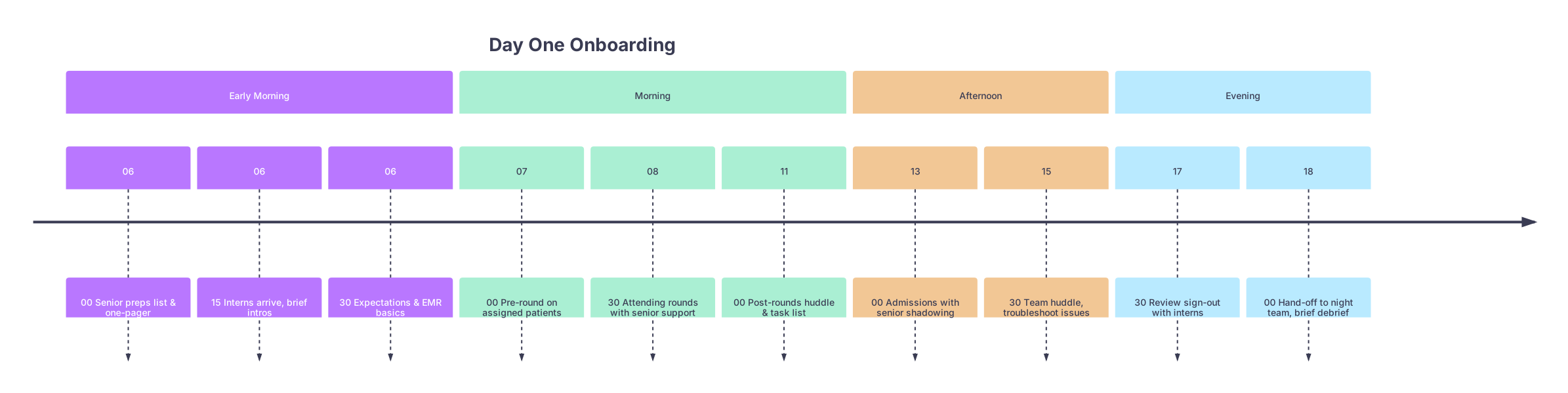
| Period | Event |
|---|---|
| Early Morning - 06 | 00 Senior preps list & one-pager |
| Early Morning - 06 | 15 Interns arrive, brief intros |
| Early Morning - 06 | 30 Expectations & EMR basics |
| Morning - 07 | 00 Pre-round on assigned patients |
| Morning - 08 | 30 Attending rounds with senior support |
| Morning - 11 | 00 Post-rounds huddle & task list |
| Afternoon - 13 | 00 Admissions with senior shadowing |
| Afternoon - 15 | 30 Team huddle, troubleshoot issues |
| Evening - 17 | 30 Review sign-out with interns |
| Evening - 18 | 00 Hand-off to night team, brief debrief |
Even if your exact times differ, the structure holds:
- Open with orientation.
- Get them seeing patients early.
- Build in two huddles.
- End with supervised sign-out and debrief.
10. Tools You Can Reuse All Year
Once you build this system, you can reuse 80% of it with every new group.
Consider creating a shared folder (drive, shared network, whatever your hospital uses) that contains:
- Your one-page team expectations
- Sample notes
- Quick references for:
- Common admission order sets
- Dosing cheatsheets (all within institutional policy)
- “Always call” criteria
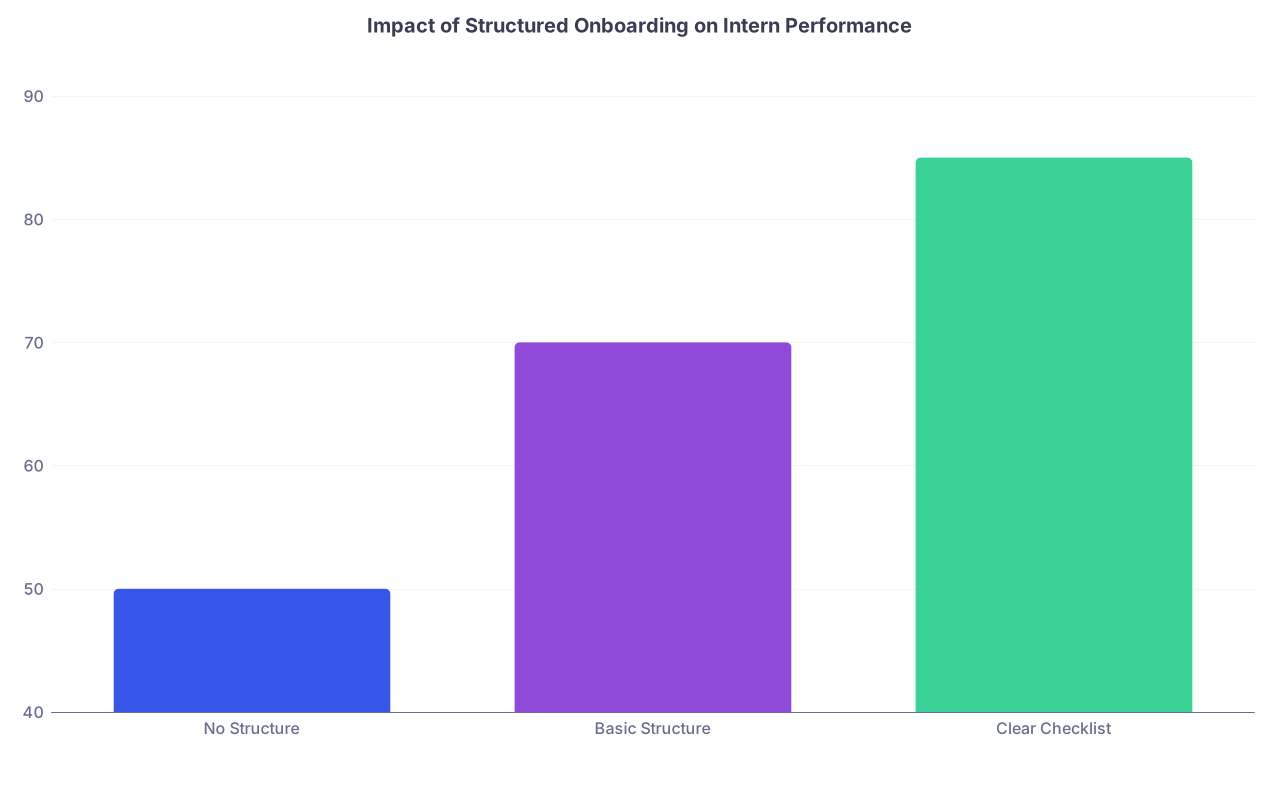
| Category | Value |
|---|---|
| No Structure | 50 |
| Basic Structure | 70 |
| Clear Checklist | 85 |
Once you have it, updating between rotations is trivial.
11. Debrief Yourself After Day One
Last piece. After sign-out, give yourself five minutes alone at a computer or in the call room. Ask three questions and write the answers down:
- What went well with intern onboarding today?
- Where did people seem confused or anxious?
- What is one thing I will change tomorrow?
Do not write a page. Three bullet points is enough. But do it. This is how you upgrade from “I survived July” to “My interns are actually good by August.”




The Short Version: What Matters Most
If you remember nothing else:
- Day one sets the culture. Be explicit about expectations, safety triggers, and communication rules. Do not assume they “just know.”
- Structure beats heroics. Simple check-ins, clear presentation formats, and supervised sign-out will prevent half your problems.
- Teach while protecting. Stand between your interns and unnecessary damage, but let them think, speak, and own their patients from the start.
Do this, and July stops being a monthly disaster drill and starts looking like what it should be: the month you actually become a leader.


