

The idea that you will “pick up” family meeting skills just by watching attendings is wrong.
If you are a resident, you need a structure, exact phrases, and fallback scripts; otherwise you will walk into high‑stakes meetings underprepared and come out feeling like you got hit by a truck.
This is fixable. You can turn family meetings from dreaded chaos into something you lead with calm, predictable steps.
1. The Core Structure: A Simple, Repeatable Framework
Most bad family meetings fail for the same predictable reasons:
- No clear purpose
- No shared understanding of the medical situation
- No explicit decision point
- No closing summary
So you need a spine. Use this seven‑step structure every time:
- Pre‑brief (with team)
- Set the stage (with family)
- Assess understanding
- Deliver information
- Align with values
- Make a recommendation & plan
- Summarize & close
Memorize that. Then layer in scripts.

| Step | Description |
|---|---|
| Step 1 | Pre-brief |
| Step 2 | Set the stage |
| Step 3 | Assess understanding |
| Step 4 | Deliver information |
| Step 5 | Align with values |
| Step 6 | Recommendation and plan |
| Step 7 | Summarize and close |
Let’s break down each step with phrases and exact language you can use tomorrow.
2. Step 1: The Pre‑Brief – What You Do Before You Walk In
You cannot “wing” the prep. Five minutes of pre‑brief saves you thirty minutes of confusion and damage control.
A. Who should be there
At minimum:
- You (resident)
- Bedside nurse
- If possible: attending / fellow (for high‑stakes cases), SW, chaplain, interpreter
If you are solo, fine. Still pre‑brief with the nurse.
Script with nurse/team (hallway, 2–3 minutes):
- “Ok, quick pre‑brief. What is our goal for this meeting? Information only, or decisions?”
- “What have you already told the family about what is going on?”
- “Are there any hot‑button issues I should know about? Conflicts, specific requests, or prior bad experiences?”
B. Define the meeting type
Be explicit with yourself. Which type is it?
| Meeting Type | Primary Goal |
|---|---|
| Informational update | Share status, next steps |
| Prognostic discussion | Explain likely outcomes |
| Goals-of-care | Align treatment with patient values |
| Code status | Decide resuscitation preferences |
| Transition to comfort | Shift focus to comfort-only care |
Write the type + goal on your sign‑out or index card. If you cannot name the goal, you are not ready.
Internal script:
- “This is a goals‑of‑care meeting. My goal: ensure family understands prognosis and discuss whether full intensive treatment still matches the patient’s values.”
C. Agree on messaging
If attending is not present, clarify their expectations beforehand.
Quick attending check‑in:
- “For this afternoon’s family meeting for Mr. Lopez, my understanding is prognosis is poor, and we are not recommending CPR or intubation. Is that correct? Anything specific you want me to communicate or avoid committing to?”
You want to avoid the classic disaster: resident promises something the attending never intended.
3. Step 2: Set the Stage – How You Start the Meeting
How you open sets the tone. Residents often mumble introductions and then dump information. Do the opposite: slow, intentional, and clear.
A. Physical setup
- Sit down. At eye level.
- Ask the nurse to silence alarms and minimize interruptions when possible.
- If the patient can participate, position yourself where they can see you.
B. Opening script (60–90 seconds)
You can reuse this almost verbatim:
“Thank you all for taking the time to be here.
My name is Dr. [Name]. I am one of the doctors taking care of [Patient]. This is [Nurse], who has been caring for [Patient] at the bedside.
Before we start, can we quickly go around and say your names and how you are related to [Patient]?”
[Let them introduce themselves. Use names.]
“Just so we are on the same page, the reason I asked you to meet today is to:
- give you an update on what is going on medically, and
- talk together about what this means for [Patient] and what to expect going forward.
We will keep this to about [15/30] minutes. I will share what we know, I want to hear your thoughts and questions, and then we will make a plan together.”
That hits:
- Who you are
- Why you are there
- Agenda
- Time frame
4. Step 3: Assess Understanding – Before You Talk, They Talk
Residents skip this and pay for it later. You need to know the story they are living in their heads.
A. The key question
Use this every single time:
“Before I explain anything new, could you tell me, in your own words, what you understand about what has been going on with [Patient] in the hospital so far?”
Then shut up. Take notes. Do not interrupt.
You are listening for:
- Knowledge gaps (“They said the infection is better, so he is out of danger now, right?”)
- Language they use (“His kidneys are tired”, “She is sleeping a lot”)
- Magical thinking (“Once he wakes up, we will start rehab and he will be back to normal”)
B. Reflect and correct gently
After they talk:
“Thank you, that is really helpful. You are right that [reflect accurate part].
There are a couple of pieces that are a bit different from what we are seeing now, and I would like to explain those.”
You validate and open space for new information.
5. Step 4: Deliver Information – Clear, Honest, No Jargon
This is where residents get tangled: too technical, too vague, or too optimistic.
Use a simple three‑part structure:
- Headline
- Details (2–3 points max)
- What it means / what to expect
A. Headline first
One sentence. No hedging.
Examples:
- “The infection is not getting better despite our strongest antibiotics.”
- “Your father’s heart and lungs are failing, and we do not think he will recover to the way he was before.”
- “Even with everything we are doing in the ICU, your sister is dying.”
Hard sentences, but families remember the first clear statement you make. If you bury the headline, they leave confused.
B. Then 2–3 key points
Pick the essential data, in plain language.
Example for severe sepsis, multi‑organ failure:
“Let me break that down a bit:
- His lungs are very weak, so the breathing machine is doing almost all the work.
- His blood pressure is low, and it only stays up because of strong medications through his IV.
- His kidneys have stopped working, so he needs dialysis to clean his blood.
Taken together, those tell us that his body is very, very sick and not bouncing back.”
C. Translate into prognosis
This is the part attendings punt to you without warning. Here is a script that works and is honest:
- “Given everything we are seeing, our concern is that time may be short — we are talking days to, at most, weeks, not months or years.”
- “If he survives this hospitalization, we do not expect him to return to being independent at home. He would likely need long‑term care with help for almost all daily activities.”
- “Even with CPR and shocks, we think the chance of him surviving and waking up meaningfully is extremely low.”
Then pause. Let that land.
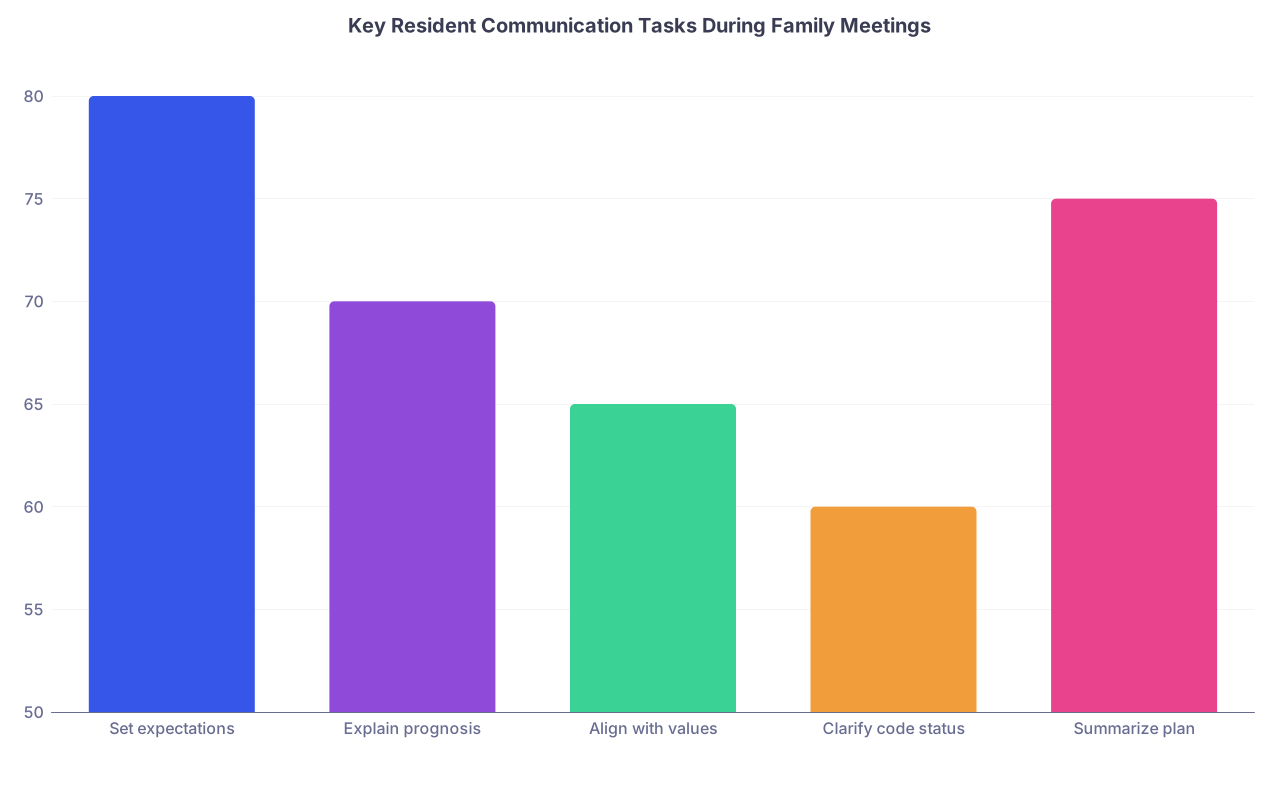
| Category | Value |
|---|---|
| Set expectations | 80 |
| Explain prognosis | 70 |
| Align with values | 65 |
| Clarify code status | 60 |
| Summarize plan | 75 |
6. Step 5: Align With Values – Turning Data Into Decisions
Information alone does not produce good decisions. You have to connect it to what matters to the patient.
A. Elicit values and prior statements
Use these questions. They work:
- “What has [Patient] said in the past about what is important to them if they were very sick?”
- “When you think about [Patient], what are the things that give their life meaning or joy?”
- “If [Patient] could see themselves in this bed, with everything going on, what do you think they would say?”
If they say “We just want everything done,” treat that as fear, not an actual goal. Gently redirect:
“I hear that you love him and want us to do everything we can for him. When doctors use the phrase ‘doing everything,’ it can mean a lot of different things. For some people, it means focusing on comfort and being with family. For others, it means using every machine possible, even if it does not change the outcome. Can you tell me more about what ‘everything’ would look like for him, based on what you know about him?”
B. Reflect and name the values
Residents underuse this step. It is powerful.
“So what I am hearing is:
- Independence has always been very important to her.
- She would not want to be kept alive on machines if there was no real chance of getting better.
- Being comfortable and not suffering is a priority.
Does that sound right to you?”
When they say “yes,” they are now co‑owning the values you will use to guide recommendations.
7. Step 6: Make a Recommendation – Stop Asking, “What Do You Want Us To Do?”
This is where many residents freeze. They dump options and then throw the hardest decision back at the family.
Families hate that. They want guidance.
Use this structure:
- Link values + medical reality
- Offer a clear recommendation
- Name the alternative, briefly
- Reassure about ongoing care
A. Values + reality sentence
“Given what we know about how important [independence / avoiding suffering / etc.] is to [Patient], and what we see medically, I am worried that continuing aggressive treatments like [CPR/intubation/escalation in ICU] would not help them get back to the life they would want.”
B. Then the recommendation
- “I would recommend that we focus our treatments on keeping her comfortable and peaceful, and that we allow a natural death when her body is ready.”
- “I would recommend that we do not perform CPR or shocks if his heart stops, because it is very unlikely to help him live longer in a meaningful way and very likely to cause harm and suffering.”
- “I would recommend that we transition from intensive care to a plan that prioritizes comfort and time with family, possibly with hospice support.”
Then add:
- “We can still treat discomfort, anxiety, and other symptoms very aggressively. We are not giving up on her comfort or on caring for all of you.”
C. Avoid the weak “menu” script
Do not say:
- “We can do A, B, or C; what do you want?”
Better:
- “There are a few options. Based on what you have shared, I recommend [X]. Another approach some families choose is [briefly describe Y], but I worry that would not match what you have told me about him.”
You are still leaving room for disagreement, but you are not abandoning them to make a technical decision without guidance.
8. Step 7: Summarize & Close – Do Not Just Drift Out of the Room
Formal closure prevents miscommunication.
A. The 3‑part summary
- What we understand
- What we decided
- What happens next
Script:
“Let me take 30 seconds to make sure we are all leaving with the same understanding.
- What we understand: [Patient] is very sick with [brief description], and we do not expect them to recover to their previous level of health. Time may be short.
- What we decided: Based on what you told us about what matters to them, we agreed that we will [DNR/DNI, focus on comfort, continue current treatment for now, etc.].
- What happens next: Today, that means [concrete steps: changing code status in chart, adjusting meds, involving palliative care, planning hospice eval, or scheduling another meeting in 48 hours].”
Then ask:
- “Does that match what you heard? Is there anything important I missed or got wrong?”
B. Normalize emotions and access
You close with human connection, not just documentation.
“I know this is a lot, and it is completely understandable to feel overwhelmed or upset.
We will not disappear. If questions come up later today or tomorrow, please let the nurse know, and we can come back to talk again.”
Then step out, debrief quickly with the nurse, and chart immediately.
9. Handling Common Difficult Situations (With Scripts)
Here is where your real stress lives. Let us tackle the standard problems.
A. “Are you giving up on her?”
Response:
“I can see how it might feel that way, and I am really glad you said it out loud.
We are not giving up on her. We are changing what we are fighting for.
Right now, we are fighting to make sure she is comfortable, that she is not suffering, and that the time she has is as peaceful and meaningful as possible. What we are not doing is treatments that are very unlikely to help and very likely to cause more pain.”
B. “God will perform a miracle.”
Do not argue theology. Acknowledge, then frame medical plan.
“I respect your faith and your hope for a miracle. I have taken care of many families for whom faith is very important.
Medically, based on everything we know, we need to plan as if her time is very short.
What I can promise is that we will continue to care for her and for you, and we will do everything we can to keep her comfortable, while you continue to pray and hope as you feel called to.”
C. Disagreement within the family
You are not a mediator, but you can structure next steps.
“I can hear that you both love him deeply but see this differently.
These are very hard decisions to make in one meeting. What I can suggest is:
- I will clearly document our medical assessment and my recommendation based on what you have shared.
- If you would find it helpful, we can involve [ethics, palliative care, chaplain, social work] and schedule a follow‑up meeting, perhaps with [healthcare proxy or legal decision maker] present.
For today, we can [maintain current level of care / not escalate further] while we work through this together.”
D. “What would you do if this was your mother?”
You will get this at 2 a.m., guaranteed.
Honest, balanced script:
“That is a very human question, and it tells me how much you care about her.
I cannot know your mother the way you do. What I can say is that, if my mother were in this situation, and she had told me that independence and avoiding suffering were important to her, I would likely choose a path that focused on keeping her comfortable and avoiding treatments that were unlikely to help her get better.
But ultimately, you know her best. My role is to share what we see medically and to support you in making the decision that best fits who she is.”
10. Documenting the Meeting – Protect Yourself and Help the Team
Your note is not busywork. It is risk management, handoff, and respect for the patient.
Key elements to include:
- Who was present (family names, relationships, disciplines: “RN, SW, chaplain”)
- Purpose of meeting (“goals-of-care discussion, code status clarification”)
- Medical summary given (1–2 sentences)
- Understanding and values elicited (quotes if powerful: “Daughter states, ‘Mom would never want to be kept alive on machines.’”)
- Recommendations made and family response
- Decisions (code status, treatment limits, plan to re‑meet)
- Follow‑up steps (consults, time‑frame for next meeting)
Example closing line:
“Family expressed understanding and agreement with transition to comfort‑focused care. Code status changed to DNR/DNI. Palliative care consult placed. RN updated.”
11. Building Your Own “Go‑Bag” of Phrases
You do not need to memorize a 50‑page script. You need a handful of reliable phrases for each step.
Here is a compact “go‑bag” you can screenshot or write on a card:
Assess understanding:
“Before I explain anything new, can you tell me what you understand about what has been going on?”Headline:
“The big picture is that…”
“Our concern is that time may be short — days to weeks, not months or years.”Values:
“What would [Patient] say is most important to them if they were very sick and could not speak for themselves?”Recommendation:
“Based on what you have shared and what we see, I would recommend…”Normalize emotion:
“Anyone who loves [Patient] would feel the way you do right now.”Summary:
“Let me take 30 seconds to make sure we are all on the same page before we end.”
Over time, you will adapt this language into your own voice. That is fine. Just keep the structure.
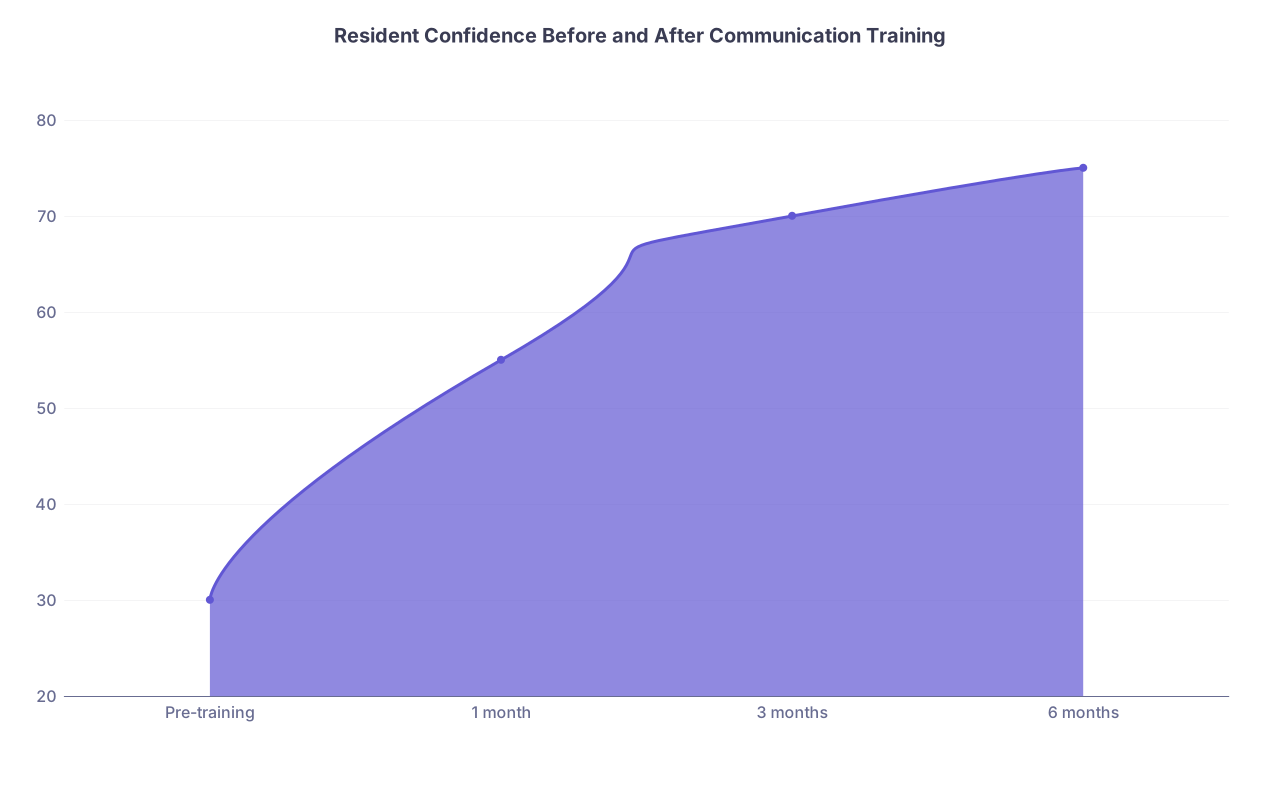
| Category | Value |
|---|---|
| Pre-training | 30 |
| 1 month | 55 |
| 3 months | 70 |
| 6 months | 75 |
12. Practice: How To Actually Get Better (Without Waiting for a Perfect Workshop)
You cannot become good at this by reading alone. You need reps.
Here is a simple, realistic training plan for a busy resident:
| Week | Focus Skill | Daily Time |
|---|---|---|
| 1 | Open & assess understanding | 5–10 min |
| 2 | Prognosis headlines | 5–10 min |
| 3 | Values & recommendations | 5–10 min |
| 4 | Summaries & documentation | 5–10 min |
Concrete steps:
- Pair up with a co‑resident and do 3‑minute role plays before sign‑out.
- After actual meetings, ask the bedside nurse:
“If you had to summarize what we just told the family in one sentence, what would it be?”
If it does not match what you intended, adjust. - Once a week, pick one meeting note and ask your attending for targeted feedback:
“Can you skim this and tell me one line you would change to be clearer or more defensible?”

13. What To Do Today: A Concrete Next Step
Print or write this on an index card and keep it in your white coat:
- Purpose of meeting: ________
- Ask: “What do you understand about what is going on?”
- Headline: “The big picture is…”
- Values: “What would [Patient] say is most important to them now?”
- Recommendation: “Based on what you have shared, I recommend…”
- Summary: “Let me take 30 seconds to make sure we are all on the same page.”
Next time a nurse says, “Can we do a family meeting later today?”, do a 2‑minute pre‑brief, pull out the card, and run the structure. You will feel the difference.


