

You walk into orientation for the new academic year. You glance up at the slide: “Welcome, New Chiefs.” And there it is. Your good friend’s name — the person you used to vent with during intern year, share memes with on night float, complain about attendings with — now listed as Chief Resident over your program.
Then it clicks: that’s not just your friend anymore. That’s your boss. Your scheduler. Your evaluator. The person who will sit in on your Clinical Competency Committee meeting. The person who can assign you to that brutal ICU rotation. Or protect you from it.
You feel that little jolt in your stomach:
“What does this mean for us?”
“Can I still talk to them the same way?”
“Are they going to treat me differently?”
And maybe the worst one: “If I screw up, is this going to wreck our friendship?”
Let’s walk through what to actually do in this situation — step by step — so you do not blow up a friendship or your professional reputation.
1. First 1–2 Weeks: Set the Tone on Purpose
Do not just “see how it goes.” That’s how small tensions turn into big resentment.
Acknowledge the change out loud
At some point early on, you need a short, direct conversation. Not dramatic. Just adult.
You might say:
- “Hey, I’m really happy for you. I also know this is a shift for us. I want to make sure I’m supporting you as chief and also not putting you in weird positions as my friend.”
- “If there are times you need to put on your ‘chief hat’ with me, I’m totally OK with that. I’d rather we talk about it up front.”
This does two things:
- Signals you respect their new role.
- Gives them explicit permission to be your boss without feeling guilty.
Do not say: “Don’t worry, nothing will change.”
That’s a lie. Things have already changed. Pretending otherwise just makes it harder later when reality hits.
Agree on boundaries (even if briefly)
You do not need a 1-hour summit. Five minutes is enough.
Touch on three things:
Feedback and criticism
“If I mess something up, just tell me directly. I’d rather hear it from you than through whispers or from the PD.”Gossip and complaining
“I know you’re going to hear stuff as chief. I’ll try to keep my venting reasonable so I’m not putting you in the middle.”Friend time vs work time
“At work, I’ll treat you like chief. Outside, we’re still us. If those bleed together sometimes, we’ll talk it out.”
You are not writing a contract. You’re just making it clear you understand the new lines.
2. How You Should Change Your Day-to-Day Behavior
You don’t need to become a different person. But you do need to stop doing the one thing a lot of residents do: acting like your friend-chief is “still just one of the residents.”
They’re not. Not to the program director. Not to the CCC. Not to the attendings.
Treat them as chief in public. Every time.
In front of:
- interns
- attendings
- nurses
- other residents
You treat them as chief first, friend second.
That means:
- You don’t undercut them on rounds or in sign-out.
- You don’t roll your eyes or joke about “Oh look, big chief energy.”
- You don’t push their boundaries because “they know I’m joking.”
If they’re giving instructions to the team, you back them up. Even if you don’t fully agree in the moment. You can debrief later.
I’ve seen this go bad. One resident thought it was funny to say in front of the night float team, “Relax, we all know you’re still the same PGY-3, title doesn’t mean anything.” Everyone laughed. The chief smiled. And then brought it up in tears a week later to the PD because they felt completely undermined.
Do not be that person.
You lose the right to certain kinds of venting
At least to them.
You can’t:
- Trash the program director to your chief-friend and expect them to just “keep it between us.”
- Rage about other residents in a way that forces them to choose sides.
- Mock scheduling decisions like they had no constraints and just chose to screw you.
They now see the sausage-making. Call schedules. ACGME rules. Faculty politics. Complaints from nurses. They are juggling stuff you don’t know about.
You can still be honest. But upgrade the tone from “I’m venting with my buddy” to “I’m giving feedback to someone in leadership.”
3. Potential Landmines — and How to Step Around Them
Here’s where people get burned. Same few patterns over and over.
Landmine #1: Perceived favoritism
Everyone is watching. If they know you’re close friends with the chief, they are looking for favoritism. Even when it’s not real.
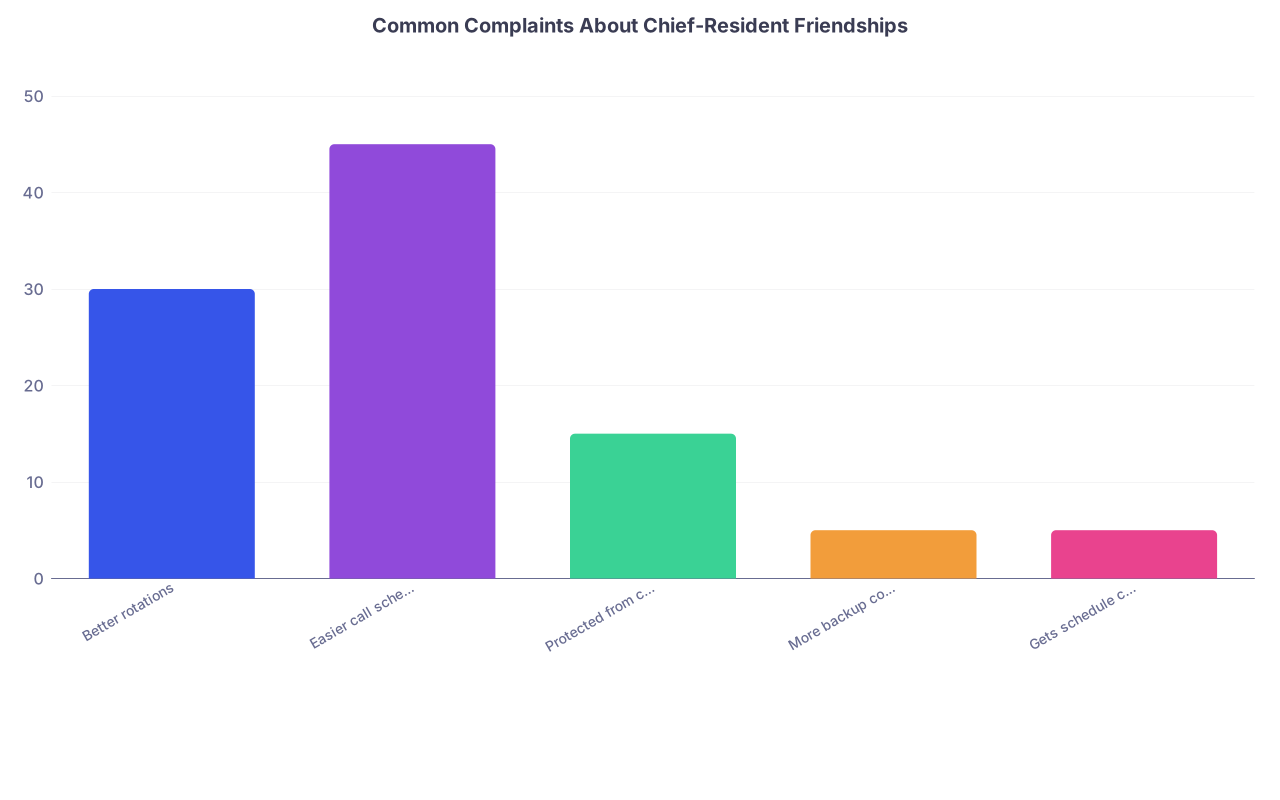
| Category | Value |
|---|---|
| Better rotations | 30 |
| Easier call schedule | 45 |
| Protected from criticism | 15 |
| More backup coverage | 5 |
| Gets schedule changes | 5 |
How to avoid this:
- Do not ask for special favors “as a friend.” If you’d be embarrassed to ask a chief you’re not close to, don’t ask this one.
- When you do need a schedule change, give a clear, legitimate reason and be willing to take a hit later (trade a bad shift for another bad shift).
- If you get a good schedule or a plum elective, do not brag about it. Do not joke “perks of being friends with chief.” Someone will repeat that to the wrong person.
If it looks like favoritism, it might as well be. Perception is what drives the drama and emails to the PD, not the actual truth.
Landmine #2: Using personal info against them (even subtly)
You probably know things about your friend that others don’t. Their burnout moments. Their insecurities. Their screwups from intern year.
Never weaponize that. Not in:
- arguments
- group settings
- passive-aggressive jokes
“I’ve seen you miss more pages than anyone, don’t act like you’re perfect now” — said once, in front of a few people, can permanently crack trust.
There’s also the quieter version: talking about them to others like they’re still “just one of us,” while complaining about their chief decisions. That gets back. It always does.
The rule is simple: protect their credibility publicly, deal with your frustrations privately.
Landmine #3: Confusing social hierarchy with work hierarchy
You might be the more experienced clinician. The stronger note writer. The better proceduralist.
Does not matter.
At work, they’re your chief. That means:
- You don’t override their assignments because “that makes no sense, I’ll just do it my way.”
- You don’t pull rank based on PGY year if the program structure says chiefs run the service.
- If you disagree, you ask, “Can we talk about this plan for a second?” instead of “That’s dumb.”
You can be right and still be insubordinate. Both can happen at the same time.
4. What to Do When You Disagree With Their Decisions
This will happen. If you think it won’t, you’re being naive.
Step 1: Choose the right time and place
Do not argue in front of the team. Just don’t.
You can say something like:
- “Let’s run this after rounds?”
- “Can we talk about that call swap when you have a minute later?”
This preserves their authority in real time and gives you both space to cool off.
Step 2: Use “chief” framing, not “friend” framing
Wrong:
“You’re really screwing me with this schedule.”
Better:
“I’m struggling with this schedule. I’m worried this sequence (ICU → nights → ICU) is going to crush me and affect my performance. Is there any flexibility here?”
That framing signals: I get that you’re doing your job; I’m asking for help, not accusing you of betrayal.
Step 3: Accept “no” like you would from any other chief
If they can’t change it, your move is:
- “I get it. Thanks for trying / for explaining.”
- Then drop it.
If you pout, go silent, or punish them socially later (“too busy” to hang out, one-word texts), they’re now carrying guilt on top of leadership stress. That will rot the friendship.
5. How Your Friend-Chief Should Change — And How You Can Help Them Get There
You can’t control them, but you can influence how they grow into the role.
Give them honest but respectful feedback
At some point, your friend-chief is going to misstep. Maybe they’re:
- too conflict-avoidant
- too harsh in feedback
- playing favorites without realizing
- clearly burned out and snapping at people
Most residents will whisper about it but never say it to their face. You actually can. That’s part of the privilege of being close.
You might say:
- “Can I give you some feedback from the friend side and the resident side?”
- “People really listen to you, but when you announce stuff last minute, it makes everyone feel like they don’t matter. I don’t think that’s what you intend.”
Keep it specific. One behavior, not “everyone thinks you’re doing a bad job.”
Don’t make them your private chief and therapist
Common trap: you bring them every frustration:
- “This attending hates me.”
- “My co-resident is lazy.”
- “The program is trash.”
They start every day with your emotional dump. Then have to go manage everyone else’s.
Better pattern:
- Save smaller annoyances for your non-chief friends.
- Bring them the big issues where their role actually matters: unfair treatment, mistreatment from staff, systemic problems, safety issues.
Think: “Is this something a chief is supposed to handle?” If yes, bring it. If it’s just “I’m tired and hate cross-cover,” that’s a group text problem, not a chief problem.
6. If Things Start Feeling Strained or Weird
You’ll feel it before you can define it. Short replies. Less joking. You assume it’s residency burnout. Maybe it is. Maybe it’s also about you.
Do a small, direct reset
Something like:
- “Hey, I feel like things have been a little off between us. I might be misreading it, but if I’ve made your chief life harder in any way, tell me. I’d rather fix it than guess.”
Don’t over-apologize for existing. But open the door.
If they say, “No, it’s just work,” believe them initially — but match their new pace. If they’re more distant, give them space. Still be supportive, but don’t make it about “us” all the time.
If they do bring up something you did? Listen. Without turning it into a full defense:
- “I hear you. I didn’t realize that came across that way. I’ll adjust.”
Then adjust. Quickly. They’ll notice.
7. When You’re Also Their Evaluated Resident
Huge piece people underestimate: this friend will write your evaluations, maybe your summative letter, and will speak about you in CCC meetings.
Your job is to make that as clean as possible for them.
Make their story about you easy and true
Ask yourself:
- If my chief-friend is in a room with the PD and CCC, what are the 2–3 sentences I want them to say about me?
Something like:
- “Reliable, shows up, takes feedback, good with nurses.”
- “Struggled early, but improved a lot with feedback and is now solid.”
You do not want:
- “Good friend, clinically fine, but sometimes a problem with professionalism.”
- “Very strong clinically, but tends to undermine leadership.”
So in your daily behavior, feed them the evidence they need to tell the story you want.
That means you:
- Answer pages.
- Show up on time.
- Don’t undercut attendings or chiefs in front of the team.
- Own your mistakes.
Not because you’re trying to “game” it. Because it’s fair. They’re putting their credibility on the line when they talk about you in those rooms.
8. Friend Time: Keeping the Relationship Alive Outside of Work
If you don’t protect some “we’re just friends” time, the relationship will slowly become purely transactional.
Keep some parts of your life strictly non-work
When you grab dinner, you don’t have to dissect the entire residency gossip mill. Decide up front: “We’re not talking about the program for the first 30 minutes.”
Talk about:
- family
- hobbies
- vacation plans
- literally anything not involving pages, CCC, or call
If they need to talk about chief stuff and specifically want your input? Fine. But do not always drag the workspace into every social moment.
Don’t punish them for doing their job well
This happens quietly.
They hold you accountable. Give you a tough evaluation. Deny a schedule request. Call you out for being late.
You take it personally and withdraw: fewer texts, fewer invites, shorter replies. They feel it. They also know exactly what changed and when.
If you can’t handle your friend holding you to a standard, that’s not a friendship problem. That’s a maturity problem.
You are allowed to feel hurt. You are not allowed to make them pay socially for doing the right thing professionally.
9. If Things Really Go Bad
Let’s not pretend it never happens. Sometimes:
- The chief actually does show favoritism and then turns on you to “prove” they don’t.
- They become power-drunk and treat you worse because they know you’ll tolerate it.
- The friendship erodes to the point where you barely speak.
If it gets to that level:
Step 1: Protect your professionalism
No matter what happens:
- Do your work.
- Be civil at work.
- Respond to their emails/messages.
- Follow their legitimate directives.
You don’t need to be close friends to maintain basic professional respect.
Step 2: Stop trying to resolve years of friendship history on work time
If there’s a deep personal hurt, that’s either:
- a private conversation off campus, or
- something you accept is not going to be resolved during this chief year.
Trying to untangle old wounds in the middle of a sign-out hallway conversation just guarantees tears, resentment, and rumors.
Step 3: Use other structures if needed
If you think your evaluations or assignments are now biased in a way that affects your training:
- Document specific incidents (dates, what was said, impact).
- Schedule a calm, factual meeting with an APD or PD.
- Frame it as: “I’m concerned that our prior close friendship is interfering with a fair working relationship. I want guidance on how to handle this professionally, not to attack them.”
You are not going to “win” by gathering co-residents to choose sides. That just drags more people into the mess.
10. If You’re Going to Be a Chief One Day
File this away for future you.
Your friend becoming your chief is also a free masterclass on what not to do when the roles flip and you’re the one with the title.
Pay attention to:
- What made you respect them more.
- What made you trust them less.
- Moments where you thought, “If I were chief, I’d handle this different.”
Then later, steal what worked and avoid what didn’t.

| Step | Description |
|---|---|
| Step 1 | Friend Resident |
| Step 2 | Friend Becomes Chief |
| Step 3 | Clear boundaries |
| Step 4 | Confusion |
| Step 5 | Healthy dual role |
| Step 6 | Tension and resentment |
| Step 7 | Set Expectations |

| Category | Value |
|---|---|
| Week 1 | 20 |
| Month 1 | 45 |
| Month 3 | 70 |
| Month 6 | 85 |

Your move today
Do something small but concrete right now:
If your friend is about to start as chief or just started, send them a quick message:
“Hey, I’m genuinely glad you’re chief. When you have 10 minutes this week, I’d like to sit down and talk about how I can support you in the role and also not make things weird between us.”
Then when you sit down, hit three points:
- “I’ll treat you as chief at work. You have my support in front of others.”
- “If I ever cross a line or make your job harder, tell me directly. I can handle it.”
- “Let’s protect at least some non-work friend time when we can.”
That’s it. Short. Adult. Clear.
Open your phone, draft that message now, and send it.


