

An attending who undermines you in front of the team isn’t just “tough teaching.” It’s a leadership failure—and if you do nothing, it will quietly erode your confidence and your reputation.
You’re not crazy for feeling shaken after it happens. You are also not powerless.
Let’s walk through what you do in the moment, that day, and over the next week to protect three things that actually matter:
- Your patients’ care
- Your standing with the team and program
- Your own sanity and learning
First: Recognize What “Undermining” Actually Is
Before you react, you need to name what happened. Because not all negative feedback is undermining. Some of it is just uncomfortable truth.
Undermining usually looks like:
- Correcting you harshly in front of others in a way that attacks you, not the plan
- Publicly questioning your competence or judgment (“Do you even know how to manage DKA?”)
- Rolling their eyes, sighing loudly, or making sarcastic comments about you to the team
- Changing your orders in Epic and then saying to the team, “I fixed the mess Dr. X made”
- Making jokes at your expense in front of nurses, consultants, or patients
Not undermining (just hard feedback):
- “Why did you choose cefepime instead of pip-tazo? Walk me through your reasoning.”
- “You missed that this was septic shock. That can’t happen. Let’s make sure you don’t miss it again.”
- “From now on, I expect you to pre-round by 6:00 so labs are in your note.”
The first set hits your credibility and dignity. The second set can sting but still respects you as a physician in training.
You respond differently depending on which bucket it’s in.
In the Moment: How to Not Get Steamrolled in Front of Everyone
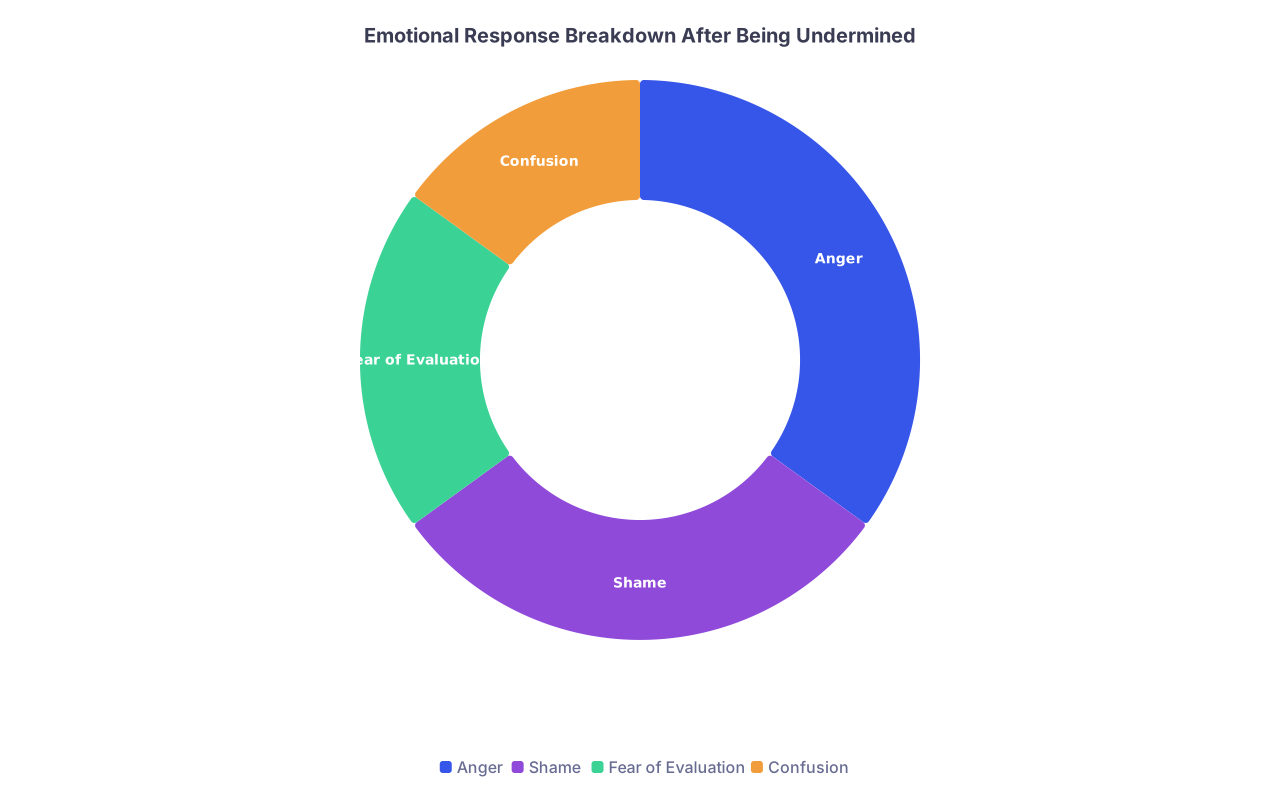
| Category | Value |
|---|---|
| Anger | 35 |
| Shame | 30 |
| Fear of Evaluation | 20 |
| Confusion | 15 |
You’re on rounds. Attending snaps at you, contradicts you, maybe mocks you a bit. You feel hot, embarrassed, a little nauseous.
Your goals right then:
- Do not escalate.
- Do not disappear.
- Salvage your credibility with the team.
Step 1: Stabilize yourself in seconds
You don’t have five minutes for box breathing. You have 5 seconds.
Try this micro-reset:
- Inhale once (normal)
- Exhale slowly for 4–5 seconds while you look at one neutral object (monitor, door frame, hallway sign)
- Say in your head: “Not about me. Fix the plan.”
Then speak.
Step 2: Protect the patient care first
If the attending is actually right about the medical issue—even if they’re a jerk about it—anchor on the plan.
Example:
Attending: “Why would you continue IV fluids? That’s completely wrong. This is heart failure, not sepsis. Did you even look at the echo?”
Bad reaction: Silence, shrinking into your coat.
Better reaction:
“You’re right, I missed how high the EF was. I’ll stop the fluids and update the orders now.”
You demonstrate responsiveness and attention to patient care. People notice that more than the outburst.
Step 3: One calm, clarifying question (if safe)
If what they said is vague, not medically clear, or confusing the team, you can ask one short, neutral question.
“To make sure I’m on the same page—would you prefer we start with IV diuresis and get a repeat BNP this afternoon?”
This:
- Shows you’re still engaged
- Redirects back to the plan
- Gives them a chance to reframe without losing face
If they’re still heated and snapping back, drop it. You’re not fixing the dynamic mid-rounds.
Step 4: Exit the moment with composure
End that interaction with something like:
“Got it. I’ll make that change now.”
“Understood. I’ll adjust the note and update nursing.”
Short. Neutral. Professional.
You’re not agreeing that you’re incompetent. You’re agreeing to the plan. There’s a difference.
Immediately After: Repair Your Standing with the Team

The worst thing you can do is vanish and stew in shame. Everyone saw what happened. If you ignore it completely, they’ll fill the silence with their own narrative.
Your goals in the next 1–3 hours:
- Show you’re still functioning
- Quietly re-establish competence
- Get a reality check from one trusted person
Step 1: Be visibly effective
Pick two or three very concrete tasks and knock them out efficiently:
- Call the consultant the attending wanted
- Rewrite the note correctly
- Talk to the patient/family and clear up the changed plan
Then, casually but clearly, loop back to the team:
“I updated Mr. Jones’s diuretic regimen in Epic and spoke with cardiology—they agree with the plan to increase IV Lasix and re-check BMP at 16:00.”
You’re sending a message: “I’m rattled, maybe. But I’m still capable and on top of things.”
Step 2: One quick reality check with a senior
Pull aside your senior resident (or a fellow you trust) briefly.
You:
“Can I run something by you? During rounds when Dr. Smith said I ‘have no idea what I’m doing’ about the fluid management—was that just tough feedback, or did that feel out of line to you?”
You’re not begging for validation. You’re calibrating.
Listen for:
- “That was harsh but they do that to everyone.” → Tough attending, maybe not personal.
- “That was out of proportion and they’ve done it before.” → Pattern, not just your bad day.
- “You were off the mark clinically, but their phrasing wasn’t great.” → There’s real content to work on.
Step 3: Decide who else needs follow-up
If the undermining was in front of:
- Nurses or RTs: Regain credibility by being responsive and clear with orders and communication for the rest of the day.
- Consultants: Be organized and professional when you call them later. They care way more about how you function than about one attending’s outburst.
- Patient/family: If appropriate, you can quietly clarify without throwing the attending under the bus.
For families, something like:
“We updated the plan after more review of your imaging. We’re going to focus on getting some of this extra fluid off your lungs. I’ll be following closely and updating you.”
Do not say: “My attending freaked out and changed everything.” You’re a professional, not a gossip conduit.
That Day: Decide Whether to Address It Directly
This is the part everyone dreads: do you actually talk to the attending about it?
There is no one-size answer. But here’s a simple decision path.

| Step | Description |
|---|---|
| Step 1 | Attending undermined you |
| Step 2 | Do not confront now |
| Step 3 | Document and talk to chief/PD |
| Step 4 | Consider direct, brief convo |
| Step 5 | Talk to senior, chief, PD |
| Step 6 | Plan neutral feedback discussion |
| Step 7 | Safety and power |
| Step 8 | Pattern? |
Option 1: Direct conversation (when it’s safe)
If:
- This was a one-off or rare event
- The attending is intense but not malicious
- You feel physically and psychologically safe talking to them
Then a short, private conversation can actually earn you respect.
Script (adapt this to your voice):
Ask for 5 minutes at a neutral time.
“Dr. Smith, do you have a few minutes after rounds to talk about something from this morning?”
Use “I” statements and be specific.
“During rounds when we were on Mr. Jones and you said I ‘had no idea what I was doing’ about fluid management—I left that interaction feeling pretty small in front of the team.”
Acknowledge the clinical piece.
“I agree that my assessment wasn’t where it needed to be, and I’m working on that.”
Ask for a more constructive approach.
“For my own learning, it’d help me a lot more if we could focus on what I missed and how to fix it, instead of comments about me as a doctor in front of the team.”
Then stop talking. Let them respond.
You’ll get one of three types:
- Reflective: “You’re right, that was too harsh. I was frustrated. Let’s walk through the case again.” (Win.)
- Defensive but not toxic: “I expect a high level of performance.” You calmly repeat your point once.
- Dismissive or hostile: “If you cannot handle criticism, maybe this is not for you.” This tells you this is not fixable on your own—and it’s time to loop in leadership.
Option 2: Do not confront—escalate or document instead
If:
- They have a known reputation for retaliation
- This isn’t the first time they’ve targeted you or others
- They used language that was demeaning, sexist, racist, or clearly inappropriate
Skip the one-on-one confrontation. You’re not a martyr; you’re a resident in a power-imbalanced system.
Instead:
Document the incident the same day.
Date, time, place, exact phrases as close as you can remember, who was present, and the impact on patient care (if any).Talk to one of these people:
- Chief resident
- Program director or associate PD
- Trusted faculty mentor outside the chain of command
Make the ask clear:
“I’m not asking you to ‘fix my feelings.’ I’m concerned about a pattern of public undermining that affects my ability to lead the team and may impact patient care. I’d like guidance on next steps and how to protect myself professionally.”
This shifts the conversation from “I’m hurt” to “This is a leadership and culture problem.” Which it is.
Over the Next Week: Protect Your Reputation and Learning
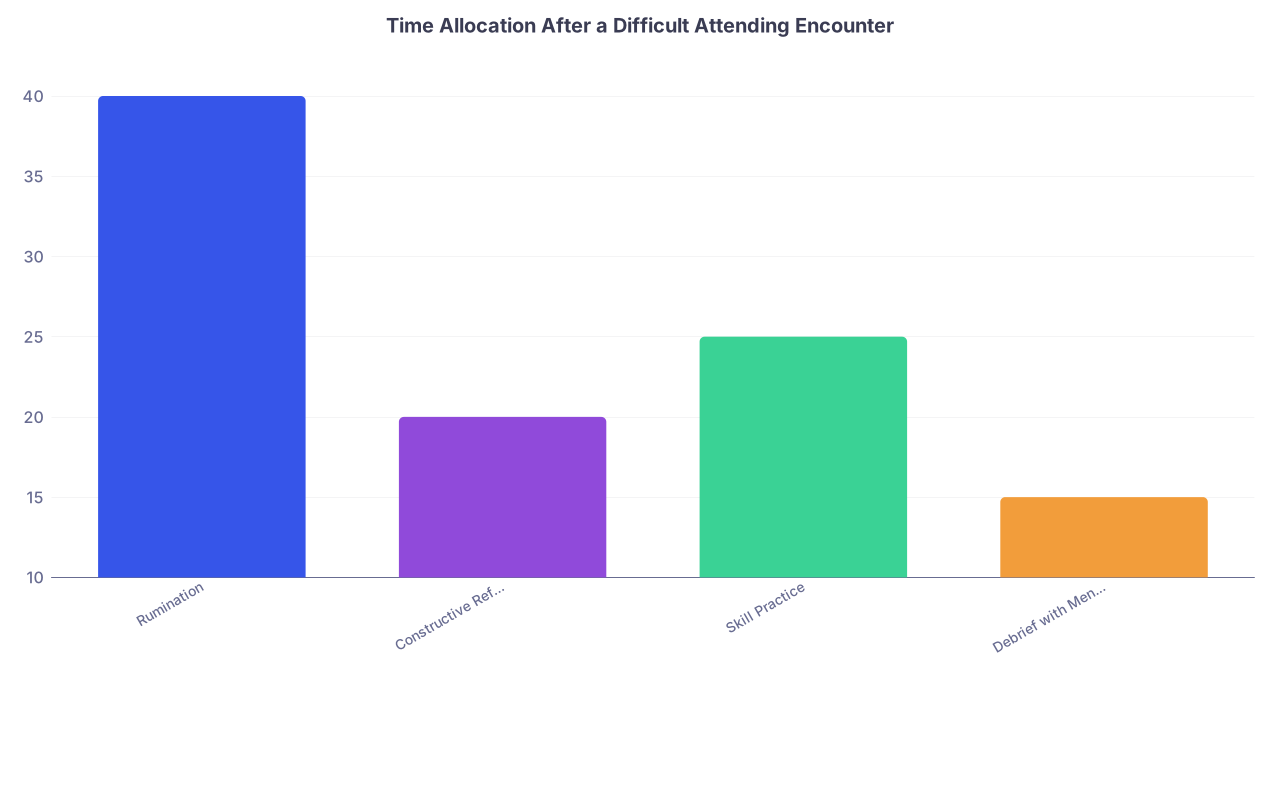
| Category | Value |
|---|---|
| Rumination | 40 |
| Constructive Reflection | 20 |
| Skill Practice | 25 |
| Debrief with Mentor | 15 |
One bad attending interaction doesn’t define you. A pattern of you spiraling afterwards can.
Here’s what to actually do over the following days.
1. Separate content from delivery
Ask yourself (and maybe a senior or mentor):
- Was there a real clinical or leadership deficiency underneath the theatrics?
- What exactly did I miss? What would a strong resident have done in that moment?
If you truly missed something, build a small, targeted plan:
- Read 1–2 UpToDate topics about that issue
- Ask your senior: “What’s your mental checklist for this scenario?”
- Put one new habit into practice on the next call night (e.g., “For every hypotensive patient, I will explicitly state volume status, infection risk, and cardiac function.”)
You turn a humiliating moment into a learning pivot. Quietly. For you.
2. Control your narrative (without trashing the attending)
You’re going to want to vent. Do it selectively.
Safe-ish places:
- A trusted co-resident outside your program
- A therapist (yes, this is therapist-level stuff sometimes)
- A mentor you know won’t repeat gossip up the chain without your consent
With classmates in your own program, be careful. Say just enough:
“Yeah, rounds were rough. I got called out hard on fluid management. I’m reading more on it and talking to my senior about how they approach it.”
You’re signaling: “I’m dealing with this like an adult.” Not: “I’m starting a whisper campaign.”
3. Track patterns
If this attending keeps undermining you:
- Log dates, rough quotes, witnesses, and whether there was any patient care risk.
- Notice if they only do it to certain people (interns, women, IMGs, certain racial/ethnic groups). That matters.
If you see a pattern, go to your chief or PD with a short, structured summary, not a messy vent:
| Date | Setting | Behavior Summary | Witnesses |
|---|---|---|---|
| 10/03/2025 | ICU rounds | Called me incompetent re: fluids | Senior, intern |
| 10/06/2025 | Family mtg | Contradicted me, mocked my plan | Family, RN |
| 10/09/2025 | Sign-out | Rolled eyes, said I am "clueless" | Night float |
You are being specific, professional, and useful. You’re giving leadership something they can actually act on.
4. Protect your evaluations
If you’re worried your evaluation will be poisoned:
- Ask another attending or fellow you worked closely with that month if they’d be willing to give you feedback or write something for your file.
- Tell your PD, calmly:
“I want you to have broader context on my performance this month. I had a conflict with Dr. Smith; I’m concerned it could color their written eval. I’ve asked Dr. Lee, who saw my work in the ICU that week, to also provide feedback.”
Program leadership is used to factoring in “difficult” attendings. But they can only correct for it if they know.
How to Lead Downward When You’ve Been Undermined Upward
You’re still the leader for your intern and med students, even if you just got publicly flattened.
Here’s how not to pass the damage down the chain.
1. Name the medical issue, not the drama
Say to your team later:
“Ok, on Mr. Jones, the central issue is that I misread his volume status this morning. I want all of us to understand why he’s more overloaded than septic right now. Let’s go through it.”
You’re modeling accountability and analysis, not gossip.
2. Reassure your intern/student subtly
If your intern looked like a deer in headlights during the blow-up, circle back.
“Rounds were intense today. That kind of thing happens sometimes. If you have questions about what was criticism versus what was key teaching points, let’s chat after we finish afternoon notes.”
You’re telling them: “This isn’t normal good behavior, but it is something you’ll see. I’ll help you sort it out.”
3. Don’t become what hurt you
Resist the urge to “teach” by imitating that attending.
No:
- “Did you seriously not check a lactate? Do you even know how sepsis works?”
Instead:
“Walk me through your thinking. What made you decide not to get a lactate yet? Let’s talk about when I like to order it.”
You use your own experience as the anti-model.
When It Crosses Into True Abuse or Harassment
There’s a line. If it’s crossed, you’re not in “difficult feedback” territory anymore. You’re in policy territory.
Clear red flags:
- Comments about your gender, race, accent, background, or appearance
- Threats (“I’ll make sure you never match in this specialty”)
- Humiliation in front of patients with no clinical teaching content
- Retaliation after you try to address behavior
At that point:
- Write it down in detail the same day.
- Screenshot relevant messages or Epic comments (if any).
- Use formal channels:
- Program leadership
- GME office
- Ombudsperson
- Institutional reporting system (often anonymous options exist)
When you report, frame it around:
- Impact on patient care
- Impact on team function and learning culture
- Concrete behavior, not general “they’re mean”
You’re not being “weak.” You’re doing actual leadership work in a broken hierarchy.
Quick Recap: Your Playbook
When an attending undermines you in front of the team:
In the moment:
- Stabilize yourself in 5 seconds
- Fix the plan, respond briefly, stay functional
- Ask one clarifying question if it helps the patient and is safe
Same day:
- Be visibly effective on tasks
- Reality-check with a senior
- Decide if a direct conversation is safe or if you need to escalate
Over the week:
- Extract real learning from the mess
- Control your narrative without trashing the attending
- Track patterns and protect your evaluations
- Lead downward with more kindness than you got
You cannot control bad attendings. You can control your response, your documentation, and how you show up for yourself and your team.


