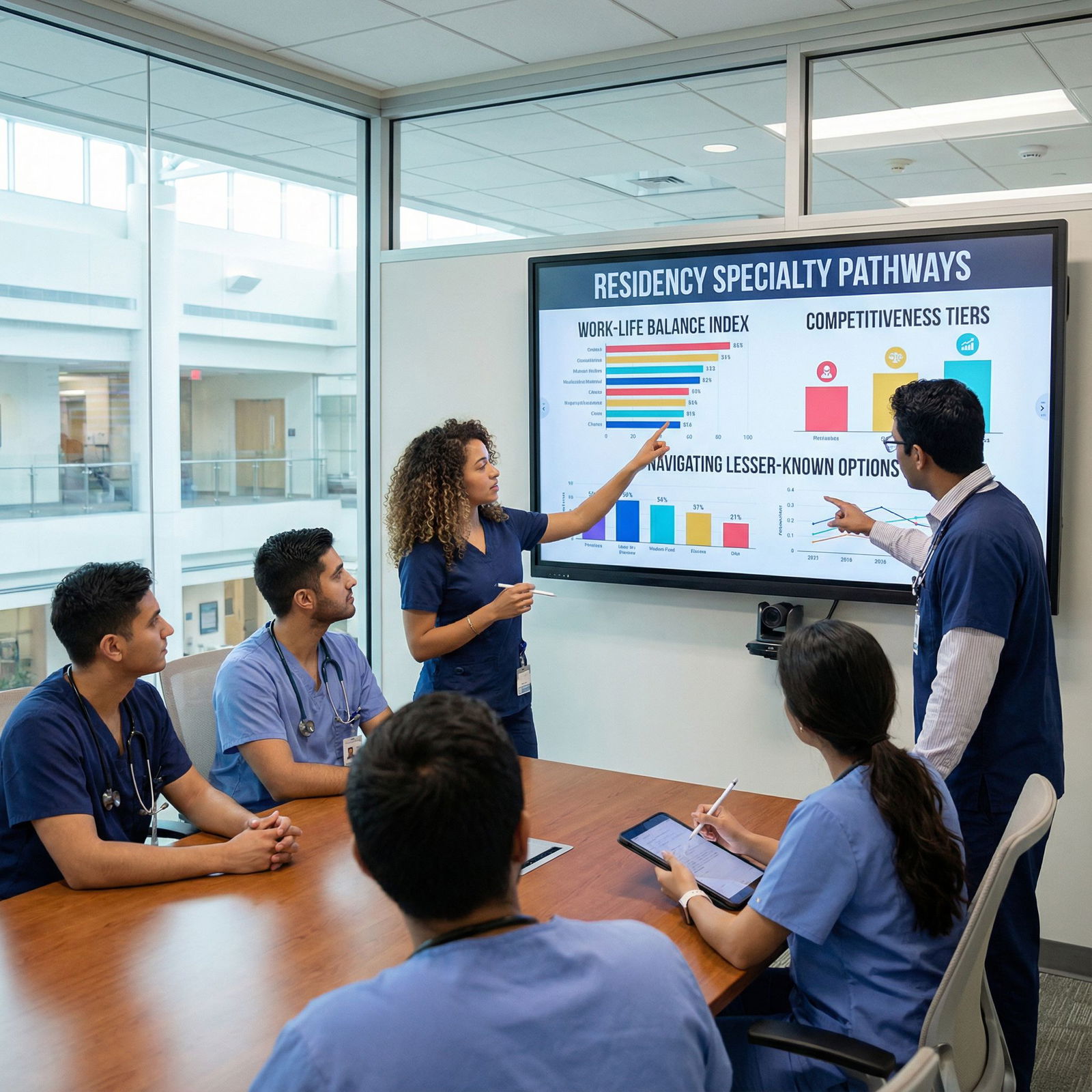
Choosing a medical specialty is one of the most consequential decisions in your healthcare career. For many medical students and residents, the process can feel dominated by prestige, Step scores, and a narrow list of “competitive” fields. Dermatology, plastic surgery, orthopedic surgery, and neurosurgery frequently take center stage in conversations about matching and career trajectories.
Yet outside that spotlight lies a wide landscape of less competitive medical specialties—many of which offer outstanding Work-Life Balance, strong job security, diverse practice settings, and deep patient relationships. These fields are often underexplored by students but can provide rewarding, sustainable Healthcare Careers aligned with your values and lifestyle.
This article reframes how you think about “competitiveness” and walks through some of the most overlooked and least competitive specialties—in particular, those within Primary Care and population-focused disciplines—while offering practical Career Advice to help you decide if they’re right for you.
Understanding What Makes a Specialty “Competitive”
Before exploring the least competitive specialties, it’s important to define what “competitive” really means in the context of residency applications and long-term careers.
Key Factors That Drive Competitiveness
A specialty is typically considered competitive when:
Applicant numbers greatly exceed available residency positions
High interest and limited slots drive up the bar for acceptance.Average Step/COMLEX scores and class rankings are high
Fields like dermatology and plastic surgery often expect scores well above national averages.Research and extracurricular expectations are extensive
Applicants may be expected to have multiple publications, conference presentations, and early specialty exposure.Prestige, lifestyle perception, and compensation are strong drivers
Some specialties attract applications based on perceived status or income potential rather than fit.
Commonly cited competitive specialties include:
- Dermatology
- Plastic Surgery
- Orthopedic Surgery
- Neurosurgery
- Otolaryngology
- Integrated Vascular and Cardiothoracic Surgery
In contrast, least competitive specialties typically have:
- More residency spots relative to applicants
- Lower average Step/COMLEX score cutoffs
- Fewer programs requiring dedicated research years
- Less pressure around “name-brand” letters or home programs
Yet “less competitive” does not mean “less valuable” or “less fulfilling.” Many of these fields are the backbone of the healthcare system—especially in Primary Care and community-based care.
Why Consider Less Competitive Medical Specialties?
There are compelling, evidence-based reasons that many students and residents are intentionally choosing these fields—not as a backup, but as a first choice grounded in values and long-term wellbeing.
1. Stronger Work-Life Balance and Schedule Control
Many primary care–aligned and population-focused specialties provide:
- Predictable clinic hours (e.g., 8–5, Monday–Friday)
- Less frequent overnight call or in-house call
- Opportunities for outpatient-only practice
- Flexibility for part-time roles, academic appointments, or administrative tracks
For physicians prioritizing family life, personal projects, or non-clinical interests (teaching, writing, entrepreneurship), these specialties often allow you to construct a more sustainable schedule over decades of practice.
2. Deep, Longitudinal Patient Relationships
In fields such as Family Medicine, Pediatrics, Internal Medicine, and Geriatrics, you often:
- See patients and families for years, even decades
- Manage multiple life stages and transitions
- Act as the central coordinator of care among specialists
- Build trust and rapport around sensitive topics like mental health, adherence, and lifestyle change
For many physicians, this continuity is a major contributor to career satisfaction and prevents burnout more effectively than prestige or income alone.
3. Diverse Career Paths and Skill Sets
Many of the least competitive specialties offer:
- Clinical care (outpatient, inpatient, or mixed)
- Academic roles (teaching residents and students, curriculum design)
- Leadership and administrative positions (medical director, quality improvement lead)
- Public health and policy opportunities (health departments, NGOs, global health)
- Non-clinical careers (consulting, informatics, industry, medical education)
These options allow you to pivot within your career as your interests evolve.
4. Job Stability and Geographic Flexibility
Primary care and related specialties are in high demand across the United States and globally. This leads to:
- Strong job markets in urban, suburban, and especially rural areas
- High degree of geographic choice for where you live and practice
- Ability to design a practice that matches your community interests (rural, underserved, academic, etc.)
Especially for those wanting to return to their home community, work in underserved areas, or practice in non-coastal markets, these fields can be a direct path to meaningful impact and stable employment.
5. Lower Entry Barriers and Less Stressful Application Processes
Practically speaking, less competitive specialties may allow:
- Greater forgiveness for academic hiccups or late specialty decisions
- Successful matches without “perfect” scores or top-tier publications
- Less stress-driven application strategies (fewer audition rotations, fewer away electives)
This doesn’t mean these specialties are easy or “fallback” options. It means the pathway into them is more humane and accessible—allowing you to focus more on genuine learning and less on proving yourself at every step.

The Most Overlooked & Least Competitive Medical Specialties
Below are several specialties that tend to be less competitive in terms of residency match metrics, yet deeply impactful in patient care and healthcare systems.
1. Family Medicine: Comprehensive Care Across the Lifespan
Family Medicine is one of the core Primary Care specialties, focusing on individuals and families from birth through end-of-life. It emphasizes preventive care, chronic disease management, and holistic care.
Why Family Medicine Is Often Overlooked
- Misperceptions around lower income compared with some procedure-heavy subspecialties
- Lack of early exposure to high-functioning, innovative family medicine practices
- Cultural emphasis in some schools on “prestige” specialties
Strengths of a Career in Family Medicine
- Breadth of practice: You can manage acute issues, chronic conditions, mental health, minor procedures, and sometimes obstetrics and inpatient medicine.
- Continuity: You may care for multiple generations in a single family, from newborns to grandparents.
- Practice variety: Options range from academic centers to rural clinics, FQHCs, telemedicine, concierge practices, and global health.
Work-Life Balance and Lifestyle
- Many family physicians structure outpatient-focused schedules with limited or no in-house call.
- Part-time and job-share arrangements are common, enabling flexible Work-Life Balance.
Career Advice: How to Explore Family Medicine
- Seek rotations in rural or community health centers to see the breadth of practice.
- Join your school’s family medicine interest group and connect with mentors.
- Consider research or QI projects in chronic disease management, community health, or health equity.
2. Pediatrics: Preventive Care and Advocacy for Children
Pediatrics focuses on the health of children from birth through young adulthood. It is another less competitive—but highly rewarding—specialty that blends clinical care with advocacy.
Why Consider Pediatrics?
- Heavy emphasis on preventive care, immunizations, growth and development, and family education
- Opportunities to build long-term relationships with families, watching patients grow and thrive
- A natural fit for physicians passionate about public health, child welfare, and policy advocacy
Lifestyle and Work Settings
- Many pediatricians practice in outpatient clinics with predictable daytime hours.
- Hospitalist pediatrics, NICU, and PICU roles can be more acute and shift-based—but still often more lifestyle-friendly than some surgical specialties.
Career Pathways in Pediatrics
- General outpatient pediatrics
- Pediatric hospital medicine
- Subspecialties (e.g., pediatric cardiology, endocrinology, infectious disease)
- Community and school-based health, NGO work, global child health
3. Geriatrics: Caring for an Aging Population
Geriatrics is a subspecialty focused on older adults, often with multiple chronic conditions, frailty, and complex medication regimens.
Why Geriatrics Is Increasingly Important
- The aging population in many countries is rapidly expanding, creating high demand for geriatricians.
- Geriatrics sits at the intersection of medicine, functional status, social determinants of health, and quality of life.
- You work closely with families and caregivers, often acting as an advocate and guide.
Practice Features
- Work primarily in clinics, nursing homes, assisted living facilities, and hospitals.
- Often embedded in interdisciplinary teams (PT/OT, nursing, social work, pharmacy).
- Heavy focus on deprescribing, functional preservation, fall prevention, and goals-of-care discussions.
Lifestyle and Career Flexibility
- Most geriatrics positions offer predictable hours with limited overnight obligations.
- Academic careers are common, with roles in education, policy development, and quality improvement.
How to Explore Geriatrics
- Seek electives on geriatric consult services, skilled nursing facilities, or VA systems.
- Get involved in projects focused on polypharmacy, fall prevention, or dementia care.
4. Internal Medicine: Gateway to Primary Care and Subspecialty Training
Internal Medicine (IM) focuses on adult medicine and complex medical conditions. It is one of the largest specialties and offers tremendous flexibility.
Why Internal Medicine Can Be Less Competitive (Depending on Path)
- While certain IM subspecialties can be highly competitive, categorical internal medicine residency is broadly accessible across many programs and regions.
- There’s a wide range of programs—from community-based to academic—so match opportunities are plentiful.
Career Options After IM Residency
- General Internal Medicine / Primary Care (outpatient clinics, integrative or concierge medicine)
- Hospitalist Medicine (shift-based work caring for acutely ill adults)
- Subspecialty Fellowships (cardiology, GI, oncology, nephrology, endocrinology, etc.)
- Non-clinical work: quality improvement, hospital administration, informatics, health policy
Work-Life Balance Considerations
- Outpatient general internists often have stable, weekday schedules.
- Hospitalists frequently work block schedules (e.g., 7-on/7-off), offering long stretches off for travel, research, or side interests.
5. Preventive Medicine: Population Health and Policy Impact
Preventive Medicine focuses on promoting health and preventing disease at the individual and population levels. It’s a lesser-known field that bridges clinical care and public health.
What Preventive Medicine Physicians Do
- Design and evaluate population-level interventions (screening programs, vaccination campaigns).
- Work in public health departments, government agencies (CDC, local health authorities), NGOs, and academic institutions.
- Lead quality improvement initiatives, occupational health programs, and corporate wellness strategies.
Training Structure
- Usually involves residency training in preventive medicine or a combined program (e.g., internal medicine–preventive medicine).
- Many programs include an MPH or equivalent advanced public health degree.
Lifestyle and Career Paths
- Typically outpatient or office-based work, with fewer acute emergencies.
- Opportunities in:
- Federal and state health agencies
- Academic public health
- Health systems leadership
- International NGOs and global health organizations
6. Occupational Medicine: The Intersection of Health and the Workplace
Occupational Medicine focuses on the prevention and management of work-related injuries and illnesses, as well as optimization of worker health and safety.
Scope of Practice
- Evaluating and managing workplace injuries and exposures (e.g., chemical, ergonomic, noise).
- Conducting pre-employment and fitness-for-duty evaluations.
- Consulting with employers on OSHA regulations, workplace safety policies, and wellness programs.
- Collaborating with industry, unions, and regulators.
Why Occupational Medicine Appeals to Many Physicians
- A blend of clinical medicine, public health, and administration.
- Often regular business hours with minimal or no call.
- Less physically demanding than some procedural specialties, allowing for a long career span.
Career Advice: How to Explore Occupational Medicine
- Consider an elective in occupational health clinics or VA systems.
- Look for rotations with corporate health services, large employers, or industrial settings.
- Attend conferences or webinars hosted by occupational or environmental medicine societies.
7. Adolescent Medicine: Bridging Pediatrics and Internal Medicine
Adolescent Medicine focuses on patients roughly ages 10–25, addressing the physical, emotional, and social challenges unique to this developmental period. It is typically a subspecialty of pediatrics, internal medicine–pediatrics (Med-Peds), or family medicine.
Key Areas of Focus
- Sexual and reproductive health
- Eating disorders and nutrition
- Mental health (depression, anxiety, substance use)
- Gender-affirming care and LGBTQ+ health
- Risk behaviors and injury prevention
Why This Field Matters
- Adolescence is a critical window where lifestyle patterns and risk behaviors form.
- Adolescent medicine physicians often act as advocates, educators, and trusted confidants.
- Strong emphasis on motivational interviewing, communication skills, and confidentiality.
Lifestyle and Career Options
- Predominantly outpatient, clinic-based care.
- Opportunities in school-based health centers, academic clinics, community programs, and policy advocacy.

Real-World Applications and Case Snapshots
Case Snapshot 1: Family Physician Revitalizing a Rural Community
Dr. Jennifer Smith, a Family Medicine physician, deliberately chose a rural community with a shortage of Primary Care providers. Over 10+ years, she:
- Built a panel spanning three generations of multiple families
- Integrated preventive medicine and chronic disease management into every visit
- Partnered with local schools and churches to run hypertension and diabetes screenings
- Led a QI initiative that significantly reduced ER usage for ambulatory-sensitive conditions
Her career illustrates how a so-called “less competitive” specialty can translate into high-impact, community-centered leadership and deeply fulfilling patient relationships.
Case Snapshot 2: Geriatrician as a System-Level Leader
Dr. Michael Thompson pursued an internal medicine residency followed by a Geriatrics fellowship. Now, at a large senior care facility and affiliated hospital system, he:
- Chairs the falls prevention task force, cutting falls-related admissions
- Leads an interdisciplinary team managing medically and socially complex older adults
- Trains residents and fellows in goals-of-care discussions, advanced care planning, and deprescribing
- Collaborates with health system leadership to reduce hospital readmissions and improve quality metrics
In addition to clinical impact, his role demonstrates how these specialties can position you for leadership and educational influence.
Practical Career Advice: Deciding If a Less Competitive Specialty Fits You
If you’re considering these overlooked specialties, approach the decision deliberately.
Step 1: Reflect on Your Core Values and Motivators
Ask yourself:
- Do you value continuity and long-term patient relationships?
- How important is Work-Life Balance relative to salary or prestige?
- Are you energized by population health, prevention, and systems-level change?
- Do you prefer outpatient vs. inpatient, shift-based vs. office-based work?
Journal about these questions and revisit them as you rotate through different fields.
Step 2: Get Authentic Clinical Exposure
- Schedule electives in Family Medicine, Pediatrics, Geriatrics, Preventive or Occupational Medicine, and Adolescent Medicine.
- Choose settings that reflect real-world practice: community clinics, rural sites, FQHCs, VA facilities.
- Compare your energy levels at the end of each day. In which rotations did you feel most fulfilled?
Step 3: Talk to Physicians at Different Career Stages
- Ask residents what surprised them about their specialty.
- Ask attendings how their Work-Life Balance has changed over time.
- Inquire about burnout, practice changes, and long-term satisfaction.
Specific questions to ask:
- “What do you wish you knew before choosing this specialty?”
- “If you had to choose again, would you still pick this field?”
- “How do you see this specialty evolving over the next 10–15 years?”
Step 4: Consider Your Competitiveness—but Don’t Let It Define You
- Review your academic record honestly.
- Understand that choosing a less competitive specialty can be proactive and strategic, not merely a fallback.
- If you’re drawn to these specialties, lean into them as a deliberate first choice that aligns with your life and career goals.
Step 5: Strategically Build Your Application
Even in less competitive specialties, strong applications matter. You can:
- Engage in research or QI projects related to primary care, prevention, or population health.
- Demonstrate commitment to underserved communities through volunteering or electives.
- Obtain letters of recommendation from physicians in the specialty.
- Highlight longitudinal experiences (e.g., free clinics, advocacy work, health education initiatives).
FAQs About Overlooked and Least Competitive Medical Specialties
1. Are these less competitive specialties still in demand?
Absolutely. Many of these fields—especially Family Medicine, Internal Medicine (general), Pediatrics, and Geriatrics—are experiencing physician shortages in multiple regions. Demand is particularly strong in:
- Rural and underserved urban areas
- Community health centers and FQHCs
- Long-term care and senior care facilities
- Public health and occupational health roles
From a job market perspective, these specialties are often more secure and geographically flexible than some highly specialized fields.
2. What does Work-Life Balance actually look like in these specialties?
While every job and practice setting is different, many physicians in these fields report:
- More predictable daytime hours, especially in outpatient settings
- Fewer overnight calls or ability to join call pools that limit frequency
- Opportunities to negotiate part-time roles, job sharing, or flexible schedules
- More control over vacation and time off, especially in stable group practices
Hospitalist roles in internal medicine or pediatrics may involve 12-hour shifts but often in block schedules with extended time off.
3. Can I still subspecialize or advance academically if I start in a less competitive specialty?
Yes. Many of these specialties are gateways to further training or advanced roles. Examples include:
- Internal Medicine → Cardiology, GI, Pulm/Crit, Endocrinology, Oncology, etc.
- Pediatrics → Neonatology, Pediatric Cardiology, Hematology/Oncology, etc.
- Family Medicine → Sports Medicine, Palliative Care, Addiction Medicine, Obstetrics, Geriatrics
- Preventive Medicine → Public Health leadership, Epidemiology, Global Health
- Occupational Medicine → Corporate medical director roles, regulatory agencies, consulting
Academic medicine, research careers, and leadership roles are accessible across all of these fields.
4. How can I tell if one of these specialties is genuinely right for me?
Consider:
- Your day-to-day enjoyment on relevant rotations—do clinic visits energize you or drain you?
- How you feel about chronic vs. acute care, procedures vs. conversation-focused visits, and team-based care.
- Whether you find meaning in small, incremental improvements (e.g., better A1C, fewer falls, improved adherence).
Shadow physicians, seek mentorship, and consider doing a subinternship or acting internship in your top choice to experience the workload and culture firsthand.
5. Do less competitive specialties limit my earning potential or future options?
Income varies by region and practice type, but many physicians in these fields have solid, comfortable compensation, especially in high-need areas or leadership roles. Additionally:
- Certain outpatient primary care physicians benefit from value-based care models, bonuses, and incentives.
- Hospitalist roles can offer very competitive salaries with fewer years of training.
- Leadership, medical directorships, and hybrid clinical-administrative roles can significantly enhance earning potential.
Most importantly, Work-Life Balance, job satisfaction, and longevity in your career can be more valuable than marginal differences in salary.
Exploring these overlooked, least competitive medical specialties can open doors to deeply meaningful, sustainable Healthcare Careers. By prioritizing fit over prestige and by understanding the true scope and opportunities within these fields, you can craft a residency and career path that supports both the patients you serve and the life you want to lead.