
The lie that “you can have work‑life balance or money, but not both” is quietly ruining people’s careers.
And if you’ve got six figures of loans hanging over your head, it feels even more suffocating. Because suddenly it’s not just “what kind of doctor do I want to be?” — it’s “am I allowed to care about my own life at all, or do my loans mean I have to sacrifice everything and pick the highest‑paying misery specialty?”
Let me say this bluntly: wanting work‑life balance when you have massive loans is not unrealistic.
But pretending there are no tradeoffs? That’s the fantasy.
You’re not crazy for wanting both. You’d be crazy to not at least think very carefully about how they actually play together.
The Fear You’re Not Saying Out Loud
You’re probably thinking some version of this:
“I want a lifestyle‑friendly specialty. Derm, psych, PM&R, ophtho, maybe anesthesia. But I have $250–400k in loans at 6–7%. If I don’t do ortho or gas or something brutal with high pay, am I setting myself up for financial disaster? Am I being selfish? Irresponsible? Will I be 45, exhausted, with kids, still drowning in debt because I chose ‘balance’?”
I’ve watched people try to outrun that fear in two ways:
They force themselves into a high‑pay, high‑burnout specialty because “it’s the responsible thing for my debt,” then fantasize every week about quitting.
They swing the other way, pick something lifestyle‑friendly, then silently spiral about money and feel guilty buying a coffee.
Both groups are miserable, just in different ways.
The truth is more boring and more survivable: you can have a lifestyle‑friendly specialty and pay off big loans — if you’re brutal about a few key levers: where you work, how you live your first 5–10 attending years, and what “balance” actually looks like in real life.
Let’s ground this a bit.
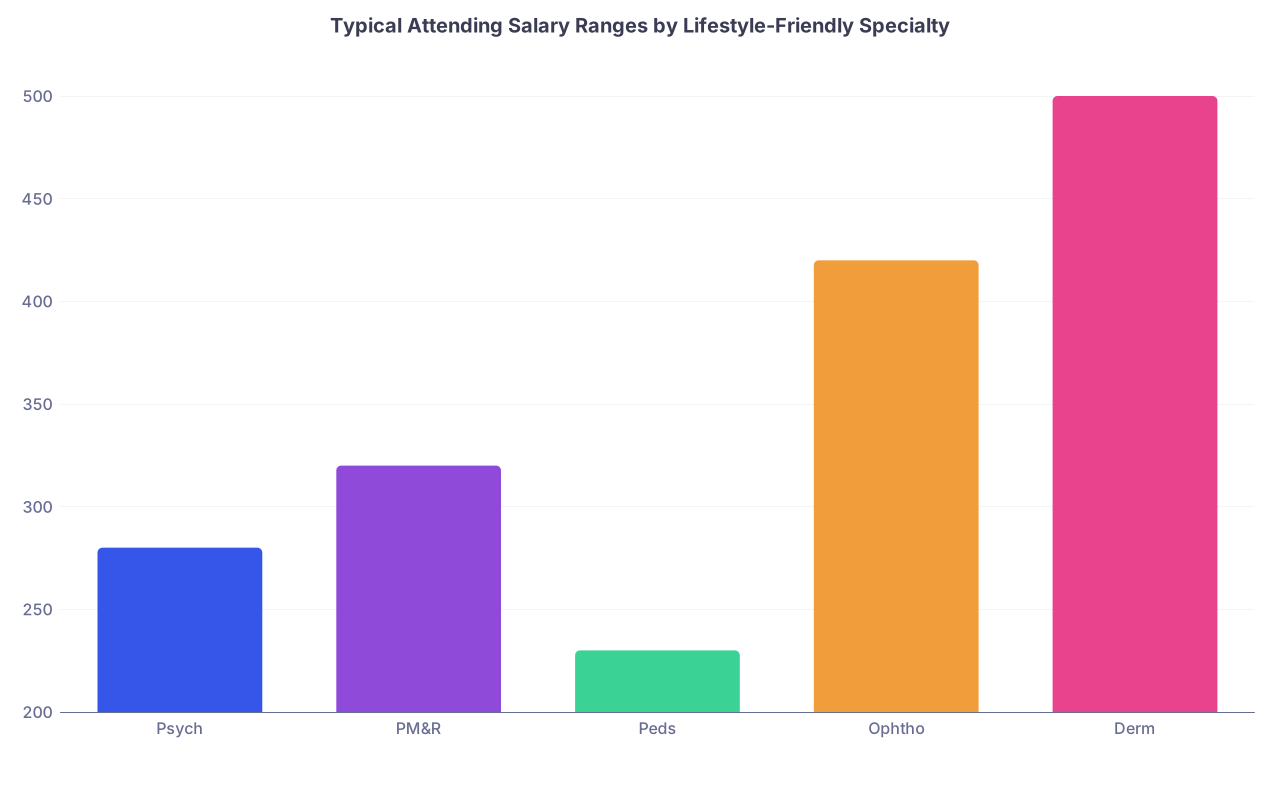
| Category | Value |
|---|---|
| Psych | 280 |
| PM&R | 320 |
| Peds | 230 |
| Ophtho | 420 |
| Derm | 500 |
These are ballpark medians (yes, they vary by region, practice setting, etc.), but they’re not poverty wages. Even peds, which is on the lower end, is an upper‑middle‑class income in most of the country.
So the real question isn’t “Can a lifestyle specialty pay off my loans?”
It’s “Am I willing to live like a resident for a few more years and be intentional — or do I want the attending lifestyle and the easy schedule and fast debt payoff all at once?”
Because you don’t get all three. Nobody does.
What “Lifestyle-Friendly” Actually Looks Like (Not the Instagram Version)
Let’s talk about the specialties people whisper about as “most lifestyle friendly” and what I’ve actually seen residents and attendings live like.

Dermatology
The fantasy:
9–4 clinic. No call. Cash pay cosmetics. Perfect skin. Driving a Tesla to your med spa side hustle.
Reality (for most):
Busy clinic days, tons of biopsies, lots of older patients with complicated skin cancer histories, documentation like everyone else. Lifestyle is genuinely good — outpatient, predictable, minimal nights/weekends. But:
- Getting in is brutal. You pay with research years, high scores, and specialty‑specific grinding.
- Early jobs may be productivity‑based. You’ll be hustling to fill your schedule.
- The “all cosmetics, all cash” thing is rare and often comes after years of building.
Money: Excellent long‑term. Very compatible with big loans if you don’t go wild on housing and cars early.
Psychiatry
The fantasy:
Talk to people, write some meds, go home at 4, no codes, no running to the OR. You have time to think.
Reality:
Schedule is often predictable, yes. But the emotional load is heavy. Suicidality, trauma, high‑risk situations. Call can be rough depending on the setting (inpatient, ED psych consults, etc.). The lifestyle is still far better than, say, trauma surgery for most people.
Money: Solid. Not derm‑level, but absolutely compatible with loan payoff. And telepsych / part‑time / side gig options are real once you’re established.
PM&R (Physical Medicine & Rehabilitation)
The fantasy:
Chill clinic, MSK focus, procedures, sports medicine vibes, leave by 5, home for dinner.
Reality:
Good lifestyle in many jobs, especially outpatient MSK or sports. Inpatient rehab (SCI, stroke, TBI) can be intense and emotionally draining, but still typically better hours than surgical fields. There’s call, but not “2 am emergent bowel perf” call.
Money: Middle of the pack but good. If you pick your market right (Midwest, South) and avoid super‑high‑cost cities early, loans are very manageable.
Ophthalmology
The fantasy:
Tiny surgeries, great pay, clinic‑heavy, no overnight disasters like general surgery.
Reality:
You’re still a surgeon. The training is demanding. Clinic can be packed and tedious. OR days can be long. Call is better than many surgical fields but not zero, and early career may involve some tough call schedules.
Money: Very strong. Lifestyle can be excellent in the right practice, but don’t expect part‑time nirvana in year one.
Anesthesia (borderline but often in the “lifestyle” conversation)
The fantasy:
You sit in the OR, you read, you drink coffee, you go home. CRNAs do the work.
Reality:
Early years: early mornings, real stress, real night calls, real post‑op issues. But many attendings eventually carve out pretty decent schedules, especially in groups with good staffing or those doing outpatient/ASC work.
Money: Very high. Very compatible with aggressive loan payoff if you don’t inflate spending too hard.
The Debt Piece: Are You Screwed If You Don’t Choose High Pay?
Let’s put something concrete on the table so your brain stops spinning worst‑case scenarios with no numbers attached.
Say you have:
- $350,000 in federal loans
- Weighted average interest ~6.5%
- You finish residency and become an attending at age ~30–32
You match into:
- Psych in a moderate COL area, make ~$280k as an attending
- Or Peds in a high COL city, make ~$230k
- Or Derm in a mid COL area, make ~$500k
I’m not going to drown you in amortization, but here’s the uncomfortable summary:
- You can pay off $350k on any of those salaries.
- The difference is how much crap you’re willing to eat in those first 5–7 years: roommates vs house, used car vs Tesla, Costco vs constant DoorDash, etc.
Here’s a simplified comparison of what “aggressive but sane” payoff might look like if you dedicate ~20–25% of your gross income to loans as an attending (after doing income‑driven payments in training):
| Approx Attending Salary | Annual Loan Payment | Years to Payoff* |
|---|---|---|
| $230k (Peds) | $45k | 9–10 years |
| $280k (Psych) | $55k | 7–8 years |
| $320k (PM&R) | $65k | 6–7 years |
| $420k (Ophtho) | $90k | 4–5 years |
| $500k (Derm) | $110k | 3–4 years |
*Very rough ballpark assuming no PSLF and interest continuing in the background, but you get the pattern.
So no, you’re not doomed in psych or peds. You just don’t get instant attending lifestyle plus luxury city plus house plus rapid payoff. You pick two and compromise on the third for a while.
Hidden Levers That Matter More Than Your Specialty
The part people ignore — and then regret — is this: your choices after residency often matter more than your specialty label.
Here are the levers I see quietly changing people’s actual lived experience:
1. Geographic arbitrage
A psych attending making $320k in a low‑COL Midwest city with a 15‑minute commute and cheap housing is going to be more “balanced” and less stressed than a derm attending making $500k in Manhattan working 55 hours a week and paying $4k/month for a tiny apartment.
Lifestyle specialties really shine when paired with reasonable cost of living. If you insist on SF/NYC/LA right away, you’re choosing stress. You can still do it, but don’t pretend it’s neutral.
2. Practice setting
Academic vs private vs employed vs hybrid.
Same specialty, totally different life.
I’ve seen:
- A PM&R attending in academics making $230k, very chill schedule, lots of teaching, happy.
- Another PM&R doc in private practice doing pain procedures making $600k, long days, high intensity, but planning to retire at 50.
Same field. Opposite tradeoffs.
3. Early lifestyle creep
This is the silent killer. The “I deserve it, I’ve sacrificed so much” spending spree:
- New luxury car, $800–$1,200/month.
- Big house with a mortgage that assumes your top earning years will last forever.
- Private school from kindergarten.
- Vacations like you’re an influencer.
If you want work‑life balance and big loans, your first 5 attending years are the danger zone. You can absolutely wreck yourself there. Or you can live like a comfortable senior resident with a higher salary and blast the debt.
Your choice. And yes, it really is a choice — even though everyone around you will pretend it’s not.
Are You “Allowed” To Choose Lifestyle With Big Debt?
This is the moral shame part no one talks about openly.
You might be thinking:
“If taxpayers backed my loans, and the system is strained, and other people are grinding in hard specialties, is it selfish for me to go into something less intense and still make good money? Am I lazy? Did I waste the opportunity?”
No. You’re not a martyr. You’re a human being who will burn out, make worse decisions, and be a worse physician if you’re working in a specialty that makes you miserable just because it pays more.
You don’t “owe” the system a specific specialty. You owe your patients competence and care. You’ll deliver that far better in a field that fits you reasonably well.
What you do owe yourself, though, is honesty:
- If you pick a lower‑pay specialty, don’t also pick the maxed‑out lifestyle.
- If you pick a lifestyle‑heavy field, remember residency in that specialty may still be hard and not feel very “balanced.”
- If you’re already prone to anxiety about money, ignoring it while choosing your future is a bad plan. Run numbers, talk to people actually in those fields, consider financial coaching.
What I’d Do If I Were You
If I were sitting exactly where you are — huge loans, craving work‑life balance — here’s how I’d stop spiraling and start being strategic:
- I’d stop asking “Am I being unrealistic?” and start asking, “What am I actually willing to trade for what I want?”
- I’d pick a specialty where I don’t dread the core work, even on a bad day. If the bread‑and‑butter cases bore or annoy me now, they’ll torture me later, no matter how good the hours are.
- I’d assume my first 5 attending years will be “work‑life better but not perfect” — and commit to living like an upgraded resident, not a lottery winner.
- I’d strongly consider a lifestyle‑friendly specialty in a moderate‑COL area for my first job to crush loans, then maybe move to the dream city or cut back later.
You’re not trapped. But you also don’t get a version of this path without sacrifice.
The question is which sacrifice you can live with:
Some money early?
Some location preferences?
Some luxuries?
Or 30 years in a specialty that drains you?

| Step | Description |
|---|---|
| Step 1 | Big Loans and Want Balance |
| Step 2 | Focus on lifestyle specialties |
| Step 3 | Consider mix of high pay with better groups |
| Step 4 | Pick best fit specialty and plan aggressive payoff |
| Step 5 | Accept slower payoff or higher stress |
| Step 6 | Hate high intensity fields? |
| Step 7 | Willing to live modestly 5 yrs? |
You’re not being unrealistic for wanting a life. You’re being responsible for worrying about how to pay for the one you already borrowed against. Both are valid. They just need a plan that isn’t fantasy.
FAQ (Exactly 6 Questions)
1. If I have $400k+ in loans, is it stupid to choose peds, psych, or PM&R over something like anesthesia or ortho?
Not stupid. But it is a decision with consequences. You’ll probably trade faster payoff and maybe some long‑term wealth for a more sustainable day‑to‑day life. You can still pay off $400k in those fields — it just may take closer to 8–12 years instead of 3–5, depending on where you live and how aggressively you attack the loans. If the thought of doing a high‑intensity, high‑acuity field fills you with dread, forcing yourself into it “for the money” is how people end up miserable and burned out by 40.
2. Should I pick a more competitive lifestyle specialty (like derm or ophtho) just because of my debt?
No. Those fields are so competitive that if your main motivation is money + hours, you’ll likely struggle to build the kind of application they require. The people who get in usually love the field (or at least convincingly act like they do). If you’re neutral or lukewarm and just chasing the perceived lifestyle + pay combo, you’re going to be miserable during the grind to match and possibly in the job itself. Debt is a factor, not the only one.
3. Will I regret going into a lower‑pay lifestyle specialty if student loan forgiveness or PSLF expands?
Maybe. Maybe not. Betting your happiness and specialty fit on hypothetical future policy is a bad strategy. PSLF exists now, but it’s bureaucratic and not guaranteed to stay exactly as is forever. If you’re PSLF‑eligible, great — that might let you lean a bit more into lifestyle. But I wouldn’t pick your entire career path assuming the government will bail out a huge chunk of your debt 10 years from now.
4. Is it realistic to aim for work‑life balance during residency if I pick a lifestyle specialty?
Your residency will still be hard. Psych, PM&R, derm, ophtho — they all have call, long days, and exhaustion baked in. Yes, they’re often less brutal than, say, general surgery or neurosurgery. But don’t go in thinking, “I’ll have evenings free to do all my hobbies.” Residency is still residency. The lifestyle perks show up more reliably as an attending.
5. Should I factor in my future family plans when choosing a specialty with big loans?
Yes, and not just in the cliché “I want time with my kids” way. Kids are expensive. Childcare alone can rival a mortgage. If you know you want kids young, a field that’s somewhat flexible and works well with part‑time/4‑day‑week setups gives you more options. But remember: wanting flexibility later might mean being even more disciplined with debt and spending early on, so you’re not chained to a 1.2 FTE job just to keep up with payments.
6. What can I do right now to feel less panicked about picking a lifestyle specialty with big loans?
Today, run actual numbers instead of catastrophizing in the dark. Take your current or projected debt, plug it into a loan calculator with different attending salaries (peds, psych, derm, etc.), and see what payoff timelines look like with different monthly payment levels. Then talk to two or three attendings in the specialties you’re considering — ask them frankly about hours, pay, and whether they feel balanced. Reality, even if imperfect, is always less terrifying than the vague monster in your head.
Open a blank document tonight and write down three columns: “Fields I actually like,” “Places I’d be willing to live for 5 years,” and “Lifestyle luxuries I could delay.” Start filling them in honestly. That list will tell you far more about what’s realistic for you than any forum thread screaming that you’re doomed.