
The most dangerous locums schedules for new attendings are the ones that sound “flexible.”
Not the brutal 7-on/7-off with 28 patients a day. Not the rural nightmare with no night coverage and a pager that never stops. Those look scary on paper, and you will at least hesitate. The real trap is the “You can work whenever you want” pitch that quietly hijacks your time, your income stability, and your long‑term career plans.
I have watched too many fresh grads walk out of residency swearing they will “just do locums for a year to keep options open” and end up:
- Chasing shifts across three states.
- Paying for two apartments.
- Burning out worse than residency.
- Having nothing consistent to show for a year except a 1099 and a vague sense they lost control.
All because they underestimated how “flexible” can become “completely unpredictable.”
Let me walk you through the most common ways new attendings get trapped by “flexible” locum schedules—and how to avoid getting played.
The First Trap: Confusing “Flexible” With “Stable”
The core mistake: assuming schedule flexibility equals life flexibility.
It does not.
When recruiters say “Very flexible schedule,” what they usually mean is one of three things:
- They have coverage gaps they cannot predict.
- They want you to float to fill whatever hole appears.
- They do not want to guarantee you anything.
You, as a new attending, hear:
- “I can work as much or as little as I want.”
- “This will be perfect while I figure out where I want to settle.”
- “I can travel, rest, and earn well at the same time.”
Reality usually looks different:
- Months where you get 20+ shifts and feel like you are back in residency.
- Dry months with 4 shifts and a rent payment that does not care about “flexibility.”
- Constant last‑minute asks: “Can you come tomorrow? Our other doc just backed out.”
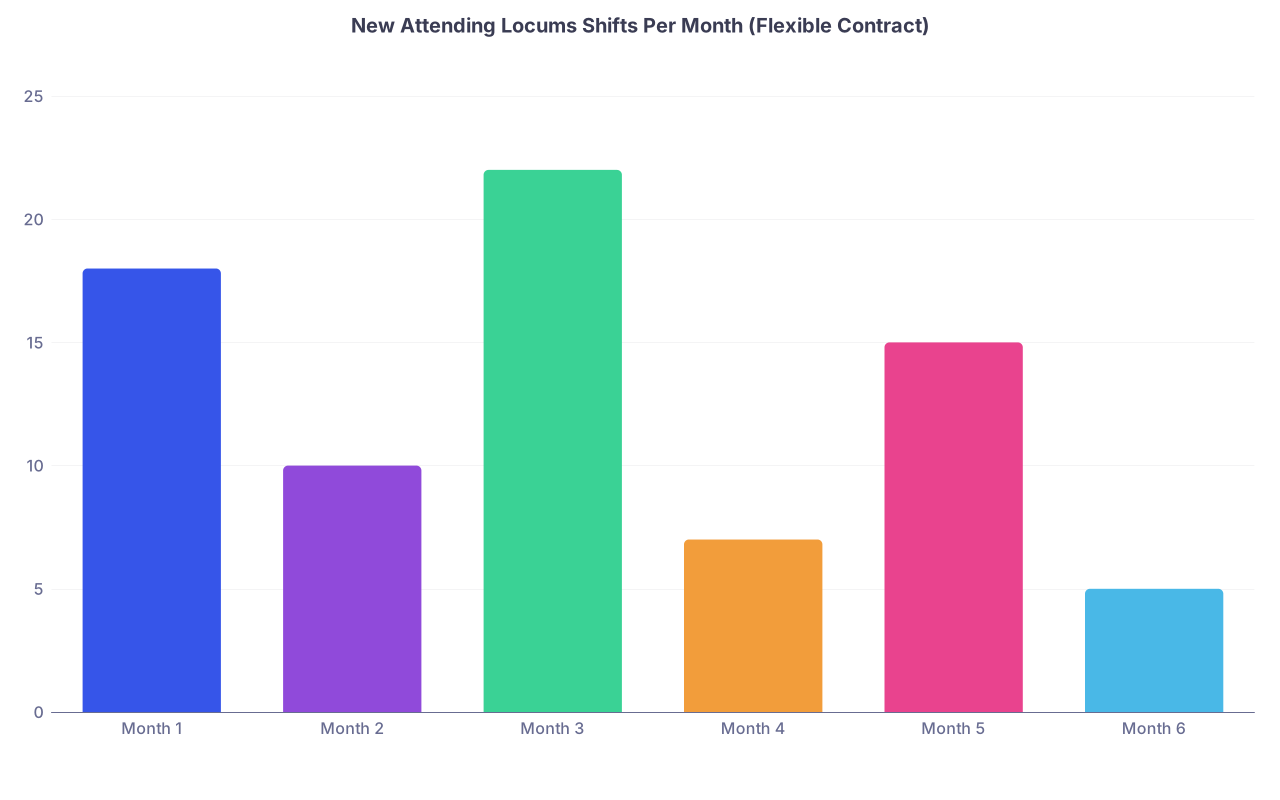
| Category | Value |
|---|---|
| Month 1 | 18 |
| Month 2 | 10 |
| Month 3 | 22 |
| Month 4 | 7 |
| Month 5 | 15 |
| Month 6 | 5 |
This is how “freedom” turns into constant low‑grade anxiety.
Red flags in recruiter language
When you hear any of the following from a recruiter or medical director, your guard should go up:
- “You just tell us your availability and we plug you in.”
- “We cannot guarantee volume, but most docs stay very busy.”
- “Our needs fluctuate, but we usually find something for people.”
- “You can always pick up in our sister sites if this one slows down.”
Translation:
They control the schedule.
You carry the risk.
Mistake to avoid: Signing a “flexible” contract with no minimum shift guarantee, no cancellation protection, and no clear pattern of actual coverage needs.
The Money Mirage: Unpredictable Income Dressed as Opportunity
The second big trap is financial. New grads dramatically underestimate how volatile locums income can be when the schedule is “flexible.”
Let me be blunt: Your loans, your rent/mortgage, and your insurance premiums are not flexible. If your shifts drop, they do not sympathetically shrink.
Here is what trips people up.
Over‑projecting from best months
You hear $220/hr, you hear “We have a lot of open shifts,” you multiply 14 shifts × $220 × 12 months and suddenly you think you are making $350k+ and can afford anything.Then reality hits:
- The group hires a new full‑time doc.
- Census drops.
- Administration decides to “tighten locums usage.”
Underestimating dead space
Travel days. Credentialing delays. Orientation days at half pay (or no pay). Blocked schedules for EMR training. The “you’ll start in June” job that actually starts in late August because credentialing sat on someone’s desk.Not understanding cancellation risk
You think a booked shift is guaranteed income. It is not.Typical scenarios:
- “The partner decided to pick up that shift instead.”
- “Our census is low, we are cutting back locums next month.”
- “We double‑booked. Sorry. Maybe we can get you something next month.”
| Month | Shifts Worked | Rate (USD/hr) | Approx Income* |
|---|---|---|---|
| 1 | 14 | 220 | 30,800 |
| 2 | 9 | 220 | 19,800 |
| 3 | 5 | 220 | 11,000 |
| 4 | 16 | 220 | 35,200 |
| 5 | 7 | 220 | 15,400 |
*Assuming 10‑hour shifts, pre‑tax, no expenses deducted.
For a new attending trying to:
- Qualify for a mortgage.
- Maintain loan payments.
- Build an emergency fund.
…this level of variability is not “adventurous.” It is reckless.
Anti‑trap insurance: financial rules for “flexible” locums
If you insist on doing a flexible locums setup early in your career:
- Build a 6‑month bare‑bones emergency fund before you rely solely on locums.
- Underwrite your life based on your worst realistic 3‑month income, not your best.
- Do not sign an expensive lease or mortgage assuming “I will just pick up more shifts.”
Mistake to avoid: Letting a high hourly rate blind you to low annual predictability.
The Lifestyle Illusion: “I’ll Have So Much Free Time”
The third trap is psychological. PGY‑3 you is exhausted and fantasizing about autonomy. Recruiters know this. They weaponize it.
You hear:
- “You can take whole weeks off.”
- “You choose your shifts.”
- “Perfect if you like to travel.”
You imagine:
- Long stretches in Airbnbs.
- Working 7 days, then 7 days off on the beach.
- Visiting friends and family between assignments.
What actually tends to happen for new attendings:
You accept a weird mix of days, nights, and weekends
Because those are the shifts they cannot fill. That “flexibility” you were promised? It goes one direction: you flex around their needs.You lose any sense of routine
Your sleep is wrecked:- 2 day shifts.
- Then 3 nights.
- Then a mid‑day swing at a different facility after a 90‑minute drive.
You never fully “off” mentally
You are always:- Checking your email for contract updates.
- Watching for crisis texts about tomorrow’s shift.
- Worried the next month will be light and you will need to say yes to everything.

This is how I see new attendings burn out faster on “part‑time flexible locums” than they did in full‑time residency. At least residency had structure. You knew your call schedule. Your co‑residents were suffering alongside you. Locums can feel isolating and chaotic.
Ask this one blunt question
Before you sign:
“Show me the actual monthly schedule patterns of the last three locums physicians in this role.”
If they hesitate, or say, “It really varies a lot,” that is your answer. They do not have a stable pattern. You will be the plug for whatever hole opens next.
Mistake to avoid: Believing you can “design your lifestyle” around a schedule you do not control.
The Multi‑Site Trap: “You Can Always Float to Our Other Locations”
Another classic. Looks helpful on the surface. It is almost always about protecting their flexibility, not yours.
Here is the script I have heard verbatim:
“If this site slows down, we have lots of needs at our other hospitals—so you will never be short on work.”
What they do not tell you:
- Those “other hospitals”:
- May be 2–4 hours away.
- Use different EMRs.
- Have completely different workflows and politics.
- You will need:
- Separate credentialing.
- Possibly separate orientation.
- Extra unpaid travel days and lodging coordination.

| Step | Description |
|---|---|
| Step 1 | Sign for One Flexible Site |
| Step 2 | Site 1 Slow Month |
| Step 3 | Recruiter Suggests Site 2 |
| Step 4 | New Credentialing and Orientation |
| Step 5 | Travel and Housing for Site 2 |
| Step 6 | Irregular Mix of Site 1 and Site 2 |
| Step 7 | Unpredictable Schedule and Income |
I watched one new hospitalist bounce between three community hospitals within one system:
- Week 1: Day shifts at Hospital A.
- Week 2: Nights at Hospital B, 2 hours away.
- Week 3: Backup day shifts at Hospital C, 90 minutes in the opposite direction.
- Week 4: Light census. Two shifts total.
On paper? Lots of “options” and “flexibility.”
In practice? Constant driving, two half‑lived lives, and unpredictable paychecks.
Guardrails for multi‑site offers
If a group starts talking about “sister sites” and “system‑wide opportunities,” you ask:
- “What percentage of my shifts do you realistically expect at each site?”
- “Will I have a primary site with priority for scheduling?”
- “How often have you moved locums between sites in the last 12 months?”
If they say:
- “It just depends month to month.”
- “We really need someone flexible who does not mind bouncing.”
Walk away. Or at least renegotiate the terms to include:
- One designated home base.
- Written limits on cross‑site travel.
- Clear travel reimbursement policies.
Mistake to avoid: Being sold as “system‑wide coverage” with no guaranteed home base.
The Credentialing Delay Trap: Your “Start Date” Is Fiction
New attendings fall for this one all the time. They hear:
- “We can bring you on in July.”
- “Credentialing is usually 60–90 days.”
- “We need coverage ASAP.”
So they:
- Do not sign a permanent job.
- Move to a new city.
- Rely on that “July start.”
Then:
- The medical staff office drags its feet.
- The background check pings some old address issue.
- The EMR training is only offered once a month.
- The payer enrollment takes longer than expected.
Your July start quietly becomes September.
And because your contract is “flexible,” there is no guarantee of back‑pay, no retainer, no penalty to the group for delay. You absorb the hit.
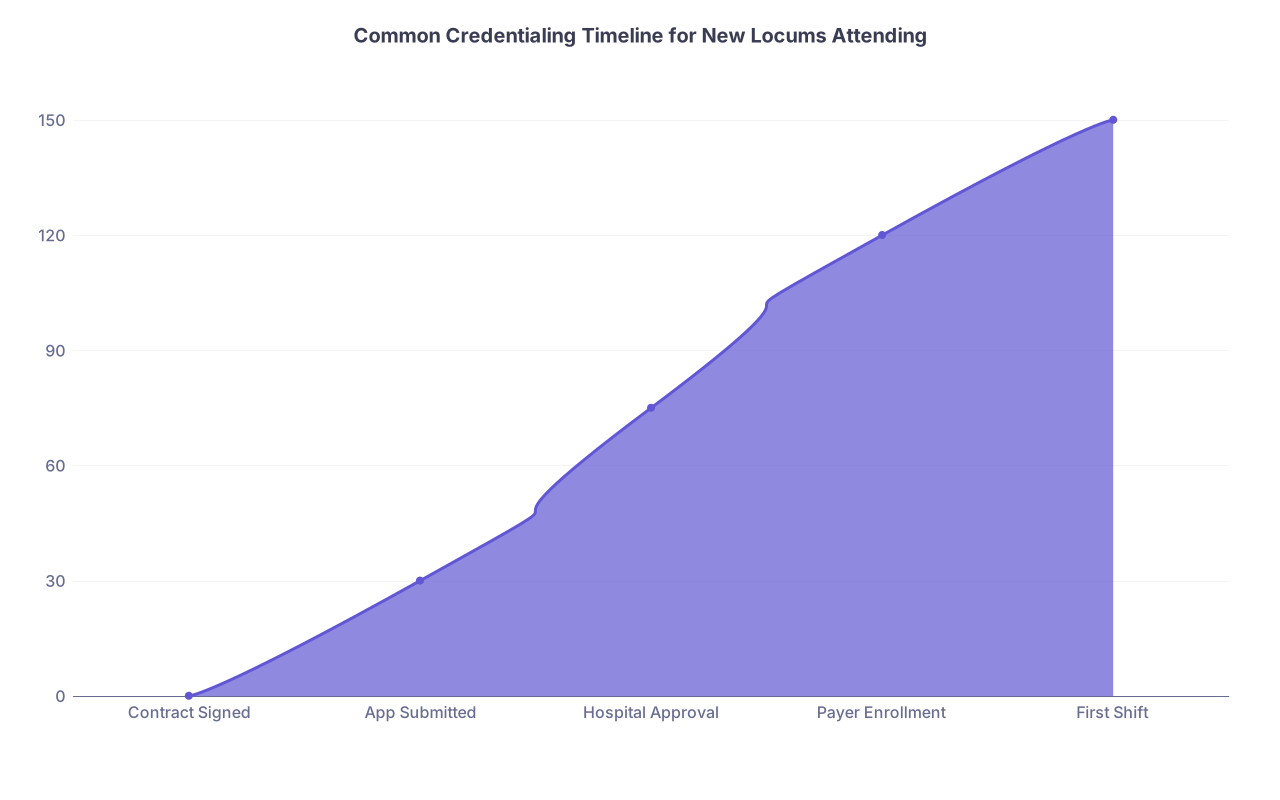
| Category | Value |
|---|---|
| Contract Signed | 0 |
| App Submitted | 30 |
| Hospital Approval | 75 |
| Payer Enrollment | 120 |
| First Shift | 150 |
Those numbers are days. That is five months in a not‑uncommon scenario.
How to not get burned by phantom start dates
For every new locums arrangement, force yourself to ask:
- “What is the latest realistic date I might be able to start, assuming delays?”
- “Are you willing to add a clause that if start is delayed beyond X date due to hospital/agency factors, I receive a stipend or minimum payment?”
Most will say no. That is fine. You then adjust your plans. You do not quit your current job or move cross‑country assuming best‑case timelines.
Mistake to avoid: Building your whole post‑residency life around the recruiter’s optimistic credentialing estimate.
The “Just Until I Find Something Permanent” Fantasy
The biggest strategic mistake: using “flexible” locums as a placeholder without a real plan.
I hear this from graduating residents constantly:
“I do not want to commit yet. I will just do locums for a year while I figure out where I want to live.”
On the surface, that sounds reasonable. The problem is how the “flexible” part warps everything:
Your schedule is too unstable to:
- Schedule in‑person interviews easily.
- Maintain continuity somewhere long enough to get strong local references.
- Actually spend time living in potential cities—you are too busy commuting or recovering.
Your CV starts to look:
- Fragmented.
- Light on long‑term responsibility.
- Full of short stints that can be misread as lack of commitment.
Are there people who pull it off well? Yes. But they are deliberate about it. They do not just “see how it goes.”
| Aspect | Structured Locums Plan | 'Flexible' Just Wing It Plan |
|---|---|---|
| Primary Site | 1–2 defined | 3–6 rotating |
| Shift Minimum | Written expectation | None |
| Financial Planning | Based on conservative estimate | Based on recruiter optimism |
| Time for Interviews | Protected blocks scheduled | Squeezed around chaos |
If you really want a “locums year,” make it structured:
- Choose one primary site (two at most).
- Negotiate block scheduling (e.g., one week on, one week off).
- Use your off weeks intentionally:
- Geographic scouting.
- On‑site interviews.
- Shadowing in target systems.
Mistake to avoid: Letting a year disappear into patchwork shifts that help everyone but you.
Specific Red Flags to Stop Ignoring
Let me be explicit. If you are a new attending and you see any of these in a proposed “flexible” locums opportunity, pause hard.
- No minimum monthly shift expectation written anywhere.
- Cancellation terms where:
- They can cancel you with minimal notice and no pay.
- You are penalized heavily for any cancellation.
- Vague language like:
- “Schedules are made based on need.”
- “We cannot predict volumes, but we will try to keep you busy.”
- Heavy emphasis on:
- “We have needs at multiple sites.”
- “You will never run out of opportunities in our system.”
- No access to:
- Actual prior schedules.
- Historical locums usage data.
That last point is crucial. Any group serious about you should be willing to show:
- Average shifts per month for previous locums docs.
- How often shifts were cut or canceled.
- Trend in locums usage (growing, stable, shrinking).
If they cannot or will not share that, they are asking you to gamble with your life and finances based on trust in people who are not on the hook if things go badly.

How to Use Locums Without Getting Trapped
Locums is not the enemy. Sloppy, vague, “trust us, it is flexible” setups are.
Here is how smart new attendings use locums without falling into the flexibility trap:
Prioritize predictability over theoretical freedom
- Choose contracts with:
- Block shifts.
- Clear patterns (e.g., hospitalist week on/week off).
- Written expectations.
- Choose contracts with:
Limit your sites
- One main site.
- One backup only if necessary.
- Turn down “system‑wide float” roles early in your career.
Treat the first year like a business, not a gap year
- Separate checking account for all locums income/expenses.
- Monthly tracking of:
- Shifts booked vs. worked.
- Cancellations and reasons.
- Actual vs. promised volume.
Pre‑plan your exit or next step
- Timeline: “By month 9, I will either convert this to permanent / choose a region / switch to a more stable role.”
- Do not let “I will decide later” quietly become “I guess I am still doing this 4 years later.”
FAQ (Exactly 3 Questions)
1. Is it ever smart for a brand‑new attending to do pure locums right out of residency?
Yes, but only in specific circumstances:
- You have a solid financial buffer (at least 6 months of basic expenses).
- You have clear reasons:
- Visa issues.
- Geographic scouting with specific target regions.
- Spouse career considerations and you genuinely need short‑term flexibility.
- You choose structured locums (block schedules, one primary site) instead of “we will call you when we need you” setups.
If you are already stressed about money, unsure about documentation, or craving mentorship, a completely flexible locums path right out of residency is usually a bad call.
2. How much schedule control should I realistically expect as a locums doc?
You should expect input, not full control. Reasonable control looks like:
- Being able to say:
- “I will work 7–10 shifts per month, no more than 4 nights.”
- “I am available weeks 1 and 3 each month.”
- Having those preferences consistently honored in writing and in practice.
What you should not expect (and what is often promised but not delivered):
- Total freedom to pick any shifts you want.
- The ability to cancel or rearrange at will without financial consequences.
- Endless shift availability whenever you suddenly decide you want more income.
3. What is one clause I should always push for in a locums contract to protect myself?
A cancellation protection clause. At minimum:
- If the facility cancels a booked shift within X days (often 14–30), they pay:
- A percentage of the shift (50–100%), or
- A fixed minimum (e.g., 4 hours).
- Travel‑related protection:
- If they cancel after you have already traveled, they cover your travel + at least a partial day rate.
You might not always get it, but forcing the conversation tells you a lot about how they value your time. If they insist on total unilateral flexibility to cancel you without compensation, believe them: you are disposable there.
Open the last locums email or contract you received and circle every appearance of the word “flexible” or “varies.” Then ask: “If things slow down, who actually carries the risk—me or them?” If the answer is you, stop right there and renegotiate or walk away.