
Why do so many residents still think “locums = middle of nowhere clinic with one stoplight and a Dollar General”?
Let’s kill that myth properly.
Locum tenens did start as a rural access solution. That much is true. But locking it there is like saying telemedicine is only for psychiatry because that’s where it took off. History is not destiny.
Right now, if you think locums is only for rural family med docs who couldn’t land a “real job,” you’re leaving money, flexibility, and leverage on the table. Especially in the post‑residency job market you’re walking into.
Let’s walk through what the data and the actual market show, not the stories you heard from that one attending who did a month in Wyoming fifteen years ago.
Myth #1: “Locums is basically code for rural family medicine”
This is the big one. And it’s outdated.
Historically, yes, a lot of locums work was designed to plug gaps in remote areas. But if you look at current placement patterns from major agencies (CompHealth, Weatherby, LocumTenens.com, etc.), the picture is completely different.
Urban and suburban placements are now a huge share of the locums market, especially in hospital‑based specialties and shift work fields like EM, anesthesia, and hospitalist medicine.

| Category | Value |
|---|---|
| Urban | 40 |
| Suburban | 35 |
| Rural | 25 |
Those numbers will vary by agency and specialty, but you get the point: rural is a minority, not the default.
And this idea that locums is just for family or internal medicine clinic work? Also wrong. The growth has been happening in procedural and hospital‑based fields for years. You see locums covering:
- Trauma call at Level I and II centers
- Cath lab schedules in big city systems
- ICU coverage in academic‑adjacent hospitals
- EM shifts in high‑volume urban EDs
The rural clinic stereotype is basically stuck in the late 1990s.
Myth #2: “If I want major metro, I have to take a permanent job”
No. This is where you’re getting played by bad assumptions and by hospitals who benefit from them.
Big city systems use locums constantly. They just do not advertise it to their residents, because they’d rather you sign a restrictive 3‑year contract with a bonus clawback.
I’ve seen locum contracts in:
- NYC borough community hospitals
- Chicago safety‑net systems
- Houston and Dallas suburban hospitals
- Denver, Phoenix, Seattle, San Diego group practices
- Boston and Philly satellite campuses and affiliated hospitals
And not just as “we’re desperate” measures. They’re using locums as deliberate strategy:
- Filling gaps during EHR conversions
- Covering parental leave or academic sabbaticals
- Backfilling while recruiting for permanent hires
- Smoothing out seasonal demand spikes (snowbirds, flu season, tourist seasons, etc.)
These hospitals don’t send a blast email to your residency program saying, “We’re paying $260/hour for nocturnist coverage.” They call agencies and sort it behind the scenes.
If you only ever talk to your PD, department chair, or the hospital recruiter who bought everyone Panera for noon conference, you’re seeing maybe 20% of the actual job market.
Myth #3: “Locums is for docs who couldn’t get a real job in a real place”
This one is quietly toxic and completely false.
Hospitals are not paying $230–$350/hour for night coverage (or $2,000+ per 24‑hour call in some surgical subspecialties) because they’re scraping the bottom of the barrel. They’re doing it because:
- They’re chronically understaffed.
- Permanent hires are expensive and slow.
- Patients keep showing up regardless of HR timelines.
Locums physicians in desirable locations are often:
- Fresh grads who want to explore cities and systems before committing
- People paying off loans aggressively with high‑pay, short‑term gigs
- Specialists who know their market value and refuse to accept bad RVU contracts
- Parents who want schedule control in urban/suburban settings
- Burned‑out attendings who left toxic permanent jobs and picked their geography first, then built a locums life around it
I’ve seen anesthesiologists in major metros running 7‑on/7‑off locums schedules and flying out for high‑pay week blocks, then spending their off weeks at home in the city. More income than their academic colleagues. More control. Zero committee meetings.
Is everyone like this? No. Are there also people using locums as a desperate bridge? Of course. But the idea that “real” doctors get permanent urban jobs and the leftovers get locums rural scraps is garbage.
What actually drives where locum jobs are
You’ll hear lazy explanations like “rural shortages” and that’s it. The reality is more interesting and more predictable.
Three main forces control where locum work shows up:
Maldistribution of physicians
Not just rural vs urban. Within cities, certain neighborhoods and hospital types are chronically understaffed. Safety‑net hospitals, community hospitals competing with prestigious academic centers, places with brutal payer mix. They lean on locums hard.System growth and consolidation
Big hospital systems eating up smaller groups. As they “transition,” those schedules still need coverage. That’s locum territory. And those systems are not all in small towns.Lifestyle shifts in the physician workforce
More part‑time, more parental leave, more sabbaticals, more early retirements. As core staffing gets thinner, every mild volume surge produces a gap. Locums fills the gap.
The net effect: location is much more about how dysfunctional or thin the staffing model is, not whether the hospital is rural or urban.
Here’s a snapshot of what’s actually common in different locales.
| Location Type | Common Settings | Typical Drivers |
|---|---|---|
| Urban | ED, ICU, OR, cath lab, hospitalist | High volume, burnout, system churn |
| Suburban | Community hospitals, large multispecialty groups | Growth, maternity/LOA coverage, recruitment gaps |
| Rural | Critical access hospitals, small clinics | Chronic understaffing, recruitment failures |
Rural still needs coverage, badly. But it’s not the only game.
Myth #4: “If I do locums, I’ll get stuck in nowhere-land with no control”
You lose control only if you act like you have none.
Agencies don’t force you to go anywhere. They present what’s available. If you say “I want to work within an hour of Atlanta or Boston or Denver,” the game changes.
What residents never learn is how selective you can actually be, especially early in your attending life when your schedule is flexible and you’re geographically mobile.
Some reality points:
- You can specify states, cities, types of hospitals, inpatient vs outpatient, call vs no call.
- You can say no. To a contract, to a shift pattern, to a location, to a rate.
- You can try one hospital and never go back without burning your whole locums life down.
The physicians who end up in the middle of nowhere for months are usually doing one of three things:
- Chasing the absolute top dollar above all else.
- Signing long blocks without first testing the waters.
- Accepting whatever is offered because they’re scared to negotiate.
That’s not a locums problem. That’s a boundaries problem.
Where the money actually is: rural vs urban vs suburban
The common belief: rural pays more, urban pays less, therefore locums is “for rural.”
It’s partially true, partially lazy.
Yes, rural often pays a high headline rate because they’re desperate and have limited recruiting power. But you must factor:
- Case mix and intensity
- Cost of living
- Guaranteed hours vs feast‑or‑famine
- Call burden and backup support
Urban and suburban settings sometimes pay slightly lower hourly rates, but you get:
- More consistent need
- More sophisticated systems (better support, less chaos… sometimes)
- Easier travel and housing
- Ability to maintain a home base in a city and commute regionally
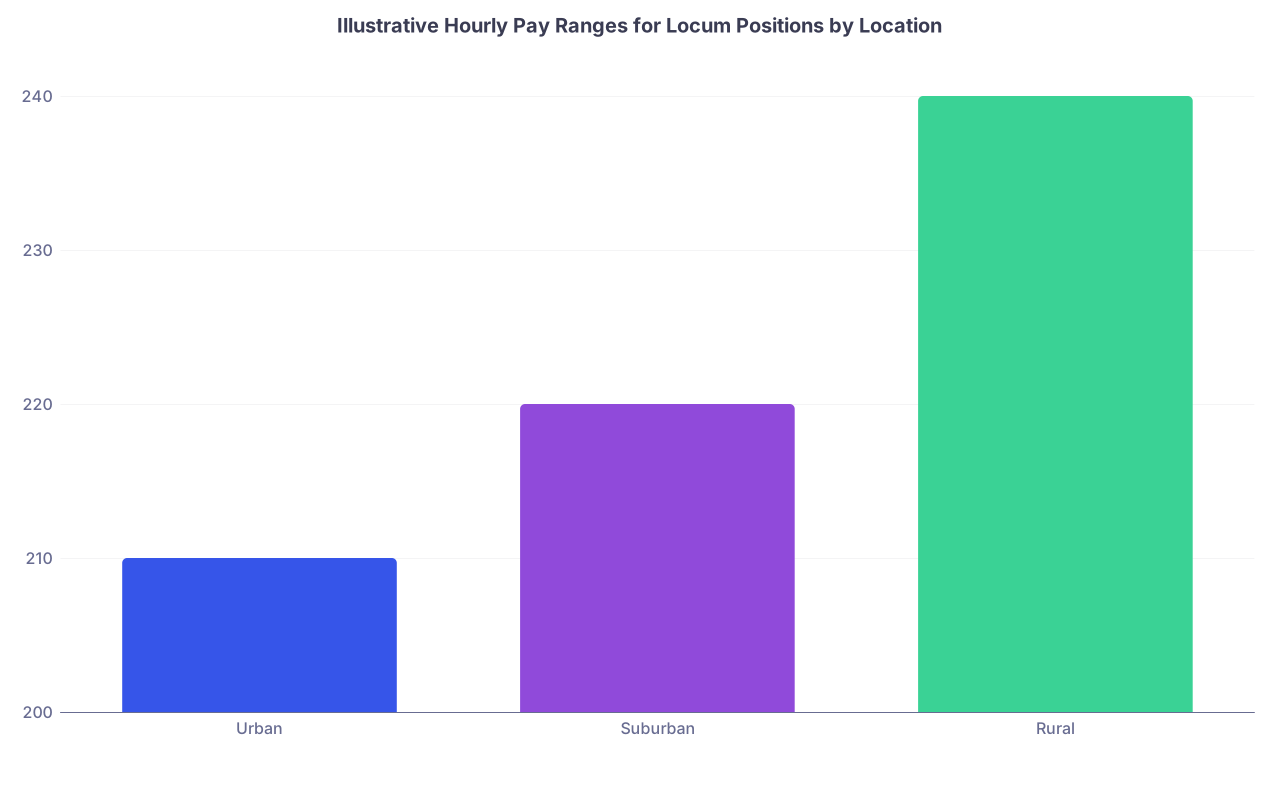
| Category | Value |
|---|---|
| Urban | 210 |
| Suburban | 220 |
| Rural | 240 |
Are there rural gigs that blow those numbers away? Absolutely. I’ve seen rural EM at $300+/hr, surgical call stipends that look insane on paper, critical care rates that make your academic attending blush.
But I’ve also seen urban hospitalist and anesthesia gigs within 10–15% of those rural rates, with a fraction of the lifestyle disruption.
You’re not choosing between “good money in the woods” and “bad money in the city.” You’re choosing between different trade‑offs and support environments. The “rural only” framing hides that nuance.
Post‑residency reality: how locums actually gets used
Let’s bring this down to the level you care about: you, in PGY‑3/4 or fellowship, staring at a job market that feels rigged.
You’ve probably been told your options are:
- Take whatever hospital job your department chair recommends.
- Join a big group in your preferred city and pray the wRVU math isn’t a scam.
- Move to the boonies for big money and “come back later” (which many never do).
Locums gives you a fourth option:
Work where you actually want to live, without being owned by one employer, while testing systems and building leverage.
I’ve watched new grads do the following:
- Move to a major metro with their partner. Keep a modest baseline locums commitment close to home (e.g., 7–10 shifts a month within an hour drive). Fill extra time with higher‑pay week‑blocks in nearby states when they want to spike income.
- Rotate through 3–4 hospitals in the same metro area over a year, then pick the one that treats them best and negotiate a permanent offer from a position of strength, with real numbers in hand.
- Combine a half‑time academic job in the city they love with targeted locums blocks to make their salary livable without selling their soul to RVUs.
None of those stories fit the “only for rural” narrative. All of them are common if you talk to actual locums docs, not just program leadership.
How to tell if locums in your desired city is realistic
Here’s the quick and dirty litmus test.
Look up the big systems and safety‑net hospitals in your target metro.
If there are multiple EDs, community hospitals, or large multispecialty groups, there is almost certainly locums work. They may not call it that internally, but the positions exist.Talk to agencies early—but ask very specific questions.
Not “Do you have anything near LA?” but “How many hospitalist/anesthesia/EM shifts did you place in the LA metro in the last 6 months? What were the actual ranges? How many clients?” Specific volume questions force real answers.Ask current locums docs where they really work.
Not just on AMA forums. Ask them privately: “What cities have you actually worked in the last year?” You’ll hear far more “Cleveland suburbs” and “Houston satellites” than “200‑mile drive from the nearest Starbucks.”Ignore your academic mentors’ stereotypes.
Many of them trained and locked into permanent jobs before modern locums exploded in urban markets. Their mental model is pure historical artifact.
Common traps specific to urban/suburban locums
It’s not all roses in the city either. Different problems, not fewer.
Some traps you should see coming:
- Bait‑and‑switch volume. “Average 12 patient encounters” morphs into 22 once you arrive. Happens everywhere, but especially in busy suburban settings.
- Rotating hospitalists/ED groups. When administration keeps firing or cycling through permanent groups, they use locums as duct tape. Good short‑term pay, questionable long‑term sanity.
- Institutional chaos. Large systems with half‑implemented EHR changes, constant formulary battles, and unpredictable ancillary staffing. High density doesn’t guarantee high function.
This is why short trial blocks matter. Do 3–5 shifts. See it with your own eyes. Then decide.
The contrarian bottom line
Locum tenens is not a rural consolation prize. It’s a staffing strategy that now permeates the full spectrum of American healthcare: rural, suburban, and urban.
The “locums = rural” story survives because it’s convenient for hospital recruiters and comfortable for training programs that still think in straight lines: residency → permanent job → tenure track or partnership.
But the market moved. Quietly.
You do not have to move to a town of 4,000 people to:
- Earn excellent money
- Maintain flexibility
- Test drive systems before committing
- Keep leverage in contract negotiations
You can do all of that from, or around, the cities where you actually want to live.
Just stop playing the game with rules that expired a decade ago.
FAQ
1. As a brand‑new attending, will urban or suburban locums hurt my chances of getting a permanent job later?
No. If anything, it helps. You’ll have multiple real‑world references, a record of adaptability, and firsthand knowledge of different systems. The only time locums raises questions is when your CV is a string of 1–2 month stints with no explanation and clear red flags. Thoughtful, longer blocks in urban or suburban centers look perfectly reasonable to hiring committees.
2. Do I need experience first, or can I start locums right out of residency or fellowship in big cities?
You can start immediately after training, and many do. Some hospitals actually like new grads for locums because you’re fresh on guidelines and flexible with systems. The catch: you need to be honest about your autonomy level and avoid settings that expect you to function like a 10‑year veteran on day one, especially for high‑acuity solo roles.
3. How many agencies should I work with if I want urban or suburban assignments?
Usually two is enough. One large national player and one mid‑size or regional group. More than that and you’re duplicating effort and creating confusion. Make it clear to each what your geography priorities are (e.g., “within 1 hour of Seattle” or “Northeast corridor, major metros only”) and judge them by how often they come back with options that actually match that brief.