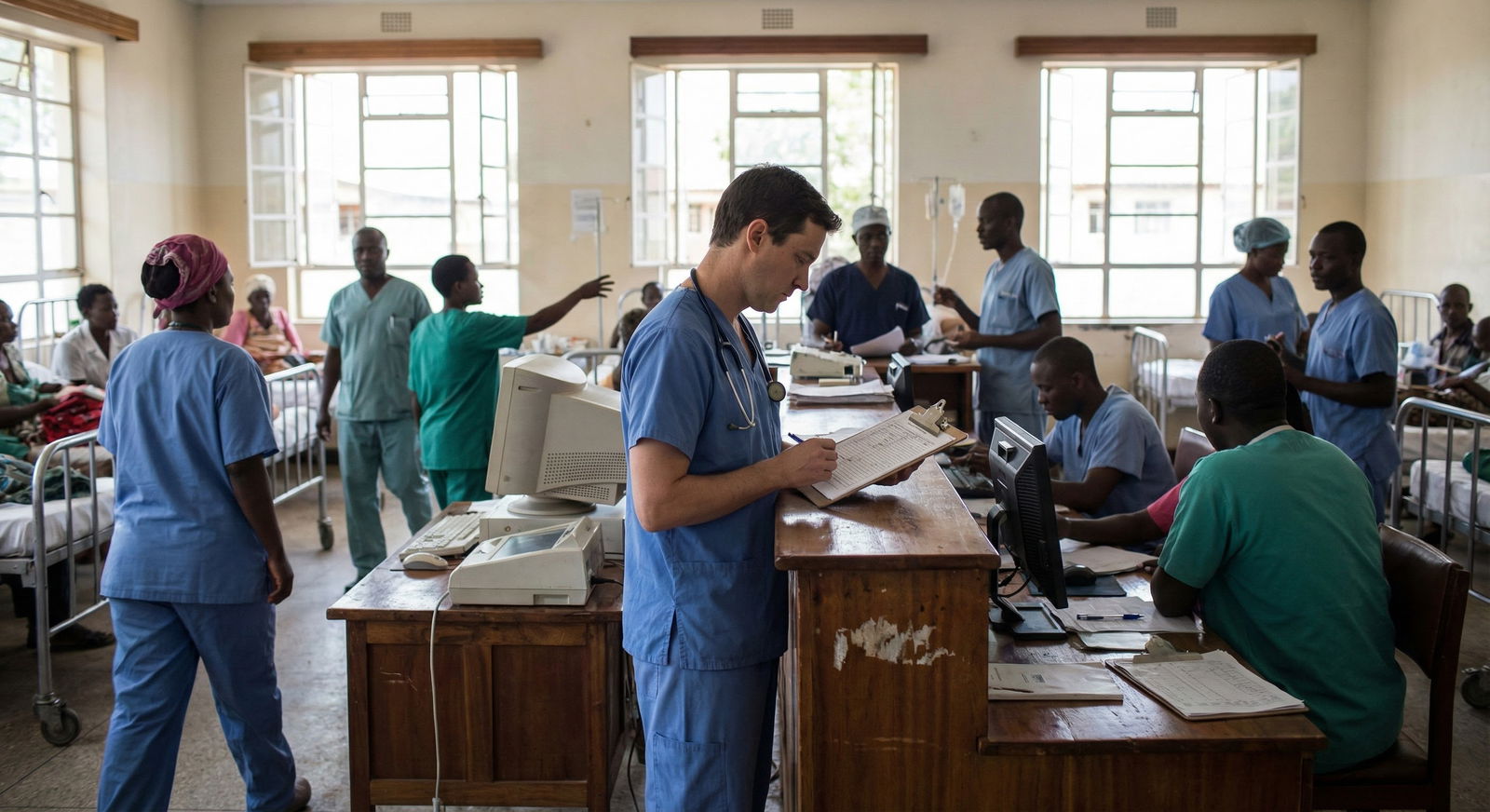
You have just signed a three-week locums contract in a country you have never worked in. You are post-residency, licensed, board-certified, and you thought you understood what “credentialing” meant—until the recruiter drops a 14-item document checklist, the hospital sends a “scope of practice” form that looks nothing like your US delineation, and the local medical council wants original notarized copies of documents you are pretty sure are in a storage unit three states away.
You are not wrong to feel uneasy. Short-term overseas locums are where “flexible adventure” marketing collides with hard regulatory reality. And if you get this wrong—credentialing, scope, standards—you are the one who owns the risk, not the cheerful rep on WhatsApp.
Let me break this down specifically.
1. What “Short-Term Overseas Locums” Actually Means
There are three very different animals that people lump together:
- Pure clinical locums in another country’s formal health system
- NGO / mission / humanitarian deployments with clinical work
- Hybrid “medical tourism” or private concierge setups catering to expats or visitors
Each has different credentialing expectations, scope, and standards. The phrase “short-term” usually means:
- 1–12 weeks at a time
- Often repeating trips, but each is technically a discrete engagement
- Sometimes under a single “visiting specialist” license or temporary registration
You will see these framed as:
- “Visiting consultant” posts (often in the Gulf, some Asian systems)
- “Relief” or “locum” contracts in systems with national health services (e.g., NZ, Australia, UK)
- “Volunteer physician” or “surgeon on mission” under an NGO umbrella (MSF, Samaritan’s Purse, Mercy Ships, etc.)
Do not treat these as interchangeable. A 2-week ENT “visiting consultant” role in a tertiary hospital in Dubai is not remotely the same as a 2-week mission trip to a rural surgical camp in sub-Saharan Africa.
2. Credentialing: Who Actually Has To Clear You, And For What
You will face (at least) three layers of gatekeepers:
- National / regional regulators (medical council, health ministry, immigration)
- The host institution (hospital/clinic)
- The intermediary (locums agency or NGO)
If any one of these is sloppy, you inherit the liability.
2.1 National / Regional Licensing and Registration
Most countries draw a hard distinction between:
- Full registration (like full licensure in the US)
- Temporary or limited registration (for visiting specialists, NGO docs, or short-term locums)
Typical patterns:
- Gulf countries (UAE, Qatar, Saudi, Oman): require a license with their health authority (DHA, HAAD/DOH, MOH). For true short-term stints, certain institutions and agencies can push through “locum” or “temporary” licenses tied to that facility.
- Anglophone systems (UK, Ireland, Australia, NZ): more formal. Even short-term locums almost always require actual registration (GMC, NMC, AHPRA) plus sometimes a visa specific to locum work.
- Low- and middle-income countries (LMICs): can be surprisingly strict on paper, but variable in enforcement. Some require:
- Temporary registration with the medical council
- Ministry of Health approval for foreign medical volunteers
- Specific NGO or institutional sponsorship
Red flag: “You do not really need a local license; you are covered by our NGO MOU.” No. Regulators do not care about internal MOUs when something goes wrong.
Documentation you will almost always need:
- Medical degree + translations or apostilles if non-English
- Residency completion certificate and/or board certification
- Full, unrestricted license from your home country (US state, GMC, etc.)
- Letter of good standing from current licensing body (often must be recent, e.g., <3 months)
- CV with no unexplained gaps
- Passport (sometimes notarized copies)
- 1–3 reference letters (often from recent department heads or program directors)
- Proof of language competency if the country’s working language is not English (varies widely)
Timeframes: often longer than you think. “Short-term” work does not mean “fast” licensing.
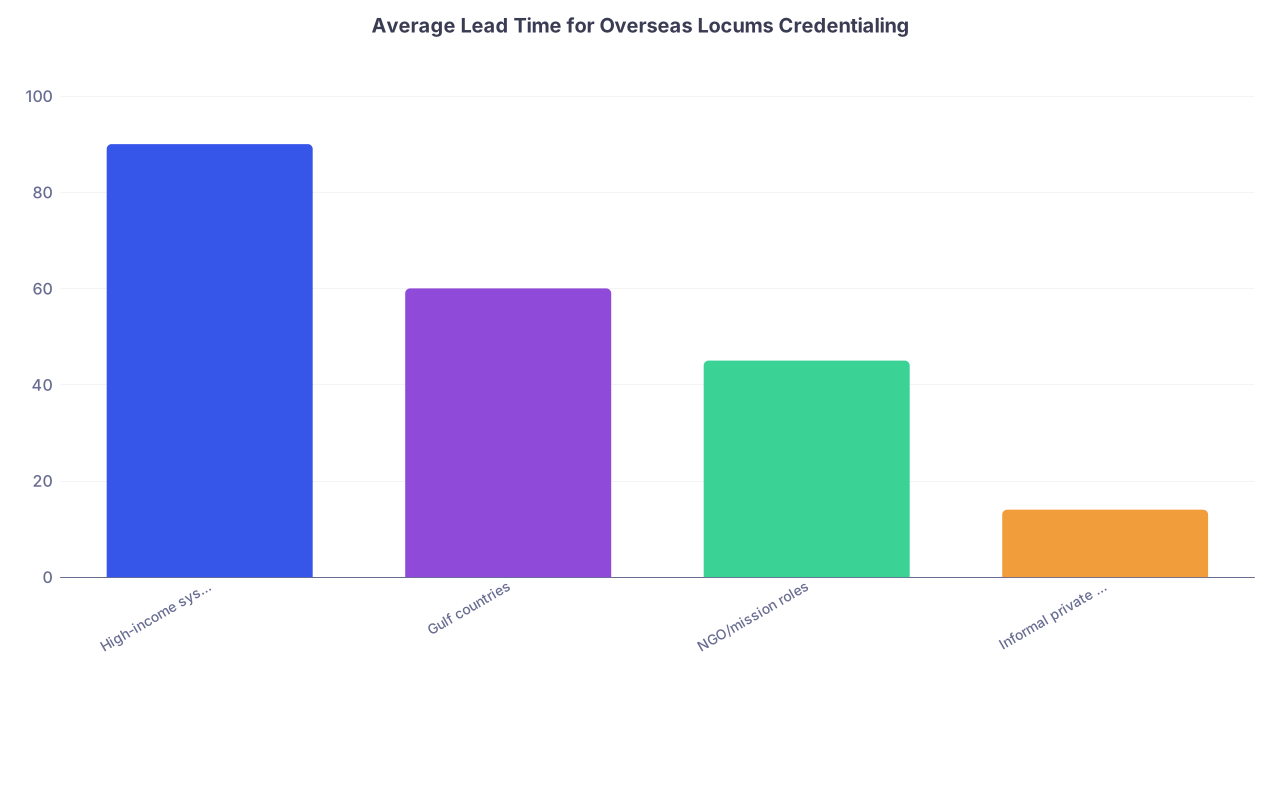
| Category | Value |
|---|---|
| High-income systems | 90 |
| Gulf countries | 60 |
| NGO/mission roles | 45 |
| Informal private clinics | 14 |
The fastest, ironically, is often the least regulated—and the highest risk.
2.2 Hospital / Facility Credentialing
Separate from national licensure, you will almost always be asked to complete some version of privileging or credentialing at the facility level.
Typical ask:
- Detailed log of procedures or case volumes (especially for surgery, anesthesia, OB, EM)
- Malpractice history, NPDB-style disclosures (yes, even overseas systems ask)
- Immunization records and basic health clearance (Hep B, TB, sometimes HIV status in some countries—this is where ethics and local law can conflict)
- Proof of life support certifications (BLS/ACLS/ATLS/PALS/NRP etc.)
Your US or home-country privileging lists are gold here. Bring them. They show someone has already thought through your scope.
2.3 Agency / NGO Credentialing
Locums agencies and NGOs run their own screening:
- Background checks
- Professional references
- Sometimes simulation or skills verification for high-acuity roles
- Compliance modules (safeguarding, humanitarian principles, cultural competence)
NGOs vary wildly. MSF will grill your experience and put you through structured assessments. A small church-based mission may just ask your pastor if you are “a good person” and want to know your favorite Bible verse. The first is annoying but professional. The second is a liability trap.
3. Scope of Practice: What You Are Actually Allowed (And Expected) To Do
Here is where many post-residency physicians get burned. “I am a board-certified internist, so I will do internal medicine.” No. That is not precise enough.
Every host system has a mental image of what your specialty includes, which often does not match your training.
Examples I have personally seen:
- US-trained EM physician in a Pacific island emergency department expected to manage the whole ICU overflow because “ER is intensive, yes?”
- US FM doc in a rural African hospital expected to perform cesarean sections because “family doctors in [neighboring country] do C-sections all the time.”
- US general surgeon in a Caribbean hospital pressed to perform high-complexity hepatobiliary cases with zero subspecialty backup because “you are the surgeon.”
You need a written, mutually understood scope before you get on a plane.
3.1 Your Realistic Scope – Not Just Your Paper Scope
Start with three buckets:
- Core competencies you perform independently, routinely, and recently.
- Skills you have done before but not recently, or only under supervision.
- Skills you have never done, or that you would not touch in your home country.
Your overseas scope should live almost entirely in bucket 1, with a small spillover into 2 if:
- You discuss it explicitly with the host
- There is appropriate supervision or backup
- It would be considered reasonable for someone of your training in that system
But what you will be pushed toward, especially in under-resourced settings, is bucket 2 and 3. “Doctor, there is no one else.”
You need a personal red line before you arrive, or your boundary will be defined for you in a crisis.
3.2 How Host Systems Define Scope
Formal systems often have:
- “Delineation of privileges” forms, similar to US hospitals
- National scopes for GP vs specialist vs consultant
- Specific lists of procedures allowed under each licensing category
Less formal systems may define scope by:
- Your perceived seniority (“consultant,” “specialist,” “expat doctor”)
- What prior foreign doctors did (“The last NGO surgeon did all C-sections and hysterectomies”)
- Simple desperation
Ask for written expectations in advance. Make them put it in email or in a formal document.
Good pre-departure questions:
- What procedures are you expecting me to perform?
- What age range and acuity will I manage?
- What on-call responsibilities are expected?
- What diagnostics and therapeutics are actually available (CT, blood bank, ventilators, pressors, etc.)?
- Who are my immediate colleagues and what are their scopes?
4. Standards of Care: Which “Standard” Are You Being Held To?
Here is the uncomfortable bit. When something goes badly wrong, people will retroactively invent the “standard” they think you should have met.
Three overlapping standards exist:
- International best practice (e.g., guidelines from major societies)
- Local customary practice
- Your home-country standard for someone of your training
In a malpractice or regulatory review, any or all of these may be invoked.
4.1 Resource-Constrained Standard vs Negligence
You cannot be blamed for not ordering a CT when the nearest scanner is 8 hours away. That is resource constraint.
You can be blamed for:
- Not documenting that CT was indicated but unavailable
- Not escalating to transfer when feasible
- Not using reasonable alternatives within the system’s constraints
Concrete example:
- You are in a district hospital with no CT but with ultrasound.
- A patient presents with right lower quadrant pain and fever.
- You can document: “CT imaging not available; performed bedside ultrasound; findings equivocal; clinical concern for appendicitis high; discussed with regional hospital; no ambulance available; proceeded with open appendectomy.”
- That is very different from: “RLQ pain – appendectomy” with no reasoning or documentation of limitations.
Your defense is always: reasonable care, given the resources actually at your disposal. Not fantasy resources from some big-city guideline.
4.2 The “Higher Standard Because You Are Foreign” Problem
I have seen this in practice: local clinicians are informally forgiven for shortcuts or improvisations; visiting doctors are expected to do better because “you are from America/Europe, you should know better.”
Regulators and plaintiff attorneys are especially fond of this narrative.
Your counter: meticulous documentation and visible adherence to process, even when the locals are more casual.
Examples:
- Actually doing and documenting full neuro exams for head injuries, even if the local norm is “wait and see.”
- Using checklists for central lines or surgical time-outs, even if nobody else does.
- Writing short but structured notes: assessment, plan, risk/benefit, alternatives, resource limitations.
You are not going to convert the whole system in two weeks. But you can make your personal practice defensible.
5. Malpractice Coverage and Legal Exposure
This is where many short-term overseas locums ventures cross the line from “risky but manageable” to “professionally suicidal.”
You need clear answers, in writing, to three questions:
- Are you personally named on any malpractice or professional indemnity policy?
- Does your home-country malpractice cover you abroad (almost always: no, or very restricted)?
- What legal jurisdiction applies if you are sued or investigated?
5.1 Typical Coverage Setups
For formal locums through a major agency:
- Agency-provided malpractice or indemnity policy in the host country
- Sometimes “claims-made” and only valid during the contract period
- Often limited limits compared with US norms, but adequate for local legal environment
For NGO work:
- Institutional indemnity covering volunteer clinicians
- Sometimes backed by an international insurer
- Often excludes egregious misconduct but covers routine negligence allegations
For ad hoc, informal work:
- “The hospital covers you under their insurance” (no documentation)
- “No one sues here” (historically maybe, but this is changing rapidly)
- “We have never had a problem” (famous last words)
You are not covered until you have seen your name, role, and dates on an actual policy or certificate, or an institutional indemnification letter with legal weight.
| Scenario | Coverage Quality | Red Flag Level |
|---|---|---|
| Major agency-sourced Gulf locums | High | Low |
| NGO with formal indemnity | Moderate-High | Low-Moderate |
| Self-arranged private clinic gig | Unknown | High |
| Church mission with vague MOU | Poor | Very High |
5.2 Home-Country License Risk
Even if lawsuits are rare locally, complaints can migrate:
- A serious adverse event is publicized
- Media or families contact your home licensing board or medical council
- You now have to explain an overseas case to people who have never worked without an MRI in the building
So you:
- Keep contemporaneous documentation (your own copy of key notes or anonymized summaries, where legal)
- Report serious issues to your malpractice carrier and licensing body if required
- Avoid doing anything overseas that you would be ashamed to explain in a US M&M
6. Practical Credentialing Game Plan (Step by Step)
Let us make this usable. You are 6–12 months from wanting to do short-term overseas locums.
6.1 Six to Twelve Months Out
Clean your documentation:
- Update CV with exact dates, no gaps
- Collect copies of: degree, residency cert, board cert, license, passport
- Request a generic letter of good standing from your primary licensing body
Pick your lane:
- Formal locums via agency in regulated systems
- NGO/humanitarian route
- Hybrid (e.g., do 2 weeks NGO, 2 weeks paid locums somewhere else)
-
- Ask bluntly: “Which countries do you place in, how many physicians per year, what is your licensing support structure?”
- Demand to see sample contracts and coverage certificates.
6.2 Three to Six Months Out
Confirm host country licensing requirements:
- Which authority?
- Temporary vs full registration?
- Expected processing time?
- Need for in-person appearance or exam?
Start facility credentialing:
- Request their privileging forms now, not later
- Align your proposed scope with what you actually do
Lock down coverage:
- Get the malpractice policy or indemnity letter in writing
- Ask specifically about tail coverage and claims-made vs occurrence
6.3 One to Three Months Out
Clarify scope:
- Email or call the department chief or lead clinician
- Ask case-mix and daily census
- Ask “What are the three most common situations where previous visiting doctors struggled?”
Prepare for standards-of-care issues:
- Bring or preload guidelines tailored for low-resource settings (WHO, MSF, SAM guidelines, etc.)
- Print or save dosing charts and protocols that fit local formulary where possible
Sort logistics that affect safety:
- Evacuation insurance (medical and non-medical)
- Next-of-kin, emergency contacts
- Communication reliability (can you call for advice, telemedicine backup, etc.?)
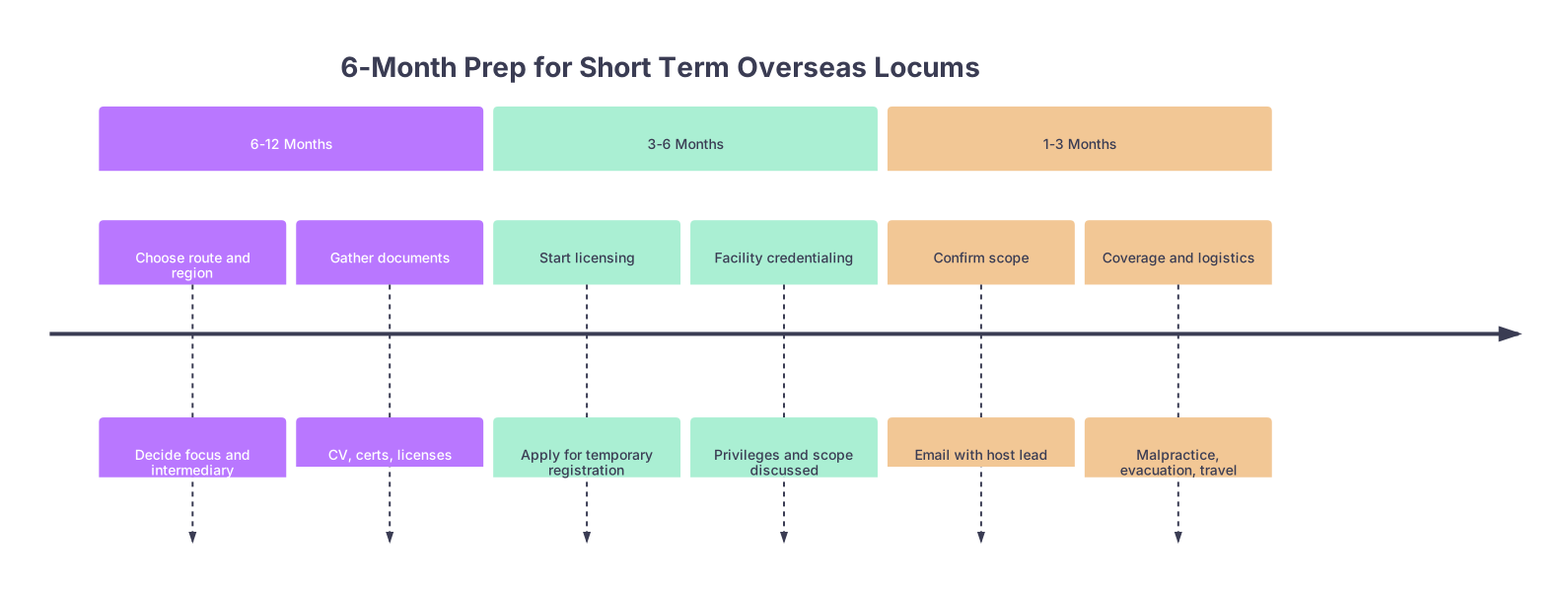
| Period | Event |
|---|---|
| 6-12 Months - Choose route and region | Decide focus and intermediary |
| 6-12 Months - Gather documents | CV, certs, licenses |
| 3-6 Months - Start licensing | Apply for temporary registration |
| 3-6 Months - Facility credentialing | Privileges and scope discussed |
| 1-3 Months - Confirm scope | Email with host lead |
| 1-3 Months - Coverage and logistics | Malpractice, evacuation, travel |
7. Red Flags That Should Make You Walk Away
There is no shortage of “opportunities” overseas. You can afford to decline bad ones.
Concrete red flags:
- “We do not need to bother with local licensing; our NGO has an agreement.”
- “Can you also do obstetrics / anesthesia / neurosurgery? The last visiting doc did.”
- No written contract or terms; all arrangements via WhatsApp or text only.
- No explicit statement of malpractice or indemnity coverage naming you.
- Host facility cannot tell you what diagnostics, blood products, or backup are available.
- You are asked to bring your own medications or supplies for core aspects of care (I am not talking about a few extra sutures; I am talking about “we have no reliable antibiotics”).
If you are desperate for “experience,” do not experiment on patients in a foreign system. That experience will follow you home.
8. How To Keep Your Practice Safe Once You Are On The Ground
You have arrived. The system is more chaotic than advertised. What you do in the first 48 hours sets the tone.
Start narrow, then expand.
- Take admission and ED cases that match your comfort zone first
- Scrub in as assistant on borderline cases before you are primary
Be annoyingly clear about boundaries.
- “I am not trained for X; we need to find an alternative.”
- Say it in front of nursing and other staff so expectations adjust early.
Over-document key decisions.
- New environment, new risks—documentation is your memory and your defense.
- Especially document resource limitations and discussions with local colleagues.
Ask for help. Constantly.
- Preferably from the most experienced local clinician, even if that is a nurse with 20 years there.
- Say the quiet part out loud: “You know how things work here better than I do. How do you usually handle this?”
Debrief serious events.
- If there is a bad outcome, request a review, even if informal.
- Put key facts in writing while fresh—not to blame others, but to fix the record.
9. Quick Example Scenarios (So You Can See the Edges)
Scenario 1: Short-Term EM Locums in the Gulf
- Agency arranges 3-week blocks in a private hospital ED in Dubai
- You need DHA or DOH temporary license, 2–3 months lead time
- Hospital expects you to see all-comer ED cases, moderate acuity, no trauma surgery
- Full CT, MRI, labs, subspecialists on call
- Malpractice coverage provided with clear limits and policy copies
Reasonable, as long as the scope matches your real EM practice. Your standard is essentially US-level.
Scenario 2: Two-Week NGO Surgical Mission in Rural Africa
- NGO arranges temporary registration with national council
- You work as general surgeon in a district-level OR
- Blood bank minimal, often family-donated; limited ICU
- You are the only surgeon on site for part of the mission
- NGO provides indemnity; lawsuits rare but not impossible
Here, your standard of care is “reasonable in an under-resourced setting,” but your risk is scope creep. If you are a bread-and-butter general surgeon, you should not be doing pancreatic resections because “no one else will.”
Scenario 3: Volunteer Pediatrics Work with Small Faith-Based Group
- No clear licensing process; group says hospital “handles it” on arrival
- No written contract, just an email
- Coverage: “Hospital has insurance; we have never had a problem.”
- You are expected to see everything from neonates to adolescents, ward + ED
This is how people get into trouble. You are practicing in a gray zone, completely exposed. I would decline this unless the licensing and coverage pieces are clarified and formalized.
FAQ (Exactly 5 Questions)
1. Do I really need local licensure for a short-term overseas locums assignment if I am fully licensed at home?
Yes. Your home-country license gives you credibility, but it does not grant you legal authority to practice in another jurisdiction. At minimum, you need temporary or visiting registration with the host country’s medical council or equivalent. If someone tells you, “You can just come as a volunteer under our NGO,” ask for the specific regulation or statute that permits foreign doctors to practice without local registration. If they cannot produce it, assume you need licensure.
2. Will my US (or home-country) malpractice insurance cover me when I work abroad?
In most cases, no. Standard US malpractice policies either exclude international practice outright or only cover certain types of work (e.g., telemedicine, US-based patients temporarily abroad) and often only in countries with similar legal frameworks. You must confirm with your carrier in writing. For true overseas locums, assume you need separate coverage provided by the agency, institution, or NGO, or you must purchase an international policy tailored for your work.
3. How narrow should I define my scope for an overseas assignment?
Narrower than your ego but aligned with your actual, recent, independent practice. If you have not done open cholecystectomies in five years, you do not list them as a core skill, even if you did them in residency. Your initial scope should focus on procedures and conditions you handle weekly, without supervision, in your home system. You can always expand scope after a few days on site if you and the local team jointly agree it is appropriate and safe. You cannot easily walk back overcommitment once the staff think you “do everything.”
4. What if the local standard of care seems clearly unsafe or outdated—am I supposed to follow it anyway?
You are not obligated to copy unsafe local practices, but you must work within local resource constraints. The balance is: do not import reckless shortcuts just because “everyone else does it,” but do not insist on unrealistic gold-standard care when the resources do not exist. Pragmatically: implement safer processes where you can (e.g., checklists, basic monitoring, rational antibiotics) and document explicitly when you deviate from international guidelines because of logistical limits. If a practice seems grossly unsafe (reusing single-use devices without sterilization, for example) and cannot be changed, you should reconsider participating in that setting.
5. How do overseas locums and missions affect my home-country licensing and career long term?
They can help or hurt. Structured, well-documented overseas work through reputable agencies or NGOs usually reflects positively, especially if you can articulate the systems skills, adaptability, and case-mix you managed. But ad hoc, poorly supervised work where bad outcomes occur can trigger board inquiries, malpractice alerts, and reputational damage, especially if patient families or media bring cases back to your home regulators. The key is to treat overseas work as real medicine with real accountability, not as a casual volunteer side trip. Document, stay within scope, and choose partners who take credentialing and standards as seriously as you do.
Key points, distilled:
- Treat short-term overseas locums as real, regulated medical practice: get proper licensure, clear scope, and documented coverage or do not go.
- Your defensibility hinges on staying within honest, recent competencies and documenting how you delivered reasonable care in that specific resource environment.
- If the people arranging your trip are casual about credentialing, scope, or standards, walk away; there are better, safer ways to work abroad than gambling your license for a two-week adventure.