
The biggest mistake subspecialists make with locums is assuming “a gig is a gig.” It is not. Cardiology locums is a different universe from GI locums, and both are wildly different from heme/onc locums.
Let me break this down specifically, because the nuances here will make or break your sanity, your income, and sometimes your malpractice risk.
The Core Reality: These Three Fields Sell Completely Different Problems
Hospitals do not hire subspecialty locums because they “like flexibility.” They hire you to fix one of a few very specific pain points:
- Cardiology: “We are terrified of being uncovered for STEMIs, AF with RVR, and decompensated CHF.”
- GI: “We are drowning in consults and colonoscopy backlogs, and we need someone to scope without complaining.”
- Heme/Onc: “Our oncologist left or is out long‑term, and we need someone to keep the infusion center and clinic from imploding.”
Once you see the underlying problem, the patterns of schedule, compensation, and lifestyle make sense. And once you stop treating them as interchangeable, you can pick the subspecialty locums lane that actually fits your life.
Big‑Picture Comparison: Cardiology vs GI vs Heme/Onc
| Factor | Cardiology Locums | GI Locums | Heme/Onc Locums |
|---|---|---|---|
| Typical setting | Inpatient heavy, ICU mix | Mix inpatient + endoscopy | Outpatient clinic + some IP |
| Call burden | High, often in‑house/24h | Moderate to high, procedural | Often light or phone only |
| Procedural intensity | Caths, TEEs, cardiovers. | Scopes, ERCP (if advanced) | Mostly non‑procedural |
| Day‑to‑day stress | Acute, time‑sensitive | Steady but physically taxing | Emotional, chronic care |
| Top income potential | Very high | Very high | Moderate to high |
| Burnout risk flavor | Sleep deprivation, pace | Physical + time pressure | Compassion fatigue, volume |
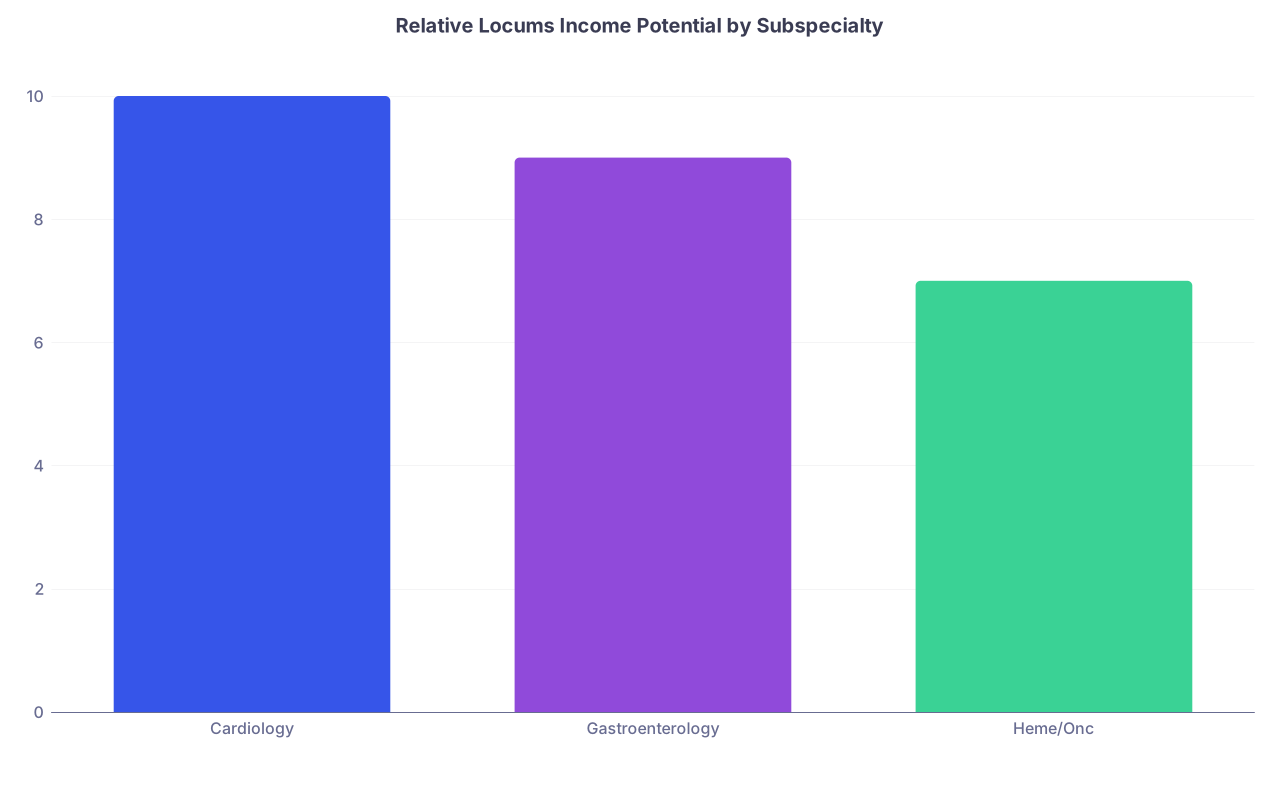
| Category | Value |
|---|---|
| Cardiology | 10 |
| Gastroenterology | 9 |
| Heme/Onc | 7 |
Values are relative, not absolute dollars. But the hierarchy is what you would expect.
Now let’s go deep into each.
Cardiology Locums: High Acuity, High Pay, High Noise
If you want “excitement” and are still comfortable living on adrenaline, cardiology locums will feed that habit.
1. Typical Cardiology Locums Models
Most cardiology locums fall into a few buckets:
Inpatient general cardiology with call
You round on 10–20 patients, manage consults, and take overnight call for the hospital. Cath lab involvement varies.Interventional cardiology with STEMI coverage
You are the STEMI doc. You will be judged on door‑to‑balloon times, speed, and how few times you say “take them to the tertiary center.”Non‑invasive / imaging‑heavy roles
Often community hospitals that need someone to read echos, stress tests, maybe nuclear. Inpatient consults plus imaging.“Hybrid” community cardiology
A bit of clinic, some inpatient, some call. Often in smaller markets that lost their only cardiologist.
Each structure has very different lifestyle implications. The bad sign is vagueness in the job description: “general coverage, some call” usually means “we are desperate and you will do everything.”
2. Schedule, Call, and Workflow
Common patterns you will see:
- 7 on / 7 off with 24‑hour call
- 2‑week or 4‑week blocks with home call but really busy evenings
- “Clinic plus call” 3–5 days per week for a month at a time
On‑call nights are not equal. At a regional referral center with a large catchment area, you may have multiple STEMIs, post‑MI complications, unstable arrhythmias, and ICU consults overnight. At a critical access hospital, the volume is lower but resources are thinner, and transfers become the main headache.
In practical terms: you will not control your sleep. If you are finishing fellowship or still like the ICU, this is tolerable. If you have been in practice 10 years and your cortisol spikes every time the pager buzzes, you will age faster in this lane.

| Step | Description |
|---|---|
| Step 1 | Pre-round charts |
| Step 2 | Inpatient rounds |
| Step 3 | New consults |
| Step 4 | Echo reads / stress tests |
| Step 5 | Afternoon follow-ups |
| Step 6 | Sign out or stay for call |
| Step 7 | STEMI / acute calls overnight |
| Step 8 | Off duty |
| Step 9 | On call? |
3. Procedural vs Non‑Procedural Cards Work
The biggest fracture line: interventional vs non‑invasive.
Interventional locums:
- Often higher daily rates or extra STEMI stipends.
- More strict requirements: recent cath volume, logs, board certification.
- Credentialing often slower because of cath lab privileging and QA.
Non‑invasive roles:
- Focus on inpatient consults, TTE, TEE, stress, sometimes nuclear.
- You need clear clarity on echo reading expectations and volume. I have seen locums cardiologists walk into 30+ echos to read from the previous week, plus 20 inpatients.
You must be specific about what you will and will not do. If you do not perform TEEs regularly, say so early. Locums agencies will happily “assume” you do everything.
4. Compensation Patterns in Cardiology Locums
Typical structures:
- Daily rate plus call stipend (and sometimes RVU or per‑procedure bonuses)
- 24‑hour rate whether or not you sleep
- Separate imaging read rates (per echo, per nuclear, etc.)
High‑demand regions or interventional gigs can pay extremely well. But people forget the opportunity cost: if you are getting crushed with 24‑hour STEMI call, that rate is not passive income. It is hazard pay.
5. Pros and Cons of Cardiology Locums
Pros:
- Top‑tier earning potential among medicine subspecialties.
- Acute, satisfying problem‑solving. You see the impact of your decisions quickly.
- Skill maintenance if you want to keep doing complex inpatient medicine.
Cons:
- Sleep disruption and chronic stress from call.
- Malpractice exposure, especially if systems and protocols are shaky.
- Choppy lifestyle; difficult if you want predictable days.
If your primary goal is maximum income in 1–3 concentrated years, cardiology is hard to beat. If your goal is low‑stress semi‑retirement, this is the wrong aisle.
GI Locums: Procedure‑Driven, Time‑Pressure, Physically Demanding
GI locums looks “chill” on paper: scopes and consults, no STEMIs. In reality, the day can be relentless.
1. Why Hospitals Hire GI Locums
Three common drivers:
- High colonoscopy backlog due to screening demand or lost staff.
- No call coverage for GI bleeds and food impactions.
- A solo GI retired / moved, and the hospital must keep the service line alive.
So they bring you in as a procedural engine.
2. Typical GI Locums Structures
You will usually see:
Endoscopy‑heavy weeks:
M–F, 7:00 or 7:30 am first case, scoping until mid‑afternoon, plus inpatient consults squeezed in.Mixed inpatient/clinic weeks:
Morning endoscopy blocks, afternoon clinic, some call.“Consult + emergency scope” roles in smaller hospitals:
Daytime consults, plus you are the person for all bleeds and foreign bodies.
Key variable: ERCP/EUS expectations. Many contracts say “ERCP preferred.” That usually means “you will be the only person and we expect you to do it.” If you are not current or comfortable, do not gloss over that.
3. The Daily Grind of GI Locums
A realistic day at a typical community hospital:
- 7:00–7:30: First colonoscopy
- 7:30–12:30: Back‑to‑back colonoscopies and EGDs, maybe a dilation or PEG
- 12:30–1:00: Quick lunch while you try to answer Epic messages you do not get paid for
- 1:00–3:00: More scopes, often add‑ons from morning consults
- 3:00–5:00: Inpatient consults, re‑scopes, clinic overflow
Then, depending on the shift, you might be on call for GI bleeds or food impactions until the next morning.
Physically, this is not nothing. On busy days you are standing for hours, hands and back taking repetitive strain. I have seen mid‑career GI locums develop serious musculoskeletal issues because they did not factor that in when stacking 3–4 weeks back‑to‑back.

4. Call and After‑Hours Expectations
GI call is a different flavor of disruption:
- Not constant like STEMI calls.
- But when it hits, it is often emergent and procedure‑based: severe UGIB, stuck food bolus, obstructing lesions.
Call volume varies hugely by hospital size and ED culture. Some EDs are trigger‑happy and scope everything. Others manage conservatively overnight and push to the morning.
Before you accept a gig, ask direct questions:
- “How many emergent scopes per night on average?”
- “How often are you called in after 10 pm in a typical week?”
- “Do you have anesthesia support 24/7, or are there limitations?”
If they cannot answer clearly, assume they are desperate and underselling the burden.
5. GI Locums Compensation Patterns
GI is also a high‑paying locums specialty, especially if you:
- Perform ERCP and EUS confidently.
- Tolerate a high daily scope volume.
You will see mixes of:
- Daily flat rate (often tied to a minimum number of scopes).
- Per‑scope bonuses beyond a baseline.
- Call stipends plus per‑procedure rates for after‑hours scopes.
Do not ignore endoscopy turnover times and staffing. A “10 scope” day can feel like 5 if turnover is efficient, or like 20 if you are constantly waiting 20–30 minutes between cases because of understaffed nursing or anesthesia delays. This is where a lot of GI locums quietly burn out.
6. Pros and Cons of GI Locums
Pros:
- High earning potential, strong demand nationwide.
- Procedural satisfaction; clear, discrete tasks.
- Less constant life‑and‑death stress compared with cards.
Cons:
- Physically demanding; long days standing, repetitive motion.
- Time pressure and “scope factory” environments.
- Nighttime disruptions for GI bleeds at poorly organized facilities.
For a subspecialist who enjoys procedures and can tolerate repetitive physical work, GI locums can be lucrative and oddly straightforward. You are paid to scope and clear a backlog, not to reinvent the service line.
Heme/Onc Locums: Clinic‑Heavy, Emotionally Heavy, Logistically Messy
Hematology/Oncology locums is almost a different profession. Less acute adrenaline. More chronic, relational, and administrative.
1. Why Heme/Onc Locums Happen
Patterns I keep seeing:
- A community oncologist leaves and they cannot recruit fast enough.
- Maternity leave / medical leave coverage for a solo practitioner.
- Rapid local growth in cancer volume without enough permanent staff.
No matter the trigger, the core problem is the same: patient panels and infusion centers do not stop just because the doctor did. Someone has to manage chemotherapy, orders, and follow‑ups to prevent absolute chaos.
2. Typical Heme/Onc Locums Structures
You usually see:
Clinic‑dominant weeks:
4–5 days per week, 8–16 patients per day (sometimes more), mix of new consults and follow‑ups.Hybrid clinic + inpatient consults:
You run clinic and also cover inpatients, often rotating with another oncologist.Inpatient‑heavy roles:
Less common in pure community settings, more common at academic centers; you do leukemias, lymphomas, febrile neutropenia, etc.
You are not doing procedures like the other two specialties (beyond basics like bone marrow biopsies in some settings). The burden is cognitive and emotional, not procedural.
3. The Real Work: Orders, Regimens, and “Someone Has To Own It”
On paper, clinic days sound simple: see patients, adjust chemo, document.
In practice, you are:
- Managing complex chemo regimens that other people designed.
- Being held responsible for toxicity, timing, dose modifications.
- Constantly double‑checking someone else’s roadmap.
If the practice is well organized, nurse navigators and pharmacists help a lot. If not, you are thrown into a maze of partially documented regimens and incomplete staging, and you spend half your day hunting through old notes and outside records.
The other hidden burden: follow‑up responsibility. Locums is supposed to be “come in, cover, leave.” Oncology does not easily work like that. When you start a new regimen or break terrible news, you are psychologically on the hook for what happens next, even if your contract ends in 2 weeks.
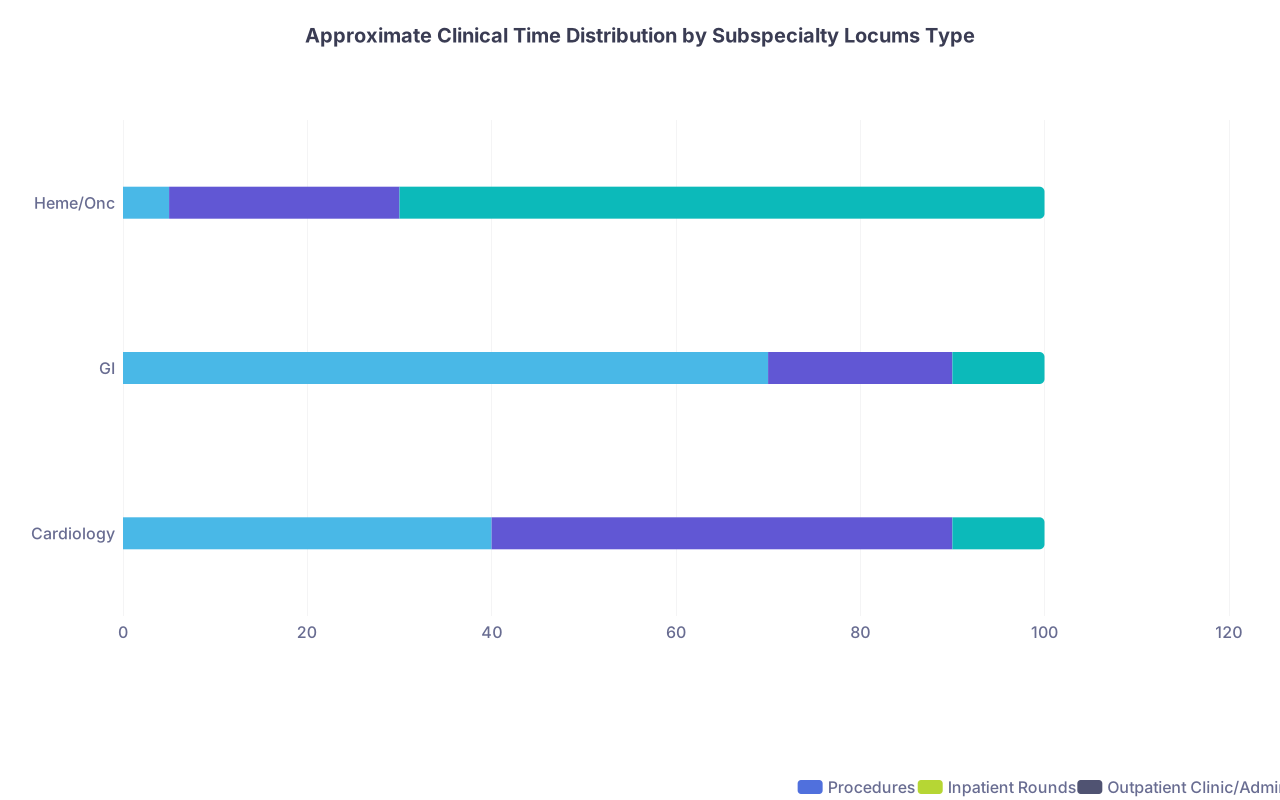
| Category | Procedures | Inpatient Rounds | Outpatient Clinic/Admin |
|---|---|---|---|
| Cardiology | 40 | 50 | 10 |
| GI | 70 | 20 | 10 |
| Heme/Onc | 5 | 25 | 70 |
Percentages approximate, but the pattern holds: heme/onc is clinic/admin heavy relative to procedures.
4. Call, Weekends, and Infusion Center Realities
Heme/Onc call:
- Often lighter in terms of acute overnight emergencies.
- More phone management, treatment complications, fever neutropenia advice, etc.
- Rarely the 2 a.m. procedure type situation.
What matters more than call is infusion center structure:
- How many chairs?
- How many regimens in a typical day?
- How many new starts weekly?
- Are pharmacists robust, or is everything on you?
If the infusion center is drowning, your clinic days will be chaos. Every delayed chemo, every borderline ANC or creatinine, every reaction will land in your lap.
Again, ask numbers, not adjectives.
5. Heme/Onc Locums Compensation Patterns
Oncology locums usually pays less peak‑hour than GI or interventional cardiology, but ranges are still solid. You will see:
- Daily or hourly rates for clinic days.
- Separate stipends for call or weekend coverage.
- Occasionally volume or RVU bonuses, but many are straight time‑based.
The ceiling is lower because you are not cranking out high‑RVU procedures. But the schedule is often more humane. Clinic from 8–4 or 9–5 with phone call is very different from 24‑hour STEMI or GI bleed coverage.
6. Emotional Burn and Ethical Tension
This is the part people underestimate.
Being the temporary oncologist creating or modifying chemo plans, giving bad news, and then disappearing a few weeks later is emotionally messy. It can also feel ethically uncomfortable if the system is disorganized and you cannot guarantee continuity.
I have watched excellent oncologists walk away from locums because of:
- Unsafe chemo practices at understaffed centers.
- Pressure to continue regimens they considered inappropriate.
- Constant moral distress from being asked to “just sign” for plans they did not fully believe in.
If you choose heme/onc locums, pick your sites very carefully. You want mature, stable practices with robust nursing and pharmacy, not duct‑taped operations trying to stave off collapse.

Hidden Variables That Change Everything
Subspecialty aside, there are a few cross‑cutting variables that completely change the feel of any locums job.
1. Academic vs Community vs Rural
Academic centers:
More fellows and residents, more subspecialty backup, but more bureaucracy and teaching expectations. Locums may be less common or more tightly structured.Community hospitals:
Most common for locums. You are often “the” specialist, or one of very few. Thin backup. Direct relationship with hospital admin.Rural / critical access:
Sometimes very low volume, sometimes complete chaos when something big hits. Transfer logistics matter more than finesse.
For cardiology and GI, rural often means you will be the only proceduralist on site. For heme/onc, rural means you may be the only oncologist for a massive geographic region, with limited referral options.
2. EMR, Support Staff, and “Soft Infrastructure”
I have seen perfectly reasonable jobs destroyed by mediocre support systems.
Questions that matter more than people admit:
- Which EMR? (Epic vs Cerner vs the unknown dinosaur.)
- How many APPs or NPs support the service?
- For GI: How many RNs and techs in the endoscopy suite?
- For Cards: Dedicated echo techs? 24/7 cath lab staff?
- For Heme/Onc: Nurse navigators? Oncology pharmacists on site?
The better the infrastructure, the more your job feels like practicing medicine instead of hand‑to‑hand combat with a broken system.
3. Credentialing, Licensing, and Travel Realities
Subspecialty locums credentialing is slower and more painful, especially for:
Interventional cardiology and advanced GI (ERCP/EUS):
Case logs, QA, reference letters, device reps, cath lab committee approval.Heme/Onc with chemo oversight:
Policies, protocols, multiple committee approvals.
You are also more likely to be juggled between multiple sites if you are in a high‑demand niche. That sounds glamorous until you are living out of two suitcases and fighting travel fatigue.

| Step | Description |
|---|---|
| Step 1 | Choose subspecialty focus |
| Step 2 | GI or Interventional Cards |
| Step 3 | Heme/Onc or Non-invasive Cards |
| Step 4 | Cards or GI with call |
| Step 5 | Clinic-heavy GI roles |
| Step 6 | Heme/Onc Locums |
| Step 7 | Non-invasive Cards without heavy call |
| Step 8 | Prefer procedures? |
| Step 9 | Tolerate high call? |
| Step 10 | Handle chronic emotional load? |
How To Choose: Matching Your Personality and Phase of Life
This is where most people lie to themselves. They chase rate spreadsheets and ignore who they actually are and what stage of life they are in.
If you are early post‑fellowship and want to maximize income fast
Cardiology or GI locums with high call and procedure volume will pay the most, quickest. You trade sleep and predictability for dollars.
Smart play:
Do 1–3 years of high‑intensity locums, stack cash, crush your loans, then re‑evaluate. Do not pretend you can do this pace indefinitely.
If you are mid‑career and burned out on inpatient chaos
Heme/Onc locums or clinic‑heavy non‑invasive cardiology gigs are saner. Slightly lower ceiling, far more sustainable. Prioritize:
- Clinic‑heavy roles.
- No 24‑hour call, or limited phone‑only call.
- Sites with strong APP and nursing support.
If you are late‑career and want semi‑retirement
You probably want:
- Limited or no call.
- Predictable clinic days or low‑acuity inpatient roles.
- Minimal procedural expectation unless you still enjoy it physically.
Heme/Onc in a well‑run cancer center or non‑invasive cards with constrained expectations can work. Avoid any job that starts with “we are desperate.”
Red Flags Specific to Each Subspecialty
Let’s be blunt. If you hear these, approach very carefully.
Cardiology Red Flags
- “We just lost three cardiologists in the last year.”
- “The cath lab is new; we are still building protocols.”
- “You will be the only cardiologist on site overnight.”
Not automatic dealbreakers, but they scream system issues.
GI Red Flags
- “We book 18–20 scopes per day routinely.”
- “Turnover has been a bit slow but we are working on it.”
- “We do not have in‑house anesthesia after 5 pm.”
Translation: expect long days, delays, and some sketchy after‑hours logistics.
Heme/Onc Red Flags
- “Our last oncologist left on short notice; we do not know why.”
- “We just need you to sign off on existing chemo plans.”
- “We do not really have pharmacists dedicated to oncology.”
That last one alone should make you seriously reconsider.

FAQs (Exactly 6)
1. Which subspecialty pays the most for locums: cardiology, GI, or heme/onc?
Cardiology and GI are usually at the top, especially interventional cardiology and ERCP‑capable GI. Heme/Onc pays well compared with general internal medicine, but generally below high‑procedure subspecialties. The trade‑off: oncology often has more regular hours and less overnight chaos than high‑call GI or interventional cardiology.
2. If I am a non‑interventional cardiologist, can I still find good locums jobs?
Yes. There is steady demand for non‑invasive cardiologists to cover inpatient consults, read echos and stress tests, and run clinic. The key is being explicit about your procedural scope: do you do TEE? Cardioversion? Do not let agencies or hospitals assume cath lab skills you do not have. Non‑invasive roles often have heavy inpatient loads but lower procedural intensity.
3. I am a GI doc who does not do ERCP. Will that limit my locums options significantly?
It cuts out some of the highest‑paying, most desperate gigs, but there is still plenty of work. Many community hospitals mainly need screening and diagnostic scoping plus inpatient coverage. However, be very clear upfront; “ERCP preferred” in the posting often means “we will push you hard to do it.” If you are honest, you can still build a solid locums practice around colonoscopy and EGD.
4. Is heme/onc locums a bad idea because of continuity and ethical concerns?
Not inherently. In a well‑run system with solid handoffs, oncology locums can be a reasonable way to provide coverage during absences or recruitment gaps. The problems arise in chaotic systems that lack documentation, pharmacist support, or realistic expectations. If you choose carefully, you can practice ethically and safely; if you ignore red flags, you will end up in moral distress quickly.
5. How many weeks per year can I realistically do high‑intensity cardiology or GI locums before burning out?
That depends on your baseline resilience and family responsibilities, but most people overestimate. Back‑to‑back 7‑on/7‑off blocks with heavy call or high procedure volumes will grind you down fast. Many seasoned locums subspecialists find a sustainable rhythm around 20–30 working weeks per year in high‑intensity roles, with real time off between blocks. Treat this like a sprint‑then‑recover pattern, not a 52‑week marathon.
6. Should I work directly with hospitals or use agencies for subspecialty locums?
For most subspecialists, agencies are a necessary evil early on. They have multi‑state reach, know credentialing pathways, and can line up multiple offers. Once you establish yourself at a few sites, you can often renegotiate directly with hospitals or systems for better rates and fewer middlemen. In high‑demand niches (interventional cards, ERCP GI), going direct can significantly boost your net, but you will do more of the negotiation and logistics yourself.
Key Takeaways
- Cardiology, GI, and heme/onc locums are fundamentally different beasts: cardiology is acuity and call, GI is procedures and pace, heme/onc is clinic and emotional weight.
- Your subspecialty choice should match your actual tolerance for call, procedures, and long‑term emotional load, not just the highest daily rate on a spreadsheet.
- The site’s infrastructure—staffing, EMR, pharmacy, and culture—will matter as much as the specialty itself in determining whether a locums job feels like a smart move or a slow‑motion disaster.