
Most applicants have the politics of SOAP completely backwards.
You’ve been taught to think SOAP is a safety net. A rescue plan. The system that ensures “all positions get filled and all applicants have a fair chance.”
That’s the brochure version.
Behind closed doors, a lot of program directors will do almost anything to avoid using SOAP. Not because they’re too competitive to ever go unfilled. But because SOAP is messy, exposes weaknesses, and forces them to make compromises they’d rather hide.
Let me walk you through what actually happens in program meetings the week before and during Match—and what that means for you if you’re anywhere near the SOAP danger zone.
What SOAP Really Looks Like From the Program Side
First, you need to understand that from a program’s perspective, SOAP is not “round two of the Match.”
SOAP is work.
I’ve watched PDs and coordinators at three different institutions—one mid-tier IM, one community FM, and one surgical subspecialty—say some version of this in February:
“We do not want to be in SOAP. Build the list to avoid it.”
They’re not being dramatic. Here’s what SOAP actually means for a program:
- 48–72 hours of controlled chaos
- Hundreds to thousands of applications dumped into the portal at once
- Time-sucking “speed interviews” with very little data
- Pressure from GME and the department chair: “Why are we unfilled?”
- A public black eye in the PD community: other PDs can see you had unfilled positions
So programs quietly plan to avoid SOAP at almost any cost. And you feel those decisions long before Match Week.
The Real Reasons Programs Hate SOAP (The Stuff No One Tells You)
Let me break down why programs avoid SOAP, not the sanitized NRMP explanation, but the conversations that happen after the Zoom is turned off.
1. SOAP Makes a Program Look Weak
This is the part nobody will put in an email, but they absolutely say it out loud in meetings.
Being in SOAP is a reputational hit.
Programs talk. PD listservs, national meetings, private group chats. When a program appears in the “Unfilled Positions” list, other PDs clock it instantly:
- “Oh, they expanded too fast.”
- “Their residents are leaving.”
- “Something’s wrong there.”
I’ve literally heard: “We cannot show up unfilled. I don’t care if it means ranking deeper than we want.”
So what do they do? They stretch their rank list way beyond where they’re truly comfortable to avoid the embarrassment of going into SOAP. They take people they’re unsure about in February to avoid having to pick strangers in March.
That affects you directly: if you’re on that fringe, they’d rather take you than risk SOAP.
2. SOAP Candidates Are Often Desperate – and Programs Know It
This is harsh, but this is how they talk in the work room.
By the time SOAP rolls around, most applicants in the pool are:
- Red flags (academic issues, professionalism problems, failed exams)
- Under-screened (IMGs, non-traditional applicants with limited US clinical experience)
- Unlucky but unproven (okay applicants who didn’t get enough interviews, but PDs don’t have time to identify who’s who)
So from the program’s view, SOAP candidates are a giant, undifferentiated mass with higher risk and less information.
Are there excellent people in SOAP? Yes. Every year. I’ve seen incredible candidates get a SOAP spot and shine.
But the perception among many PDs is: “This is where the leftovers are.” That’s their word, not mine. And they don’t want to pick from “leftovers” under a two-day time crunch.
So they ask themselves: “Why not just fill in the main Match with the safest possible people—even if they’re not our dream candidates—so we never have to touch SOAP?”
And they act accordingly.
3. SOAP is a Massive Administrative Burn
Most applicants don’t appreciate how maxed-out program staff already are by February.
The week of SOAP, here’s what has to happen on the program side if they go unfilled:
- PD and APDs cancel clinics or OR time
- Coordinators drop everything to manage applications, schedule phone/Zoom calls
- Residents are pulled in last-minute to “rapid interview” candidates
- GME is breathing down their neck: “You need to fill these spots”
I’ve sat in on a SOAP day where one coordinator had 600+ applications dropped into her queue in less than an hour. PD turns to her and says, “Screen these and give me your top 50 to call.”
She laughed. Then started doing it anyway.
Programs remember those days. They remember that feeling of: “I will never do this again if I can help it.”
So during rank list creation, the marching order is: “Rank deep. Don't leave positions to SOAP.”
4. Financial and Service Pressure: Positions Have to Be Filled
Here’s the dirty secret: unfilled positions aren’t just “education spots.” They’re budget lines and service coverage.
In many hospitals, residents do a large chunk of the clinical work:
- Night float
- Cross-cover
- Admitting patients
- Clinic volume tied to RVUs
If a program leaves spots unfilled:
- Faculty and existing residents pick up extra shifts
- Coverage schedules get redrawn
- Department loses revenue or has to pay for locums or moonlighters
Department chairs hate SOAP for this reason. They want those spots filled. But they want them filled before SOAP, when they feel they have more control and better choice.
So they push PDs hard: “Do not end up in SOAP. Fix it on the front end.”
That’s why borderline candidates who might have been screened out early suddenly look more attractive in February. A warm body in July is better than a scramble in March.
5. SOAP Forces Transparency They’d Rather Avoid
Another angle: SOAP exposes things programs don’t want on display.
If they go unfilled, people start asking questions:
- “Did something bad happen there?”
- “Why did they lose three residents last year?”
- “Is their accreditation in trouble?”
Sometimes the real answer is benign (new program, too ambitious expansion, weird year). Sometimes it isn’t.
But programs would rather not invite that scrutiny. So they overcompensate on the front end to avoid showing up on that unfilled list.
How Programs Quietly Restructure Their Strategy to Avoid SOAP
This is where it hits you directly. Because when programs are terrified of SOAP, they change their entire approach to ranking and interviewing.
1. Rank Lists Get Longer—and “Safer”
In January, PDs sit in front of a big board of applicants. There’s the “We love them” group. The “Good but not spectacular” group. And the “I’d be fine if they matched here but we’re not excited” group.
Here’s the decision point you don’t see.
If a program is scared of SOAP, they will:
- Add way more names from that “fine but not excited” group
- Push down the line to people they barely remember from interviews
- Include applicants they know will be high-maintenance but at least somewhat known quantities
I’ve seen mid-tier IM programs go 300–400 deep on their rank list purely to avoid the risk of unfilled spots.
For you, that means if you’re “borderline,” you’d rather be on a long list at a SOAP-phobic program than on a short high-ego list at a brand-name place that’s comfortable going unfilled and picking from SOAP.
2. Early Filtering Becomes More Aggressive
Ironically, programs that fear SOAP aren’t always more generous. They’re sometimes more rigid with initial screens:
- Minimum Step 2 scores
- No YOG (year of graduation) older than 5 years
- No significant leaves of absence
Why? Because they want their interview pool to be as SOAP-proof as possible. If they invite you to interview, you’re someone they’d be willing to rank deep and potentially take over stronger on-paper people who didn’t mesh socially.
So they frontload the risk management. You’ll never even know you were screened out because they didn’t think you could help them avoid SOAP.
3. They Watch Applicant Behavior Closely
There’s another piece you probably don’t think about: programs hate getting burned by people who rank them low.
If they sense you’re using them as a “backup,” they’re less likely to rank you high—because that increases the risk of going unfilled.
I’ve watched PDs say: “She’s great, but she’s not coming here. Drop her lower, we need people who might actually come.”
Signals they pay attention to:
- Did you show genuine engagement on interview day?
- Did you ask specific questions about their program, or just generic stuff?
- Did you send a thoughtful follow-up or very obviously copy-pasted email?
- Did you hint you’re ranking them high—or did you broadcast you’re aiming “as high as possible”?
This matters more when they’re protecting themselves from SOAP.
How This Affects You Before Match Week
Let’s bring this out of the program conference room and into your actual decisions.
If You’re a Borderline Applicant for a Specialty
If you’re worried you might end up in SOAP—or worse, unmatched entirely—here’s the truth: you cannot “plan” to fix your situation in SOAP. Programs are doing everything they can to avoid dealing with you there.
What you can do, though, is exploit their fear of SOAP now.
This means:
- Apply broadly not just across geography but across program “personality”
- Notice which programs historically go unfilled vs. which almost never do
- Take every interview seriously – not as “practice,” but as a potential final home
The programs that are obsessed with not being in SOAP are surprisingly willing to rank you higher than you think—if you show them you’ll show up, work hard, and not cause drama.
Community vs. University Programs
Here’s an unspoken pattern I’ve seen repeatedly:
- University programs with strong reputations are more willing to risk going unfilled and dip into SOAP if needed. They think their brand can still attract decent SOAP candidates.
- Community programs, especially those heavily dependent on resident service coverage, are terrified of being unfilled and usually rank very deep to avoid SOAP.
That gives you a strategic edge: if you’re open to community programs, you’ll benefit from their SOAP avoidance. They’d rather take a chance on you in the main Match than spin the wheel in SOAP.
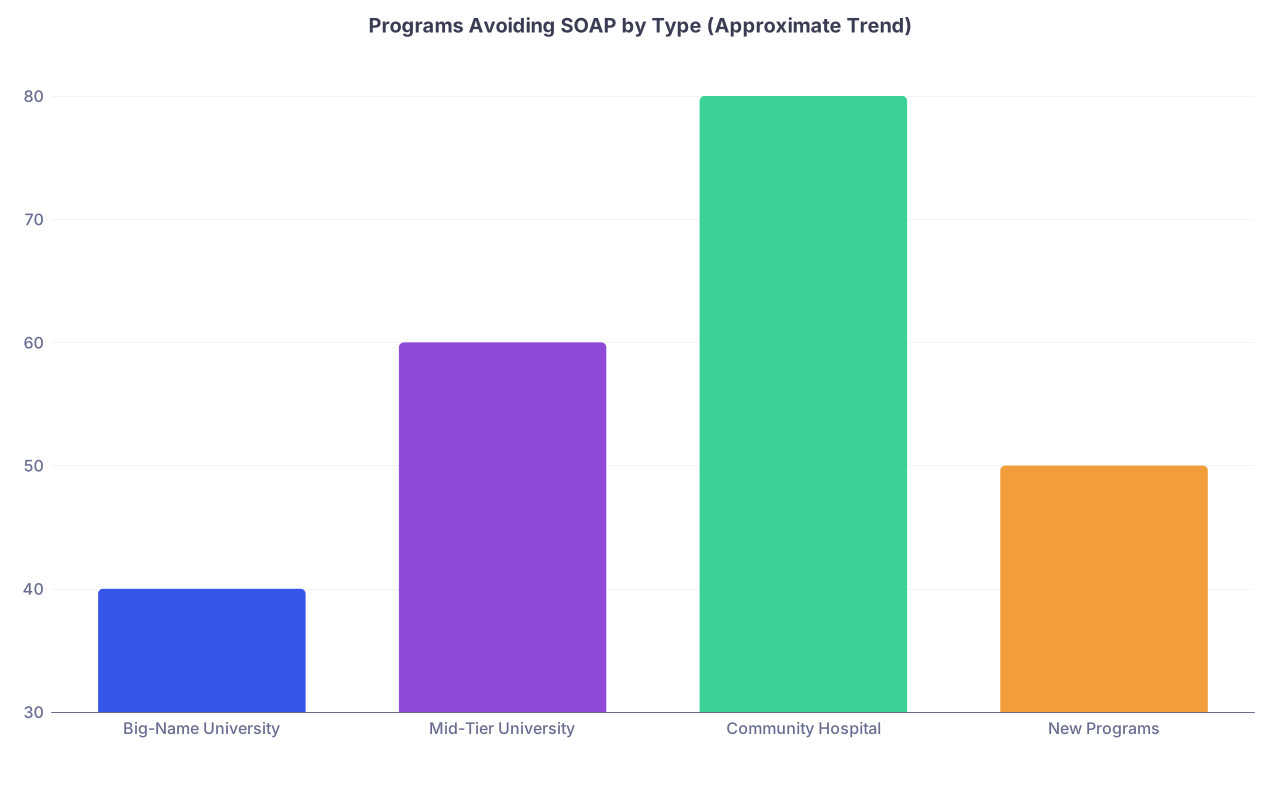
| Category | Value |
|---|---|
| Big-Name University | 40 |
| Mid-Tier University | 60 |
| Community Hospital | 80 |
| New Programs | 50 |
(Percentage represents rough proportion of programs that deliberately rank very deep or otherwise change strategy to avoid SOAP based on insider experience—this is not official NRMP data, but it reflects what faculty talk about.)
What Actually Happens During SOAP If They End Up There Anyway
Despite all this, some programs still end up in SOAP. Someone resigned. A new spot was approved late. Their rank list underperformed.
Here’s the part people sugarcoat. SOAP from the program side is not “holistic review.” It’s triage.
The PD logs in and sees hundreds of applications. They have maybe 24–36 hours to:
- Filter by Step scores, graduation year, visa status
- Skim a few personal statements
- Rapidly pick a small subset to call or video chat
You? You’re one of many profile cards.
The vibe is not “We’re so excited to meet you.” It’s:
- “Does this person have a clean record?”
- “Can they show up on July 1 and not implode?”
- “Are they going to create problems with professionalism or patient safety?”
SOAP reviews are blunt. PDs will openly say things like:
- “I don’t care about research right now.”
- “No more than one failed exam.”
- “I am not dealing with visa complexity for a SOAP spot this late.”
Is that fair? Not really. But it’s the reality.
And it explains why they’d rather fill earlier. Rank deeper. Take the B+ applicant they kind of liked in December over the unknown wildcard in March.

| Step | Description |
|---|---|
| Step 1 | Unfilled after Match |
| Step 2 | Log into SOAP portal |
| Step 3 | Filter by basic criteria |
| Step 4 | Select small subset to contact |
| Step 5 | Rapid phone/Zoom interviews |
| Step 6 | Internal huddle with faculty |
| Step 7 | Submit SOAP preference list |
| Step 8 | Positions filled or remain unfilled |
Strategic Moves for You If You’re SOAP-Adjacent
You can’t control how programs think, but you can absolutely position yourself better in light of their SOAP avoidance.
1. Stop Fantasizing About SOAP as a “Second Chance Plan”
The worst misconception I hear: “If I don’t match, I’ll just SOAP into something.”
That’s like saying, “If I fail the exam, I’ll charm the dean into giving me an A anyway.”
You might get lucky. Some do. But the system is set up for programs to avoid needing you in SOAP at all. So betting your career on SOAP is reckless.
Your real leverage point is before rank lists go in.
2. Signal Serious Interest Where It Matters
Programs hate being burned. You can ease that paranoia.
Without crossing into NRMP violation territory, you can:
- Tell a program if they’re your top choice (once) in a concise, specific email
- Tell several programs they’re “among your top choices” and why
- Be very concrete in your interview and post-interview communication about why you fit them, not just “medicine” or “this city”
Those signals matter more for programs terrified of SOAP. They want evidence that if they rank you high, you won’t drag them into the scramble.
3. Choose a Backup Specialty or Broader List Intelligently
If you’re aiming for a competitive specialty and your numbers/portfolio are marginal, understand this:
A lot of those programs are comfortable going into SOAP. They’d rather not, but they can tolerate it.
Community IM/FM/Peds/Path, on the other hand, are often desperate to avoid it.
So your strategic move might look like:
- Aim at your dream specialty with a realistic number of programs
- Have a serious, not token, application to a less competitive specialty or broader range of community programs
- View that second tier not as a failure, but as aligning yourself with programs highly motivated to fill in the main Match

The Psychological Game: How PDs Think About You When They Fear SOAP
Let me give you three real composite examples of how SOAP avoidance shapes decisions.
The “Solid but Quiet” Applicant
- Decent Step scores, no red flags
- Average letters, nothing glowing
- Interview was fine but not memorable
If the program is not worried about SOAP, you land in the middle or lower middle of the rank list. They don’t mind if you end up elsewhere.
If the program is terrified of SOAP, suddenly your predictability is an asset. “He’s solid, no trouble, he’ll show up and do the work.” You creep up the list.
The “Star but Flight Risk”
- Great scores, strong research, charismatic
- Very clear they’re aiming for big-name places
- Interviewed at your mid-tier program as a backup
In a SOAP-averse program, they’ll say: “We love her, but she’s not coming here. Don’t rank her too high or we risk slipping if she ranks us low.”
You might be objectively better than half their class. Doesn’t matter. You’re a perceived risk.
The “Red Flag but Charming”
- Failed Step once, or professionalism concern on the dean’s letter
- Interview was excellent, everyone liked them
- PD is torn
In a program unconcerned about SOAP, they might roll the dice and rank you reasonably high. In a program trying to avoid any risk of not filling, you get pushed way down or off the list.
Because the mental calculus is: “If they flame out, we’re down a resident and maybe unfilled next year. Not worth it.”
They’d rather take three boring workhorses than one star and one landmine who could throw them back into SOAP again.
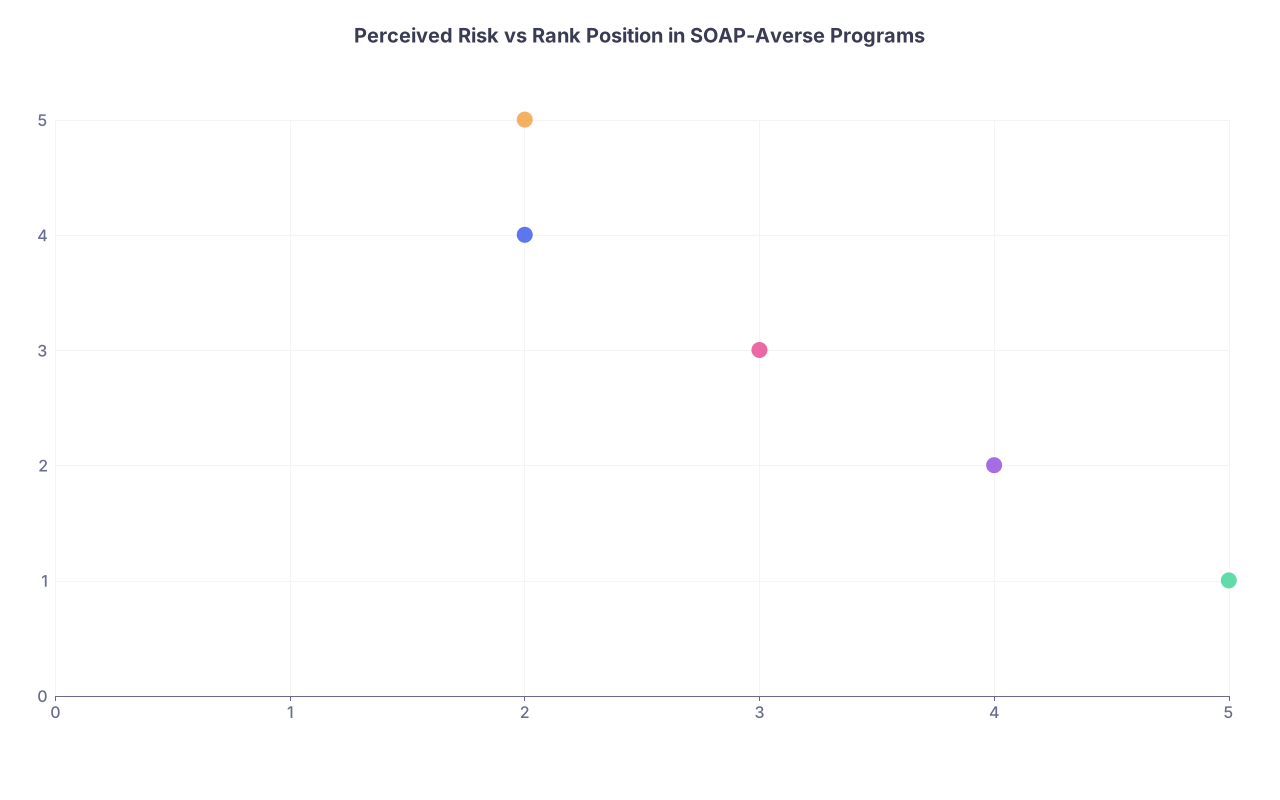
| Category | Value |
|---|---|
| Solid Quiet | 2,4 |
| Star Flight Risk | 4,2 |
| Red Flag Charming | 5,1 |
| Average Engaged | 2,5 |
| Strong but Late Grad | 3,3 |
(X-axis: perceived risk 1–5; Y-axis: approximate relative rank position 1–5, with 5 ranked highest. Again, this is conceptual, but it mirrors how PDs actually talk.)
How This Shapes Your Behavior on Interview Day
Knowing all this, you should walk into interviews with a very different mindset.
You’re not just “selling” yourself as a great future doctor. You’re also:
- Lowering their perceived risk
- Showing them you’re not going to leave them hanging
- Making it easy for them to justify ranking you above someone who’s shinier on paper
Concrete ways you do that:
- Be specific when you talk about why that program works for you (family nearby, patient population, schedule, fellowships, whatever is actually true)
- Show you’ve done your homework: know their tracks, call schedule, clinics, affiliated hospitals
- When they ask “Where else are you interviewing?” don’t flex; be honest but measured. If you only name ultra-elite programs, you’re telling them “I will probably rank you low.”

What To Do If You End Up in SOAP Anyway
Let’s not pretend this can’t happen. It does, even to strong applicants.
If you find yourself in SOAP, remember: programs are overwhelmed and risk-averse. You need to make their job easy.
Three priorities:
Clean, concise application updates
Anything that reduces perceived risk helps: passed Step 2 recently, strong new clinical eval, explanation of a gap or issue in straightforward language.Rapid, professional responsiveness
Answer emails and calls immediately. Programs are under the clock; if you seem disorganized or slow, they move on.Direct reassurance without begging
In quick interviews, calmly communicate you can start on time, you’re committed to showing up, and you understand the realities of intern year. No drama, no desperation meltdown.

| Stage | Activity | Score |
|---|---|---|
| Match Week | Discover Unmatched | 1 |
| Match Week | Regroup and Update Materials | 3 |
| SOAP | Submit Applications | 2 |
| SOAP | Rapid Interviews | 3 |
| Outcome | Receive Offer | 4 |
| Outcome | Start Residency | 5 |
Quick Reality Check: SOAP is Built for Programs, Not for You
Here’s the blunt truth most students never hear:
SOAP is optimized to help programs plug holes quickly, not to help applicants “fix” a bad Match season.
That’s why:
- Programs can mass filter and mass reject
- Time windows are compressed
- Listings of unfilled positions are carefully controlled
The system’s priority is: “Make sure hospitals have enough residents to function.” Your career plans are secondary.
Once you understand that, you stop fantasizing about SOAP as a strategy and start treating it as what it is: emergency backup.
You don’t plan a career around the fire extinguisher.

FAQs
1. Do top programs ever use SOAP, or is it just weaker programs?
Yes, even “top” programs occasionally land in SOAP—usually due to unexpected resident resignations, rapid expansion, or strange match dynamics. The difference is attitude. Big-name places are more comfortable with the reputational hit and often assume their brand will still attract decent SOAP applicants. Smaller or community programs are much more anxious about it and work harder to avoid it.
2. If a program uses SOAP, does that mean it’s a bad program?
Not automatically. Newer programs, rapidly expanding systems, or niche specialties can end up in SOAP for benign reasons. That said, repeat SOAP appearances over several years can signal instability, poor reputation among residents, or serious structural issues. One SOAP year is a yellow flag. A pattern is a red flag.
3. Should I tell a program I’ll rank them highly to avoid ending up in SOAP?
If it’s true they’re your top choice, a single clear, specific email stating that can help. If they’re “among your top choices,” you can say so without overcommitting. What you should not do is send “You’re my #1” to multiple programs—that’s dishonest and, if discovered, damaging. Programs do pay attention to these signals, especially when they’re anxious about going unfilled.
4. Is there any way to improve my chances in SOAP if I do end up there?
Yes, but it’s damage control, not a guaranteed solution. Have an updated CV and a brief explanation ready for any red flags. Be extremely responsive and professional during SOAP week. Target programs that historically fill through SOAP or value service coverage highly. And if you do land a SOAP spot, show up in July ready to work; a strong intern year can open doors later, even if your entry route was rough.
Bottom line: Programs avoid SOAP because it’s chaotic, reputationally risky, and exposes their weaknesses. That fear quietly reshapes how they screen, interview, and rank you months before Match Week. Use that to your advantage now—because by the time SOAP opens, the power balance has already shifted away from you and firmly back to them.