
The fastest way to destroy your residency chances is to treat SOAP like a backup lottery instead of a brutal four‑day job hunt.
SOAP is not “extra time.” It’s sudden‑death overtime. And most of the damage happens in the first 24 hours while people are still spinning, crying, and texting group chats instead of acting strategically.
I’ve watched strong applicants go 0/45 in SOAP not because they were bad candidates, but because they made dumb, preventable mistakes in that first day. You don’t have to join them.
Let’s walk through the 13 missteps that quietly wreck SOAP outcomes—and what you should do instead.
1. Freezing for Half a Day After the “You Did Not Match” Email
The first mistake is emotional, not logistical: losing half of Monday morning to panic.
Here’s what usually happens.
9:00 AM ET: Email hits. “We are sorry to inform you…”
9:05–11:30: Shock. Tears. Calling every relative. Group chats full of “WTF happened?”
Meanwhile, programs are loading your application into their systems, comparing lists, planning who to call.
They’re working while you’re spiraling.
You absolutely deserve to feel awful. You just cannot afford to act awful for more than an hour.
What you must do instead in those first 1–2 hours:
- Call your dean’s office / student affairs and find out what SOAP support they have ready
- Confirm your ERAS is updated: transcripts, exam score releases, MSPE visible
- Start triaging your application: what are your salvageable strengths, and what’s your actual target range now?
If your first real SOAP action happens after lunch on Monday, you’re already behind.
2. Reusing Your Original Personal Statement Without Surgery
This one’s deadly and far too common.
You wrote a personal statement months ago aimed at:
- Academic, highly competitive programs
- A different geographical focus
- Sometimes even a slightly different angle on your specialty
Then in SOAP, people just…attach the same thing. Because “there’s no time.”
Huge mistake.
Programs reading SOAP applications know exactly what they’re getting:
- People who didn’t match
- People now aiming lower than their initial list
- People under pressure
They’re looking for two things:
- Do you still actually want this specialty?
- Are you realistic, humble, and ready to work?
A generic, lofty original PS screaming “future academic leader” applying now to a small community program? It reads as delusional and misaligned.
You don’t have to rewrite from scratch. But you do need to:
- Strip out overblown language about “top research institution” or “cutting‑edge tertiary care” if you’re SOAPing into small community sites
- Add 2–3 concrete sentences showing you understand the type of patients and practice setting these programs have
- Show that you’ve reflected on growth areas—not that you’re wallowing, but that you’re self-aware
If your SOAP PS looks exactly like your original PS, you’re telling programs: “I learned nothing and adjusted nothing.”
3. Applying Too Narrowly Because You’re Still Chasing the Dream
SOAP is full of people trying to “salvage” the original dream instead of securing any residency position.
I’ve seen unmatched applicants apply to:
- Only university programs
- Only a single state
- Only 15–20 SOAP positions
because they “still believe they’re competitive.”
Belief does not beat supply and demand.
You are now in a market with:
- Limited seats
- Hundreds of similarly panicked applicants
- Programs that are often risk‑averse with SOAP spots
If you SOAP like you’re still in Round 1 of the match, you will be sitting with no PGY‑1 position in July.
Here’s the harsh filter you need:
Within SOAP, your priority is to get into a residency spot that will train and pay you, not to perfectly optimize prestige or location.
That doesn’t mean spam every open field. It means:
- Apply across academic and community programs
- Apply across regions, not just your favorite coastal city
- Apply to all reasonable open positions in your chosen specialty, unless there is a truly massive dealbreaker (e.g., religious requirements you cannot meet, visa issues)
Your emotional brain will tell you to “hold out.” Don’t listen.
4. Totally Ignoring Reasonable Backup Specialties
The clock starts ticking and people say:
“I’ll just reapply next year. I’m not doing prelim medicine or family or psych—ever.”
Sometimes that’s the right call. Often it’s a mistake.
Here’s the part no one likes to say out loud:
Reapplicants without any clinical training for a year are a harder sell than those who did something clinically structured, even in a different field.
I’m not telling a die‑hard ortho person to suddenly become thrilled about family med. I’m saying:
- A transitional year or prelim medicine year can keep you clinically active
- Some people successfully re‑specialize later from prelim IM, TY, or even other core specialties
- Being “too good” for a backup now often turns into being “too stale” clinically next year
Talk to your dean or advisor about:
- Whether you should add prelim/TY/IM/FM/psych SOAP choices given your Step scores and red flags
- How often people from your school have successfully re‑matched from those paths
Refusing to consider any alternative can quietly lock you into a year of research, unemployment, or “clinical experience” that doesn’t actually move the needle.
5. Ignoring Program Red Flags Because “Any Spot is Better Than None”
Now the opposite mistake: blind desperation.
Some SOAP programs are fantastic and simply under‑recruited. Others are chronically underfilled for a reason: brutal call schedules, toxic culture, poor board performance, zero support.
You don’t have the luxury of being picky, but you also shouldn’t walk into an abusive situation if you can help it.
Watch for:
- Programs that repeatedly show up in SOAP year after year in the same specialty in your region
- Word from recent grads: “People try to transfer out as fast as they can”
- PGY‑2 and PGY‑3 attrition rates that are quietly mentioned or known locally
- Obvious duty hour violations or chaotic leadership
This doesn’t mean you apply to only perfect places. It means you don’t ignore glaring danger signs just because you’re panicking.
A bad residency can tank your board performance and your mental health. That can be career‑ending too.
6. Failing to Clean Up Red Flags in Your ERAS Before SOAP Opens
SOAP does not reset ERAS. Programs see what they saw before—plus your behavior under pressure.
I’ve watched people do this:
- Leave unexplained gaps in training
- Ignore a failed Step attempt without context
- Keep a vague “personal reasons” leave of absence with no clarification
Then, in SOAP, they complain nobody called them.
You don’t need a long essay. But you do need:
- Clear, concise explanations of leaves, failures, or disruptions
- A narrative focused on: what happened, what you did about it, what changed, and how you’re performing now
If there’s a professionalism issue in your MSPE, you can’t rewrite it, but you can:
- Get a strong, recent letter that explicitly speaks to your reliability, teamwork, and recovery
- Be ready with a short, direct explanation if it comes up in a SOAP interview or call
Not cleaning up red flags before Monday? You’ve just made every program do extra detective work in the most time‑crunched part of the process. Many simply won’t bother.
7. Not Coordinating Letters and References Proactively
SOAP moves fast. Programs don’t have time to email eight faculty and wait for responses.
Yet every year I hear:
“I think Dr. X likes me; I’ll just put their name down in ERAS as a reference.”
Meanwhile, Dr. X:
- Has no idea you’re unmatched
- Has no updated CV or talking points
- Might even be on vacation when the call comes
You need to:
- Alert 2–3 attendings or mentors as soon as you know you didn’t match
- Send them your updated CV and a blunt summary: what happened, what you’re applying to in SOAP, what you want them to emphasize
- Ask if they’re willing to take calls this week for programs that may ask about you
Does everyone get called? No. But when they do, unprepared references kill you. The “uhhh, I think they were fine on rotation” type comments are as good as a lukewarm rejection.
8. Submitting a Sloppy, Copy‑Pasted Program List
In the scramble, people rush through their list of programs to apply to and end up:
- Applying to programs that don’t sponsor their visa
- Applying to specialties they’re not actually eligible for
- Missing entire clusters of programs that would have been a good fit
- Misreading positions as categorical when they’re actually prelim only
You cannot afford this kind of careless bleeding.
You need a 1–2 hour focused sprint with:
- A spreadsheet or quick table
- Columns for: program name, specialty, position type (cat/prelim/TY), state, visa policy, known culture notes, and priority level
| Program | Specialty | Position Type | Visa? | Priority |
|---|---|---|---|---|
| Community A | IM | Categorical | No | High |
| University B | IM | Prelim | Yes | Medium |
| Community C | FM | Categorical | Yes | High |
| University D | Psych | Categorical | No | Medium |
| Community E | TY | Transitional | Yes | Backup |
No, your list doesn’t have to be pretty. It has to be correct.
Applying to 30 programs that will auto‑screen you out on visa or exam cutoffs is a quiet disaster. You won’t know how much you hurt yourself until Match Day passes and you’re still unmatched.
9. Ghosting Your School’s SOAP Support Out of Shame
Here’s a particularly self‑destructive move: hiding from student affairs because you’re embarrassed.
I’ve literally heard students say:
“I just…didn’t want to talk to them. I felt like a failure.”
So they:
- Skip faculty review of their SOAP personal statement
- Don’t use the emergency advisor list the school prepared
- Miss out on insider info about which programs tend to be friendly to their grads
Your school wants you matched. Not for charity—your match stats make them look good. They have every incentive to help you salvage this.
Leverage:
- The dean who knows which PDs will take a phone call
- Recent grads who matched from SOAP who can tell you which programs gave them a shot
- Any centralized SOAP playbook your school has (some have “call lists,” rank strategy, etc.)
If you don’t know what resources exist, ask explicitly:
“What exactly is the school doing this week for SOAP candidates? Who should I be talking to today?”
Hiding in your apartment is not a strategy.
10. Acting Desperate or Unprofessional on Calls and Emails
SOAP communications are weird. Programs may:
- Email you directly
- Call you with no warning
- Ask screening questions that feel abrupt or intrusive
Your job is to be calm, concise, and like someone they’d want to work with at 3 a.m.
Common mistakes here:
- Oversharing about your emotional state or blaming others for not matching
- Sounding entitled: “I was shocked I didn’t match; my scores are above average”
- Rambling for minutes instead of answering the actual question
You need a few prepared, tight responses:
- A 20–30 second “what happened in the Match and what you’re looking for now” summary
- A 30–45 second “why this specialty, and why you’d fit well in a community/academic/underserved setting” version
- A clean, non‑defensive explanation of any big red flags if asked
If you sound chaotic on the phone or in an email, programs assume you’ll be chaotic on the wards. They move on.
11. Ignoring Time Zones, Deadlines, and the Actual SOAP Timeline
SOAP is a schedule, not a vibe. People forget that and pay for it.
Missteps:
- Confusing Eastern Time with local time, missing key windows
- Assuming they’ll have more time to tweak applications after submissions open
- Not realizing when rounds of offers go out and when they expire
You should have the timeline physically in front of you.
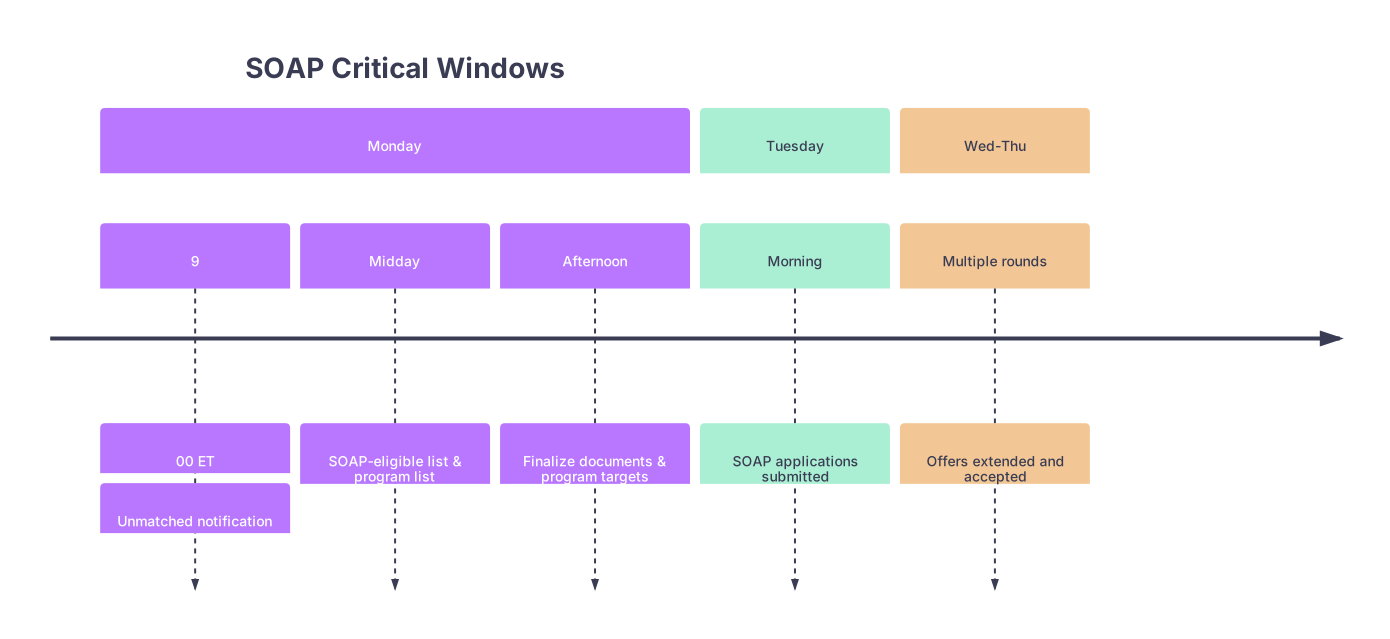
| Period | Event |
|---|---|
| Monday - 9 | 00 ET |
| Monday - Midday | SOAP-eligible list & program list |
| Monday - Afternoon | Finalize documents & program targets |
| Tuesday - Morning | SOAP applications submitted |
| Wed-Thu - Multiple rounds | Offers extended and accepted |
Do not assume “I’ll do it tonight” is safe. SOAP moves in discrete chunks, and missing a chunk can mean you never get seen.
12. Clinging to Prestige and Geography Like It’s Still September
This one’s harsh, but it needs to be said.
You’re not in the September–February match market anymore. You’re in the “fill unfilled positions” market. Very different.
Yet people still say:
- “I won’t go to the Midwest.”
- “I only want big‑name academic centers.”
- “I’d rather not match than go to [state].”
You’re gambling a medical career on preferences that may feel huge now and tiny later. Once your loans are due, that “uncool” state starts looking a lot more reasonable.
Residency is temporary. The MD/DO and board certification are permanent.
Yes, family, partner, and personal responsibilities are real. But ego location preferences are not the same thing as genuine constraints. If you’re honest with yourself, you know the difference.
Stop quietly filtering out half the country in your mind and looking only at the three coastal cities you like. You do not have that luxury in SOAP.
13. Doing Nothing to Prepare for the “What If I Don’t Match in SOAP?” Scenario
The last mistake is pretending SOAP is guaranteed salvation.
Sometimes it works beautifully. Sometimes it doesn’t. Pretending the second outcome is impossible is a good way to end up paralyzed when it happens.
You need a Plan B sketched out before SOAP offers go out:
- Will you consider a research year? If so, where, and with whom?
- Are you open to a non‑ACGME preliminary year or an international clinical role?
- What’s your financial plan if you don’t get a PGY‑1 salary this July?
This isn’t pessimism. It’s emotional risk management.
When you know there’s a survival path even if SOAP fails, you make clearer decisions during SOAP. You’re less likely to jump into a truly toxic program, and less likely to freeze from anxiety.
A Quick Visual: Where People Blow Their SOAP Chances
Most people think the danger zone is the offer rounds. Actually, most self‑sabotage happens before that.
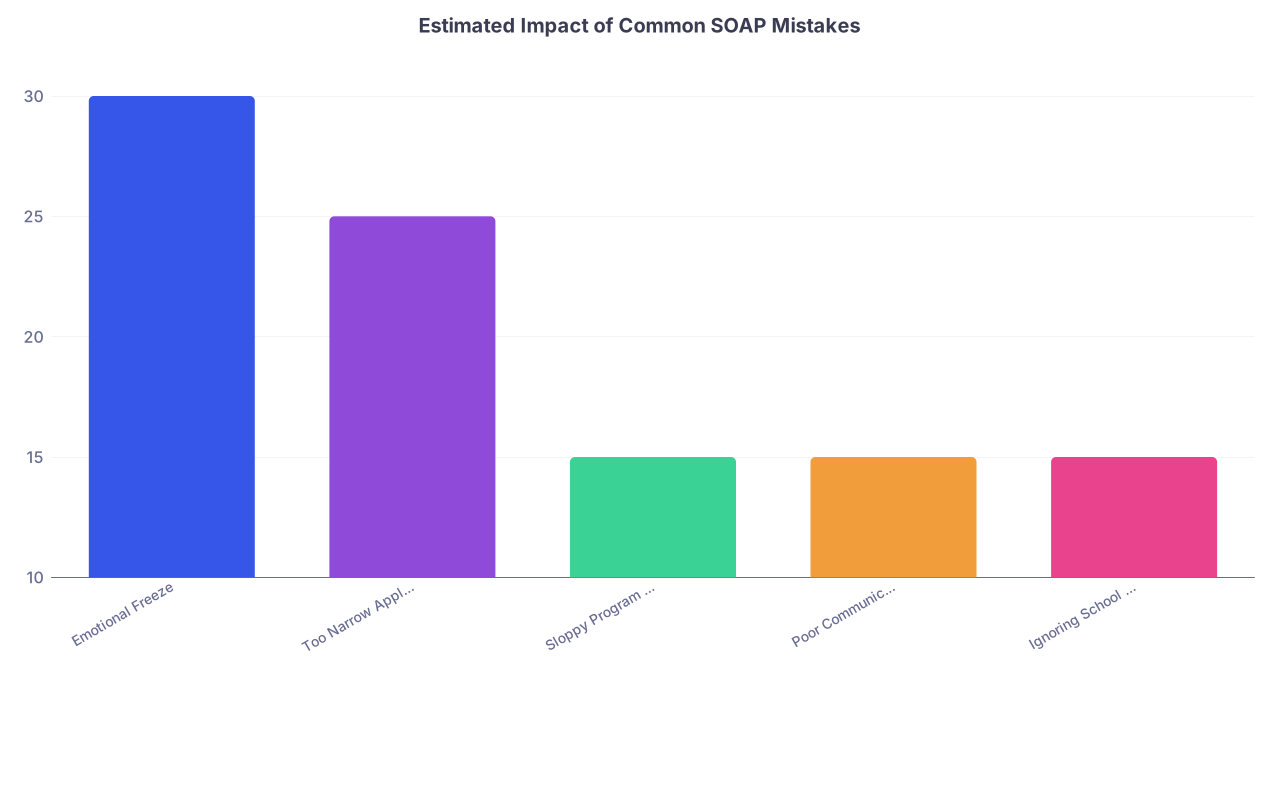
| Category | Value |
|---|---|
| Emotional Freeze | 30 |
| Too Narrow Applications | 25 |
| Sloppy Program List | 15 |
| Poor Communication | 15 |
| Ignoring School Support | 15 |
Not a scientific study. But it matches what I’ve seen over years of watching this play out.
Your 24‑Hour Survival Checklist
If you’re in SOAP or think you might be, here’s how you avoid the worst damage in that crucial first day. Treat this as your minimum.

| Step | Description |
|---|---|
| Step 1 | Unmatched Email |
| Step 2 | 1-2 hrs to process emotions |
| Step 3 | Contact Dean/Student Affairs |
| Step 4 | Review ERAS & fix red flags |
| Step 5 | Define core & backup specialties |
| Step 6 | Build targeted program list |
| Step 7 | Alert references & mentors |
| Step 8 | Submit SOAP apps strategically |
And yes, that first box really is “1–2 hours to process emotions.” You’re not a robot. You just don’t get 2 days.
The Bottom Line
SOAP is not random chaos; it just feels that way from the inside.
The applicants who do best are not always the “strongest” on paper. They’re the ones who:
- Don’t waste half the first day panicking
- Accept the new reality quickly and adjust their strategy
- Use every support system they can find
- Keep their ego out of their application list
- Stay professional and clear under pressure
You will be tempted to make almost every mistake I just described. That doesn’t mean you have to.
Today, before you even know whether you’ll need SOAP, do this:
Open a blank document and write a one‑page “SOAP plan” with three sections—who you’ll call (by name), which backup specialties you’d realistically consider, and how many states you’re truly willing to go to. Save it. If that Monday email ever hits, you won’t be starting from zero.