
Most unmatched applicants destroy their chances not with their CV, but with one terrible email or phone call.
If you are contacting programs after the Match or during SOAP, you are walking through a minefield. One poorly worded subject line, one desperate voicemail, one “follow-up” too many — and you are done at that program. Not because you are unqualified. Because you signaled “high maintenance,” “poor judgment,” or “possible NRMP problem.”
Let me walk you through the mistakes I have watched torpedo real candidates. So you do not become one of those cautionary stories people whisper about in the coordinator’s office.
1. The “Spray and Pray” Mass Email Disaster
This is the classic catastrophic move: sending one generic email to 60+ programs, CC or BCC, and hoping something sticks.
Programs see through this immediately. It screams:
- Lack of judgment
- Lack of genuine interest
- Possible difficulty with professionalism and boundaries
I have literally seen a coordinator forward one of these “To Whom It May Concern” blasts to the entire program leadership with the subject line: “Another mass email…trash?”
What this mistake looks like
- Using a generic subject such as: “Interested in your residency position”
- Addressing: “Dear Program Director / To Whom It May Concern”
- No specific reference to:
- The program’s name
- Specialty-specific features
- Any previous contact or connection
- Obvious mail merge errors: wrong program name, wrong specialty, wrong city
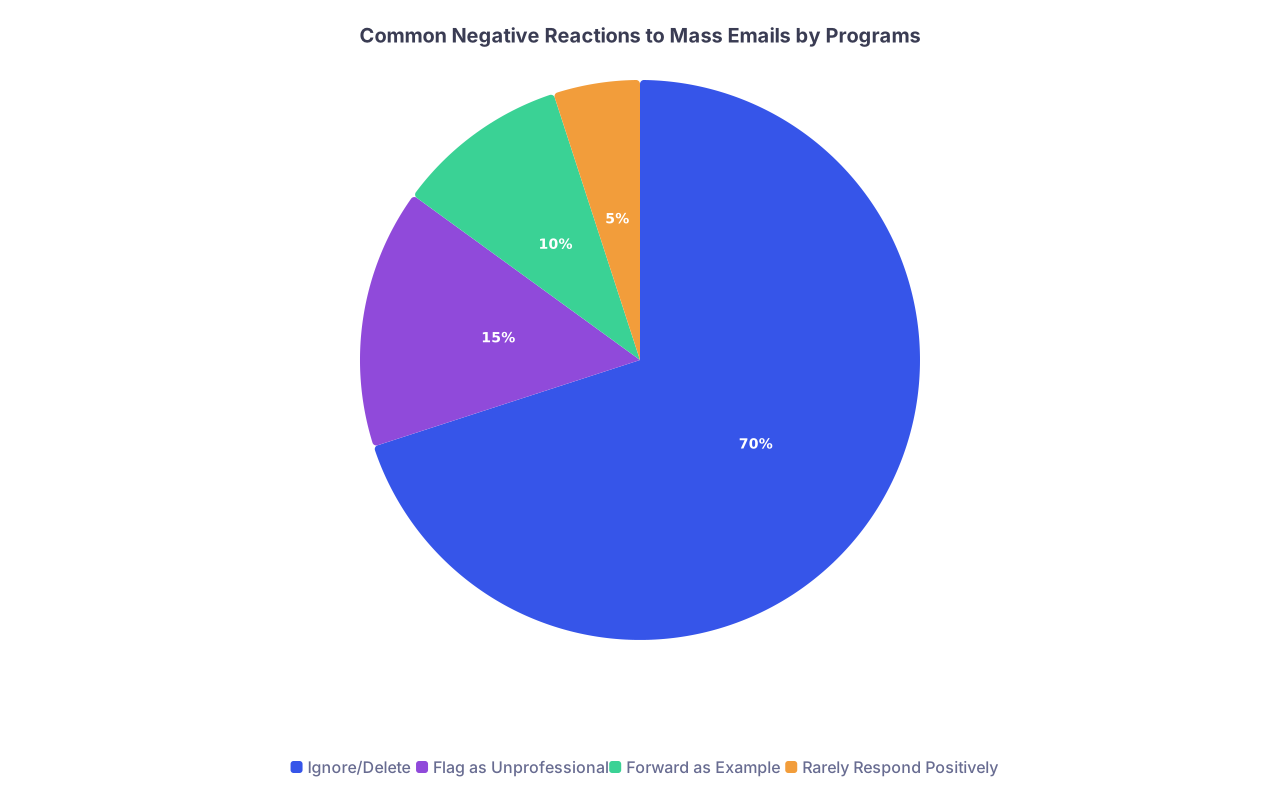
| Category | Value |
|---|---|
| Ignore/Delete | 70 |
| Flag as Unprofessional | 15 |
| Forward as Example | 10 |
| Rarely Respond Positively | 5 |
Why this is fatal
In the post-Match scramble, program staff are already overwhelmed. A mass, low-effort email tells them:
- You will likely be a high-volume, low-quality communicator as a resident
- You are not interested in their program, just any program
- You may not understand professionalism or appropriate boundaries
This is not a “small faux pas.” It can permanently mark you in their applicant tracking notes.
How to avoid it
- No mass blasts. Ever. Each email must be individually written and targeted.
- Use precise, program-specific subject lines, like:
- “Unmatched applicant in IM – Interested in prelim position at [Program Name]”
- “Former applicant – Continued interest in [Program Name] FM residency”
- Proofread for names and locations. One wrong program name and your email is instantly discarded.
If you do not have the time to customize, you do not have the time to contact them at all.
2. The Subject Line That Kills You Before You Start
Your subject line is triage. It determines whether your email is opened, skimmed, or auto-deleted.
I have watched program coordinators sort their inbox basically by subject line — anything that looks chaotic, emotional, or non-specific goes straight to the trash.
Subject line mistakes that tank you
Overly emotional / dramatic
- “Desperate IMG seeking ANY position”
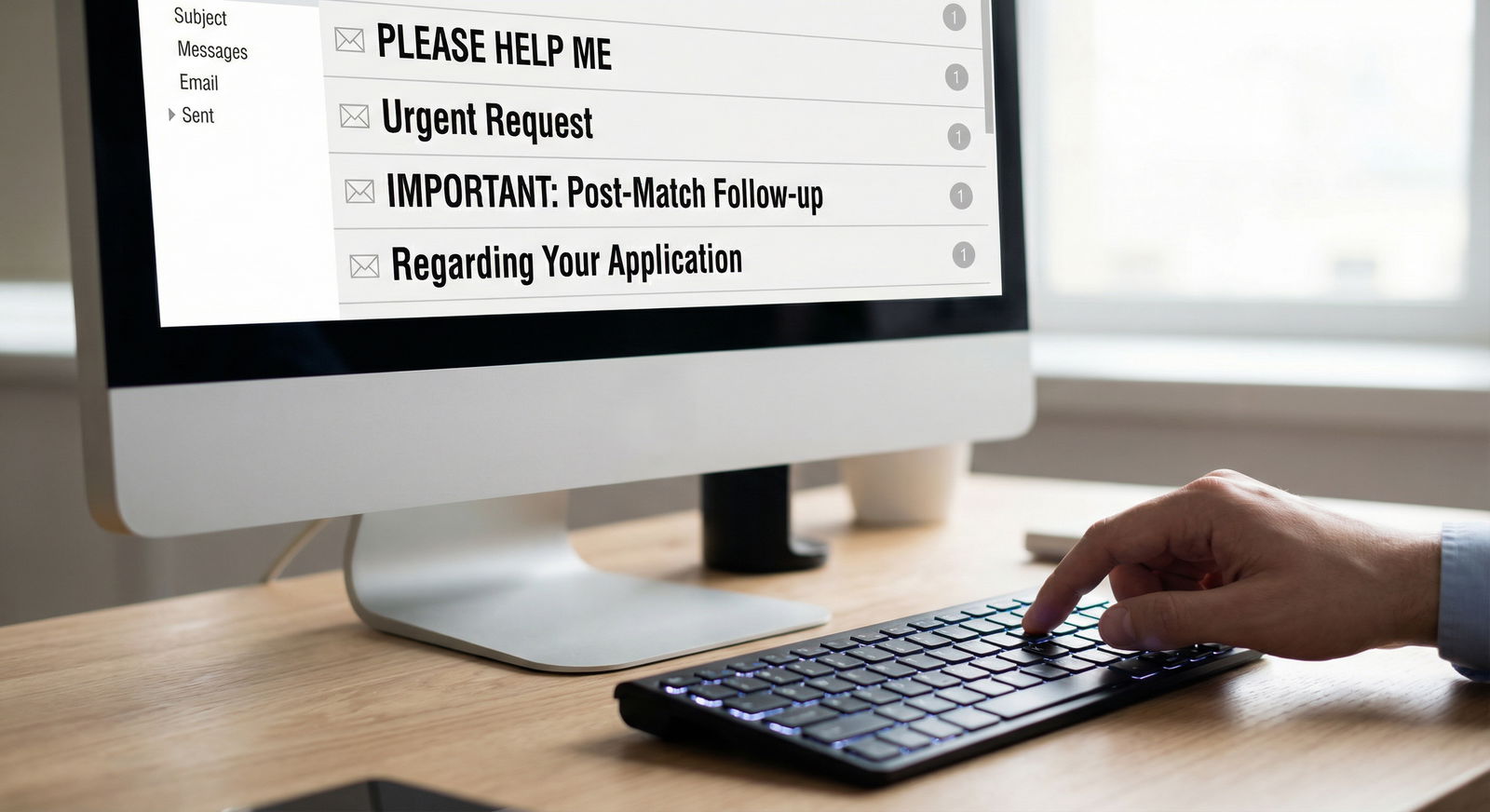
- “PLEASE HELP ME – unmatched and hopeless”
Vague / spam-like
- “Hello”
- “Question”
- “Urgent request”
Aggressive or presumptive
- “Requesting immediate position with your program”
- “I am the best candidate for your open spot”
NRMP-problem-alarming
- “Failed to match due to ranking mistake – need help”
- “Match violation error; seeking placement”
What to do instead
Your subject line should be:
- Specific
- Neutral
- Informative, not emotional
Examples that usually pass the sniff test:
- “Unmatched 2026 graduate – interest in PGY-1 IM position at [Program]”
- “Former applicant – availability for prelim surgery at [Hospital]”
- “Unmatched FM applicant – inquiring about potential off-cycle openings”
Do not hide that you are unmatched. Do not dramatize it either. State your status, your target, and the program name. Clean and professional.
3. Email Tone That Screams “Red Flag Resident”
Programs are not just evaluating your CV. They are testing: What would this person be like at 2 a.m. on call when they are stressed?
Your email tone gives them a preview.
Red-flag tone patterns
Desperation and oversharing
- 800-word life story
- Detailed explanations of family crises, financial hardships, personal trauma
- Repeated “I beg you,” “I’m desperate,” “You are my only hope”
Entitlement
- “Given my scores, I should have matched”
- “I believe I deserve an opportunity at your program”
- “I expect a response regarding any available positions”
Blaming and complaining
- Complaints about previous programs, faculties, or the Match itself
- “I was unfairly treated by…”
- “The system is biased against IMGs / DOs / etc.”
Over-familiar or inappropriate
- Using first names with PDs you have never met
- Jokes, emojis, or informal language: “lol,” “thx,” “u guys”
| Situation | Red Flag Wording | Safer Alternative |
|---|---|---|
| Describing status | "I am desperate and will take anything." | "I remain without a position for this cycle." |
| Explaining no match | "The system is unfair to IMGs." | "My application was not successful this cycle." |
| Asking for consideration | "I deserve a chance in your program." | "I would be grateful for any consideration." |
| Mentioning hardship | "My life has been a nightmare." | "I have faced challenges, which I can discuss if helpful." |
The tone you actually want
Aim for:
- Calm
- Brief
- Respectful
- Competent
You are not asking for pity. You are demonstrating that, even under stress and disappointment, you communicate like a responsible physician.
One more thing: length. A post-Match inquiry email should typically be 200–350 words. If you are pushing past 500, you are almost certainly oversharing and diluting your message.
4. The Voicemail That Haunts You
Bad news: a bad voicemail is even worse than a bad email. You cannot unsend a voicemail. You cannot edit it. And yes, they sometimes forward wild voicemails around for others to hear.
I have sat in offices where coordinators hit play on a message that started with heavy breathing, then a five-second pause, then: “Hi I am unmatched and I really need your help, I sent an email yesterday and last week and I am just not sure if you saw it…”
Everyone in that room decided “absolutely not” in under ten seconds.
Fatal voicemail mistakes
- Calling repeatedly and leaving multiple messages in 24–48 hours
- Sounding panicked, breathless, or on the verge of tears
- Rambling without a point or clear ask
- Criticizing other programs or the Match process on the message
- Demanding a call back: “Please call me back urgently as soon as possible”
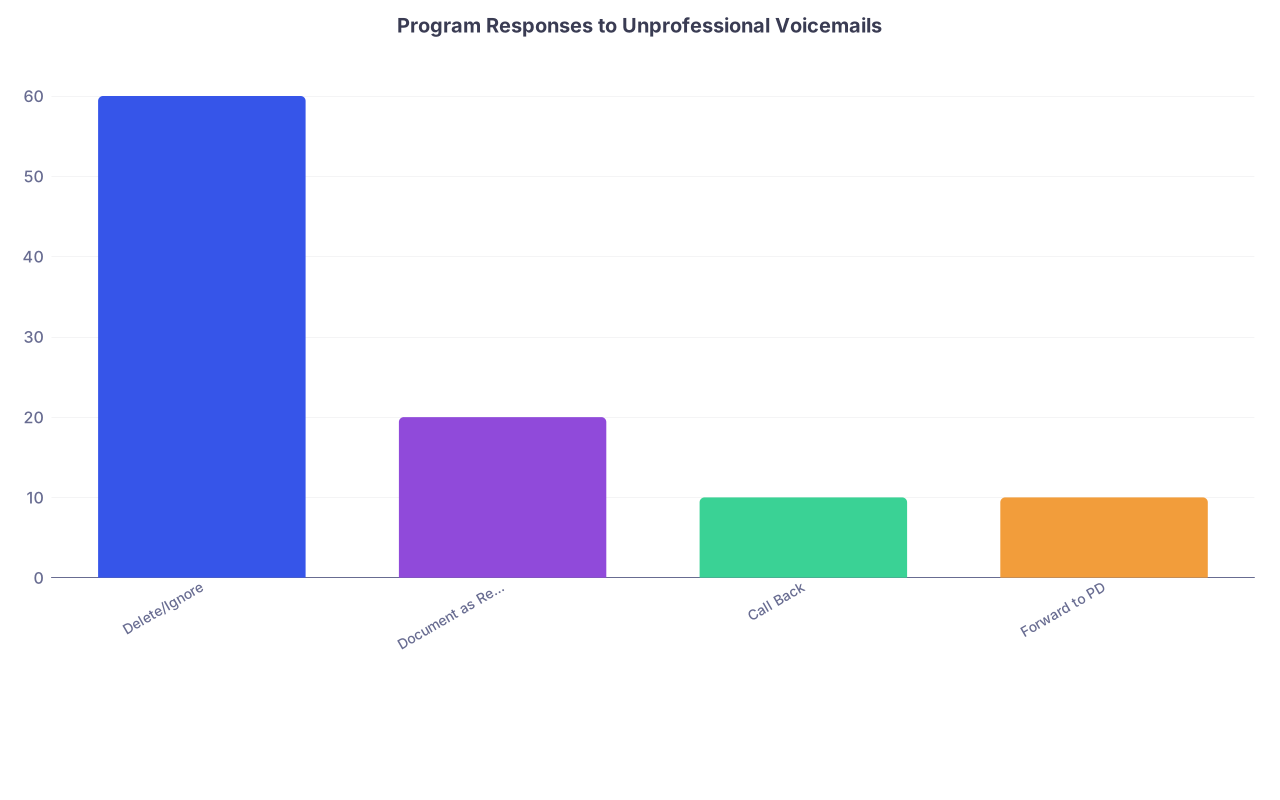
| Category | Value |
|---|---|
| Delete/Ignore | 60 |
| Document as Red Flag | 20 |
| Call Back | 10 |
| Forward to PD | 10 |
What a safe voicemail sounds like
You need a script. Write it down. Practice it. Then speak it slowly.
Structure:
- Your full name and status
- Your purpose in one sentence
- Your callback info
- One polite line of thanks
Example:
“Hello, my name is Dr. [Full Name], an unmatched 2026 graduate interested in any potential PGY-1 internal medicine positions at [Hospital Name]. I sent a brief email earlier this week and wanted to respectfully confirm it was received. There is no urgency, but if it is convenient, I can be reached at [phone number] or [email]. Thank you for your time.”
Then stop. Do not start explaining your entire application history on voicemail. That is what email and, later, interviews are for.
And absolutely no more than one voicemail unless they specifically invite you to call again.
5. Violating NRMP, SOAP, or Program Policies in Writing
This one is not just a “bad impression” issue. It can get you blacklisted across multiple programs if people talk, or even reported.
If you are in SOAP or within NRMP rules, there are things you simply do not say or imply.
Dangerous content that can cross lines
Offering or implying any kind of incentive
- “My family can donate to the hospital…”
- “I am willing to work without pay initially…” (yes, people actually say this)
Suggesting you ranked them higher or lower than you did
- “You were my #1 choice” when that is false
- “I would have ranked you higher if…”
Probing for confidential information
- “Did your current residents fail to meet expectations?”
- “What happened to the prior person in this position?”
Appearing to solicit a backdoor position outside rules
- “Can you add me off-cycle without going through NRMP or SOAP?”

| Step | Description |
|---|---|
| Step 1 | Drafting email/phone script |
| Step 2 | STOP - Do not send |
| Step 3 | Likely safe to refine and send |
| Step 4 | Mentions money/donations? |
| Step 5 | Discusses rank list or violations? |
| Step 6 | Requests confidential info? |
How to keep it safe
- Do not discuss rank lists, theirs or yours.
- Do not talk about “working around” NRMP or SOAP.
- Do not propose anything that sounds like bribery, gifts, or side deals.
- Keep questions general and professional, never prying into internal issues.
Assume your email could be shown to a compliance office. If that thought makes you nervous, your draft is wrong.
6. The Follow-Up Stalker: Over-Contacting Programs
You absolutely can follow up. But there is a firm line between “appropriately persistent” and “the person whose name pops up in everyone’s inbox every 48 hours.”
Here is what I have seen ruin otherwise reasonable candidates:
- Three emails in one week to the same program
- Email + voicemail + LinkedIn message to the PD
- Contacting multiple faculty at the same institution separately, without disclosure
- Looping in the GME office to “escalate” a lack of response from the program
Programs read this as: this person will be a nightmare when they want a schedule change, a letter, or a favor.
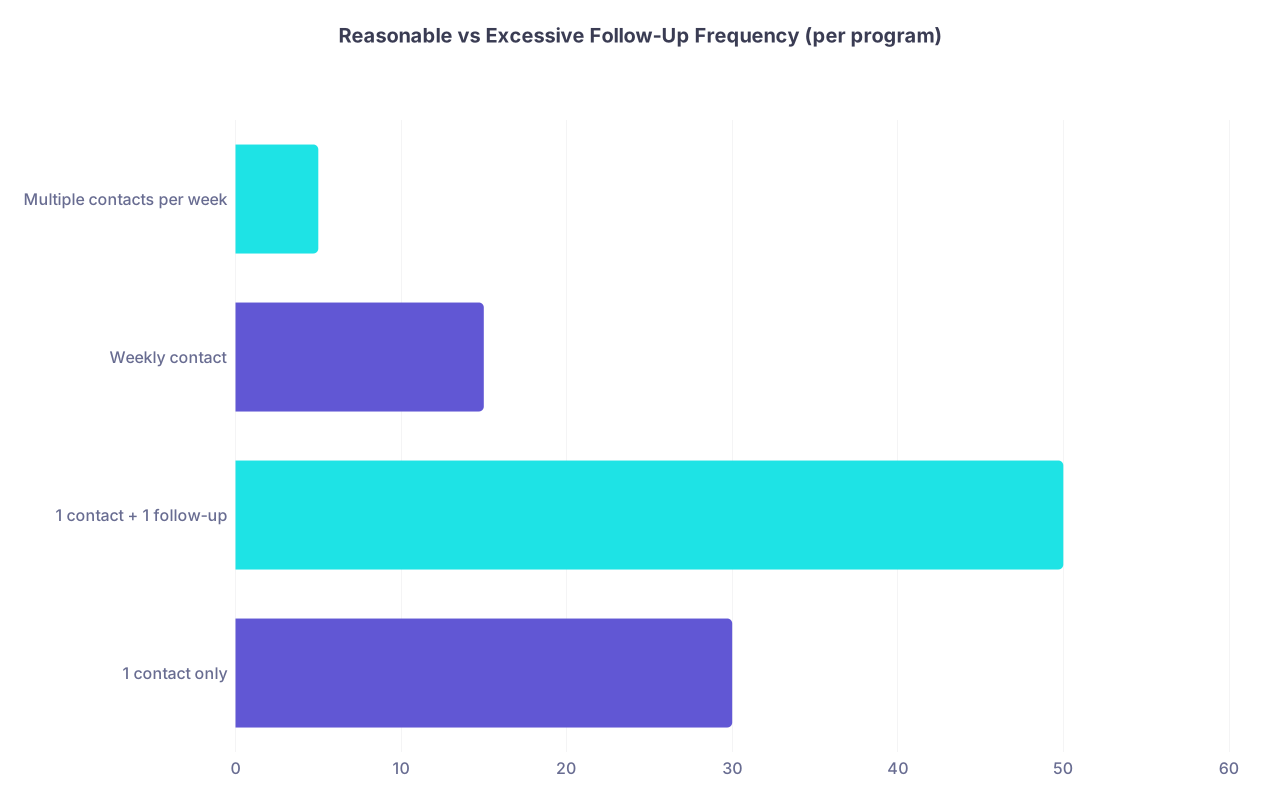
| Category | Value |
|---|---|
| 1 contact only | 30 |
| 1 contact + 1 follow-up | 50 |
| Weekly contact | 15 |
| Multiple contacts per week | 5 |
Reasonable follow-up strategy
- Initial email during SOAP/post-Match period
- If no response: one polite follow-up after 5–7 days
- After that: you let it go unless they reply or invite further contact
Phone calls:
- Only if the program explicitly lists a number for applicant questions
- No more than one voicemail attempt unless they ask you to call again
Social media and personal channels:
- Do not DM PDs or faculty on Twitter, Instagram, or Facebook about positions
- Do not send connection requests with pleading messages on LinkedIn
If you are unsure whether you are overdoing it, you probably are.
7. Sloppy, Error-Filled Communication That Screams “I Cut Corners”
You might think programs will “look past” small mistakes because you are stressed. They will not. Many will see them as predictors of charting errors, medication mistakes, and poor patient communication.
Errors that raise immediate doubts
- Wrong program or hospital name
- Wrong specialty name (e.g., “I am very interested in psychiatry” sent to a neurology program)
- Typos in your own name, degree, or contact info
- Attachments labeled in chaotic ways: “NewnewerCVFINAL2.docx”
- Sending from unprofessional email addresses: “drpartyboy2020@…”

Minimum professionalism checklist before you hit send
- Program name, hospital name, and specialty spelled correctly
- Your full legal name, degree (MD/DO/MBBS), and contact info in signature
- One clean, clearly named PDF CV:
Lastname_Firstname_CV_2026.pdf - Concise subject line with correct program name
- Spellcheck and grammar check completed
This is the bare minimum. If they cannot trust you to get this right under pressure, why would they trust you with orders and notes?
Putting It All Together: A Safer Template
Use this as a structure, not a script. Customize heavily. But do not improvise wildly and then regret it.
Email skeleton:
- Greeting: “Dear Dr. [Last Name] and [Program Name] Residency Team,”
- One-sentence introduction: who you are, what you are seeking
- One to two sentences of specific connection/interest to that program
- Brief one-sentence acknowledgment of being unmatched
- One to two sentences on what you offer (clinical strengths, USCE, language skills, etc.)
- Soft close: expressing openness and attaching CV
- Signature with full contact info
Keep it clean, under 350 words, and emotionally steady.
Voicemail skeleton (if appropriate):
- Full name and status
- Reason for calling in a single sentence
- Callback number, said slowly and repeated once
- Thank-you
If you follow just these structures, you will already be ahead of the majority of panicked, self-sabotaging messages programs receive every Match cycle.
Key Takeaways
Do not let one bad email or phone call permanently mark you as a problem. The three truths you need to keep in mind:
- Programs judge your professionalism and emotional control from every word you send or say post-Match.
- Desperation, over-contact, and sloppy errors are far more damaging than a low Step score in this context.
- Calm, concise, accurate communication gives you a chance; chaotic communication closes doors you will never even know existed.
Protect yourself. The post-Match period is stressful enough without you accidentally setting your own application on fire.