
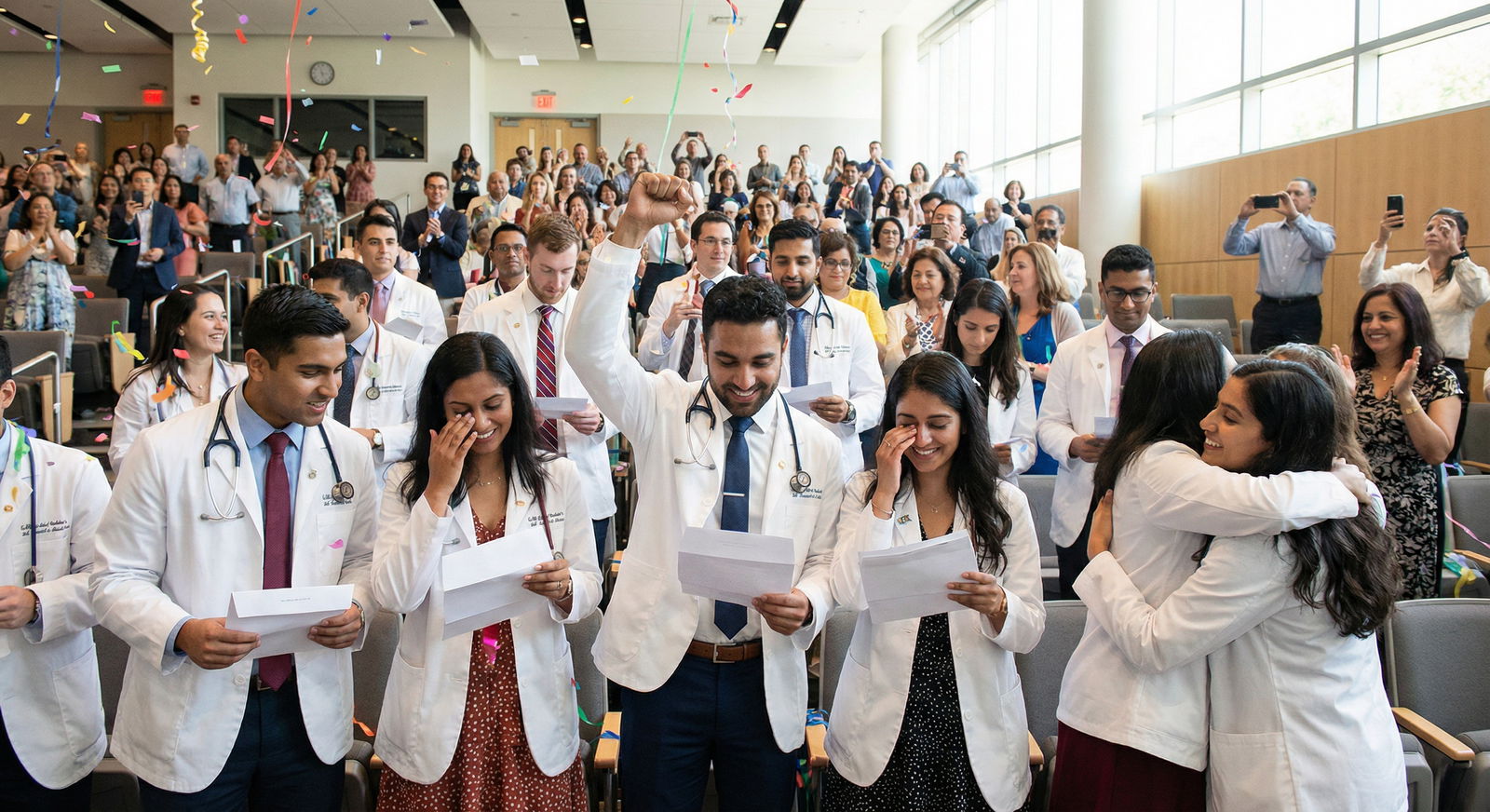
After the Big Reveal: How to Handle Match Day Results and Plan Your Next Steps
Match Day is one of the most defining milestones in medical school. In a single moment, years of exams, rotations, and late-night studying crystallize into one result: where you will begin your medical residency. Whether your envelope delivered your top choice, a surprising outcome, or the news that you did not match, how you respond in the days and weeks after Match Day matters deeply for your well-being and your future career in medicine.
This guide walks through what to expect emotionally and practically, how to manage both positive and disappointing outcomes, and concrete Career Strategies to help you move forward with clarity and confidence.
The Gravity of Match Day in Your Medical Career
Match Day is much more than a celebration event. It represents a turning point in your professional identity and the start of your post-graduate training.
Why Match Day Matters So Deeply
Validation of Years of Effort
Match Day is a public acknowledgment of years of:- Preclinical coursework and exams
- USMLE or COMLEX preparation and testing
- Clinical rotations and evaluations
- Research, leadership, volunteering, and other extracurricular commitments
Seeing your name next to a residency program confirms that those efforts have translated into a real opportunity to practice medicine and grow as a clinician.
Shaping the Trajectory of Your Medical Residency and Beyond
The residency program you match into influences:- Your day-to-day training environment and patient population
- Exposure to subspecialties, procedural volume, and research opportunities
- Mentorship and Networking in Medicine
- Fellowship and job prospects after residency
While your first residency match does not rigidly determine your entire future, it strongly shapes your early career—especially in competitive specialties.
Transition from Student to Physician-in-Training
Match Day symbolizes the twilight of student life and the beginning of professional responsibility:- Your decisions will directly impact patient care.
- You will be working in teams where your input matters.
- Expectations shift from “learning about medicine” to “practicing medicine under supervision.”
This transition is exciting, but also emotionally and cognitively demanding. Recognizing its significance can help you approach it with intentionality.
Navigating the Emotional Landscape of Match Day
Match Day is rarely emotionally neutral. Even those who match at their first-choice program can feel overwhelmed, anxious, or conflicted. Others may feel grief, anger, or shame if they did not match or matched somewhere unexpected.
Allow Yourself to Feel: Emotional Support Is Essential
Suppressing your emotions tends to prolong distress. Instead, give yourself permission to experience whatever shows up—joy, relief, disappointment, envy, confusion, or even numbness.
Some strategies to support your emotional health:
Name Your Emotions
Saying to yourself, “I feel disappointed and scared about the future,” or “I feel excited but overwhelmed,” can reduce emotional intensity and make feelings more manageable.Connect with Trusted People
- Share with classmates, partners, family, or friends who understand how high the stakes feel.
- If your emotions are mixed, that’s okay—celebrate parts that feel good and acknowledge what feels hard.
- Avoid comparing your outcome too intensely with others’ social media posts; those snapshots rarely tell the full story.
Seek Professional Emotional Support When Needed
If you notice persistent symptoms—like insomnia, intrusive thoughts, hopelessness, panic attacks, or a sense of paralysis about next steps—consider:- Counseling through your medical school or hospital
- Student wellness centers or employee assistance programs
- Private therapy or telehealth counseling services
Utilizing mental health care is a sign of insight and professionalism, not weakness.
Reflect on Your Journey Before Rushing Ahead
After Match Day, the urge to immediately pivot to logistics can be strong. Before you do, take time to reflect:
Review How Far You’ve Come
Write about:- Key moments that shaped your specialty choice
- Challenges you overcame (exam failures, family responsibilities, health issues, financial stress)
- Times you demonstrated resilience, compassion, or leadership
Identify What You’ve Learned About Yourself
Ask:- When did I feel most energized in medical school?
- What kind of team culture allowed me to thrive?
- How do I handle uncertainty and setbacks?
This reflection not only supports Emotional Support and healing; it also informs future Career Strategies and specialty decisions, especially if you did not match or are considering reapplying.

Immediate Steps After You Receive Your Match Day Results
Once the emotional dust begins to settle, there are several practical actions to take to position yourself for a smooth transition into residency—or to regroup strategically if you did not match.
Carefully Review Your Match Documentation
After the initial reveal, go back and read everything you received from the NRMP and your matched program:
Confirm Your Program Details
- Program name, track (categorical, preliminary, transitional, advanced), and start date
- Location and primary training sites
Note All Instructions and Deadlines
Look for:- Onboarding packet or portal information
- Credentialing requirements (background checks, immunizations, licenses, drug screens)
- Deadlines for submitting documentation or confirming acceptance
Missing early deadlines can create unnecessary stress or even jeopardize your position, so organize this information in a calendar or task manager right away.
Update Your Professional Presence
Your Match Day result is a major professional milestone. Keep your professional profiles current to support Networking in Medicine and future career opportunities:
LinkedIn and Other Professional Platforms
- Add your residency program, specialty, and PGY status to your profile.
- Update your headline (e.g., “Incoming Internal Medicine Resident at [Institution]”).
- Adjust your “About” section to reflect your career interests (e.g., hospitalist medicine, academic surgery, primary care, global health).
CV and Personal Website (If Applicable)
- Add “Matched to [Program Name], [Specialty], PGY-1 start July [Year].”
- If you maintain a professional website or portfolio, update your training trajectory and interests.
Keeping an accurate, up-to-date professional presence supports future fellowship applications, job searches, and ongoing Networking in Medicine.
Proactively Connect With Your Future Program
Your relationship with your residency program starts now, not on July 1.
Consider sending a brief, professional email to your program director or program coordinator:
- Express enthusiasm and gratitude for the opportunity.
- Introduce yourself (name, medical school, pronouns if you wish, particular interests).
- Ask about:
- Welcome packets or orientation schedules
- Recommended reading or resources for incoming interns
- Any group chats, Slack/WhatsApp channels, or social media groups for your incoming class
Many programs also host pre-residency meet-and-greets, virtual Q&A sessions, or resident social events. Participating early helps you build community and reduces first-day anxiety.
Making the Most of Your New Residency Position
Regardless of whether you matched at your dream program or a place you hadn’t expected, you can shape your experience through preparation, mindset, and relationship-building.
Practical Preparation for the Transition to Residency
Residency is demanding—emotionally, intellectually, and physically. Thoughtful preparation can make the transition smoother.
Logistics and Life Setup
Housing and Transportation
- Secure housing close enough to the hospital to manage call schedules and fatigue safely.
- Investigate parking, public transportation, and commuting times.
- Consider on-call rooms and backup plans for severe weather or long shifts.
Licensure and Administrative Tasks
- Complete pre-employment physicals, vaccines, and TB testing promptly.
- Begin state license or training license applications as instructed.
- Ensure your I-9, visa (if applicable), and other HR forms are submitted on time.
Financial Planning
- Create a realistic budget based on resident salary and cost of living.
- Review loan repayment options and consider income-driven repayment plans.
- Plan for moving costs, work clothing, and initial licensing/exam fees.
Academic and Clinical Readiness
Review Core Knowledge
- Refresh high-yield topics relevant to your specialty (e.g., ACLS algorithms for EM, sepsis management for IM, common pediatric emergencies for Pediatrics).
- Consider reading your specialty’s “survival guide” books or concise handbooks often used by residents.
Learn About Program Culture and Expectations
- Explore the residency website, mission statement, and any resident manuals.
- Talk with current residents (if possible) about:
- Call schedules
- How feedback is given
- Strengths and pain points of the program
- Identify any wellness resources, mentorship programs, or DEI initiatives that might support you.
Building Strong Relationships and Networking in Medicine
Your colleagues and mentors will be central to your experience and future opportunities.
Connect With Co-Residents and Interprofessional Teams
Fully Engage in Orientation and Social Events
- Show up, introduce yourself, and learn names.
- Ask about others’ interests and backgrounds—shared experiences often become the basis of strong friendships.
Respect and Partner With the Entire Care Team
Nurses, pharmacists, respiratory therapists, social workers, and others can teach you invaluable clinical and systems knowledge. Collaboration and humility build trust and make patient care safer and more efficient.
Seek Mentors and Sponsors Early
Identify Potential Mentors
Look for:- Faculty whose clinical style you admire
- Residents or fellows a year or two ahead who remember what it’s like to be new
- People who share research interests or career paths you’re considering
Clarify What You Want From Mentorship
- Guidance on subspecialty choice?
- Support in research or quality improvement projects?
- Help navigating work-life integration, burnout prevention, or identity issues in medicine?
Intentional Networking in Medicine during residency can lead to research collaborations, strong letters of recommendation, and job or fellowship opportunities later.
When Match Day Doesn’t Go as Planned: Not Matching or Disappointing Results
Not everyone leaves Match Day with the outcome they hoped for. Some do not match at all; others match to a lower-ranked program, a preliminary year they didn’t really want, or a geographic location that feels far from ideal. These situations are painful—but they are not the end of your medical career.
If You Did Not Match: Using SOAP Strategically
The Supplemental Offer and Acceptance Program (SOAP) provides a rapid, structured way for unmatched applicants to obtain unfilled residency positions.
How to Approach SOAP Effectively
Stay Organized and Grounded
- Work closely with your dean’s office or advising team.
- Create a clear schedule for SOAP week and task lists for each step.
- Prioritize sleep and nutrition as much as possible; the process is intense.
Research Programs Thoughtfully
- Look beyond program names; evaluate:
- Specialty compatibility
- Geographic constraints and family considerations
- Program mission, size, and training environment
- Be realistic about competitiveness based on your step scores, experiences, and application history.
- Look beyond program names; evaluate:
Tailor Applications Quickly but Intentionally
- Update your CV and personal statement to reflect your current goals (including openness to related fields, if applicable).
- Highlight:
- Clinical strengths
- Professionalism and teamwork
- Resilience and adaptability
SOAP moves quickly, but even small tailoring efforts—one or two sentences—can better align your application with each program’s values.
Reflecting and Reassessing After an Unmatched or Unexpected Outcome
Once SOAP is complete—or if you choose not to participate—take time for a structured review.
Analyze Your Application With Support
Seek Honest Feedback
Speak with:- Specialty advisors
- Program directors (if willing)
- Faculty mentors
Ask about perceived weaknesses, such as:
- Board scores
- Clinical grades or professionalism concerns
- Limited or unfocused research
- Narrow geographic or specialty preferences
Clarify Your Priorities and Flexibility
Consider:- Are you open to a related specialty?
- Would you consider a preliminary year with the goal of reapplying?
- How flexible are you about location or program type?
This reflection helps shape a more strategic, informed plan for the next application cycle if you decide to reapply.
Exploring Alternative and Bridge Opportunities
If you are not entering residency this year, there are still valuable ways to move your career forward:
Research or Clinical Research Positions
- Join ongoing clinical trials, health outcomes research, or basic science labs.
- Aim to obtain concrete outputs: posters, abstracts, manuscripts, or QI projects.
- Choose mentors who understand your goal is to re-enter the Match and who will advocate for you.
Non-Accredited Clinical Roles
- Some hospitals or clinics offer positions such as clinical observers, research coordinators with patient contact, or teaching assistants in clinical skills courses.
- Clarify visa and licensing constraints if applicable.
Public Health, Policy, or Administrative Work
- Work with health departments, NGOs, or hospital administration on population health, quality, or policy projects.
- These roles demonstrate broader systems thinking and can strengthen your narrative if you choose to reapply.
Volunteer and Community Engagement
- Free clinics, community health education, or global health projects (if feasible) can keep you clinical-adjacent and mission-driven.
Throughout this period, document your activities and reflections; they will be crucial for future personal statements and interviews.

Approaching Your Future With Perspective and Gratitude
Regardless of your specific Match Day outcome, it represents one chapter—not the entirety—of your story in medicine.
Your Value Is Not Defined by a Single Day
Matching at a prestigious program does not guarantee long-term fulfillment, and not matching does not negate your potential to become an excellent physician.Gratitude and Growth Mindset Support Resilience
- Cultivate gratitude for the opportunities, mentors, patients, and peers who have shaped your path.
- View setbacks as data and redirection rather than permanent verdicts.
Commit to Ongoing Professional and Personal Development
- Prioritize Emotional Support, self-care, and sustainable work habits.
- Seek feedback, mentorship, and continuous learning.
- Stay open to evolving interests and career paths—medicine offers many ways to contribute.
By combining practical planning, emotional awareness, and purposeful Networking in Medicine, you can navigate Match Day results—good or bad—and continue building a meaningful, impactful medical career.
Frequently Asked Questions About Match Day and Residency Results
1. How can I cope emotionally if I matched below my top choice or in an unexpected location?
Feeling disappointed, conflicted, or even embarrassed is common when results don’t align with your top rank list. To cope:
- Acknowledge your feelings instead of forcing yourself to “just be grateful.” Both gratitude and disappointment can coexist.
- Talk openly with trusted peers, mentors, or a counselor about your concerns.
- Learn more about your program—strengths, unique opportunities, and city resources you might not have considered.
- Set short-term goals (e.g., finding a mentor, joining a research project) to help you feel more empowered and engaged once residency begins.
Many residents who initially felt disappointed later report deep satisfaction with their training once they experience the program firsthand.
2. What should I focus on in the months between Match Day and the start of residency?
Balance rest, preparation, and personal life:
- Rest and Recovery: Take time off if you can—travel, reconnect with loved ones, and pursue hobbies.
- Logistics: Secure housing, plan your move, complete health and HR requirements, and set up your finances.
- Academic Prep: Lightly review high-yield topics for your specialty and familiarize yourself with your hospital’s common protocols if available.
- Professional Networking in Medicine: Engage with incoming co-residents, attend pre-residency events, and touch base with mentors about your evolving goals.
Avoid trying to “master everything” before day one; residency is designed to teach you.
3. How important is Networking in Medicine during residency, and how do I do it effectively?
Networking in Medicine is crucial for:
- Fellowship or job opportunities
- Research collaborations
- Mentorship and sponsorship
- Career guidance and emotional support
To network effectively:
- Attend grand rounds, conferences, and departmental events.
- Ask faculty or senior residents for brief coffee chats to learn about their career paths.
- Volunteer for projects that align with your interests (research, QI, education, advocacy).
- Maintain relationships with mentors from medical school and prior experiences through periodic updates.
Focus on genuine curiosity and mutual respect rather than transactional “networking for benefit.”
4. What if I still feel devastated or stuck months after not matching?
Persistent distress after not matching is understandable, but you do not have to navigate it alone:
- Seek professional mental health support to address grief, anxiety, or depression.
- Work closely with advisors to create a structured, realistic plan—whether it’s reapplying, pursuing research, or exploring adjacent career options.
- Break your plan into small, manageable steps with clear timelines.
- Stay connected with a support network; isolation tends to worsen distress.
Many physicians have non-linear paths to residency and still build fulfilling, impactful careers.
5. How can I strengthen my application if I plan to re-enter the Match next year?
Consider these targeted strategies:
- Academic: Address gaps such as low scores or failed exams; consider additional coursework or exam retakes if feasible and advised.
- Clinical: Seek opportunities for recent, strong clinical experiences with U.S.-based letters of recommendation if relevant.
- Research and Scholarship: Aim for concrete outputs (posters, manuscripts, QI projects).
- Professional Narrative: Work on a cohesive story in your personal statement and interviews that explains what you learned from your previous cycle and how you have grown.
- Flexibility: Reconsider specialty choice, geographic constraints, or willingness to pursue preliminary or transitional programs.
Collaborate with mentors who are honest, supportive, and experienced in advising reapplicants.
By understanding the emotional and practical dimensions of Match Day, embracing support, and applying thoughtful Career Strategies, you can turn this intense milestone into a launching point for a resilient, purpose-driven life in medicine—no matter what your envelope contained.


