Introduction: From Match Day Euphoria to Residency Reality
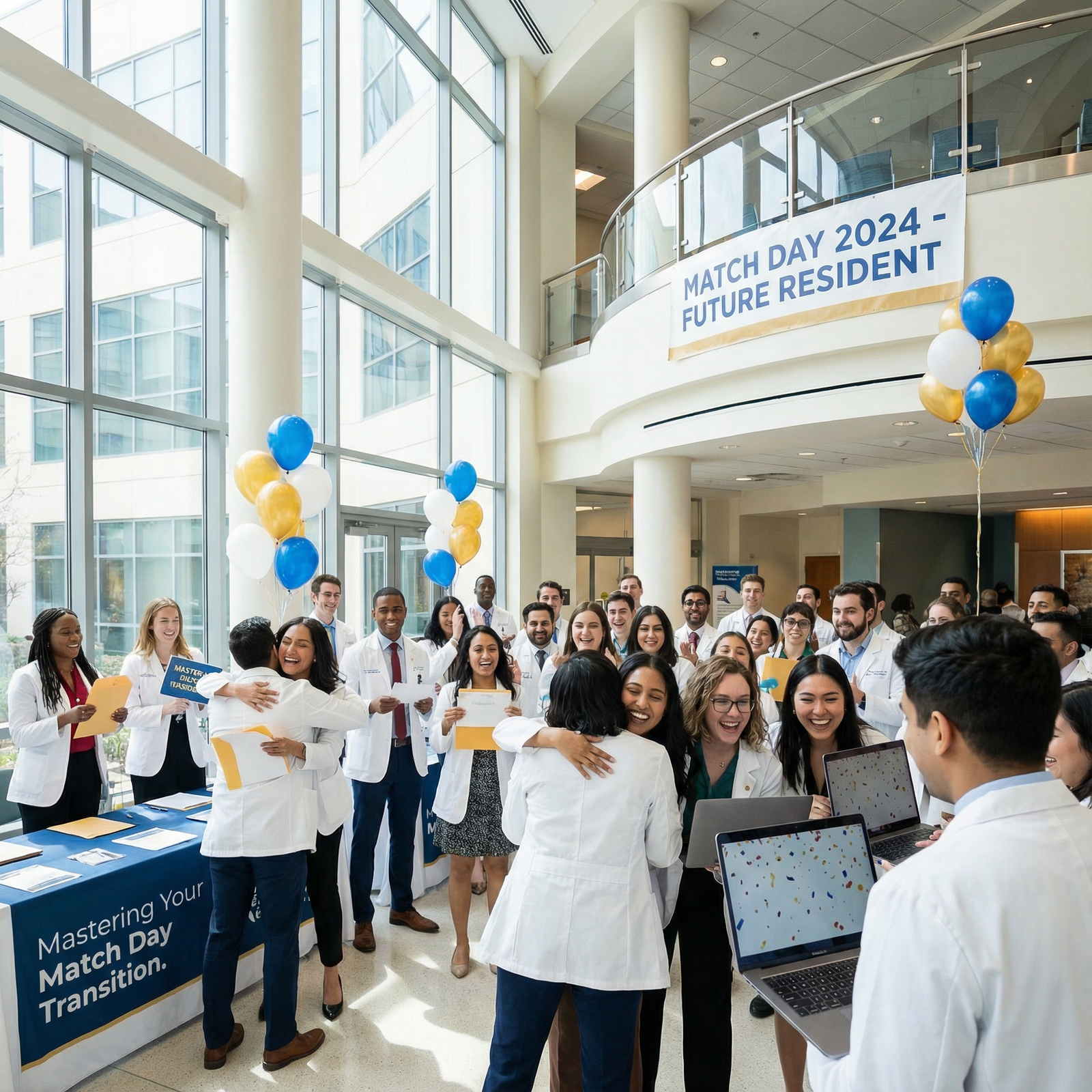
Match Day is one of the most defining moments in medical education. With a single email or envelope, years of exams, clerkships, applications, and interviews crystallize into one concrete outcome: where you will train as a resident physician.
That moment is powerful—and then reality sets in.
Between Match Day and your first day of residency, there is a crucial transition period that shapes how smoothly you enter graduate medical training. This phase is about more than logistics; it’s about identity, expectations, Self-Care, and setting up systems that will support you throughout residency.
This guide walks you step-by-step through:
- Understanding Match Day and what your result really means
- The essential tasks in the transition from Match Day to residency
- Preparing your finances, career trajectory, and support systems
- What to expect during orientation and your first weeks as an intern
- How to care for yourself in one of the most intense phases of your career
Whether you matched at your dream program or somewhere unexpected, you can make this Residency Transition deliberate, organized, and growth-oriented.
Understanding Match Day and Your Result
What Match Day Really Represents
Match Day is when the National Resident Matching Program (NRMP) releases the results of the Match—a nationwide system that pairs applicants with residency programs across the United States. It is the final step of a long, structured process involving ERAS applications, interviews, and rank lists.
From a career perspective, Match Day:
- Determines where you’ll spend the next 3–7 years of postgraduate training
- Shapes your professional network and mentorship opportunities
- Often dictates where you’ll live, build community, and possibly start a family
Match Day is not just a single-day event; it’s a transition point between being a medical student and becoming a physician-in-training with real responsibility for patient care.
A Quick Refresher on the Match Process
Understanding the logic behind the Match can help you better process your result—especially if you didn’t get your top choice.
Application Submission (ERAS)
You submit applications via the Electronic Residency Application Service (ERAS), including your CV, personal statement, letters of recommendation, USMLE/COMLEX scores, and other supporting documents.Interview Season
Programs invite selected applicants for interviews (in-person or virtual). These conversations assess your clinical preparation, professionalism, communication style, and alignment with the program’s culture and mission.Rank Order Lists (ROLs)
- Applicants rank programs in genuine order of preference.
- Programs rank applicants they are willing to train.
Your best strategy is always to rank according to preference—not “strategy.”
The Matching Algorithm
The NRMP algorithm is an applicant-proposing algorithm designed to be fair and favor applicant preferences when possible. It compares your rank list with each program’s list to produce a stable match.Match Week and Match Day
- Monday of Match Week: You learn whether you matched.
- Monday–Thursday: If you didn’t match, you may participate in the Supplemental Offer and Acceptance Program (SOAP).
- Friday (Match Day): You learn where you matched, celebrated across U.S. medical schools and training institutions.
The outcome reflects many factors: your performance, geographic considerations, program needs, and the inherent complexity of national matching. It does not wholly define your future potential as a physician.
The Transition Period After Match Day: What to Do Next
Once you know where you’re headed, you enter a critical Residency Transition period—typically from March to June. This phase sets the foundation for your success as an intern.

1. Celebrate Your Match—Intentionally
Before diving into checklists and paperwork, pause and acknowledge what you’ve accomplished.
Why this matters:
- You have completed a demanding path in medical education that many never reach.
- Psychological closure on medical school helps you mentally prepare for your new identity as a resident.
- Celebrating with loved ones reinforces your support network, which will be essential during residency.
Ideas for meaningful celebration:
- Host a small gathering with family and friends, in person or virtually.
- Reflect by journaling about what this means to you, your fears, and your hopes.
- Express gratitude to mentors and peers; a simple email or message can strengthen relationships.
Even if you didn’t match at your top choice, you’ve still taken a major step toward independent practice. It’s okay to hold both disappointment and pride at the same time.
2. Get to Know Your Residency Program in Depth
Once the excitement settles, shift into “preparation mode” by understanding where you’re going and what will be expected of you.
Review Program Materials Thoroughly
Most programs provide:
- Program manuals or handbooks detailing policies, evaluation systems, duty hour expectations, and professionalism standards.
- Curriculum outlines with rotation schedules, didactic schedules, and procedural expectations.
- Onboarding instructions for credentialing, EMR training, and institutional requirements.
Read these carefully. Flag sections on:
- Evaluation and remediation processes
- Vacation and leave policies
- Moonlighting policies (later in residency)
- Policies on fatigue mitigation and wellness resources
Connect With Current Residents
Current residents are your best source of realistic, day-to-day insight.
Consider:
- Emailing your future chief residents or class representatives to introduce yourself.
- Asking for a current intern or PGY-2 mentor to answer practical questions.
- Joining any program-specific group chats, Slack channels, or social media groups (if available).
Questions to ask:
- What do the first 3 months typically look like?
- What resources (apps, reference books, pocket guides) are actually useful here?
- How do call schedules, night float, and weekends typically feel?
- What’s the culture around asking for help or escalating concerns?
Understand Rotations, Sites, and Expectations
Most programs rotate trainees across multiple hospitals or clinics. Learn:
- Your primary hospital site and any satellite locations
- Typical intern rotations (wards, ICU, ED, night float, clinic, specialty services)
- Call responsibilities (home vs in-house, frequency, post-call policies)
If you can, map out:
- Your commute options and estimated travel time
- Where to park and how to navigate between key locations (ward, cafeteria, call rooms, ED)
Getting oriented early reduces anxiety significantly during your first weeks.
3. Complete Onboarding, Licensing, and Credentialing Requirements
Onboarding is often the least glamorous part of the Residency Transition, but missing a deadline can delay your start date or restrict your privileges.
Medical Licensure and Certifications
Depending on your specialty and state:
- Training License / Limited License: Many states require a postgraduate training license; some programs coordinate this but still need timely documents from you.
- Full Medical License: Usually only needed for later years or moonlighting; confirm your state’s requirements.
- Certifications:
- Basic Life Support (BLS)
- Advanced Cardiac Life Support (ACLS)
- Pediatric Advanced Life Support (PALS) or Neonatal Resuscitation Program (NRP) for pediatrics/OB
Action steps:
- Check your program’s onboarding emails early and create a checklist of deadlines.
- Schedule any required courses or renewal exams as soon as possible.
- Keep digital copies of all certificates, immunization records, and identification documents in a secure, organized folder.
Background Checks, Drug Screening, and Health Clearance
Most institutions require:
- Criminal background check
- Drug screening
- TB testing, immunization titers (MMR, varicella, hepatitis B), and flu/COVID-19 vaccination compliance
- Occupational health evaluation (fit testing for respirators, etc.)
Respond quickly to all requests. If you are an international graduate, confirm whether additional documentation (e.g., visa, ECFMG certification) is needed and keep close communication with GME and HR.
Understanding Benefits, Insurance, and Policies
Carefully review:
- Health, dental, and vision insurance: Understand coverage, premiums, and effective dates.
- Disability and life insurance: Often provided or available at reduced group rates.
- Malpractice coverage: Typically covered by your institution; verify whether it’s “claims-made” or “occurrence-based” (important later in your career).
- Retirement options: 401(k), 403(b), or pension options—consider at least contributing enough to receive any employer match.
- Parental and medical leave policies: Even if you don’t anticipate needing them now, it’s helpful to know what’s possible.
Keep a running document with key contacts: GME office, HR, program coordinator, IT helpdesk, and occupational health.
4. Financial Planning for the Residency Transition
Residency is the first time many physicians receive a consistent salary—but with that comes relocation costs, loan management, and major cost-of-living adjustments.
Understand Your PGY-1 Salary and Actual Take-Home Pay
Most first-year residents earn approximately $55,000–$75,000 annually, varying by region and institution. This is before taxes, insurance premiums, retirement contributions, and other deductions.
To plan realistically:
- Use an online paycheck calculator for your new state to estimate monthly take-home pay.
- Consider any state or local taxes if moving to a new area.
- Factor in required fees (parking, union dues, license fees) if applicable.
Build a Residency Budget
Construct a simple monthly budget:
- Fixed expenses
- Rent and utilities
- Student loan payments (if applicable)
- Phone and internet
- Insurance premiums (if not fully employer-covered)
- Variable expenses
- Groceries and eating out
- Transportation/gas/public transit
- Professional expenses (scrubs, textbooks, apps, conferences)
- Personal needs and entertainment
Aim to:
- Keep housing costs under ~30–35% of your gross income when possible.
- Set up automatic transfers for savings—even small amounts—for emergencies (goal: at least 1–3 months of essential expenses over time).
Strategize Student Loan Management
Student loans can be a major source of stress during this transition. Consider:
- Federal loans: Explore income-driven repayment plans (e.g., SAVE, PAYE, IBR) that adjust payments to your residency salary.
- Public Service Loan Forgiveness (PSLF): If your residency hospital is a qualifying non-profit, you may want to start making qualifying payments early.
- Deferment or forbearance: Can reduce short-term pressure but may increase long-term interest accumulation.
If your debt is complex, consider a brief consultation with a financial advisor familiar with physician finances.
Plan for Moving and Relocation Costs
Relocation can be expensive:
- First and last month’s rent + security deposit
- Moving services or truck rental
- Travel to your new city and temporary lodging
- Furniture, kitchen basics, and work-related supplies
If your program offers a relocation stipend, verify the amount and whether it’s taxed. Create a realistic moving budget and prioritize essential purchases.
5. Academic and Clinical Preparation Before Residency
Your medical education doesn’t pause between Match Day and residency. A bit of targeted preparation can make the first months far less overwhelming.
Attend Pre-Residency Orientations and Boot Camps
Many medical schools and residency programs offer:
- Transition-to-Residency courses or capstone experiences
- Skills boot camps (e.g., suturing, central line simulation, ACLS megacode practice)
- Workshops on handoff communication (e.g., I-PASS), paging etiquette, and EMR documentation
These are invaluable for refreshing clinical skills and practicing high-yield scenarios in a low-risk environment.
Use High-Yield Study Resources—Strategically
Instead of trying to “relearn everything,” focus on:
- Core conditions and emergencies for your specialty (e.g., sepsis, chest pain, stroke, DKA).
- Common admission diagnoses and initial management steps.
- Interpretation basics: EKGs, chest X-rays, ABGs, common lab patterns relevant to your field.
Consider:
- Specialty-specific intern guides or pocket handbooks
- Question banks or case-based resources (done in moderation, not cramming)
- Reviewing institutional clinical guidelines once you have access
Your goal is confidence with initial management and when to escalate, not mastery of every possible diagnosis.
6. Prioritizing Self-Care and Mental Health During the Transition
Residency is demanding physically, cognitively, and emotionally. Thoughtful Self-Care practices established early can dramatically affect your well-being and performance.
Build Sustainable Habits Now
Before residency begins, try to:
- Establish a regular sleep schedule as much as possible.
- Develop a simple, flexible exercise routine (e.g., 20–30 minutes of walking, stretching, or bodyweight exercises 3–4 times per week).
- Clarify your non-negotiables—small daily rituals like morning coffee, a 10-minute walk, or nightly journaling.
These habits are easier to maintain if they are simple, enjoyable, and adaptable to changing shifts.
Protect Your Mental Health
Be proactive about mental health:
- Identify a therapist or counselor covered by your insurance if you find it helpful.
- Ask about resident wellness programs, confidential counseling, or peer support groups at your institution.
- Normalize seeking help—residency is not a test of how much distress you can silently tolerate.
Pay attention to early signs of burnout: emotional exhaustion, cynicism, loss of empathy, and feeling ineffective. Addressing these signs early is part of being a safe, sustainable physician.
Clarify Expectations and Boundaries
Set realistic expectations:
- You will make mistakes; residency is structured learning under supervision.
- You’re not expected to know everything—only to learn, ask for help, and prioritize patient safety.
- It’s acceptable—and necessary—to say, “I’m not comfortable with this yet; can we review it together?”
Define your boundaries around:
- How many extra committees or projects you’ll take on in your first year
- Protecting designated time off (within reason) for rest and personal life
- Communicating needs to co-residents and leadership when you’re overwhelmed
Your First Day (and First Weeks) of Residency: What to Expect
As July 1 approaches, anticipation often mixes with anxiety. Knowing what the start of residency usually looks like can reduce uncertainty.
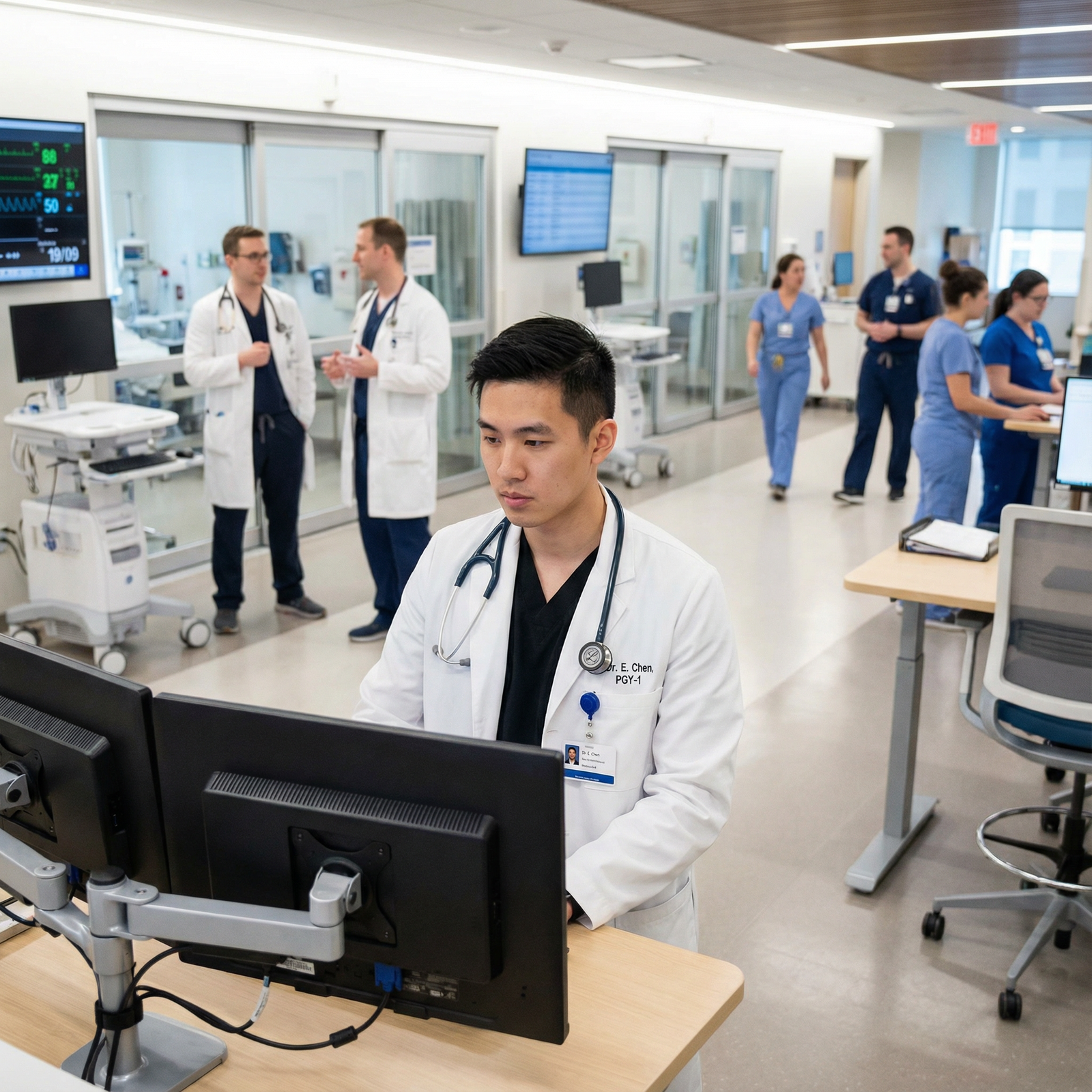
Orientation: Your Launchpad into the Program
Most institutions provide a multi-day orientation that may cover:
- Welcome from GME office, program director, and hospital leadership
- Review of hospital policies, duty hours, and professionalism standards
- EMR training and order entry practice
- Safety and quality modules (e.g., infection control, patient identification, incident reporting)
- Logistics: badges, scrubs, parking, call room access
Tips to get the most out of orientation:
- Take notes on workflows, especially for admissions, discharges, and handoffs.
- Ask for a “cheat sheet” of commonly used order sets, consult numbers, and hospital-specific protocols.
- Introduce yourself to co-interns, chiefs, and administrative staff—you’ll rely on them often.
Meeting Your Team and Learning Team Dynamics
You’ll meet:
- Co-interns and senior residents
- Attending physicians
- Nurses, pharmacists, case managers, respiratory therapists, and other allied health professionals
Clarify early on:
- Preferred communication methods (pager, secure messaging, phone)
- Expectations for presenting on rounds and pre-rounding
- How to escalate urgent concerns or emergencies (rapid response, code procedures)
Remember that strong interprofessional relationships—especially with nursing—are critical to effective patient care and to your learning.
Getting Comfortable with Your Clinical Environment
During your first days on service:
- Take a brief tour of critical locations: supply rooms, crash carts, medication rooms, code buttons, call rooms.
- Learn how to quickly access important information in the EMR (previous discharge summaries, consultant notes, recent imaging).
- Create personal “smart phrases” or templates for notes, if allowed, to save time.
Expect a steep learning curve. Much of what you need to know is not purely medical knowledge; it’s systems knowledge—how to get things done safely and efficiently in your specific hospital.
Conclusion: Owning Your Residency Transition
The journey from Match Day to residency is a complex but exciting chapter in your medical education. You are moving from supervised learner to physician-in-training with real responsibility, increasing autonomy, and an expanding professional identity.
By:
- Intentionally celebrating Match Day
- Proactively learning about your program and expectations
- Completing onboarding and credentialing early and carefully
- Planning your finances and living situation with realistic numbers
- Engaging in focused clinical preparation
- Prioritizing Self-Care, mental health, and sustainable habits
…you set yourself up not just to survive residency, but to learn, grow, and thrive.
Your residency is the bridge between who you are now and the physician you will become. Use this transition period to build support systems, clarify your values, and commit to the kind of doctor—and colleague—you want to be.
FAQs: Match Day, Residency Transition, and Early Residency
1. What should I do if I didn’t match or only partially matched?
If you didn’t match:
- Participate in the SOAP (Supplemental Offer and Acceptance Program) during Match Week if eligible.
- If you remain unmatched after SOAP, consider:
- A research year in your target specialty
- A preliminary or transitional year (if available in a later cycle)
- Additional clinical experience, volunteering, or observerships
- Strengthening your application with updated letters, scores, or publications
Work closely with your dean’s office, mentors, or career advisors to create a concrete plan for the next application cycle. Not matching is a setback, not an endpoint.
2. How can I find mentors and support early in residency?
- Ask your program director or chiefs if the program has a formal mentorship system.
- Identify attendings and senior residents whose teaching style and values you respect; ask if they’d be open to meeting periodically.
- Attend departmental conferences, resident retreats, and social events to meet faculty and peers.
- Use professional organizations (e.g., specialty societies, interest groups) for additional mentorship opportunities.
Mentorship can be formal or informal; what matters most is consistent, honest guidance and support.
3. What’s the best way to manage my time as a new intern?
Effective time management during residency includes:
- Starting your day with a prioritized to-do list for each patient.
- Learning to “chunk” tasks (e.g., placing all morning orders at once, batching documentation).
- Using tools like electronic task lists, checklists, or planner apps.
- Communicating with your team—especially nurses—about time-sensitive tasks.
- Debriefing with senior residents on how to streamline your workflow.
Expect time management to feel challenging at first; it improves with experience and feedback.
4. Can I take vacation or time off during my first year of residency?
Yes, but it is structured:
- Most programs offer a set number of vacation weeks per year (often 3–4 weeks).
- Time off is scheduled in advance and coordinated to ensure adequate coverage.
- Policies around sick leave, parental leave, and family/medical leave vary by program and accreditation standards.
Review your program’s policies and talk with your chief residents or coordinator if you have major life events planned or anticipate health-related needs.
5. What are the most important skills I’ll develop during residency?
During residency, you will deepen:
- Clinical reasoning and diagnostic skills
- Procedural competence (specialty-specific skills)
- Communication skills with patients, families, and interprofessional teams
- Leadership and teamwork, especially as you advance to supervising roles
- Resilience and adaptability, including recognizing your limits and asking for help
You will also learn to balance patient care, learning, documentation, and your personal life—a lifelong skill for a sustainable medical career.
Use this transition period intentionally. The work you do between Match Day and residency will echo throughout your training—and beyond.