
The period after Match Day is a powerful turning point in your medical education journey. It brings intense emotions—relief, pride, surprise, sometimes disappointment—and it also launches a rapid transition into residency training. Whether you matched into your dream specialty, matched but not where you expected, or are still figuring out your path, what you do in the weeks and months after the Match can profoundly shape your residency experience.
This guide expands on best practices for new matchers with practical, detailed, and realistic strategies. It focuses on three pillars of thriving in this phase: effective Residency Preparation, protecting your Emotional Well-Being, and building durable systems for Time Management and professional growth.
Understanding the Post-Match Landscape: What Really Happens Next
The post-match period isn’t just a waiting game until July; it’s an active phase of transition that combines administrative work, emotional processing, and professional preparation.
Key Elements of the Post-Match Period
There are several overlapping domains you’ll be managing:
Getting Ready for Residency (Professional Transition)
- Learning about your program’s expectations, schedule structure, and clinical responsibilities
- Preparing for your specific specialty (e.g., brushing up on medicine for transitional year, OB basics for family medicine, core pediatric topics for pediatrics)
Academic Expectations (Ongoing Medical Education)
- Shifting from exam-based learning to real-world clinical decision-making
- Identifying key resources (handbooks, guidelines, question banks) relevant to your specialty
- Planning how you’ll maintain deliberate studying amidst service demands
Personal Adjustments (Life Logistics)
- Relocating to a new city, often with limited time
- Finding housing, transportation, and community resources
- Navigating changes in support systems, finances, and relationships
Even if you feel “on top of things,” this transition is cognitively and emotionally heavy. Recognizing that weight early allows you to plan more realistically and compassionately.
Prioritizing Emotional Well-Being in the Post-Match Period
Residency Preparation is often framed in terms of textbooks and checklists, but your Emotional Well-Being is equally critical. You’ll arrive at residency more effective—and more sustainable—if you enter with some emotional bandwidth and coping tools.
Common Emotional Reactions After Match Day
You might experience:
- Joy and pride – You worked for this for years. Acknowledge it.
- Impostor syndrome – “Did I really earn this?” Very common, especially entering competitive programs.
- Grief or disappointment – If you didn’t match your top choice, your ideal specialty, or preferred city.
- Anxiety and uncertainty – About performance, expectations, or moving away from your support system.
- Survivor’s guilt – If your friends didn’t match and you did.
All of these reactions are normal. The goal is not to “fix” your emotions but to manage them so they don’t overwhelm you.
Practical Strategies for Emotional Self-Care and Support
Normalize Getting Help Early
- Schedule a visit with a therapist or counselor before residency starts if possible.
- Many medical schools and hospitals offer free or low-cost mental health resources. Ask student affairs, GME office, or wellness departments.
Build a Peer Support Network
- Create a small group chat with classmates or co-residents you trust where you can be honest about how you’re doing.
- Agree on norms (confidentiality, non-judgmental support, no comparison of achievements).
Designate “Non-Medical” People in Your Life
- Identify 1–2 friends or family members who can help you disconnect from medicine and talk about other aspects of life.
- Tell them explicitly: “Residency is coming up. Sometimes I’ll need to just talk about normal life stuff.”
Establish Simple, Repeatable Coping Tools
Think small and realistic:- A 5-minute breathing exercise (e.g., box breathing) when you feel overwhelmed
- A short walk outside after difficult news or a stressful day
- Journaling 5–10 minutes a few times a week to “offload” thoughts
If You Did Not Match or Matched Differently Than Expected
- Allow yourself to grieve that outcome—this is a real loss.
- Seek structured support (dean’s office, faculty mentors, or a physician coach) to help plan next steps.
- Separate your self-worth from the match outcome: it reflects system constraints and probability, not your value as a physician.
Emotional resilience isn’t about being tough 100% of the time—it’s about knowing when to rest, when to ask for help, and how to recover.
Organizing the Logistics: Turning Chaos Into a Checklist
Logistical tasks can feel overwhelming, but they’re highly manageable when turned into clear steps. Systematizing this early is one of the most effective Post-Match Strategies you can use.

Creating a Master Post-Match Checklist
Start a living document (Google Doc/Notion/Trello) with major categories:
Licensing and Credentialing
- State medical license or training license requirements and deadlines
- USMLE/COMLEX score reports submitted to your institution
- Background checks, drug screening, immunization titers, TB testing
- BLS/ACLS/PALS certification (confirm which your program requires and where to get them)
HR and Onboarding
- Contract review and signed offer letter
- Benefits selection (health, dental, disability, life insurance)
- Direct deposit and W-4 setup
- Malpractice coverage details (usually provided by institution, but ask if unsure)
Housing and Relocation
- Research neighborhoods near your hospital, focusing on:
- Proximity to hospital and 24/7 transportation options
- Safety and late-night commute routes
- Access to grocery stores and essentials
- Use resident Facebook groups, Reddit, or program WhatsApp groups to find:
- Roommates
- Recommended complexes or landlords
- Furniture or car recommendations
- Research neighborhoods near your hospital, focusing on:
Financial Planning
- Update your budget for resident salary and cost of living.
- Decide on loan repayment strategy (income-driven repayment, PSLF, consolidation if appropriate).
- Set up automatic payments for major bills so you don’t miss deadlines during heavy rotations.
Technology and Equipment
- Update your smartphone, laptop, and any apps you’ll use regularly (calendar, note-taking, drug references).
- Consider:
- A comfortable pair of shoes for long shifts
- A good stethoscope and penlight
- Charging cables for call rooms, portable battery pack
- Noise-cancelling headphones or earplugs
Tips for Making Logistics Manageable
- Time-block “Admin Hours” once or twice weekly to handle forms, emails, and calls.
- Create a shared folder (cloud-based) for important documents: immunizations, certifications, ID, contracts.
- Ask current residents what they wish they had handled earlier—often housing, licenses, and child/eldercare arrangements top the list.
Mastering Time Management Before and During Residency
Time Management is one of the most critical skills for residency success—and one of the least explicitly taught in Medical Education. The post-match period is an ideal time to build simple, sustainable systems.
Designing Your Time Management Framework
Think in three layers: daily, weekly, and long-term planning.
1. Daily Structure
- Use a digital calendar (Google, Outlook) for:
- Work schedule and call shifts
- Academic conferences
- Personal appointments and protected time (exercise, relationships, sleep)
- Plan your next day the night before:
- 3 “must-do” items (e.g., submit vaccine paperwork, read 1 topic, call utility company)
- 2–3 “nice-to-do” items if time permits
- Include buffer time for the unexpected—because in residency, the unexpected is routine.
2. Weekly Planning
Choose a day (often Sunday) to:
- Review the upcoming week’s schedule
- Plan meals or grocery runs
- Coordinate with family/partners about shared responsibilities
- Set academic goals (e.g., “review 5 cardiology topics,” “do 20 practice questions”)
Consider “theme nights” when possible:
- One night for admin tasks
- One night for social connection or hobbies
- One for focused study or reading
3. Long-Term Planning (Rotation and Year-Level)
- Before each new rotation:
- Identify core learning objectives (e.g., for ICU: ventilator basics, shock management).
- Ask senior residents: “If I learn 5 things really well on this rotation, what should they be?”
- Align your reading and question bank use to these objectives.
Tools That Support Time Management
- Task managers: Todoist, Notion, Microsoft To Do, or even a simple paper planner.
- Clinical reference apps: UpToDate, MDCalc, drug reference apps—bookmark your most-used tools.
- Study planning apps: Spaced repetition (e.g., Anki) to maintain knowledge over a long residency.
The goal is not perfection; it’s building a system that keeps you moving forward even on chaotic days.
Engaging in Smart Pre-Residency Learning
There is a temptation to “learn everything” before day one. That’s not realistic, and it’s not necessary. Focus your pre-residency learning on high-yield, practical preparation that reduces your stress and sharpens your clinical reasoning.
What to Study Before Residency
Core Concepts for Your Specialty
- Internal medicine: common admission diagnoses (CHF, pneumonia, COPD, sepsis, AKI, DKA).
- Surgery: pre-op evaluation, fluid and electrolyte management, post-op complications.
- Pediatrics: fever in different age groups, dehydration, asthma, neonatal basics.
- Family medicine: diabetes, hypertension, prenatal care basics, common outpatient complaints.
- Psychiatry: approach to suicidal ideation, psychosis, bipolar disorder, substance use.
How to Think Like a Resident
- Focus on approach rather than memorizing details:
- How do you evaluate chest pain safely?
- How do you prioritize tasks on call?
- How do you present a patient succinctly?
- Focus on approach rather than memorizing details:
Practical Clinical Skills
- Interpreting basic EKGs and chest X-rays
- Writing admission orders (mnemonics like ADC VAN DISMAL, etc.)
- Handing over patients safely (SBAR, IPASS frameworks)
How to Study Without Burning Out Before You Begin
- Limit structured study to 30–60 minutes per day most days. You still deserve rest.
- Use:
- A concise pocketbook for your specialty (e.g., “The Washington Manual,” “Pocket Medicine”).
- 10–20 practice questions a day from a reputable question bank.
- Short topic-based podcasts or videos during commutes or workouts.
Connecting With Mentors and Near-Peers
- Reach out to:
- Residents from your medical school now in your specialty.
- Incoming co-residents in your class.
- Program alumni or faculty who are open to informal mentorship.
Ask targeted questions:
- “What do you wish you had reviewed before starting?”
- “What resources did you find essential your intern year?”
- “What are common pitfalls for new interns in this program?”
Building Relationships and Understanding Program Culture
Residency is not just a training program; it’s a workplace culture you are about to join. Early networking and relationship-building improve learning, support, and well-being.
Networking and Relationship-Building Strategies
Be Present at Orientation and Social Events
- Show up, be curious, and be yourself.
- Learn names—especially your co-residents, chiefs, and program coordinators (they are key allies).
- Ask about others’ paths and interests; relationships are built on mutual interest, not self-promotion.
Use Digital Spaces Wisely
- Join your program’s group chats or social media groups.
- Avoid venting about your program or colleagues online—treat these spaces as semi-public.
Engage in Collaborative Learning
- Join or form small study groups for boards, in-training exams, or challenging topics.
- Share resources (Anki decks, helpful articles, templates for sign-out).
Adapting to the Culture of Your New Residency
Every program has unwritten rules and norms. Your job early on is to observe, ask, and adapt.
Watch how:
- Attendings expect presentations and notes.
- Senior residents communicate with nurses and consultants.
- The team handles pages, sign-out, and task distribution.
Read and understand:
- Duty hour policies
- Moonlighting policies (later in training)
- Wellness and leave policies (vacation, sick time, parental leave)
Ask clarifying questions respectfully:
- “I want to make sure I’m following program expectations—what’s the preferred way to handle X?”
- “How do you usually structure your notes on this service?”
Adapting to culture doesn’t mean abandoning your values; it means learning how to function effectively within a specific system while maintaining your professionalism and integrity.
Protecting Your Health: Sustainable Self-Care for Residents
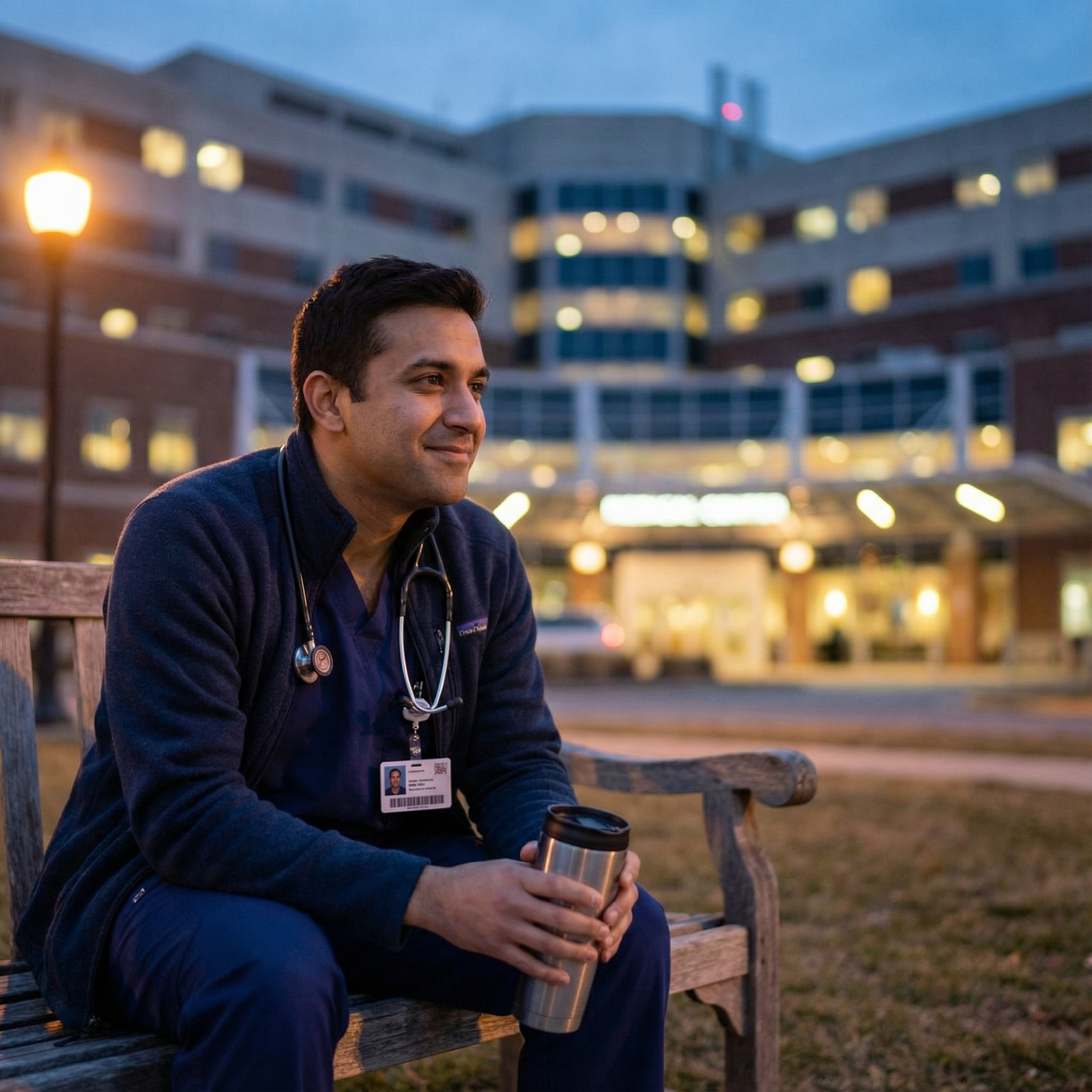
Self-care in residency must be realistic. It’s not about perfect morning routines; it’s about non-negotiable basics that protect your physical and Emotional Well-Being.
Core Self-Care Domains
Sleep (as much as realistically possible)
- Protect sleep before night shifts and post-call.
- Use sleep aids strategically (eye mask, blackout curtains, white noise).
- Avoid the trap of sacrificing sleep purely for extra studying.
Physical Activity
- Aim for short, consistent movement rather than idealized workouts:
- 10–20 minute walks
- Quick bodyweight exercises at home
- Stretching before bed or after shifts
- Aim for short, consistent movement rather than idealized workouts:
Nutrition
- Pack snacks or simple meals for long shifts (nuts, yogurt, fruit, pre-made salads).
- Stay hydrated—keep a water bottle where you can access it during rounds or charting.
Boundaries and Recovery Time
- Protect at least part of a day off for non-medical life.
- Learn to say, “I’d love to help, but I can’t tonight—I need to rest for tomorrow’s shift.”
Mindfulness and Reflection
- Short daily or weekly reflection: “What went well? What did I learn? What was hard?”
- Consider brief mindfulness apps or exercises, especially after distressing cases.
Reassessing and Refining Your Career Objectives
The post-match period and early residency are good times to clarify where you’re headed—even if the exact destination is still evolving.
Reflecting on Your Long-Term Goals
Ask yourself:
- What drew me to this specialty originally?
- Which parts of clinical care feel most energizing (procedures, longitudinal care, acute care, teaching, research)?
- What kind of life do I imagine 10 years from now (location, family, practice type)?
Setting Short- and Long-Term Goals
Short-term (0–12 months):
- Survive and grow during intern year
- Build good habits and a reputation for reliability
- Pass any licensing or in-training exams required
Medium-term (1–3 years):
- Explore subspecialty interests (electives, shadowing, research)
- Develop teaching skills for medical students and juniors
- Consider fellowship or practice settings
Long-term (3–5+ years):
- Fellowship or job planning
- Academic vs. community vs. hybrid careers
- Leadership, QI, or education roles if interested
Keep your goals flexible. Residency often exposes you to new areas you didn’t know you’d love—or aspects you thought you’d love that turn out not to fit.
FAQs: Navigating the Post-Match to Residency Transition
1. What should I do if I did not match or only partially matched?
If you did not match:
- Participate in SOAP if eligible and interested.
- Meet urgently with your dean’s office or advisors to create a reapplication strategy (improving exam scores, gaining research or clinical experience, broadening specialty choices).
- Consider prelim or transitional positions that keep you clinically active if reapplying.
- Take time to process the emotional impact—this is a major disappointment, but it does not define your worth or ultimate success in medicine.
If you partially matched (e.g., prelim year without advanced spot), work closely with mentors during your PGY-1 year to secure an appropriate PGY-2+ position.
2. How can I be ready for my first day of residency without burning out beforehand?
Focus on:
- Essential logistics: housing, licensing, certifications, and HR forms.
- Review core topics for your specialty 30–60 minutes per day a few days a week.
- Organize your calendar, apps, and basic tools you’ll use daily.
- Prioritize sleep, movement, and time with loved ones—you’ll need that reserve.
You do not need to read an entire textbook or be an expert before day one. Programs expect you to be a learner, not a finished product.
3. What resources are most helpful for managing stress and Emotional Well-Being during residency?
Common helpful resources include:
- Institutional mental health services (resident counseling programs, employee assistance programs).
- Peer support groups or Balint-style groups where cases and emotions are discussed.
- Wellness or resilience workshops offered by GME.
- National physician support lines or organizations (through specialty societies or medical associations).
On a personal level, low-barrier tools—brief therapy sessions, mindfulness apps, supportive relationships, and structured time off—are often more sustainable than occasional large “wellness events.”
4. How important is networking in the post-match period and early residency?
Networking is very important, but think of it as relationship-building, not transactional interactions:
- Within your program, relationships with residents, attendings, and staff affect your learning, support, and evaluations.
- Across institutions and conferences, mentors and collaborators can help with research, fellowships, and job opportunities.
Show up, be reliable, express interest, and help others when you can. That is the foundation of effective professional networking.
5. How can I realistically balance work and personal life during residency?
Balance in residency is dynamic, not static. Helpful approaches:
- Use Time Management strategies: planning your week, batching tasks, and protecting days off.
- Decide what you must protect (e.g., a weekly call with family, a hobby, religious practice, or exercise).
- Be flexible month-to-month—ICU months will look different than elective months.
- Communicate openly with partners, family, and friends about your schedule and limitations.
- Ask for help early if you feel overwhelmed—burnout is easier to prevent than to reverse.
The post-match period is both exciting and daunting, but it is also a powerful opportunity. By attending to your Emotional Well-Being, organizing your logistics, sharpening your Time Management, and staying intentional about your growth, you can enter residency not just surviving, but prepared to thrive in this next phase of your medical education and career.